The Hidden Meaning Of Your Birth Month Flower (And How Floridians Can Grow It At Home)
Ever wondered why certain flowers instantly feel “you”? Your birth month bloom carries hidden meaning tied to personality, emotion, and ancient symbolism, and it might explain more than you expect.
From fiery favorites linked to confidence to soft petals connected to loyalty and love, these flowers tell a story that goes deeper than looks. Even better, many of them grow beautifully right here in Florida with the right timing and care.
Picture stepping outside and seeing a bloom that represents your own story growing in your yard. That’s personal, powerful, and seriously cool.
If you love fun facts, garden magic, and turning your outdoor space into something meaningful, you’re about to love this.
1. January Is All About Carnations And What They Say About You
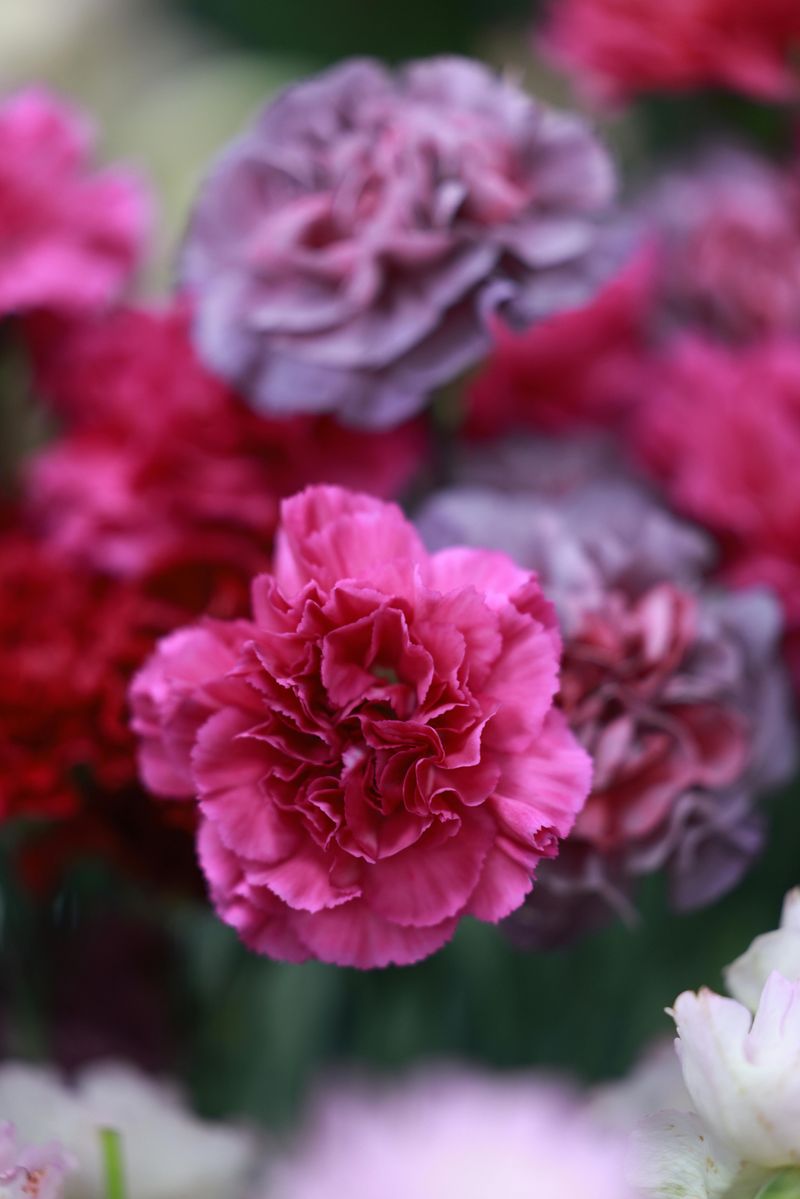
January mornings in Florida feel crisp compared to our summer heat, and this cooler weather creates perfect conditions for carnations to thrive. These ruffled blooms symbolize love, fascination, and distinction, with different colors carrying specific messages that date back to ancient Rome and early Christian traditions.
Pink carnations represent a mother’s undying love, while white ones speak to pure affection and good luck.
Your Florida garden welcomes carnations during our mild winters when temperatures stay between 50 and 65 degrees. Plant them in October or November across most of the state, giving roots time to establish before blooms appear in January and February.
South Florida gardeners enjoy the longest growing season, often seeing flowers persist into March.
Container growing works beautifully for carnations since you control soil drainage and can move pots to shadier spots when March heat arrives. Mix equal parts peat moss, perlite, and quality potting soil to create the well-draining environment these flowers prefer.
Water when the top inch feels dry, and pinch back young plants to encourage bushier growth and more blooms throughout their season.
2. February Belongs To Violets And Their Quiet Symbolism
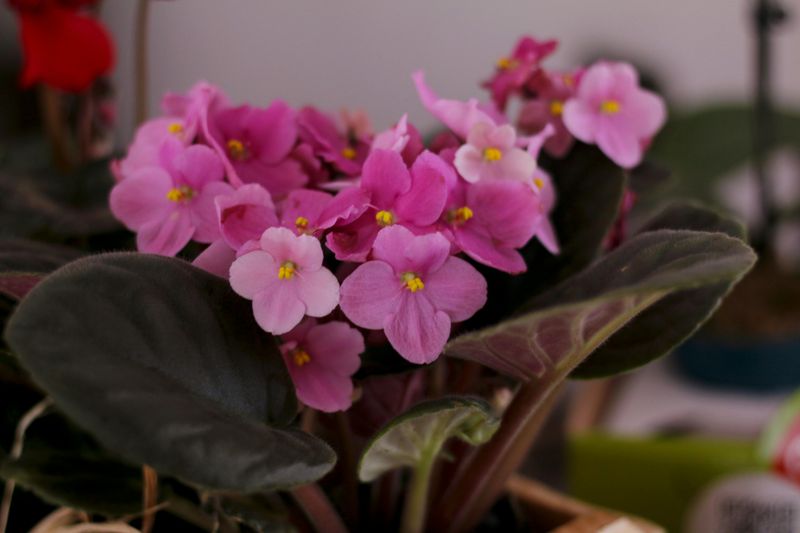
February brings Valentine’s Day and thoughts of love, making violets the perfect birth flower with their associations of faithfulness, modesty, and spiritual wisdom. Victorian flower language gave violets deeper meaning, where lovers exchanged these delicate blooms as promises of devotion.
The Greeks believed violets symbolized fertility and used them in love potions, while medieval Europeans saw them as symbols of humility.
Traditional woodland violets struggle in Florida’s heat and humidity, but African violets become your reliable alternative for capturing this birth month’s essence. These cousins of true violets bloom year-round indoors with proper care, offering the same purple hues and symbolic connections.
Place them near east-facing windows where bright, indirect light reaches leaves without scorching them.
Your African violets need consistent moisture without soggy roots, so water from below by setting pots in saucers filled with water for thirty minutes. Room temperature water prevents leaf spots that cold water sometimes causes.
Feed monthly with fertilizer formulated specifically for African violets, diluted to half strength. North Florida gardeners can grow native woodland violets outdoors in shaded areas during winter months when temperatures stay mild.
Your Florida Garden Changes Every Week. Your Plan Should Too.
Gardening in Florida changes quickly throughout the season. Every Friday you’ll receive a simple weekly plan showing exactly what to plant, prune, fertilize, harvest, and protect so you never miss the right timing.
3. March Brings Daffodils And The Promise Of Something New
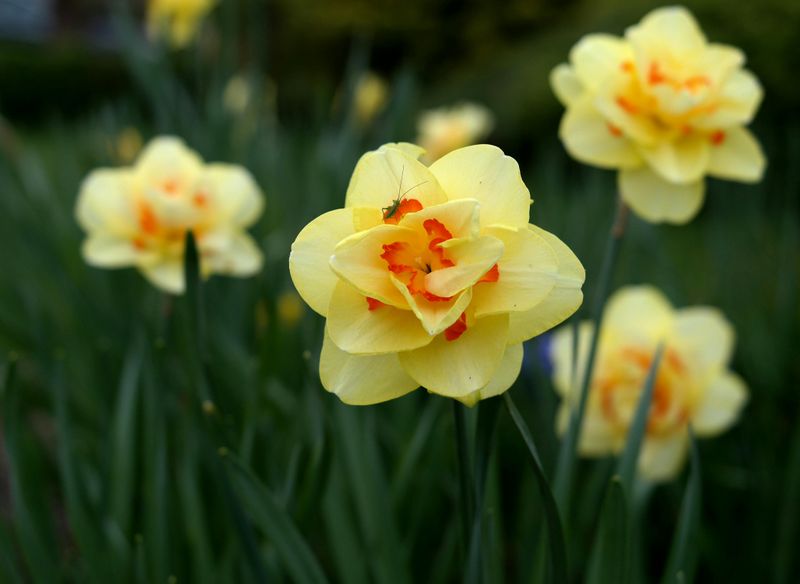
March marks spring’s arrival across much of America, and daffodils symbolize new beginnings, rebirth, and unequaled love according to traditions spanning centuries. Ancient Greeks associated these sunny blooms with Narcissus and self-reflection, while Persians celebrated them during their New Year festivals.
Chinese culture views daffodils as symbols of good fortune, especially when they bloom during lunar new year celebrations.
Florida’s warm climate challenges traditional daffodil growing since these bulbs need extended cold periods that only North Florida reliably provides. Gardeners in Tallahassee, Jacksonville, and Pensacola can plant pre-chilled bulbs in December for February or March blooms.
Central and South Florida residents should embrace paperwhites, a daffodil relative that thrives without chilling requirements and blooms beautifully in containers.
Plant daffodil bulbs four to six inches deep in well-draining soil amended with compost, spacing them three inches apart for natural-looking clusters. North Florida locations with partial shade work best since afternoon sun protection extends bloom time.
Paperwhites grow easily indoors in pebble-filled containers with water reaching just below the bulb base. Your daffodils and paperwhites need minimal fertilizer, just one application of bulb food when foliage emerges in late winter.
4. April Celebrates Daisies And A Surprisingly Deep Meaning
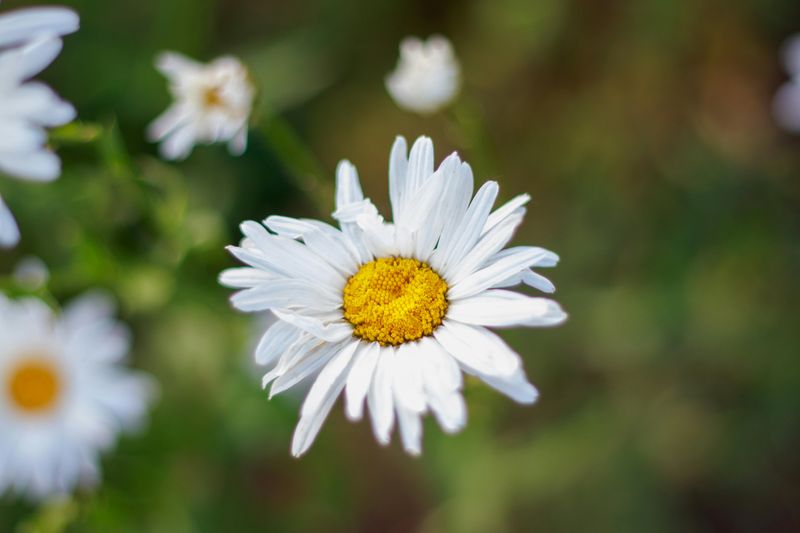
April showers bring May flowers, and daisies embody the innocence, purity, and true love that springtime represents in folklore and literature. These cheerful blooms with white petals surrounding golden centers symbolize new mothers and childbirth in Norse mythology, while Celtic legends connected them to children’s spirits.
Medieval Europeans called daisies “day’s eye” because petals close at dusk and reopen with sunrise.
Shasta daisies adapt wonderfully to Florida gardens when you treat them as cool-season annuals rather than traditional perennials. Plant them in October or November for blooms lasting from February through May, before summer heat causes decline.
North Florida gardeners sometimes see Shasta daisies return for a second year, especially in locations with afternoon shade and consistent moisture.
Your daisy plants need full morning sun with protection from intense afternoon heat that arrives in late April and May. Space plants twelve inches apart in beds amended with compost and aged manure for nutrient-rich soil that drains quickly after rain.
Deadhead spent blooms regularly to encourage continuous flowering throughout the season. Water deeply twice weekly during dry spells, and apply a balanced fertilizer monthly.
Consider growing daisies in large containers where you control soil quality and can move plants to shadier spots as temperatures climb.
5. May Features Lily Of The Valley And Its Timeless Message
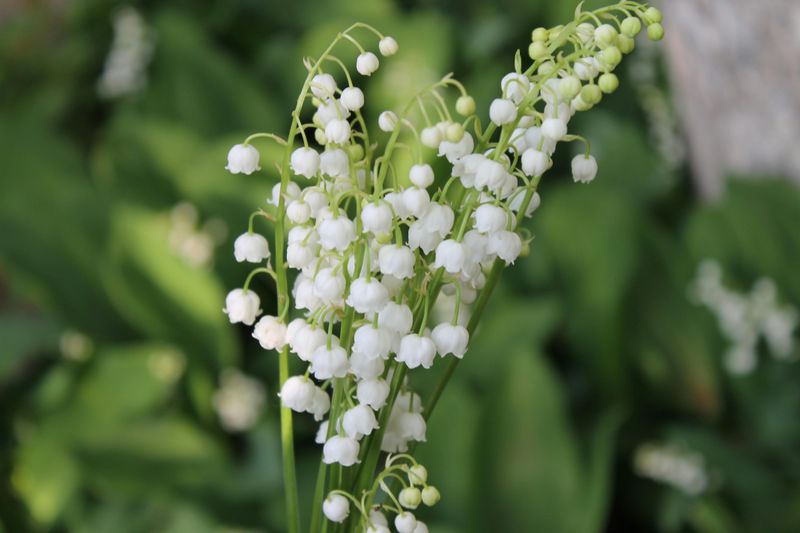
May Day traditions across Europe involved giving lily of the valley bouquets as symbols of sweetness, humility, and the return of happiness. These delicate bell-shaped flowers appear in royal wedding bouquets and Christian art representing Mary’s tears.
French customs include exchanging lily of the valley sprigs on May first for good luck, a practice dating back to the Renaissance.
Traditional lily of the valley cannot survive Florida’s climate since these woodland plants require cold winters and cool summers. Your alternative comes through society garlic, a Florida-friendly perennial with similar delicate blooms and graceful appearance.
This South African native produces clusters of tubular lavender flowers on slender stems, creating the same gentle effect as lily of the valley.
Plant society garlic bulbs year-round in Florida, spacing them six inches apart in beds or containers with excellent drainage. These adaptable plants tolerate full sun to partial shade, though afternoon shade in summer prevents leaf tips from browning.
Water regularly until plants establish, then reduce to weekly deep watering. Society garlic spreads slowly through underground bulbs, creating attractive clumps that bloom spring through fall.
The foliage carries a mild garlic scent when brushed, which actually helps deter deer and rabbits. Divide clumps every three years to maintain vigor and create new plants for other garden areas.
6. June Shines With Roses And Their Powerful Symbolism
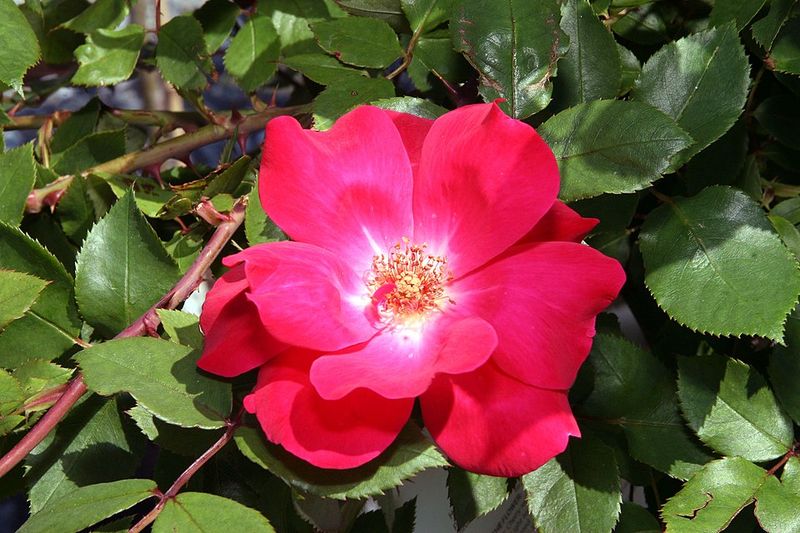
June weddings and graduations make roses the natural choice for a birth flower representing love, honor, and devotion across countless cultures. Ancient Romans scattered rose petals at celebrations, while medieval knights wore roses as symbols of their beloveds.
Different rose colors carry specific meanings: red for passionate love, pink for grace and gratitude, yellow for friendship, and white for purity and new beginnings.
Florida rose gardening succeeds when you choose disease-resistant varieties bred for heat and humidity tolerance. Knock Out roses, Drift roses, and many David Austin English roses perform beautifully across the state with proper care.
Plant roses between January and March in North and Central Florida, or year-round in South Florida where winter temperatures rarely drop below 50 degrees.
Your roses need at least six hours of morning sunlight with some afternoon shade protection during peak summer months. Amend planting holes with compost and ensure excellent drainage since roses hate wet feet.
Space plants according to variety recommendations, usually three to four feet apart for proper air circulation that reduces fungal diseases. Water deeply two to three times weekly, applying moisture at soil level rather than overhead to keep foliage dry.
Feed monthly during growing season with rose-specific fertilizer, and mulch around plants to conserve moisture and regulate soil temperature.
7. July Highlights Larkspur And Its Hidden Personality Traits
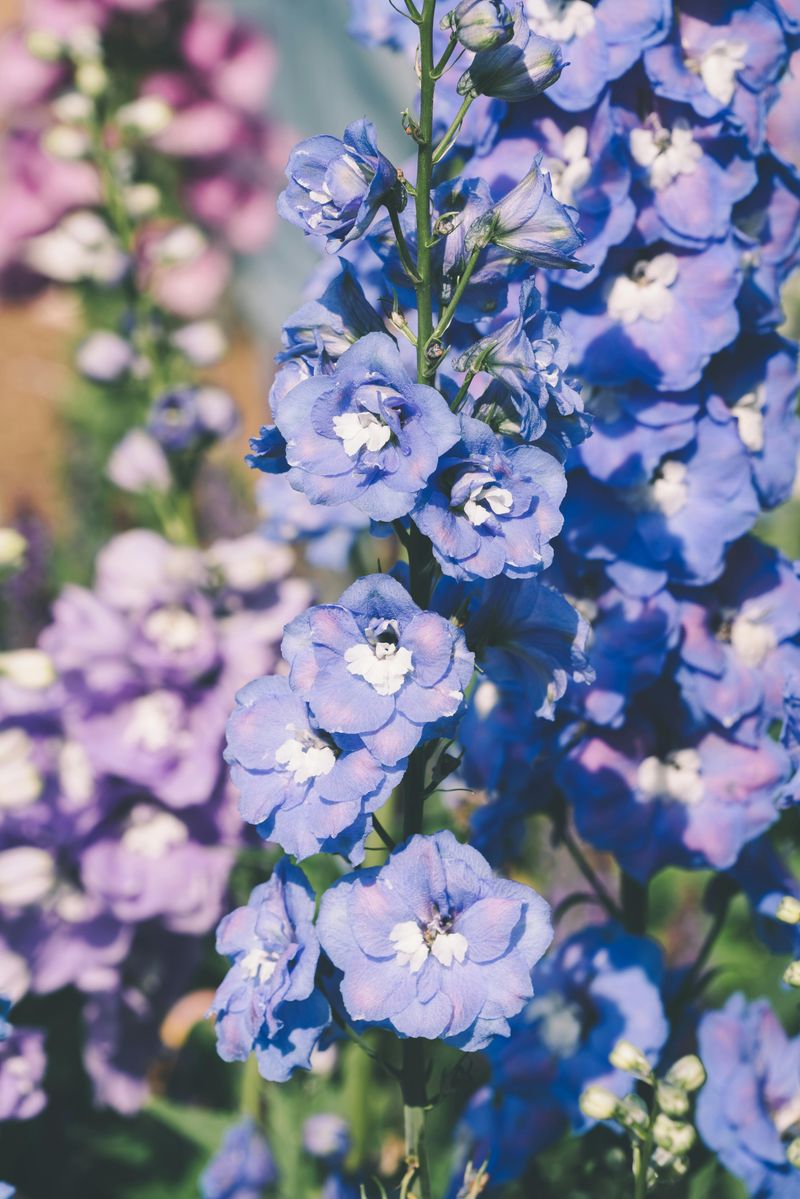
July brings peak summer heat, and larkspur symbolizes levity, lightness, and strong bonds of love according to Victorian flower dictionaries. These tall spiky blooms in shades of blue, purple, pink, and white represented fickleness in some traditions while others saw them as protective charms.
Native American tribes used larkspur in ceremonies, believing the flowers kept negative spirits away from celebrations and gatherings.
True larkspur cannot tolerate Florida’s summer heat and humidity, but delphiniums, their close relatives, can grow as cool-season annuals in Florida gardens. Plant delphinium seedlings in October for winter and spring blooms, or grow them year-round in containers that you move to air-conditioned spaces during extreme heat.
North Florida gardeners have the best success with outdoor plantings that bloom from February through April.
Container culture works best for capturing larkspur’s essence in Florida since you control growing conditions and protect plants from afternoon sun and heavy rain. Choose large pots at least twelve inches deep to accommodate delphinium’s root systems.
Use quality potting mix amended with perlite for drainage, and stake tall flower spikes to prevent wind damage. Water when the top two inches of soil feel dry, and feed every two weeks with diluted liquid fertilizer.
Deadhead spent blooms promptly to encourage additional flowering.
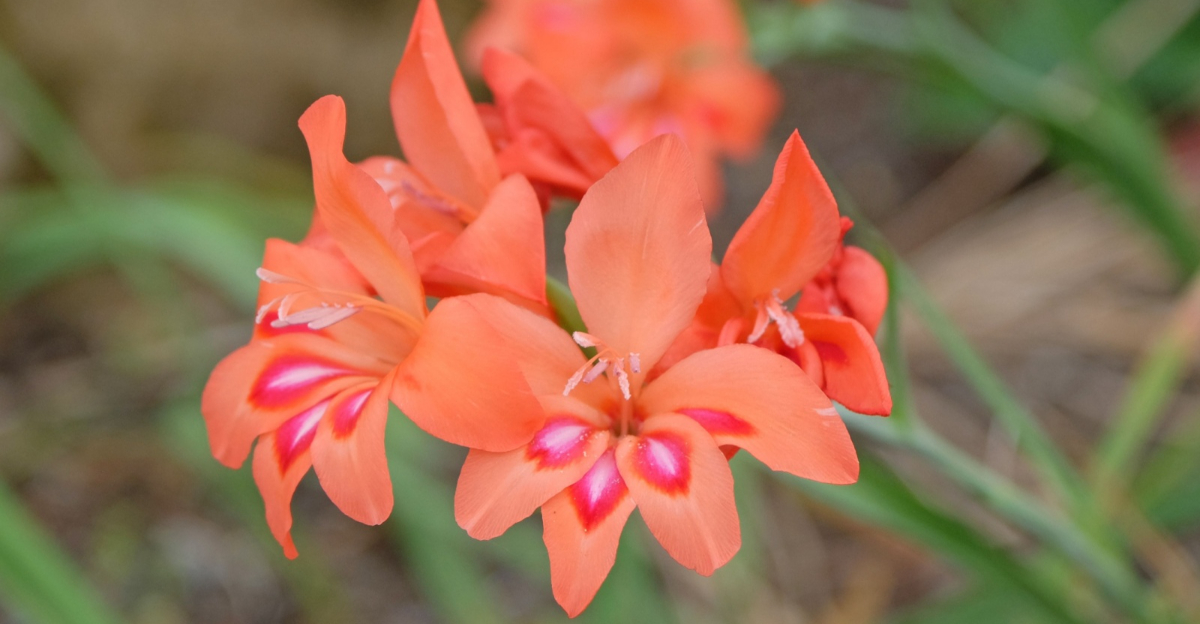
8. August Spotlights Gladiolus And Its Bold Meaning
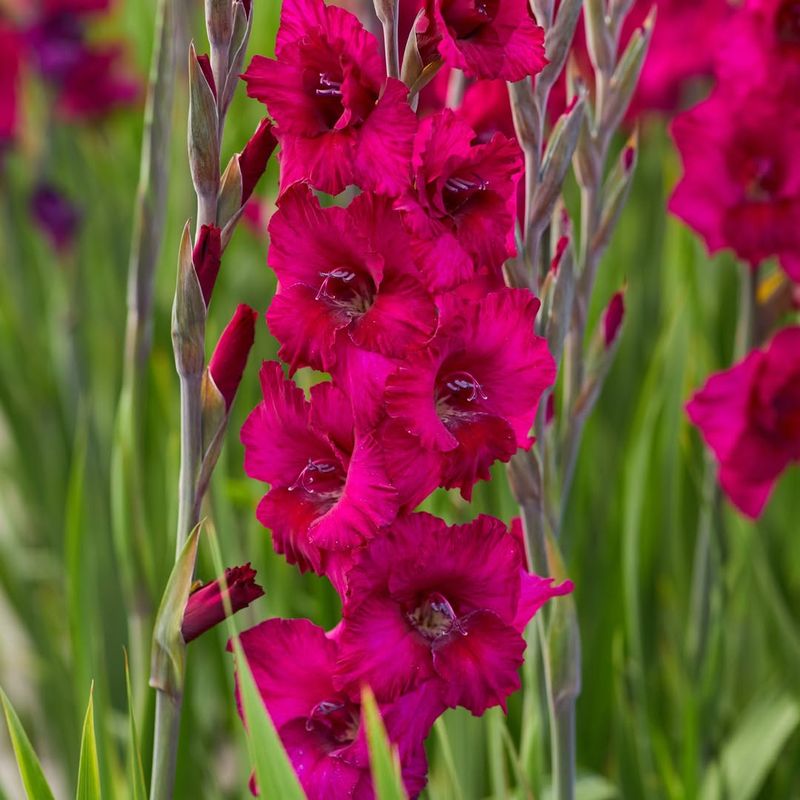
August heat reaches its peak, and gladiolus stands tall as a symbol of strength, integrity, and moral character dating back to Roman gladiators. These sword-shaped flowers earned their name from the Latin word for sword, representing the weapons gladiators carried into battle.
Victorian society used gladiolus to convey infatuation and the idea that the recipient pierced the giver’s heart with passion.
Gladiolus bulbs, actually called corms, grow successfully in Florida when you plant them during our cooler months. North and Central Florida gardeners plant corms from January through March for late spring blooms, while South Florida residents can plant from October through February.
Stagger plantings two weeks apart for continuous flowers throughout the season, creating a succession of blooms for cutting and display.
Plant gladiolus corms four to six inches deep in full sun locations with excellent drainage, spacing them six inches apart in groups of at least ten for visual impact. These tall flowers need staking to prevent wind damage, especially important during Florida’s afternoon thunderstorms.
Drive stakes at planting time to avoid damaging corms later. Water regularly to keep soil evenly moist but never waterlogged, and apply balanced fertilizer when shoots emerge and again when flower spikes form.
Cut flower stalks when the bottom two or three blooms open, leaving at least four leaves on the plant to nourish the corm for next season.
9. September Showcases Asters And Their Symbol Of Wisdom
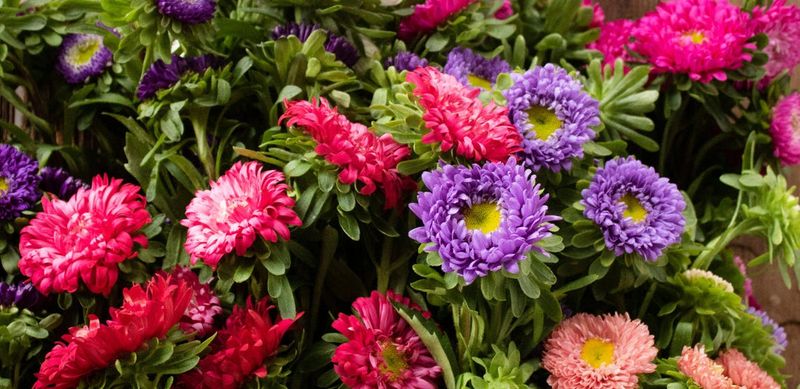
September transitions toward fall, and asters represent wisdom, valor, and faith according to myths where Greek gods created these star-shaped flowers from stardust. Ancient Greeks placed asters on temple altars believing the flowers carried divine messages.
The flower’s name comes from the Greek word for star, reflecting the bloom’s radiating petals that reminded ancient peoples of celestial bodies in night skies.
Florida gardeners struggle with traditional asters since these cool-climate perennials wilt in our heat and humidity. Your best alternative comes through tropical aster species and Stokes’ aster, a southeastern native that tolerates Florida conditions better than northern varieties.
Plant these alternatives in fall for winter and spring blooms that capture the essence of September’s birth flower throughout your growing season.
Stokes’ aster grows well in North and Central Florida gardens with morning sun and afternoon shade, blooming from April through June in established plantings. Space plants twelve inches apart in beds with improved drainage and neutral to slightly acidic soil.
Water regularly during establishment, then reduce to weekly deep watering once plants settle in. Tropical asters grow year-round in South Florida and bloom almost continuously in frost-free areas.
Deadhead both types regularly to promote additional flowering, and divide clumps every two to three years to maintain plant vigor and prevent overcrowding.
10. October Glows With Marigolds And Ancient Meaning
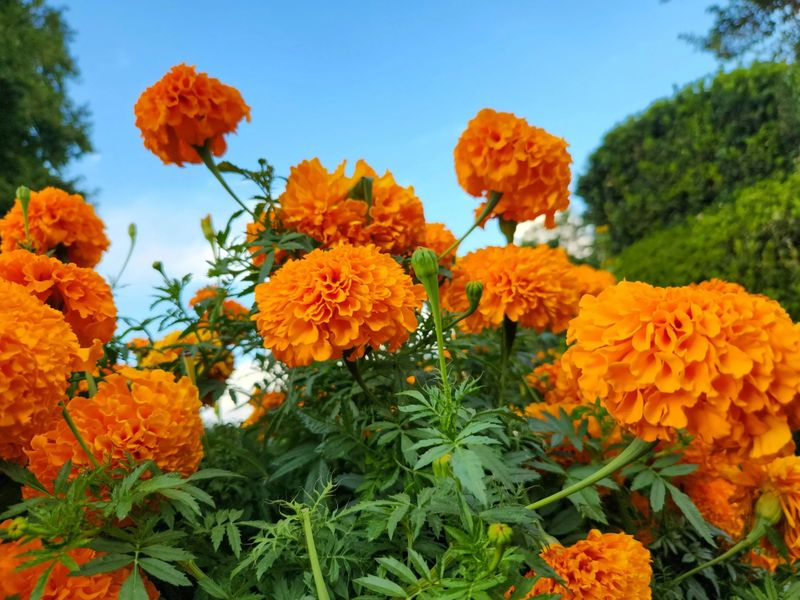
October brings relief from summer heat, and marigolds symbolize passion, creativity, and the drive to succeed in traditions spanning continents. The Aztecs regarded marigolds as sacred flowers connected to spiritual traditions and remembrance ceremonies.
Hindu ceremonies use marigolds extensively, stringing thousands of blooms into garlands for weddings and religious festivals. Victorian flower language assigned marigolds meanings of grief and jealousy, though modern interpretations focus on their sunny, optimistic nature.
Marigolds thrive throughout Florida’s warm climate, growing as cool-season annuals in the southern part of the state and year-round in northern regions. Plant marigold transplants or seeds from September through March for blooms lasting until summer heat causes decline.
These reliable flowers tolerate poor soil, drought, and neglect better than most annuals, making them perfect for beginning gardeners or busy households.
Your marigolds need full sun and decent drainage but adapt to various soil types without amendment. Space plants eight to twelve inches apart depending on variety size, with dwarf types suitable for container edges and tall African marigolds creating dramatic backdrops.
Water when soil feels dry an inch below the surface, usually twice weekly in containers and once weekly in garden beds. Deadhead spent blooms to encourage continuous flowering, though modern varieties often bloom prolifically without this maintenance.
Marigolds naturally repel some garden pests, making them excellent companion plants near vegetables and herbs.
11. November Honors Chrysanthemums And Their Special Message
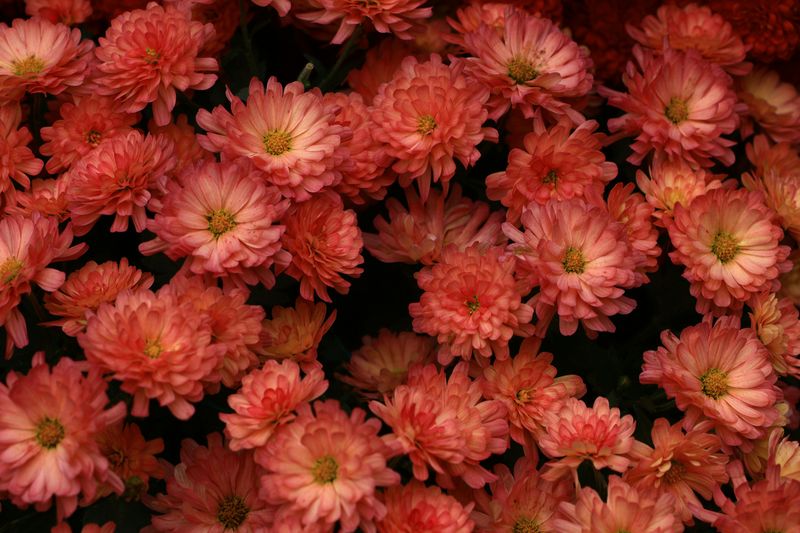
November brings thoughts of gratitude and family gatherings, and chrysanthemums symbolize joy, optimism, and long life in Asian cultures where these flowers originated. Japanese emperors sat on chrysanthemum thrones, and the flower remains Japan’s national symbol today.
Chinese philosophers associated chrysanthemums with nobility and integrity, often featuring them in poetry and paintings. Victorian England assigned chrysanthemums meanings of cheerfulness and devoted friendship, making them popular gifts between close companions.
Chrysanthemums grow as cool-season annuals throughout Florida, planted from September through November for fall and winter blooms. Garden centers stock mums in autumn, offering instant color for porches and garden beds.
These short-lived plants bloom for six to eight weeks before declining, though North Florida gardeners sometimes see them return the following year if planted in optimal conditions with afternoon shade.
Plant chrysanthemums at the same depth they grew in nursery containers, spacing them twelve to eighteen inches apart in beds or grouping several in large decorative pots. Morning sun with afternoon shade extends bloom time and prevents flowers from fading quickly in strong light.
Water consistently to keep soil evenly moist, checking containers daily since mums dry out rapidly. Pinch off faded flowers to maintain appearance, though mums typically bloom so abundantly that deadheading becomes optional.
Feed weekly with diluted liquid fertilizer to support the heavy flowering these plants produce throughout their display season.
12. December Welcomes Narcissus And The Theme Of Renewal
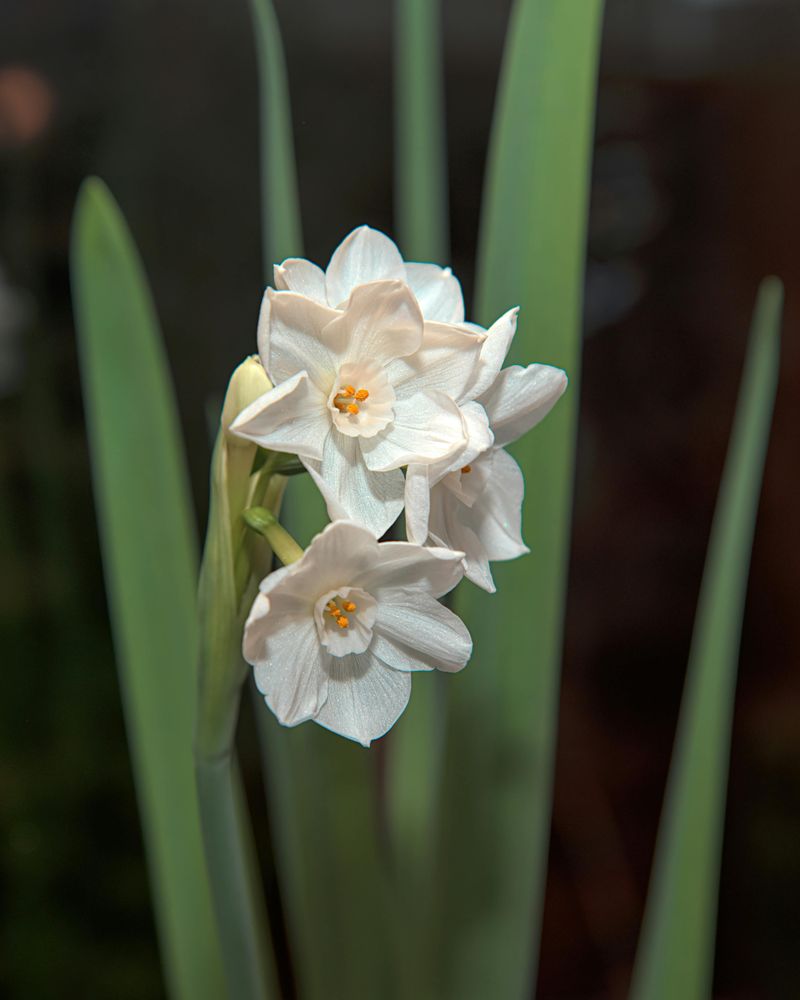
December closes the year with thoughts of renewal and fresh starts, and narcissus flowers symbolize rebirth, inner reflection, and hope for the future. Greek mythology tells of Narcissus, the beautiful youth who fell in love with his own reflection, lending the flower associations with vanity and self-love.
Chinese New Year celebrations feature narcissus prominently, believing the flowers bring good fortune for the coming year. Winter blooming narcissus varieties remind us that beauty and growth continue even during darker, quieter months.
Paperwhite narcissus grows effortlessly indoors throughout Florida, requiring no soil and blooming within weeks of planting. These fragrant white flowers bring December’s birth flower symbolism into your home without fighting Florida’s climate limitations.
Traditional narcissus and daffodil varieties need cold periods that only North Florida provides, making paperwhites the practical choice for most state residents who want to celebrate this birth month flower.
Place paperwhite bulbs in shallow bowls or decorative containers filled with pebbles, marbles, or decorative stones. Add water until it reaches just below the bulb base, never covering the bulb completely to prevent rot.
Position containers in bright, indirect light near windows, and watch roots emerge within days. Flowers appear three to four weeks after planting, filling rooms with sweet fragrance.
Stake flower stems with decorative supports if they grow too tall and lean. Plant new bulbs every two weeks from November through February for continuous blooms throughout winter.