Top 10 Plants Texas Gardeners Are Buying Right Now
What’s the one thing Texas gardeners can’t get enough of right now? Plants that actually thrive in this wild climate.
Whether you’re sprucing up a small patio in Austin or planting raised beds in San Antonio, there’s a noticeable buzz around certain green picks that are flying off nursery shelves.
We’re talking about plants that can handle heat, bounce back after dry spells, and look amazing while doing it.
These trending choices are showing up in shopping carts for good reason. They’re easy to care for, gorgeous to look at, and strong enough to survive the Texas sun.
If you’ve been wondering what other gardeners are buying lately (and why they’re raving about them), this list will give you the inside scoop.
From flowering favorites to drought-tough staples, these plants are stealing the spotlight in yards across the Lone Star State. Ready to see what’s hot in Texas gardens right now? Let’s dig in.
1. Texas Sage
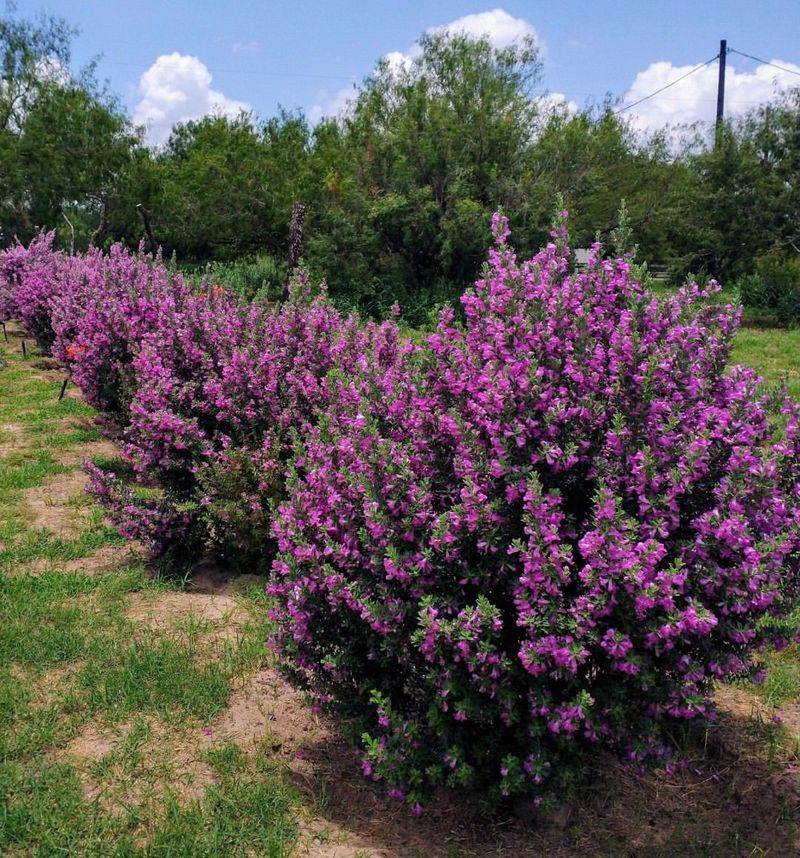
Purple blooms appear like magic after summer rains, transforming this silvery-green shrub into a showstopper. Texas sage earned its nickname “barometer bush” because it seems to predict rainfall by flowering just before storms arrive.
Gardeners across the state love how this native plant thrives in poor soil and blazing heat without demanding constant attention. Reaching about five feet tall and wide, this rounded shrub fits perfectly into xeriscapes and water-wise landscapes.
The fuzzy, silver leaves create a soft texture that contrasts beautifully with darker green plants. When those tubular purple flowers emerge, hummingbirds and butterflies show up within hours to enjoy the nectar.
Planting Texas sage requires almost no effort once you choose a sunny spot with good drainage. Water it occasionally during the first growing season, then step back and let nature take over.
This tough plant handles extreme heat, drought, and even occasional freezes without complaint. Many Texas homeowners use it as a low-maintenance hedge or accent plant that looks good year-round.
Garden centers report selling out quickly because both experienced gardeners and beginners appreciate how forgiving this plant is. From El Paso to Beaumont, Texas sage has become a staple in landscapes throughout the state.
2. Esperanza
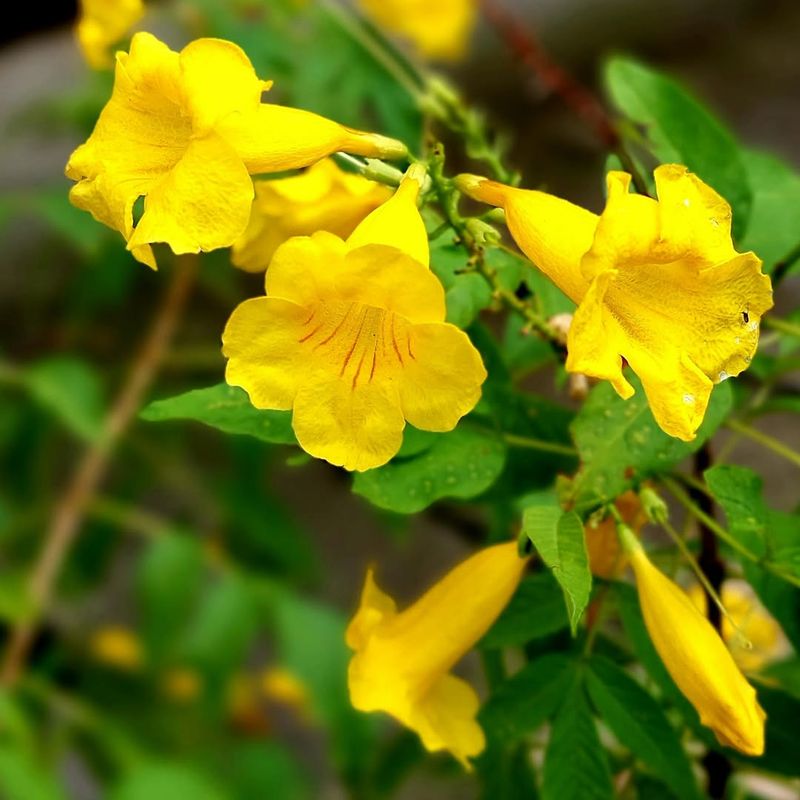
Golden trumpet flowers practically glow in the Texas sunshine, making esperanza one of the most eye-catching plants you can grow.
This heat-loving perennial blooms from late spring through the first frost, providing months of cheerful color when many other plants give up.
The name “esperanza” means hope in Spanish, and this plant certainly delivers hope for continuous garden color. Growing four to six feet tall in a single season, esperanza creates an impressive presence in landscape beds.
The glossy green leaves stay attractive even when flowers take a brief break between bloom cycles. Butterflies, bees, and hummingbirds visit constantly, turning your garden into a wildlife haven.
After a light freeze, the plant may lose its leaves, but it bounces back vigorously when warm weather returns. Texas gardeners appreciate how esperanza handles the brutal summer heat that sends other flowering plants into hiding.
Your Texas Garden Changes Every Week. Your Plan Should Too.
Gardening in Texas changes quickly throughout the season. Every Friday you’ll receive a simple weekly plan showing exactly what to plant, prune, fertilize, harvest, and protect so you never miss the right timing.
Full sun and occasional deep watering keep this plant happy and blooming. Garden centers across Texas struggle to keep esperanza in stock during spring planting season because word has spread about its reliable performance.
Whether you plant it as a specimen, in groups, or along a fence line, this cheerful plant brightens any Texas landscape with minimal fuss.
3. Blackfoot Daisy
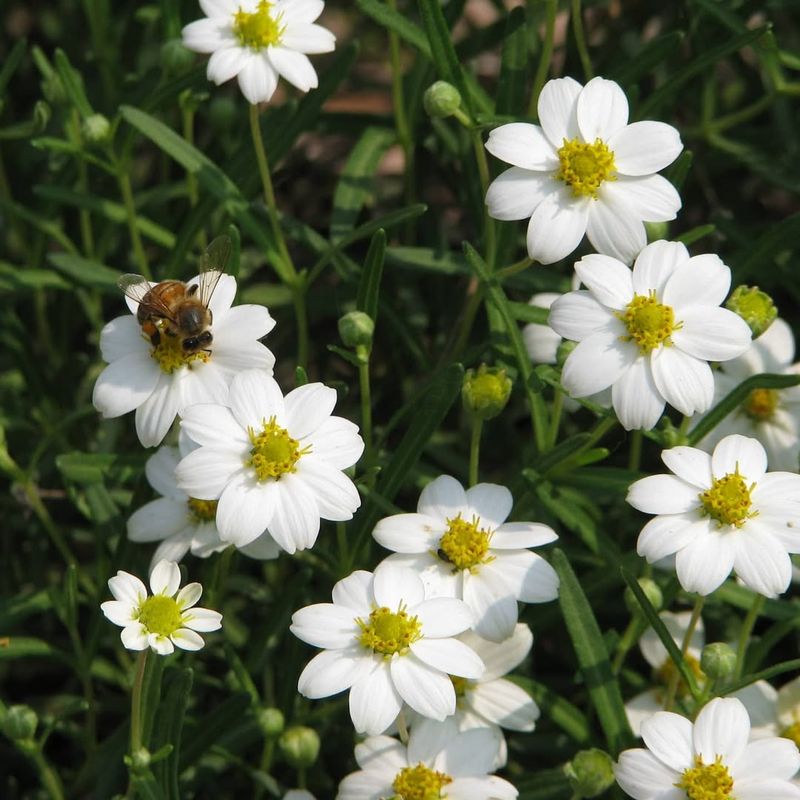
Cheerful white petals surround sunny yellow centers on this tough little groundcover that Texas gardeners can’t get enough of.
Blackfoot daisy stays low to the ground, rarely exceeding eight inches tall, but spreads into a dense mat covered with flowers from spring through fall.
Native to Texas and surrounding states, this plant knows exactly how to survive the challenges of local growing conditions. Rocky, poor soil doesn’t bother blackfoot daisy one bit—in fact, it prefers lean conditions over rich, amended soil.
The narrow, dark green leaves create a fine texture that contrasts nicely with bolder foliage plants. Flowers appear in waves throughout the growing season, with the heaviest blooming occurring during cooler months.
Pollinators love these simple, accessible flowers that provide easy landing platforms. Planting blackfoot daisy along walkways, in rock gardens, or as edging creates a cottage-garden feel without requiring cottage-garden maintenance.
Once established, this plant needs almost no supplemental water, making it perfect for Texas water restrictions. Garden centers report that customers return season after season to buy more because blackfoot daisy performs so reliably.
From San Antonio to Dallas, this little native has earned its place as a Texas garden favorite that delivers big impact despite its small stature.
4. Turk’s Cap
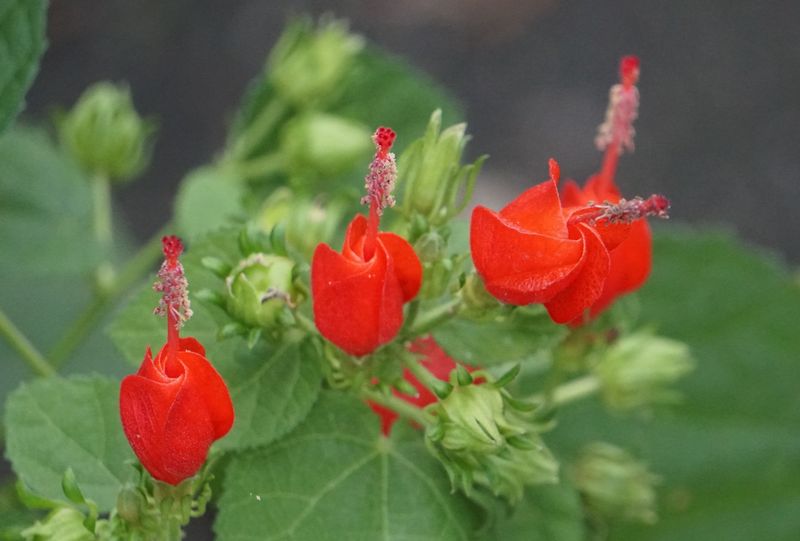
Unusual red flowers shaped like tiny turbans dangle from this shade-loving native that solves the problem of what to plant under trees.
Turk’s cap thrives in partial shade where many flowering plants struggle, producing blooms from summer through fall when shady gardens need color most.
Hummingbirds recognize these distinctive flowers from far away and visit repeatedly throughout the day. Growing three to five feet tall, this bushy perennial fills spaces under oak trees or along shaded fence lines beautifully.
The heart-shaped leaves create a lush, tropical appearance that softens harsh landscape lines. Small edible fruits follow the flowers, attracting birds who spread seeds naturally throughout your garden.
Turk’s cap often self-sows, giving you free plants that pop up in unexpected places. Texas gardeners love how Turk’s cap handles humidity and heat while providing consistent color in difficult shady spots.
The plant may freeze back during hard winters, but it returns reliably from the roots when spring arrives. Garden centers across Texas have noticed increased demand as more people discover this versatile native.
Whether you have deep shade in Houston or dappled light in Austin, Turk’s cap adapts and performs beautifully. This reliable bloomer has become a go-to solution for Texas gardeners seeking color in challenging shady locations.
5. Mexican Feathergrass
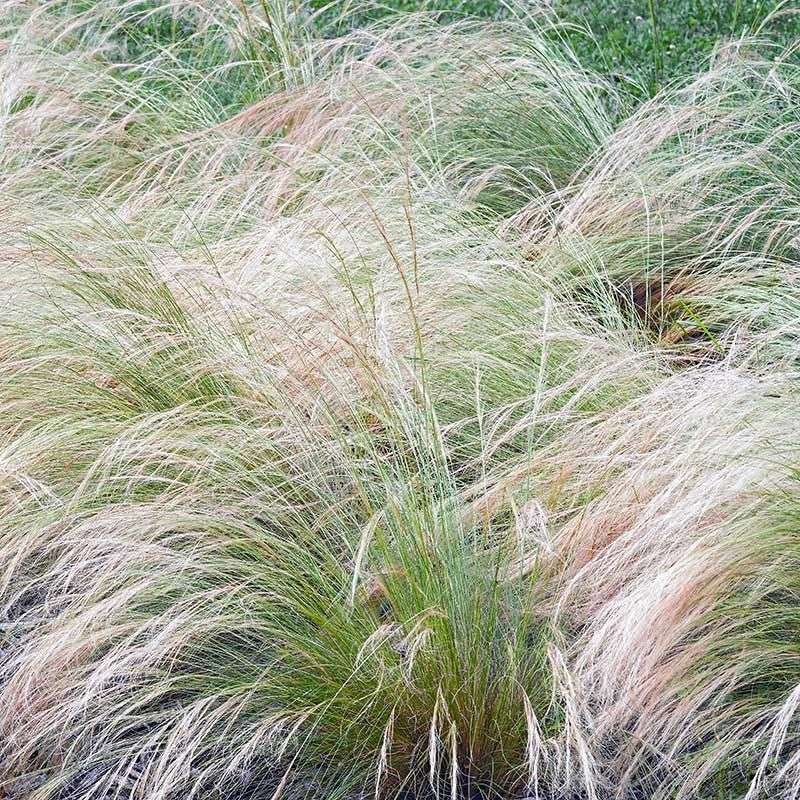
Graceful blonde plumes sway in the slightest breeze, creating movement and softness in Texas landscapes. Mexican feathergrass brings an elegant, flowing quality to gardens that contrasts beautifully with rigid, structural plants.
The fine-textured foliage forms airy clumps about two feet tall and wide, with flower stalks rising several inches above the leaves. This ornamental grass has become incredibly popular because it looks delicate but proves incredibly tough.
Drought tolerance ranks among the top reasons Texas gardeners choose Mexican feathergrass for their landscapes. Once established, this grass survives on rainfall alone in most parts of the state.
The feathery seed heads start green, then fade to a beautiful tan color that catches afternoon sunlight. Even in winter, the dried foliage provides visual interest and habitat for beneficial insects.
Planting Mexican feathergrass in groups creates a stunning wave effect when wind moves through the garden. Individual plants work well as accents among boulders or paired with bold-leaved succulents.
Garden centers report that this grass sells quickly because customers love its low-maintenance nature and year-round appeal.
From Fort Worth to Corpus Christi, Mexican feathergrass has earned a reputation as one of the most versatile and beautiful ornamental grasses for Texas conditions. Its ability to thrive with minimal care makes it perfect for busy gardeners.
6. Dwarf Ruellia
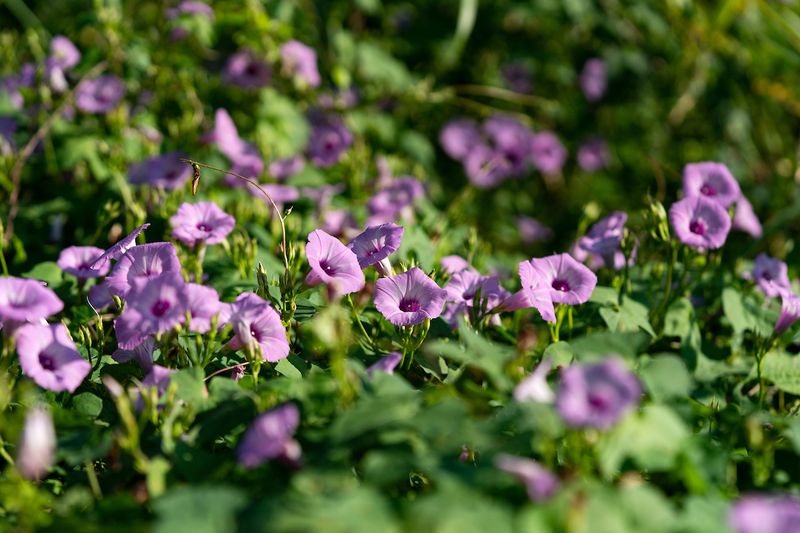
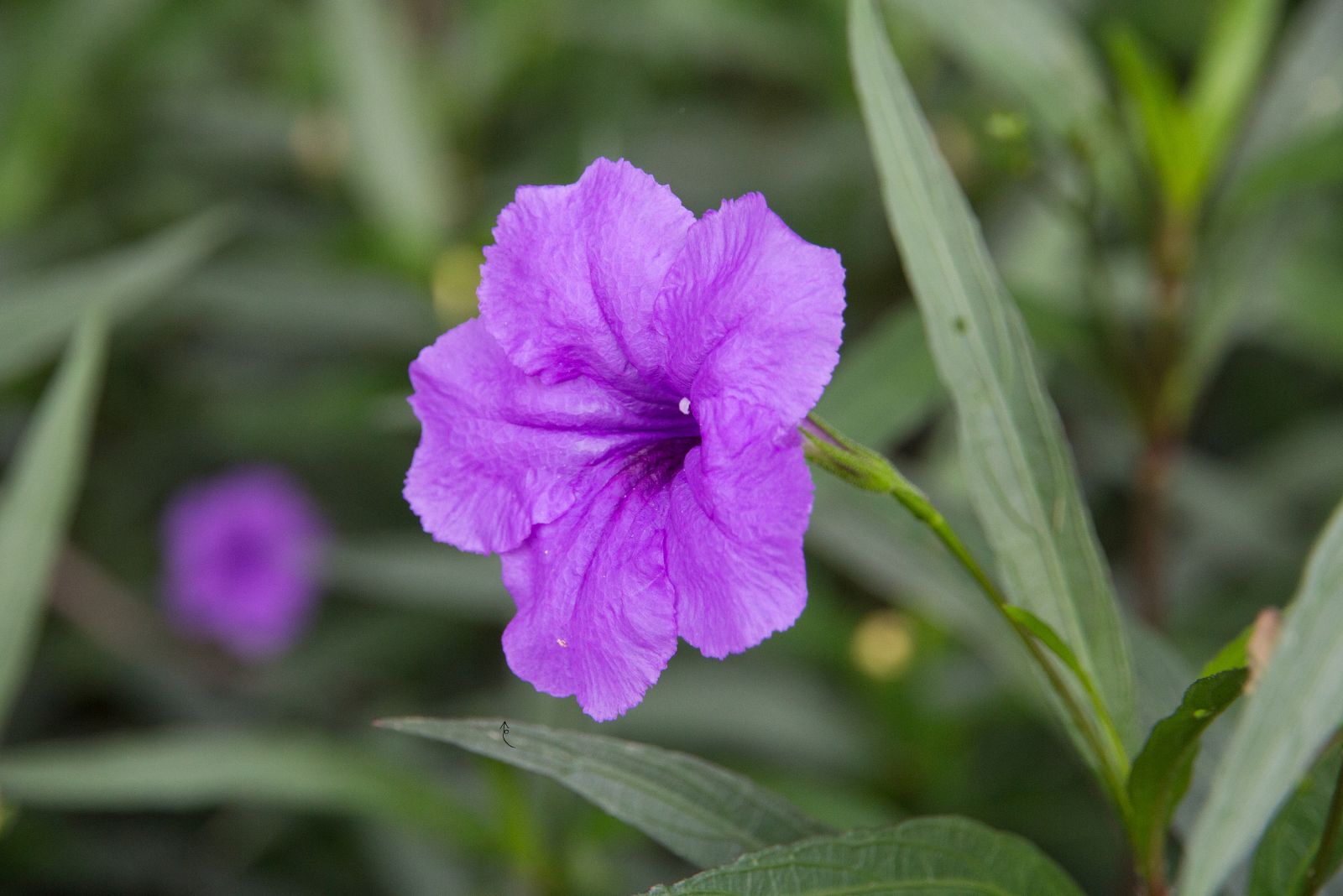
Purple flowers resembling small petunias appear daily on this compact groundcover that Texas gardeners use to solve bare-ground problems. Dwarf ruellia stays low, forming a dense mat only six to twelve inches tall that suppresses weeds naturally.
Each flower lasts just one day, but new blooms open continuously from spring through fall, creating constant color. Native to the southwestern United States, this plant understands Texas weather perfectly.
Spreading slowly but steadily, dwarf ruellia fills spaces between stepping stones, edges beds, or covers slopes that resist other plants. The narrow green leaves create a fine texture that shows off the bright purple blooms.
Unlike its taller cousin, this dwarf version stays compact and well-behaved without becoming invasive. Butterflies visit the flowers regularly, adding another layer of interest to your landscape.
Garden centers across Texas have seen demand for dwarf ruellia skyrocket as water conservation becomes increasingly important. This plant needs minimal irrigation once established and actually prefers lean soil over heavily fertilized conditions.
From Houston to Lubbock, landscapers and homeowners alike appreciate how this groundcover performs in full sun or partial shade.
The combination of beautiful flowers, low maintenance, and excellent heat tolerance explains why dwarf ruellia consistently ranks among the top-selling plants at Texas nurseries. It delivers exactly what Texas gardeners need most.
7. Flame Acanthus
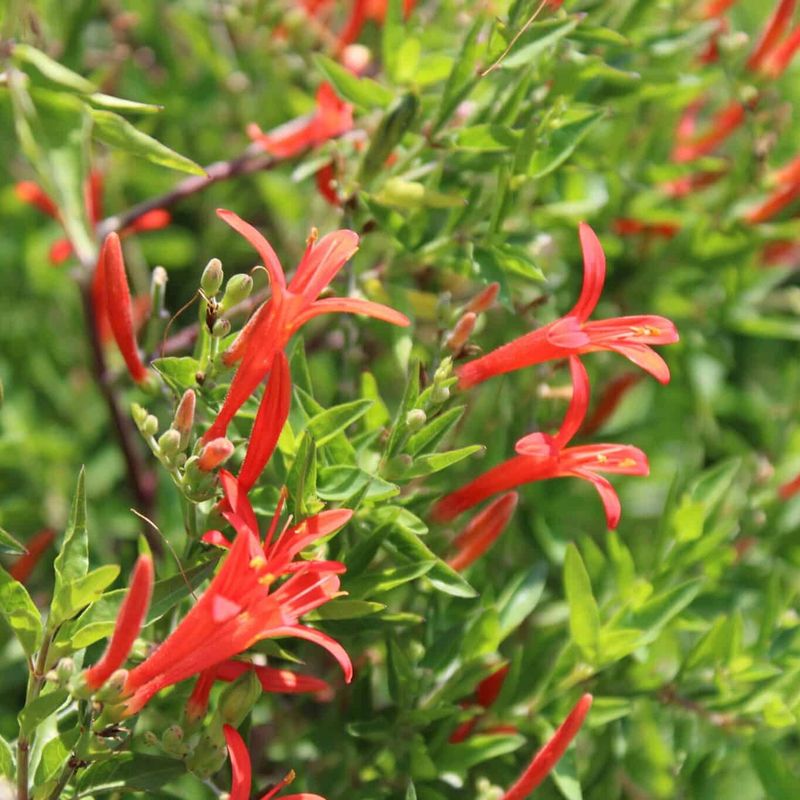
Brilliant orange-red tubular flowers act like magnets for hummingbirds, making flame acanthus essential for Texas wildlife gardens.
This native perennial blooms heavily in fall when hummingbirds migrate through the state, providing crucial nectar during their long journey.
The flowers continue opening even after light frosts, extending the garden season when most other plants have finished blooming. Watching hummingbirds dart among the flame-colored blooms never gets old.
Growing two to four feet tall, flame acanthus creates substantial presence without overwhelming smaller gardens. The dark green leaves provide a perfect backdrop for the vibrant flowers that seem to glow in late afternoon light.
This plant handles both sun and partial shade, making it adaptable to various garden locations. After cold winters, it may freeze to the ground but returns vigorously from the roots when temperatures warm.
Texas gardeners love how flame acanthus requires almost no maintenance once established in the landscape. Occasional deep watering during extreme drought helps, but this tough native typically survives on natural rainfall.
Garden centers report strong sales year after year because satisfied customers spread the word about this reliable performer. Whether you garden in San Marcos or Waco, flame acanthus delivers consistent results and attracts fascinating wildlife.
Its combination of beauty, toughness, and wildlife value makes it a smart choice for any Texas landscape.
8. Gulf Coast Muhly
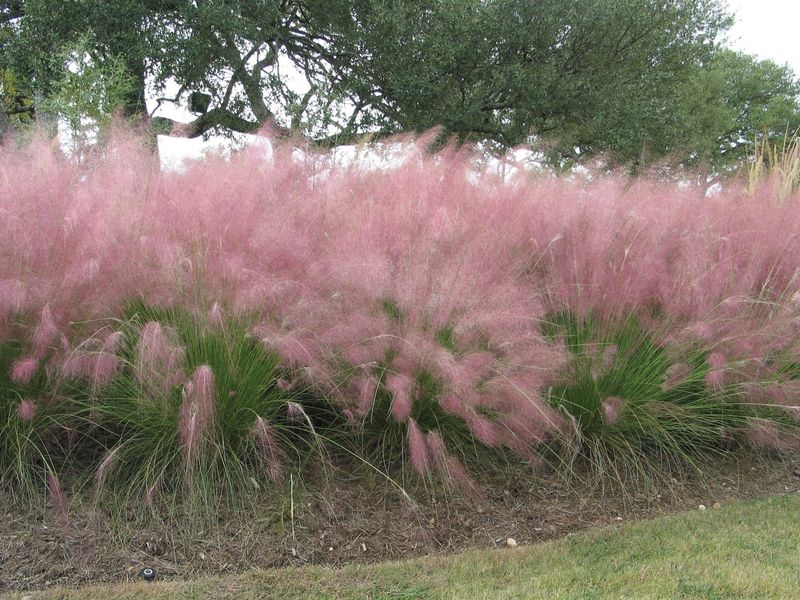
Clouds of pink-purple plumes emerge in fall, transforming this ornamental grass into one of the most spectacular sights in Texas gardens.
Gulf Coast muhly creates drama when most gardens start looking tired, producing airy flower stalks that seem to float above the green foliage.
The display lasts for weeks, with the pink color intensifying as autumn progresses. Native to coastal areas, this grass adapts surprisingly well throughout Texas.
Forming neat clumps about three feet tall and wide, Gulf Coast muhly fits into gardens of any size. The fine-textured foliage stays attractive year-round, providing structure even when not in bloom.
Morning dew or light rain makes the pink plumes sparkle, creating magical moments in the garden. This grass tolerates heat, humidity, and occasional flooding better than many other ornamental grasses.
Planting Gulf Coast muhly in groups creates breathtaking sweeps of pink color that photograph beautifully. Single specimens work well as focal points or in containers for patio displays.
Garden centers across Texas struggle to keep this grass in stock during fall when customers see it blooming and want it immediately. From Galveston to Austin, muhly grass has become a must-have plant for anyone wanting spectacular fall color.
Its easy-care nature and stunning appearance explain why it ranks among the top-selling grasses in the state.
9. Autumn Sage
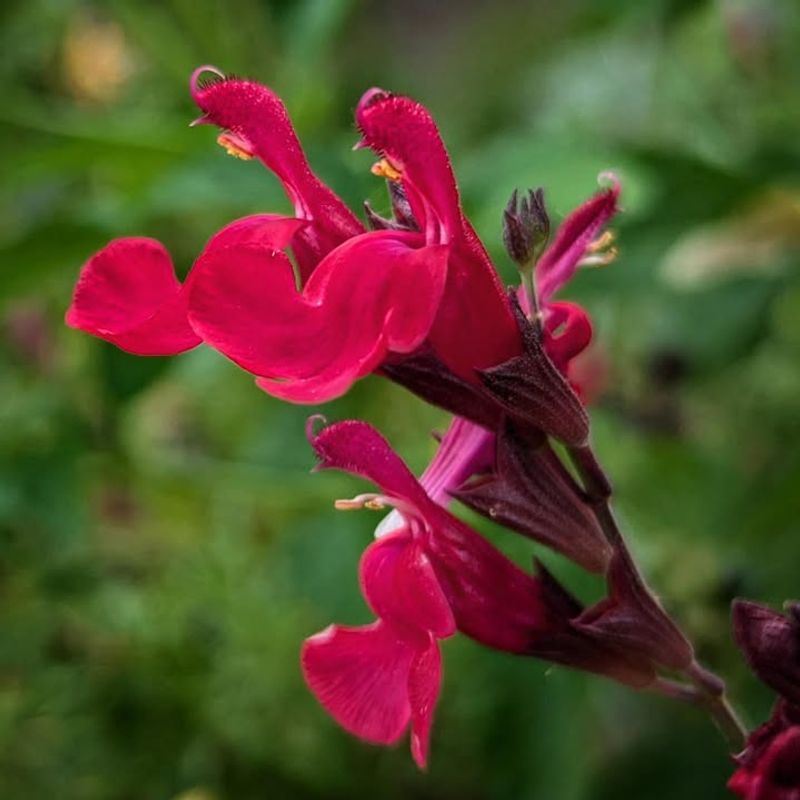
Hummingbirds zoom in from seemingly nowhere when autumn sage blooms, creating action-packed scenes in Texas gardens. This reliable native salvia produces tubular flowers in shades of red, pink, white, or coral from spring through fall.
The long blooming period makes autumn sage incredibly valuable for maintaining continuous garden color. Bees and butterflies also visit frequently, making this plant a pollinator paradise.
Compact varieties stay around two feet tall, while larger selections reach three to four feet, giving gardeners options for different landscape situations. The small, aromatic leaves release a pleasant scent when brushed or crushed.
Autumn sage handles full sun and reflected heat from walls or pavement without wilting or fading. Regular light trimming after bloom cycles encourages bushier growth and more flowers.
Texas gardeners appreciate how autumn sage thrives with minimal water once established in the landscape. This drought-tolerant native actually prefers lean soil and can suffer from overwatering or excessive fertilization.
Garden centers report that autumn sage remains consistently popular because it combines beauty with toughness so successfully.
Whether you choose red for maximum hummingbird attraction or softer colors for gentler garden palettes, autumn sage delivers reliable performance.
From El Paso to Beaumont, this versatile native has proven itself worthy of its place among Texas garden favorites. Its ability to bloom through heat waves sets it apart from less adapted plants.
10. Pride Of Barbados
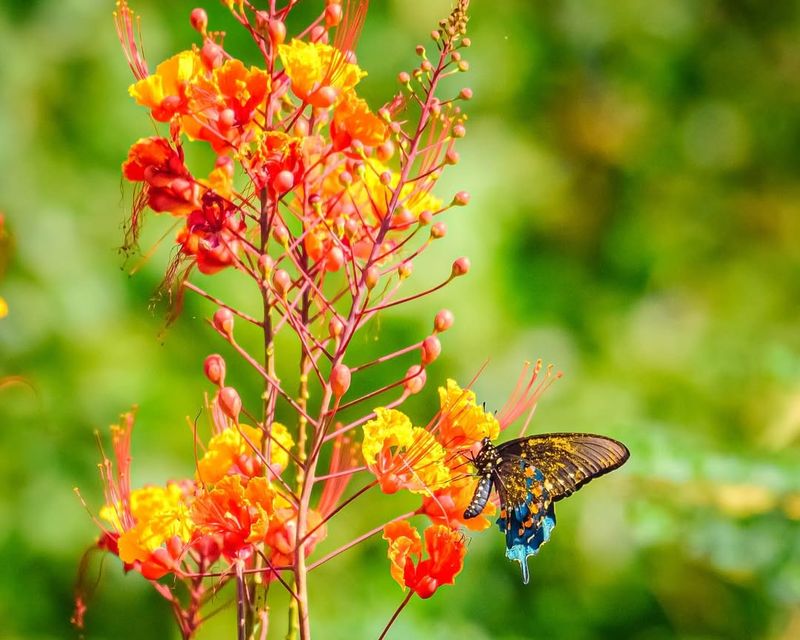
Tropical-looking flowers in shades of orange, red, and yellow create exotic drama in Texas gardens without requiring tropical care.
Pride of Barbados blooms prolifically during the hottest months when many plants struggle, producing clusters of showy flowers that seem impossibly vibrant.
The delicate, fernlike foliage adds textural interest even between bloom cycles. Long red stamens extend beyond the petals, giving flowers an extra decorative element that catches everyone’s attention.
Growing six to ten feet tall in favorable conditions, this large shrub makes a bold statement in landscape beds or as a specimen plant. Butterflies, especially swallowtails, visit the flowers constantly throughout summer and fall.
Seed pods develop after flowering, adding another layer of interest with their distinctive shape. In South Texas, pride of Barbados may stay evergreen, while in colder areas it freezes back but returns from roots.
Garden centers across Texas have noticed increased interest in pride of Barbados as gardeners seek heat-tolerant plants with serious visual impact. This plant needs full sun and good drainage but otherwise requires little attention once established.
From Houston to San Antonio, pride of Barbados has become a favorite for adding tropical flair to Texas landscapes.
The combination of spectacular flowers, attractive foliage, and excellent heat tolerance explains why this plant consistently ranks among top sellers at nurseries throughout the state.