These Container Plants Will Make Your Space More Appealing In Texas Homes
Want to give your Texas home an instant glow up without a big renovation? The secret might be sitting right on your porch, patio, or windowsill.
Container plants are one of the easiest ways to add color, charm, and personality to any space, whether you live in a cozy apartment or a spacious house. The right plant in the right pot can completely change the mood of a room or outdoor corner.
Texas homeowners love container gardening because it is flexible, stylish, and surprisingly low effort when you choose the right plants. You can move them around, refresh your look with the seasons, and create eye catching focal points without digging up your yard.
Ready to make your space feel more inviting and alive? Let’s explore the container plants that instantly boost appeal in Texas homes.
1. Coleus
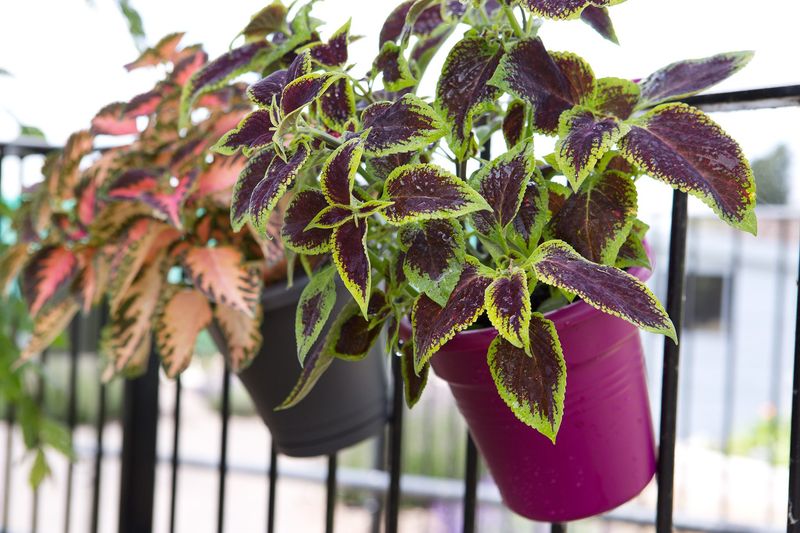
Coleus plants bring an explosion of color to shaded areas where many flowers struggle to bloom. Their leaves come in stunning combinations of red, purple, pink, yellow, and green that create living artwork in your containers.
Texas gardeners love coleus because it thrives in our humid summers and doesn’t mind the heat when planted in spots with morning sun and afternoon shade.
These plants grow quickly and fill out pots beautifully within weeks of planting. You can pinch back the stems regularly to encourage bushier growth and prevent them from getting leggy.
Coleus works wonderfully as a centerpiece plant or as a colorful filler around taller specimens.
Watering needs are moderate, making coleus forgiving if you occasionally forget to water. They prefer consistently moist soil but bounce back quickly from brief dry spells.
In Texas, coleus performs best during spring and fall, though they can survive summer with proper shade and water.
One major advantage is their versatility in container arrangements. Mix different coleus varieties together for a rainbow effect, or pair them with trailing plants like sweet potato vine.
They’re also budget-friendly since you can easily propagate new plants from cuttings, allowing you to expand your collection without spending extra money.
2. Succulent
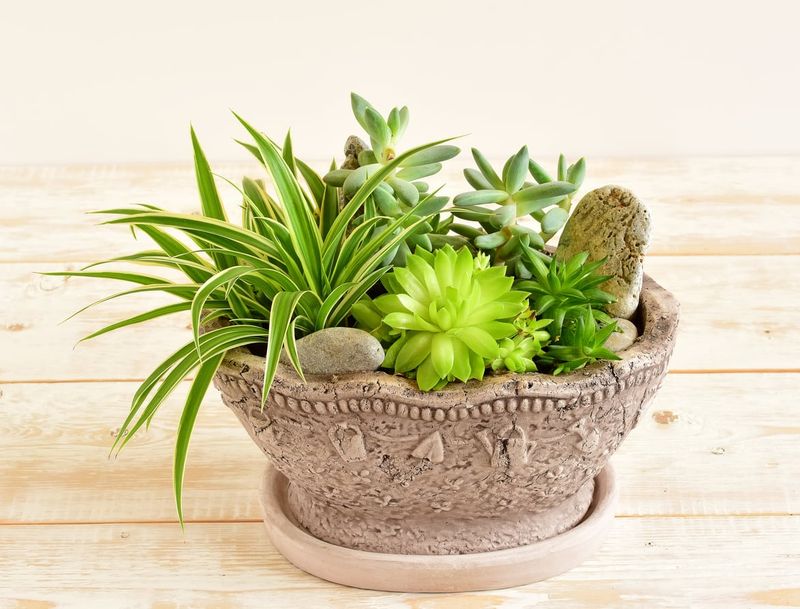
Succulents are perfect for busy Texas homeowners who want beautiful plants without constant maintenance. Their thick, water-storing leaves allow them to survive weeks without watering, making them ideal for hot Texas summers.
These plants come in incredible varieties, from rosette-shaped echeveria to trailing string of pearls, offering endless design possibilities.
Most succulents love full sun, which Texas has in abundance. Place containers on south-facing patios or windowsills where they’ll receive at least six hours of direct sunlight daily.
The intense Texas sun brings out the best colors in many varieties, turning them shades of pink, purple, and red.
Container choice matters with succulents since they hate sitting in soggy soil. Use pots with drainage holes and fill them with cactus-specific potting mix that drains quickly.
Terracotta pots work exceptionally well because they allow excess moisture to evaporate through the sides.
Winter protection becomes necessary when temperatures drop below freezing in North Texas. Simply move containers to a covered porch or bring them indoors temporarily.
Your Texas Garden Changes Every Week. Your Plan Should Too.
Gardening in Texas changes quickly throughout the season. Every Friday you’ll receive a simple weekly plan showing exactly what to plant, prune, fertilize, harvest, and protect so you never miss the right timing.
Succulents also make fantastic indoor plants year-round, thriving on sunny windowsills where they add sculptural interest to your decor while requiring minimal care and attention from you.
3. Begonias
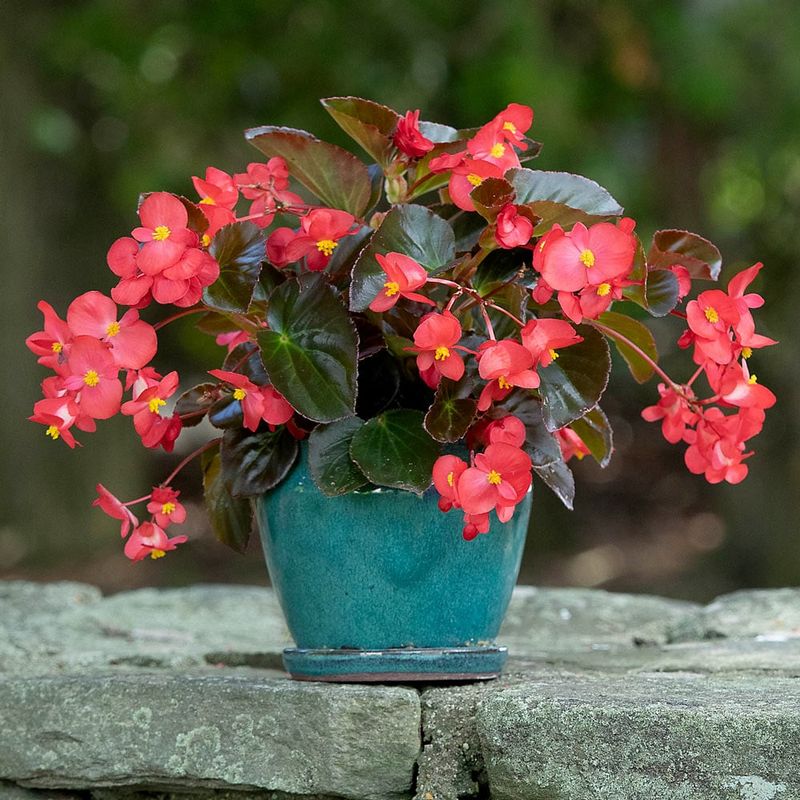
Begonias deliver continuous blooms throughout the growing season, making them workhorses in Texas container gardens. Their flowers come in shades of red, pink, white, and coral, creating eye-catching displays from spring until the first frost.
Both their blooms and foliage contribute to their appeal, with some varieties featuring stunning leaf patterns.
Shade-loving begonias solve the problem of what to grow in those tricky spots under eaves or on north-facing porches. They actually prefer protection from harsh afternoon sun, which can scorch their delicate petals.
This makes them perfect companions for Texas homeowners with covered outdoor living spaces.
Wax begonias are particularly popular in Texas because they tolerate more sun than other types and handle humidity well.
Rex begonias offer incredible foliage in silver, burgundy, and green patterns, though they’re more sensitive to direct sunlight. Tuberous begonias produce the largest flowers but need more careful watering.
Keep soil consistently moist but never waterlogged, as begonias are susceptible to root rot in overly wet conditions. Fertilize every two weeks during active growth to maintain their prolific blooming.
Deadheading spent flowers isn’t necessary since begonias are self-cleaning, dropping old blooms on their own and continuously producing fresh flowers to replace them.
4. Canna Lily
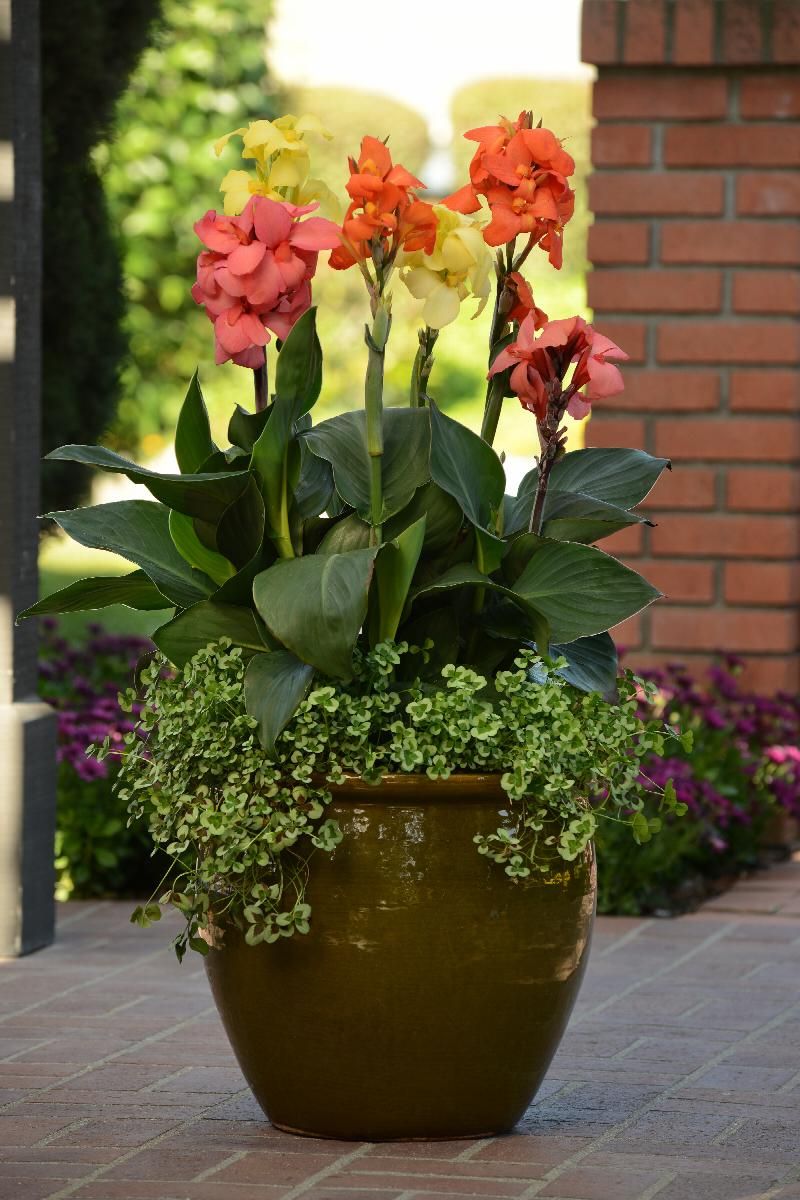
Canna lilies bring a tropical feel to Texas landscapes with their bold foliage and dramatic flower spikes. These plants grow tall and make excellent thriller plants in large container arrangements.
Their paddle-shaped leaves come in green, bronze, or striped varieties, while flowers bloom in shades of red, orange, yellow, or pink.
Heat doesn’t bother cannas at all. They actually thrive in the scorching Texas summer sun that wilts many other plants.
This makes them reliable performers from June through September when you need color most. Plant them in the largest containers you can manage since cannas develop substantial root systems.
Water requirements are higher than many container plants, especially during peak summer heat. Check soil moisture daily and water deeply when the top inch feels dry.
Cannas appreciate fertilizer every few weeks to support their rapid growth and heavy blooming.
In South Texas, cannas can stay in containers year-round with occasional trimming of frost-damaged foliage. North Texas gardeners should either bring containers into a garage during winter or dig up the rhizomes for storage.
Their rhizomes multiply quickly, giving you extras to plant in new containers or share with neighbors each spring when you divide them.
5. Dracaena
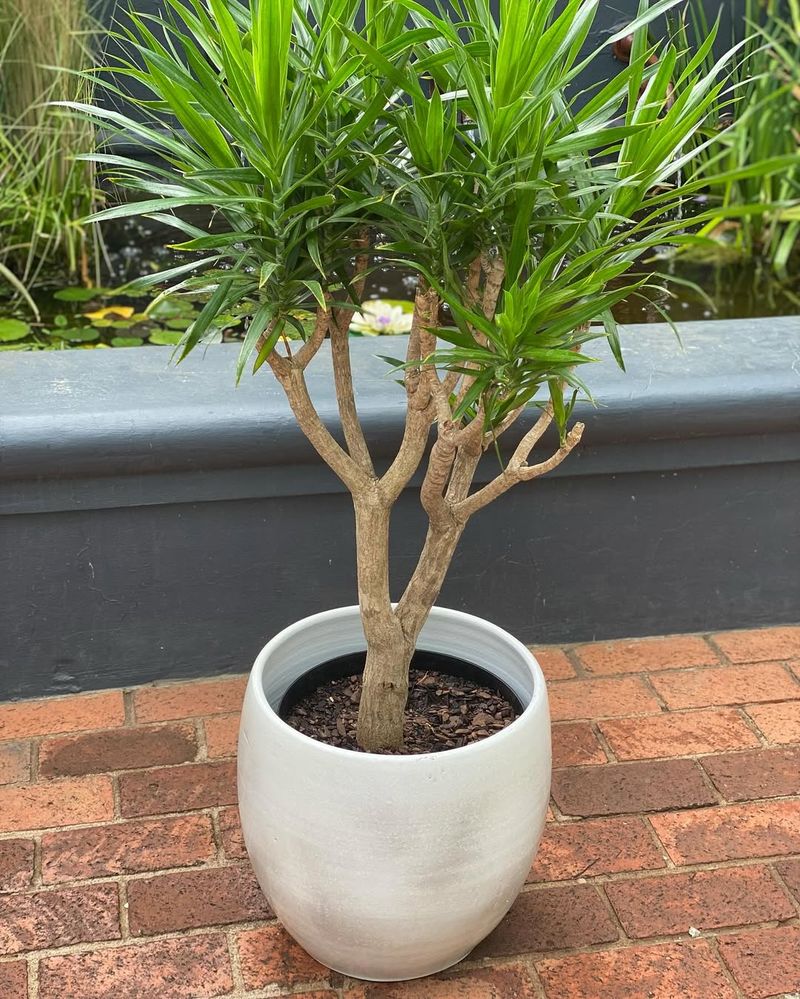
Dracaena plants offer architectural interest with their spiky, sword-like foliage that adds vertical drama to container displays. These tropical plants adapt remarkably well to both indoor and outdoor settings in Texas homes.
Their striped or solid leaves in combinations of green, yellow, and red create year-round visual appeal without requiring flowers.
Outdoor containers with dracaena work beautifully on covered patios where they receive bright indirect light. They tolerate Texas heat well but prefer protection from intense midday sun.
During winter, simply move containers indoors where they’ll continue thriving as houseplants until spring returns.
Low maintenance makes dracaena ideal for beginners or anyone with a busy schedule. They’re forgiving about watering, tolerating some neglect better than overwatering.
Allow the top few inches of soil to dry between waterings, then water thoroughly until excess drains from the bottom.
Different dracaena varieties offer distinct looks for your space. Dracaena marginata features thin leaves on woody stems for a palm-like appearance.
Dracaena fragrans has wider leaves with yellow stripes down the center. Dracaena reflexa grows more compact and bushy, perfect for smaller containers or tabletop displays in your home or office space.
6. Fountain Grass
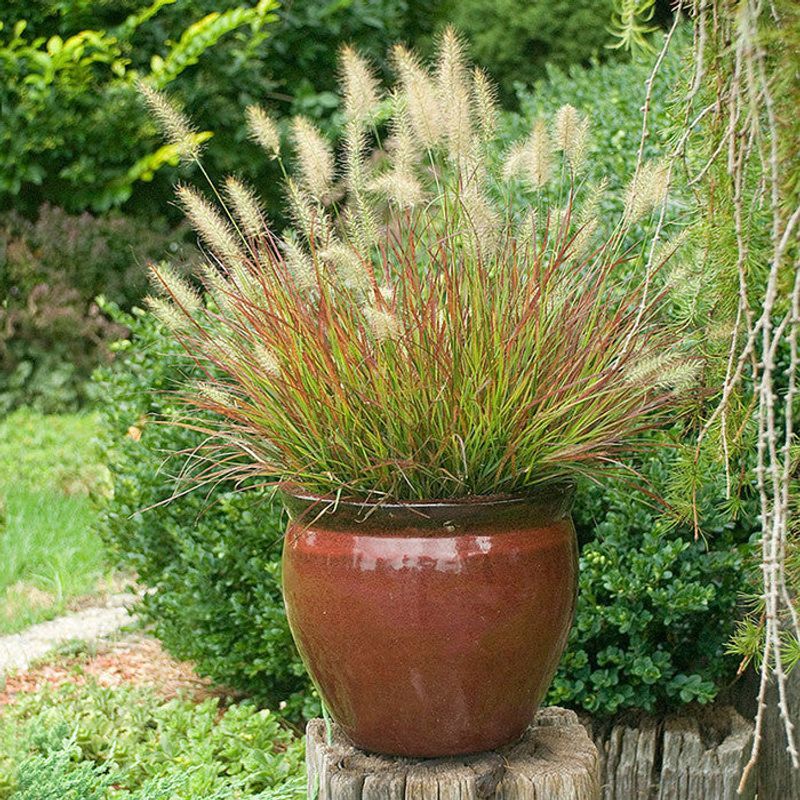
Fountain grass adds movement and texture that contrasts beautifully with flowering plants in mixed containers.
Its arching blades sway gracefully in the breeze, creating a calming effect on patios and decks. The feathery plumes that appear in summer add soft, fuzzy interest that lasts for months.
This grass loves full sun and handles Texas heat without complaint. It’s drought-tolerant once established, though container plants need more frequent watering than in-ground specimens.
Purple fountain grass varieties offer burgundy foliage that intensifies in full sun, providing rich color even when not blooming.
Use fountain grass as a thriller in large container combinations, or plant it alone in statement pots flanking entryways.
Its rounded, fountain-like shape naturally draws the eye and softens hard architectural lines. The grass grows quickly, filling containers and reaching mature size within a single season.
Trimming is minimal compared to many ornamental grasses. Simply cut back dry foliage in late winter before new growth emerges in spring.
In South Texas, fountain grass may remain semi-evergreen through mild winters. North Texas gardeners can treat it as an annual or move containers to protected areas during freezing weather to preserve the plants for another year.
7. Hibiscus
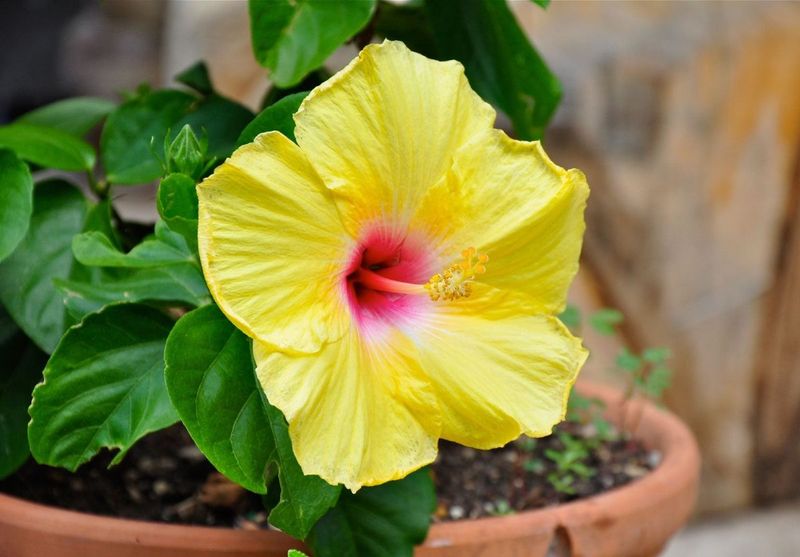
Few plants deliver the wow factor of hibiscus with their dinner-plate-sized blooms in jewel tones. These showstoppers produce flowers that can reach six inches across in colors ranging from classic red to peachy orange, sunny yellow, and soft pink.
Each bloom lasts only a day, but plants produce so many buds that you’ll have fresh flowers opening constantly.
Tropical hibiscus thrives in Texas heat and humidity, making it a natural choice for container gardens. Place pots in locations receiving at least six hours of direct sunlight for maximum blooming.
They’re heavy feeders and drinkers, requiring regular fertilizer and daily watering during hot months.
Container size matters significantly with hibiscus since they develop extensive root systems. Choose pots at least 14 inches in diameter for mature plants.
Good drainage is essential because soggy roots cause leaf yellowing and bud drop, common problems when containers lack proper drainage holes.
Overwintering depends on your Texas location and hibiscus type. Tropical varieties must come indoors before frost, where they’ll continue blooming near sunny windows.
Hardy hibiscus varieties can stay outdoors year-round in containers, though they’ll go dormant in winter and resprout from roots each spring with fresh vigor.
8. Petunia
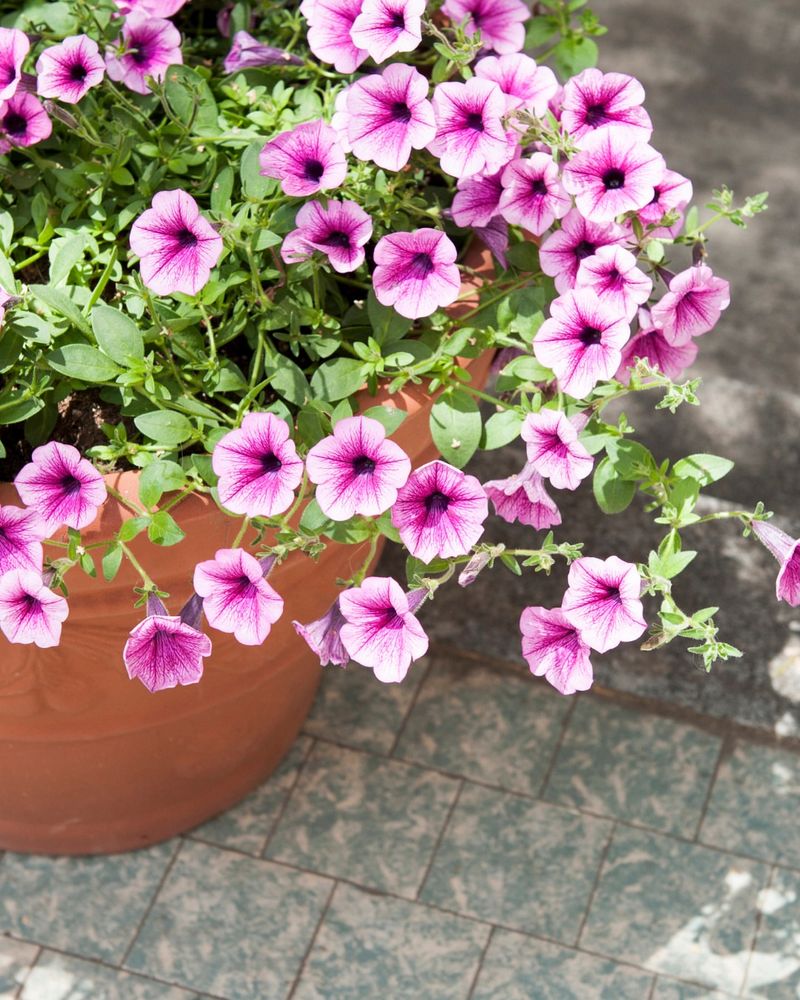
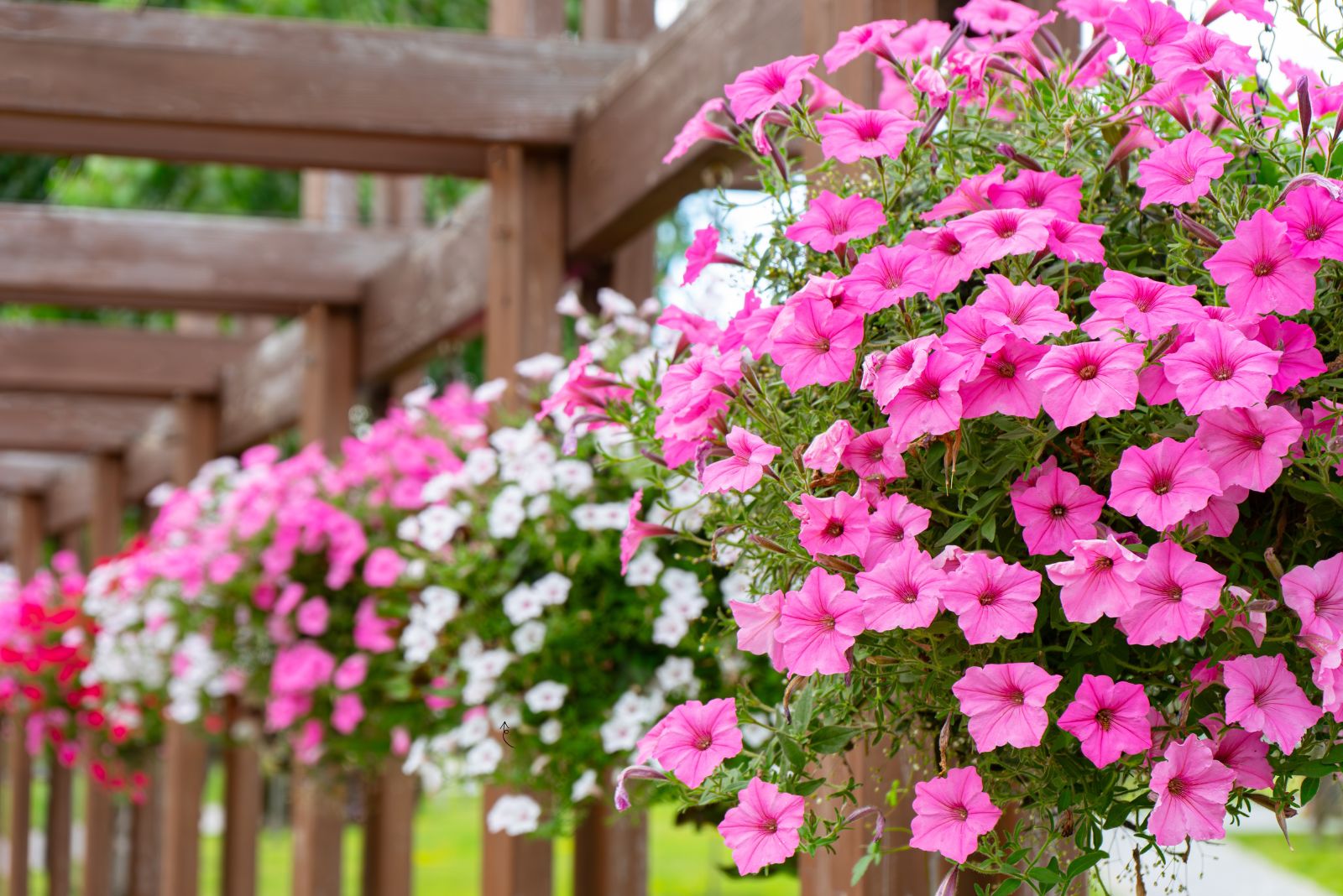
Petunias remain Texas favorites for good reason. They bloom nonstop from spring through fall, covering themselves in trumpet-shaped flowers that come in virtually every color imaginable.
Wave petunias and other spreading varieties cascade beautifully over container edges, creating waterfall effects that soften hard surfaces.
Modern petunia varieties handle Texas weather better than older types. Look for heat-tolerant series that won’t stop blooming during July and August.
They need full sun for best performance, though they’ll tolerate light afternoon shade in the hottest parts of Texas.
Regular deadheading keeps petunias looking fresh and encourages more blooms, though some newer varieties are self-cleaning.
Fertilize weekly with diluted liquid fertilizer to support their heavy blooming habit. Petunias in containers dry out quickly, so check moisture levels daily during summer.
Combining different petunia colors in one container creates stunning displays. Try pairing purple with white for classic elegance, or mix hot pink with lime green foliage plants for bold impact.
Petunias also work wonderfully in hanging baskets where their trailing habit shines. Their flowers attract hummingbirds and butterflies, adding even more life and movement to your outdoor spaces throughout the growing season.
9. Geraniums
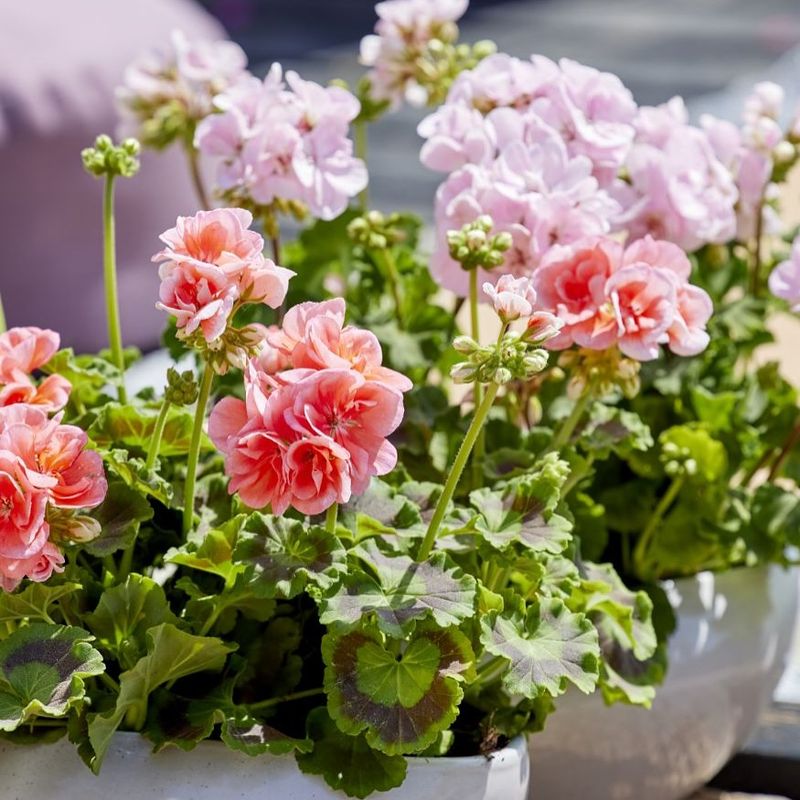
Geraniums bring old-fashioned charm to Texas container gardens with their clusters of cheerful blooms. These reliable performers produce round flower heads in shades of red, pink, salmon, white, and purple that stand up well to sun and heat.
Their rounded leaves sometimes feature darker zones or patterns that add interest even between bloom cycles.
Full sun suits geraniums perfectly, making them ideal for hot Texas patios and south-facing locations. They’re surprisingly drought-tolerant once established, though container plants perform best with regular watering.
Allow soil to dry slightly between waterings since geraniums prefer drier conditions than many flowering plants.
Zonal geraniums are the most common type, featuring upright growth and large flower clusters. Ivy geraniums trail gracefully, making them perfect for hanging baskets or tall containers.
Scented geraniums offer fragrant foliage in scents like rose, lemon, and mint, though their flowers are smaller and less showy.
Deadheading spent flower clusters keeps plants looking tidy and encourages new blooms to form. Geraniums are easy to overwinter indoors near bright windows, or you can take cuttings in fall to start fresh plants for spring.
Their long blooming season and minimal care requirements make them perfect choices for Texas homeowners wanting reliable color.