How To Create A Butterfly Garden In Texas Using These Native Plants
Imagine stepping into your Texas garden and seeing butterflies fluttering from bloom to bloom, filling the air with color and movement. Creating a butterfly garden is easier than you might think when you choose the right native plants.
These plants are naturally suited to Texas conditions, making them tougher, more reliable, and perfect for supporting local butterflies through every stage of life.
With a thoughtful mix of nectar rich flowers and host plants, you can turn an ordinary space into a lively habitat that attracts beautiful winged visitors all season long.
Many Texas gardeners love how a butterfly garden brings energy, color, and purpose to their outdoor space while remaining simple to maintain.
With the right plant choices and layout, your garden can become a vibrant haven that feels alive, colorful, and full of natural beauty throughout the growing season.
1. Tropical Milkweed
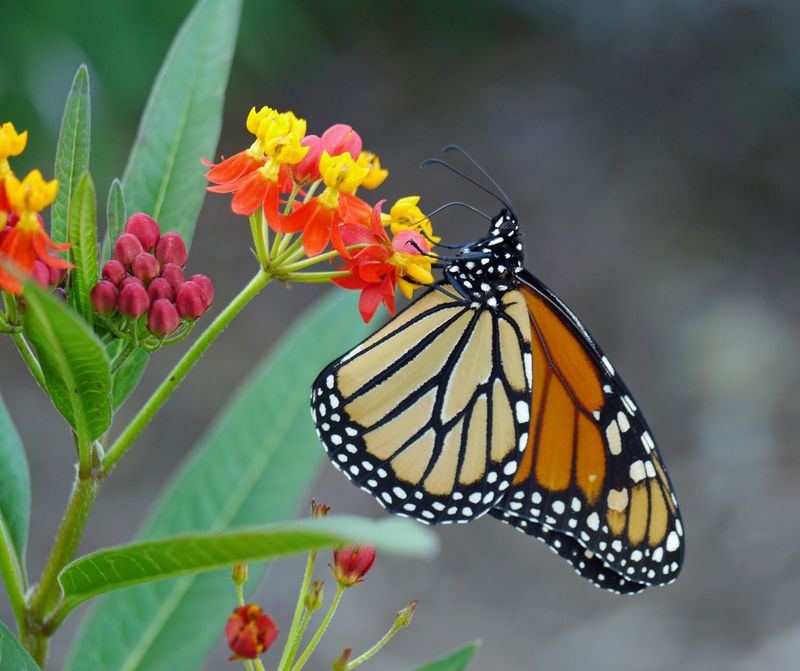
Monarch butterflies cannot survive without milkweed plants, making this species absolutely essential for your Texas butterfly garden. Tropical Milkweed produces clusters of brilliant orange and yellow flowers that bloom almost year-round in warmer parts of Texas.
The nectar feeds adult butterflies while the leaves serve as the only food source for Monarch caterpillars.
This plant grows between two and three feet tall and spreads easily in sunny locations with well-drained soil. Texas gardeners love how low-maintenance it is once established, requiring minimal watering during dry spells.
The vibrant flowers attract not just Monarchs but also Queen butterflies and various other pollinators throughout the growing season.
Plant Tropical Milkweed in groups of three or more for the best visual impact and to provide enough food for multiple caterpillars. Space them about 12 inches apart in areas that receive at least six hours of direct sunlight daily.
The plants can handle the intense Texas summer heat without wilting or requiring constant attention.
One important consideration for Texas gardeners is cutting back Tropical Milkweed in late fall to prevent it from disrupting Monarch migration patterns. Simply trim the plants down to about six inches above ground level in November.
This practice encourages the butterflies to continue their journey south rather than staying in one place too long.
The bright blooms also add stunning color to your landscape from spring through fall. Tropical Milkweed works wonderfully in container gardens too, making it perfect for patios or small spaces.
Watch for the distinctive black, yellow, and white striped caterpillars munching on the leaves throughout warm months.
2. Black-Eyed Susan
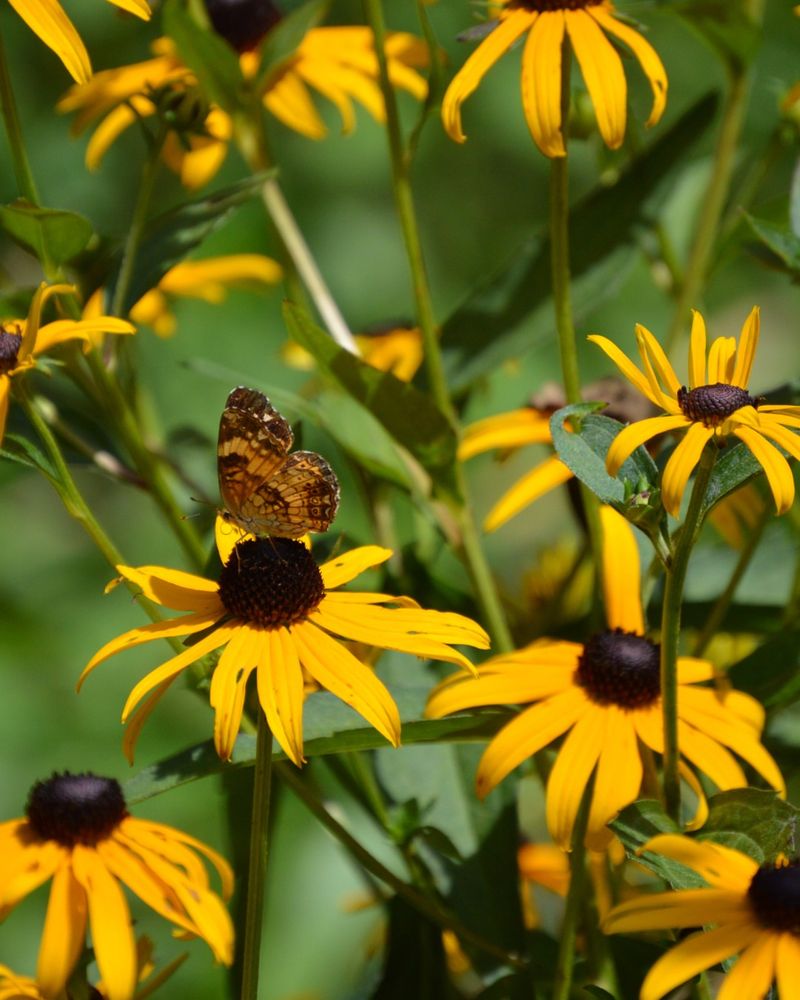
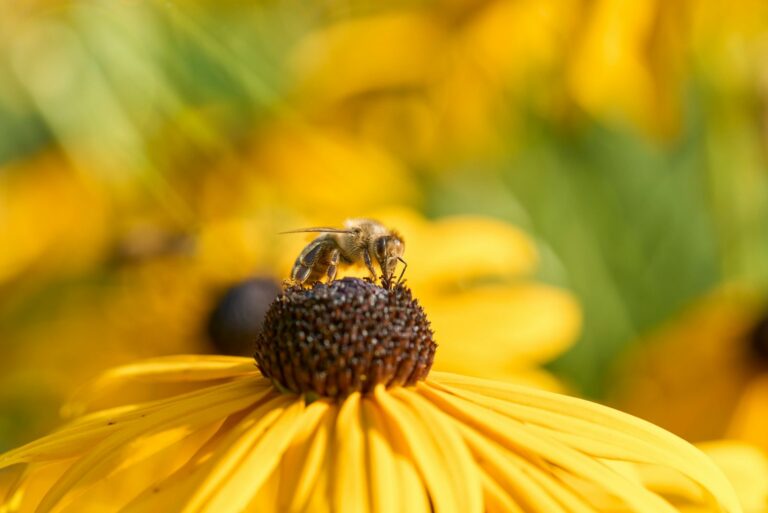
Golden petals surrounding a dark chocolate center make Black-Eyed Susans one of the most recognizable wildflowers across Texas. These cheerful flowers bloom from late spring through fall, providing consistent nectar sources when butterflies need them most.
Swallowtails, Painted Ladies, and Skippers regularly visit these bright yellow blooms throughout the day.
Black-Eyed Susans grow naturally in Texas meadows and prairies, which means they handle our climate perfectly without fussy care requirements. Plants typically reach two to three feet in height and spread to form attractive clumps over time.
The flowers last for weeks, even in the scorching summer heat that challenges many other garden plants.
Your Texas Garden Changes Every Week. Your Plan Should Too.
Gardening in Texas changes quickly throughout the season. Every Friday you’ll receive a simple weekly plan showing exactly what to plant, prune, fertilize, harvest, and protect so you never miss the right timing.
Starting these plants from seed is incredibly easy and budget-friendly for Texas gardeners creating larger butterfly gardens. Scatter seeds in fall or early spring in areas with full sun and average soil.
Within weeks, you will see seedlings emerge that grow quickly into flowering plants by their first summer.
The sturdy stems rarely need staking, and the plants tolerate drought conditions once their roots establish in the ground. Black-Eyed Susans also reseed themselves naturally, creating more plants each year without any effort on your part.
This self-seeding habit helps fill in bare spots and creates a naturalized look in your butterfly garden.
Beyond attracting butterflies, these flowers bring a prairie charm to any Texas landscape while requiring almost no maintenance. The blooms make excellent cut flowers for indoor arrangements that last over a week in vases.
Goldfinches also enjoy eating the seeds in fall, adding even more wildlife interest to your garden throughout the year.
3. Purple Coneflower
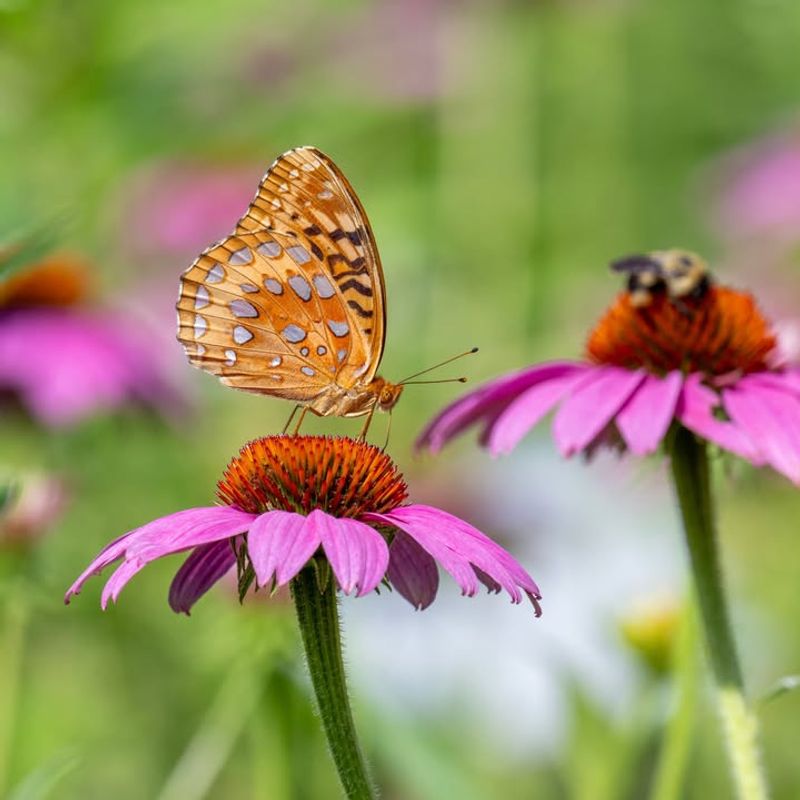
Few native plants match the butterfly-attracting power of Purple Coneflower, also called Echinacea, which grows beautifully throughout Texas. Large pink-purple petals surround a spiky orange center that rises above the petals like a cone.
Butterflies land on these cone-shaped centers to sip nectar while also getting a convenient resting spot between flights.
Purple Coneflowers bloom from early summer through fall, offering months of food for butterflies visiting your Texas garden. The plants grow two to four feet tall with sturdy stems that withstand strong winds common across the state.
Once established, these flowers need very little water and actually prefer the hot, dry conditions Texas summers bring.
Fritillaries, Swallowtails, and Monarchs all favor Purple Coneflower nectar, often spending several minutes on a single bloom. The flowers also attract beneficial bees and other pollinators that help your entire garden thrive.
Planting them in groups creates stunning visual displays while providing multiple feeding stations for busy butterflies.
Texas gardeners appreciate how Purple Coneflowers handle clay soil better than many other perennials, making them suitable for challenging garden spots. The plants spread slowly over time, forming larger clumps that produce more flowers each season.
Dividing established clumps every few years gives you free plants to expand your butterfly garden.
Deadheading spent blooms encourages more flowers, but leaving some seed heads provides winter food for goldfinches and other songbirds. The dried seed heads also add interesting texture to winter gardens when most other plants look dormant.
Purple Coneflowers rarely suffer from pest problems and can grow in the same spot for many years without declining.
4. Texas Lantana
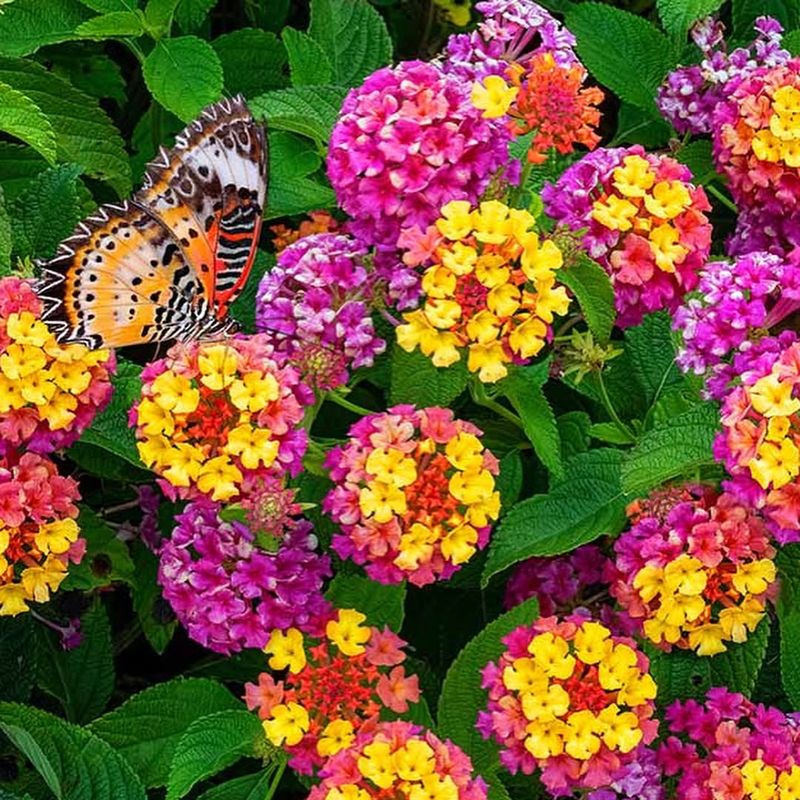
Butterflies absolutely adore Texas Lantana, which produces clusters of tiny flowers in brilliant combinations of orange, yellow, red, and pink. Each flower cluster contains multiple colors that change as the blooms age, creating a stunning multicolored effect.
This native shrub blooms continuously from spring until the first frost, providing reliable nectar throughout the entire butterfly season.
Texas Lantana grows as a small shrub reaching three to five feet tall and equally wide in most Texas landscapes. The plant thrives in full sun and actually performs better in poor soil than in rich, fertilized beds.
Once established, it survives on rainfall alone across most of Texas, making it perfect for water-conscious gardeners.
Sulfur butterflies, Swallowtails, Monarchs, and dozens of other species visit Lantana flowers daily during peak butterfly season. The continuous blooming habit means butterflies always find fresh nectar, even during the hottest weeks of summer.
Hummingbirds also frequent these flowers, adding another layer of wildlife enjoyment to your garden.
In South Texas, Lantana may stay evergreen through mild winters, while in North Texas it typically freezes back to the ground. New growth emerges quickly each spring from the roots, and plants reach full size by early summer.
Pruning in early spring encourages bushier growth and even more flower production throughout the season.
The aromatic leaves have a distinctive scent that some people love while others find too strong for planting near patios. Position Texas Lantana in sunny borders or as a colorful hedge that requires almost no maintenance once established.
The plants rarely need watering, fertilizing, or spraying, making them ideal for busy gardeners who want maximum butterfly activity with minimal effort.
5. Flame Acanthus
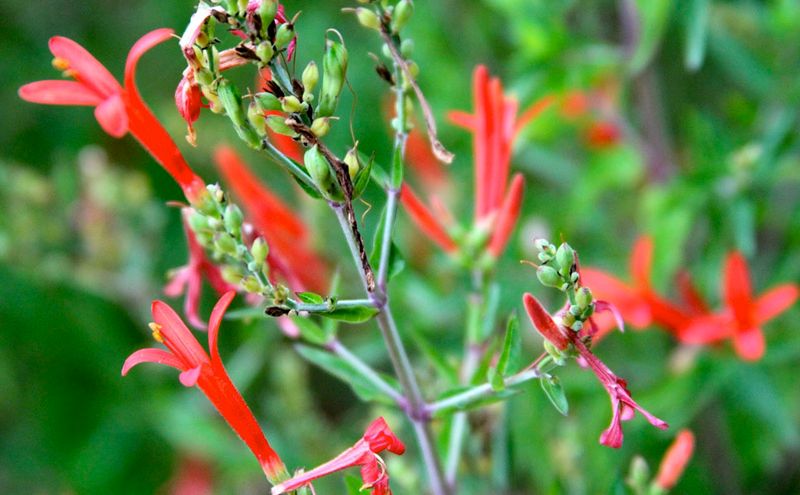
Brilliant orange-red tubular flowers stand upright on spikes above the foliage of Flame Acanthus, creating a dramatic focal point in any Texas butterfly garden.
This native perennial blooms from late spring through fall, with flowers appearing in waves throughout the growing season.
The tubular shape particularly attracts long-tongued butterflies like Swallowtails and Fritillaries that can reach the nectar inside.
Flame Acanthus grows naturally in South and Central Texas, handling extreme heat and drought with remarkable resilience. Plants typically reach three to four feet tall and spread slowly to form attractive clumps over several seasons.
The dark green leaves provide a perfect backdrop for the vibrant flowers that seem to glow in the Texas sunshine.
Hummingbirds compete with butterflies for the nectar-rich flowers, creating entertaining wildlife viewing opportunities throughout the day. The plant performs best in partial shade in far South Texas but tolerates full sun in other regions.
Once established, Flame Acanthus needs watering only during extended dry periods, making it exceptionally low-maintenance.
In areas with hard freezes, the plant dies back to the ground in winter but returns vigorously each spring. South Texas gardeners often enjoy evergreen foliage year-round with occasional flowers even during mild winter months.
The plant spreads by underground runners but does so slowly enough that it never becomes invasive or problematic.
Flame Acanthus works beautifully as a mid-border plant or grouped as a colorful hedge in larger butterfly gardens. The flowers attract butterflies from across your yard, serving as a beacon that draws them to other nearby plants.
Deer typically avoid eating this plant, which is a significant advantage for Texas gardeners dealing with wildlife browsing issues.
6. Gregg’s Mistflower
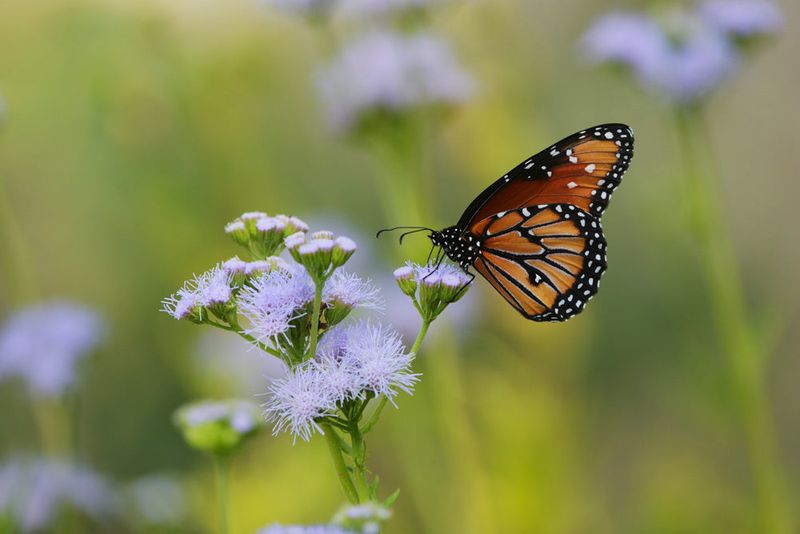
Clouds of fluffy blue-purple flowers cover Gregg’s Mistflower from late summer through fall, arriving just when butterflies need late-season nectar sources.
The fuzzy flower clusters contain dozens of tiny blooms packed together, creating landing pads that butterflies find irresistible.
This native perennial grows wild along Texas streams and adapts easily to garden conditions across the state.
Queen butterflies particularly favor Gregg’s Mistflower, often covering the plants in groups during peak blooming periods.
The flowers also attract Monarchs during their fall migration through Texas, providing crucial fuel for their long journey. Plants grow one to three feet tall depending on growing conditions and available moisture.
Gregg’s Mistflower tolerates more shade than most butterfly plants, making it perfect for gardens with afternoon shade or beneath tree canopies. The plants spread by underground stems to form attractive colonies that increase flower production each year.
In Texas gardens with adequate moisture, this spreading habit fills in areas quickly without becoming problematic.
Fall blooming makes Gregg’s Mistflower especially valuable since many other butterfly plants finish flowering by September. The blue-purple color also provides a refreshing contrast to the yellow and orange flowers dominating most late-season gardens.
Butterflies seem to locate these flowers from remarkable distances, suddenly appearing when the blooms open.
Cutting plants back by half in early summer encourages bushier growth and more flowers in fall when butterflies need them most. The foliage stays attractive throughout the growing season, even before flowers appear in late summer.
Gregg’s Mistflower grows well in containers for patios or small spaces where you want to enjoy watching butterflies up close during their fall migration.
7. Zexmenia
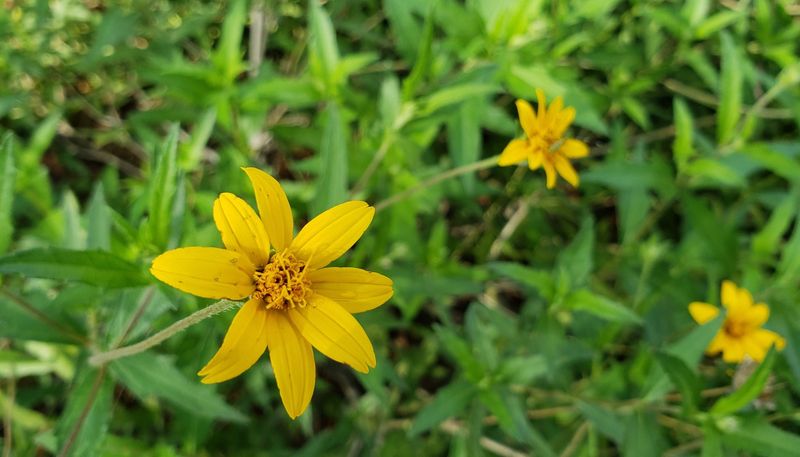
Cheerful yellow daisy-like flowers cover Zexmenia plants from spring through fall, creating a golden carpet that butterflies cannot resist.
This tough native groundcover grows naturally across Central and South Texas, thriving in conditions that challenge many other plants.
The flowers bloom in such abundance that plants often disappear beneath a blanket of bright yellow petals.
Zexmenia grows low to the ground, typically reaching only 12 to 18 inches tall while spreading several feet wide. The sprawling growth habit makes it perfect for filling large areas in butterfly gardens or cascading over walls and slopes.
Butterflies appreciate having flowers at various heights, and Zexmenia provides lower-level feeding stations that complement taller plants.
Skippers, Sulphurs, and various small butterflies regularly visit Zexmenia flowers throughout the day. The plants bloom most heavily in spring and fall but continue producing flowers even during hot summer months.
This reliable blooming habit ensures butterflies always find nectar available in your Texas garden.
Extreme drought tolerance makes Zexmenia ideal for Texas gardens where water conservation matters or in areas with poor soil.
The plants actually perform better with less water, developing stronger root systems and denser foliage. Once established, Zexmenia survives entirely on natural rainfall across most of Texas.
The plant spreads by underground stems and also reseeds itself, gradually filling in bare areas without any effort from gardeners. Some people consider it aggressive, but in butterfly gardens this spreading habit creates the large flower masses butterflies prefer.
Trimming back plants in midsummer encourages fresh growth and heavier fall blooming when migrating butterflies pass through Texas on their way south.