These Low-Maintenance Native Shrubs Are Perfect For Texas Front Yards In Spring
Want a front yard that looks fresh in spring without constant work or watering? Native Texas shrubs might be your new favorite landscaping secret.
These hardy plants are built for local soil, sun, and unpredictable weather, so they grow strong with very little fuss. Once established, many need less water, fewer chemicals, and minimal pruning, which saves time and effort.
In spring, they burst with color, texture, and life, giving your yard a clean, natural look that stands out in the neighborhood. Birds, butterflies, and pollinators are drawn to native plants, adding movement and charm right outside your door.
Whether you prefer a neat, tidy style or a softer, more natural feel, there is a native shrub that fits perfectly. With the right choices, you can enjoy a beautiful, low effort front yard that thrives through spring and beyond in the Texas climate.
1. Cenizo (Texas Sage)
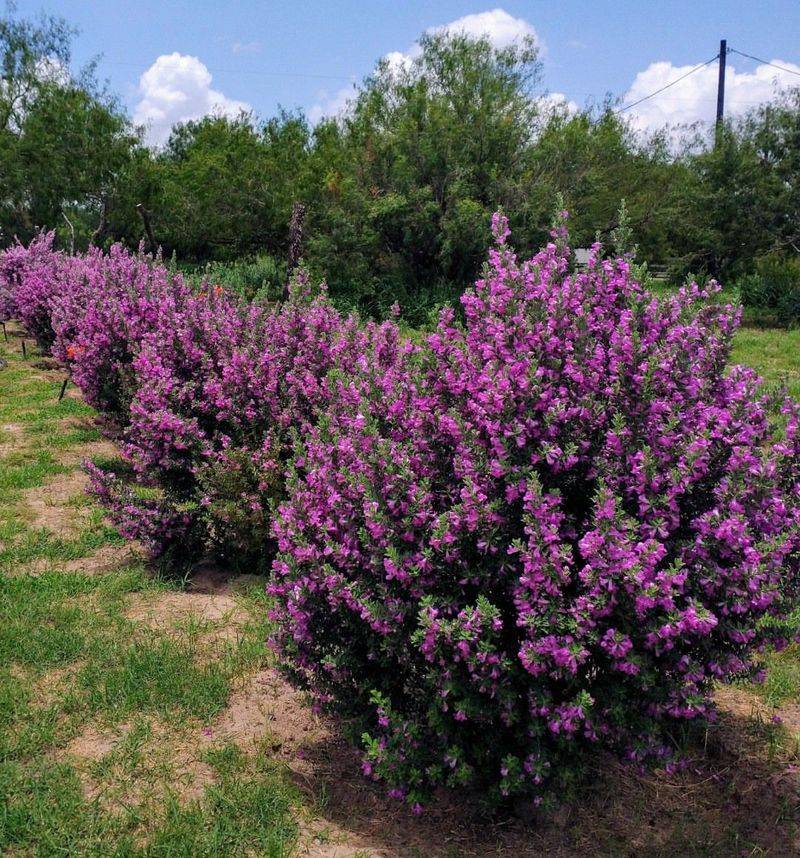
Silvery leaves that shimmer in the sunlight make Cenizo one of the most eye-catching shrubs you can plant in Texas.
This drought-tolerant beauty earned its nickname “barometer bush” because it bursts into bloom right after rain showers, covering itself in tubular purple, pink, or white flowers depending on the variety.
The soft, fuzzy foliage creates a lovely contrast against darker green plants and adds year-round interest even when flowers aren’t present.
Cenizo thrives in full sun and actually prefers the rocky, alkaline soil found throughout much of Texas. Once established, this shrub can survive on rainfall alone in most areas of the state, making it perfect for water-conscious homeowners.
It typically grows 4 to 6 feet tall and wide, creating a rounded shape that works beautifully as a foundation plant or informal hedge along your driveway.
Pruning requirements are minimal since Cenizo naturally maintains an attractive form. You can lightly shape it in early spring if needed, but avoid heavy trimming that removes too many flower buds.
Deer usually leave this plant alone, which is a huge bonus for Texas gardeners dealing with hungry wildlife.
The flowers attract hummingbirds and butterflies throughout the growing season. Plant several Cenizo shrubs together for maximum visual impact when they bloom simultaneously after a spring rain.
This native performs equally well in El Paso, San Antonio, Houston, and everywhere in between, adapting easily to different regions across Texas.
2. Flame Acanthus (Hummingbird Bush)
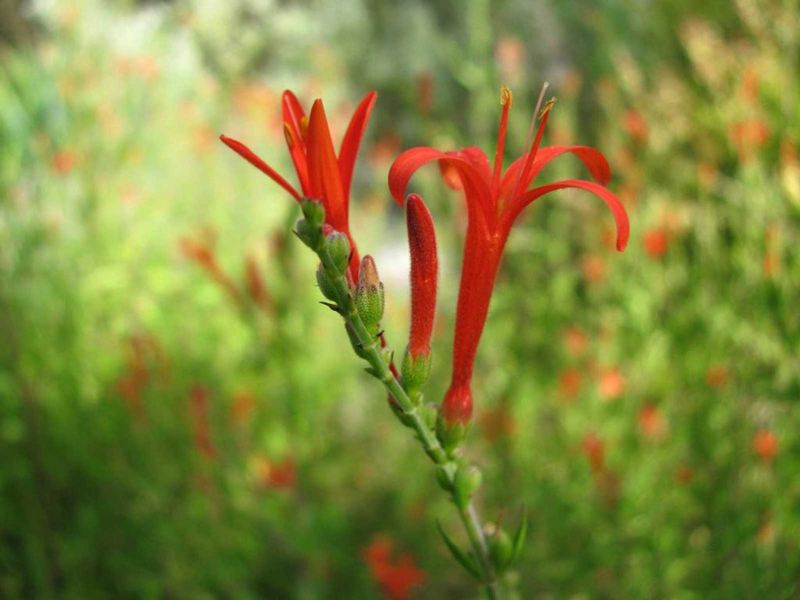
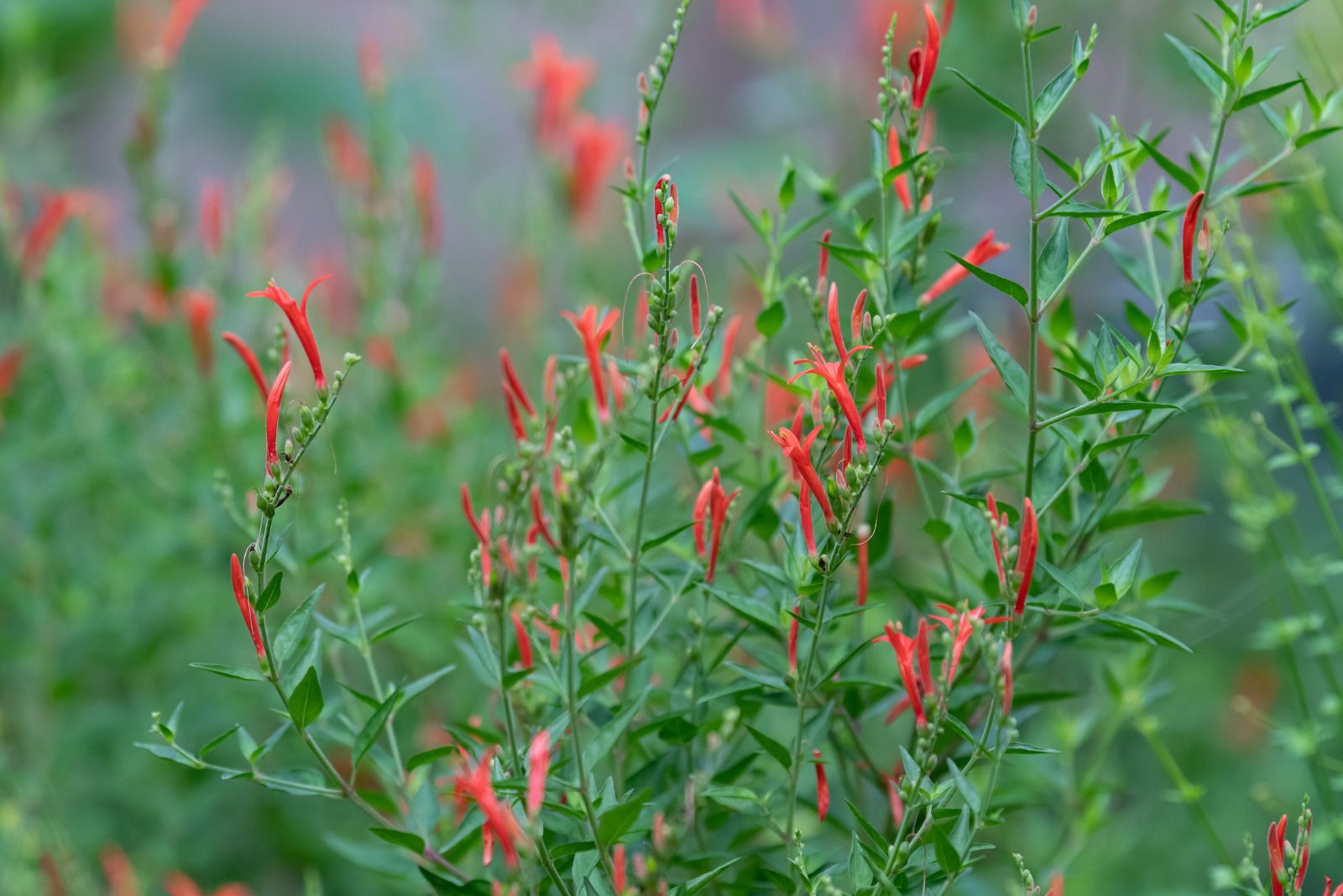
Bright orange-red blooms cover this showstopper from spring through fall, creating a beacon for hummingbirds in your front yard.
Flame Acanthus produces tubular flowers that these tiny birds absolutely cannot resist, and you’ll enjoy watching them dart around your landscape throughout the warmer months.
The dark green foliage provides a striking backdrop that makes the fiery blooms pop even more dramatically.
This Texas native handles our state’s heat and humidity without breaking a sweat. It grows 3 to 4 feet tall in most locations, though it can reach 5 feet in ideal conditions with regular moisture.
Flame Acanthus works wonderfully as a colorful accent near your front entrance or grouped in masses for a bold statement along your property line.
Your Texas Garden Changes Every Week. Your Plan Should Too.
Gardening in Texas changes quickly throughout the season. Every Friday you’ll receive a simple weekly plan showing exactly what to plant, prune, fertilize, harvest, and protect so you never miss the right timing.
Cold weather causes the stems to freeze back in winter across most of Texas, but the roots survive and send up fresh growth each spring. Simply cut away the old stems in late winter before new shoots emerge.
This annual trim keeps the plant looking tidy and encourages bushier growth with more flowering stems.
Flame Acanthus tolerates partial shade but produces the most flowers in full sun locations. It adapts to various soil types as long as drainage is decent, and established plants handle dry spells remarkably well.
Butterflies also visit the nectar-rich blooms alongside hummingbirds, adding even more wildlife activity to your Texas front yard throughout spring and beyond.
3. Turk’s Cap
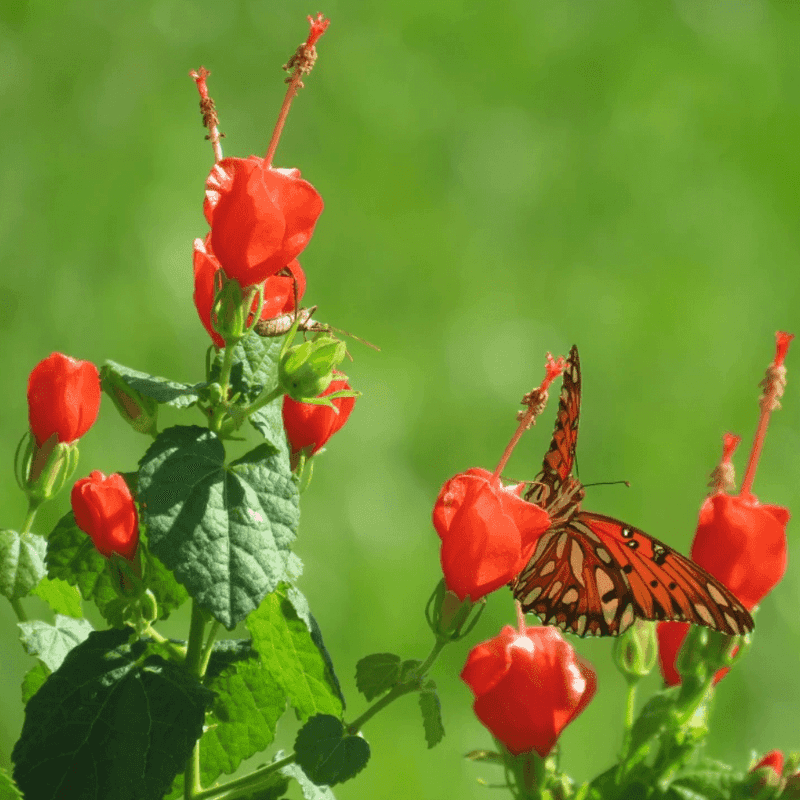
Heart-shaped leaves and unusual red flowers that look like tiny turbans give this native shrub serious charm. Turk’s Cap blooms continuously from spring until the first frost, providing months of color in areas of your front yard that don’t get full sun all day.
The flowers dangle from the stems like little lanterns, and hummingbirds quickly learn where to find this reliable nectar source.
Shade tolerance sets Turk’s Cap apart from many other flowering shrubs suited to Texas landscapes. It actually prefers morning sun and afternoon shade, making it perfect for planting on the east side of your home or under the canopy of larger trees.
The plant grows 2 to 5 feet tall depending on conditions, spreading slowly to form attractive clumps over time.
Small red fruits follow the flowers and attract songbirds to your yard in late summer and fall. These edible berries taste bland to humans but provide valuable food for mockingbirds, cardinals, and other feathered visitors.
Deer occasionally nibble Turk’s Cap foliage but rarely cause serious damage to established plants.
This shrub appreciates regular moisture and looks its best with occasional watering during extended dry periods. Mulch around the base helps keep roots cool and conserves soil moisture throughout the growing season.
Turk’s Cap handles Houston’s humidity beautifully and adapts well to different soil types found across Texas, from sandy loam to heavier clay.
4. Agarita
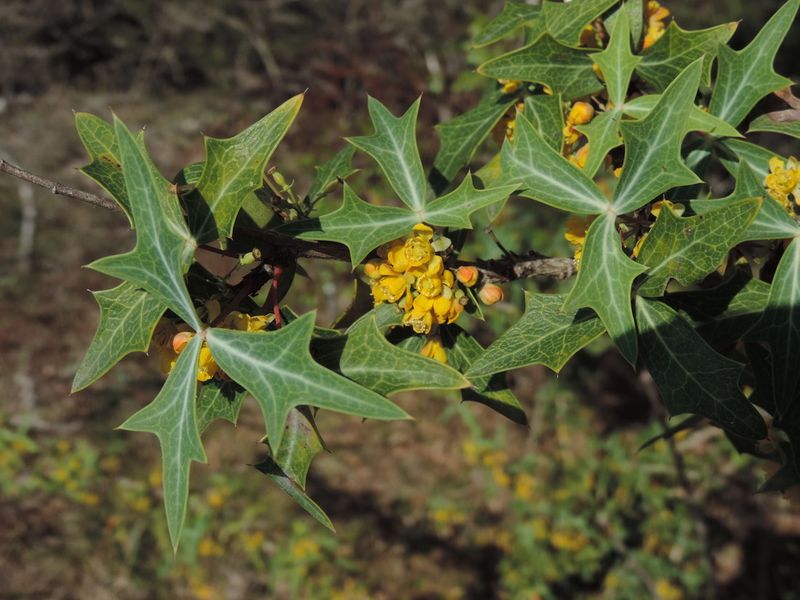
Clusters of fragrant yellow flowers appear in early spring on this tough evergreen shrub, filling your front yard with a sweet honey scent.
Agarita blooms often open in February or March, providing one of the first significant nectar sources for bees emerging from winter dormancy.
The small, holly-like leaves have a distinctive blue-gray color that looks attractive year-round and helps this plant stand out among other landscape shrubs.
Red berries ripen in late spring and early summer, offering food for birds and even humans who enjoy making jelly from the tart fruit.
The berries have a flavor similar to cranberries and contain large seeds surrounded by just enough pulp to make harvesting worthwhile if you’re patient.
Wildlife appreciate these fruits tremendously, and you’ll notice increased bird activity around your Agarita during berry season.
Sharp spines along the stems make Agarita an excellent choice for security plantings beneath windows or along property boundaries.
The plant grows slowly to about 3 to 6 feet tall and wide, creating an impenetrable barrier that discourages unwanted visitors without looking harsh or uninviting.
Just remember to plant it away from walkways where people might brush against the thorny foliage.
Agarita thrives in the challenging alkaline soils common throughout central and west Texas. Once established, this native requires virtually no supplemental water and laughs at our state’s worst droughts.
It performs best in full sun to partial shade and needs no fertilizer to maintain healthy growth and abundant flowering each spring.
5. Possumhaw Holly
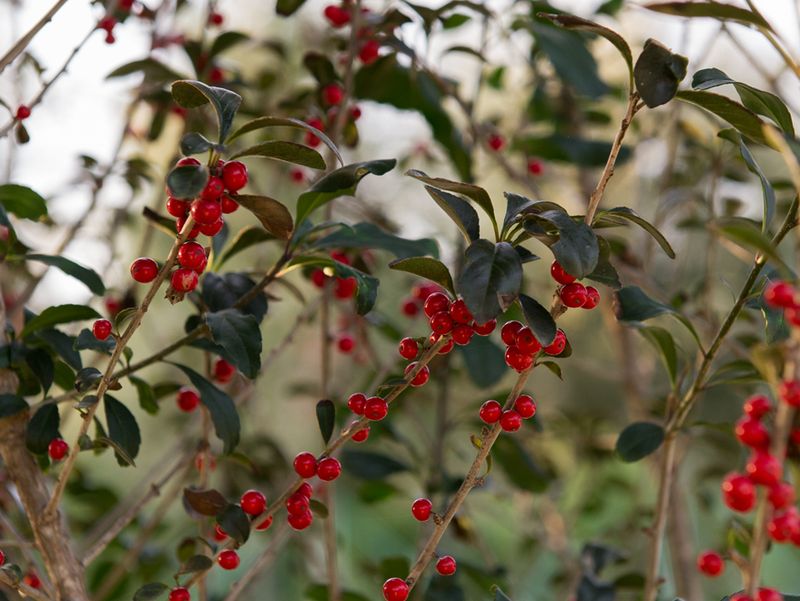
Brilliant red berries cover the bare branches of this deciduous holly in winter and early spring, creating a spectacular display when most other plants look dormant.
Possumhaw Holly offers something different from the typical evergreen landscape shrubs, losing its leaves in fall to reveal an architectural branch structure decorated with countless colorful fruits.
The berries persist through winter unless birds devour them first, which often happens because cedar waxwings and robins find them irresistible.
Small white flowers bloom in spring after new leaves emerge, but they’re not particularly showy compared to the dramatic fruit display.
Female plants produce the berries, so you’ll need to purchase a named female cultivar or plant both male and female specimens to ensure good fruit set.
The glossy green summer foliage provides a nice backdrop for other flowering plants before turning yellow in autumn.
This native Texas holly adapts to various moisture conditions, from the relatively wet soils near Houston to drier locations in central Texas. It grows 10 to 15 feet tall over time but responds well to pruning if you need to maintain a smaller size.
Possumhaw works beautifully as a specimen plant in your front yard or planted in groups for maximum berry impact.
The smooth gray bark adds winter interest even after birds finish eating the berries. Possumhaw Holly tolerates both full sun and partial shade, though berry production is heaviest with at least six hours of direct sunlight daily.
Established plants handle our Texas heat waves and periodic droughts with minimal stress once their root systems develop properly.
6. Evergreen Sumac
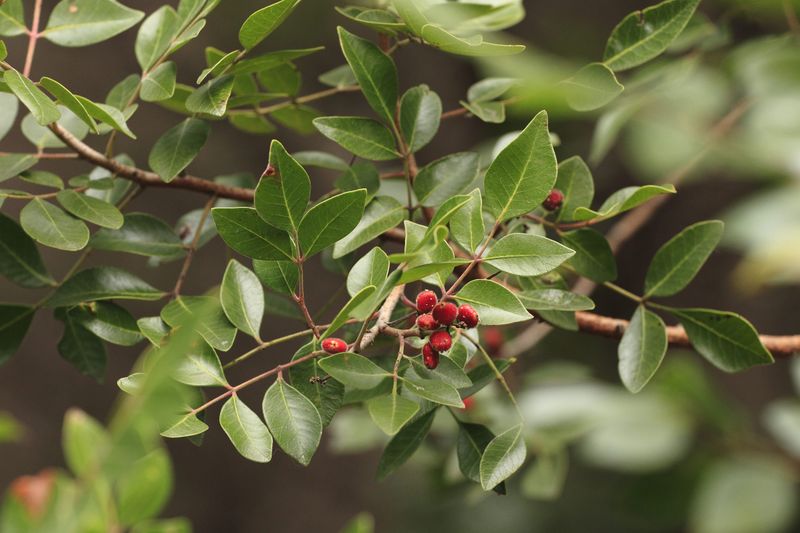
Glossy green leaves that stay on the plant year-round make Evergreen Sumac a reliable choice for Texas landscapes that need consistent color.
Unlike its weedy cousins that spread aggressively, this well-behaved native stays put and won’t invade your lawn or neighboring flower beds.
The compound leaves have an attractive texture that adds visual interest even when the plant isn’t blooming, and they remain fresh-looking through summer heat that wilts less adapted species.
Creamy white flower clusters appear in late spring, attracting numerous pollinators to your front yard. Bees particularly love these blooms, and you’ll hear their busy humming around the shrub during peak flowering.
Small reddish fruits follow the flowers and provide food for songbirds during fall and early winter months.
Evergreen Sumac handles the toughest Texas growing conditions with ease. It thrives in full sun, tolerates extreme heat and drought once established, and adapts to rocky or clay soils that challenge many other landscape plants.
This shrub typically reaches 6 to 8 feet tall with a similar spread, creating a substantial presence without overwhelming smaller yards.
Pruning needs are minimal since the plant naturally develops an attractive rounded form. You can shape it lightly after flowering if desired, but heavy pruning isn’t necessary for good performance.
Evergreen Sumac works well as a foundation plant, informal hedge, or background shrub behind lower-growing perennials. It’s particularly valuable in water-wise Texas landscapes where tough, attractive plants are essential for long-term success.
7. Fragrant Sumac
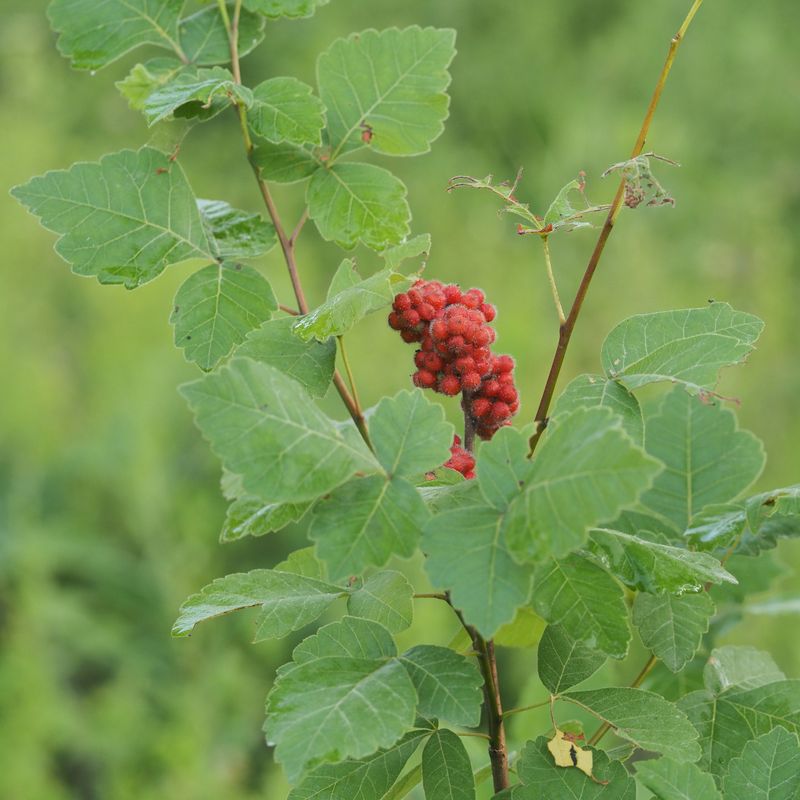
Aromatic foliage releases a pleasant scent when you brush against it or crush the leaves between your fingers.
Fragrant Sumac offers sensory interest beyond just visual appeal, making it a wonderful choice for planting near walkways or entrances where people will notice the fragrance.
The plant produces small yellow flowers in early spring before leaves fully emerge, providing an early season color boost when most shrubs are just waking up from winter dormancy.
Bright red or orange fall color makes this native sumac particularly valuable for Texas landscapes that often lack autumn interest.
The leaves turn vibrant shades that rival any New England maple, giving your front yard a seasonal show that neighbors will admire. Small red berries appear in summer and attract birds throughout fall and winter months.
This adaptable shrub grows 3 to 6 feet tall and spreads slowly by underground stems to form colonies over time. You can control the spread by removing unwanted shoots or use this characteristic to your advantage for erosion control on slopes.
Fragrant Sumac tolerates various soil types and handles both full sun and partial shade locations equally well.
Drought tolerance is excellent once the root system establishes, making this plant ideal for low-maintenance Texas landscapes. It performs reliably from the Panhandle to the Gulf Coast, adapting to different climate zones across our state.
Deer typically avoid Fragrant Sumac, and it has no serious pest or disease problems that require attention. The combination of spring flowers, summer berries, fall color, and winter interest makes this native shrub a true four-season performer.