6 Stunning Blue Flowers To Grow In Your Texas Garden This Spring
There is something instantly calming about blue flowers, and in a Texas spring garden they can feel like a refreshing splash of cool color among warmer tones.
From soft sky shades to rich, deep blues, these blooms add contrast, depth, and a touch of elegance to beds, borders, and containers.
Many blue flowering plants also handle Texas conditions surprisingly well, standing up to bright sun, shifting temperatures, and occasional dry spells once established.
They attract pollinators, pair beautifully with whites and purples, and help create a balanced, eye catching landscape that feels vibrant without being overwhelming.
Whether you prefer delicate blossoms or bold bursts of color, the right blue flowers can transform your spring garden into a peaceful yet lively space.
With smart plant choices, your Texas yard can shine with cool tones, fresh energy, and stunning seasonal beauty that keeps your garden looking colorful and inviting all spring long.
1. Texas Bluebonnet (Lupinus Texensis)
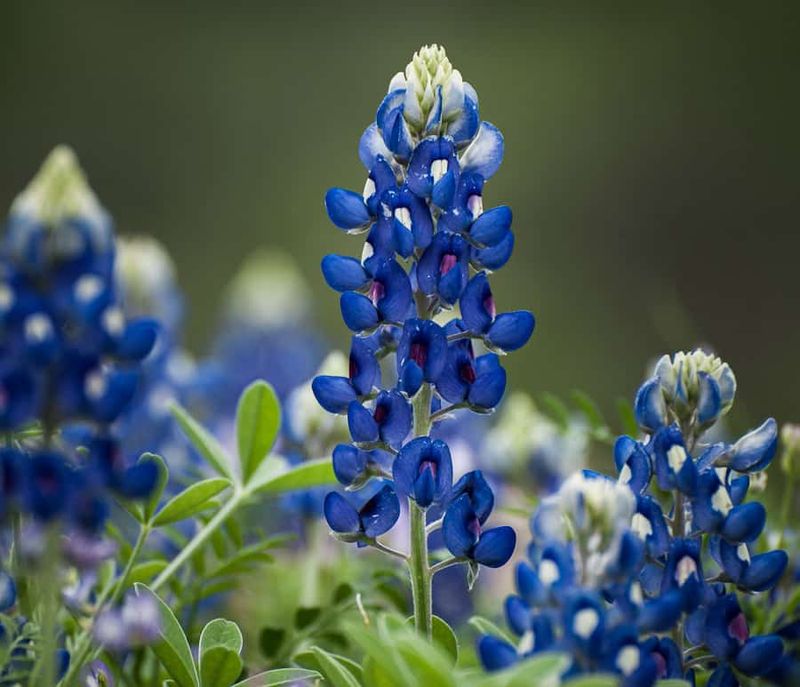
Nothing says Texas spring quite like a field of bluebonnets stretching across the landscape. This state flower grows wild along highways but performs beautifully in home gardens too.
The tall spikes of blue and white flowers create a classic look that Texans have loved for generations.
Plant bluebonnet seeds in fall between September and November for best results. They need this cool period to germinate properly before blooming in spring.
Scatter seeds directly in your garden bed and lightly cover them with soil. Water gently and then leave them alone through winter.
These flowers prefer full sun and well-drained soil that isn’t too rich. Heavy clay soil can cause problems, so add sand or compost if your ground stays wet.
Once established, bluebonnets handle drought well and rarely need extra water. They reseed themselves naturally, coming back year after year without replanting.
Bluebonnets reach about 12 to 18 inches tall and bloom from March through May across most of Texas. Monarchs and native bees visit the flowers frequently.
After blooming ends, let the seed pods mature and drop before mowing. This ensures next year’s display will be just as spectacular.
Pair bluebonnets with Indian paintbrush or yellow coreopsis for a colorful wildflower mix. They work wonderfully in meadow gardens, along fence lines, or as border plants.
Children love photographing themselves among bluebonnets, making them perfect for family-friendly gardens throughout the Lone Star State.
2. Blue Salvia (Salvia Farinacea / Mealy Blue Sage)
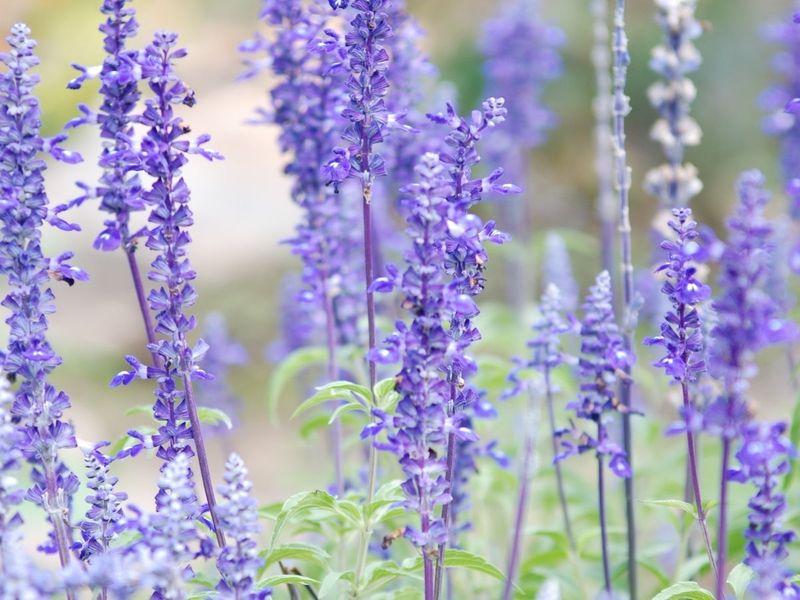
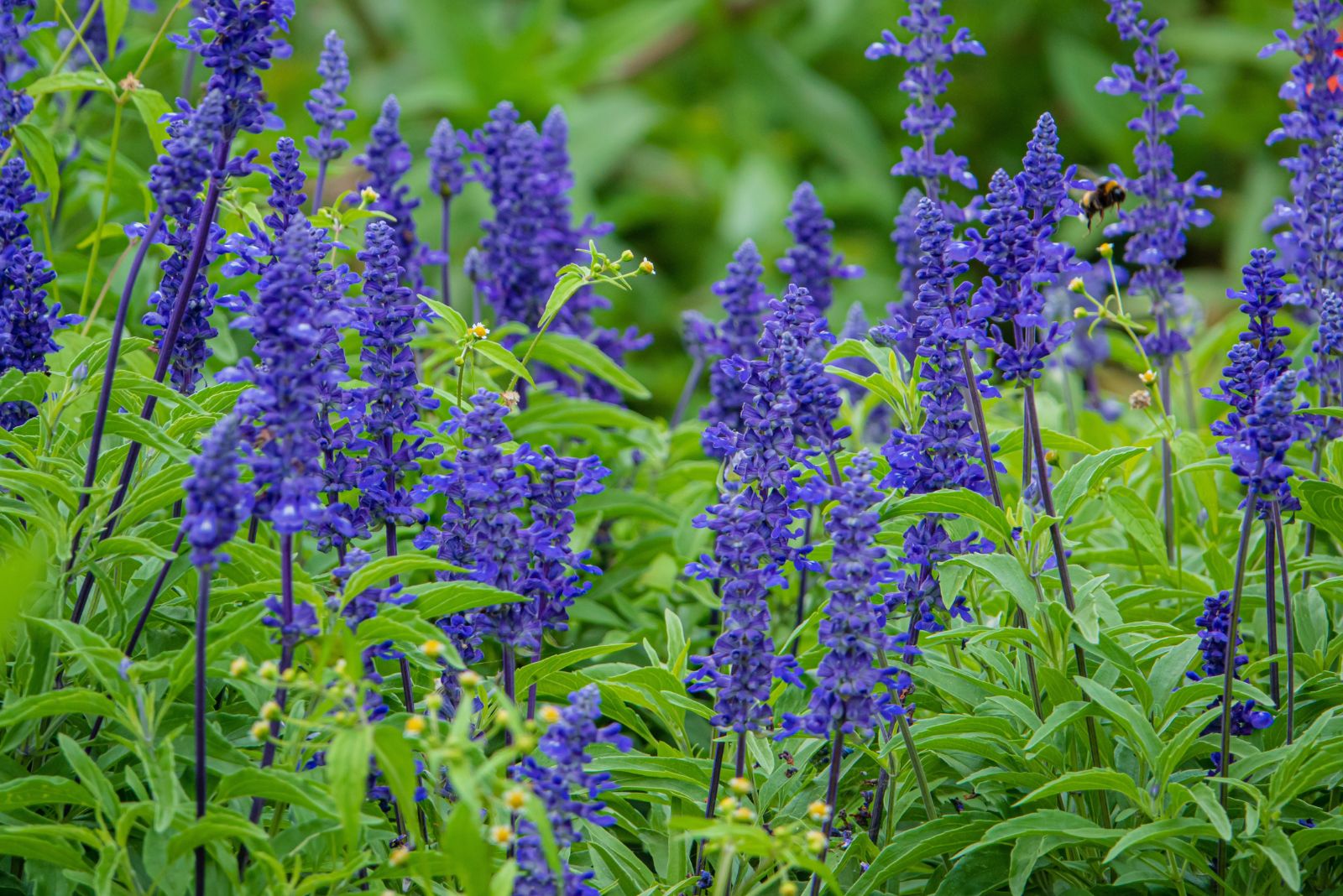
Gardeners across Texas rely on blue salvia for non-stop color from spring until frost arrives. The tall purple-blue flower spikes stand upright on sturdy stems that rarely need staking.
Hummingbirds and butterflies flock to these blooms all season long, creating constant movement and life in your garden.
Blue salvia tolerates Texas heat better than most flowering plants. It thrives in full sun but also grows well in partial shade, making it versatile for different garden spots.
Plant it in spring after the last frost date passes. Space plants about 12 inches apart to allow good air circulation.
This perennial often behaves like an annual in colder parts of Texas but returns reliably in southern regions. Regular deadheading encourages more blooms, though the plant flowers heavily even without this extra care.
Your Texas Garden Changes Every Week. Your Plan Should Too.
Gardening in Texas changes quickly throughout the season. Every Friday you’ll receive a simple weekly plan showing exactly what to plant, prune, fertilize, harvest, and protect so you never miss the right timing.
Water deeply once or twice weekly during establishment, then reduce watering as plants mature. Salvia handles brief dry spells without wilting.
The plant grows 18 to 24 inches tall and spreads about 12 inches wide. Its gray-green foliage provides nice contrast to the vibrant blue flowers.
Deer usually avoid salvia, making it ideal for gardens where wildlife browsing causes problems. It also resists most common pests and diseases.
Use blue salvia in mass plantings for dramatic impact or mix it with yellow marigolds and red zinnias for patriotic color combinations. It works beautifully in containers, cutting gardens, and butterfly gardens throughout Texas landscapes.
3. Blue Daze (Evolvulus Glomeratus)
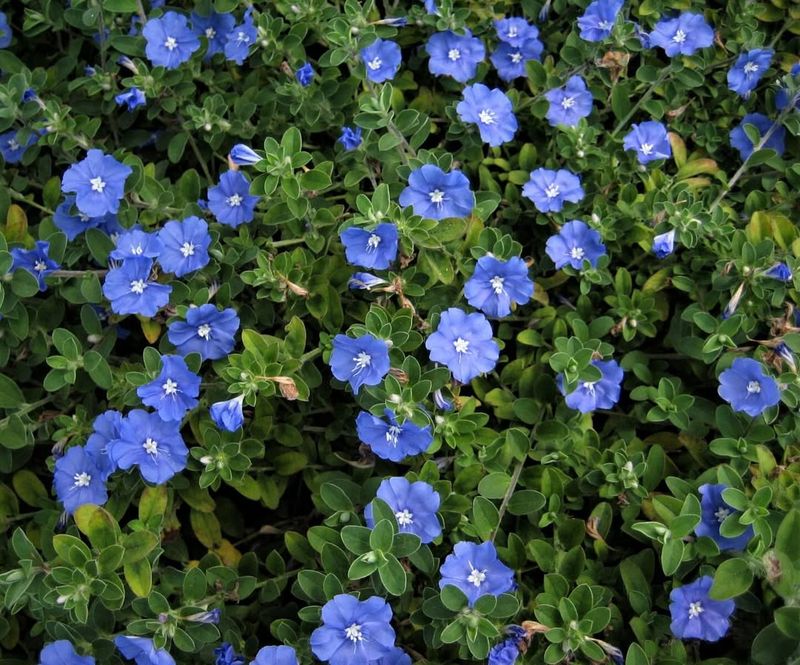
Bright sky-blue flowers open fresh each morning on this charming ground cover plant. Blue daze creates a carpet of color that spills beautifully over container edges or spreads across garden beds.
Each bloom lasts just one day, but plants produce so many flowers that you’ll always see plenty of blue covering the foliage.
This low-growing perennial reaches only 6 to 12 inches tall but spreads 2 to 3 feet wide. It loves hot Texas summers and blooms continuously from spring through fall.
Full sun brings the most flowers, though blue daze tolerates light afternoon shade in extremely hot areas. Plant it after frost danger passes in spring.
Blue daze needs well-drained soil and cannot survive in wet conditions. Sandy or rocky soil works perfectly for this plant.
Water regularly during the first few weeks, then reduce frequency once established. The plant handles drought fairly well but blooms more heavily with occasional deep watering during dry periods.
Butterflies and small bees visit the flowers throughout the day. The plant rarely suffers from pest or disease problems in Texas gardens.
It may slow down or stop blooming during the hottest part of summer, but cooler fall temperatures bring renewed flowering. In South Texas, blue daze often survives winter and returns as a perennial.
Use this versatile plant as an edging along walkways, in rock gardens, or cascading from hanging baskets. It pairs wonderfully with pink petunias or white sweet alyssum for cottage-style combinations throughout Texas landscapes.
4. Blue Flax (Linum Lewisii / Texas Blue Flax)
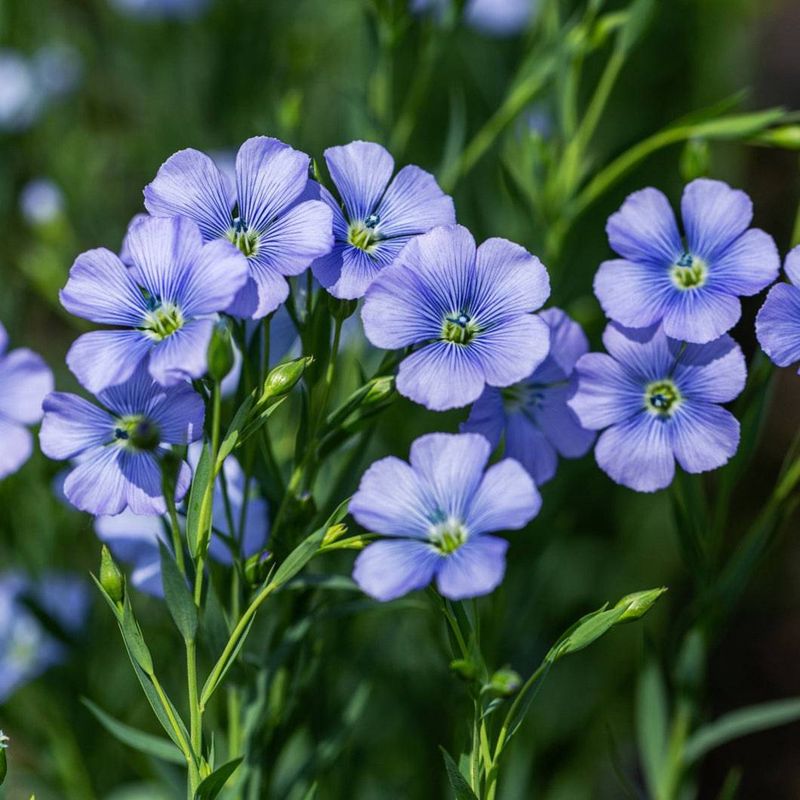
Delicate blue flowers dance on thin stems that sway with every breeze. Blue flax brings an airy, naturalistic look to gardens while requiring almost no maintenance.
Each flower opens in the morning and drops its petals by afternoon, but new buds open constantly to keep the display going for weeks.
This native Texas wildflower grows 12 to 24 inches tall with narrow gray-green leaves. It thrives in full sun and poor to average soil, making it perfect for difficult garden spots where other plants struggle.
Blue flax actually performs worse in rich, heavily fertilized soil. Plant seeds in fall or very early spring directly where you want them to grow.
The plant develops a taproot that makes transplanting difficult, so choose your location carefully. Once established, blue flax needs almost no supplemental water except during severe drought.
It reseeds readily, creating natural-looking drifts throughout your garden. Blooming occurs from April through June across most of Texas.
Native bees and small butterflies visit the flowers regularly. Blue flax works beautifully in wildflower meadows, prairie-style gardens, or mixed perennial beds.
The fine texture contrasts nicely with bold flowers like coneflowers or black-eyed Susans. It also makes an excellent cut flower despite the short bloom life of individual flowers.
Combine blue flax with red Indian blanket and white evening primrose for a classic Texas wildflower mix. It naturalizes easily in open areas and requires no deadheading or special care throughout the growing season.
5. Blue Mistflower (Conoclinium Coelestinum)
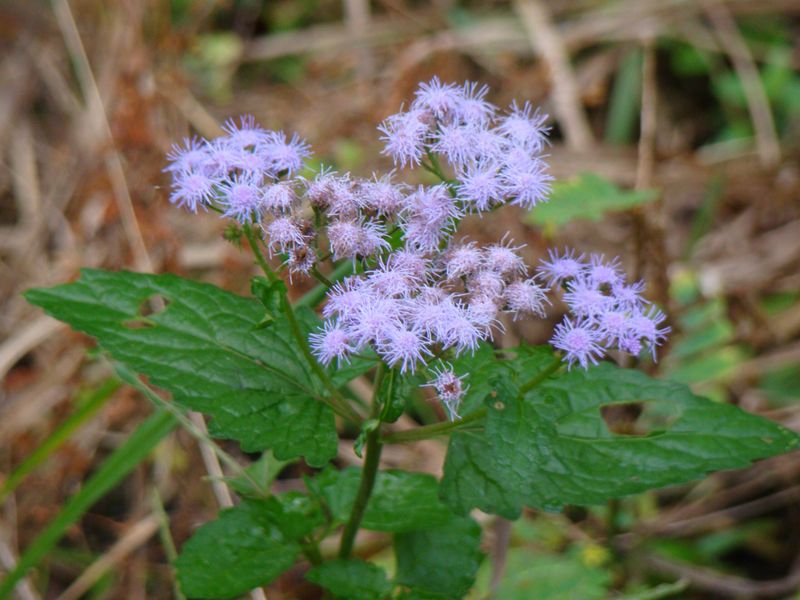
Fuzzy clusters of powder-blue flowers appear in late summer when many other plants have stopped blooming. Blue mistflower provides crucial nectar for migrating monarch butterflies traveling through Texas each fall.
The fluffy blooms create a soft, misty appearance that gives this native plant its common name.
This perennial spreads enthusiastically through underground rhizomes, forming large colonies over time. Plant it where spreading won’t cause problems, or use barriers to contain growth.
Blue mistflower reaches 2 to 3 feet tall and blooms from August through October. It grows in full sun to partial shade and adapts to various soil types.
The plant tolerates both wet and dry conditions better than most garden flowers. It thrives near ponds or in rain gardens but also survives normal garden beds.
Water regularly during establishment, then let rainfall provide most moisture needs. Blue mistflower may look tired during extreme heat but rebounds quickly with cooler temperatures.
Butterflies, especially monarchs, cover the blooms during fall migration. Native bees and other beneficial insects also visit frequently.
Cut plants back in late winter before new growth emerges. The aggressive spreading habit makes blue mistflower perfect for naturalizing in large areas but potentially troublesome in small, formal gardens.
Use this Texas native in butterfly gardens, along creek banks, or in meadow plantings. It pairs well with goldenrod and asters for a beautiful fall display.
Blue mistflower provides important late-season resources for pollinators preparing for winter throughout Texas.
6. Victoria Blue Salvia (Salvia Farinacea ‘Victoria Blue’)
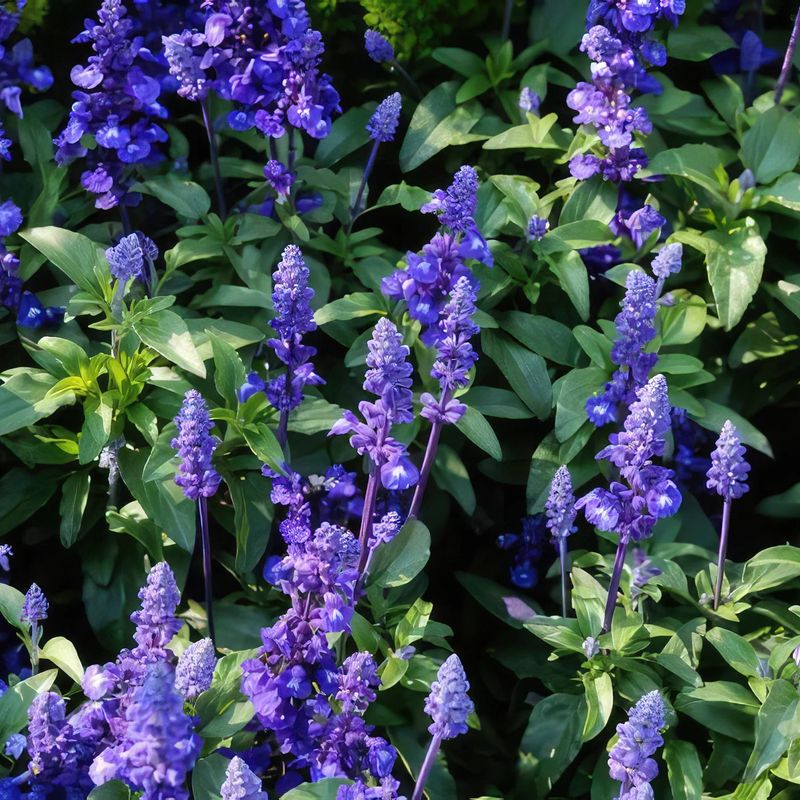
Deep indigo-blue flowers cover this improved salvia variety from spring through fall. Victoria Blue produces darker, more intense color than standard blue salvia, creating bold statements in garden beds and containers.
The compact growth habit and reliable blooming make it a favorite among Texas gardeners who want consistent performance.
This cultivar grows 18 to 20 inches tall with a similar spread. It forms neat, rounded mounds that maintain their shape without constant pruning.
Plant Victoria Blue in full sun for best flowering, though it tolerates light afternoon shade. Space plants 12 to 15 inches apart in garden beds or use three plants in a large container.
Victoria Blue handles Texas heat exceptionally well and rarely shows stress even during the hottest months. Water deeply when soil feels dry an inch below the surface.
The plant tolerates brief dry periods but blooms more heavily with regular moisture. Fertilize monthly during the growing season with a balanced fertilizer diluted to half strength.
Hummingbirds visit the flowers constantly throughout the day. The plant also attracts numerous butterfly species and native bees.
Deer typically avoid salvia, making it useful in areas with browsing wildlife. Victoria Blue resists most common pests and diseases that affect garden plants in Texas.
Use this versatile salvia in mass plantings for dramatic color impact or mix it with yellow coreopsis and white angelonia for bright combinations. It works beautifully in formal gardens, cottage-style plantings, or modern landscape designs across Texas.