7 Weeds That Trouble Texas Gardeners And How To Control Them
Every Texas gardener knows the frustration of watching unwanted plants pop up just when the garden starts looking its best. Weeds compete for water, nutrients, and sunlight, often growing faster than the plants you actually want to thrive.
Left unchecked, they can quickly take over beds, crowd out healthy growth, and make even well kept spaces look untidy. Texas conditions, with warm temperatures and periods of rain, can give many weeds the perfect chance to spread.
Understanding which weeds commonly cause trouble and why they appear is the first step toward keeping them under control. With the right approach, you can reduce their impact, protect your plants, and maintain a cleaner, healthier garden.
A few consistent habits and smart strategies can make a noticeable difference, helping your Texas garden stay productive, attractive, and far easier to manage throughout the growing season.
1. Crabgrass
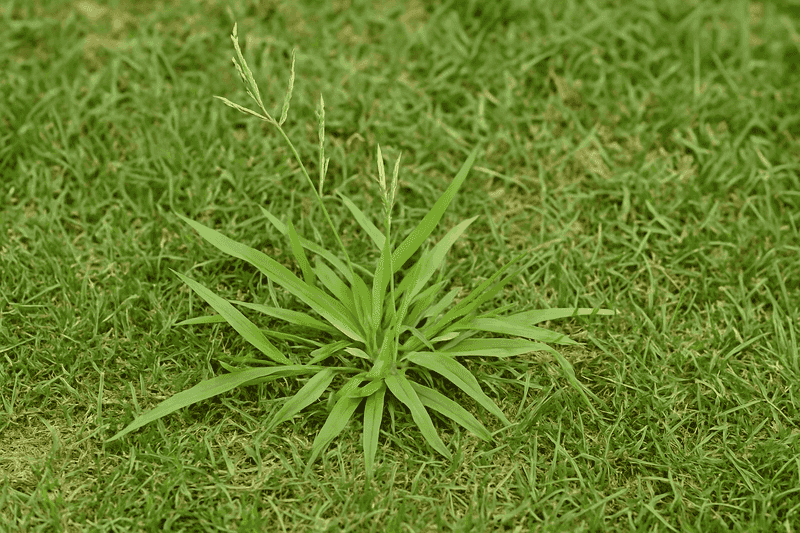
Few things frustrate Texas homeowners more than watching crabgrass invade their carefully maintained lawns during summer months.
This aggressive annual grass spreads rapidly through above-ground stems that root at each node, creating thick mats that crowd out desirable turf.
Each plant produces thousands of seeds that germinate when soil temperatures reach 55 degrees Fahrenheit, typically starting in March across most of Texas.
Prevention works better than trying to remove established plants. Apply pre-emergent herbicide in early spring before soil warms up, usually between February and March depending on your specific region.
Timing matters tremendously because once crabgrass germinates, pre-emergent products become useless. Keep your lawn thick and healthy through proper mowing, watering, and fertilization since dense turf naturally crowds out crabgrass seedlings.
Young plants can be pulled by hand before they develop extensive root systems and produce seeds. Wear gloves and pull gently to remove the entire plant including roots.
Avoid letting any crabgrass plant reach maturity and drop seeds because those seeds remain viable in soil for several years. Mow your lawn at the proper height for your grass type since taller grass shades soil and prevents crabgrass germination.
Post-emergent herbicides labeled for crabgrass control can target established plants during active growth. Read labels carefully and follow application instructions precisely.
Water stressed lawns become more susceptible to crabgrass invasion, so maintain consistent watering schedules during hot Texas summers. Healthy, thick turf remains your best defense against this persistent summer weed.
2. Dandelion
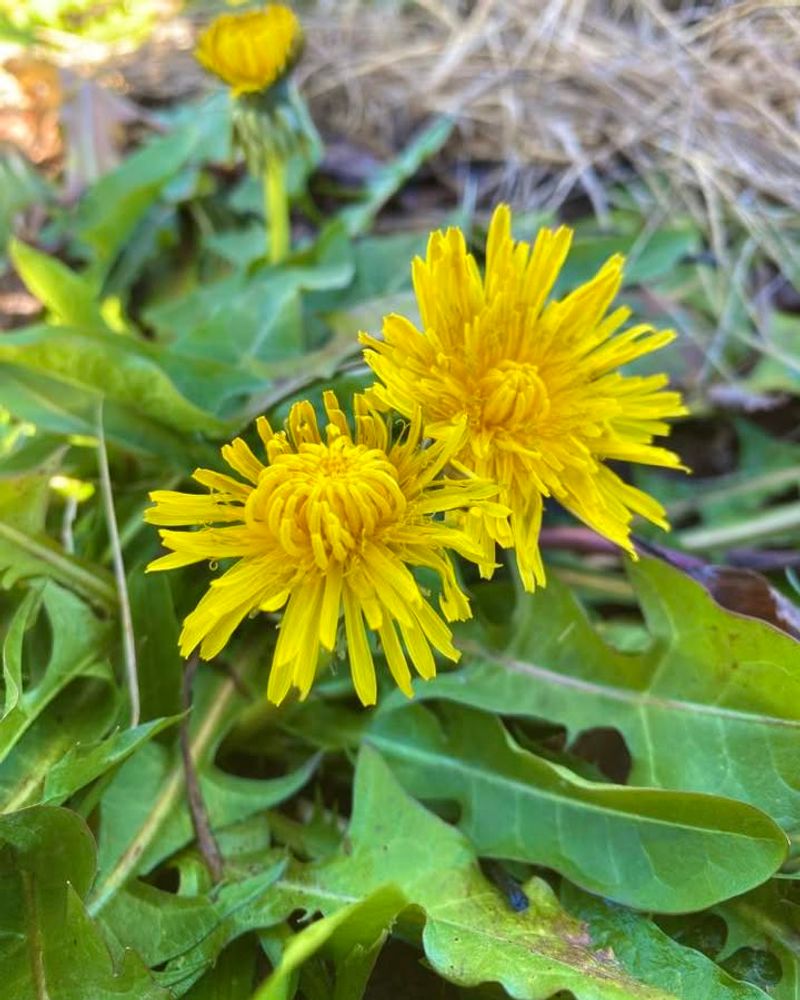
Bright yellow dandelion flowers might look cheerful, but Texas gardeners know these perennial weeds spell trouble for lawns and garden beds.
Each plant develops a thick taproot that can extend more than ten inches deep into soil, making complete removal challenging without proper tools.
Those fluffy white seed heads that children love to blow contain hundreds of seeds that travel miles on wind currents, spreading the problem far beyond your property.
Manual removal works best when you catch dandelions young and soil remains moist. Use a specialized weeding tool with a forked end designed to extract the entire taproot without breaking it.
Broken roots left underground simply regenerate into new plants within weeks. Pull dandelions before they flower and produce seeds, ideally during spring when plants put energy into flower production rather than root development.
Your Texas Garden Changes Every Week. Your Plan Should Too.
Gardening in Texas changes quickly throughout the season. Every Friday you’ll receive a simple weekly plan showing exactly what to plant, prune, fertilize, harvest, and protect so you never miss the right timing.
Maintaining thick, healthy turf naturally crowds out dandelion seedlings before they establish deep roots. Mow your lawn regularly at proper height and fertilize appropriately for your grass type.
Dense grass coverage blocks sunlight from reaching dandelion seeds, preventing germination. Avoid creating bare patches where dandelion seeds find easy entry points.
Spot-treat persistent dandelions with selective broadleaf herbicides that target these weeds without harming grass. Apply treatments during active growth periods in spring or fall when plants actively move nutrients through their systems.
Multiple applications may be necessary for complete control since dandelions prove remarkably resilient. Water your lawn properly and avoid scalping grass during mowing, which creates perfect conditions for dandelion establishment across Texas yards.
3. Nutsedge (Nutgrass)
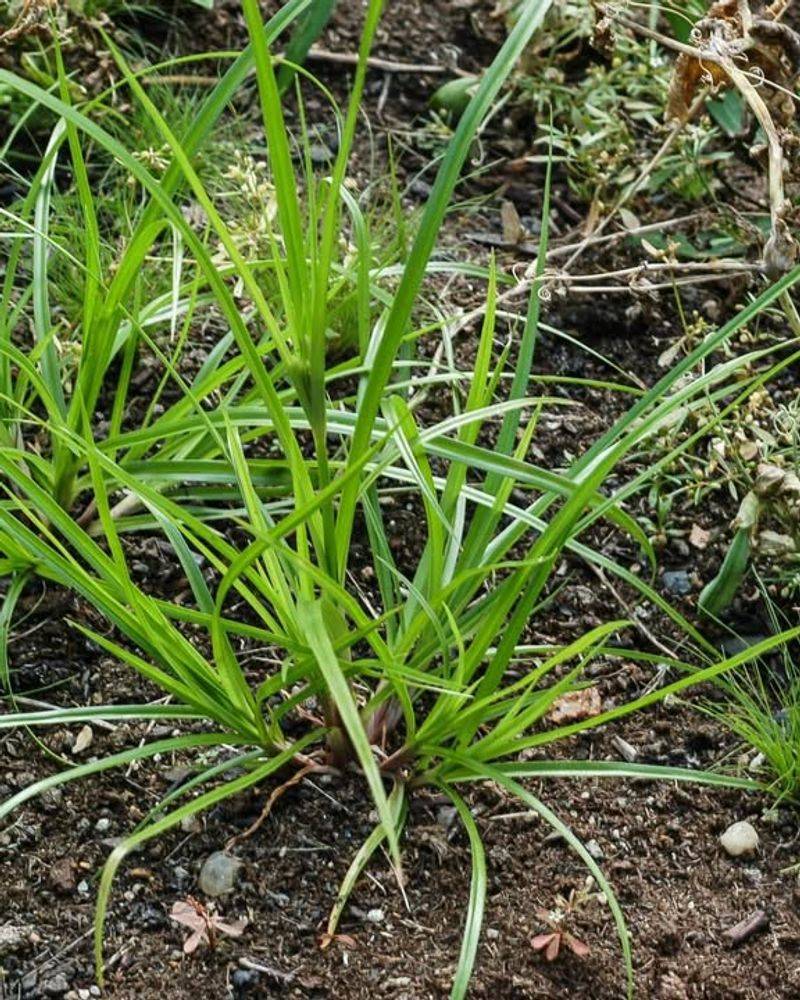
Nutsedge earns its reputation as one of the most frustrating weeds Texas gardeners face because it grows faster than lawn grass and resists most common control methods.
This perennial sedge features triangular stems that feel distinctly different from grass blades when rolled between fingers.
Yellow or purple varieties thrive across Texas, especially in areas with poor drainage or excessive moisture. Underground tubers called nutlets allow plants to survive and spread even after above-ground portions are removed.
Never pull nutsedge by hand because this action stimulates dormant tubers underground to sprout multiple new plants. Each plant can produce several hundred tubers in a single growing season, and these nutlets remain viable in soil for several years.
Breaking the stem above ground leaves tubers intact and actually worsens your infestation by triggering increased growth.
Use herbicides specifically labeled for nutsedge control since regular lawn weed treatments prove ineffective. These specialized products work by moving through the plant into tubers, providing more complete control.
Multiple applications spaced several weeks apart typically produce best results. Improve drainage in affected areas because nutsedge thrives in wet conditions that stress desirable grass.
Avoid overwatering lawns and gardens since excess moisture creates ideal conditions for nutsedge growth. Water deeply but infrequently to encourage deep grass roots while discouraging shallow-rooted nutsedge.
Consider installing drainage solutions in problem areas where water pools after rain. Maintain thick, healthy turf through proper fertilization and mowing practices.
Persistent efforts over multiple seasons may be necessary to completely control established nutsedge infestations across Texas properties.
4. Pigweed (Amaranth)
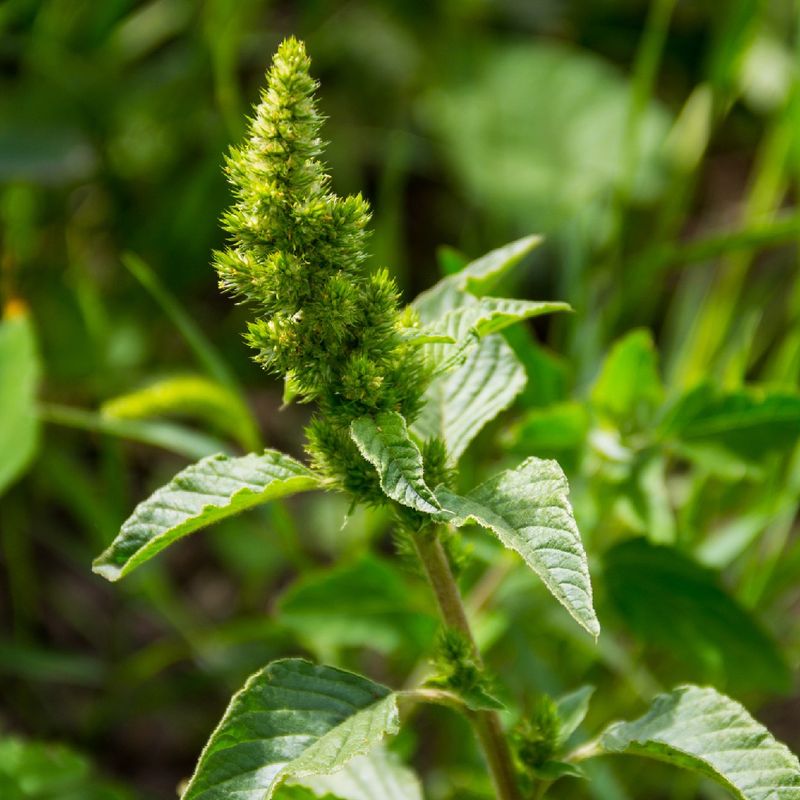
Pigweed grows with alarming speed during hot Texas summers, sometimes adding several inches of height in a single day. This aggressive annual weed competes fiercely with vegetables and flowers for nutrients, water, and sunlight.
Several pigweed species thrive across Texas, including redroot pigweed and Palmer amaranth, all sharing similar growth habits and control challenges. Mature plants produce enormous quantities of seeds that remain viable in soil for decades.
Early removal makes all the difference when dealing with pigweed infestations. Pull or hoe young seedlings as soon as you spot them, ideally when plants stand less than four inches tall.
Small pigweeds come out easily, roots and all, especially after rain or irrigation when soil remains loose. Waiting until plants mature makes removal much harder because they develop thick, tough stems and extensive root systems.
Apply thick layers of organic mulch around garden plants to suppress pigweed germination. Two to three inches of wood chips, straw, or shredded leaves block sunlight from reaching seeds and create barriers seedlings cannot penetrate.
Refresh mulch as needed throughout the growing season. Never let pigweed plants reach flowering stage because each one produces hundreds of thousands of tiny seeds that spread your problem exponentially.
Regular cultivation disrupts pigweed seedlings before they establish strong roots. Run a hoe through garden rows weekly during peak growing season.
Remove pulled plants from garden areas entirely rather than leaving them on soil surface where seeds might mature and drop.
Monitor vegetable gardens and flower beds closely during summer months when pigweed growth peaks across Texas. Consistent attention prevents small problems from becoming overwhelming infestations.
5. Purslane
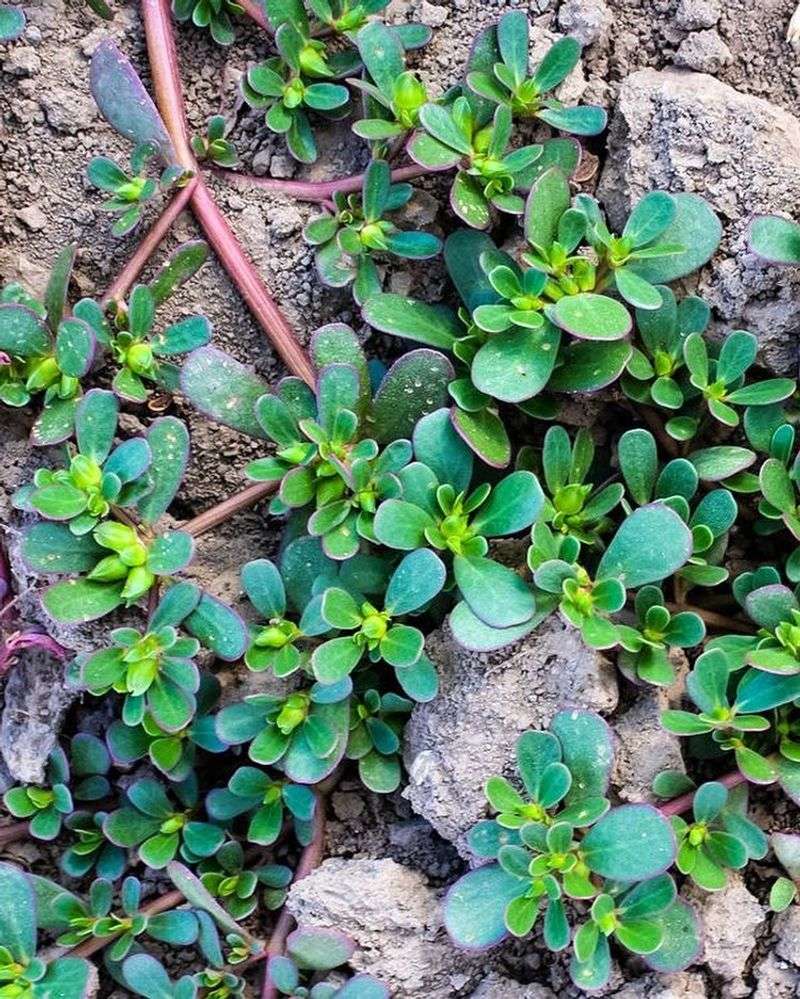
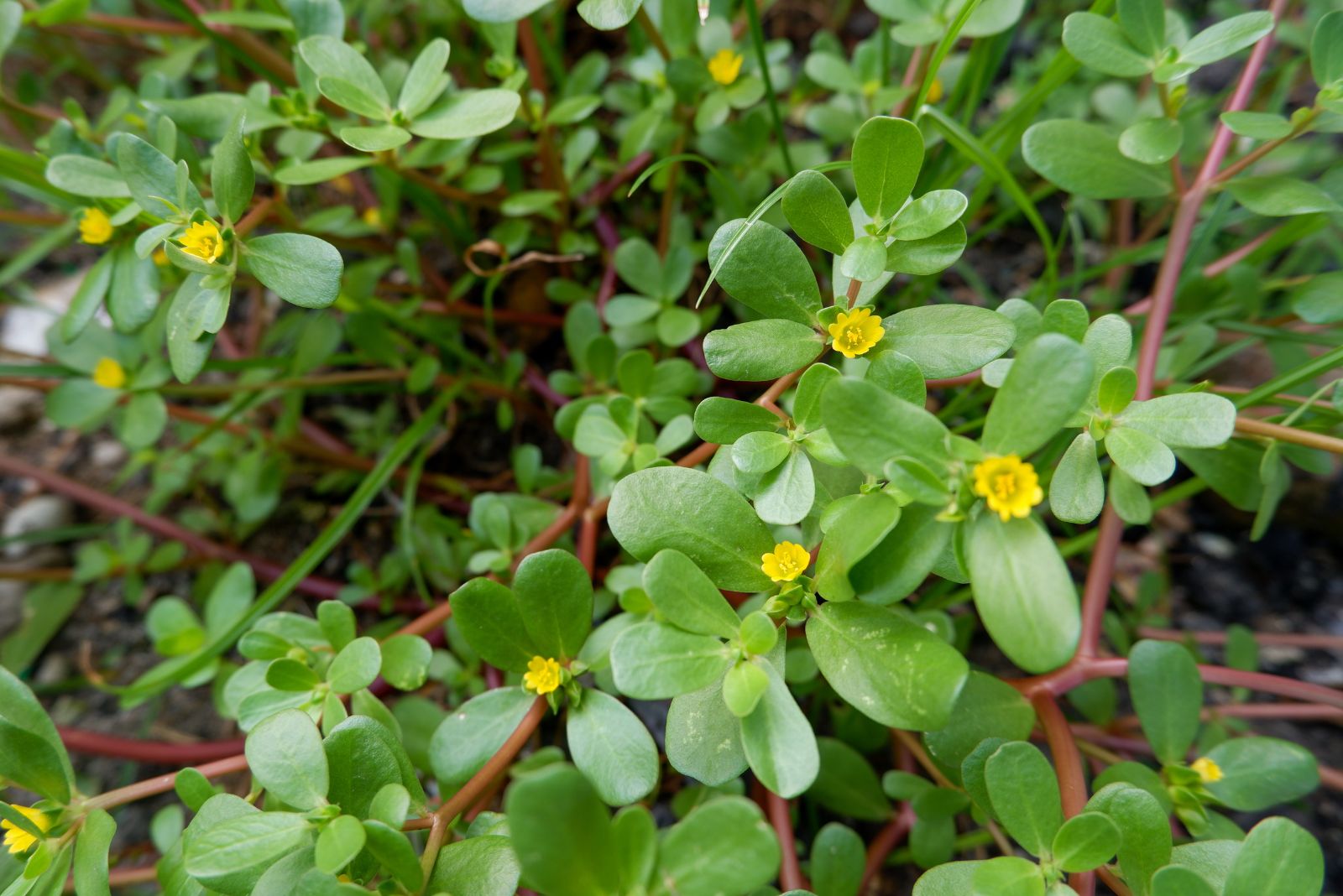
Purslane thrives in the hot, dry conditions that challenge many Texas gardeners during summer months. This low-growing annual succulent spreads quickly across bare soil, forming thick mats that smother desirable plants.
Thick, reddish stems and small, paddle-shaped leaves store water efficiently, allowing purslane to survive drought conditions that stress other plants. Tiny yellow flowers produce capsules filled with numerous black seeds that remain viable for years.
Complete removal proves essential because broken stem pieces left on soil can root and form new plants within days. Pull entire plants including roots, preferably when soil remains moist from recent rain or watering.
Place pulled plants in trash bags rather than compost piles because seeds and stem fragments often survive composting and spread when you use that compost later. Work carefully to avoid breaking stems during removal.
Heavy mulching prevents purslane seeds from germinating by blocking sunlight and creating physical barriers. Apply three to four inches of organic mulch around garden plants, vegetables, and in flower beds where purslane commonly appears.
Check mulched areas regularly and pull any purslane seedlings that emerge before they establish and spread. Remove purslane before plants flower and set seed to prevent future generations.
Improve soil quality by adding organic matter because purslane particularly favors compacted, nutrient-poor soil. Maintain dense plantings in garden beds so desirable plants shade soil and prevent purslane establishment.
Water gardens deeply but infrequently rather than frequent shallow watering that favors purslane growth.
Monitor problem areas closely during hot summer months when purslane grows most actively across Texas. Consistent removal over multiple seasons gradually depletes seed banks in soil.
6. Spurge
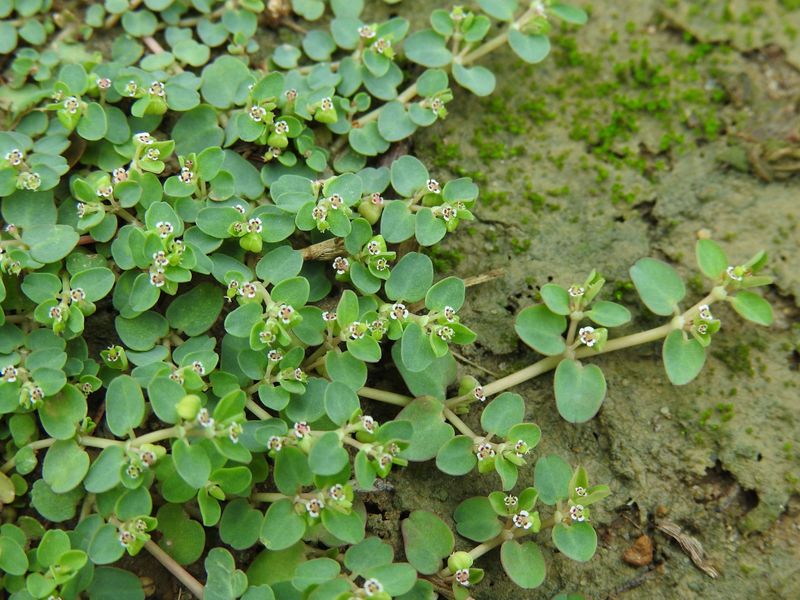
Spotted spurge spreads rapidly across thin lawns and garden beds throughout Texas, forming dense mats that crowd out grass and ornamental plants.
This summer annual features small, oval leaves often marked with purple or red spots and stems that radiate from a central taproot.
When broken, stems release milky white sap that can irritate skin, so always wear gloves when handling spurge. Each plant produces hundreds of seeds in tiny capsules that explode when mature, scattering seeds several feet away.
Pre-emergent herbicides applied in early spring before soil temperatures reach 60 degrees Fahrenheit prevent spurge seeds from germinating. Timing proves critical because once spurge emerges and begins growing, pre-emergent products provide no control.
Mark your calendar for February or March applications depending on your location within Texas. Reapply according to product label instructions since most pre-emergents require repeat applications for season-long control.
Hand-pulling works for small infestations when you catch plants young. Remove entire plants including roots before they flower and produce seeds.
Wear gloves to protect skin from irritating sap. Avoid letting pulled plants drop seeds on soil by placing them directly into bags for disposal.
Water stressed, thin lawns prove most susceptible to spurge invasion, so maintain proper lawn care practices.
Improve lawn density through appropriate fertilization, proper mowing height, and consistent watering schedules. Thick, healthy grass naturally crowds out spurge seedlings and prevents establishment.
Avoid scalping grass during mowing because this creates bare spots where spurge easily invades. Post-emergent herbicides labeled for spurge control can treat established plants during active growth.
Multiple applications may be necessary for complete control across Texas lawns and gardens.
7. Bindweed (Wild Morning Glory)
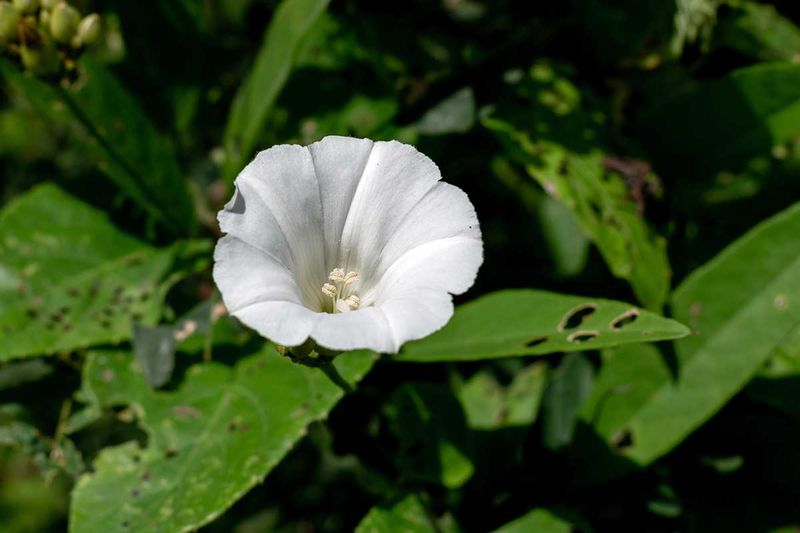
Bindweed earns its place as perhaps the most persistent and difficult weed Texas gardeners battle. This perennial vine features arrow-shaped leaves and attractive white or pink trumpet-shaped flowers that resemble cultivated morning glories.
Deep, extensive root systems extending ten feet or more underground make complete removal nearly impossible.
Roots store energy and produce new shoots even after repeated removal of above-ground growth. Each small root fragment left in soil can regenerate into a new plant.
Repeated removal of new shoots eventually exhausts root reserves, though this process requires patience and persistence over multiple growing seasons. Cut or pull new growth as soon as it appears, ideally every few days during active growing periods.
Consistent removal prevents plants from photosynthesizing and replenishing underground energy stores. Never let bindweed flower and produce seeds because this adds another layer of difficulty to control efforts.
Dig out as much root system as possible when removing bindweed from garden beds and flower borders. Work carefully to extract long root sections without breaking them into fragments.
Sift through soil to find and remove every piece of root you can locate. Apply thick layers of mulch over affected areas to suppress new growth and make emerging shoots easier to spot and remove quickly.
Landscape fabric covered with mulch can help suppress bindweed in ornamental beds, though determined shoots often find their way through seams and planting holes.
Spot-treat stubborn patches with appropriate herbicides during active growth when plants most effectively move chemicals into root systems.
Multiple applications prove necessary because bindweed rarely succumbs to single treatments. Monitor treated areas for several years because roots often survive initial control efforts across Texas gardens and landscapes.