9 Nectar-Rich Plants That Bring Butterflies To Texas Yards
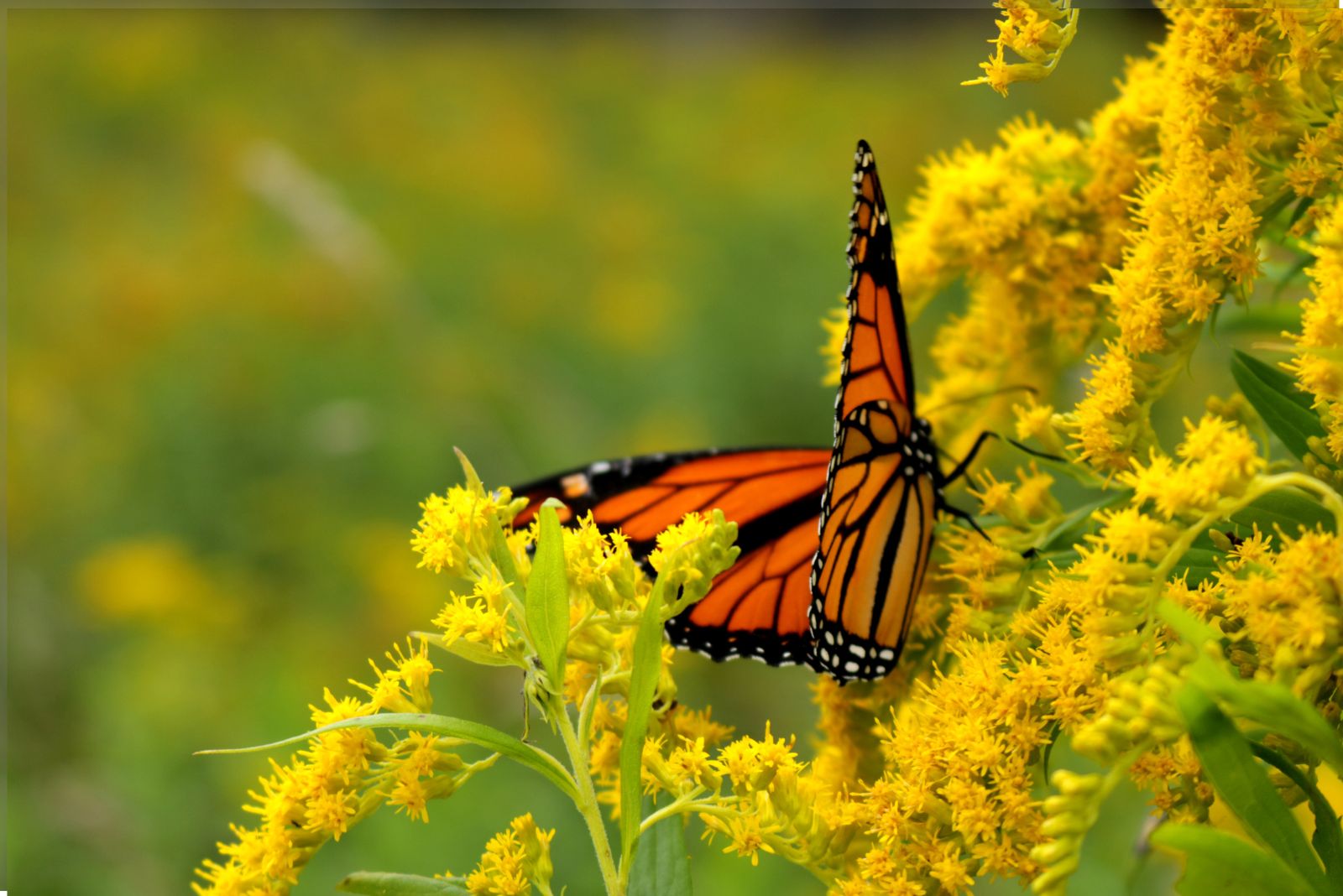
Few things make a Texas yard feel more alive than butterflies drifting from flower to flower. Their bright wings flash in the sun, turning an ordinary afternoon into something special.
If your garden feels quiet or empty, the right plants can change that fast. Butterflies are not just passing through.
They are looking for rich nectar, safe landing spots, and steady color. Texas weather can be intense, but many flowering plants thrive in the heat and still produce the sweet nectar butterflies crave.
When you choose wisely, your yard becomes more than just a patch of grass and shrubs. It becomes a feeding ground, a resting place, and even a nursery for these delicate visitors.
A few smart additions can fill your space with motion and color from spring through fall. Once butterflies find a reliable food source, they return again and again.
With the right mix of blooms, your yard can stay lively, colorful, and full of fluttering wings all season long.
1. Lantana
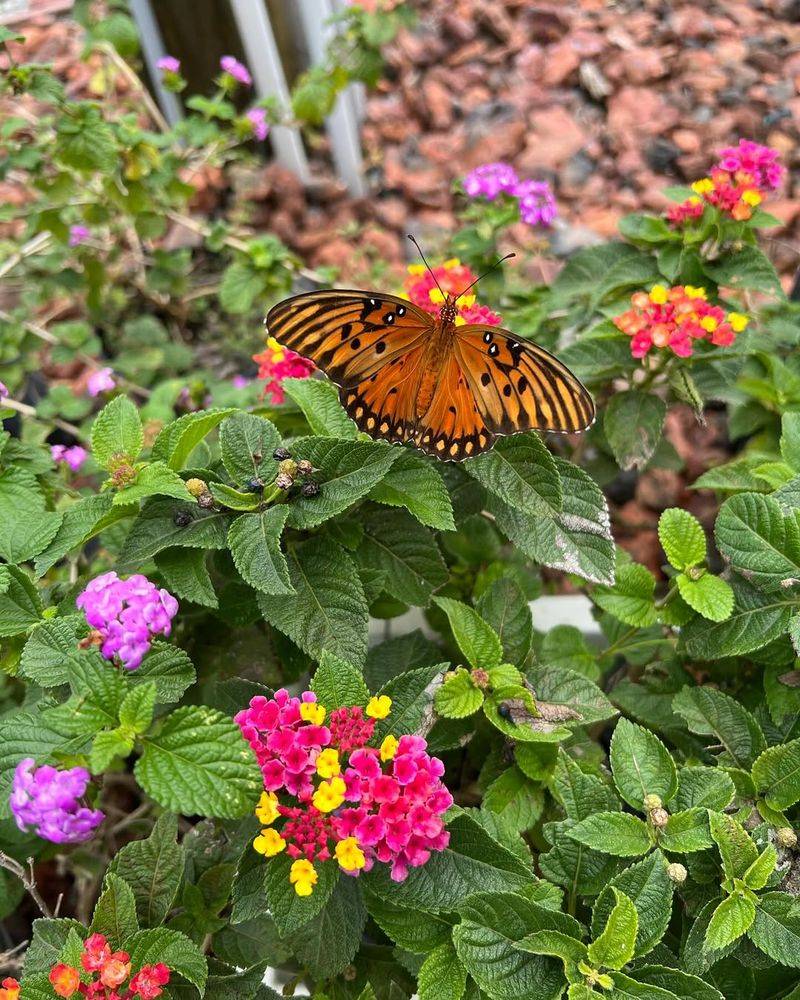
Lantana stands out as one of the absolute best choices for attracting butterflies to Texas landscapes. Gardeners across the state love this plant because it delivers nonstop color and butterfly action from spring all the way until the first frost arrives.
The clustered flowers come in stunning color combinations like orange and yellow, pink and purple, or white and gold.
Butterflies can’t resist lantana’s generous nectar supply. You’ll see Monarchs, Gulf Fritillaries, Swallowtails, and many other species visiting throughout the day.
The plant grows as a low spreading shrub or ground cover, making it perfect for borders, containers, or mass plantings.
Heat and drought don’t bother lantana one bit, which makes it ideal for Texas summers. Once established, it needs very little water and thrives in full sun.
The plant actually blooms better when conditions get hot and dry. Just give it well-drained soil and watch it perform.
In South Texas, lantana often acts as a perennial, coming back year after year. In North Texas, it might freeze back in winter but usually returns from the roots.
Some varieties stay compact while others spread wider, so choose based on your space. Deadheading spent blooms isn’t necessary, but it can encourage even more flowers.
2. Gregg’s Mistflower
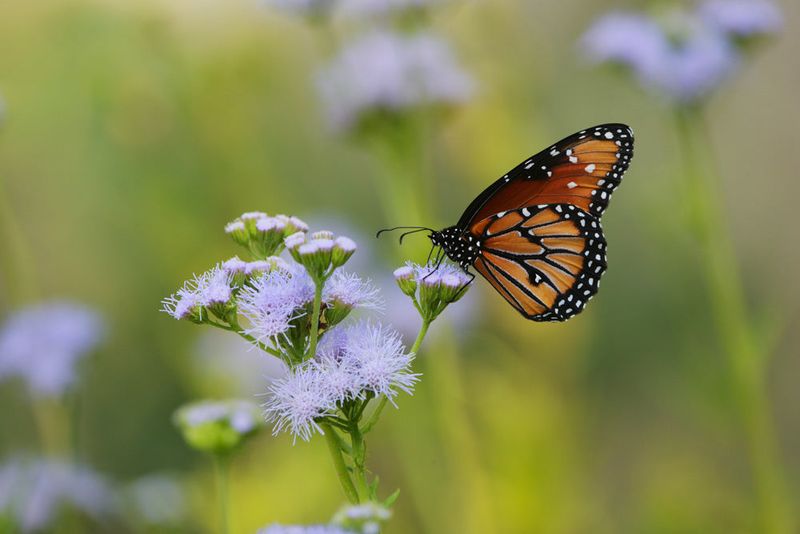
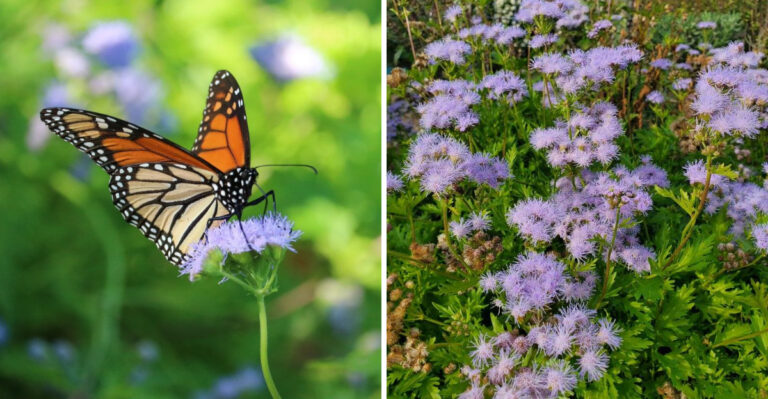
Native Texas plants often outperform imported species, and Gregg’s mistflower proves this point beautifully. This low-growing perennial produces clouds of soft blue flowers that butterflies absolutely adore.
Queen and Monarch butterflies especially seek out these blooms during their fall migration through Texas.
The flowers look almost fuzzy due to their unique structure, creating a misty appearance that gives the plant its common name. Blooming begins in late summer and continues through fall, providing crucial nectar when many other plants have finished flowering.
This timing makes it incredibly valuable for butterflies preparing for long journeys or cold weather.
Gregg’s mistflower grows about one to two feet tall and spreads to form nice patches over time. It prefers partial shade but tolerates full sun in most Texas regions.
Your Texas Garden Changes Every Week. Your Plan Should Too.
Gardening in Texas changes quickly throughout the season. Every Friday you’ll receive a simple weekly plan showing exactly what to plant, prune, fertilize, harvest, and protect so you never miss the right timing.
The plant handles our tough climate with ease, requiring minimal water once its roots establish.
Gardeners in Austin, San Antonio, and throughout Central Texas find this native particularly reliable. It spreads by underground runners, filling in spaces naturally without becoming aggressive.
Cutting it back in early summer encourages bushier growth and more blooms. Pair it with other fall bloomers like goldenrod and salvia for a butterfly buffet that lasts until frost.
3. Zinnias
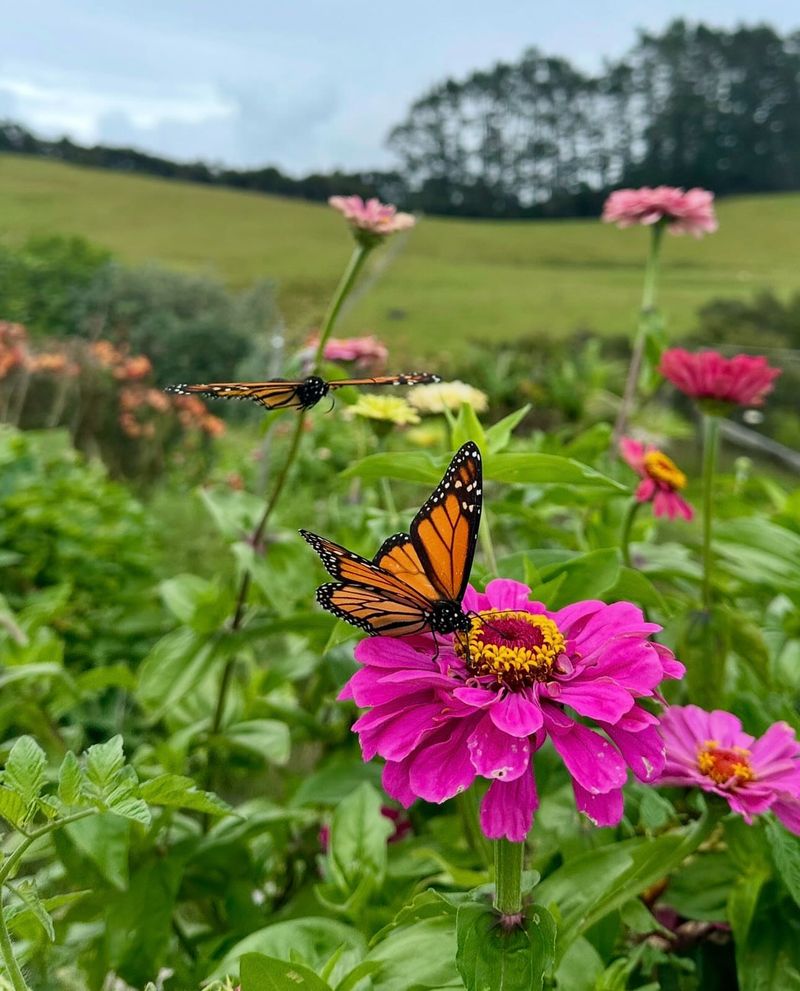
Few flowers match zinnias for pure butterfly-attracting power combined with easy growing. These cheerful annuals produce bold, colorful blooms that butterflies spot from far away.
Plant them once from seed or transplants, and they’ll reward you with flowers all summer long without much fuss.
Zinnias come in nearly every color except blue, giving you endless design possibilities. The flat or slightly rounded flower heads provide perfect landing pads for butterflies to rest while they drink nectar.
Swallowtails, Painted Ladies, and Sulphurs are frequent visitors to zinnia patches.
Hot Texas summers don’t slow zinnias down at all. They actually thrive in heat and full sun, blooming more profusely as temperatures rise.
Regular watering helps them look their best, but they tolerate some drought once established. Space plants properly to allow good air circulation, which helps prevent powdery mildew in humid areas.
Deadheading spent blooms keeps zinnias producing fresh flowers continuously. You can also let some flowers go to seed late in the season to attract seed-eating birds.
Tall varieties work great as cut flowers, while shorter types suit containers and front-of-border plantings. Starting seeds directly in the garden after the last frost date works perfectly throughout Texas.
4. Salvia
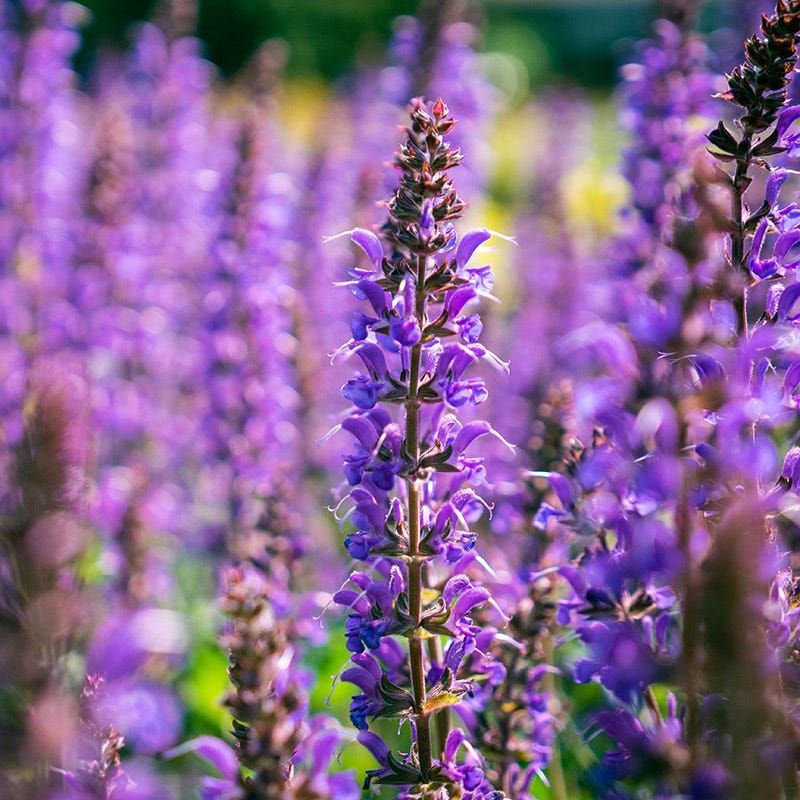
Salvia varieties bring incredible versatility to Texas butterfly gardens, with options for every region and situation. Autumn sage and mealy blue sage rank among the best performers, producing tubular flowers packed with nectar.
Butterflies love them, and hummingbirds often visit too, creating entertaining wildlife watching opportunities.
These salvias bloom for months on end, often starting in spring and continuing until frost arrives in fall. The flowers come in shades of red, pink, purple, white, and coral.
Plants form neat mounds of aromatic foliage topped with flower spikes that rise above the leaves.
Heat and drought resistance make salvias perfect for Texas conditions. They actually bloom better with moderate water stress, so avoid overwatering once they’re established.
Full sun brings out the best flowering, though they tolerate some afternoon shade in the hottest parts of the state.
Cutting salvias back by about one-third in midsummer encourages fresh growth and renewed blooming. This quick trim keeps plants looking tidy and productive.
Native Texas salvias require almost no maintenance beyond occasional trimming. They work beautifully in mass plantings, mixed borders, or containers.
Butterflies visit salvias constantly, making them must-have plants for gardens from El Paso to Beaumont.
5. Milkweed
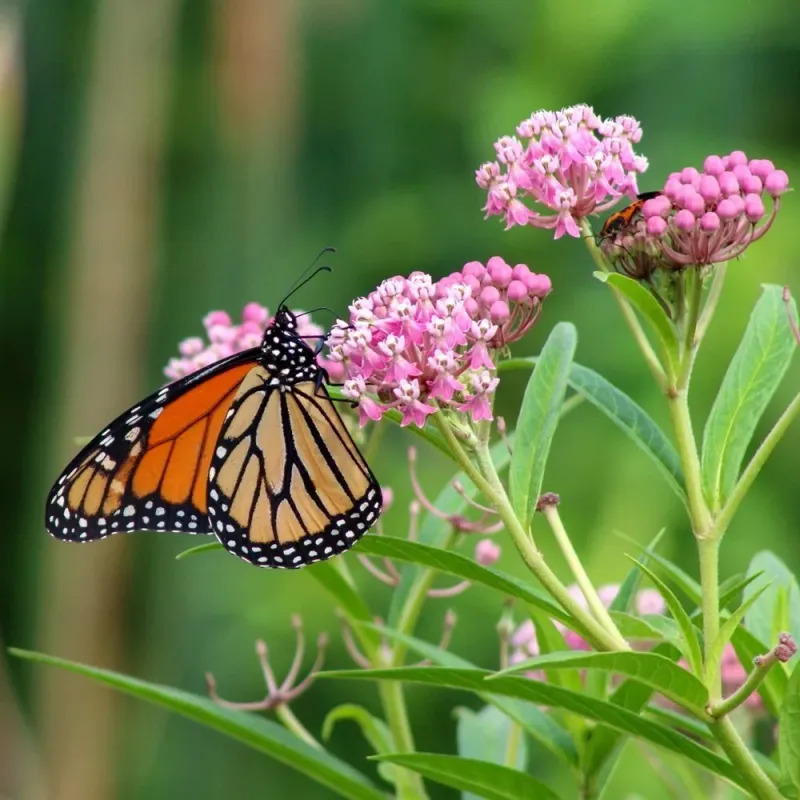
No plant matters more to Monarch butterflies than milkweed, making it essential for any Texas butterfly garden.
Milkweed serves double duty, providing nectar for adult butterflies while also acting as the only food source for Monarch caterpillars. Without milkweed, Monarchs cannot complete their life cycle.
Several native milkweed species grow naturally across Texas, and these perform far better than tropical varieties.
Antelope horn milkweed, green milkweed, and butterfly weed all thrive in our climate. Their flowers range from orange and yellow to white and pink, depending on the species.
Blooming occurs from spring through summer, coinciding with Monarch migration patterns through Texas.
The plants develop interesting seed pods later in the season that eventually split open, releasing silky seeds that float on the wind. Butterflies and other pollinators visit the fragrant flower clusters throughout the day.
Milkweed grows best in full sun with good drainage. Once established, these tough natives handle drought extremely well, making them perfect for low-water Texas landscapes.
Some species grow two to three feet tall, while others stay lower. Let caterpillars munch the leaves without worry because the plants usually recover quickly.
Growing milkweed helps support Monarch populations that travel thousands of miles between Mexico and Canada.
6. Frostweed
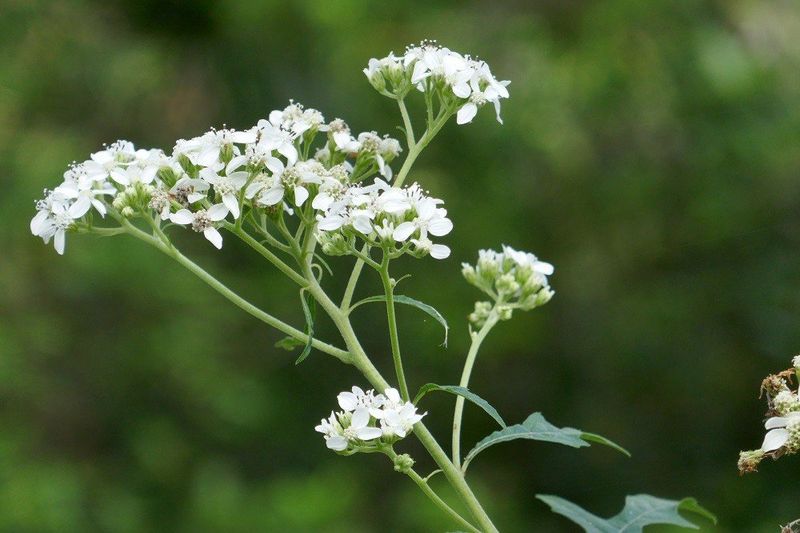
Timing matters tremendously for migrating butterflies, and frostweed blooms arrive exactly when they need it most. This native Texas plant produces masses of small white flowers in late fall, creating vital fuel stations for butterflies heading south.
Monarchs and other species gather at frostweed patches, tanking up on nectar before continuing their journeys.
The plant grows three to five feet tall with an upright, somewhat gangly form that looks best toward the back of garden beds. Dark green leaves cover the stems throughout summer, but the real show begins when those white flower clusters appear in October and November.
Frostweed earned its interesting name from a winter phenomenon. When the first hard freeze arrives, ice crystals form along the stems near the base, creating beautiful ribbon-like structures.
These ice formations last only until the sun melts them, but they’re fascinating to observe on cold mornings.
This native plant grows naturally in partial shade along woodland edges throughout Texas. It handles full sun too but appreciates some afternoon shade in the hottest regions.
Once established, frostweed needs little attention and spreads slowly to form nice colonies. The late-season nectar source makes frostweed invaluable for supporting butterfly populations during a critical time.
7. Mexican Sunflower
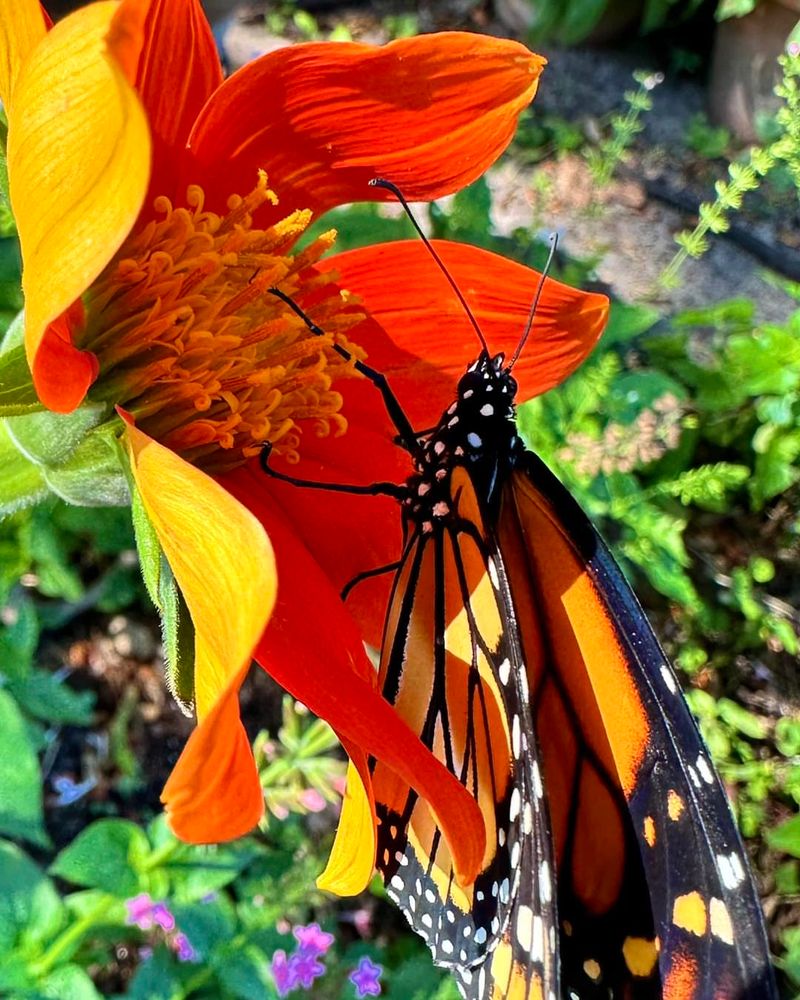
Mexican sunflower earns its reputation as a butterfly magnet through sheer nectar abundance and visibility. The brilliant orange flowers glow like beacons in the garden, drawing butterflies from remarkable distances.
Each bloom measures three to four inches across, providing generous landing platforms and abundant nectar rewards.
Growing six feet tall or more, Mexican sunflower makes a bold statement in Texas landscapes.
The large, velvety leaves and sturdy stems create substantial plants that work well as temporary hedges or background plantings. Flowers appear from midsummer through fall, blooming prolifically in the heat.
Tough doesn’t begin to describe this annual’s tolerance for difficult conditions. It thrives in poor soil, handles intense heat without complaint, and keeps blooming even when water becomes scarce.
In fact, rich soil and too much water can cause excessive leaf growth at the expense of flowers.
Starting Mexican sunflower from seed is simple and economical. Direct sow after frost danger passes, or start transplants indoors for earlier blooms.
Plants grow quickly, often reaching mature size within two months. Butterflies of all kinds visit these flowers constantly, with Monarchs, Queens, Swallowtails, and Sulphurs being regular guests.
The tall plants also provide shelter and resting spots for butterflies throughout the day in Texas gardens.
8. Black-Eyed Susan
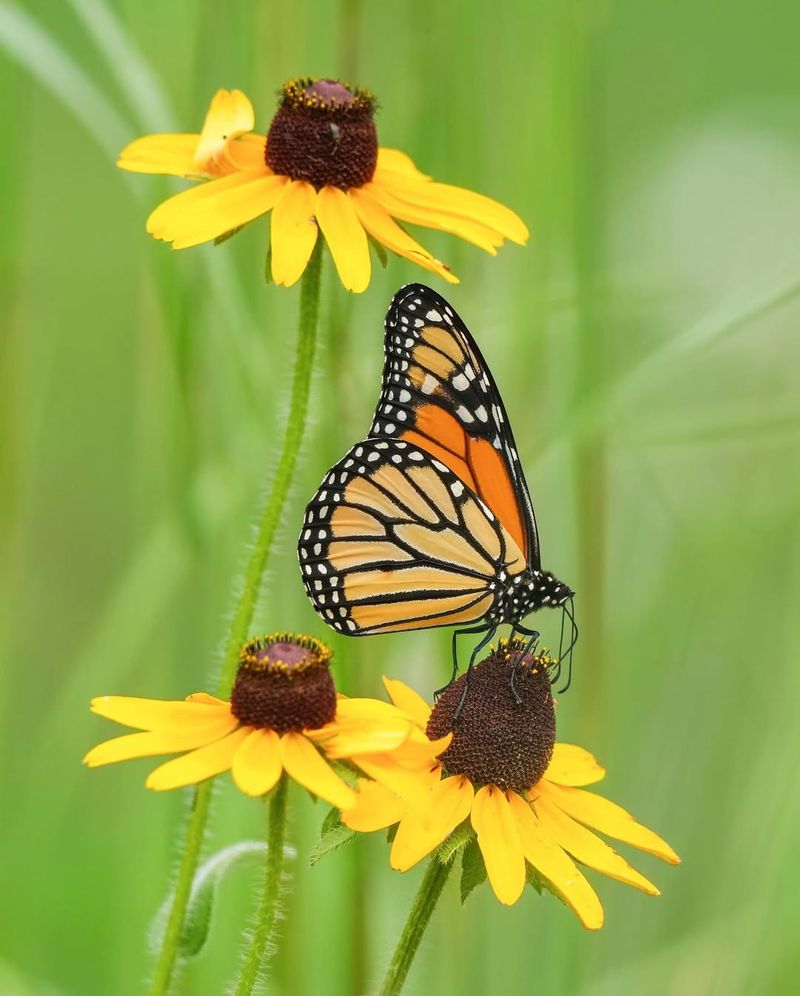
Cheerful golden petals surrounding dark chocolate centers make black-eyed Susans instantly recognizable across Texas.
These native wildflowers bring reliable nectar production and carefree growing to butterfly gardens throughout the state. Their bright faces turn toward the sun, creating sunny displays that last for weeks.
Butterflies appreciate black-eyed Susans for their accessible nectar and sturdy landing surfaces. The slightly raised center cone provides perfect footing while butterflies feed from the disk flowers.
Many native bees and other beneficial insects also visit these blooms, increasing overall garden biodiversity.
Black-eyed Susans bloom primarily in summer and early fall, with peak flowering occurring during the hottest months.
Plants typically grow two to three feet tall with multiple branching stems that produce dozens of flowers. The blooms also make excellent cut flowers that last well in vases.
Hardy barely describes these tough natives. They handle Texas heat, drought, poor soil, and neglect without missing a beat.
Full sun brings the best flowering, though they tolerate some light shade. Black-eyed Susans often reseed themselves, creating natural drifts that look beautiful in informal garden settings.
They combine wonderfully with purple coneflowers, salvias, and grasses for prairie-style plantings that support butterflies and other wildlife across Texas landscapes.
9. Goldenrod
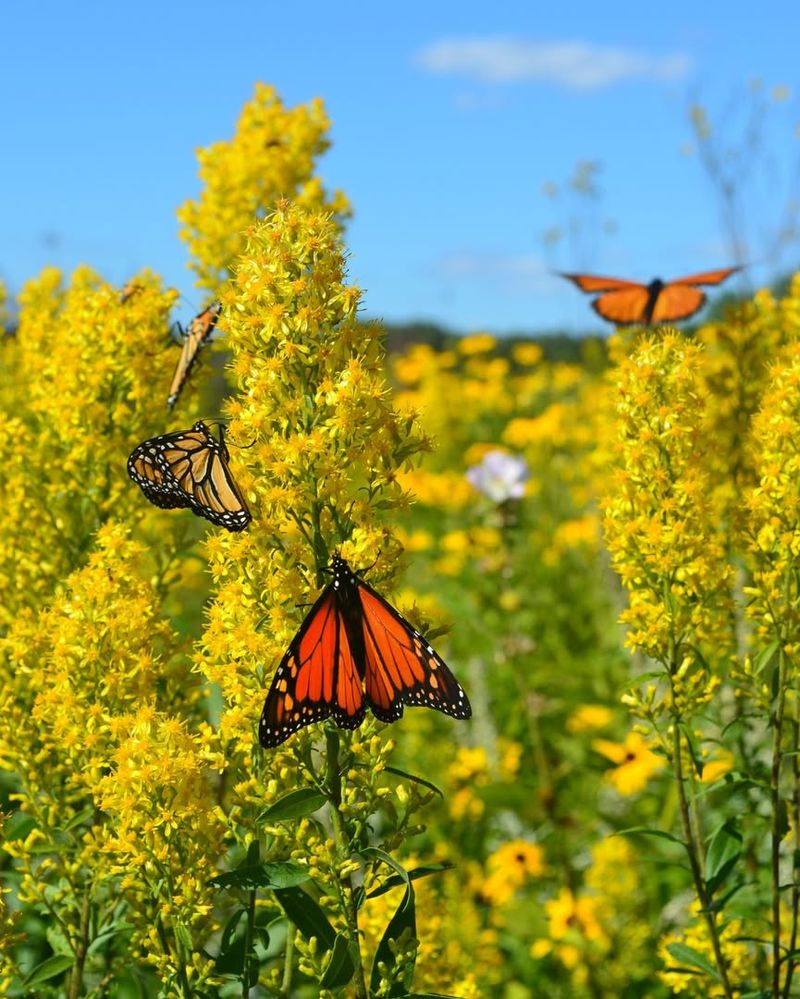
Goldenrod gets blamed unfairly for causing allergies when ragweed is the real culprit. Once you learn the truth, you’ll appreciate goldenrod as one of the most important late-season nectar sources for Texas butterflies.
The bright yellow flower plumes appear in late summer and fall, creating golden displays that attract butterflies by the dozens.
Multiple butterfly species depend on goldenrod’s abundant nectar to prepare for winter or migration. Monarchs, Sulphurs, skippers, and many others gather at goldenrod patches, feeding frantically to build energy reserves.
The timing of goldenrod blooms makes it critically important for butterfly survival.
These native perennials grow two to four feet tall, depending on species and growing conditions. The flower clusters branch into beautiful plumes that wave gracefully in the breeze.
Plants spread gradually through underground rhizomes, forming substantial colonies over time without becoming invasive.
Drought tolerance ranks extremely high with goldenrod, making it perfect for tough Texas sites. It grows in full sun to partial shade and handles clay or sandy soils equally well.
Cutting plants back by half in early summer results in shorter, bushier growth that’s less likely to flop over. Goldenrod pairs beautifully with asters, frostweed, and ornamental grasses in late-season Texas gardens that support butterflies when they need help most.