2026’s Best New Sun Perennials For Oregon Gardens
Every new gardening season brings fresh excitement, and 2026 is no exception for Oregon plant lovers.
A new wave of sun loving perennials is stepping into the spotlight, offering brighter colors, longer bloom times, and tougher performance in the Pacific Northwest climate.
These newcomers are bred to handle Oregon’s mix of cool springs, warm summers, and occasional dry spells while delivering reliable beauty year after year. Expect vivid blossoms, pollinator friendly blooms, and foliage that stays attractive well beyond peak flowering.
Even better, many of these modern varieties are more resilient and lower maintenance, making them perfect for gardeners who want big impact without constant upkeep.
If your sunny beds are ready for a refresh, this season’s standout introductions promise bold color, strong growth, and plenty of garden wow factor that will carry your landscape beautifully through the months ahead.
1. ‘Sundial’ False Sunflower (Heliopsis Helianthoides)
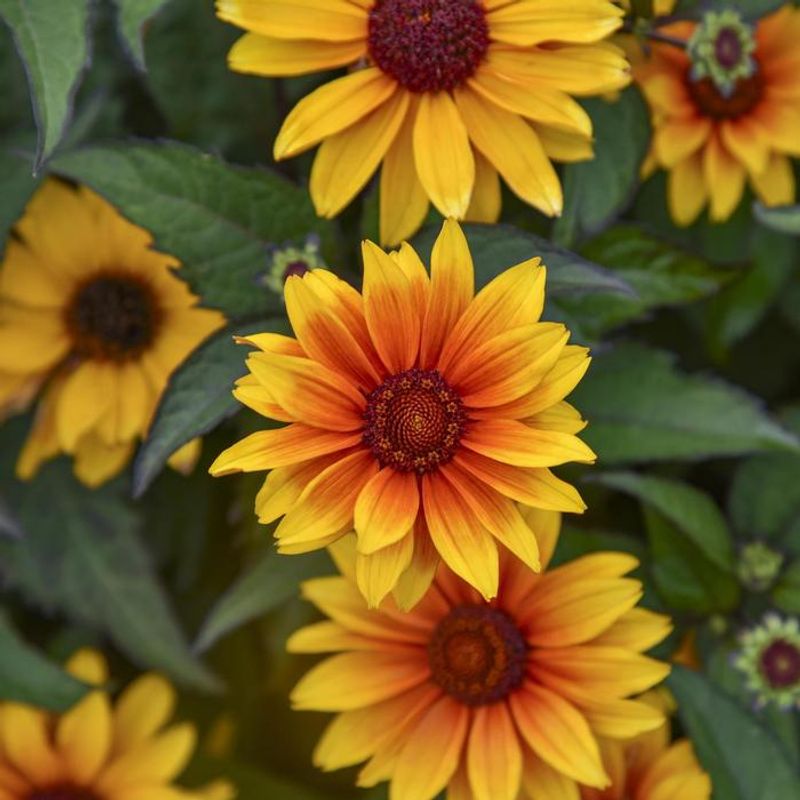
Few plants bring the kind of cheerful, sunny energy that ‘Sundial’ false sunflower delivers all season long. This compact variety produces a steady stream of golden-yellow, daisy-like blooms from early summer straight through fall.
Oregon gardeners will love how little fuss it requires once it settles in.
Unlike some perennials that peter out after their first flush of flowers, ‘Sundial’ just keeps going. It stays tidy and upright without needing staking, which makes it a smart pick for busy gardeners across the Willamette Valley and beyond.
It tops out at around 24 inches tall, so it fits nicely in the middle of a mixed border.
Plant it in full sun and well-drained soil for the best results. It handles Oregon’s summer heat well and bounces back reliably each spring.
Deadheading spent blooms encourages even more flowers, but the plant will still rebloom even if you skip it. Pollinators absolutely love it.
Bees and butterflies flock to the blooms all summer. Pair it with ornamental grasses or purple coneflowers for a colorful, low-maintenance display that looks great from June through October in Oregon landscapes.
2. Skyward™ Light Pink Speedwell (Veronica Hybrid)
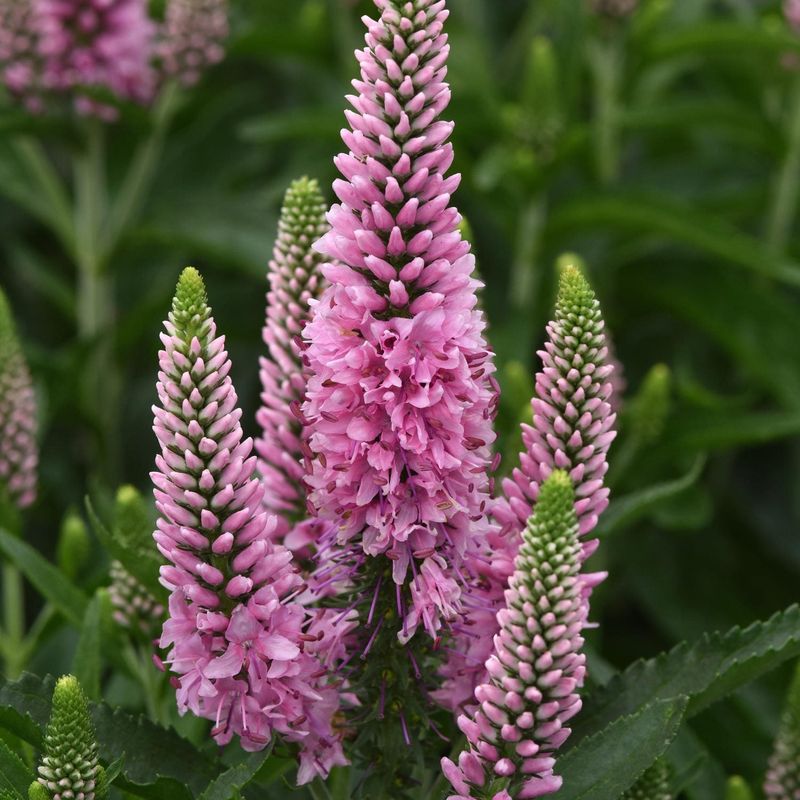
Tall, elegant, and surprisingly tough, Skyward™ Light Pink speedwell is turning heads in the perennial world for good reason.
Its slender spikes of soft pink flowers rise above the foliage like little beacons, attracting hummingbirds and butterflies from late spring into summer.
For Oregon gardeners looking for vertical interest without the headache of staking, this one is a real find.
Speedwells have always been reliable workhorses in the garden, but this new hybrid takes things up a notch. The color is a fresh, clean light pink that pairs beautifully with blues, purples, and whites.
It grows to about 20 to 24 inches tall and spreads modestly, making it easy to manage in garden beds across the state.
Full sun is where this plant shines brightest, and it handles both the wet winters and dry summers that Oregon gardeners know well. Water it regularly during the first season to help it establish strong roots.
After that, it becomes quite drought-tolerant. Cut the spent flower spikes back after blooming to encourage a second flush of color.
Your Oregon Garden Changes Every Week. Your Plan Should Too.
Gardening in Oregon changes quickly throughout the season. Every Friday you’ll receive a simple weekly plan showing exactly what to plant, prune, fertilize, harvest, and protect so you never miss the right timing.
It looks stunning alongside lavender or catmint in a cottage-style planting scheme.
3. ‘Passion Hearts’ Fernleaf Bleeding Heart (Dicentra Hybrid)
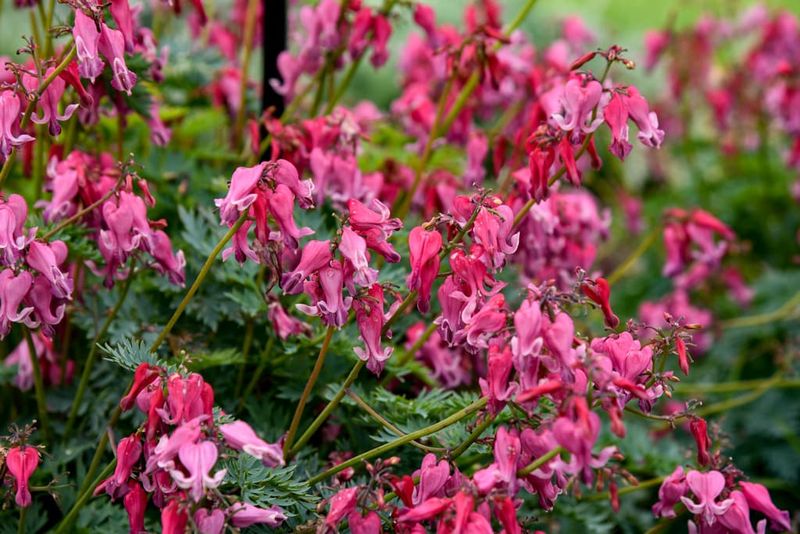
Most bleeding hearts fade away by midsummer, but ‘Passion Hearts’ breaks that rule in the best possible way. This hybrid keeps its beautiful ferny, blue-green foliage looking fresh all season long, even through Oregon’s warmer summer months.
The rosy-pink, heart-shaped flowers appear in spring and often rebloom later in the season when temperatures cool down again.
What makes this variety extra special is its sun tolerance. Traditional bleeding hearts prefer shade, but ‘Passion Hearts’ handles partial to full sun without skipping a beat.
That opens up a lot more planting possibilities for Oregon gardeners who have sunny spots but want something with a softer, more romantic feel.
It grows about 12 to 18 inches tall and wide, forming a neat, rounded mound that works beautifully as edging or in containers on a sunny patio. The foliage alone is worth growing it for.
Plant it alongside bold-leafed hostas or fine-textured grasses to create interesting contrast. Water it consistently during dry spells, especially in eastern Oregon where summers can get quite hot.
Once established, it is remarkably resilient and returns faithfully each spring with minimal care needed from you.
4. Orange Sparkler Dianthus (Dianthus Hybrid)
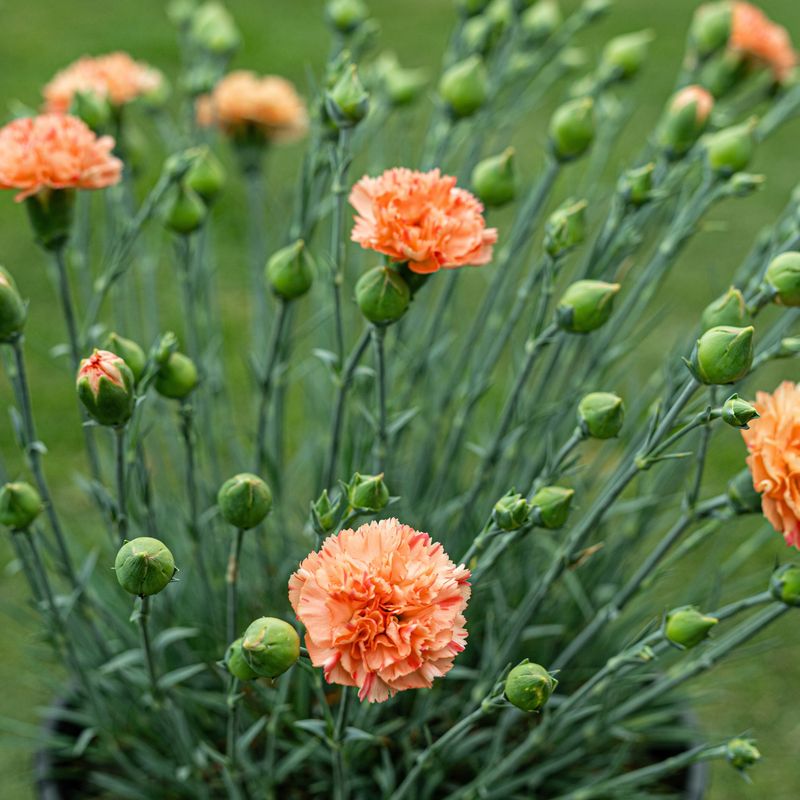
Bright, bold, and totally unexpected, Orange Sparkler dianthus brings a color to the perennial garden that is hard to find anywhere else. The flowers are a vivid, warm orange with fringed petals that look almost like tiny carnations.
Against the plant’s blue-green, grass-like foliage, the contrast is absolutely stunning in any sunny Oregon garden bed.
Dianthus plants are already known for being tough and reliable, and this new hybrid is no exception. It blooms heavily in late spring and early summer, then often reblooms again in fall when Oregon’s temperatures drop back down.
The flowers also carry a light, spicy fragrance that makes them a pleasure to have near a walkway or patio seating area.
Orange Sparkler stays compact at around 10 to 12 inches tall, making it a great front-of-border plant or container specimen. It thrives in full sun and needs well-drained soil to perform its best.
Avoid overwatering, especially in heavier Oregon clay soils, by amending with compost or planting in raised beds. Deadhead regularly to extend the bloom season.
It pairs beautifully with blue salvia, purple coneflower, or ornamental grasses for a lively, warm-toned color scheme that pops all season long.
5. ‘Prairie Princess’ Ironweed (Vernonia Hybrid)
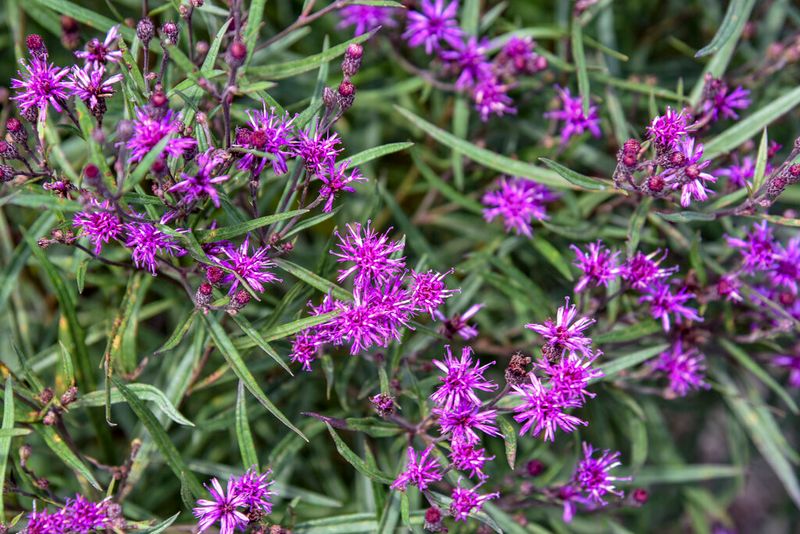
There is something bold and unapologetic about ‘Prairie Princess’ ironweed. Its clusters of vivid purple-magenta flowers arrive in late summer and fall, right when many other perennials are winding down.
For Oregon gardeners who want late-season color, this plant fills that gap like a champ.
Traditional ironweeds can get quite tall and floppy, but ‘Prairie Princess’ is a more compact hybrid that stays manageable at around 30 to 36 inches tall. It holds itself upright without staking, which is a big plus in Oregon’s often breezy conditions.
The deep green foliage stays clean and attractive throughout the growing season, providing a nice backdrop for the stunning floral display.
Monarch butterflies and other pollinators are strongly attracted to the blooms, making this plant a great choice for anyone building a pollinator-friendly garden in Oregon. Plant it in full sun with average to moist soil for best performance.
It actually tolerates wet conditions better than many perennials, which suits Oregon’s rainy spring seasons well.
Combine it with ornamental grasses, goldenrod, or rudbeckia for a prairie-inspired planting that looks wildly beautiful from August all the way through October across the Pacific Northwest.
6. ‘Violets Are Blue’ Delphinium (Delphinium Elatum)
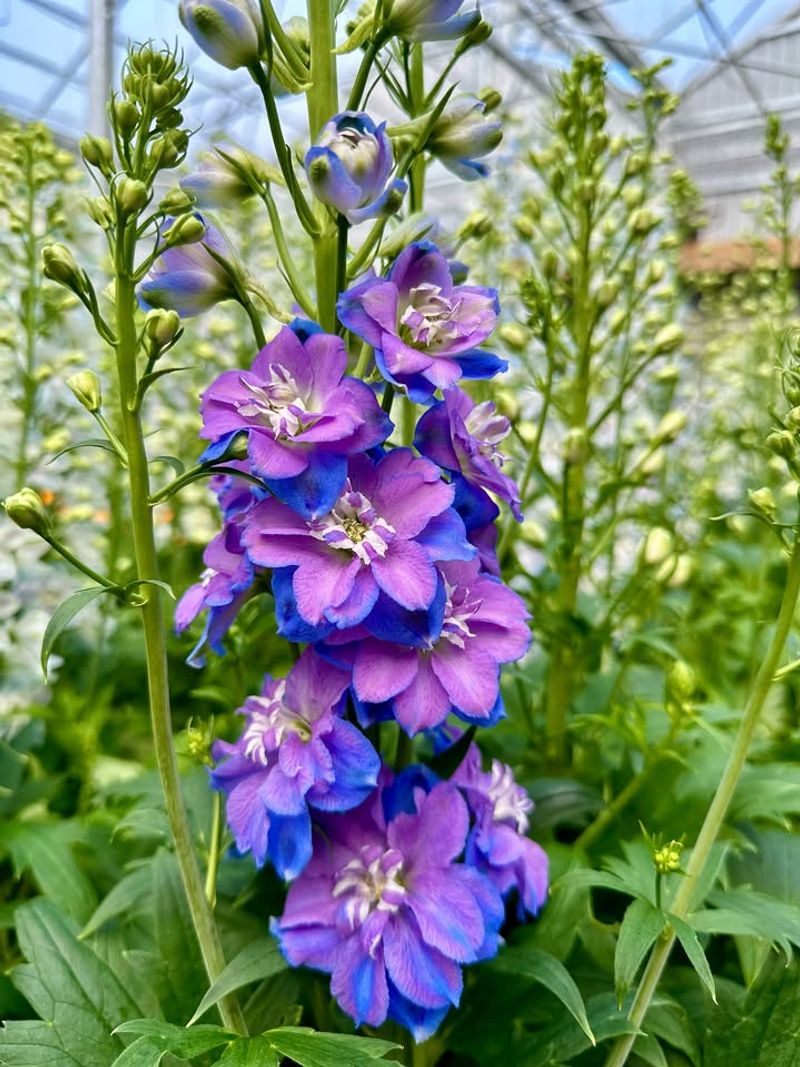
If you have ever tried growing traditional delphiniums in Oregon and struggled, ‘Violets Are Blue’ might just change your mind about this classic cottage garden plant.
Bred to be sturdier and more weather-resilient than old-fashioned varieties, it produces tall, dramatic spikes of rich violet-blue flowers that are absolutely breathtaking in a sunny garden border.
Delphiniums have a reputation for being fussy, but this newer selection has been developed with improved disease resistance and stronger stems.
It handles Oregon’s wet spring weather much better than older types, reducing the risk of crown rot and stem issues that used to frustrate gardeners across the Willamette Valley and coast.
Expect plants to reach 4 to 5 feet tall in full bloom, so position them toward the back of a border or against a fence for support. Some light staking is still a good idea in windier Oregon locations.
The blooms appear in late spring to early summer and often rebloom in early fall if you cut the spent spikes back promptly.
Pair ‘Violets Are Blue’ with roses, foxgloves, or white Shasta daisies for a classic, romantic garden combination that looks like something straight out of an English garden catalog.
7. ‘JoJo’ Joe-Pye Weed (Eutrochium Fistulosum)
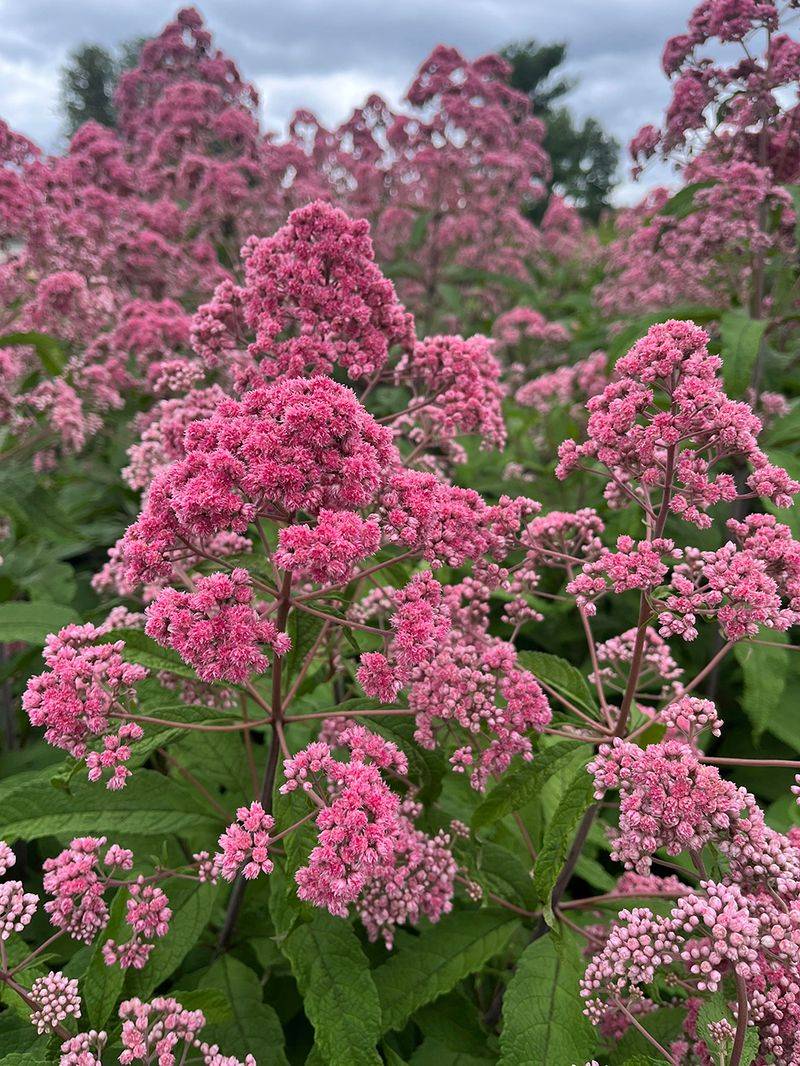
Joe-Pye weed has been a native garden favorite for years, but the original species gets enormous, sometimes reaching 7 feet or more.
‘JoJo’ is a compact selection that brings all the same charm and pollinator power in a much more garden-friendly size. It tops out at just 3 to 4 feet tall, making it perfect for mid-border plantings in Oregon landscapes.
The fluffy, mauve-pink flower clusters bloom from midsummer into fall and are absolutely irresistible to butterflies. Monarch butterflies especially love them, and seeing a plant covered in fluttering wings on a warm Oregon afternoon is genuinely magical.
The foliage is bold and attractive even before the flowers open, giving the plant a strong presence all season long.
Plant ‘JoJo’ in full sun to light shade with moist, well-drained soil. It handles Oregon’s wet winters and dry summers with equal resilience once established.
It pairs beautifully with ornamental grasses, rudbeckia, or ironweed for a late-summer meadow look. This plant is also native to North America, which means it supports local ecosystems right here in Oregon.
If you want a tough, beautiful, wildlife-friendly perennial that requires almost no fussing, ‘JoJo’ belongs in your garden without question.
8. ‘Opal’ Threadleaf Coreopsis (Coreopsis Verticillata)
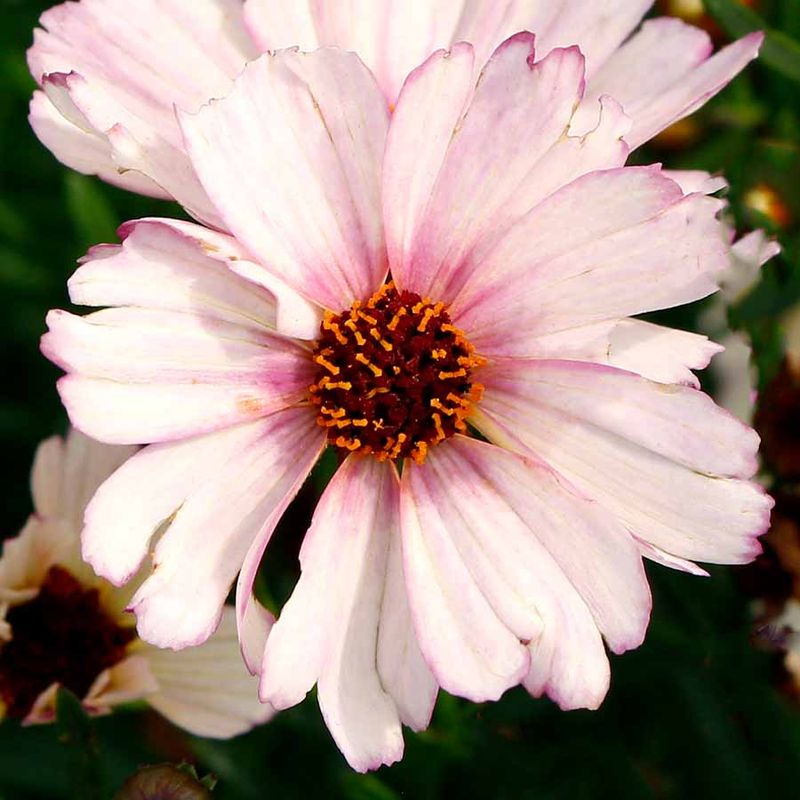
Coreopsis is one of the most sun-loving, drought-tough perennials you can grow, and ‘Opal’ is a stunning new twist on this beloved plant. Instead of the typical bright yellow blooms, ‘Opal’ produces soft, creamy-white flowers flushed with the palest blush pink.
The effect is almost ethereal, especially when the fine, ferny foliage catches a breeze in an Oregon garden.
What really sets this variety apart is its incredibly long bloom season. It starts flowering in late spring and keeps going strong right through fall without much help from you.
Deadheading is optional since the plant self-cleans fairly well, but a light trim midseason can refresh the look and encourage another burst of blooms before the season ends.
At just 18 to 24 inches tall, ‘Opal’ works well as a front-to-middle border plant and looks gorgeous in mass plantings or mixed containers. Full sun and well-drained soil are the keys to keeping it happy in Oregon’s varied climates.
It handles dry summer conditions in places like Medford or Bend very well once established.
Try pairing it with lavender, salvia, or ornamental grasses to create a soft, romantic planting scheme that feels effortlessly elegant throughout the entire growing season.
9. ‘Golden Needles’ Prairie Dropseed (Sporobolus Heterolepis)
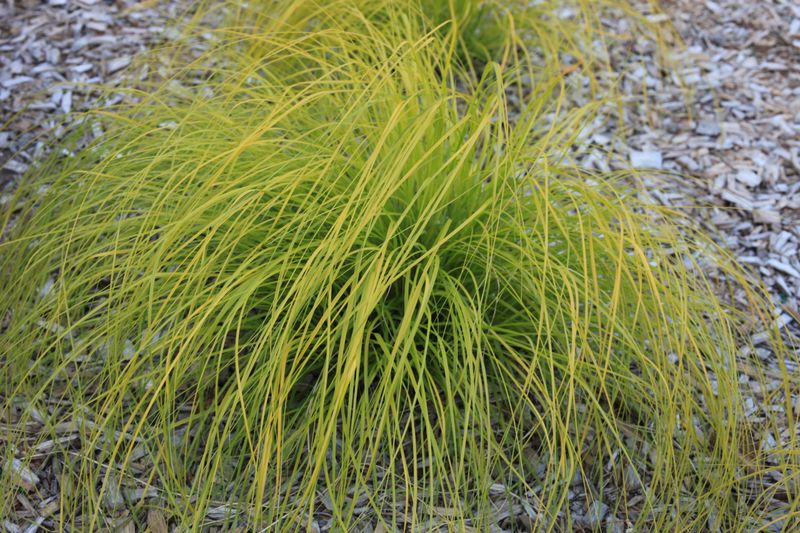
Ornamental grasses often play a supporting role in the garden, but ‘Golden Needles’ prairie dropseed insists on being noticed. Its fine, needle-like foliage emerges in a warm golden-yellow color that lights up a sunny garden bed like nothing else.
It forms a graceful, arching mound that moves beautifully in the wind, adding life and texture to any Oregon landscape.
Prairie dropseed is a native North American grass that is incredibly adaptable. It handles heat, drought, and poor soils without complaint, which makes it an excellent choice for Oregon gardeners dealing with challenging planting spots.
In fall, the foliage turns rich shades of orange and copper, giving the garden a warm, glowing look as the season winds down.
The delicate flower plumes that appear in late summer carry a surprisingly pleasant fragrance, sometimes described as buttery popcorn. They are airy and light, adding a soft, wispy quality above the golden foliage.
This grass grows slowly at first but becomes a long-lived, reliable garden resident once established. It works beautifully alongside bold-flowered perennials like rudbeckia, coneflower, or salvia.
For Oregon rock gardens, dry slopes, or prairie-style plantings, ‘Golden Needles’ prairie dropseed is a standout choice you will not regret planting.
10. Red Angelina™ Sedum (Sedum Hybrid)
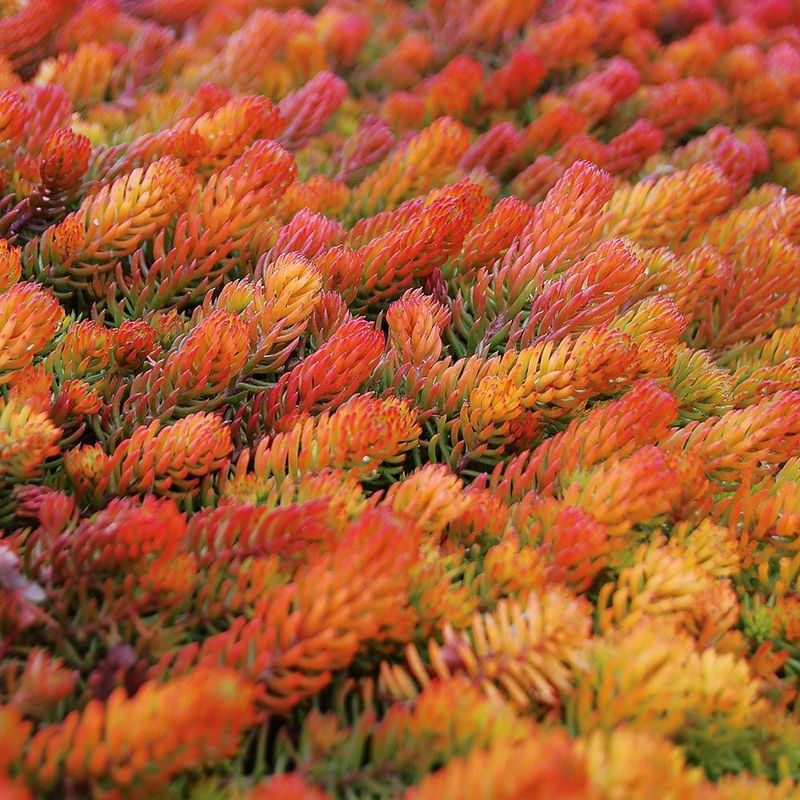
Foliage plants often get overlooked in favor of big bloomers, but Red Angelina™ sedum proves that leaves can be just as exciting as flowers. Its succulent, needle-like foliage is a vivid mix of red, orange, and bronze that intensifies in color as temperatures cool in fall.
In an Oregon garden, it practically glows in the low autumn sunlight.
Sedum is already famous for being nearly indestructible, and this hybrid is no different. It thrives in full sun, tolerates dry conditions beautifully, and shrugs off Oregon’s summer heat without missing a beat.
In late summer, clusters of tiny, star-shaped yellow flowers appear above the colorful foliage, adding a cheerful contrast that pollinators find very appealing.
Red Angelina™ grows about 6 to 8 inches tall and spreads to form a low, colorful mat. It works brilliantly as a groundcover, spilling over the edges of containers, or tucked into rock gardens and dry slopes across Oregon.
Excellent drainage is the most important thing this plant needs. Avoid heavy, soggy soils and it will reward you with season-long color and very little maintenance.
Pair it with blue fescue grass or purple salvia for a bold, striking color combination that looks sharp from spring all the way through the first frost.