10 Climbing Plants That Will Cover Texas Fences In A Flash
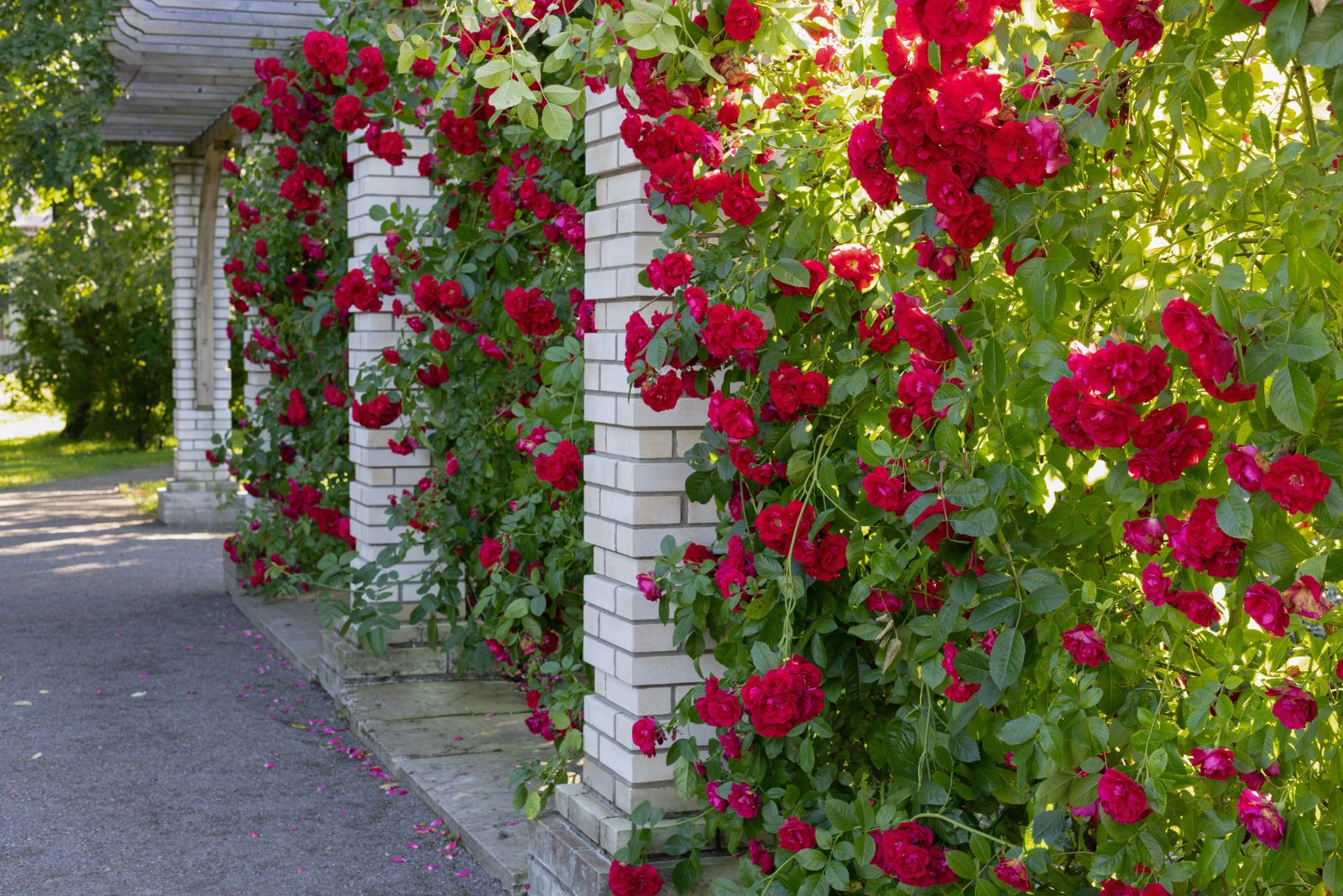
Got a plain fence that feels a little too bare? In Texas, the right climbing plants can transform that empty stretch into a lush, living wall in no time.
Fast growing vines love the Texas sun, and many of them are tough enough to handle heat, dry spells, and unpredictable weather without slowing down.
Some bring bold flowers, others offer thick greenery, and a few even attract butterflies and hummingbirds, turning your fence into a vibrant garden feature.
The secret is choosing climbers that grow quickly while staying manageable and suited to your space. Whether you want extra privacy, a burst of color, or a softer natural look, these energetic growers can do the job faster than you might expect.
Here are climbing plants that will cover Texas fences in a flash and give your yard a fresh, lively upgrade.
1. Coral Honeysuckle (Lonicera Sempervirens)
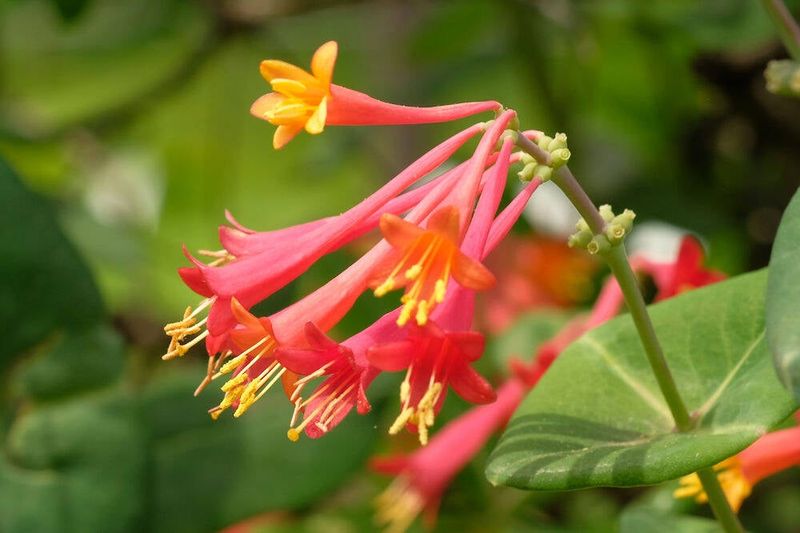
Picture a hummingbird hovering right outside your window, drawn in by a wall of bright red and orange blooms. That is exactly what Coral Honeysuckle can do for your Texas fence.
This native vine is one of the best choices for Texas gardeners because it grows fast but stays manageable, so you stay in control.
Unlike its invasive cousin, Japanese honeysuckle, Coral Honeysuckle plays nice in the garden. It will not take over your yard or crowd out your other plants.
Once it gets established, it handles heat and drought like a champ, making it a great fit for the dry stretches Texas summers are known for.
The tubular flowers bloom from spring through fall, giving you months of color. In the warmer parts of Texas, the plant stays evergreen all year long.
Plant it near a fence, trellis, or mailbox post and give it something to grab onto. It uses twining stems to climb, so a little support goes a long way. Water it regularly the first season, then step back and let it do its thing.
2. Crossvine (Bignonia Capreolata)
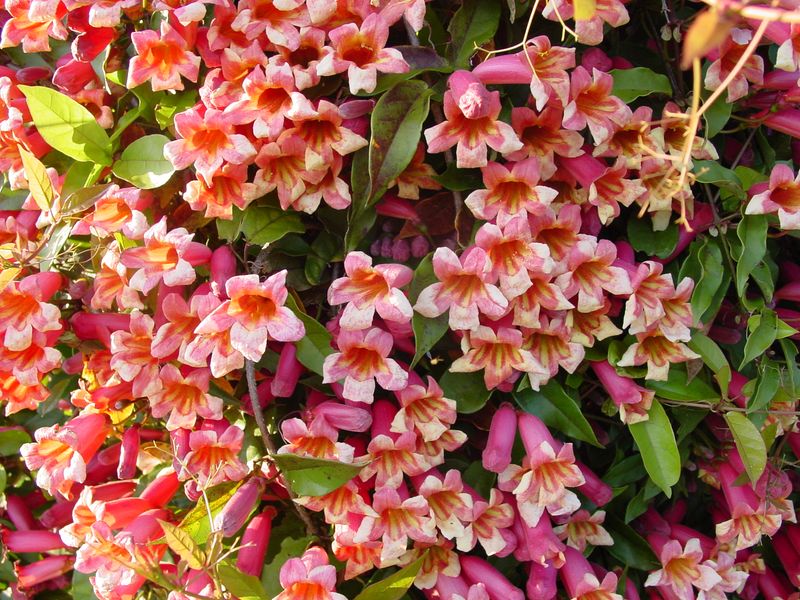
Few vines in Texas grow as boldly or as quickly as Crossvine. If you have a large fence that needs covering in a hurry, this is your plant.
It can shoot up several feet in a single season, latching onto surfaces with sticky tendrils that grip wood, brick, and metal without any help from you.
Crossvine is a true Texas tough plant. It thrives in heat, humidity, and even poor soil, which makes it ideal for spots in your yard where nothing else seems to want to grow.
The spring flowers are a real showstopper, bursting open in shades of orange, red, and yellow that look like tiny trumpets calling out to every passing hummingbird.
In the warmer regions of Texas, Crossvine holds onto most of its leaves through winter, giving your fence year-round coverage. It is native to the eastern part of the state but adapts well across most of Texas.
Prune it back after flowering if it gets too enthusiastic. A little trim keeps it tidy and actually encourages more blooms the following year. This vine rewards low-maintenance gardeners with big, beautiful results.
Your Texas Garden Changes Every Week. Your Plan Should Too.
Gardening in Texas changes quickly throughout the season. Every Friday you’ll receive a simple weekly plan showing exactly what to plant, prune, fertilize, harvest, and protect so you never miss the right timing.
3. Carolina Jessamine (Gelsemium Sempervirens)
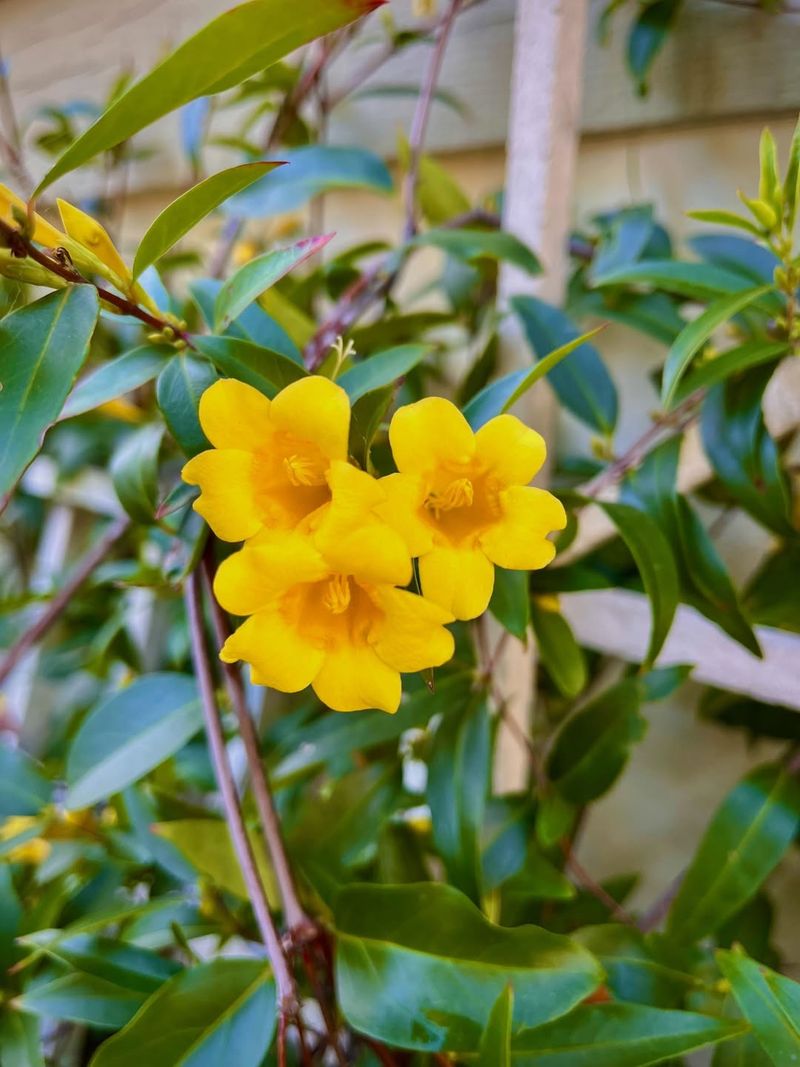
Bright yellow flowers in early spring might be the most cheerful surprise a Texas fence can offer.
Carolina Jessamine delivers exactly that, often blooming before most other plants even wake up from winter. That early burst of color makes it a neighborhood favorite from Houston to San Antonio.
This vine is a rapid grower once it settles in. It twines naturally around fence rails, wire, and trellises, making it easy to train in any direction you like.
In South Texas, it stays evergreen all year. Farther north, it may drop some leaves in winter but bounces right back when temperatures warm up again.
Carolina Jessamine does best in full sun to partial shade and handles the dry heat of a Texas summer surprisingly well once it is established. The flowers carry a light, sweet fragrance that drifts through the yard on warm spring afternoons.
One thing worth knowing: all parts of this plant are toxic if eaten, so keep it away from areas where small children or pets play.
That said, for a sturdy, fast-growing, beautiful fence vine in Texas, it is hard to beat. Plant it, train it, and enjoy the show every spring.
4. Trumpet Vine (Campsis Radicans)
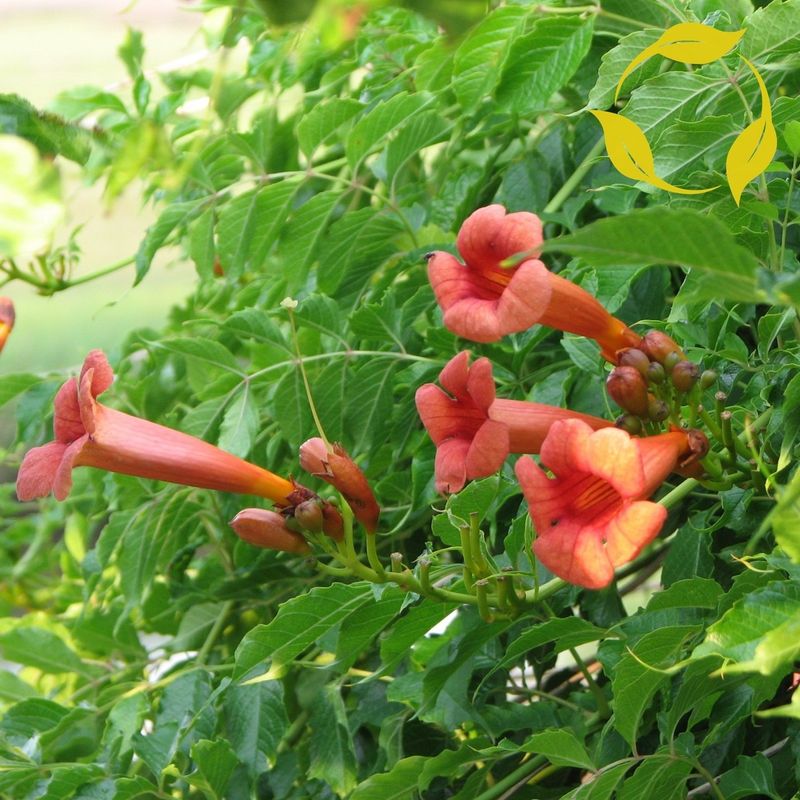
Want fast? Trumpet Vine is basically the speed racer of the climbing plant world.
This vine can grow up to 30 feet in a single season under the right conditions, and Texas heat is exactly the kind of fuel it loves. If you have a big, bare fence that needs covering fast, Trumpet Vine will not disappoint.
The flowers are hard to miss. Large, flared orange trumpets bloom all summer long and act like a magnet for hummingbirds.
Watching those tiny birds dart in and out of the blooms is one of the simple joys of a Texas summer evening. The vine grips surfaces using aerial rootlets, so it can climb wood, brick, and chain-link without any extra support.
A word of caution though: Trumpet Vine spreads aggressively. It sends up new shoots from underground runners and can pop up several feet away from the original plant.
For a large open fence line or a spot far from garden beds, it is a great choice. In smaller spaces, you will need to stay on top of pruning to keep it in bounds.
Plant it where it has room to stretch, and it will reward you with season after season of bold, brilliant color.
5. Star Jasmine (Trachelospermum Jasminoides)
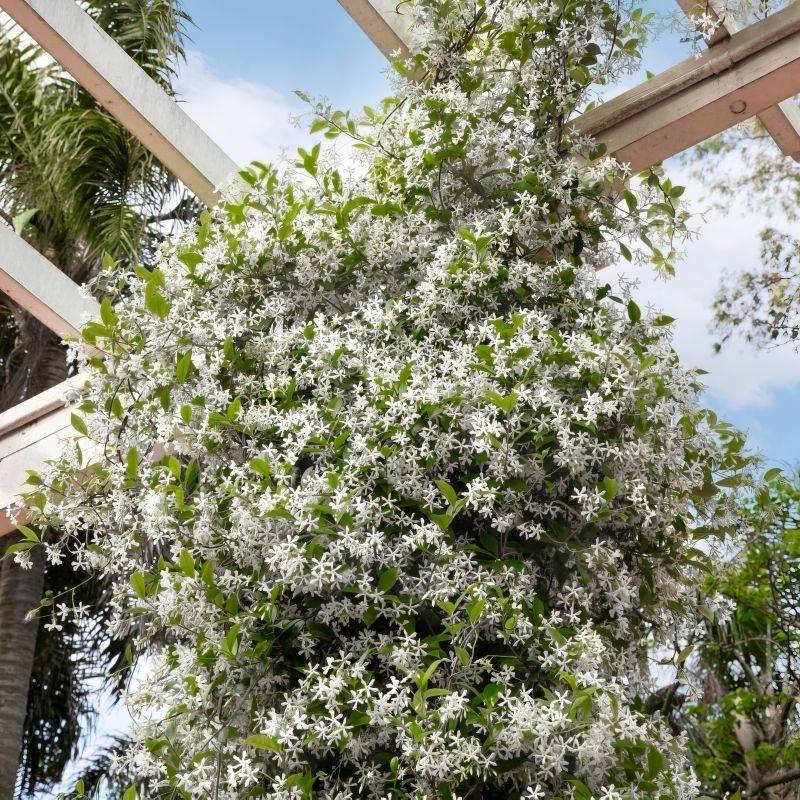
Walk past a Star Jasmine in bloom and the fragrance will stop you in your tracks. The small, pinwheel-shaped white flowers smell absolutely incredible, especially on a warm spring evening in Texas.
It is the kind of scent that makes the whole backyard feel like a retreat.
Beyond the smell, Star Jasmine is one of the most reliable fence-covering vines in Texas. It grows quickly and creates a thick, dense curtain of glossy green leaves that stays evergreen in most parts of the state.
That means year-round privacy and year-round good looks, even after the spring blooms have faded.
Star Jasmine handles the Texas heat well and becomes quite drought tolerant once it is established. It works beautifully on wooden fences, brick walls, and metal screens.
Give it a support structure to climb and it will take off. In its first year, growth can be a little slow while the roots settle in, but by year two, you will really start to see it fill in fast.
Regular watering during the first summer makes a big difference. A light pruning after flowering keeps the shape neat and tidy. For fragrance, coverage, and low-fuss beauty, Star Jasmine is a Texas fence superstar.
6. Purple Hyacinth Bean (Lablab Purpureus)
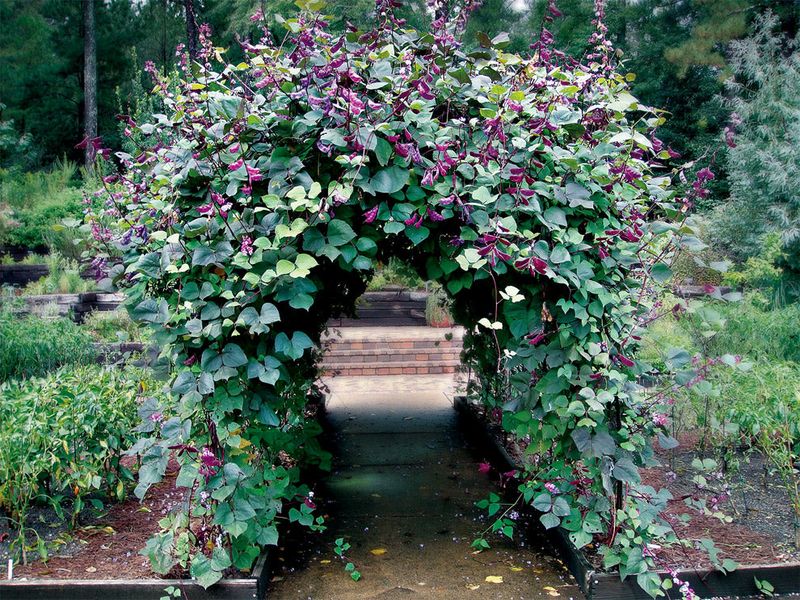
If you need a fence covered before summer is over, Purple Hyacinth Bean is your secret weapon. This vine is a powerhouse annual that can cover an entire fence in a single growing season.
Plant it in late spring when the soil warms up, and by midsummer you will have a lush, leafy wall of green, purple, and burgundy.
The flowers are a rich, vivid purple that stand out beautifully against the deep green leaves. After the blooms fade, the plant produces glossy, dark purple seed pods that are just as decorative as the flowers.
It is one of those plants that looks like it belongs in a fancy garden but is incredibly easy to grow, especially in the Texas heat.
Hyacinth Bean loves full sun and warm temperatures, which Texas has plenty of from May through October. It climbs by twining, so give it a fence, trellis, or string to grab onto and it will take off fast.
Since it is an annual, you will need to replant each spring. But the seeds are easy to save from the pods at the end of the season.
It is a great option for gardeners who want dramatic, quick summer coverage without a long-term commitment to one plant.
7. Black-Eyed Susan Vine (Thunbergia Alata)
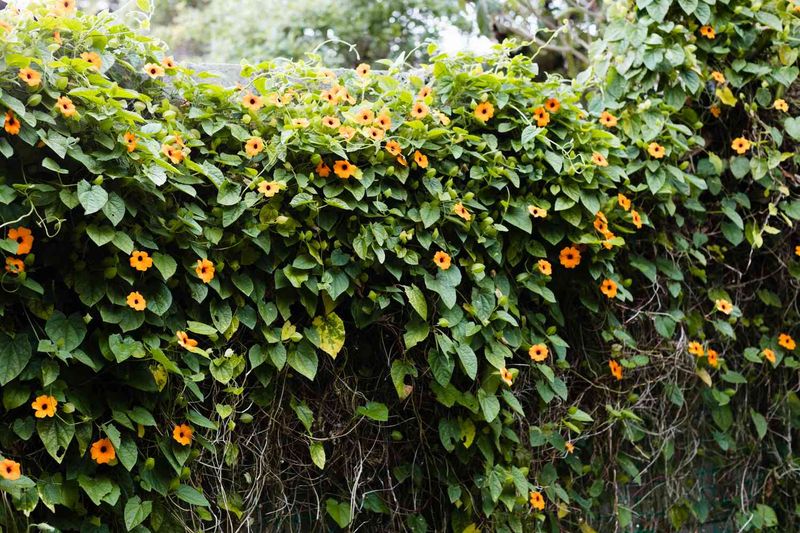
Cheerful, sunny, and surprisingly quick, Black-Eyed Susan Vine is one of those plants that just makes people smile.
The flowers are bright yellow or orange with a bold dark center, and they pop up all through the warm months, giving your Texas fence a steady stream of color from late spring right through fall.
This vine is not a native Texan, but it feels right at home in the state’s warm climate. It grows quickly in full sun, twining up fences and trellises with ease.
The plant stays relatively compact compared to some of the more aggressive climbers on this list, making it a great pick for smaller fence sections or container gardens with a trellis.
In Texas, Black-Eyed Susan Vine is typically grown as an annual since it cannot handle a hard freeze. But in the warmest parts of the state, like the Rio Grande Valley, it may come back year after year.
Start seeds indoors a few weeks before the last frost, or buy transplants from a local nursery. Plant in a sunny spot with well-draining soil and water regularly until established.
Once it is growing strong, it practically takes care of itself. Few plants deliver this much color with this little effort.
8. Passionflower (Passiflora Incarnata)
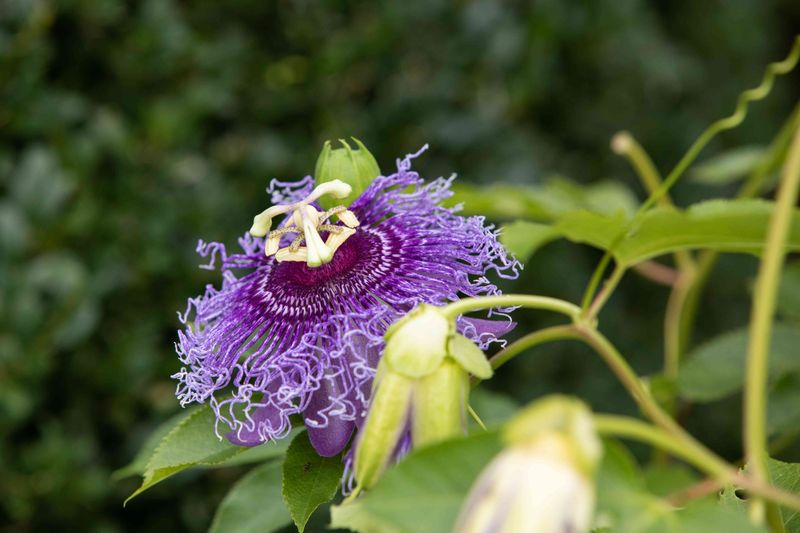
No vine on this list has a more jaw-dropping flower than the native Passionflower. The blooms look almost alien, with a complex swirl of purple, white, and lavender petals that seem too intricate to be real.
Neighbors will stop and ask what it is every time it blooms, and it blooms all summer long across Texas.
Passionflower is a native Texas plant, which means it is perfectly suited to the climate. It spreads fast, both through twining vines and underground runners, so it will fill in a fence line quickly.
It also serves as the host plant for the Gulf Fritillary butterfly, meaning your fence will double as a butterfly nursery all season long.
The plant does go dormant in winter and the vines die back to the ground, but do not worry. It returns reliably every spring, often stronger than the year before.
The underground root system survives cold snaps that would finish off other plants. Edible yellow fruits sometimes follow the flowers in late summer, which is a fun bonus.
Give it full sun and a fence to climb, and it will take care of the rest. Passionflower is wild, beautiful, and perfectly at home in any Texas garden.
9. Confederate Jasmine (Trachelospermum Jasminoides)
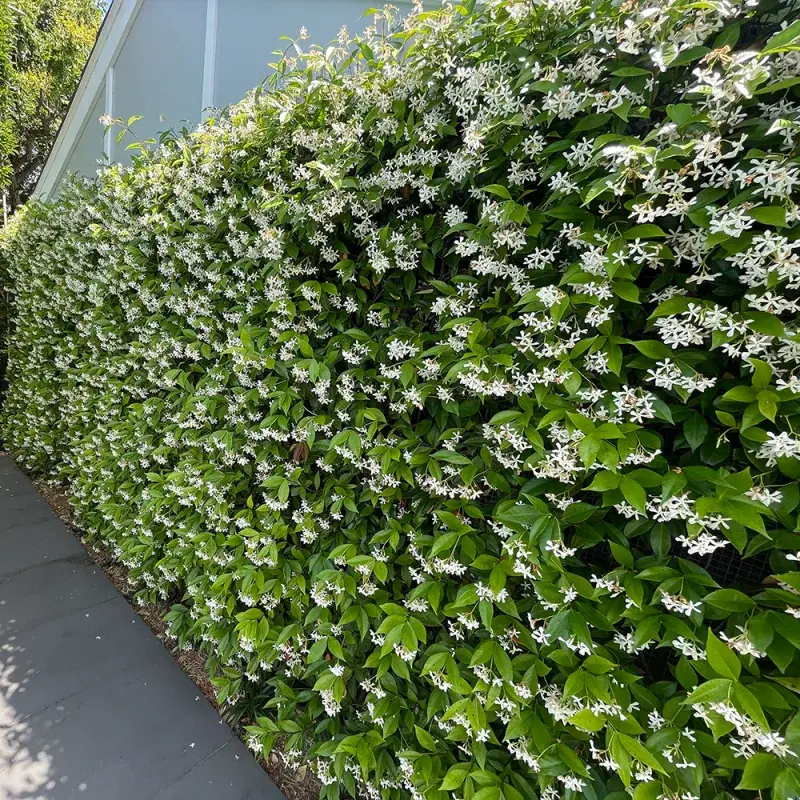
When it comes to creating a thick, private green wall along a Texas fence, Confederate Jasmine might be the most dependable plant for the job. The foliage is dense, glossy, and stays green all year in most parts of Texas.
Once it fills in, you genuinely cannot see through it, which is exactly what most homeowners are after.
The first year can feel a little slow. Confederate Jasmine spends most of its early energy putting down a strong root system rather than sending up lots of new growth.
But that patience pays off big. By year two and three, it takes off fast and starts covering fence sections with thick, layered greenery that holds up through the Texas summer heat.
The spring flowers are small, white, and incredibly fragrant, much like Star Jasmine since they are actually the same species. The scent can carry across an entire yard on a warm Texas afternoon.
Confederate Jasmine is also heat and drought tolerant once established, which makes it a low-maintenance choice for busy homeowners. Prune lightly after flowering to keep the shape you want.
Plant it in full sun or partial shade, water it through the first summer, and then let it build into the beautiful, full privacy screen you have been dreaming about.
10. Climbing Roses (Vigorous Varieties)
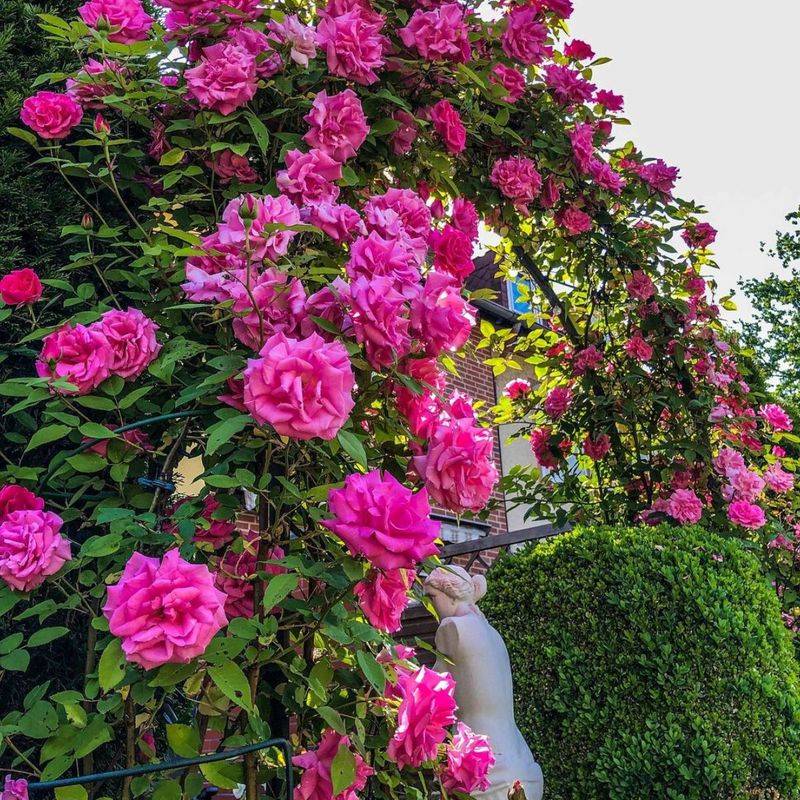
Climbing roses bring something no other plant on this list can match: romance. A fence draped in full, colorful blooms is a sight that turns an ordinary Texas backyard into something truly special.
Varieties like Lady Banks, New Dawn, and Belinda’s Dream are proven performers that thrive in the Texas sun and come back strong year after year.
Once established, vigorous climbing roses grow quickly and cover a fence with both lush foliage and seasonal blooms.
Lady Banks Rose is especially popular across Texas because it is nearly thornless, extremely tough, and produces cascading clusters of small yellow or white flowers every spring. It handles the heat and humidity of East Texas as well as the dry conditions of West Texas.
Good airflow matters with climbing roses, especially in the more humid parts of the state like Houston and the Gulf Coast. Planting them against an open fence rather than a solid wall helps air move through the canes and reduces the risk of fungal issues.
Prune after each bloom cycle to encourage new growth and more flowers. Feed with a rose-specific fertilizer in spring and midsummer for best results.
With the right variety and a little care, climbing roses will make your Texas fence the prettiest one on the block.