12 Easy Plants You Can Grow In Bottles Right Inside Your Florida Home
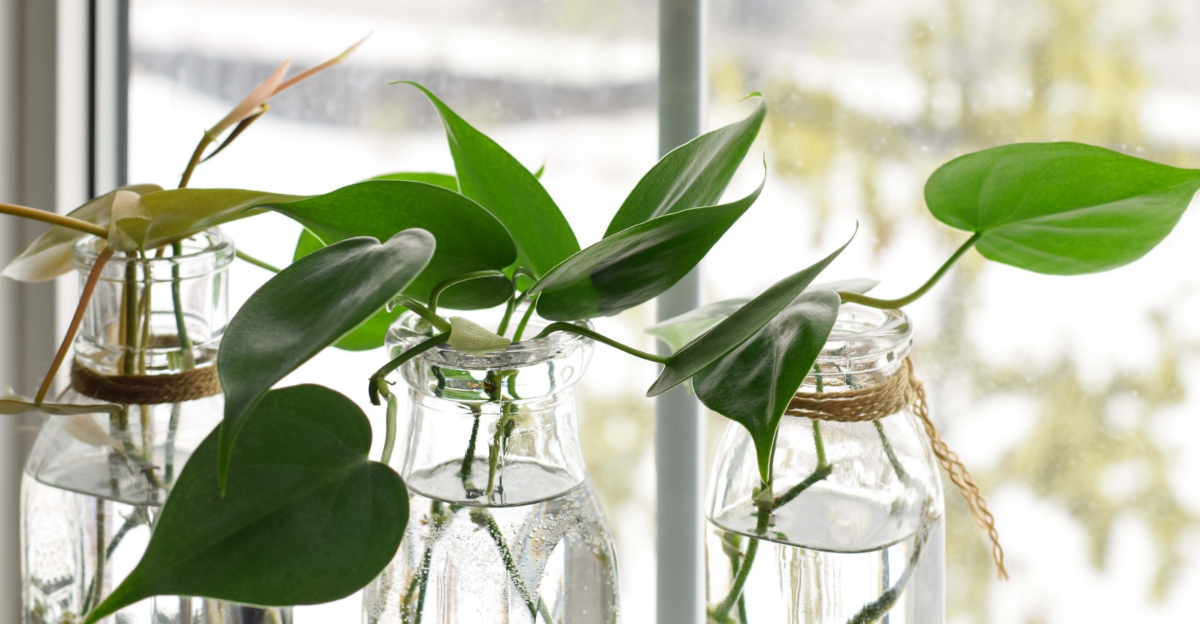
Glass bottles or jars on a sunny windowsill can turn into tiny indoor gardens faster than most people expect. In Florida homes, where warmth and bright light are part of daily life, many common houseplants adapt surprisingly well to rooting and growing in water, especially when placed in bright, indirect light.
A simple jar, a healthy cutting, and fresh water can create living decor that feels modern and low effort. Bottle growing has gained attention across Florida because it blends style with practicality while reducing soil mess and making root health easy to observe.
Clear glass lets you monitor water clarity, root growth, and plant condition at a glance. Indoor humidity, air conditioning, and light exposure all influence results, so performance can vary between homes.
While not every plant thrives long term in water alone, many tropical favorites root readily and can grow for extended periods with proper care and occasional nutrient support. That combination makes bottle gardens an appealing and realistic option for Florida plant lovers.
1. Golden Pothos Grows Almost Effortlessly In Water
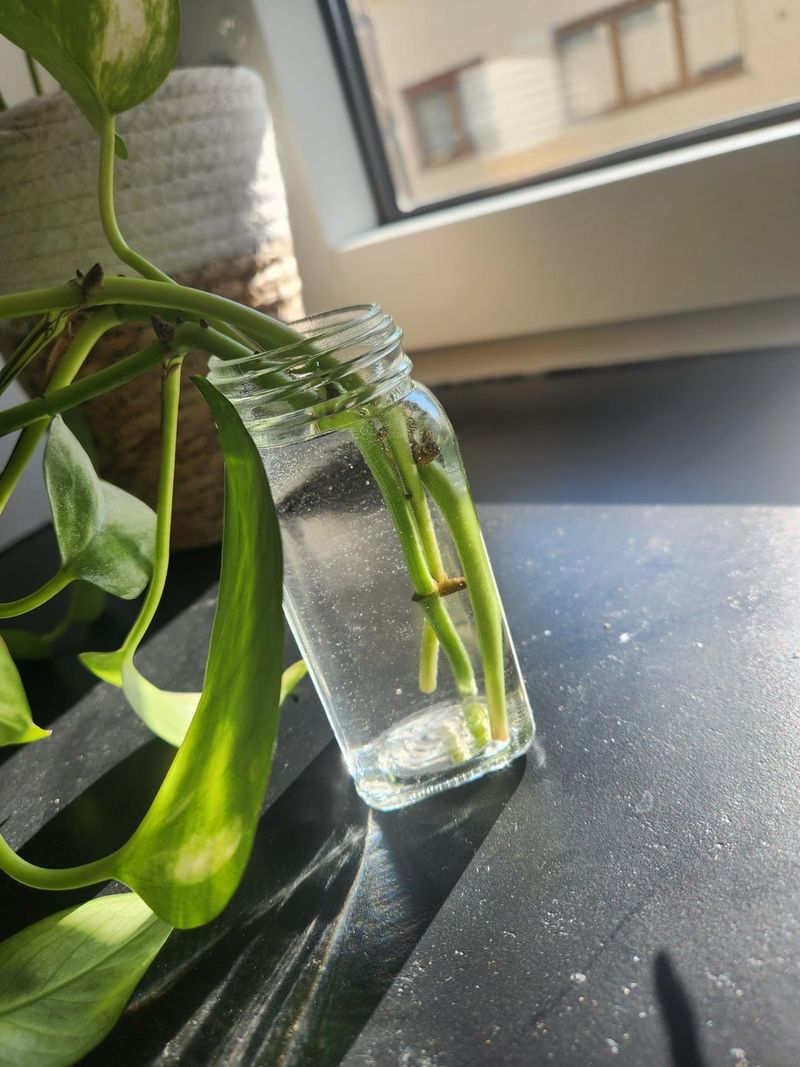
Few houseplants have earned their reputation as consistently as this one. Golden pothos has been a household staple for decades, and its ability to root quickly in water makes it especially suited for bottle growing in Florida homes.
Snip a stem just below a leaf node and place it in a clear glass container filled with room-temperature water. Position it in bright, indirect light.
Direct afternoon sun, especially through west-facing Florida windows, can stress the leaves and fade their color.
Indoor humidity in Florida can support healthy foliage growth, even in air-conditioned homes. While pothos tolerates a range of indoor conditions, steady indirect light produces the strongest vines and leaf size.
Change the water every one to two weeks to keep it fresh and oxygenated. Over time, roots can grow several inches long inside the bottle.
For short-term display, water alone works well. For long-term growth, however, diluted liquid fertilizer becomes important because plain water does not contain the nutrients needed for sustained development.
Without added nutrients, leaf size may gradually reduce and growth can slow.
With occasional feeding and clean water, pothos can remain in water culture for extended periods and continue producing trailing vines that look lush and healthy in Florida interiors.
2. Lucky Bamboo Thrives In Simple Glass Containers
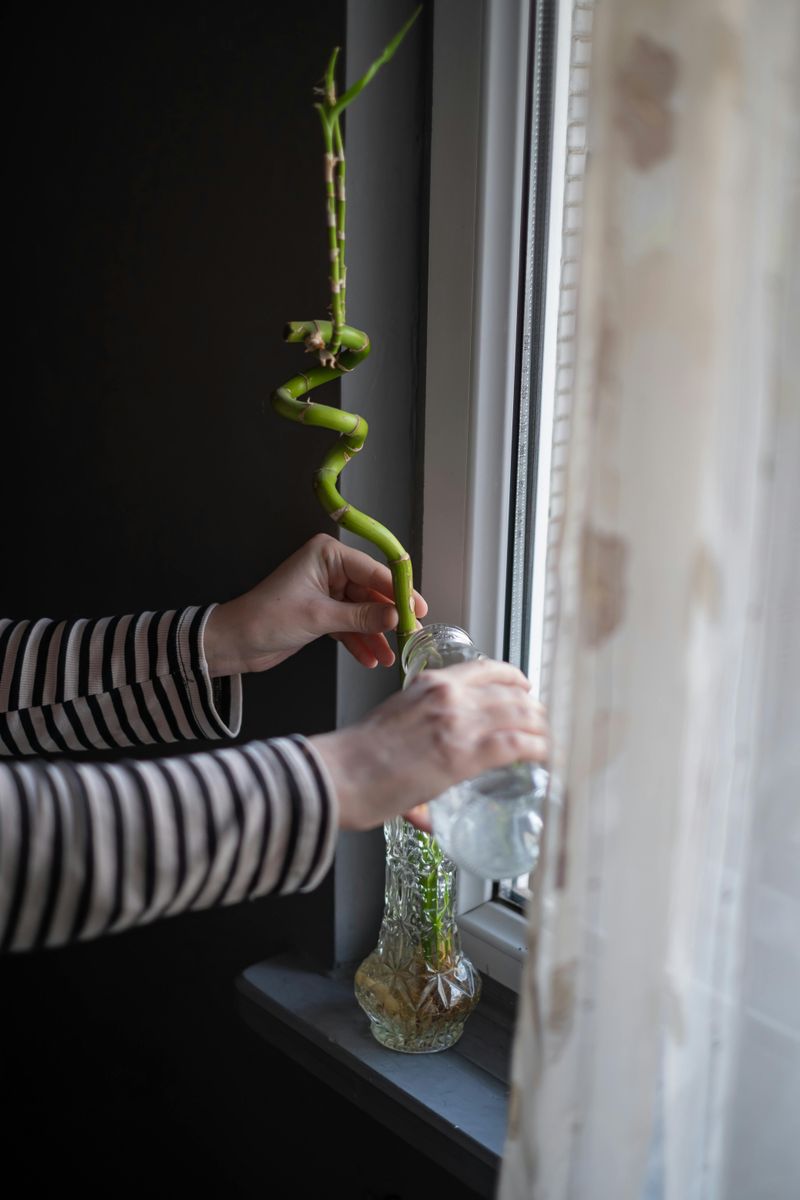
Walk into almost any Florida gift shop and you will likely spot lucky bamboo arranged in decorative glass. Its popularity comes from both cultural symbolism and its ability to adapt well to water culture indoors.
Despite the name, lucky bamboo is not a true bamboo. It is Dracaena sanderiana, a tropical plant that tolerates lower indoor light levels, though brighter indirect light generally supports stronger growth and healthier leaf color.
Place the stalks in a clean container with enough water to cover the roots. Decorative pebbles help stabilize the stems.
Keep the arrangement in filtered light rather than direct sun, since strong Florida sunlight can cause leaf yellowing or scorch.
Your Florida Garden Changes Every Week. Your Plan Should Too.
Gardening in Florida changes quickly throughout the season. Every Friday you’ll receive a simple weekly plan showing exactly what to plant, prune, fertilize, harvest, and protect so you never miss the right timing.
Water quality matters. Lucky bamboo can be sensitive to chlorine and fluoride, so filtered or distilled water often produces better long-term results.
Refresh the water every one to two weeks and rinse the container to reduce algae buildup.
A very small amount of diluted liquid fertilizer every month or two can support growth. Overfertilizing can cause leaf burn, so restraint is important.
With steady light and clean water, lucky bamboo remains one of the most reliable bottle plants for Florida homes.
3. Heartleaf Philodendron Roots Quickly And Trails Beautifully
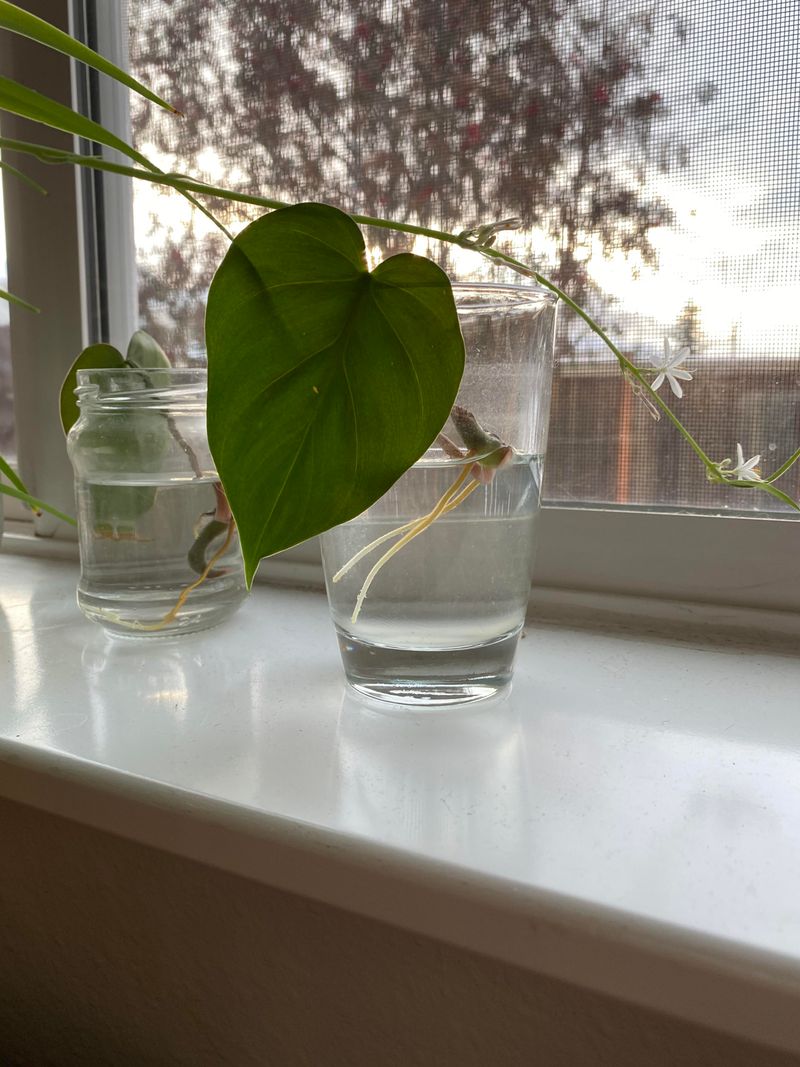
Watching a heartleaf philodendron cutting develop roots within a week or two is one of the most satisfying parts of bottle growing. This plant responds quickly, making it an encouraging choice for beginners.
Take a cutting just below a node, remove the lower leaves, and place the stem in a jar of clean water. Set it near bright, indirect light.
Florida kitchens and bathrooms can work well because moderate humidity supports leaf health, but strong direct sunlight can scorch foliage.
Water should be replaced every week to maintain oxygen levels and reduce stagnation. Roots can extend several inches into the jar over time.
For temporary propagation, water alone is sufficient. For longer-term growth, adding a few drops of balanced liquid fertilizer every three to four weeks helps maintain leaf size and color.
Philodendrons tolerate indoor Florida conditions well, especially consistent temperatures maintained by air conditioning. While they can live in water for extended periods, transitioning to soil eventually may encourage more vigorous growth.
Even so, as a bottle display plant, heartleaf philodendron remains dependable, adaptable, and visually appealing.
4. Spider Plant Babies Take Off In Clear Jars
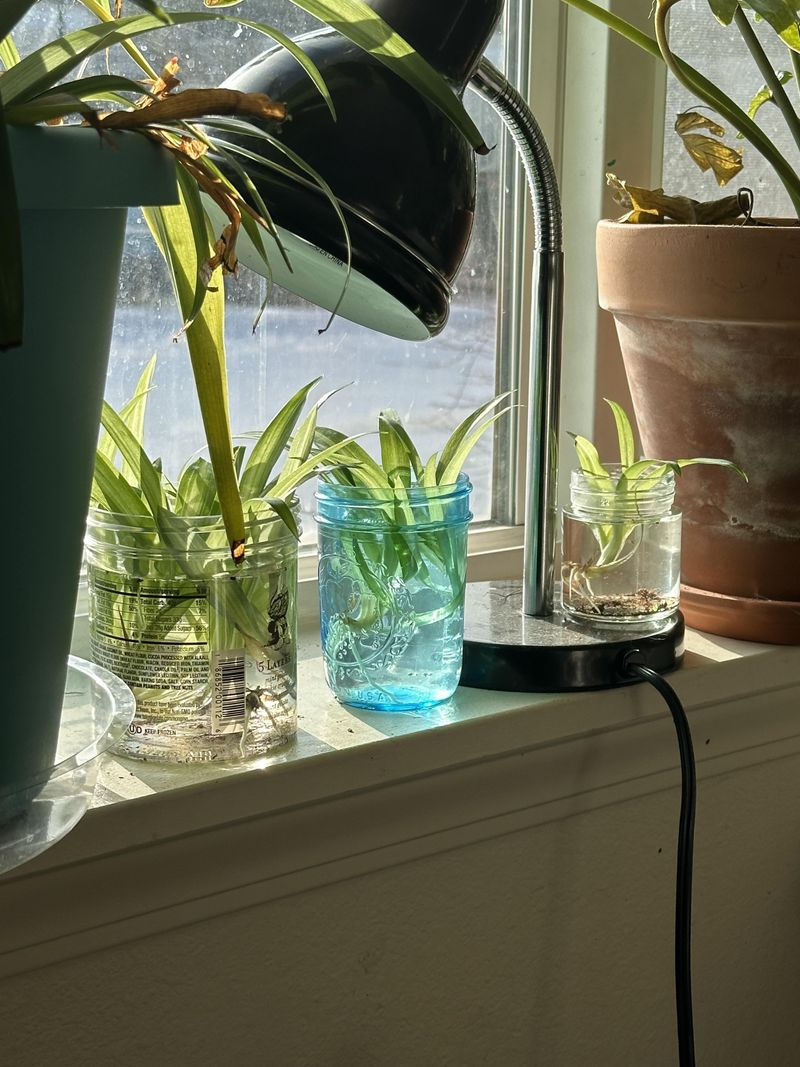
Spider plants have built their reputation on those dangling baby offshoots, and those small plantlets make bottle growing almost effortless. Once a mature plant produces spiderettes, you can snip one off and place it directly into a jar of clean water with the base submerged.
Roots often begin forming within a week or two under warm indoor conditions. Florida homes, which typically maintain steady temperatures year-round, provide a favorable environment for this early root development.
Bright, filtered light works best. Strong direct afternoon sun through unshaded windows can cause leaf tip browning or fading.
Refresh the water every seven to ten days to prevent stagnation and keep oxygen levels stable. Spider plant babies can remain in water for several weeks and even a few months.
Over time, however, long-term growth in plain water alone may lead to smaller leaves unless nutrients are introduced.
A very diluted liquid fertilizer added occasionally after roots are established can help sustain growth. Many Florida gardeners eventually transfer spider plant babies to soil for stronger long-term development, but as decorative bottle plants, they provide a cheerful and reliable display.
5. English Ivy Adapts Easily To Indoor Water Growing
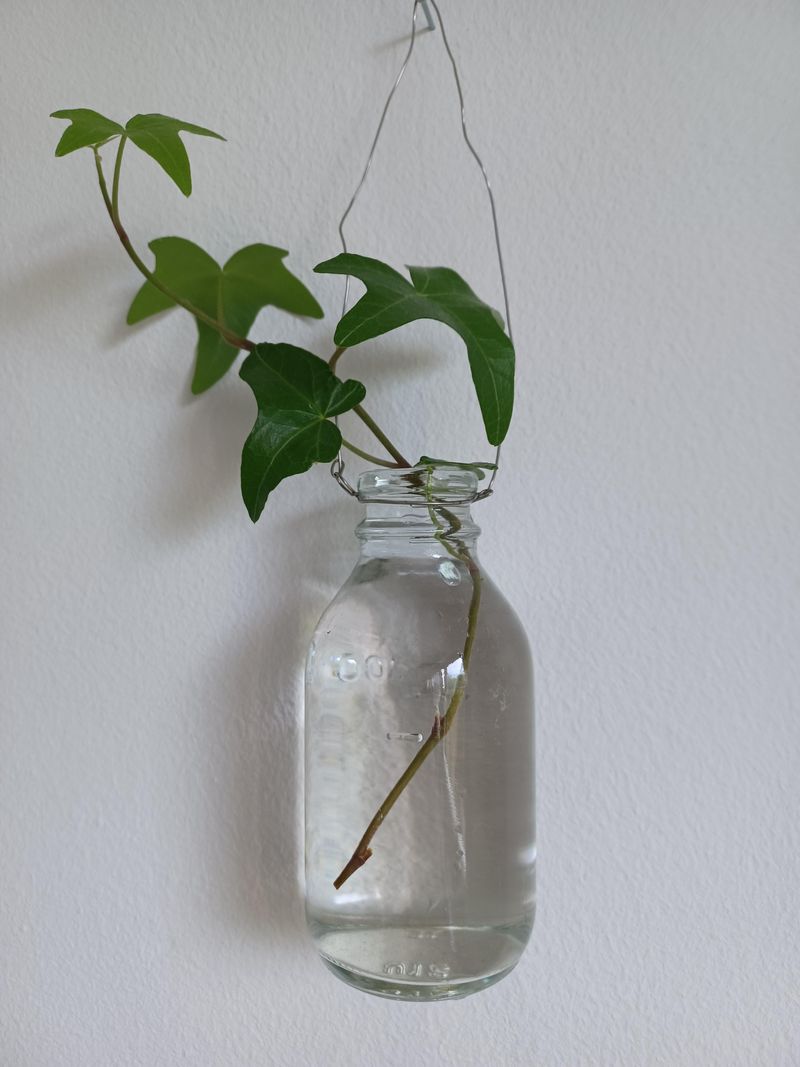
English ivy brings a classic trailing look that fits beautifully into glass containers. Its lobed leaves and cascading stems create visual interest, and cuttings root readily in water under the right conditions.
Take a four- to six-inch cutting, remove the lower leaves, and place the stem in fresh water. Position the jar in bright, indirect light.
In Florida homes, this often means near an east-facing window or a shaded south-facing window with curtains. Strong direct sun can cause leaf scorch or bleaching.
Ivy prefers cooler indoor temperatures and good air circulation. Florida homes that rely on air conditioning during warm months often provide suitable conditions.
However, high humidity combined with stagnant air can increase the risk of pests such as spider mites, so keeping airflow steady is helpful.
Change the water weekly to keep roots healthy. Ivy roots tend to be fine and delicate in water, so handle them gently.
Long-term water culture is possible with occasional diluted fertilizer, though growth may remain more moderate compared to soil-grown plants. With clean water and indirect light, English ivy can remain an attractive bottle plant indoors.
6. Monstera Cuttings Develop Strong Roots In Bottles
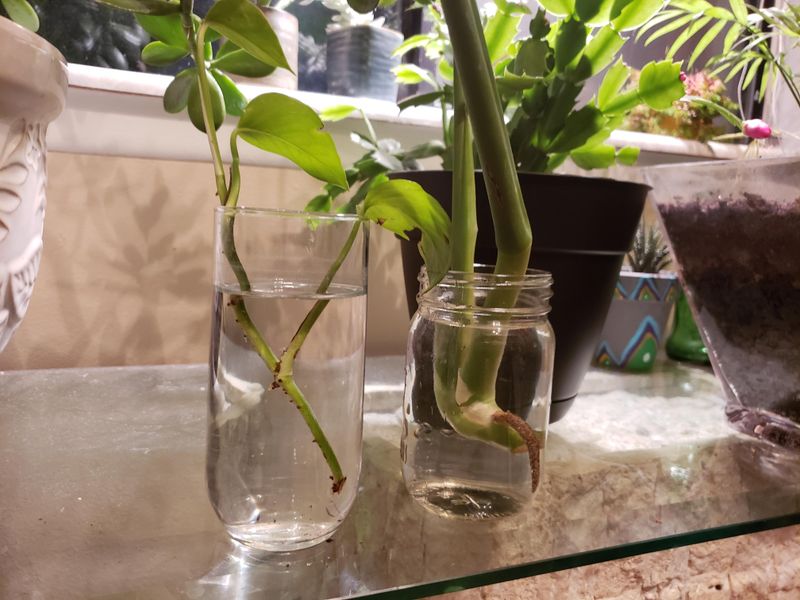
Large split leaves may be what people notice first, but monstera cuttings also root well in water when prepared correctly. Choose a cutting that includes at least one visible node.
The node must sit below the waterline because that is where new roots will form.
Florida’s warm indoor temperatures often encourage faster root development compared to cooler climates. Place the bottle near bright, indirect light.
Direct afternoon sun can stress the leaves, while deep shade may slow root growth.
Use a container wide enough to support the cutting without bending the stem. Replace the water every one to two weeks and rinse the container to prevent algae buildup.
Roots may grow thick and several inches long over time.
Monstera cuttings can remain in water for many months with proper care. For extended growth, adding a small amount of diluted liquid fertilizer becomes important because water alone does not provide sufficient nutrients.
Plants grown long-term in water may produce smaller leaves compared to soil-grown specimens. Many Florida plant owners enjoy keeping monstera in water as a decorative display, though transitioning to soil later often supports more vigorous growth.
7. Coleus Roots Fast And Shows Off Bold Color
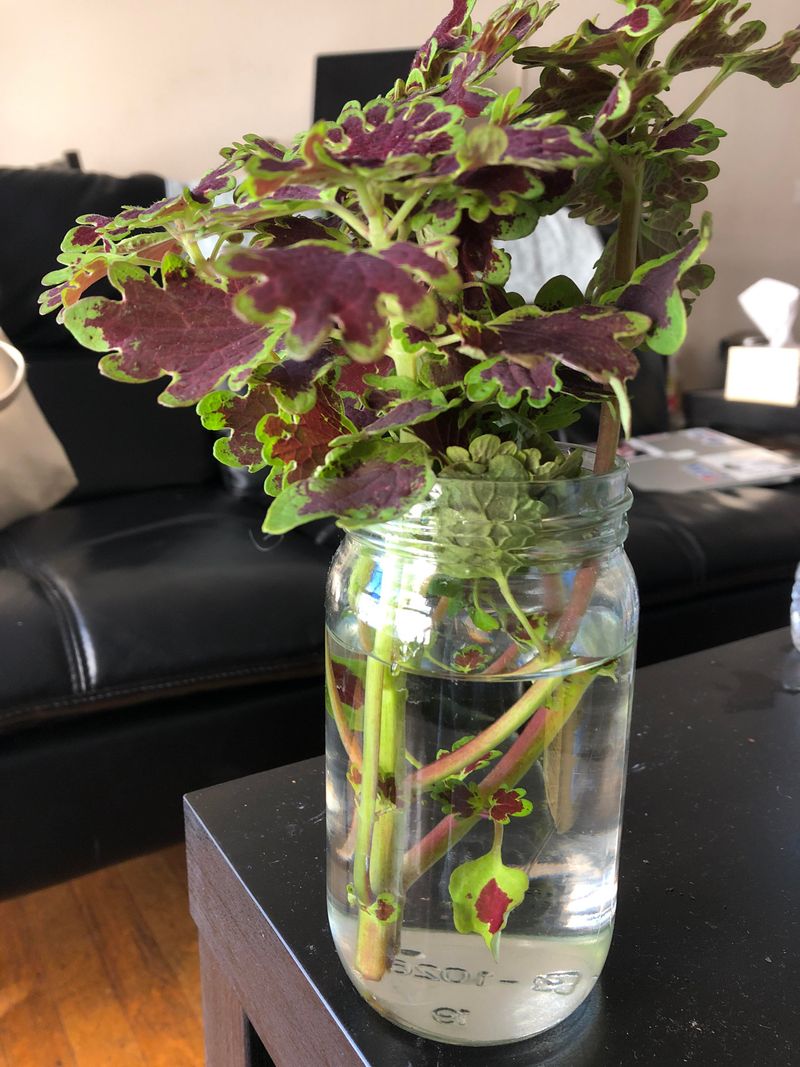
Few plants deliver color as quickly as coleus. With its mix of reds, purples, yellows, and greens, even a single cutting in a clear bottle can brighten a Florida room in days.
Take a healthy stem cutting about four to six inches long, remove the lower leaves, and place it in clean water near a bright window. Warm indoor temperatures common in Florida homes encourage fast root formation, and small white roots often appear within a week under good light.
Bright, indirect light keeps foliage vibrant. Strong direct sun, especially through south- or west-facing windows, can fade colors or cause leaf edges to crisp.
Water should be changed weekly to maintain clarity and oxygen levels.
Coleus can remain in water for several weeks and even a few months. Over longer periods, however, growth may slow and leaf size may reduce without added nutrients.
A diluted balanced liquid fertilizer every few weeks can help maintain foliage color and vigor. For more robust long-term growth, transferring rooted cuttings to soil often produces fuller plants.
As a temporary or decorative bottle plant, coleus offers fast results and striking color.
8. Begonia Cuttings Start Fresh Growth In Water
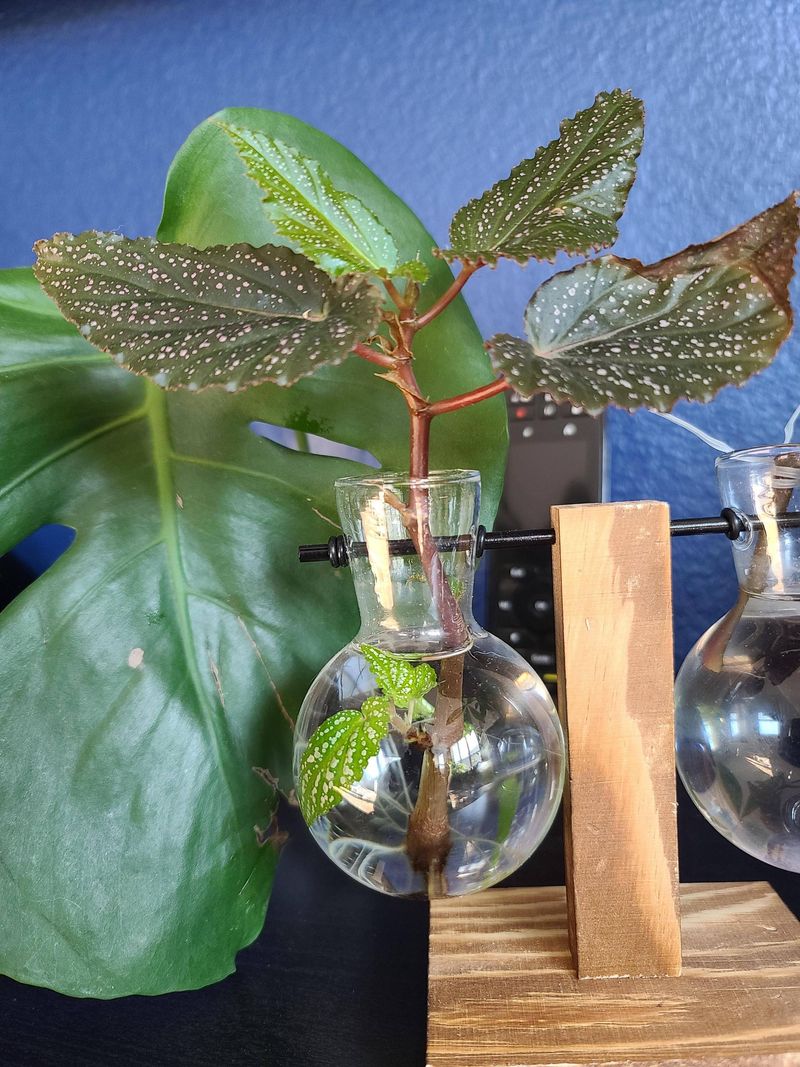
Begonias have long been popular in Florida landscapes, and many varieties root well in water indoors. Wax begonias and cane-type begonias respond especially well to stem cuttings placed in jars.
Choose a healthy stem with a few leaves, trim it to about four to six inches, and remove any foliage that would sit below the waterline. Place the cutting in a bottle filled with fresh water and set it in bright, filtered light.
Direct sun can stress the leaves, particularly during Florida’s intense summer afternoons.
Florida’s indoor humidity can support begonia cuttings during the rooting stage, though good airflow remains important. Roots often develop within two to three weeks under warm indoor conditions.
Replace the water every seven to ten days to reduce stagnation. Begonias can grow in water for several weeks to months.
Over time, nutrient supplementation may become necessary to sustain foliage growth. While bottle growing works well for display and propagation, transitioning to a well-draining potting mix typically encourages stronger long-term development.
As a decorative option, begonia cuttings provide soft texture and attractive foliage inside Florida homes.
9. Arrowhead Plant Stays Compact And Lush In Jars
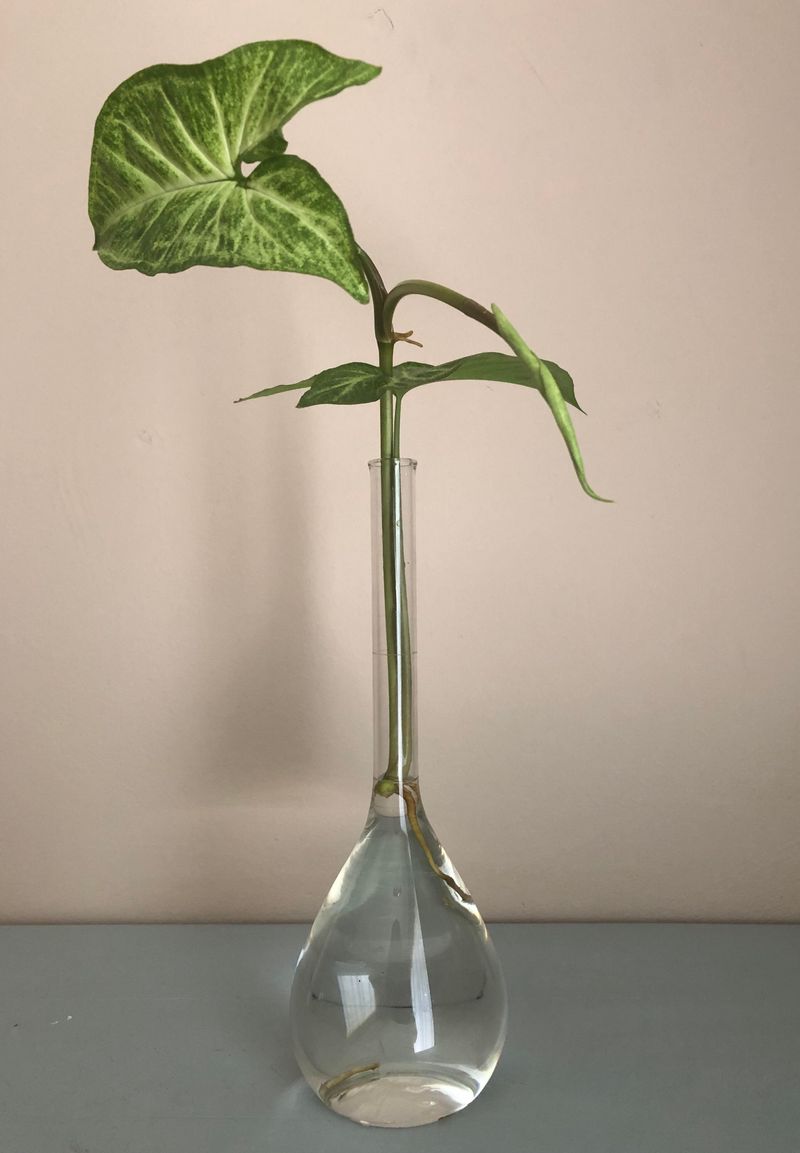
Arrowhead plant adapts readily to water culture and creates a tidy, attractive bottle display. Its arrow-shaped leaves, often variegated in green and white, stand out beautifully against clear glass.
Take a cutting just below a node, remove lower leaves, and place the stem in fresh water near bright, indirect light. Florida homes with filtered light through curtains or blinds provide suitable conditions.
Strong afternoon sun can cause leaf fading or stress.
Indoor temperatures common across Florida support steady growth year-round. Water should be replaced every one to two weeks to keep roots healthy and prevent cloudiness in the container.
Arrowhead plants can live in water for extended periods with proper care. Without nutrients, however, growth may gradually slow and leaves may become smaller.
Adding a diluted liquid fertilizer every few weeks can help maintain healthy foliage. Occasional trimming keeps the plant compact and encourages fuller growth.
For Florida homeowners who want a manageable, attractive plant in a bottle, arrowhead plant remains a practical and reliable choice.
10. Tradescantia Spreads Quickly With Minimal Effort
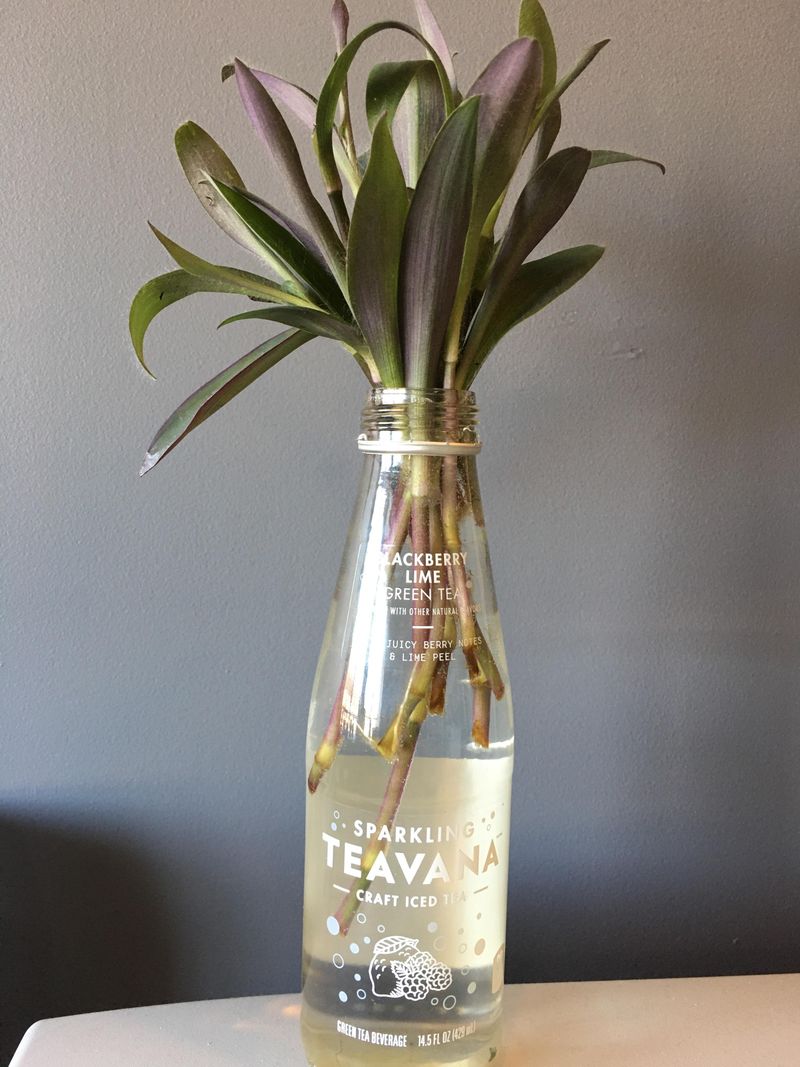
Tradescantia is one of those plants that seems eager to root the moment it touches water. Place a fresh cutting into a clear bottle, and small roots often appear within several days under warm indoor conditions.
Take a stem cutting a few inches long, remove the lowest leaves, and submerge the node in clean water. Florida homes typically provide steady warmth, which supports fast root formation.
Bright, indirect light helps maintain strong coloration in varieties with purple, silver, or striped foliage. Insufficient light may cause stems to stretch and colors to fade.
Replace the water every week to prevent stagnation and support healthy roots. Tradescantia grows vigorously in water and may quickly outgrow smaller bottles.
Occasional trimming keeps the plant balanced and encourages branching.
For short-term display, plain water is sufficient. For longer-term water culture, diluted liquid fertilizer every few weeks helps maintain leaf size and color.
While soil often produces fuller growth over time, tradescantia performs reliably in water for extended periods, making it a practical and visually striking bottle plant for Florida homes.
11. Peace Lily Adjusts Well To Water Culture Indoors
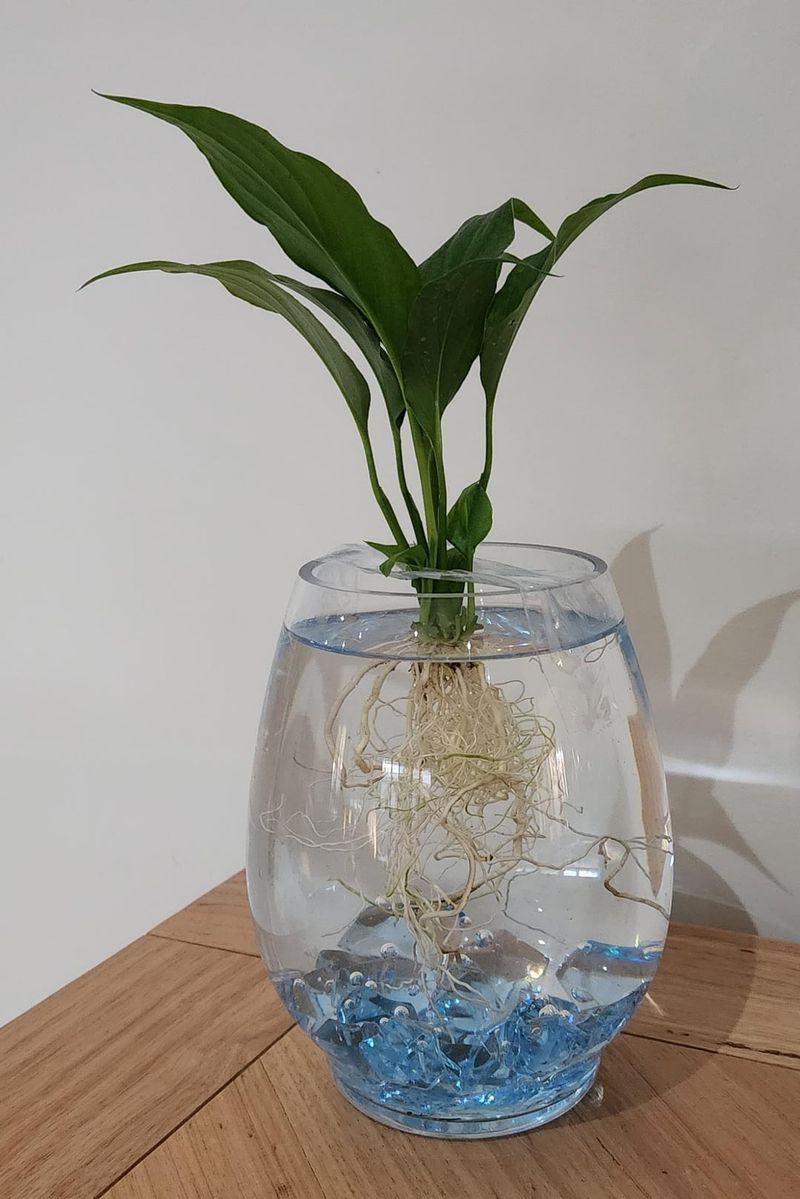
Peace lilies are usually grown in soil, but they can adapt to water culture with careful preparation. Instead of taking a stem cutting, transition a healthy plant by gently removing it from its pot and rinsing soil from the roots.
Place the cleaned root system into a vase or bottle filled with water, ensuring roots remain submerged while leaves stay above the waterline. Florida’s warm indoor temperatures support this transition, though bright, indirect light remains important for stability and future growth.
During the adjustment period, some older leaves may droop or yellow before the plant stabilizes. Replace the water every one to two weeks and keep the container clean to discourage algae buildup.
Using filtered or distilled water may reduce leaf sensitivity to chlorine or fluoride.
Long-term water culture is possible, but nutrient supplementation becomes important. A small amount of diluted fertilizer added monthly can help maintain foliage and support occasional flowering.
While soil-grown peace lilies often grow more vigorously, water culture offers a clean, modern display option for Florida interiors when maintained consistently.
12. Green Onions And Lettuce Regrow Right On The Windowsill
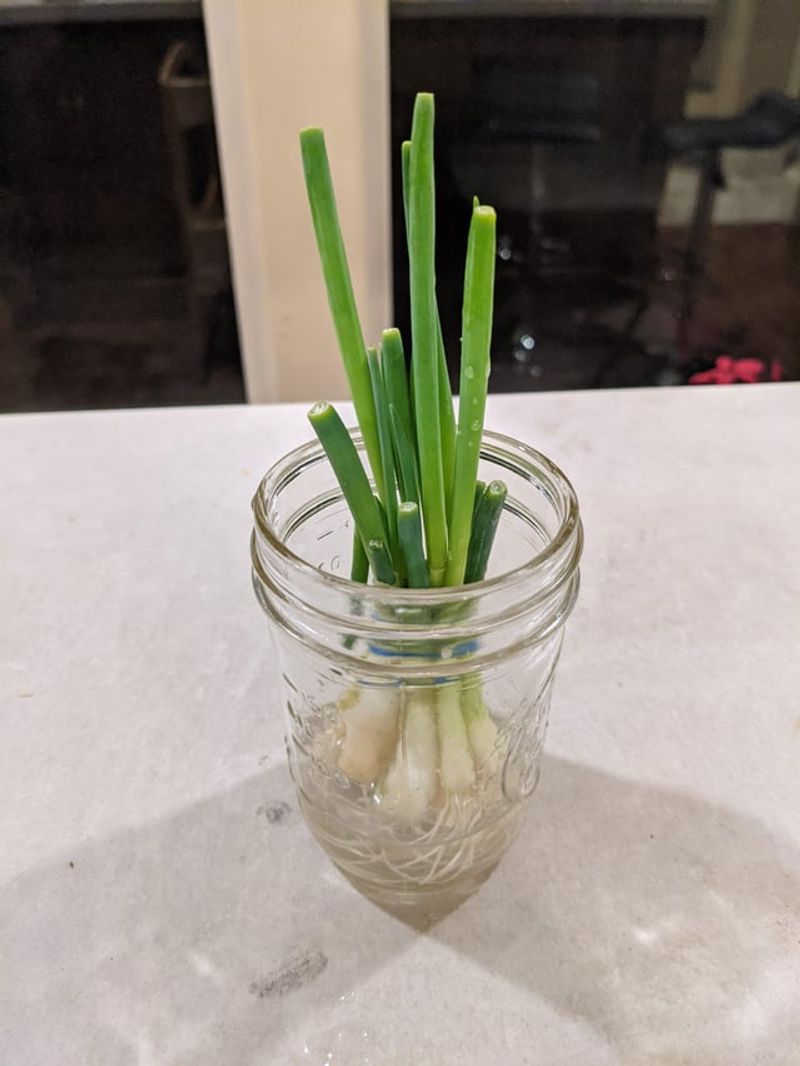
Not every bottle garden needs to be ornamental. Green onions and lettuce provide a practical and satisfying way to regrow food scraps right inside a Florida kitchen.
After trimming green onions, place the white root ends in a small jar with about an inch of water covering the base. Set the jar near a bright window.
In many Florida homes, east-facing windows provide strong morning light without the harsh afternoon heat that can stress tender regrowth.
Fresh shoots typically appear within several days. Replace the water every two to three days to keep it clean and encourage steady growth.
Green onions can be harvested multiple times, though regrowth may gradually weaken over successive cycles without nutrients.
Lettuce bases can also be placed in shallow water. They tend to produce loose leaf regrowth rather than a full new head.
Frequent water changes are important since the cut base sits close to the water surface.
For short-term regrowth, fertilizer is usually unnecessary. These simple kitchen jar setups offer a practical, low-mess introduction to bottle gardening, perfectly suited to bright Florida windowsills.