6 Different Plants Called “Jasmine” (And How To Grow Them In Florida)
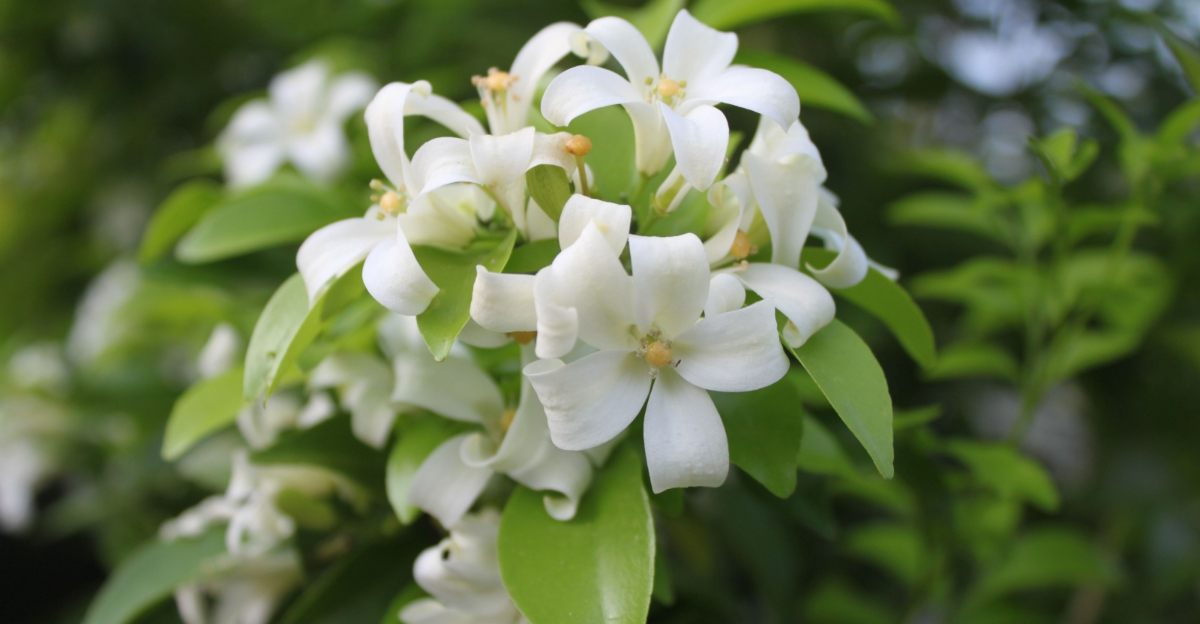
The word “Jasmine” carries serious garden romance in Florida. One mention of it and people swear they can already smell that rich, sweet perfume drifting through the evening air.
Then comes the twist. Walk into a nursery and ask for jasmine, and you might be handed a climbing vine, a glossy shrub, or a bold tropical look-alike that is not a true jasmine at all.
That shared name hides a surprising story. Several completely different plants answer to “Jasmine,” each with its own personality, growth habit, and care needs in Florida’s heat and humidity.
Some thrive in blazing sun, others prefer filtered light, and a few explode with fragrance after dark.
Sorting out who is who makes all the difference in a Florida landscape. The right pick rewards you with lush growth and unforgettable scent that turns a simple yard into something magical.
1. Star Jasmine Fills The Air With Sweet Fragrance
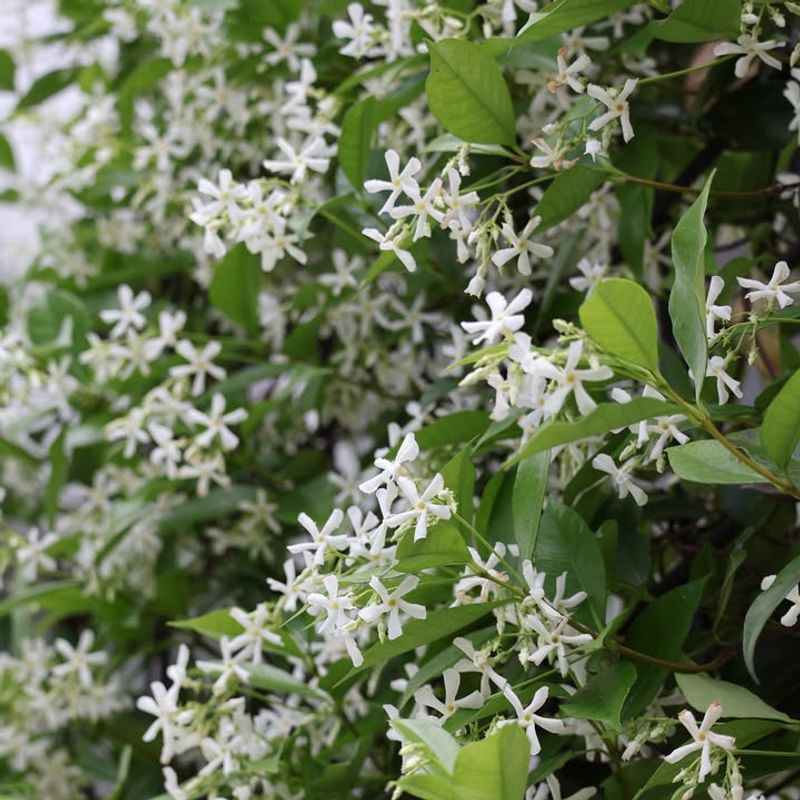
Gardeners across Florida love Trachelospermum jasminoides for its reliable beauty and incredible scent. This evergreen vine produces clusters of white, pinwheel-shaped flowers that release a powerful sweet fragrance during spring and early summer.
The glossy, dark green leaves stay attractive all year, making it a handsome addition even when not blooming.
Growing star jasmine works best when you provide a sturdy support structure like a fence, trellis, or pergola. The vine climbs by twining stems rather than clinging tendrils, so it needs something to wrap around.
Plant it in a spot that gets full sun to partial shade, with at least four to six hours of direct light for best flowering.
Soil should drain well but hold some moisture. Adding compost or aged manure at planting time helps roots establish quickly.
Water regularly during the first growing season until the plant settles in, then reduce frequency as it becomes more drought tolerant.
Star jasmine grows at a moderate pace and typically stays well behaved without aggressive spreading. Most Florida gardeners plant it directly in the ground rather than containers since it performs better with room for roots to expand.
Once established, it handles Florida’s heat and humidity beautifully.
Pruning keeps growth tidy and encourages bushier coverage. The best time to trim is right after flowering ends in late spring or early summer.
Remove any damaged or crossing branches and shape the vine as needed. Light annual pruning usually provides enough control without reducing next year’s blooms.
This variety tolerates brief cold snaps better than many tropical plants, making it suitable for most Florida regions. Fertilize lightly in early spring with a balanced formula to support healthy growth and abundant flowers throughout the blooming season.
2. Asiatic Jasmine Creates A Lush Green Carpet
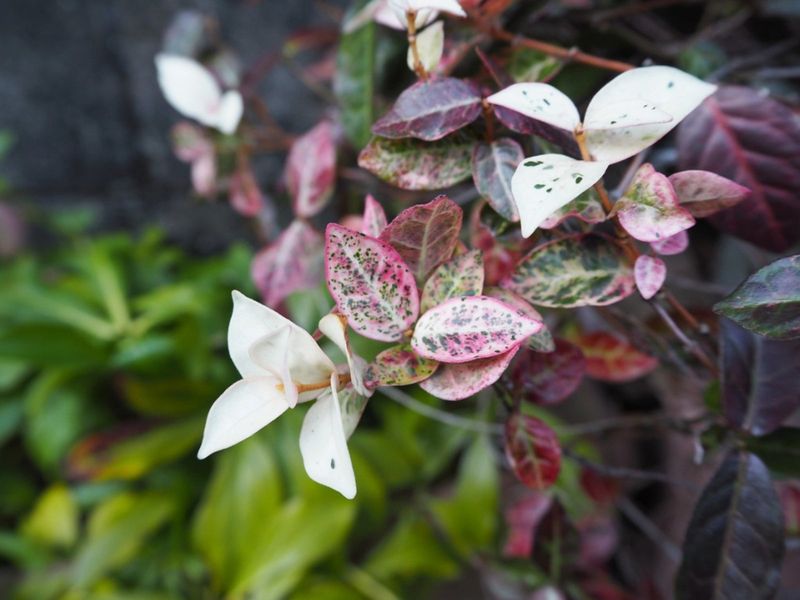
If you need a tough groundcover that handles Florida heat, Trachelospermum asiaticum delivers reliable results. This low-growing relative of star jasmine spreads quickly to form a thick mat of small, glossy leaves.
While it does produce tiny white flowers, most gardeners choose it for foliage coverage rather than blooms or fragrance.
Your Florida Garden Changes Every Week. Your Plan Should Too.
Gardening in Florida changes quickly throughout the season. Every Friday you’ll receive a simple weekly plan showing exactly what to plant, prune, fertilize, harvest, and protect so you never miss the right timing.
Asiatic jasmine thrives in partial sun to light shade, making it useful for areas under trees or along north-facing beds. It prefers partial sun to light shade but tolerates more sun once established with adequate moisture.
The plant tolerates various soil types as long as drainage is adequate.
Once established, this groundcover needs minimal attention beyond occasional watering during extended dry periods. It spreads through runners that root wherever they touch soil, filling spaces rapidly in Florida’s warm climate.
That vigorous growth makes it excellent for erosion control and weed suppression.
However, the same spreading habit that makes Asiatic jasmine valuable can become problematic if not managed properly. It will creep into lawns, flower beds, and other areas where you don’t want it.
Many Florida gardeners find that growing it in large containers or installing solid edging around planting beds prevents unwanted expansion.
Container growing works especially well on patios or porches where you want cascading greenery without ground planting. Use pots at least 12 inches deep with drainage holes and a quality potting mix.
Water containers more frequently than ground plantings since they dry out faster.
Trimming back edges with pruning shears or a string trimmer keeps growth tidy and contained. Some gardeners mow over established beds once or twice yearly to refresh the foliage and maintain a uniform height.
Fertilizing in spring with a slow-release formula supports dense, healthy growth throughout the growing season.
3. Winter Jasmine Brightens Cool Season Gardens
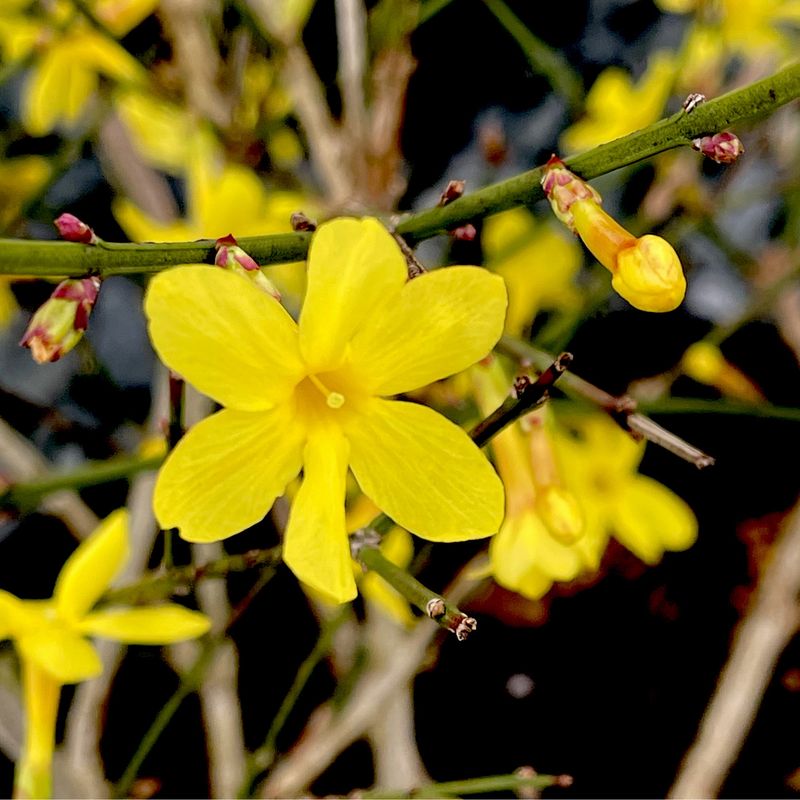
Jasminum nudiflorum stands out because it blooms when most other plants rest. Cheerful yellow flowers appear on bare green stems during late winter and early spring, often before leaves emerge.
This unusual flowering pattern brings welcome color during Florida’s cooler months when many gardens look dull.
Winter jasmine performs best in North and Central Florida where temperatures drop enough to trigger proper blooming. South Florida’s mild winters may not provide sufficient chill hours for reliable flowering.
The plant grows as an arching shrub rather than a climbing vine, with long flexible stems that cascade gracefully.
Full sun to partial shade suits this variety well, though more sun typically produces heavier flowering. Plant in well-drained soil enriched with organic matter.
Space multiple plants three to four feet apart if creating a border or mass planting.
Watering needs are moderate once roots establish. During the first year, water regularly to help the plant settle in.
After that, natural rainfall usually provides enough moisture except during prolonged dry spells. Winter jasmine tolerates brief droughts better than constantly wet conditions.
Pruning should happen immediately after flowering finishes in early spring. This timing allows new growth to develop and set buds for next year’s display.
Remove about one-third of the oldest stems at ground level to encourage fresh shoots. Shape remaining branches as desired to maintain an attractive form.
Unlike some aggressive jasmine types, winter jasmine stays where you plant it without spreading into unwanted areas. Most Florida gardeners grow it directly in the ground as a specimen shrub or informal hedge.
Container growing is possible but less common since the plant develops a substantial root system.
Fertilize lightly in early spring after flowering ends using a balanced formula. Avoid heavy feeding, which can reduce bloom production and promote excessive leafy growth instead of flowers.
4. Carolina Jasmine Brings Golden Native Charm
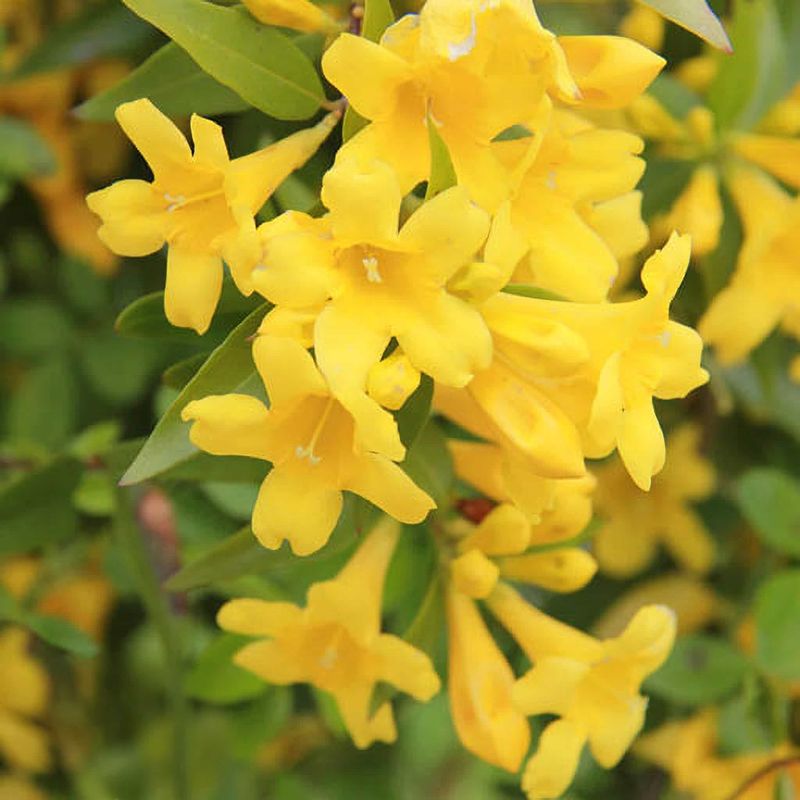
Gelsemium sempervirens holds special value as a Florida native plant that supports local ecosystems. Bright yellow trumpet-shaped flowers cover the vine in late winter through spring, creating stunning displays that attract hummingbirds and native bees.
The evergreen foliage stays attractive year-round, making this a four-season performer.
Native plant enthusiasts appreciate Carolina jasmine for its ecological benefits and adaptability to Florida conditions. It naturally occurs in woodlands and forest edges throughout the state, indicating its tolerance for various growing situations.
The vine climbs by twining stems and works beautifully on fences, arbors, and mailbox posts.
Plant in full sun to partial shade for best results. While it tolerates some shade, flowering improves with more direct light.
Soil should drain well since Carolina jasmine dislikes constantly wet roots. Once established, the plant handles moderate drought periods typical of Florida’s dry season.
Watering needs decrease significantly after the first year. During establishment, provide regular moisture to help roots spread and anchor properly.
After that, natural rainfall usually suffices except during extended dry spells when occasional deep watering helps maintain vigor.
Carolina jasmine stays relatively well behaved without aggressive spreading, making it suitable for residential landscapes. It grows at a moderate pace and rarely becomes invasive like some exotic vines.
This controlled growth habit means less maintenance and worry about containment.
One important consideration is that all parts of this plant contain toxic compounds. Keep it away from areas where children or pets might chew on leaves or flowers.
The toxicity rarely causes problems since the plant tastes bitter and animals typically avoid it naturally.
Pruning after flowering maintains shape and removes any frost-damaged stems from cold snaps in North Florida. Light trimming throughout the growing season controls size if needed.
Fertilizing is usually unnecessary since native plants adapted to Florida’s natural soil conditions, though light spring feeding can boost flowering.
5. Arabian Jasmine Delivers Pure Tropical Perfume
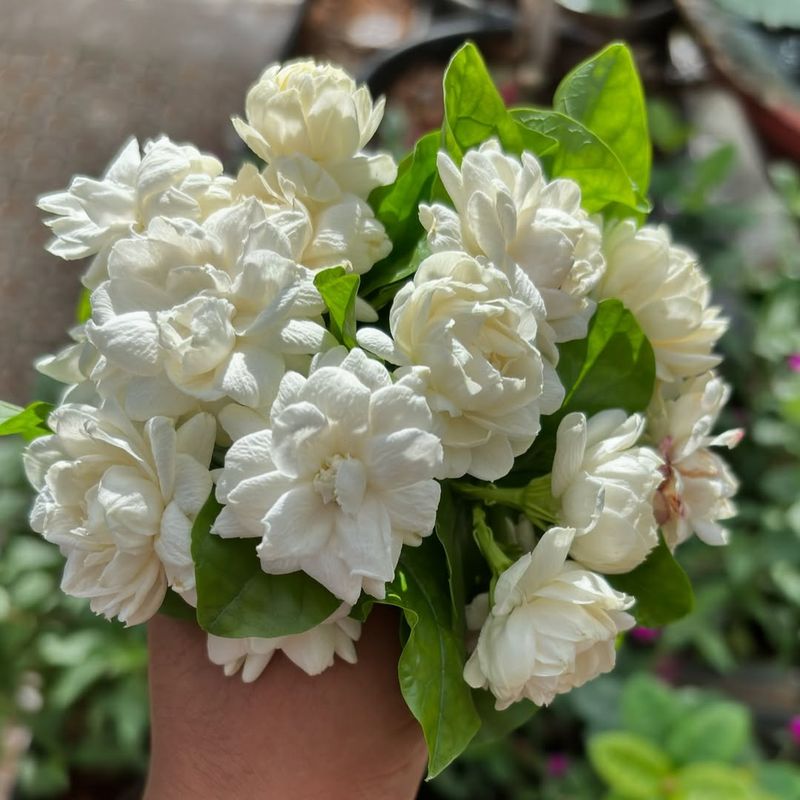
Among true jasmines, Jasminum sambac ranks as one of the most fragrant and beloved. Pure white flowers with multiple layers of petals release an intoxicating perfume that fills evening air.
This species is the jasmine used in teas and perfumes, making it special for gardeners who want authentic jasmine scent.
Arabian jasmine grows as a bushy shrub rather than a climbing vine. It performs best in Central and South Florida where winters stay mild.
North Florida gardeners can succeed with this plant if they provide frost protection during cold snaps or grow it in containers that move indoors when temperatures threaten.
Container growing actually works wonderfully for Arabian jasmine and may be the ideal method for most Florida gardeners. Pots allow you to position the plant near patios, doorways, or windows where you can enjoy the powerful fragrance.
Use containers at least 12 inches in diameter with excellent drainage holes.
Fill pots with quality potting mix that drains freely while holding some moisture. Arabian jasmine dislikes both soggy soil and complete dryness.
Water when the top inch of soil feels dry, adjusting frequency based on temperature and humidity. Container plants need more frequent watering than ground plantings.
Sunlight needs range from full sun to partial shade. In hottest areas of Florida, some afternoon shade prevents leaf scorch during summer.
The plant blooms repeatedly throughout warm months, with peak flowering during spring and summer when conditions are most favorable.
Pruning encourages bushier growth and more flowering stems. Pinch back stem tips regularly during the growing season to promote branching.
Remove spent flowers and any leggy growth to maintain a compact, attractive shape. Light pruning can happen anytime during warm months.
Feed container-grown Arabian jasmine monthly during active growth using a balanced liquid fertilizer diluted to half strength. Ground-planted specimens need less frequent feeding, perhaps quarterly during the growing season.
Consistent moisture and nutrition support continuous blooming and healthy foliage throughout Florida’s long growing season.
6. Night Blooming Jasmine Releases Powerful Evening Scent
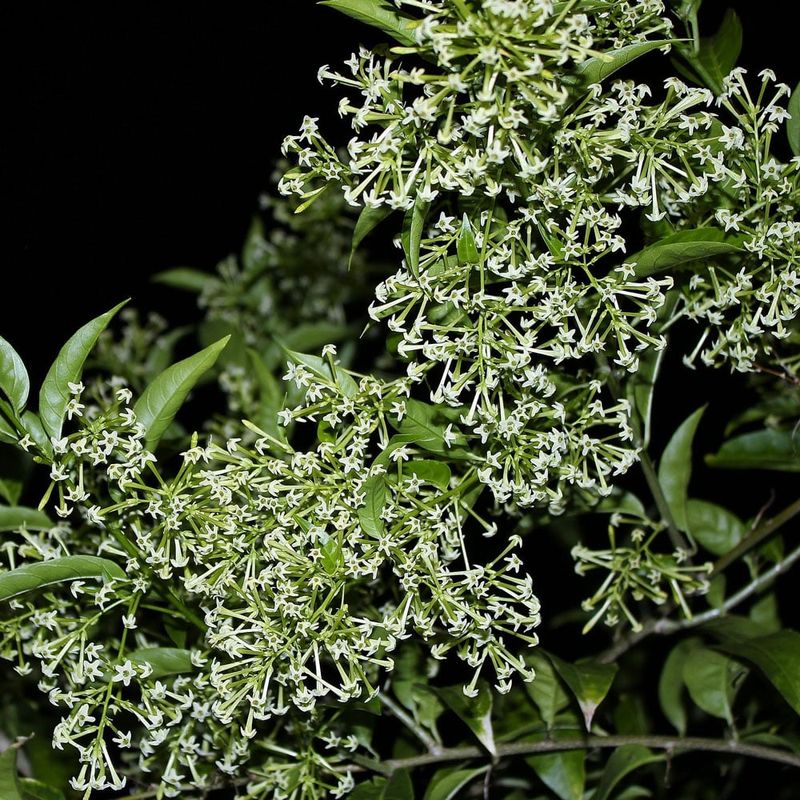
Cestrum nocturnum creates an unforgettable sensory experience when its small white flowers open after sunset. The intense sweet fragrance can fill entire yards, making this plant famous among gardeners who love evening gardens.
Flowers look insignificant during daylight but their perfume more than compensates for modest appearance.
This fast-growing shrub thrives in warm Florida climates, especially in Central and South regions. Growth can be quite vigorous, with plants quickly reaching eight to ten feet tall and wide if not controlled.
The enthusiastic growth habit requires careful consideration of placement and management strategies.
Container growing is strongly recommended for night blooming jasmine in most Florida situations. Large pots or planters help control the plant’s size and prevent it from spreading through underground roots.
This containment strategy works especially well in warm areas where growth can become overwhelming.
Choose containers at least 18 inches in diameter with good drainage. Use quality potting soil and position pots where evening fragrance can be enjoyed from patios or bedroom windows.
Container growing also makes it easier to move plants if they become too large or need protection from occasional cold weather in North Florida.
Plant in full sun to partial shade for best flowering. More sun typically produces more blooms and stronger fragrance.
Water regularly since this plant prefers consistent moisture, especially during hot summer months when growth is most active.
Pruning controls size and maintains a manageable shape. Cut back stems by one-third to one-half in late winter or early spring before new growth begins.
Additional trimming throughout the growing season keeps plants compact and encourages branching. Some Florida gardeners prune several times yearly to prevent excessive size.
Frost sensitivity means North Florida gardeners should provide protection during cold snaps or grow in containers that can move to sheltered locations. Fertilize monthly during warm months with balanced formula to support vigorous growth and continuous flowering.
Despite its maintenance needs, the remarkable evening fragrance makes this plant worth the extra effort for many Florida gardeners.