7 Birds Pennsylvanians Love Seeing In Their Gardens In Early Spring
There’s something magical about watching your garden come alive in early spring, especially when it’s filled with the colorful songs and fluttering wings of birds.
As the last of the snow melts away and the days grow longer, many of us eagerly await the return of our feathered friends.
For Pennsylvanians, the first signs of spring aren’t just about budding flowers, they’re about the birds that begin to fill the air with their cheerful songs.
From the bright blue of a Bluebird to the joyful chirps of a Robin, these early arrivals bring energy and excitement to gardens across the state. They’re not just a treat for the eyes but also a sign that warmer days are on the way.
With the right plants and a little patience, you can create a welcoming space that encourages these beloved birds to stick around, adding charm and life to your backyard for months to come.
1. Northern Cardinal (Cardinalis Cardinalis)
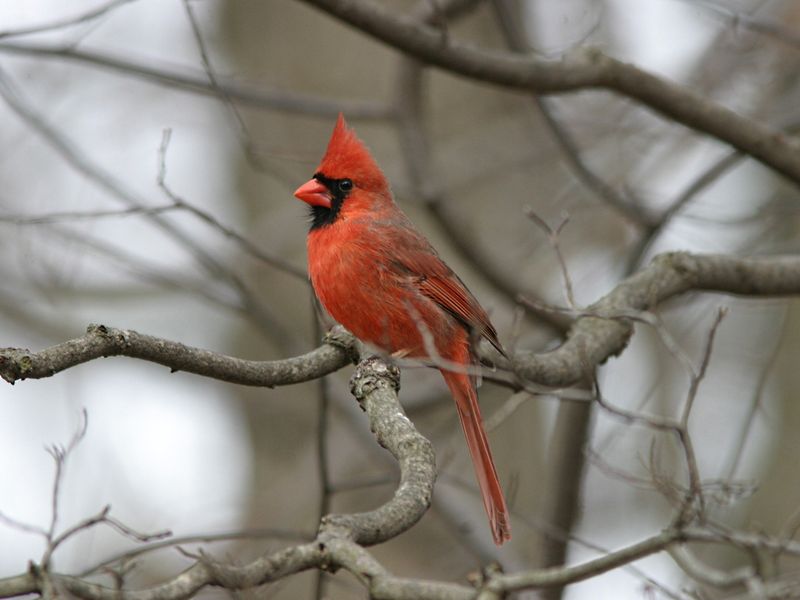
Few birds stop people in their tracks quite like the Northern Cardinal. That flash of brilliant red against a gray early spring morning in Pennsylvania is enough to make anyone look twice.
The male cardinal is one of the most recognized backyard birds in the entire country, and for good reason.
Male cardinals are covered in deep, vivid red feathers from beak to tail. They have a bold black mask around the face and a sharp crest on top of their heads.
Females are softer in color, showing warm brown tones with hints of red on their wings, crest, and tail. Both birds are beautiful and worth watching closely.
Cardinals love visiting feeders stocked with sunflower seeds. They are not shy about showing up regularly, especially in the early morning and late afternoon.
If you want to attract them to your Pennsylvania garden, place a platform feeder at a low height since they prefer feeding closer to the ground.
Dense shrubs and evergreen bushes are also important for cardinals. They use thick vegetation for shelter and nesting.
Planting native shrubs like dogwood or viburnum gives them safe spots to rest and raise their young. Cardinals stay in Pennsylvania year-round, so once they find your yard, they often return season after season.
Spotting a cardinal in early spring feels like a warm welcome after a long winter, and it never really gets old no matter how many times you see one.
2. American Robin (Turdus Migratorius)
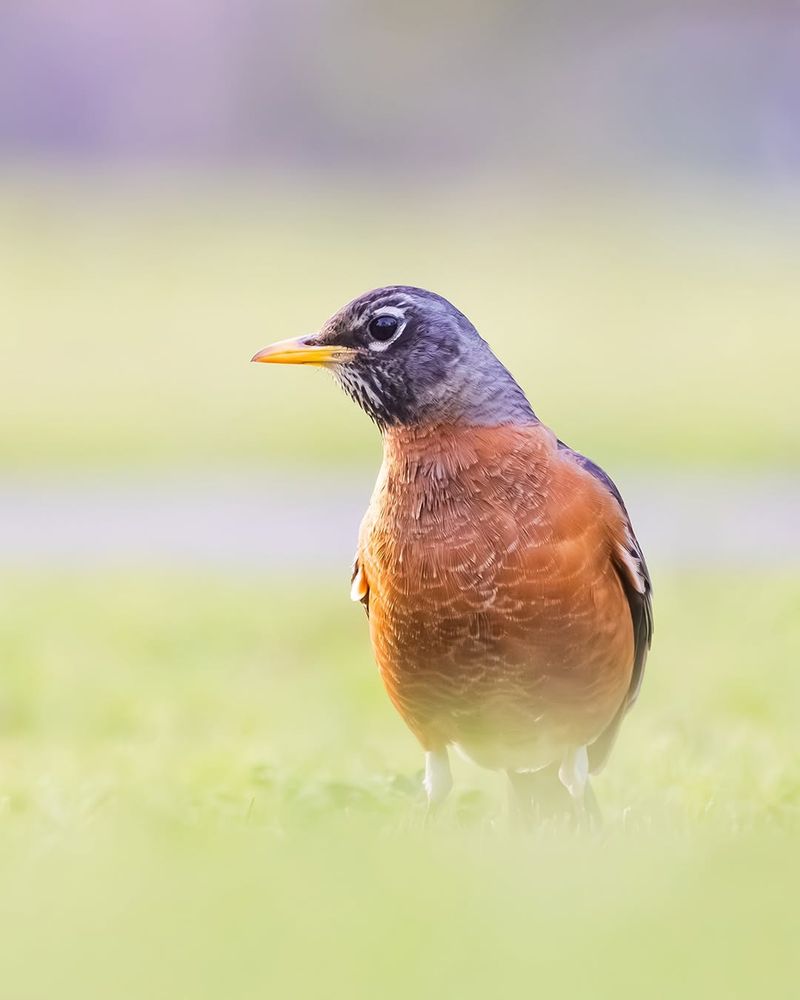
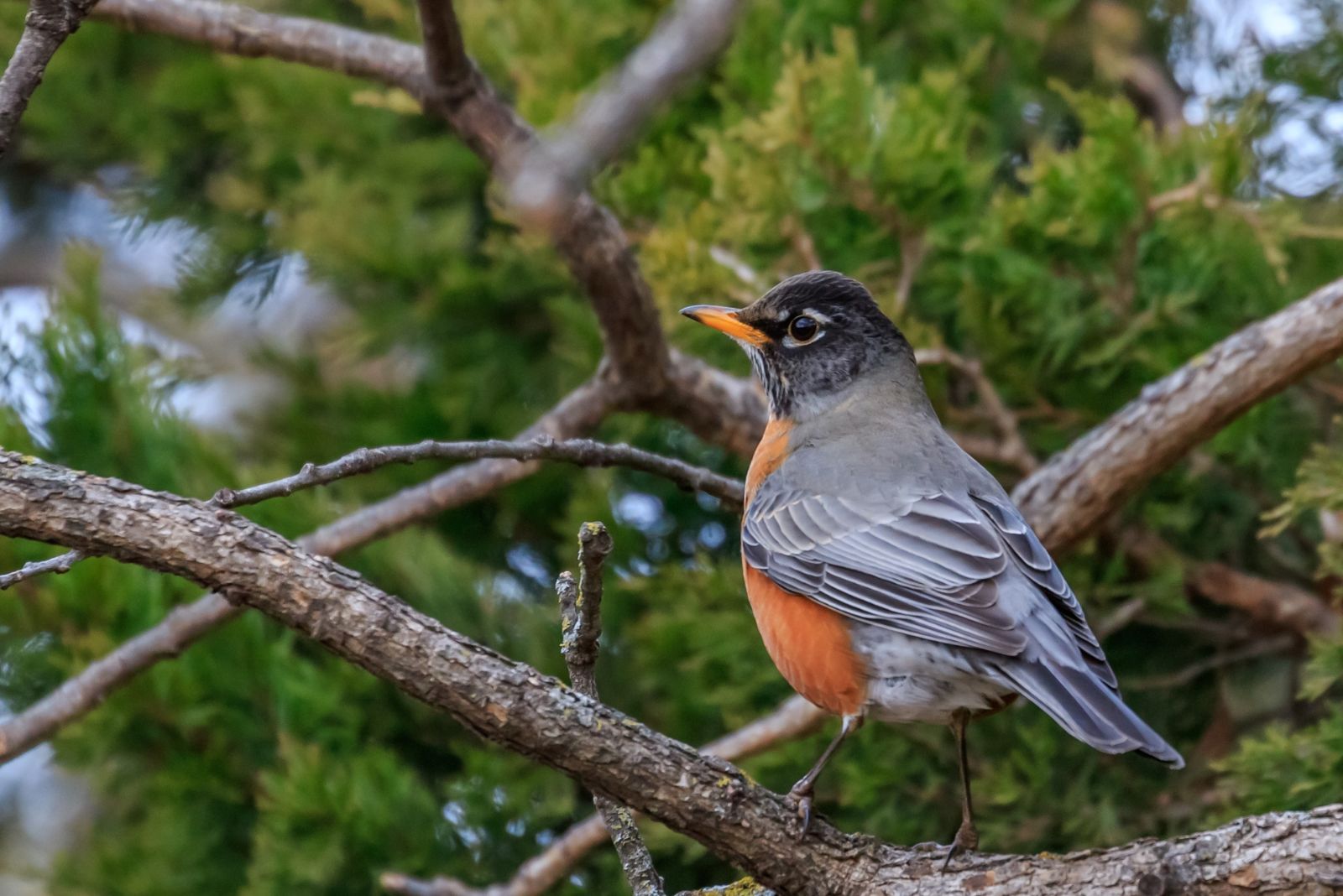
Ask any Pennsylvanian what the first real sign of spring looks like, and many will say it is the American Robin hopping across the lawn. Robins are bold, busy birds with a cheerful energy that makes the whole yard feel alive.
Seeing one tugging a worm from the soft earth after a winter freeze is a moment that feels genuinely hopeful.
The American Robin is easy to identify. It has a dark gray-brown back and a warm orange-red breast that practically glows in the morning light.
Its bright yellow beak and white eye rings make it look alert and curious. Both males and females share similar colors, though males tend to have slightly deeper tones on their chest.
Your Pennsylvania Garden Changes Every Week. Your Plan Should Too.
Gardening in Pennsylvania changes quickly throughout the season. Every Friday you’ll receive a simple weekly plan showing exactly what to plant, prune, fertilize, harvest, and protect so you never miss the right timing.
Robins feed on a wide variety of foods throughout early spring in Pennsylvania. Earthworms are a favorite, which is why you often see them hopping across lawns after rain.
They also eat insects, beetles, and berries from shrubs like holly and serviceberry. A yard with open grass and fruit-bearing plants is perfect robin territory. You do not need a feeder to attract robins. They prefer to forage on the ground naturally.
However, keeping your lawn pesticide-free helps protect their food supply and keeps your garden healthy for them. Robins also love birdbaths, so adding one with fresh water is a great idea.
In Pennsylvania, robins can be spotted almost everywhere in spring, from suburban yards to city parks and wooded edges.
3. Blue Jay (Cyanocitta Cristata)
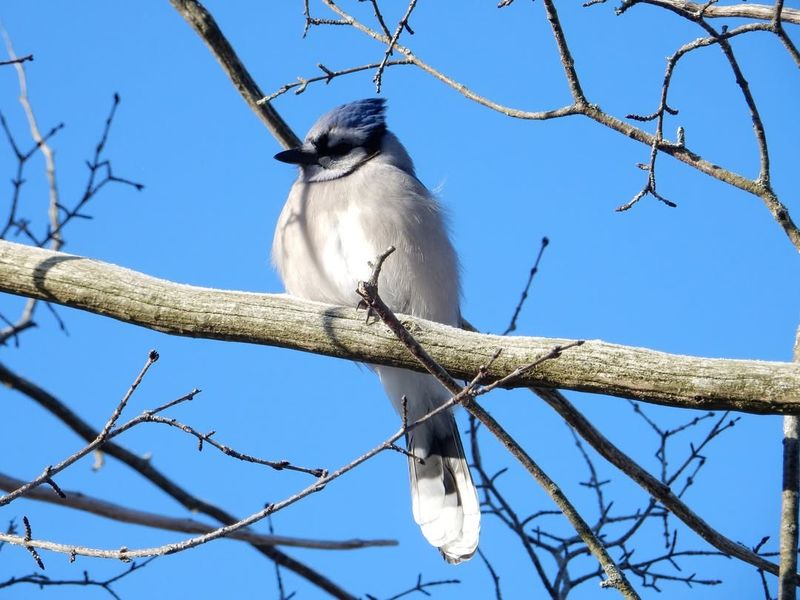
Bold, bright, and never boring, the Blue Jay is one of the most striking birds you will see in a Pennsylvania garden during early spring.
Its combination of vivid blue, crisp white, and bold black markings makes it look almost painted. Blue Jays are the kind of birds that demand your attention the moment they arrive.
Blue Jays are also surprisingly intelligent. They can mimic the calls of hawks, which some researchers believe they use to warn other birds or even to test if predators are nearby.
They communicate with a wide range of sounds and often travel in small family groups. Watching them interact at a feeder is genuinely entertaining.
These birds enjoy a varied diet. Acorns are a top favorite, and Blue Jays are actually known to help spread oak trees by burying acorns and occasionally forgetting where they hid them.
They also eat seeds, berries, insects, and sometimes eggs from other bird nests. Offering peanuts or sunflower seeds in your Pennsylvania backyard feeder is a reliable way to bring them in.
Blue Jays are year-round residents in Pennsylvania, but their activity picks up noticeably in early spring as they scout territories and prepare for nesting season. They tend to be loud and assertive at feeders, sometimes chasing smaller birds away.
Despite their bossy reputation, they play an important role in the local ecosystem. Setting up a large platform feeder with plenty of space helps keep everyone happy and well-fed in your garden.
4. Tufted Titmouse (Baeolophus Bicolor)
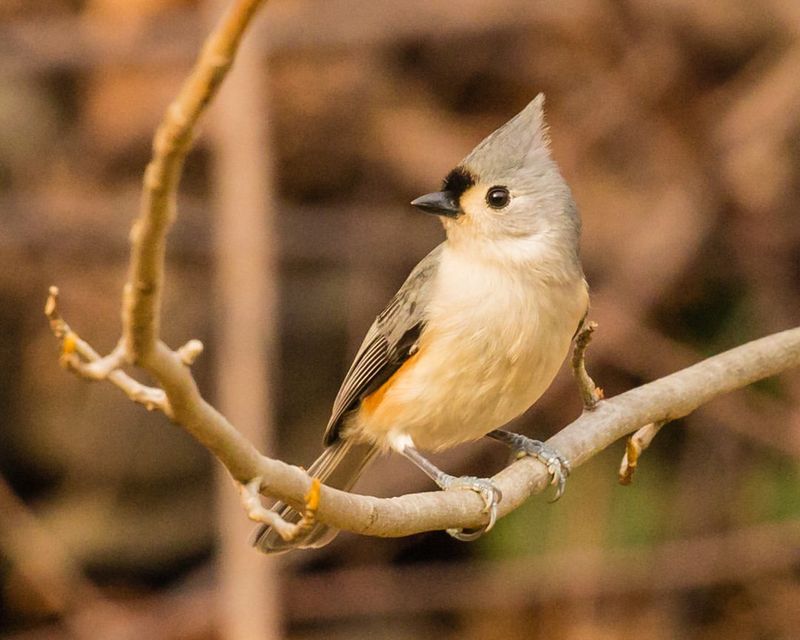
Small but completely charming, the Tufted Titmouse is a favorite among backyard birdwatchers across Pennsylvania. It has a soft gray back, a clean white belly, and a peachy blush along its sides.
That upright crest on top of its head gives it a permanently alert and slightly regal look that is hard not to love.
Titmice are social birds with big personalities. They are often found moving through the woods in mixed flocks alongside Black-capped Chickadees, Nuthatches, and Downy Woodpeckers.
This kind of group travel makes early spring birdwatching in Pennsylvania especially rewarding because spotting one titmouse often means several other species are nearby.
At feeders, Tufted Titmice have a funny habit of grabbing one seed at a time and flying off to crack it open on a branch. They prefer sunflower seeds and are also big fans of suet.
Peanuts are another hit. Placing a feeder near a tree line or dense shrubs gives them the cover they like while still letting you watch them clearly from a window.
Titmice are also known for their clear, whistled song that sounds like they are calling “peter-peter-peter” over and over. Once you learn it, you will start hearing it everywhere in Pennsylvania gardens during spring.
They are cavity nesters, so putting up a small nest box in your yard can encourage them to stick around longer. These little birds bring a lot of life and sound to any outdoor space they visit.
5. Eastern Bluebird (Sialia Sialis)
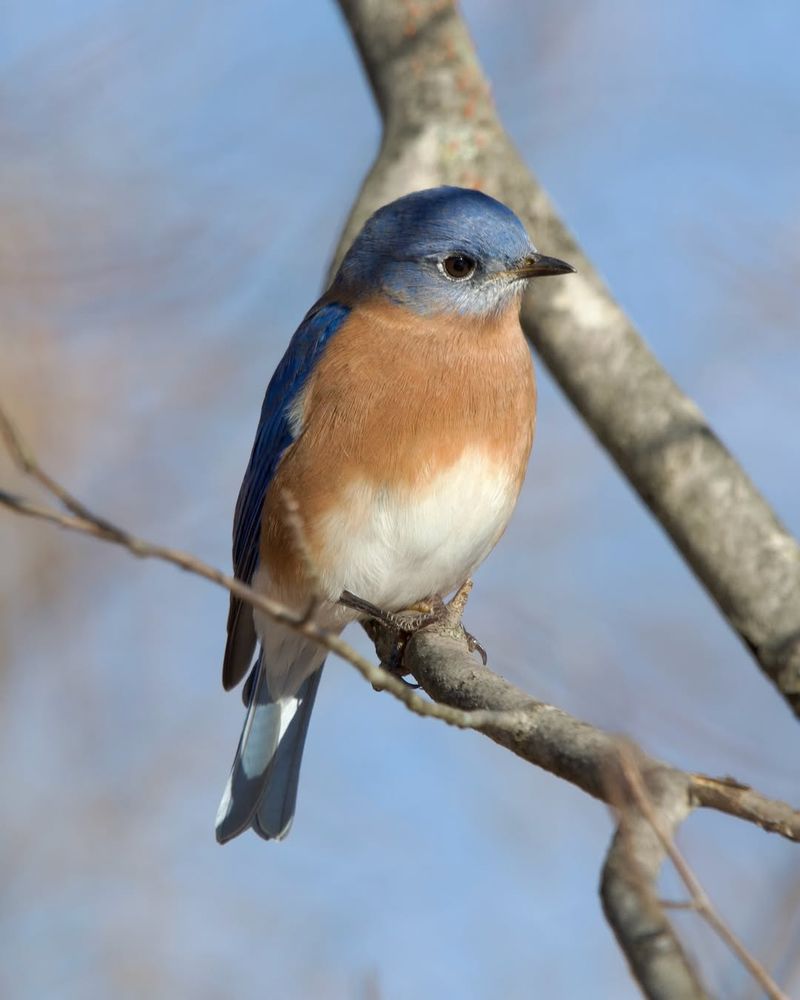
There is something almost magical about seeing an Eastern Bluebird for the first time. The male’s back is a deep, brilliant blue that almost looks electric in direct sunlight.
His chest is a warm, rusty orange that fades gently into white on the belly. Females are softer versions of the same palette, with muted blue-gray wings and a paler orange breast.
Eastern Bluebirds were once in serious decline across Pennsylvania due to habitat loss and competition from invasive birds. Thanks to dedicated conservation efforts and the widespread installation of nest boxes, their populations have made a strong comeback.
Early spring is one of the best times to spot them because they begin scouting nest sites as soon as temperatures start rising.
Bluebirds love open areas with short grass and scattered perches. Fence posts, low tree branches, and garden stakes are favorite lookout spots.
From these perches, they drop down to grab insects, beetles, and caterpillars from the ground. They also enjoy berries from native plants like dogwood and holly, which makes adding these to your Pennsylvania garden a smart move.
Installing a bluebird-specific nest box on a pole with a predator guard is one of the most rewarding things a Pennsylvania gardener can do. Place it in an open area facing east or southeast for best results.
Check the box periodically through spring to make sure it stays clean and safe. Once a pair of bluebirds moves in, watching them raise a family right in your own backyard is an experience you will remember for a long time.
6. Downy Woodpecker (Dryobates Pubescens)
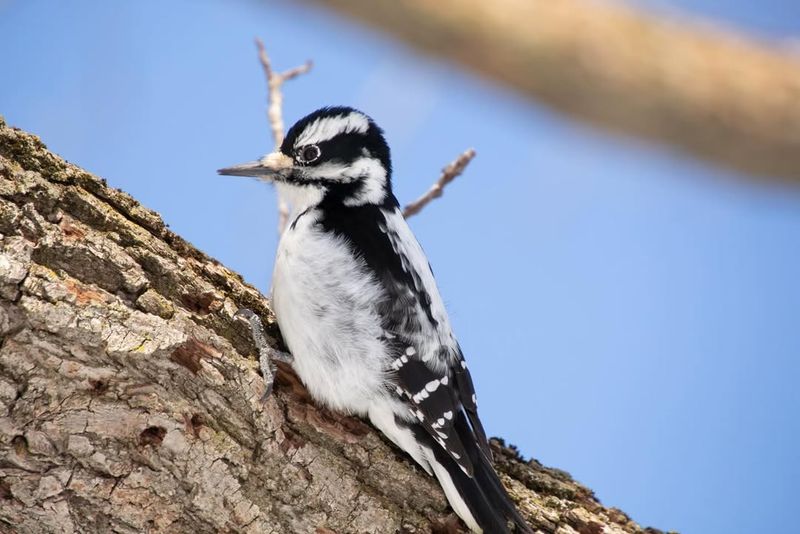
The Downy Woodpecker may be the smallest woodpecker in North America, but it has a personality that fills up the whole yard. Crisp black-and-white feathers cover its body in a neat checkerboard pattern.
Males have a small red patch on the back of their head, while females are all black and white. Despite its compact size, this bird is tough, active, and endlessly entertaining to watch.
In early spring across Pennsylvania, Downy Woodpeckers are especially busy. They spend a lot of their time tapping and probing the bark of trees in search of insects, beetle larvae, and ant colonies hidden underneath.
That rhythmic tapping sound is one of the earliest signs that spring activity is ramping up in your garden. They move quickly and methodically, often working their way up and down the same tree multiple times.
Downy Woodpeckers are also reliable visitors to suet feeders. Suet cakes are a high-energy food that helps birds fuel up during the colder early spring days when insects are not yet plentiful.
Hanging a suet cage from a tree branch or feeder pole near your window gives you a front-row seat to watch them feed up close. They are not particularly shy and will often return to the same feeder daily.
One fun fact about Downy Woodpeckers is that they often travel with mixed flocks of Titmice and Chickadees through Pennsylvania woodlands and suburban gardens. If you see one, look around because more birds are likely nearby.
Setting up multiple feeders with a variety of foods is the best way to welcome the whole group into your outdoor space.
7. Carolina Wren (Thryothorus Ludovicianus)
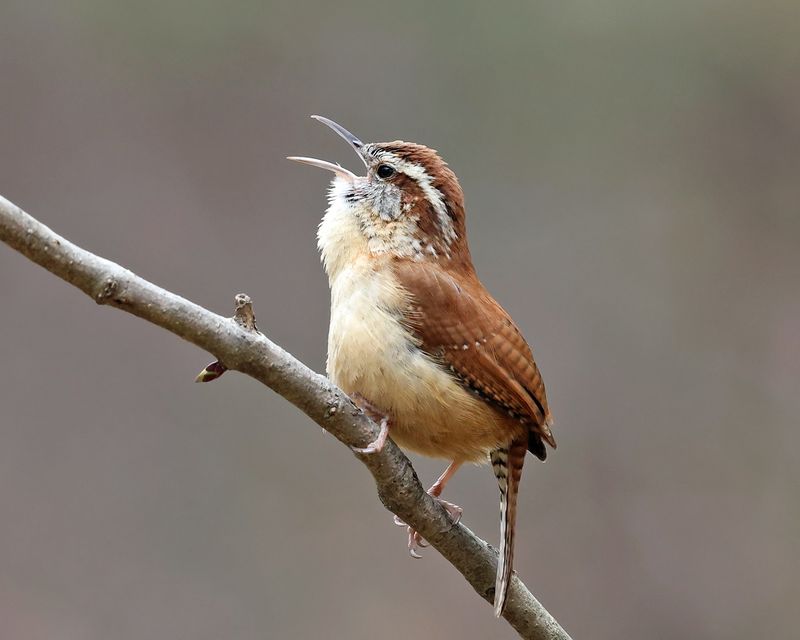
Do not let its tiny size fool you. The Carolina Wren is one of the loudest and most confident birds you will ever encounter in a Pennsylvania garden.
Its rich, rolling song bursts out of dense shrubs like a small explosion of sound. Once you hear it, you will always recognize it.
The call is often described as sounding like “teakettle-teakettle-teakettle” repeated with great enthusiasm.
Carolina Wrens have warm reddish-brown backs, creamy buff undersides, and a bold white eyebrow stripe that gives them a feisty, expressive look. Their tails are often cocked upward at a jaunty angle, adding to their spirited appearance.
They are compact birds that move with quick, darting energy through low brush and garden beds in search of food.
Insects make up the bulk of a Carolina Wren’s diet in early spring. They probe leaf litter, bark crevices, and garden corners for beetles, caterpillars, spiders, and ants.
They will also visit feeders stocked with suet or mealworms, especially when insect activity is still low during chilly early spring mornings in Pennsylvania. Keeping a brush pile or leaving some leaf litter in a garden corner gives them a natural foraging spot.
Carolina Wrens are creative nesters and will use almost any cozy nook they can find. Hanging planters, old boots left on a porch, and dense shrubs are all fair game.
Putting up a small open-fronted nest box in a sheltered spot is a great way to invite them to stay. These energetic little birds bring so much sound and movement to Pennsylvania gardens throughout the entire spring season.