8 Fast-Growing Fruit Trees You Can Easily Grow In Your Texas Backyard

Stop buying grocery store fruit that tastes like cardboard and start enjoying fruit straight from your own Texas backyard.
With our relentless sun and long growing seasons, scrawny saplings can quickly transform into heavy-yielding trees faster than you ever imagined.
You don’t have to wait a lifetime for a real harvest. From the humid soils of East Texas to the rugged limestone of the Hill Country, your backyard holds untapped potential for the right trees.
These eight fast-growing fruit trees can turn empty patches of dirt into your own private farmers market in just a few short seasons.
Forget waiting! Grab your shovel and start planting, because these rapid growers are ready to turn your yard into a sweet, juicy oasis this year.
1. Peach Tree Brings Juicy Fruit And Vibrant Spring Blossoms

Few things say Texas summer quite like biting into a sun-warmed peach straight from your own backyard tree.
Peach trees are among the fastest-fruiting options, often producing their first meaningful harvest within two to three years of planting.
Varieties such as ‘TexPrince,’ ‘Harvester,’ and ‘Elberta’ are widely recognized for their heat tolerance, reliable yields, and ability to thrive in warm, sunny conditions.
Peach trees grow best in full sun with well-drained, loamy soil. Heavy clay soils can cause root problems, so amending your planting bed with compost and ensuring good drainage will go a long way.
These trees typically reach 15 to 25 feet tall but respond well to regular pruning, which keeps them manageable and encourages bigger, juicier fruit.
One key thing to know before planting is chill hours.
Peaches need a certain number of cold winter hours below 45 degrees Fahrenheit to fruit properly, so choosing a low-chill variety suited to your specific Texas region matters.
Watch for peach tree borers and brown rot fungus during humid stretches, and apply dormant oil sprays in late winter to keep pest pressure low heading into the growing season.
2. Fig Tree Offers Sweet Fruit And Large Shade-Giving Leaves

Hardy, forgiving, and almost effortlessly productive, the fig tree has been a staple of Texas home gardens for generations.
Varieties like ‘Celeste,’ ‘Texas Everbearing,’ and ‘Brown Turkey’ thrive across most of the state, handling summer heat with ease and bouncing back quickly from occasional cold snaps.
Under good conditions, a young fig tree can begin fruiting within one to two years of planting, making it one of the fastest rewards in the backyard orchard.
Figs prefer full sun and well-drained soil, though they are surprisingly adaptable to both sandy and clay-heavy soils found across Texas.
They are also notably drought-tolerant once established, which is a real advantage during those long, dry Texas summers.
Mature trees can reach 10 to 30 feet depending on the variety, but regular pruning after harvest keeps them compact and easy to manage.
One practical tip is to mulch heavily around the base of your fig tree to retain soil moisture and protect roots during unexpected winter cold.
Fig trees rarely need cross-pollination, so a single tree planted in a sunny corner of your yard can produce generous harvests of sweet, honey-rich fruit from mid-summer through early fall.
Your Texas Garden Changes Every Week. Your Plan Should Too.
Gardening in Texas changes quickly throughout the season. Every Friday you’ll receive a simple weekly plan showing exactly what to plant, prune, fertilize, harvest, and protect so you never miss the right timing.
3. Pomegranate Adds Bright Red Fruit And Glossy Green Foliage

Hot, dry summers that challenge other fruit trees are practically ideal growing conditions for the pomegranate.
This tough, ornamental tree thrives across much of Texas, especially in Central, West, and South Texas where long, sun-drenched seasons help the fruit develop its signature deep red color and tangy-sweet flavor.
Varieties like ‘Wonderful,’ ‘Grenada,’ and ‘Angel Red’ are well-regarded choices that perform reliably in Texas heat.
Pomegranate trees prefer full sun and well-drained soil with a slightly alkaline to neutral pH, which suits the limestone-rich soils common throughout the Texas Hill Country and beyond.
They are notably drought-tolerant once established, though consistent watering during the fruiting season improves both fruit size and quality.
Expect your first meaningful harvest within two to three years of planting, with fruit typically ripening from late summer through October.
Mature pomegranate trees generally reach 12 to 20 feet tall, though they can be kept smaller with annual pruning in late winter. Their showy orange-red blossoms appear in spring, adding ornamental value well before the fruit arrives.
Pomegranates have few serious pest problems in Texas, making them a low-maintenance, high-reward addition to any sunny backyard space looking for both beauty and productivity.
4. Apple Tree Produces Crisp Fruit And Pretty Spring Flowers

Apples in Texas might sound like a stretch, but the right variety choices make backyard apple growing very achievable across much of the state.
Low-chill varieties like ‘Anna,’ ‘Dorsett Golden,’ and ‘Ein Shemer’ thrive in Central and South Texas, where winters are too warm for traditional apple types.
These low-chill apples prefer full sun and well-drained soil, and they typically begin producing fruit within two to four years of planting.
‘Anna’ and ‘Dorsett Golden’ are often planted together because they bloom at the same time and cross-pollinate each other effectively, which significantly boosts fruit set and overall yield.
Both varieties tend to ripen in early summer, well ahead of the peak Texas heat.
Apple trees in Texas generally grow 10 to 20 feet tall, though semi-dwarf rootstocks keep them more manageable for smaller backyards.
Annual pruning during the dormant season encourages new fruiting wood and keeps the canopy open for good air circulation, which helps reduce fungal issues during humid spring weather.
Apply a balanced fertilizer in early spring and water consistently during dry stretches to keep your tree healthy and productive throughout the season.
5. Pear Tree Yields Sweet Fruit And Upright, Elegant Form

With its naturally upright growth habit and graceful silhouette, the pear tree earns its place in a backyard on looks alone, but the sweet, juicy fruit it delivers each summer is the real payoff.
Fire blight resistance is an important factor when choosing a pear variety, and selections like ‘Kieffer,’ ‘Orient,’ and ‘Moonglow’ are well-regarded for their toughness, adaptability, and ability to thrive in warm, sunny conditions.
Pear trees thrive in full sun and are more tolerant of heavy clay soils than many other fruit trees, making them a practical option for gardeners dealing with the dense, sticky soils common in North and East Texas.
They typically begin producing fruit within three to five years of planting, with harvest falling in mid to late summer depending on the variety.
Most standard pear trees reach 20 to 30 feet tall, though semi-dwarf options are available for tighter spaces.
Cross-pollination between two compatible varieties significantly improves fruit production, so planting a pair of trees close together is a smart strategy.
Prune lightly in late winter to maintain shape and remove any dead or crossing branches, and keep an eye out for fire blight during warm, wet spring weather by removing any affected wood promptly.
6. Plum Tree Brings Early Fruit And Fragrant Spring Blooms
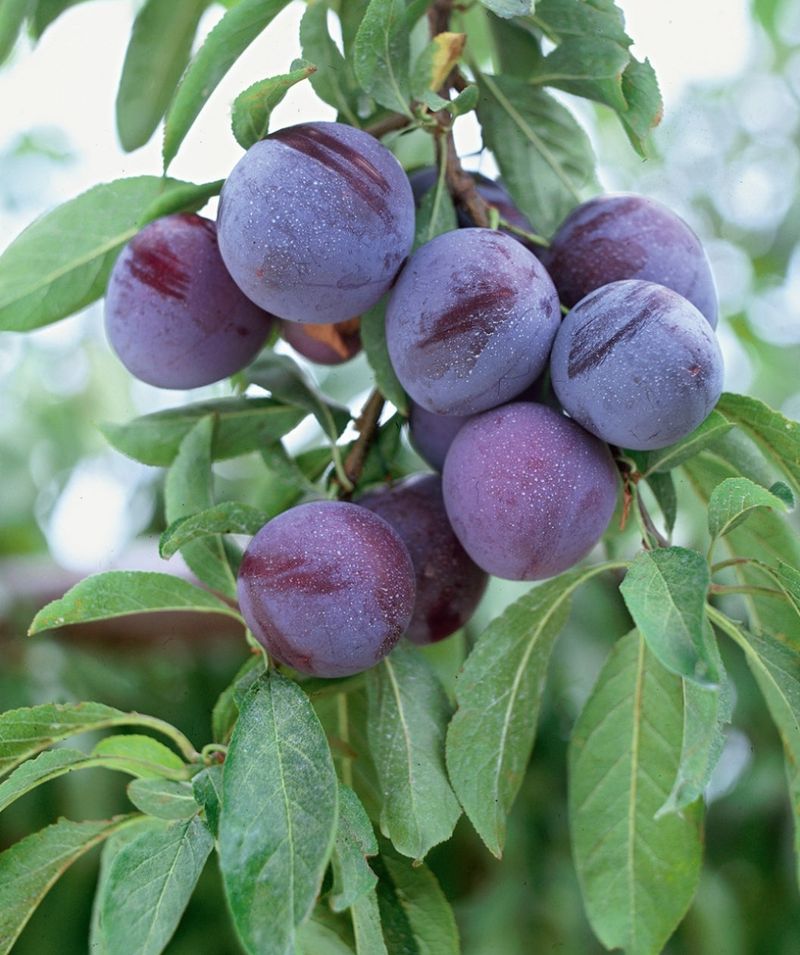
Spring arrives beautifully when you have a plum tree in the yard.
The clouds of fragrant white blossoms appear early in the season, well before most other fruit trees wake up, and they are followed by one of the earliest fruit harvests in the Texas backyard orchard.
Japanese plum varieties including ‘Bruce,’ ‘Methley,’ and ‘Santa Rosa’ are popular across Texas because they handle the heat well and begin producing fruit within two to four years of planting.
Plum trees prefer full sun and well-drained soil, and they perform best when given room to develop a rounded, open canopy.
‘Methley’ is a self-fertile variety, meaning a single tree can set fruit without a pollination partner, which is handy for gardeners with limited space. Other varieties benefit from cross-pollination, so pairing compatible types boosts overall yield.
Mature plum trees typically reach 15 to 20 feet in height and respond well to annual pruning during dormancy to keep their shape manageable and fruiting wood renewed.
Black knot fungus and plum curculio are occasional concerns in Texas, so a consistent spray schedule and good sanitation practices, like removing fallen fruit promptly, help maintain tree health.
Harvest typically runs from late May through July depending on your specific Texas location and the variety you choose.
7. Asian Persimmon Adds Orange Fruit And Glossy Evergreen Foliage

Not many fruit trees can match the visual drama of an Asian persimmon loaded with glowing orange fruit in the fall, especially once the leaves have dropped and the fruit hangs like ornaments against the Texas sky.
Asian persimmons, also known as Japanese persimmons, are exceptionally well-adapted to Texas conditions, handling both summer heat and periodic drought with impressive resilience.
Varieties like ‘Fuyu,’ ‘Hachiya,’ and ‘Eureka’ are among the most widely planted across the state.
‘Fuyu’ is a non-astringent variety, meaning the fruit can be eaten while still firm, which many backyard growers prefer for snacking fresh off the tree. ‘Hachiya’ is astringent and best enjoyed fully ripe or used in baking.
Both types prefer full sun and well-drained soil, and they are surprisingly tolerant of the alkaline, rocky soils found throughout much of Central Texas.
Asian persimmon trees typically reach 15 to 25 feet at maturity and begin producing fruit within three to five years of planting. Most varieties are self-fertile, though planting two trees can improve fruit set.
Pruning needs are minimal compared to other fruit trees, and serious pest problems are relatively uncommon in Texas, making the Asian persimmon one of the most low-maintenance options for a productive backyard orchard.
8. Loquat Produces Golden Fruit And Lush, Shiny Leaves

Walk through almost any older neighborhood in Houston, San Antonio, or Austin and you are likely to spot a loquat tree growing in someone’s front yard, its large, leathery leaves catching the light and clusters of golden fruit ripening in early spring.
Loquats are one of the few fruit trees that bloom in fall and winter, producing their harvest in February through April, well ahead of the summer heat that defines Texas growing seasons.
Varieties like ‘Gold Nugget’ and ‘Advance’ are reliable performers in Texas gardens, and the trees are notably cold-hardy for a subtropical fruit, tolerating temperatures into the mid-teens Fahrenheit when mature.
They prefer full sun to partial shade and well-drained soil, though they adapt to a wide range of soil types found across Texas, including sandy, loamy, and even moderately clay-heavy ground.
Loquat trees typically reach 15 to 25 feet tall and begin producing fruit within two to three years of planting. They are self-fertile, so a single tree produces a good crop without needing a pollination partner.
Fruit fly activity can be a concern as fruit ripens, so harvesting promptly and keeping fallen fruit cleaned up goes a long way toward protecting your harvest. The sweet, mildly tangy flavor is worth every bit of the effort.