Michigan Butterflies That Appear Before Spring Flowers Bloom
Most gardeners wait for a floral explosion before expecting butterflies, but in Michigan, a few bold pioneers show up long before the first petal drops.
Some have spent the winter huddled under tree bark, while others ride the season’s first warm breezes north, finally signaling that winter has lost its grip.
Spotting these early fliers feels like catching a secret visitor in your own yard. They are the true heralds of spring, offering a firsthand look at how resilient Michigan wildlife can be.
From the deep, forested trails of the Upper Peninsula to the sun-soaked lakeshore gardens of the south, these eight butterflies are the ultimate prizes for those heading out on the season’s first truly warm afternoons.
1. Mourning Cloak Emerges Early And Provides Winter Nectar Sources
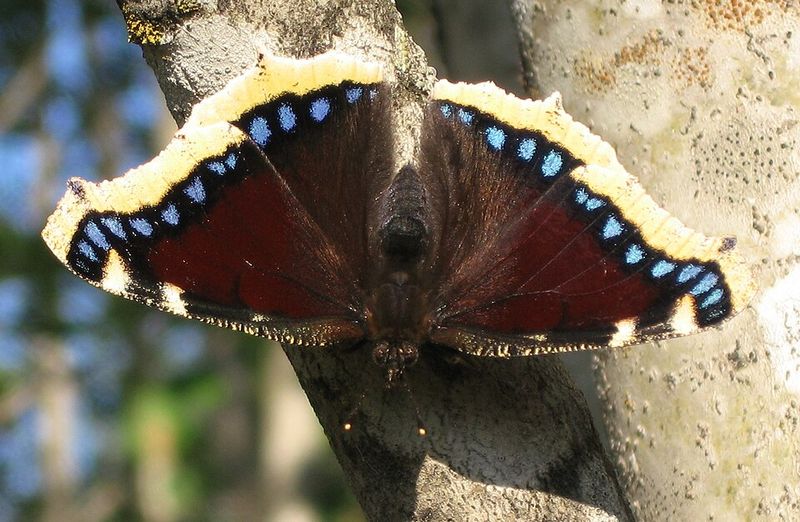
On a mild March afternoon in Michigan, when snow still lingers under the pine trees, a flash of deep maroon wings crossing a woodland path is almost always a Mourning Cloak.
This butterfly is one of the earliest to appear each year because it actually overwinters as an adult, sheltering under loose bark or inside hollow logs rather than migrating south.
When temperatures climb above 50 degrees Fahrenheit, the Mourning Cloak wakes up and begins searching for food.
At this time of year, flower nectar is nearly impossible to find, so this butterfly relies heavily on tree sap oozing from wounds in maple, elm, and oak trees.
It also visits rotting fruit when available. Those energy-rich sap flows are genuinely critical for helping the butterfly replenish fat reserves used during overwintering.
Gardeners hoping to encourage Mourning Cloaks can leave a few fallen logs or brush piles in a sheltered corner of the yard as overwintering habitat. Planting native willows, cottonwoods, or elms gives caterpillars a food source in summer.
Watching for this butterfly on sunny March days along woodland edges is one of the most rewarding early-spring wildlife experiences Michigan has to offer.
2. Eastern Comma Appears On Warm Days And Sparks Woodland Activity
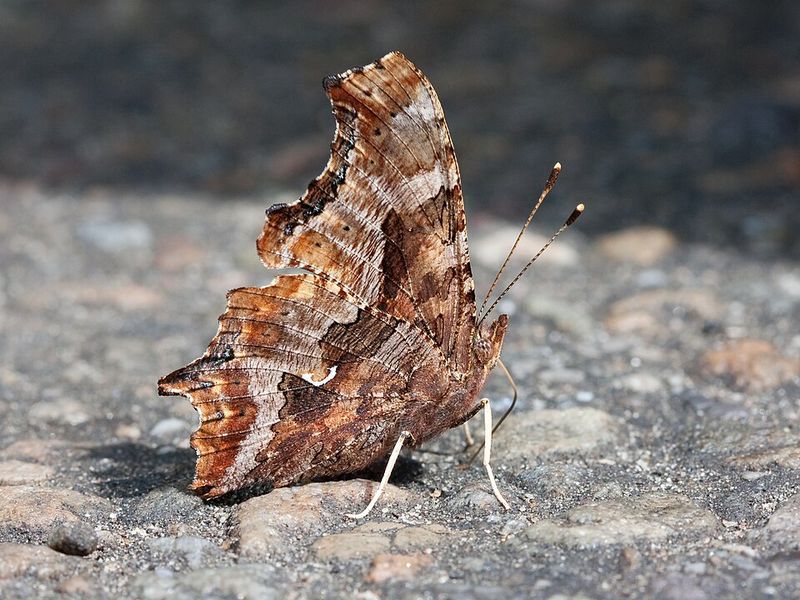
Walk along any Michigan woodland trail on the first genuinely warm day in late March, and you may notice a small, orange-brown butterfly perched on a sunlit log with wings wide open.
That is almost certainly an Eastern Comma, one of Michigan’s earliest emerging species and a fascinating sign that the forest is beginning to stir again after winter.
Like the Mourning Cloak, the Eastern Comma overwinters as an adult, hiding in wood piles, under bark, or inside dense brush. When warmth returns, it emerges to bask and search for sustenance.
Early food sources include tree sap, rotting fruit, and the occasional mud puddle rich in minerals. The butterfly gets its name from a tiny, curved silvery mark on the underside of its hind wing that looks strikingly like a punctuation comma.
Eastern Commas prefer woodland edges, stream corridors, and areas with a mix of sun and shade. Gardeners near wooded lots or parks in Michigan are most likely to spot them.
Your Michigan Garden Changes Every Week. Your Plan Should Too.
Gardening in Michigan changes quickly throughout the season. Every Friday you’ll receive a simple weekly plan showing exactly what to plant, prune, fertilize, harvest, and protect so you never miss the right timing.
Planting native nettles or hops, which serve as caterpillar host plants, can encourage breeding near your property.
Leaving some leaf litter and brush undisturbed through winter also helps protect overwintering adults from harsh Michigan temperatures.
3. Red Admiral Flies Before Blooms And Visits Sap And Early Flowers
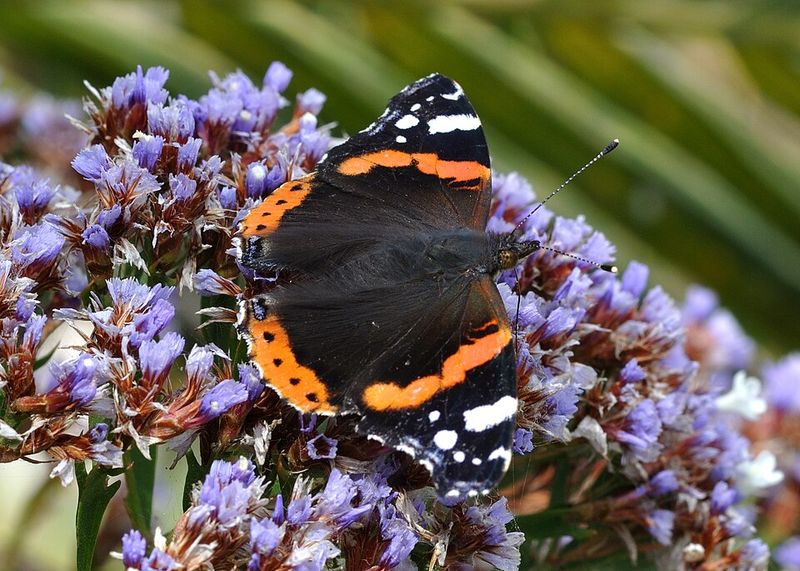
Few butterflies make as bold a visual impression as the Red Admiral, with its striking black wings crossed by bright red-orange bands and dotted with crisp white spots near the tips.
In Michigan, Red Admirals typically arrive in spring as part of a northward migration from southern states, often appearing before many wildflowers have opened their petals.
These butterflies are surprisingly resilient and can remain active in cooler temperatures than many other species, which helps explain why they are among the first to be seen in Michigan gardens and woodland edges.
Before most flowers bloom, they feed on tree sap, fermenting fruit, and occasionally on other nutrient-rich sources such as puddles or rotting vegetation.
Once early blooms such as pussy willow or dandelions open, they readily shift to nectar feeding.
Gardeners can encourage Red Admirals by planting native nettles for caterpillars and providing early-blooming shrubs like pussy willow or willows to help sustain adults arriving in spring.
Watching for Red Admirals perched on sunlit fences, logs, or pavement on cool April mornings is a rewarding way to track their arrival and enjoy one of Michigan’s most striking early-season butterflies.
4. Cabbage White Patrols Gardens And Adds Early Spring Movement
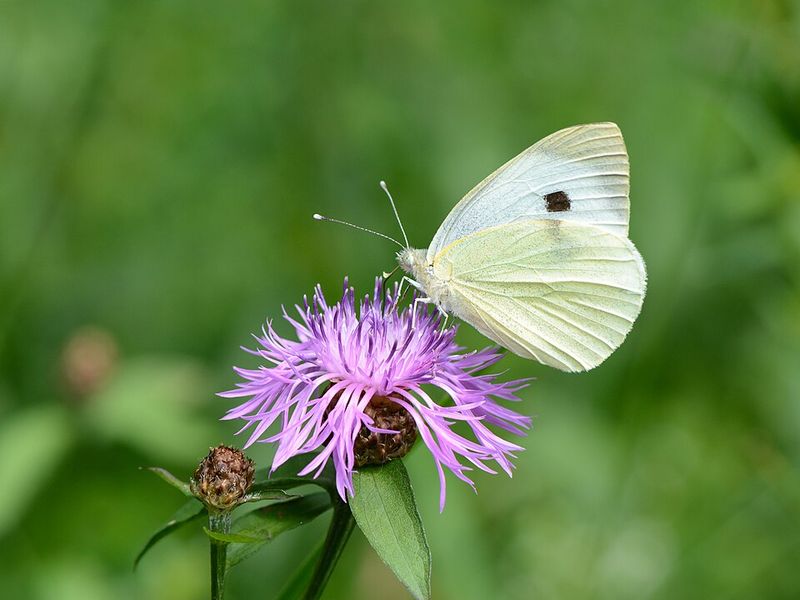
Long before the tomatoes go in or the perennials push through the soil, the Cabbage White is already patrolling Michigan gardens with its characteristic fluttery, almost restless flight.
This small, white butterfly with black wing spots is one of the most commonly spotted species across the entire state, appearing in backyards, community gardens, roadsides, and open fields from early spring through late fall.
Originally introduced from Europe in the 1860s, the Cabbage White has adapted remarkably well to Michigan’s climate and is now widespread across all regions. Males have one black spot on their forewings, while females have two.
They are among the earliest butterflies active in spring because they can fly at relatively cool temperatures and emerge quickly from overwintering pupae once conditions improve.
Gardeners growing brassicas such as broccoli, cabbage, kale, and mustard greens will likely notice female Cabbage Whites laying eggs on leaves. The resulting caterpillars can cause noticeable feeding damage.
Covering brassica beds with row cover fabric early in the season is an effective way to reduce egg laying.
On the positive side, adult Cabbage Whites do visit early flowers for nectar and contribute modestly to pollination in the spring garden before other butterfly species have arrived.
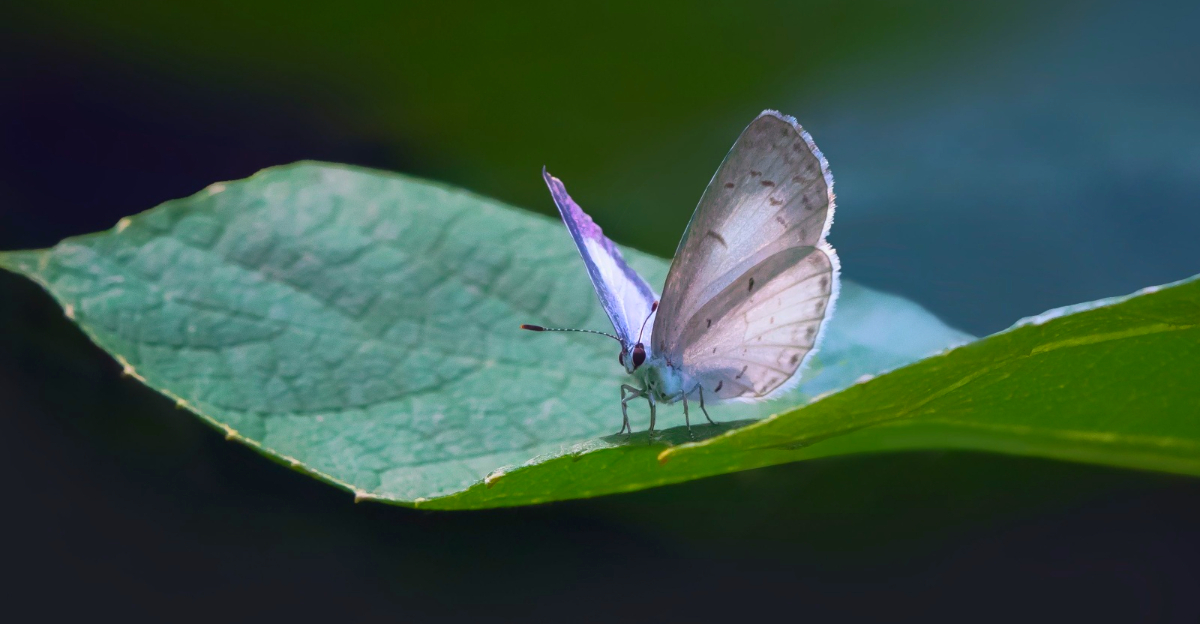
5. Spring Azure Brings Delicate Color And Woodland Cheer
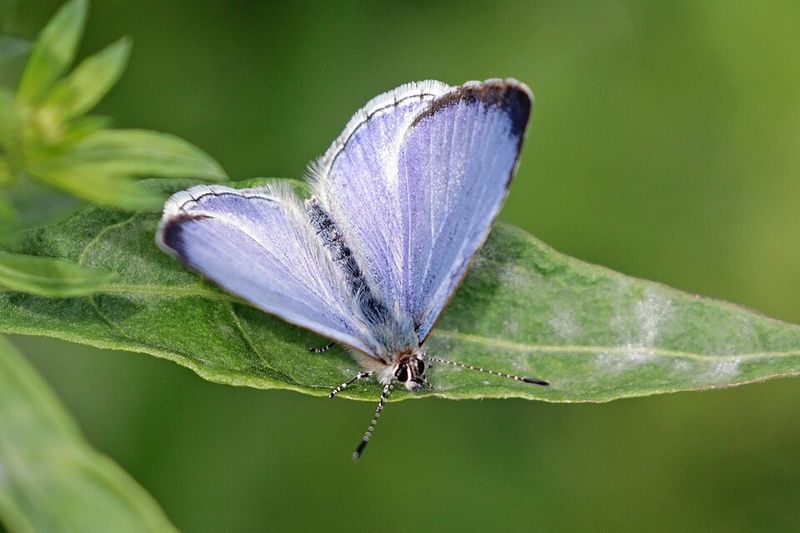
Catching a glimpse of a Spring Azure on a cool April morning in Michigan feels almost like finding a tiny piece of summer sky that arrived too early.
This small, delicate butterfly with azure blue upper wings and soft grayish undersides is one of the first truly colorful butterflies to appear each spring, often showing up before most wildflowers have opened.
Spring Azures belong to a complex group of closely related species, and Michigan populations typically emerge in late March or April.
They are strongly associated with woodland edges, forest clearings, and areas near streams where their host plants grow.
Caterpillars feed on flowers and developing fruits of native shrubs including dogwood, wild cherry, and viburnum, making these plants especially valuable for supporting local populations.
Adults feed on nectar from early-blooming plants such as willows, blueberries, and wild strawberries. They also visit damp soil and mud puddles for minerals, a behavior called puddling.
Gardeners can support Spring Azures by planting native dogwood species or viburnums near woodland edges.
Because these butterflies are small and fast-moving, they are easy to overlook, but spending time near shrubby woodland borders on warm April afternoons in Michigan greatly increases your chances of a memorable sighting.
6. Eastern Tailed-Blue Offers Tiny Flashes Of Blue In Grassy Areas
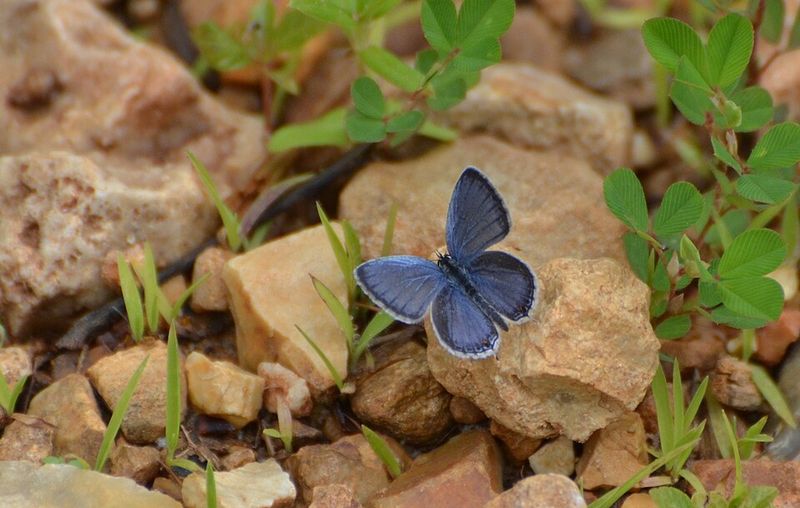
Spotting an Eastern Tailed-Blue requires a bit of patience and a sharp eye, because this butterfly is genuinely tiny, often measuring less than an inch across.
Look for small flashes of blue near clover patches, grassy roadsides, or open meadows on warm spring days in Michigan, and you may be rewarded with a look at one of the season’s most charming early fliers.
Eastern Tailed-Blues overwinter as pupae and can emerge surprisingly early in spring when temperatures cooperate. Males display striking blue upper wings, while females are more brownish-gray with blue near the body.
Both sexes have delicate, thread-like tails on their hind wings that give the species its name. These tiny tails may help confuse predators by mimicking antennae.
The caterpillars feed on legumes including wild clover, vetch, and tick trefoil, making open sunny areas with diverse native groundcover the best habitat.
Adults visit small-flowered plants for nectar, and their small size means they can access blooms that larger butterflies cannot.
Michigan gardeners can support Eastern Tailed-Blues by reducing mowing frequency in a corner of the lawn, allowing clover and low wildflowers to establish.
Sunny, sheltered spots near garden edges are ideal places to watch for these tiny blue gems in spring.
7. Question Mark Activates Early And Hunts Sunlit Edges
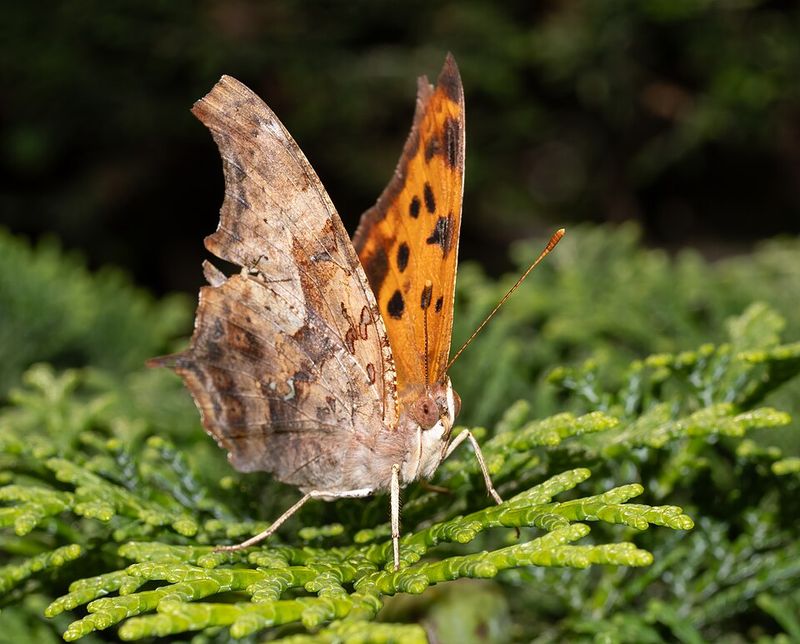
There is something almost detective-like about watching a Question Mark butterfly work a sunlit forest edge in early spring Michigan.
Named for the tiny silver question mark shape on the underside of its hind wing, this species has a personality to match its unusual name, actively patrolling territories, chasing off rivals, and basking with wings spread wide on warm surfaces.
Question Marks overwinter as adults in Michigan, tucked into sheltered spots such as wood piles, tree cavities, or dense brush.
They emerge on warm days even in late February or early March, making them among the very earliest butterflies active in the state.
Their ragged, leaf-like wing edges provide excellent camouflage when they rest on bark or among fallen leaves with wings closed.
Before spring flowers bloom, Question Marks sustain themselves on tree sap, rotting fruit, carrion, and dung, which are all nutrient-rich alternatives to floral nectar. Once early blooms appear, they shift toward nectar sources readily.
Caterpillars feed on nettles, elm, and hackberry. Gardeners can support this species by maintaining native elms or hackberry trees and leaving brush piles for overwintering.
Checking sunny woodland borders and fence lines on warm early spring afternoons in Michigan often reveals a Question Mark perched and ready to defend its patch of sunshine.
8. Red-Spotted Purple Arrives On Warm Days And Explores Forest Edges
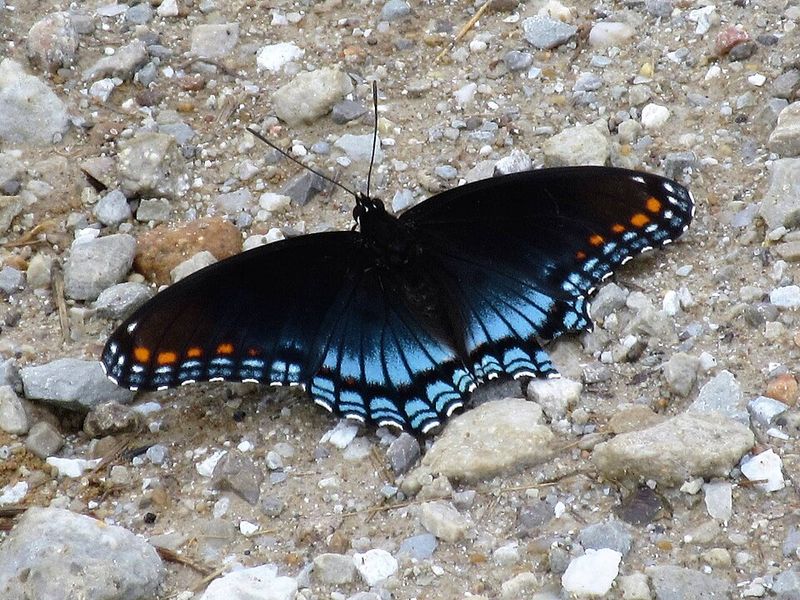
Few Michigan butterflies command attention quite like the Red-Spotted Purple, with its broad, iridescent blue-black wings and rows of orange-red spots near the edges.
Seeing one glide silently along a shaded forest trail on a warm May morning is a genuinely striking experience, especially because this butterfly appears before many woodland wildflowers have fully opened.
The Red-Spotted Purple does not overwinter as an adult. Instead, small caterpillars overwinter in rolled leaf shelters attached to host plant branches, then resume feeding in spring as temperatures rise.
This strategy allows the first generation of adults to emerge relatively early in the season. Host plants include wild cherry, aspen, and oaks, all of which are common across Michigan woodlands.
Adults feed on tree sap, rotting fruit, dung, and carrion rather than primarily on floral nectar, which helps explain why they appear before most flowers bloom. They are also attracted to moist soil and puddles for minerals.
Gardeners with wooded lots or properties near forest edges in Michigan have the best chance of attracting this species. Planting native wild cherry or maintaining aspen trees provides caterpillar habitat.
Watching for the Red-Spotted Purple along shaded woodland paths and sunny openings on warm late-spring mornings is one of Michigan’s most rewarding early butterfly experiences.