The Best Blooming Plants For Michigan’s Acidic Soil Zones
Soil chemistry might not sound exciting, but it makes a huge difference in whether your plants thrive or just barely survive.
Michigan has large stretches of naturally acidic soil, especially across the northern Lower Peninsula and the Upper Peninsula, where sandy, leached ground keeps pH levels on the lower end.
A lot of gardeners spend years fighting their soil instead of working with it, buying plants that struggle no matter how much attention they get.
The trick is choosing plants that actually prefer those acidic conditions, and Michigan has some stunning options that fit that description perfectly.
From bold flowering shrubs to delicate perennials, the right plants will reward you with better color, stronger growth, and way less frustration.
If your yard sits in one of these acidic soil zones, you are not at a disadvantage. You actually have the perfect conditions for some of the most beautiful blooms available to Michigan gardeners.
1. Wild Columbine Thrives In Michigan’s Naturally Acidic Woodland Soils
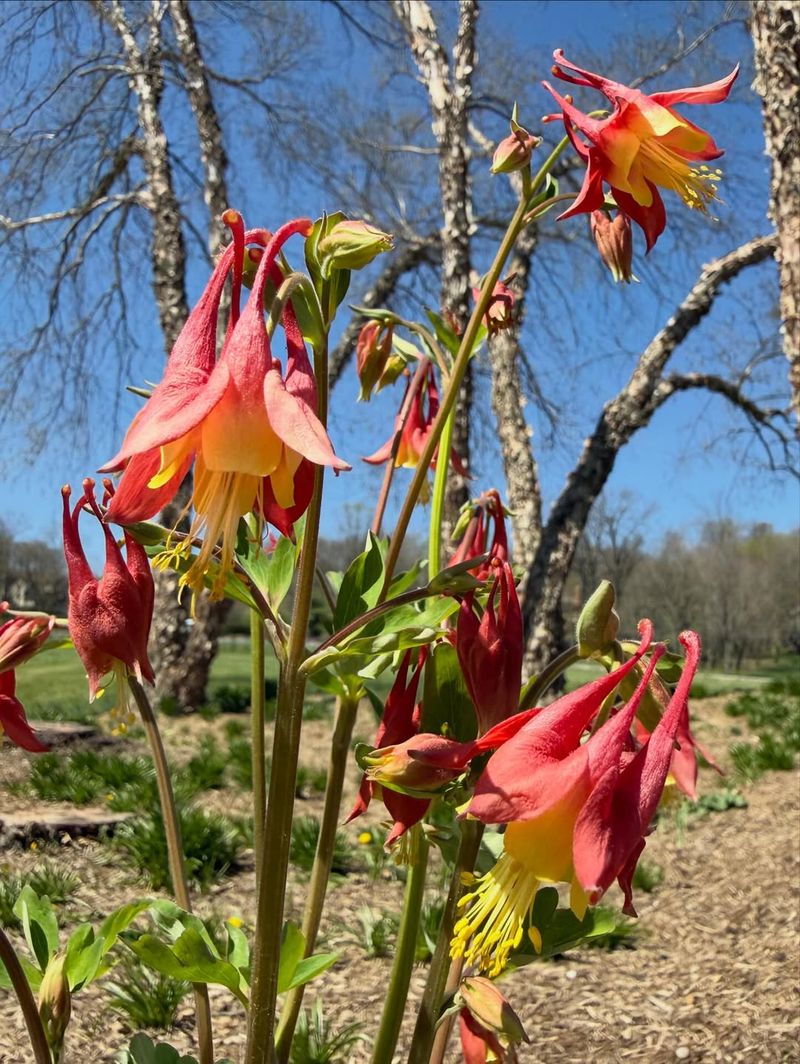
Few native plants are as effortlessly beautiful as wild columbine, and Michigan gardeners in acidic soil zones are especially lucky to have it.
Aquilegia canadensis is native to the state and performs exceptionally well where soil pH falls between 4.5 and 6.0, which describes much of Michigan’s northern Lower Peninsula and Upper Peninsula perfectly.
No soil amendments, no pH adjusters, no fuss required. The flowers themselves are a showstopper.
Nodding red and yellow blooms appear in May and June, dangling like little lanterns above delicate, lacy foliage that stays attractive long after blooming ends.
Hummingbirds are absolutely wild about them, and you will notice increased garden activity the moment the first flowers open each spring.
Wild columbine self-seeds reliably in the right conditions, meaning your planting slowly expands and fills in over the years without any extra effort on your part.
It handles partial shade well, making it ideal for the woodland edges and pine understory settings so common across Michigan’s acidic zones.
Plant it once and watch it spread naturally through your garden with almost no intervention needed at all.
Sourcing from a reputable native plant nursery ensures you get a true Michigan-adapted strain.
Once established, wild columbine is drought-tolerant and low-maintenance, asking very little while giving back remarkable seasonal color every single year.
2. Lupine Puts On A Spectacular Show In Michigan’s Sandy Acid Soils
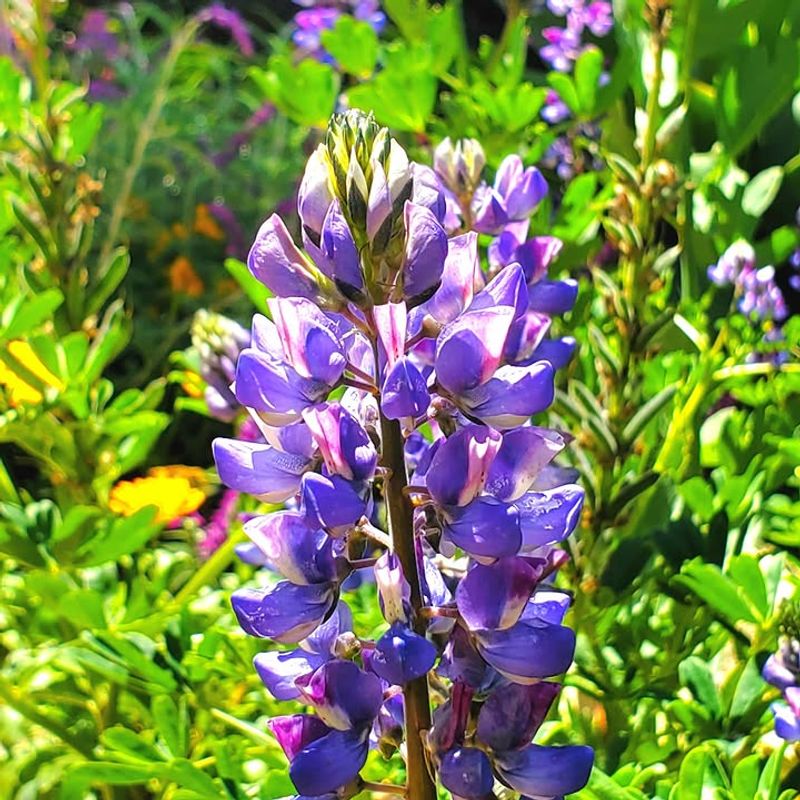
There is nothing quite like a field of wild lupine in full bloom across a Michigan sandy landscape in late May.
Lupinus perennis is native to the state and produces tall, dramatic spikes of blue to purple flowers that rise boldly above the surrounding vegetation, making it one of the most visually striking bloomers you can grow in Michigan’s acidic sandy zones.
What makes lupine even more impressive is what it does below the surface. As a legume, it fixes nitrogen directly into the soil, actually improving the ground around it over time.
That combination of stunning above-ground beauty and underground soil improvement is rare in the plant world, and Michigan gardeners are wise to take full advantage of it.
Your Michigan Garden Changes Every Week. Your Plan Should Too.
Gardening in Michigan changes quickly throughout the season. Every Friday you’ll receive a simple weekly plan showing exactly what to plant, prune, fertilize, harvest, and protect so you never miss the right timing.
Wild lupine is also the only host plant for the endangered Karner blue butterfly, which makes growing it in Michigan an act of genuine ecological restoration.
The northern Lower Peninsula and Upper Peninsula have the sandy acidic soils this plant loves most, and it truly thrives there without any amendment or intervention needed.
Forcing lupine into neutral or alkaline ground is a recipe for disappointment. Plant wild lupine in full sun with excellent drainage and give it space to naturalize.
It blooms in May and June, self-seeds in favorable conditions, and creates a sweeping seasonal display that makes Michigan acidic gardens look absolutely extraordinary.
3. Rhodora Blooms Before Its Leaves Even Open And Asks For Nothing
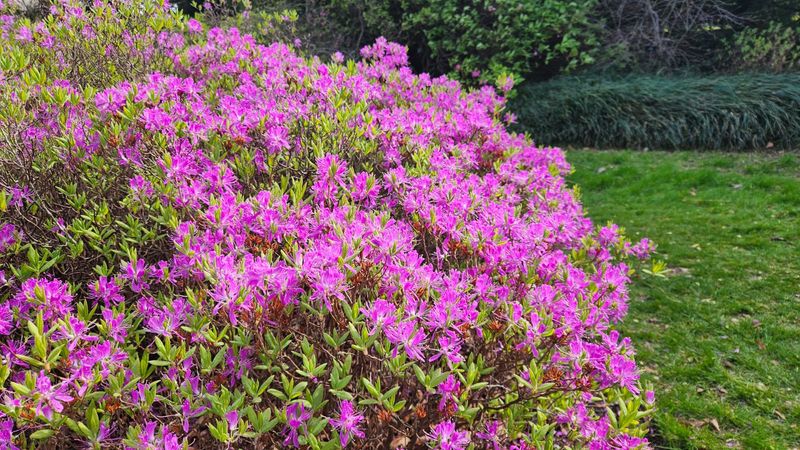
Imagine walking through a northern Michigan bog in early April and suddenly coming across a shrub absolutely covered in vivid rose-purple flowers, with not a single leaf in sight yet.
That is rhodora, and it is one of the most breathtaking early spring bloomers Michigan’s acidic zones have to offer. Rhododendron canadense earns every bit of that wow factor.
Closely related to azaleas, rhodora shares that family’s deep love for acidic soil, thriving best at pH 4.5 to 6.0.
It is perfectly adapted to the cold boggy conditions found across the Upper Peninsula and northern Lower Peninsula, making it an ideal choice for those wet low spots in Michigan gardens where most other plants simply refuse to cooperate.
You will rarely find rhodora at a standard garden center, which is part of what makes it so special for gardeners who seek it out.
It blooms in April and May, often before the surrounding landscape has fully woken from winter, giving your garden a dramatic early-season color burst that few other shrubs can match at that time of year.
Rhodora spreads slowly and stays relatively compact, rarely exceeding four feet in height. Plant it near water features, along stream edges, or in naturally boggy areas of your Michigan property where the soil stays consistently moist and acidic.
It asks for almost nothing once established and rewards patience with extraordinary floral displays each spring.
4. Swamp Rose Mallow Lights Up Michigan’s Acidic Wet Edges
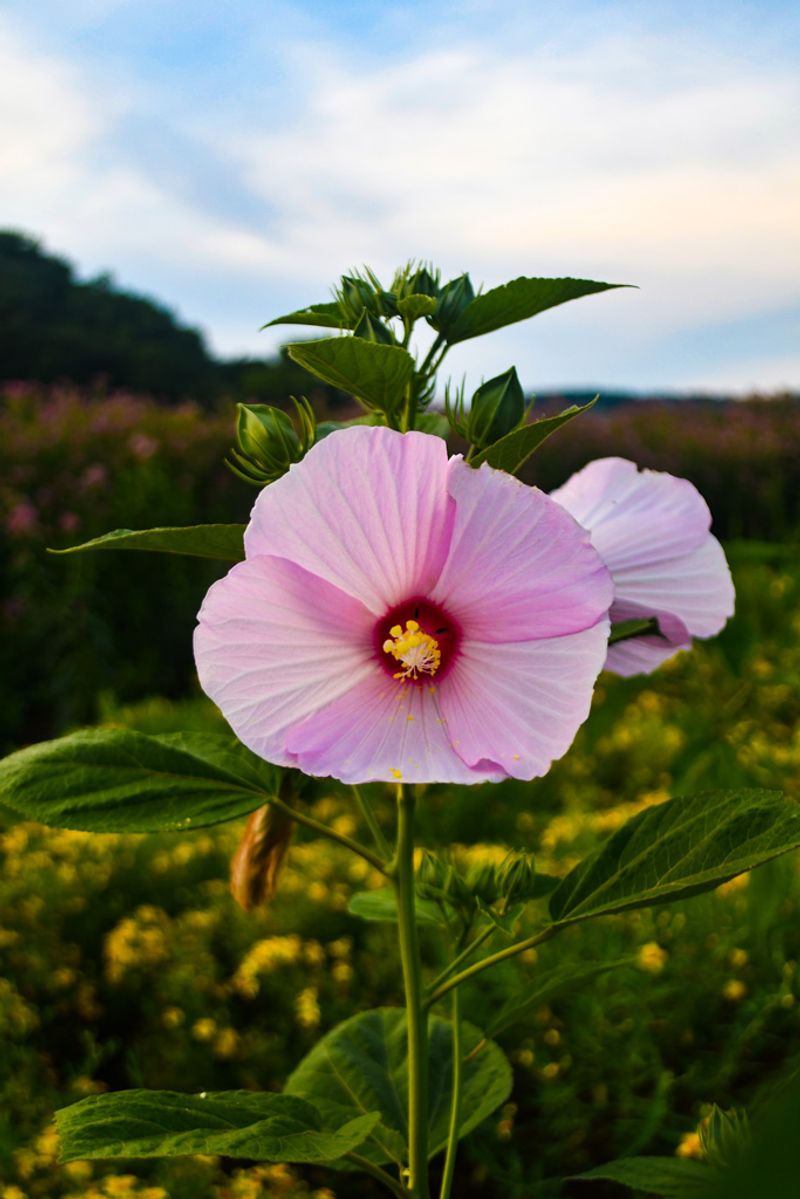
When a flower measures up to ten inches across, it tends to stop people in their tracks.
Swamp rose mallow does exactly that along the acidic wet edges of Michigan’s countless lakes, streams, and low marshy areas, producing enormous pink to white blooms from July through August that feel almost tropical in their scale and richness.
It is a true summer showpiece. Hibiscus moscheutos is native to Michigan and naturally adapted to the moist acidic soils found throughout the state’s lakeshores and streamside margins.
It does not need dry or well-drained ground and actually struggles in overly neutral or alkaline conditions, which means Michigan’s naturally acidic wet spots are precisely where it performs best.
No soil tinkering required. Beyond its jaw-dropping flowers, swamp rose mallow grows tall and full, often reaching five to seven feet in a single season.
That bold vertical presence makes it a natural focal point in any Michigan water garden or rain garden design.
Hummingbirds, bees, and butterflies visit the flowers constantly throughout the blooming season.
Plant it where the soil stays consistently moist and slightly acidic, and give it full sun for the best flower production.
It grows back reliably from its roots each spring and gets larger and more floriferous with each passing year.
For Michigan gardeners near water, swamp rose mallow is one of the most rewarding native bloomers available anywhere in the state.
5. Trillium Is The Signature Bloom Of Michigan’s Acid Forest Floor
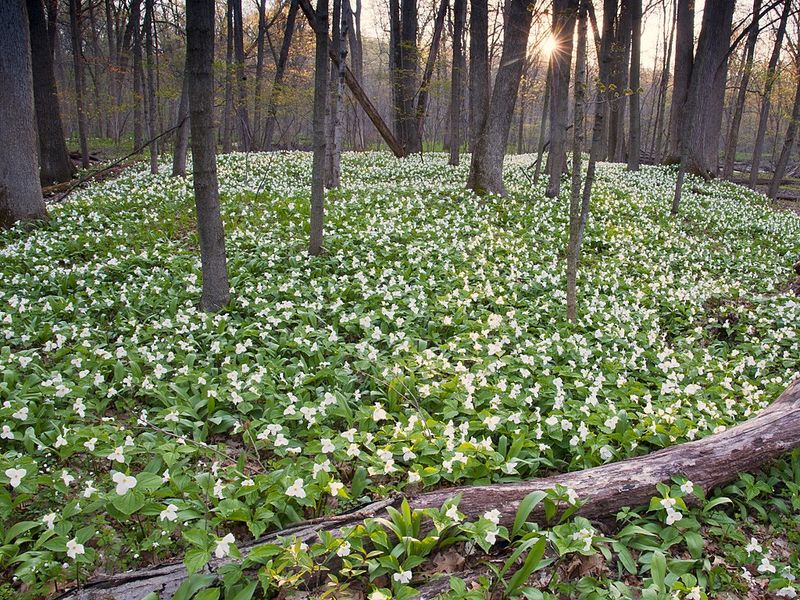
Michigan chose its state wildflower wisely.
Large-flowered trillium is one of the most iconic spring sights in the state, rising from the acidic humus-rich soil of hardwood and mixed forests every April and May with clean white three-petaled blooms that slowly deepen to soft pink as they age.
Spotting a carpet of trillium in a Michigan woodland is genuinely unforgettable. Trillium grandiflorum needs undisturbed acidic soil with good organic matter to establish properly.
It is not a fast plant, and gardeners who rush it will be disappointed. Give it the right conditions and it will quietly build into a long-lived colony that persists for decades, returning faithfully every spring without any intervention needed from you at all.
Recreating those conditions in a Michigan garden means working with shaded spots under deciduous trees, keeping the soil rich with leaf mulch, and never disturbing the root zone once plants are established.
The acidic humus environment found naturally across Michigan’s forest floors is exactly what trillium needs to thrive year after year in a home garden setting.
Always source trillium from reputable native plant nurseries that propagate from seed rather than wild-collected stock. Wild populations across Michigan are vulnerable and deserve protection.
Nursery-grown plants establish more reliably anyway, giving you a stronger start toward building the kind of lush woodland garden floor that makes springtime in Michigan so genuinely magical.
6. Mountain Laurel Thrives In Michigan’s Most Acidic Sandy Zones
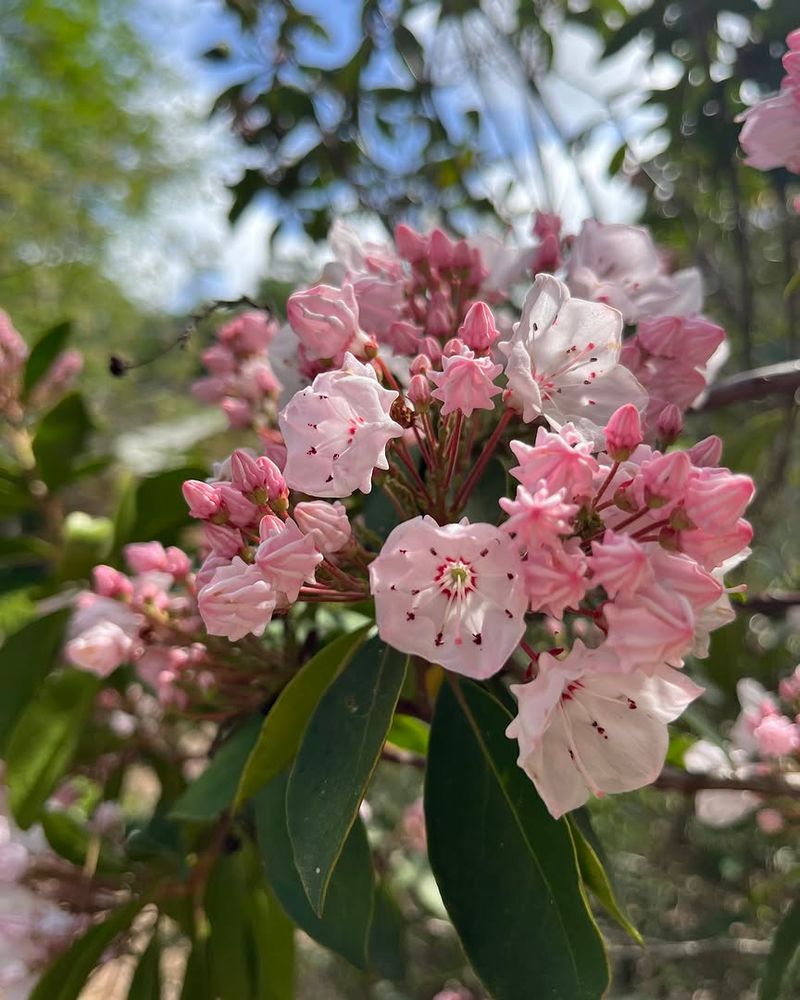
Mountain laurel is the kind of shrub that makes visitors stop mid-sentence and ask what it is.
Kalmia latifolia produces some of the most intricate and beautifully patterned flowers of any blooming shrub, with dense clusters of pink and white blossoms that open in June and cover the plant so thoroughly that the leaves nearly disappear behind them.
Northern Michigan acidic gardens are a natural home for it. This evergreen shrub handles Michigan’s zone 4 and zone 5 winters with ease, keeping its glossy dark leaves through even the coldest Upper Peninsula winters.
It thrives at pH 4.5 to 6.0 and declines noticeably when forced into neutral or alkaline ground, which makes Michigan’s naturally acidic sandy soils in the northern Lower Peninsula ideal without any soil adjustment needed.
Mountain laurel grows slowly but steadily, eventually reaching six to eight feet with a graceful, layered branching structure that looks beautiful even when it is not in bloom.
The evergreen foliage adds year-round structure and color to Michigan gardens, which is a meaningful bonus in a state with long winters and limited greenery from November through April.
Plant it in partial shade to full sun, keep the soil consistently moist but well-drained, and mulch generously with pine needles or shredded oak leaves to maintain that acidic soil environment it loves.
Once established in the right Michigan conditions, mountain laurel is a long-lived, low-maintenance showpiece that rewards patient gardeners enormously every June.
7. Pink Lady’s Slipper Is The Most Dramatic Acid Soil Wildflower In Michigan
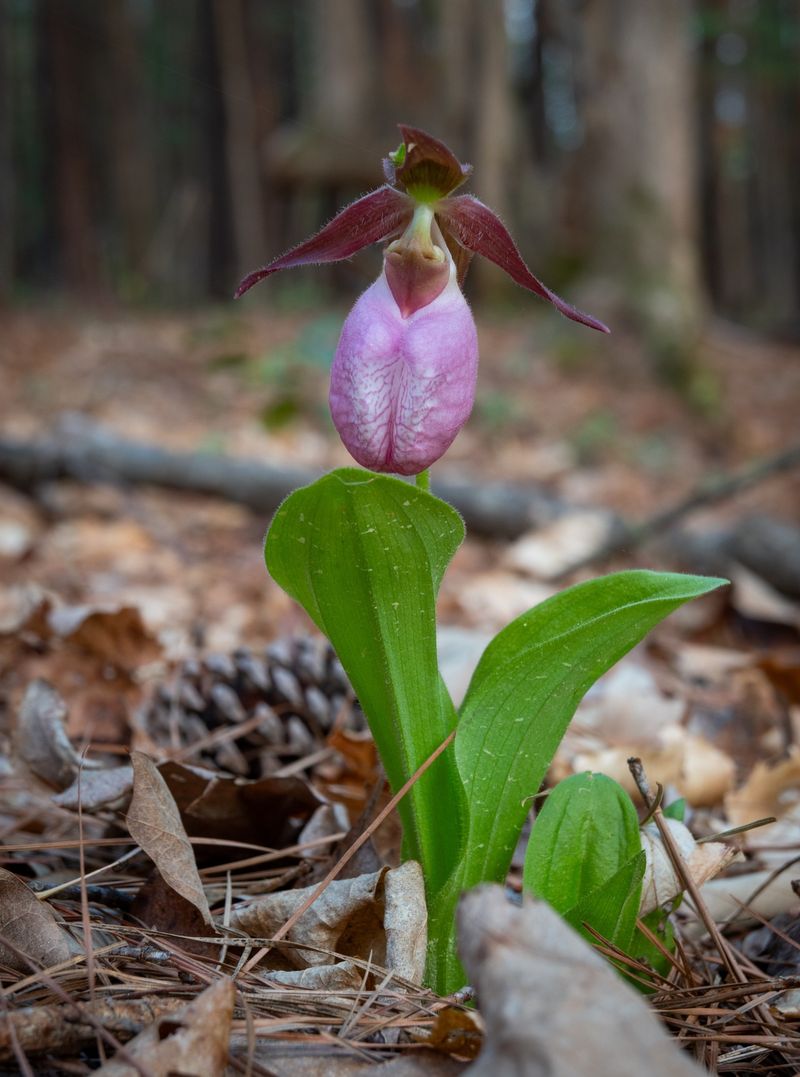
Finding a pink lady’s slipper blooming on the floor of a Michigan pine forest feels like discovering something rare and almost magical.
Cypripedium acaule is a native Michigan orchid that grows exclusively in highly acidic soils, sometimes at pH as low as 4.0, and it produces a single striking pink pouch-shaped flower each May and June that is unlike anything else blooming in the state’s forests at that time.
What makes this orchid so fascinating is its relationship with the soil itself. Pink lady’s slipper depends on a specific mycorrhizal fungus living in the acidic soil around its roots, and without that fungal partnership the plant simply cannot survive.
That relationship is why transplanting wild specimens almost never works, and why patience with nursery-grown plants is so essential for anyone hoping to establish this orchid in a Michigan garden.
The northern Lower Peninsula and Upper Peninsula have the cold acidic pine and mixed forest conditions this orchid needs most.
A naturalistic woodland setting with undisturbed acidic soil, consistent pine needle mulch, and filtered light gives it the best chance of establishing and eventually flowering in your Michigan landscape.
Always purchase pink lady’s slipper from nurseries that propagate from seed and never collect from wild Michigan populations.
Wild plants can take up to sixteen years to bloom from seed, so patience is truly part of this plant’s story.
When it finally blooms in your Michigan garden, the reward feels absolutely worth every year of waiting.
8. Fringed Polygala Blooms Bright In Michigan’s Acidic Pine Understory
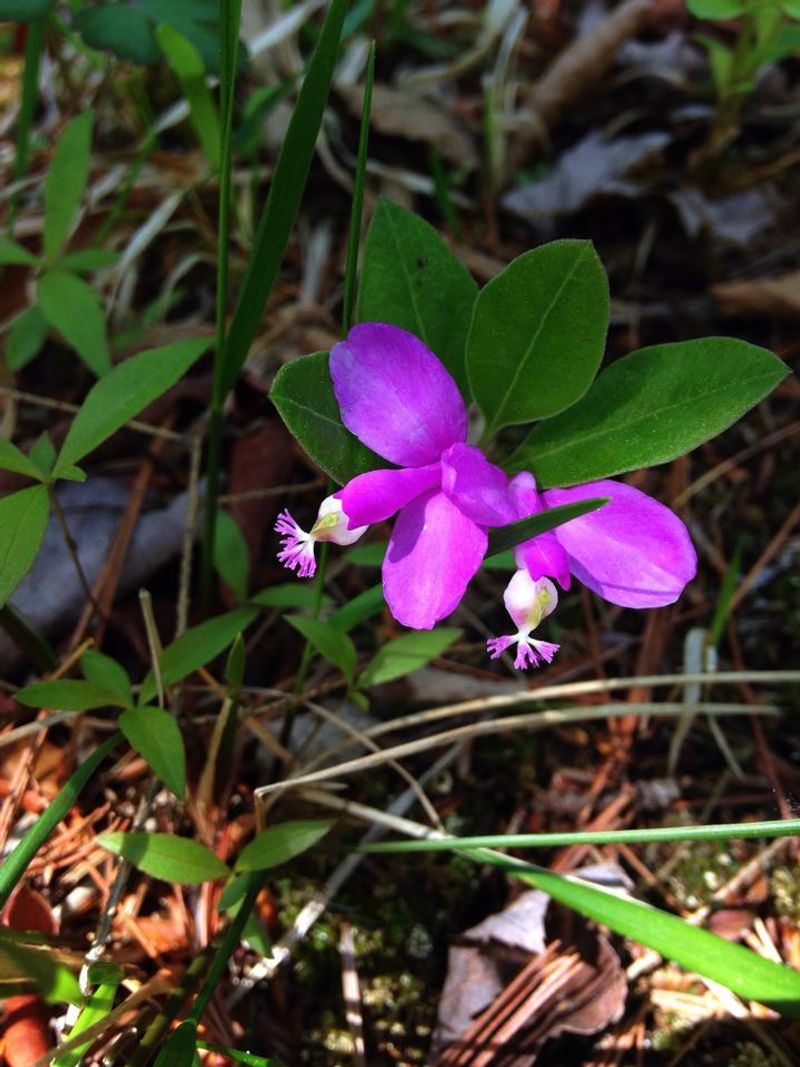
Tucked low among the pine needles of Michigan’s forest floors, fringed polygala is one of those wildflowers that rewards the people who actually look down while walking through the woods.
Polygala paucifolia blooms in May with vivid magenta-pink flowers that genuinely resemble tiny orchids, and the comparison is not an exaggeration.
They are surprisingly exotic-looking for a plant growing so quietly in the acidic understory of Michigan’s pine and mixed forests.
This small native wildflower thrives at pH 4.5 to 5.5 and grows in the acidic humus that builds up under conifer canopy across the Upper Peninsula and northern Lower Peninsula.
It is low-growing, staying just three to four inches tall, and spreads slowly outward by rhizome to form a gradually expanding ground-level carpet of bloom each spring.
It is one of the most charming and consistently underused native bloomers for acidic Michigan woodland gardens.
Fringed polygala works beautifully alongside other low-growing Michigan natives like bunchberry and wild ginger, creating a layered woodland floor planting that looks both natural and intentional.
It needs consistent moisture, good organic matter in the soil, and the kind of dappled shade that a pine or mixed forest canopy provides naturally across much of Michigan’s north. Source plants from native nurseries that specialize in Michigan woodland species.
Once established in the right acidic conditions, fringed polygala spreads reliably and blooms consistently every May, adding a vivid pop of color to the shaded garden floor when almost nothing else at that level is flowering.
9. Bunchberry Carpets Michigan’s Acidic North With White Flowers And Red Fruit
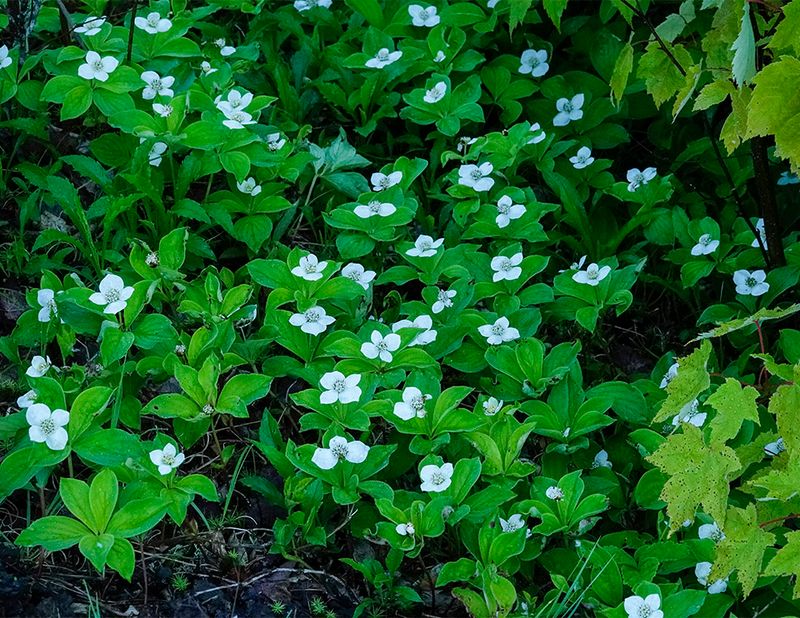
Bunchberry might be the hardest-working groundcover in Michigan’s acidic north, and it deserves far more attention than it typically gets.
Cornus canadensis is a native Michigan plant that functions as a true groundcover, spreading steadily by rhizome to form a dense, low carpet of deep green leaves under conifer canopy across the Upper Peninsula and northern Lower Peninsula.
In May and June it covers itself with white four-petaled flowers that look like miniature dogwood blooms, because bunchberry is, in fact, a member of the dogwood family.
After flowering, the plant produces clusters of bright red berries in late summer that add another season of visual interest and provide food for birds throughout the fall.
That two-season display of white flowers followed by vivid red fruit makes bunchberry one of the most versatile and rewarding native plants available for Michigan’s coldest and most acidic garden zones.
Bunchberry thrives at pH 4.5 to 6.0 and genuinely needs the cold acidic soils of northern Michigan to perform well.
It struggles in warmer, more alkaline conditions and is not well-suited to southern Michigan gardens without significant soil adjustment.
In the Upper Peninsula and northern Lower Peninsula, though, it spreads reliably and fills in beautifully year after year without much help at all.
Plant it in shade to partial shade under pines, firs, or spruces and keep the soil consistently moist.
Mulching with pine needles maintains the acidic conditions it loves and mimics its natural Michigan habitat almost perfectly.