What North Carolina Gardeners Should Know About Birds Nesting Early This Season
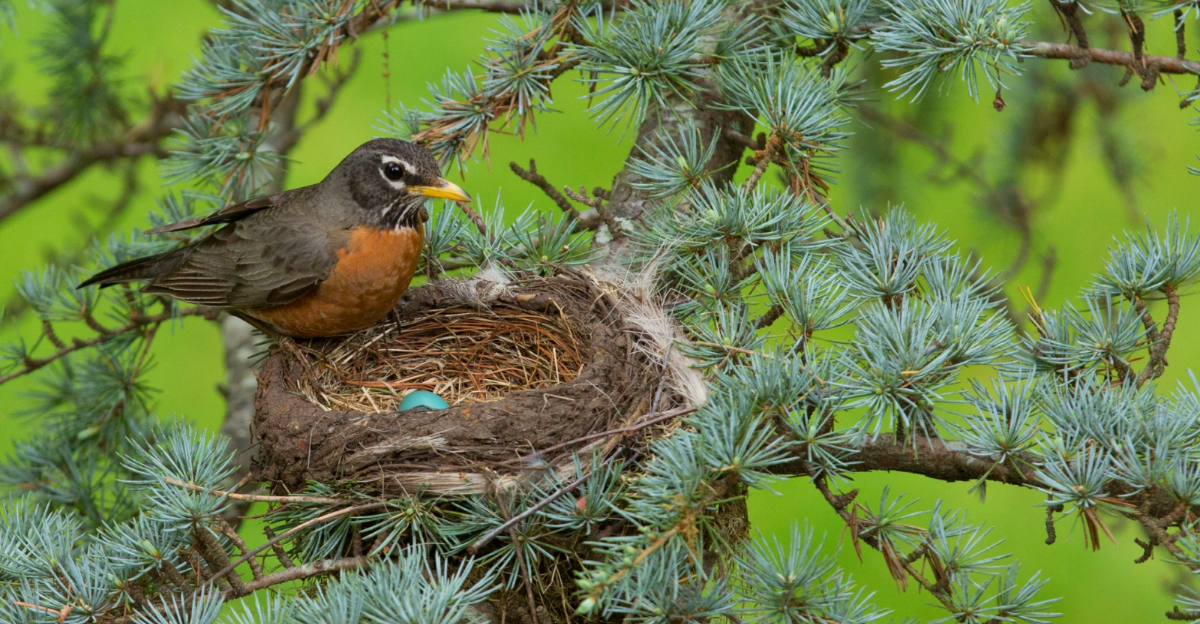
Think your garden is still dormant? Think again – your feathered neighbors are already moving in, often weeks ahead of schedule.
While you’re prepping for your first round of spring pruning, those “empty” shrubs might already be housing delicate nests full of eggs or tiny chicks. One snap of your shears could accidentally turn your sanctuary into a disaster zone.
In North Carolina, the timing for spring cleaning is shifting fast. If you want to keep your landscape looking sharp without crashing the local bird nursery, you need to know exactly where to look before clearing brush.
This guide is your cheat sheet for identifying early nesters and mastering bird-friendly maintenance.
Ready to be the ultimate host? Let’s ensure your spring prep helps – not hurts – the next generation of feathered visitors.
1. Why Birds Start Nesting Early In North Carolina Gardens
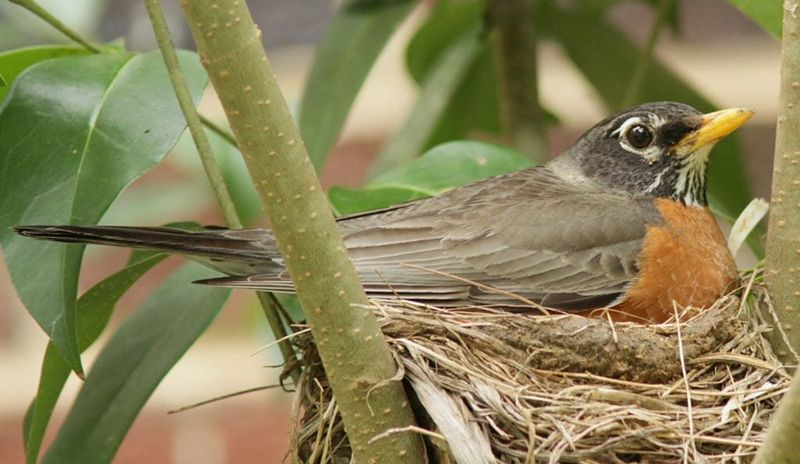
North Carolina sits in a climate zone where winter temperatures have been trending milder over the past several decades, and birds respond to those changes faster than most gardeners realize.
Longer daylight hours and warmer soil temperatures signal to birds that conditions are safe for raising young, even when a late frost is still possible.
Some species in the Piedmont and Coastal Plain regions are beginning nest construction as early as late February.
Birds rely on a combination of cues including light cycles, temperature shifts, and food availability to decide when nesting should begin.
In North Carolina, the mild climate means native insects emerge earlier in the season, giving parent birds a reliable food source to feed their chicks.
This creates a natural feedback loop that pushes nesting activity forward year after year.
For gardeners, the key takeaway is that spring garden prep can no longer wait until the calendar officially says March or April. A shrub that looks bare and dormant in late February may already be sheltering a nest at its base.
Checking garden beds, hedgerows, and low-hanging branches before grabbing pruning shears can prevent accidental harm to early nesters.
The Audubon Society of North Carolina encourages homeowners to do a slow, careful walk-through of their property before beginning any major outdoor work, treating the garden as an active wildlife habitat rather than just a planting space.
2. Common Bird Species Nesting Ahead Of Schedule
Eastern Bluebirds are among the earliest nesters in North Carolina, often beginning nest box inspections and courtship displays in January.
The North Carolina Bluebird Society reports that first eggs can appear in nest boxes as early as mid-February in the southern Piedmont and coastal regions.
Their willingness to use man-made nest boxes makes them one of the most observable early nesters for backyard gardeners.
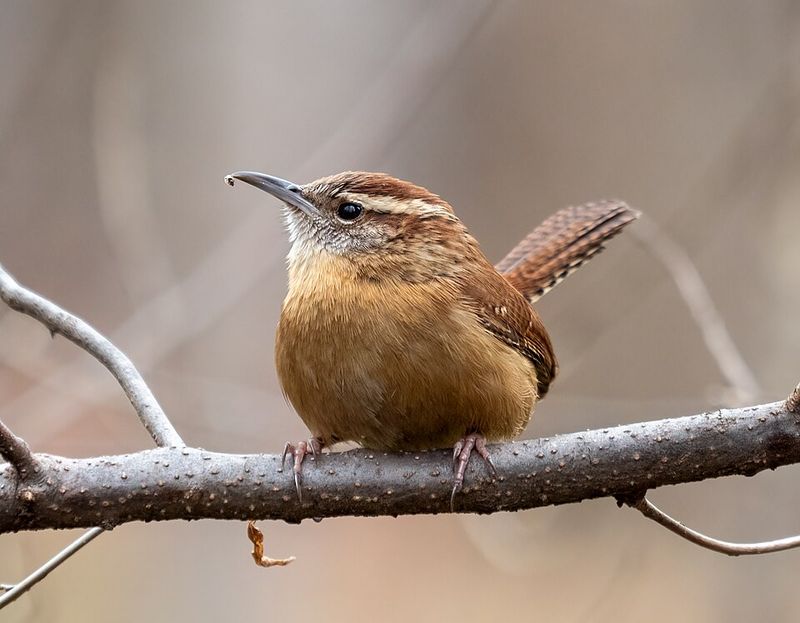
Carolina Wrens are another species that frequently surprises homeowners with how early they get started. These small, energetic birds will tuck nests into almost anything with a cavity, including garden pots, tool sheds, hanging baskets, and brush piles.
They begin claiming territory and building nests well before most gardeners think about clearing their yards in spring.
Your North Carolina Garden Changes Every Week. Your Plan Should Too.
Gardening in North Carolina changes quickly throughout the season. Every Friday you’ll receive a simple weekly plan showing exactly what to plant, prune, fertilize, harvest, and protect so you never miss the right timing.
American Robins, long considered a reliable sign of spring, are now starting to arrive and nest earlier in the Southeast.
Warmer winter temperatures and earlier availability of insects have contributed to this shift, meaning robins may begin nesting in North Carolina weeks sooner than in past decades.
Northern Mockingbirds, Mourning Doves, and House Finches round out the group of species most likely to be nesting in North Carolina gardens before the official start of spring.
Mourning Doves in particular build loose, minimalist nests on flat surfaces like window ledges, fence posts, and low tree branches, making them easy to overlook until a gardener accidentally disturbs one.
Knowing which species are most active early helps gardeners focus their attention on the right areas of the yard.
3. Signs To Watch For That Birds Have Started Nesting
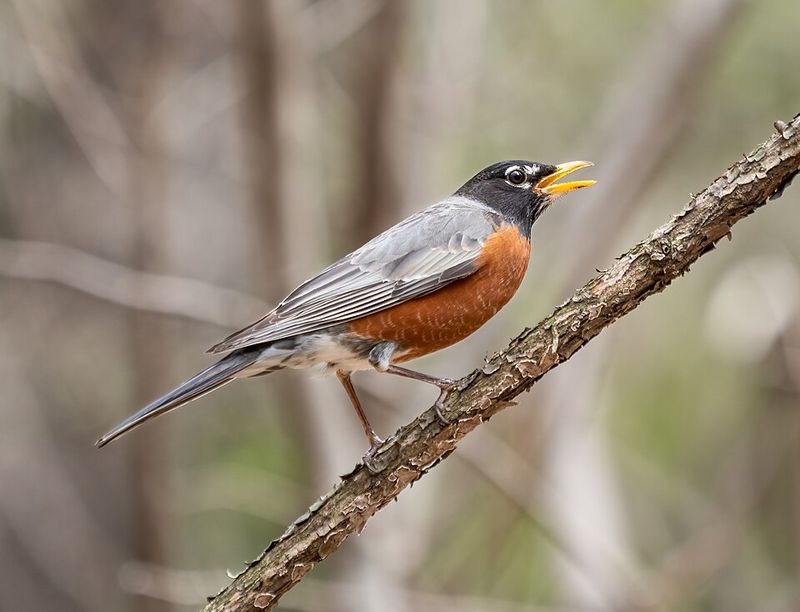
Spotting active nesting before it becomes obvious takes a bit of patience and a slow eye. One of the earliest signs is increased territorial singing, especially from male birds defending a specific area of the garden.
If you notice a bird repeatedly returning to the same shrub or corner of the yard while singing loudly, there is a good chance nesting activity is already underway nearby.
Carrying behavior is another reliable indicator. When birds are seen flying with grass, twigs, moss, feathers, or bits of bark in their beaks, they are actively constructing or lining a nest.
This behavior tends to happen in short, busy bursts during the morning hours. Watching the direction the bird travels after collecting material can lead you directly to the nest site.
Parent birds near an established nest will also display distraction displays if they feel threatened.
A bird that flutters low to the ground, drags a wing, or makes repeated alarm calls near a specific garden area may be trying to draw your attention away from eggs or chicks.
NC Wildlife Resources Commission advises homeowners to back away slowly and give the area a wide berth if this behavior is observed.
Checking dense shrubs, climbing vines, low evergreen branches, and garden ornaments from a distance using binoculars rather than approaching directly is a smart habit.
Nests can be surprisingly well camouflaged and are often discovered only after eggs have already been laid.
4. How Early Nesting Can Affect Garden Plants And Landscaping
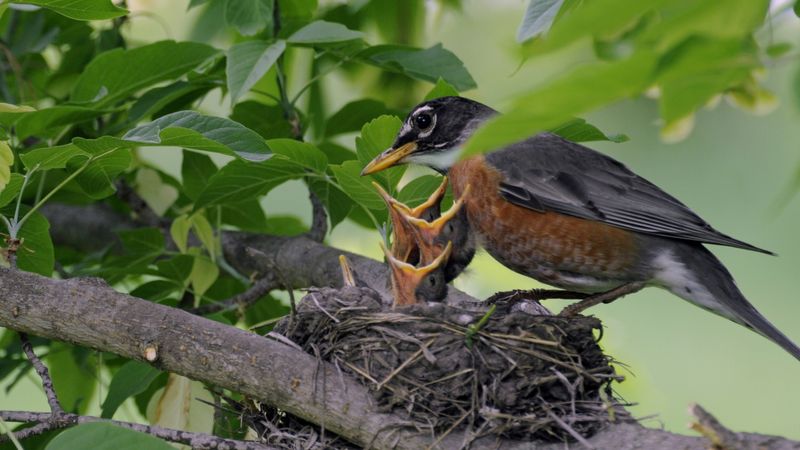
When birds nest earlier than expected, the timeline for standard garden maintenance gets complicated in ways most homeowners do not anticipate.
Pruning hedges and ornamental shrubs is a normal part of spring garden care, but cutting back a shrub that contains an active nest is not just disruptive to the birds – it can also be a federal violation.
The Migratory Bird Treaty Act protects most native bird species and their active nests, meaning that disturbing nests with eggs or chicks can carry legal consequences.
Beyond the legal side, early nesting can also affect how gardeners approach mulching, edging, and bed preparation.
Ground-nesting species like Killdeer often lay eggs directly in open soil, gravel, or sparse lawn areas, which can easily be disturbed during routine spring cleanup.
Spotting a nest in a mulch bed before raking can make the difference between a successful brood and a failed one.
On a more positive note, having nesting birds in the garden actually benefits plants significantly.
Parent birds are constantly foraging for insects to feed their young, and this increased insect-hunting activity helps control populations of aphids, caterpillars, and other garden pests naturally.
A single pair of Carolina Chickadees can collect thousands of caterpillars during a single nesting season to feed their chicks.
Treating nesting areas as protected zones during the active season allows gardeners to benefit from this natural pest management while supporting local bird populations at the same time.
5. Do Not Disturb Guidelines For Protecting Nests
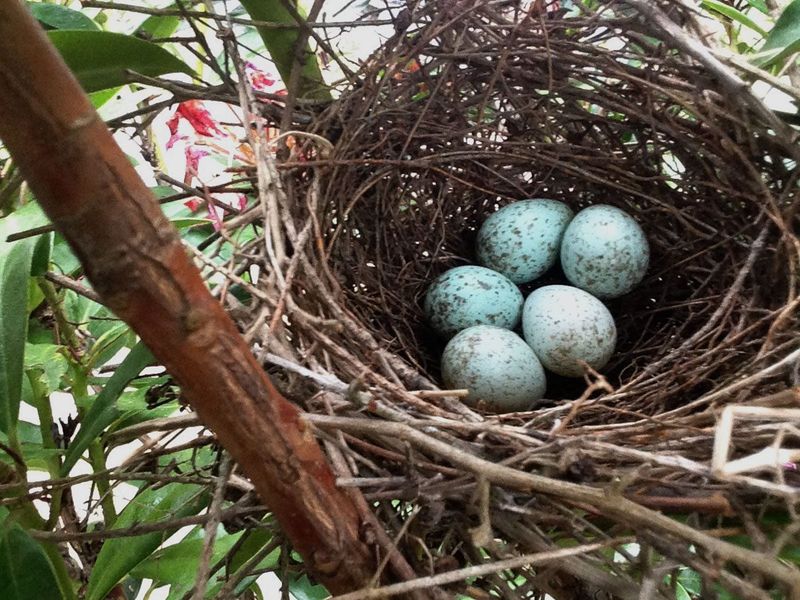
Federal law under the Migratory Bird Treaty Act makes it unlawful to remove, relocate, or interfere with an active nest belonging to any native migratory bird species. This protection covers the nest itself, the eggs, and the chicks inside.
Most common backyard birds in North Carolina fall under this protection, including wrens, bluebirds, robins, mockingbirds, and finches.
Understanding this legal framework helps gardeners make informed decisions about when and where to work in the yard.
The practical side of nest protection starts with a simple rule: if you find an active nest with eggs or young birds, stop work in that area and create a buffer zone of at least a few feet around the nest site.
Mark the area with a small stake or garden flag so other household members are aware. Avoid approaching the nest more than once or twice per week, and keep visits brief to reduce stress on the parent birds.
Noise and vibration from power tools are also worth managing near active nest sites. Lawn mowers, leaf blowers, and string trimmers can startle parent birds off the nest and leave eggs exposed to temperature fluctuations.
Scheduling loud work for times when nesting activity is lower, such as midday when birds tend to be less active at the nest, can reduce disruption.
The North Carolina Bluebird Society recommends tapping on nest boxes before opening them to alert any occupants, and avoiding opening boxes at all once nestlings are older than 14 days to prevent premature fledging.
6. Providing Food And Shelter For Early-Nesting Birds
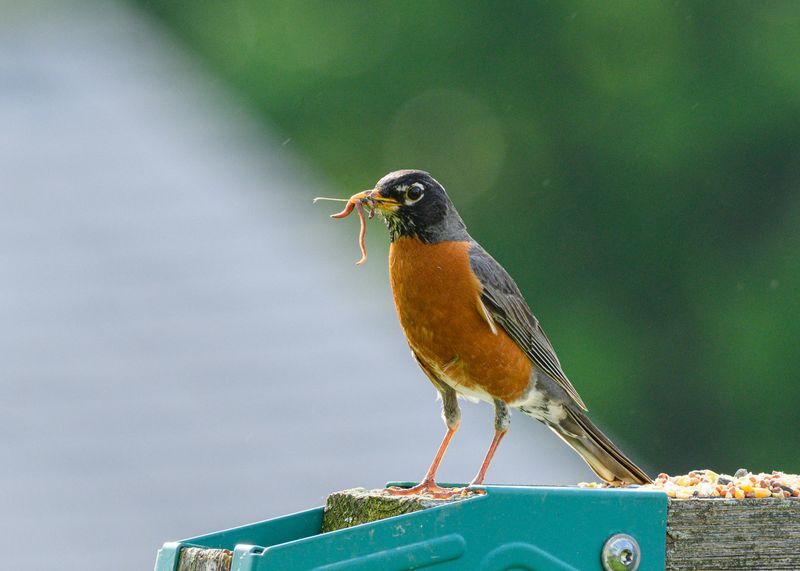
Early spring can be a lean time for birds even in North Carolina’s relatively mild climate. Late freezes, rain, and fluctuating insect populations can make food harder to find just when parent birds need the most energy.
Keeping feeders stocked with high-quality food during this window gives early nesters a reliable supplement while natural food sources stabilize.
Mealworms are especially valuable for bluebirds and robins during early nesting season.
Both species feed primarily on insects and earthworms, and offering live or dried mealworms in a shallow dish feeder can dramatically support their energy needs.
Sunflower seeds and safflower seeds attract a broader range of species including finches, chickadees, and nuthatches.
The Audubon Society recommends avoiding bread, crackers, and processed foods, which provide little nutritional value and can harm nestlings if fed by parent birds.
Shelter is just as important as food. Dense native shrubs like American Holly, Eastern Red Cedar, and Wax Myrtle provide protected nesting sites and year-round cover.
NC Audubon notes that native plantings support dramatically higher insect diversity than non-native ornamentals, which directly benefits nesting birds that rely on insects to raise their young.
Installing nest boxes designed for specific cavity-nesting species is another excellent option.
Bluebird boxes with a 1.5-inch entry hole, mounted on a smooth metal pole with a predator guard, provide safe, effective nesting sites and increase the chances of raising a healthy brood.
Positioning boxes in open areas with a clear flight path and morning sun exposure gives nesting pairs the best chance of raising a healthy brood.
7. Timing Garden Maintenance Around Nesting Activity
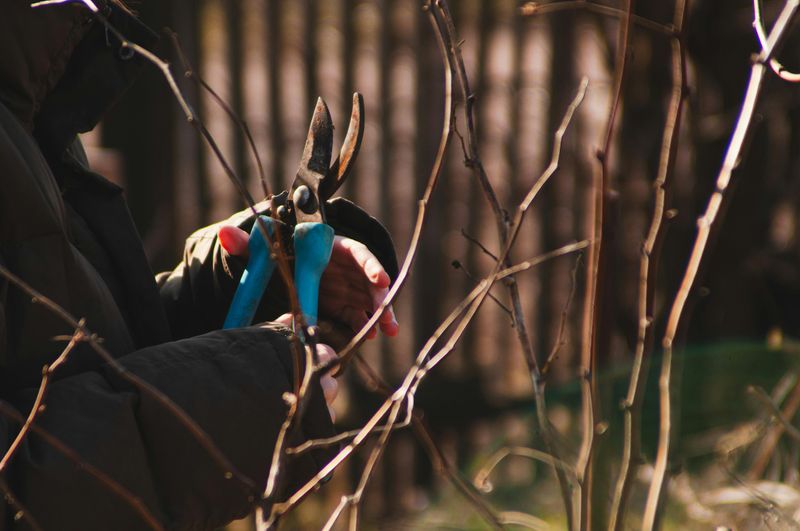
Rethinking the traditional spring cleanup schedule is one of the most practical things North Carolina gardeners can do to support early nesting birds.
Many garden guides recommend pruning shrubs and clearing beds as soon as the threat of frost passes, but that timeline now overlaps directly with early nesting activity in much of the state.
Shifting heavy pruning to late fall or very early winter, before birds begin scouting nest sites, is a straightforward adjustment that avoids the conflict entirely.
For tasks that cannot be moved to a different season, a pre-work inspection routine makes a significant difference. Before pruning any shrub, vine, or hedgerow, take a few minutes to peer inside from several angles without touching the plant.
Look for the rounded cup shape of a nest, listen for alarm calls, and watch for birds hovering nervously nearby. If no nest is found, proceed with care.
If a nest is present, flag the area and return after the brood has fledged, which typically takes between two and four weeks depending on the species.
Ground-level work like rototilling, heavy raking, and bed edging should also be approached with caution in areas with open soil or sparse ground cover, where Killdeer and other ground-nesting species may have laid eggs directly on the surface.
Killdeer eggs are remarkably well camouflaged and are frequently missed until a tool is nearly on top of them.
A slow, visual sweep of any bare or minimally vegetated area before working is a simple habit that protects both birds and gardeners from an unpleasant surprise.
8. How Weather And Microclimates Influence Nesting Schedules
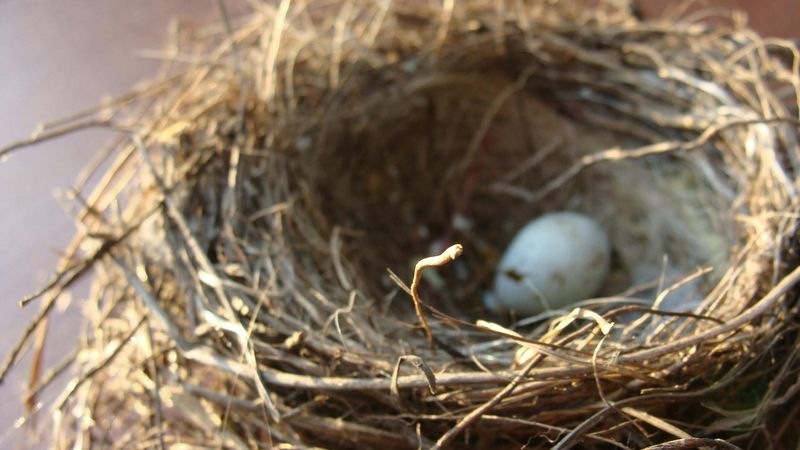
North Carolina’s geography creates a remarkable range of local climate conditions, and those differences have a direct effect on when birds begin nesting in any given yard.
Coastal Plain gardens near Wilmington or New Bern experience noticeably warmer winters than mountain gardens near Asheville or Boone, sometimes by as much as 10 to 15 degrees on average.
This means early nesting can be underway in coastal areas well before Piedmont or mountain gardeners have even noticed the first crocuses pushing up.
Within a single yard, microclimates created by walls, fences, paved surfaces, and dense plantings can advance nesting timelines even further.
A south-facing brick wall that absorbs and radiates heat will warm the surrounding soil and air faster than an open lawn, attracting insects earlier and signaling to birds that conditions are favorable for nesting.
Gardens with windbreaks, water features, or protected corners tend to see earlier bird activity than more exposed properties in the same neighborhood.
Rainfall patterns also influence nesting timing. Wet winters that keep soil moist allow earthworms and ground insects to remain active at shallower depths, making them easier for birds to find.
In drought years, some species may delay nesting slightly until food availability improves.
Paying attention to which parts of your North Carolina garden warm up fastest and attract the most insect activity in late winter can give you a practical sense of where early nesters are most likely to establish themselves.
Focusing protective efforts on those microclimates first is a smart, targeted approach to garden bird conservation.
9. Tips For Encouraging Healthy Nesting Without Stressing Birds
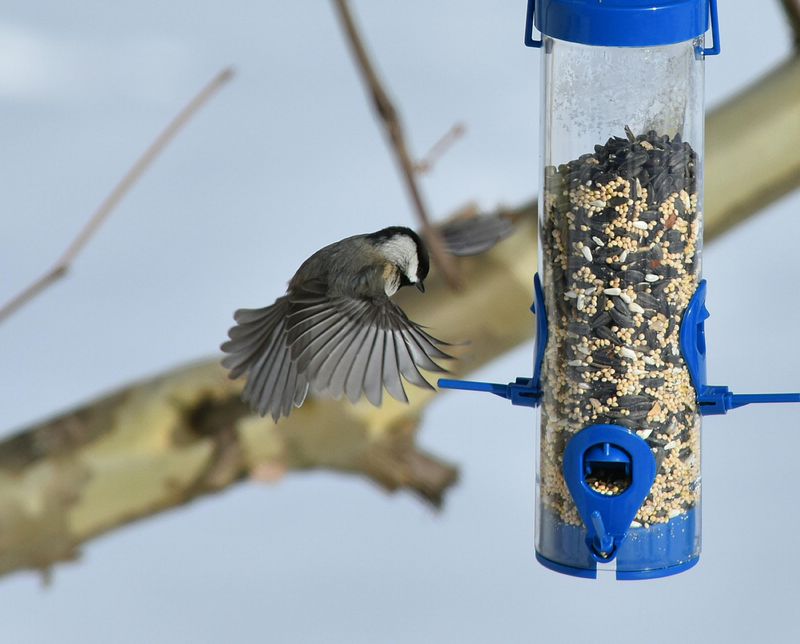
Creating a garden that supports nesting birds without causing them unnecessary stress comes down to a few consistent habits practiced throughout the season. Fresh, clean water is one of the most overlooked resources in bird-friendly gardens.
A shallow birdbath kept clean and filled regularly provides drinking and bathing water that parent birds need during the energy-intensive nesting period.
Keep birdbaths clean at least twice a week during warm months to prevent algae buildup and reduce the risk of disease for visiting birds.
Reducing pesticide use is another high-impact step. Insecticides applied to garden beds remove the very insects that nesting birds depend on to feed their young.
A single clutch of Carolina Chickadee chicks requires thousands of caterpillars to reach fledgling weight, so eliminating this food source at the wrong time can result in nest failure even when parent birds are diligent.
Choosing organic pest management strategies and tolerating some leaf damage in exchange for a thriving insect population supports healthy bird activity throughout the season.
Keeping cats indoors during nesting season is one of the most effective actions a North Carolina homeowner can take to protect birds.
Pair this with minimizing reflective window surfaces that cause collisions, and gardeners can make a measurable difference in the survival and success of nesting birds without investing in specialized equipment.