Why Gardenias Turn Yellow In Florida Spring (And How To Fix Them Fast)
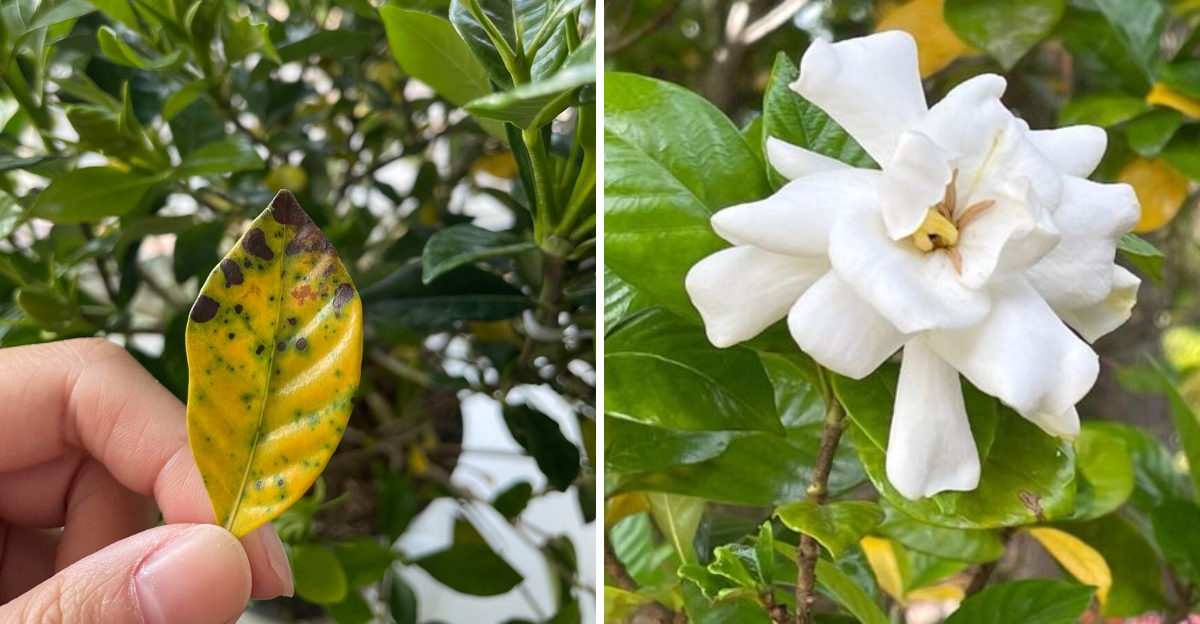
Your gardenia looked perfect just days ago. Glossy green leaves.
Healthy buds. Everything about the plant promised a beautiful spring.
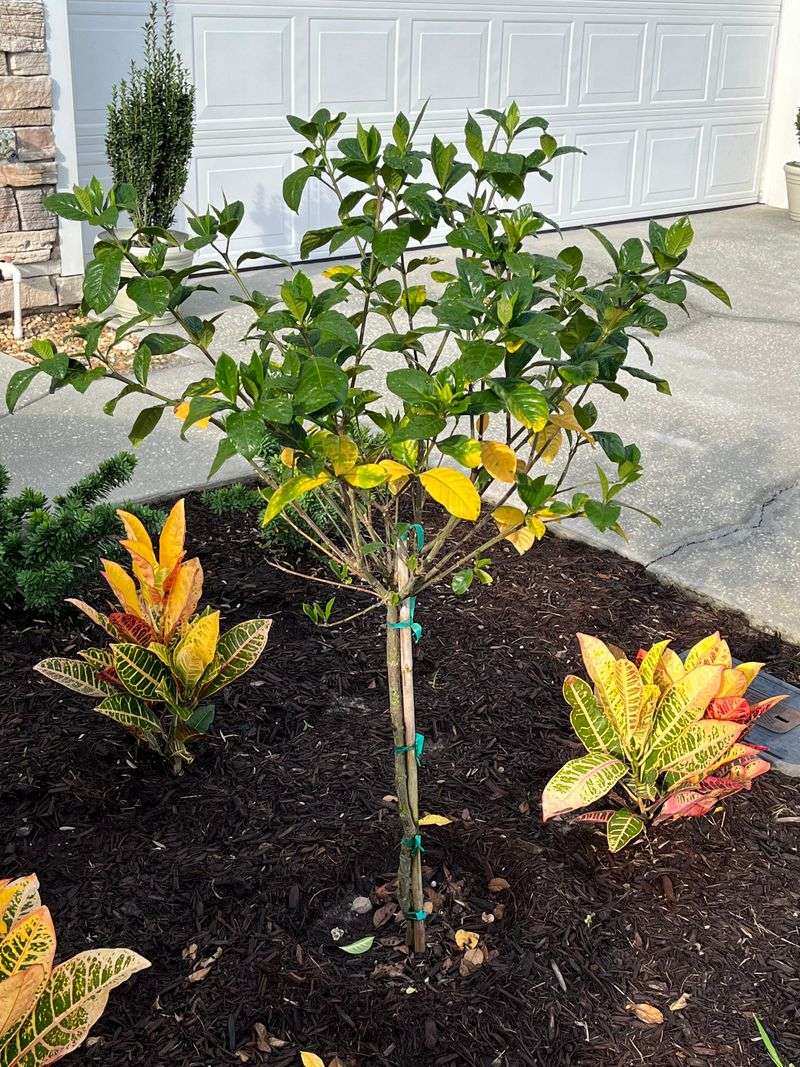
Then the color started fading. Leaf after leaf turned yellow and the whole shrub suddenly looked tired.
That moment stops a lot of Florida gardeners in their tracks. A plant that looked strong can change fast once spring arrives.
The shift feels confusing and even a little alarming. Before giving up on the plant, take a closer look.
Yellow leaves rarely appear without a reason. In many Florida yards, the plant actually sends a clear signal that something in its environment needs attention.
The surprising part comes next. Once the real cause becomes clear, the path forward often feels much simpler than most people expect.
1. High Soil pH Triggers Iron Chlorosis
Soil pH is one of the sneakiest culprits behind yellow gardenias in Florida, and most gardeners never think to check it. Gardenias need acidic soil with a pH between 5.0 and 6.5 to stay healthy.
When the pH creeps above that range, the plant cannot absorb iron properly, even if iron is physically present in the soil.
The result is a condition called iron chlorosis. You will notice the leaves turning yellow while the veins stay green.
That distinctive pattern is a clear giveaway that iron uptake is being blocked. Florida soils, especially in areas with limestone bedrock or where alkaline irrigation water is used, are particularly prone to this problem during spring.
Testing your soil is simple and inexpensive. Many Florida cooperative extension offices offer soil testing kits.
If your pH is too high, apply elemental sulfur to gradually bring it down. For faster relief, a chelated iron supplement applied as a foliar spray or soil drench can deliver iron directly to the plant.
Avoid using hard tap water on gardenias if possible, since it often raises soil pH over time. Repeat soil tests every season to stay ahead of the problem.
2. Overwatering Suffocates Gardenia Roots
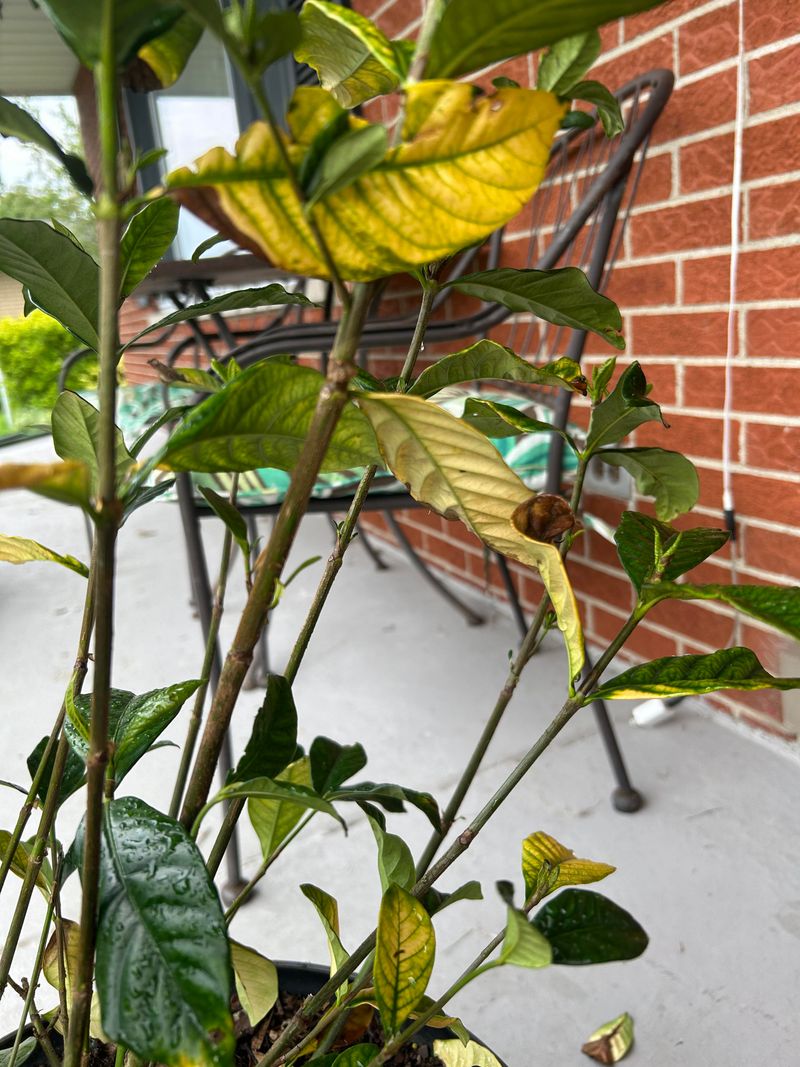
Spring in Florida brings a tricky combination of increased rainfall and enthusiastic gardeners who keep watering on schedule regardless of what the sky is doing. That extra moisture adds up fast, and gardenias are surprisingly sensitive to having too much water sitting around their roots.
When roots stay wet for too long, oxygen gets squeezed out of the soil. Without oxygen, roots struggle to function properly and can no longer deliver nutrients to the rest of the plant.
The leaves respond by turning yellow, starting with the older growth near the base of the plant. Many gardeners mistake this for underwatering and add even more water, which makes things worse.
The fix starts with changing your watering habits. Check the top two inches of soil before reaching for the hose.
If it still feels damp, wait another day or two. Deep, infrequent watering is much better for gardenias than light daily watering.
In Florida’s rainy spring season, you may barely need to water at all during weeks with regular afternoon showers. A simple moisture meter costs just a few dollars and takes all the guesswork out of knowing when your plant actually needs a drink.
Your Florida Garden Changes Every Week. Your Plan Should Too.
Gardening in Florida changes quickly throughout the season. Every Friday you’ll receive a simple weekly plan showing exactly what to plant, prune, fertilize, harvest, and protect so you never miss the right timing.
3. Poor Drainage Leads To Yellow Leaves
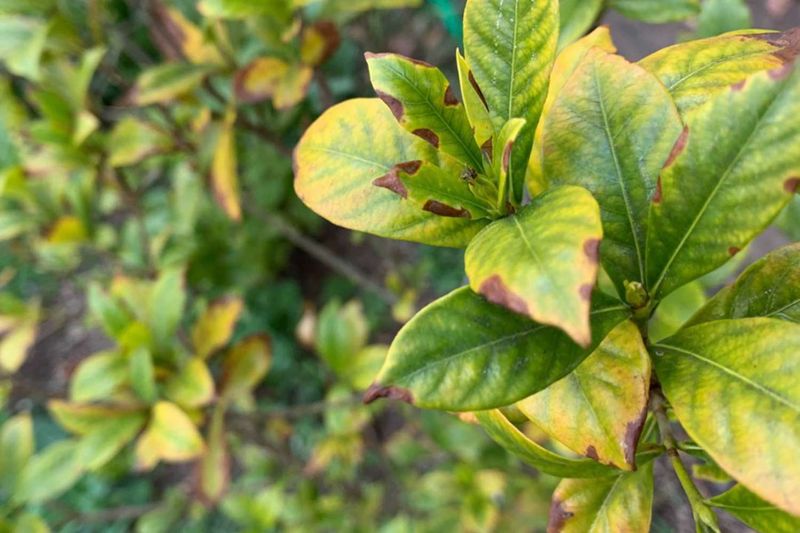
Even when you water perfectly, poor drainage can still cause serious trouble. Florida’s soils vary widely across the state, and many residential areas have compacted, clay-heavy, or hardpan soils underneath a shallow layer of sandy topsoil.
After a heavy spring rain, that compacted layer traps water with nowhere to go.
Gardenias sitting in waterlogged soil for even a few days can develop root stress that shows up as yellowing leaves within a week. The roots essentially run out of air, and the plant starts to shut down nutrient absorption.
You might notice the yellowing spreading from the bottom of the plant upward, often accompanied by a slight wilting even though the soil is soaking wet.
Improving drainage is the long-term solution. Before planting, work organic compost deep into the soil to break up compaction and improve structure.
Raised beds or mounded planting areas work well in Florida landscapes because they lift the root zone above any drainage problem areas. For established plants, top-dress with compost and avoid packing mulch tightly against the stem.
If drainage is severely limited, consider relocating the plant to a spot with naturally better soil structure or building a raised planting mound at least eight inches high.
4. Magnesium Deficiency Yellows Leaf Veins
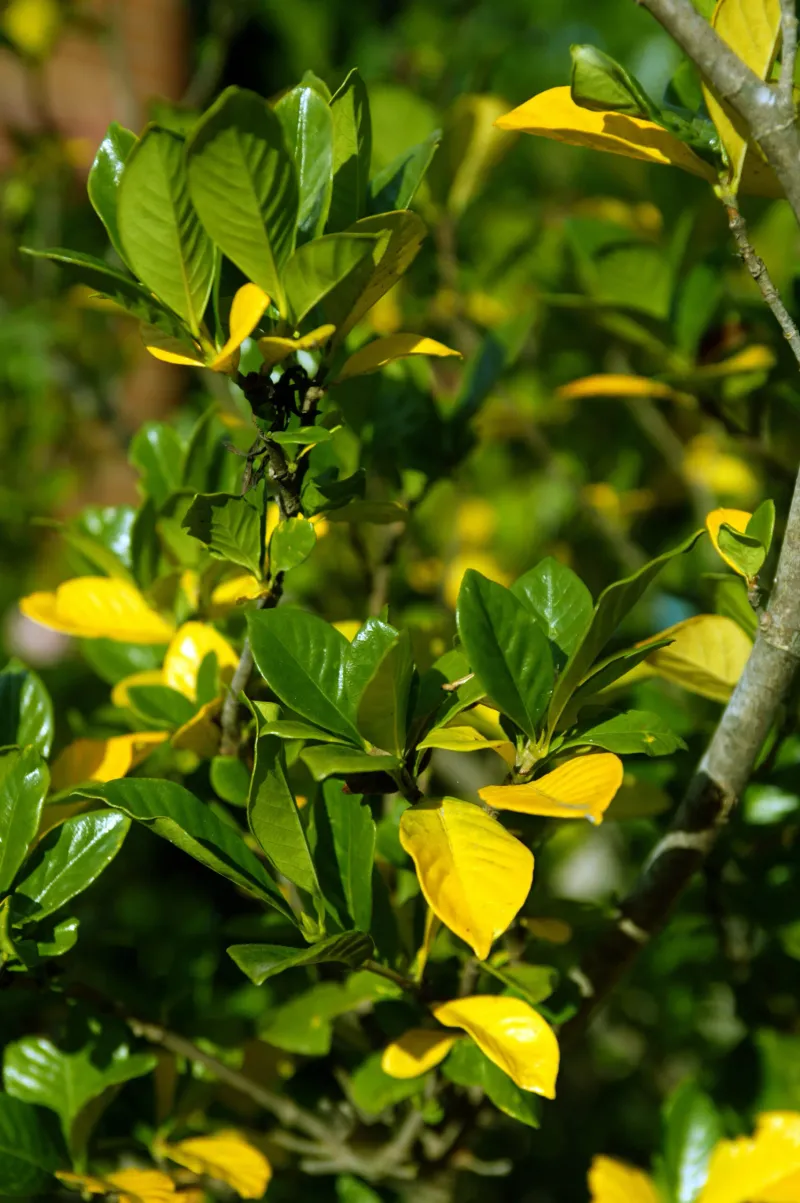
Magnesium deficiency is more common in Florida gardenias than most people realize, partly because the state’s sandy soils are naturally low in this nutrient and partly because heavy rainfall leaches it away quickly. Unlike iron chlorosis, which affects newer growth first, magnesium deficiency usually shows up on the older, lower leaves first.
The classic symptom is interveinal yellowing, meaning the tissue between the leaf veins turns yellow while the veins themselves stay green. It can look similar to iron deficiency at first glance, but the location on the plant tells you which nutrient is actually missing.
Magnesium is a key building block of chlorophyll, so when levels drop, the plant simply cannot produce enough green pigment to keep leaves looking healthy.
Epsom salt, which is magnesium sulfate, is a widely used and affordable fix that many Florida gardeners already have on hand. Mix one tablespoon of Epsom salt per gallon of water and apply it as a foliar spray directly onto the affected leaves every two to four weeks until the color improves.
You can also apply it as a soil drench around the root zone. University of Florida IFAS Extension recommends confirming the deficiency with a soil test before applying repeated treatments to avoid over-correcting the soil balance.
5. Cold Spring Nights Stress Gardenias
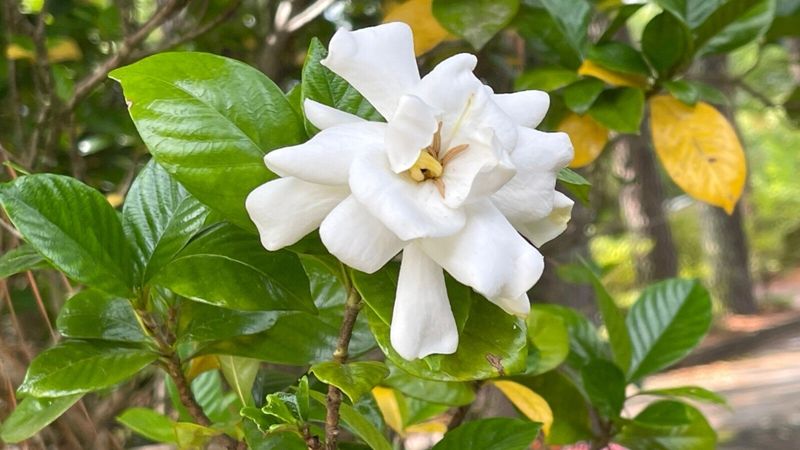
Florida gardeners sometimes forget that spring does not always mean warm nights. Cold fronts can sweep through the state well into April, sending nighttime temperatures plunging into the 40s or even the upper 30s in northern and central Florida.
Gardenias are subtropical plants that prefer temperatures between 60 and 75 degrees Fahrenheit, and anything below that range puts them under real stress.
Cold nights followed by warm days create a temperature swing that the plant struggles to handle. The leaves may yellow at the tips or across entire sections of the plant, and bud drop often happens at the same time.
The yellowing from cold stress tends to look patchy rather than following the interveinal pattern you see with nutrient deficiencies. New growth may also appear pale or stunted after a cold spell.
Protecting gardenias during unexpected cold snaps is easier than it sounds. Cover plants with a lightweight frost cloth or even an old bedsheet on nights when temperatures are forecast to drop below 50 degrees.
Remove the covering once the sun warms things up the next morning so heat does not build up underneath. Applying a two to three inch layer of mulch around the base of the plant also helps insulate the root zone from temperature swings throughout the Florida spring season.
6. Sap-Sucking Pests Weaken Foliage
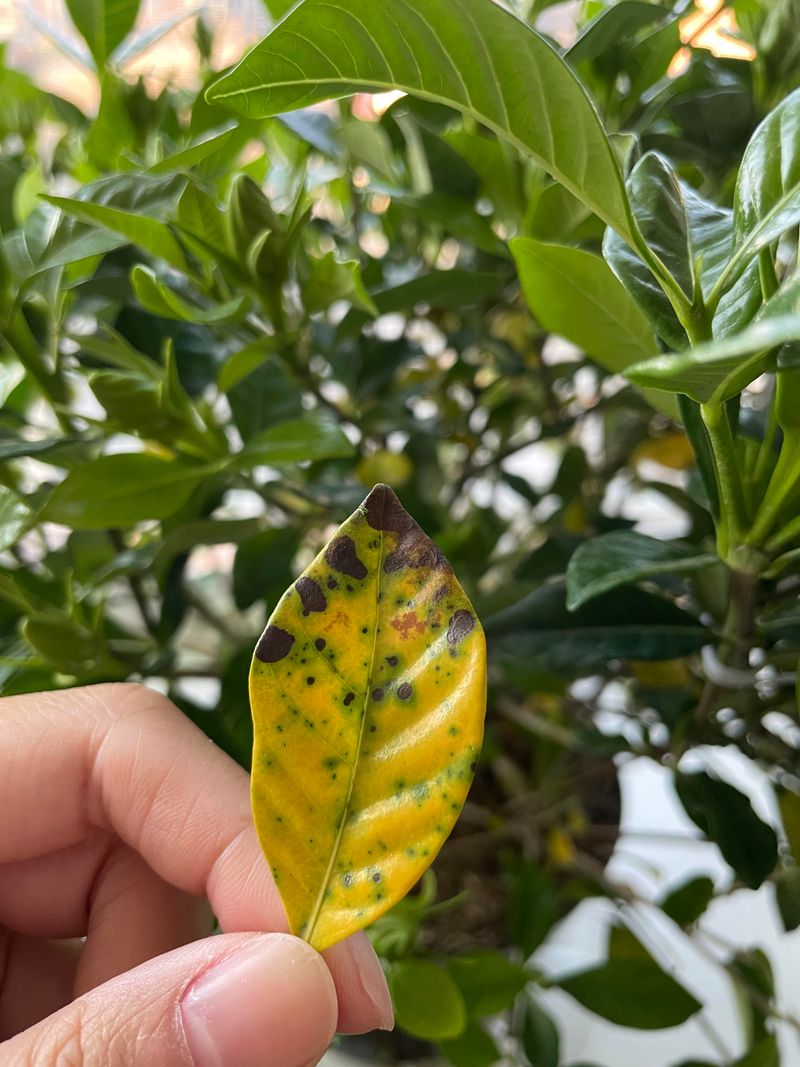
Florida’s warm and humid spring climate is a paradise for plants, but it is equally welcoming to the tiny insects that feed on them. Aphids, scale insects, spider mites, and whiteflies are among the most common pests that target gardenias in Florida gardens, and all of them cause yellowing leaves by draining the plant of its sap and vital nutrients.
Aphids cluster on new growth and the undersides of leaves, leaving behind a sticky residue called honeydew that encourages black sooty mold to grow. Scale insects look like small brown or white bumps along stems and leaf surfaces.
Spider mites are nearly invisible but leave fine webbing and cause a speckled, bronzy yellowing across the leaf surface. Whiteflies flutter up in clouds when you brush against the plant and weaken it steadily over time.
Start by inspecting your gardenias regularly, especially on the undersides of leaves where pests hide. A strong blast of water from a garden hose can knock off aphids and mites quickly.
For heavier infestations, neem oil spray is a safe and effective option that works well against multiple pest types without harming beneficial insects when applied in the early morning or evening. Insecticidal soap is another reliable choice for Florida gardeners dealing with soft-bodied pests throughout spring.
7. Nutrient-Poor Soil Fades Green Leaves
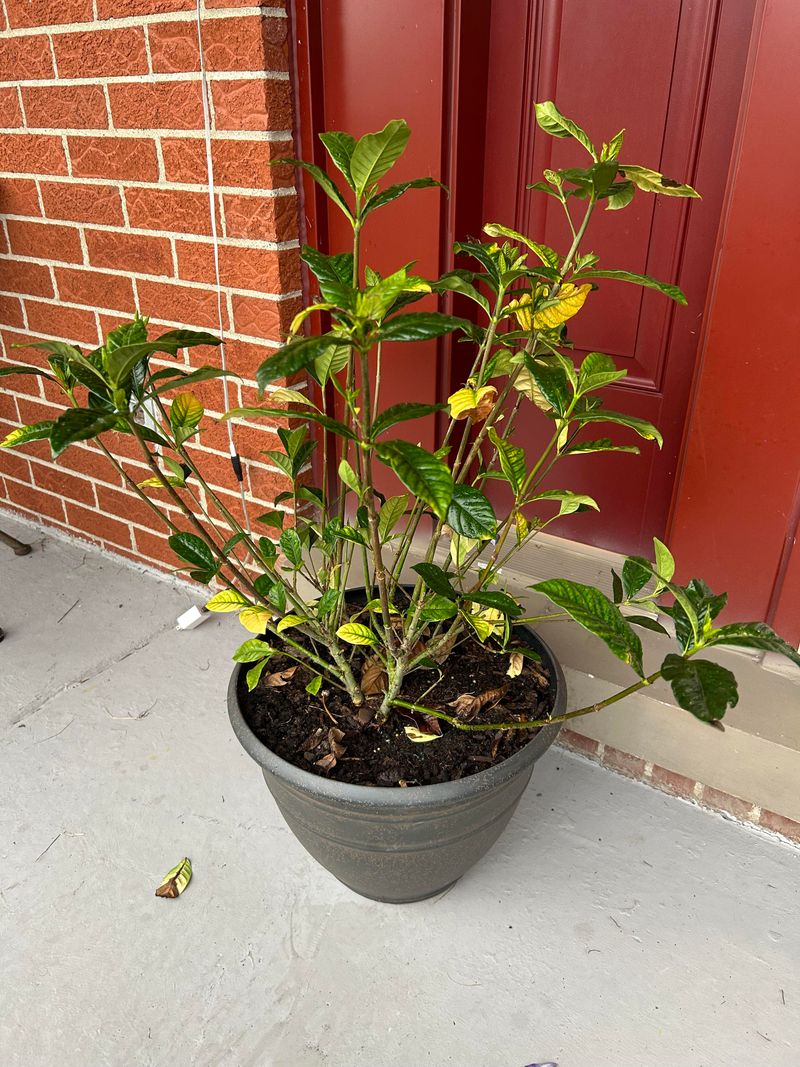
Sandy Florida soils are notoriously low in organic matter and nutrients. Without regular fertilization, gardenias growing in these conditions slowly run out of the building blocks they need to maintain their deep green color.
Nitrogen is the most critical nutrient for leaf color, and when levels drop, the oldest leaves turn yellow first before the problem spreads to younger growth.
Spring is the season when gardenias push out new growth and buds, which means their nutritional demands are at their highest. A plant that was just barely getting by through winter can hit a wall in spring when it tries to grow and bloom but does not have enough nutrients to support both.
The leaves fade to a dull yellowish-green rather than the rich, glossy green that healthy gardenias display.
Feed your gardenias with a fertilizer formulated specifically for acid-loving plants, such as an azalea and camellia blend or a product labeled for gardenias. Apply it in early spring as new growth begins, then again in midsummer.
Avoid fertilizing in late summer or fall in Florida, as this encourages tender new growth that can be damaged by cold. Always water well after applying granular fertilizer to help it reach the root zone without burning the plant.
8. Care Mistakes Trigger Sudden Yellowing
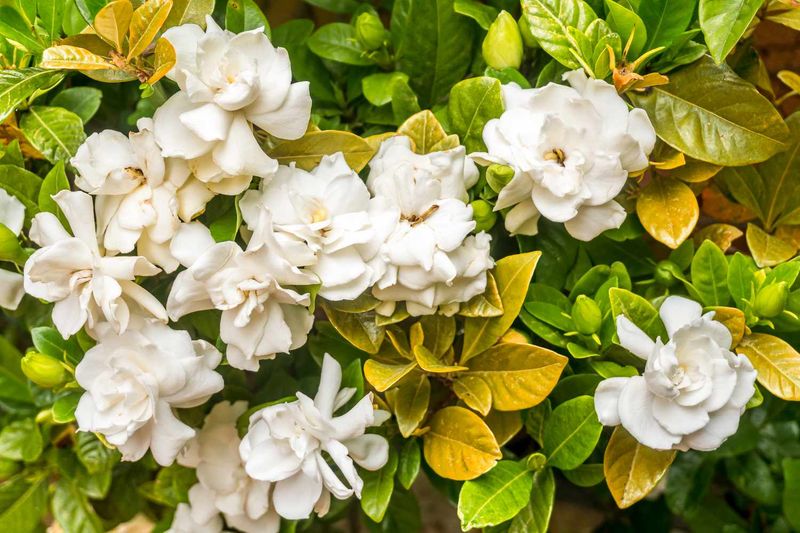
Sometimes yellow leaves are not about soil chemistry or pests at all. Everyday care habits can quietly cause problems that build up over time and suddenly show up as yellowing foliage.
Florida gardeners often run into trouble with a handful of common mistakes that are easy to fix once you know what to look for.
Planting gardenias too deep is a frequent issue. The root flare, where the trunk widens at the base, should sit at or slightly above the soil surface.
Burying it too deep cuts off oxygen exchange and stresses the plant from the start. Placing gardenias in too much shade is another common error.
They need at least four to six hours of bright, indirect light daily, and deep shade in Florida’s spring can slow their growth and cause leaves to yellow and drop.
Using the wrong fertilizer is also worth checking. High-phosphorus fertilizers meant for flowering annuals can actually lock out micronutrients in acid-loving plants like gardenias.
Inconsistent watering, swinging between bone dry and soaking wet, creates stress that shows up as patchy yellowing across the plant. Taking a step back and reviewing your full care routine, from planting depth to sun exposure to fertilizer type, can reveal a simple fix that gets your gardenias back on track quickly.