8 Desert-Adapted Plants That Thrive In West Texas’ Tough Heat
West Texas is not an easy place for most plants. The sun can feel relentless, rain is often scarce, and the soil can be stubbornly dry.
Yet step into the right garden and you might be surprised by how lively and colorful it can be. The secret is choosing plants that actually enjoy these harsh conditions instead of struggling against them.
Desert adapted plants are built for this environment. Many store water in thick leaves, grow deep roots that search for moisture, or develop tough surfaces that protect them from intense sunlight.
These natural traits help them stay strong even during long stretches of heat. For gardeners in West Texas, picking the right plants can turn a difficult yard into a landscape that looks vibrant without constant watering or heavy maintenance.
With the right choices, your garden can handle the heat while still offering texture, color, and plenty of visual interest throughout the year.
1. Texas Sage (Leucophyllum Frutescens)
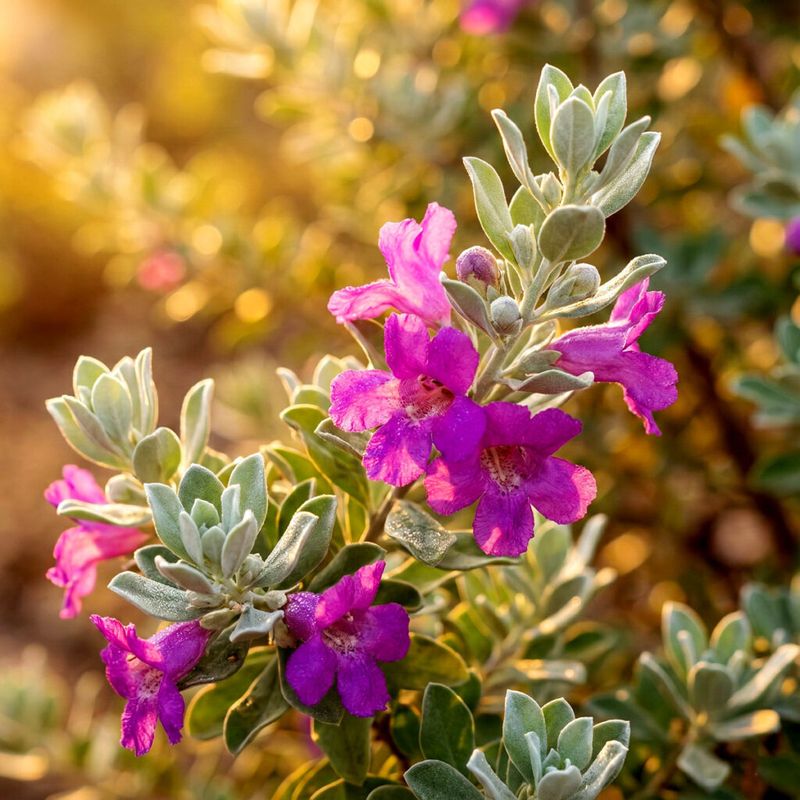
After a good rain in West Texas, something magical happens in the landscape. Texas Sage bursts into a cloud of purple blooms almost overnight, which is why locals lovingly call it the “barometer bush.” This silvery-leafed shrub seems to know when rain is coming, and it puts on a show every single time.
Also known as Cenizo, Texas Sage is an evergreen shrub that grows naturally across the Chihuahuan Desert region.
Its soft, silvery-gray foliage reflects sunlight, helping it stay cool even during the most brutal summer days. The contrast between the silver leaves and the bright purple flowers is truly eye-catching.
One of the best things about Texas Sage is how low-maintenance it really is. Once it gets established in well-drained soil, it needs very little water.
It handles full sun like a champ and actually does better in poor, rocky soils than in rich garden beds. Overwatering or heavy fertilizing can actually hurt it.
For West Texas homeowners, this shrub is a landscaping dream. It forms a dense, rounded shape that works great as a hedge or a standalone accent plant.
It grows anywhere from three to eight feet tall depending on the variety. Planting it along a fence line or driveway adds structure and color without demanding constant attention from you.
2. Red Yucca (Hesperaloe Parviflora)
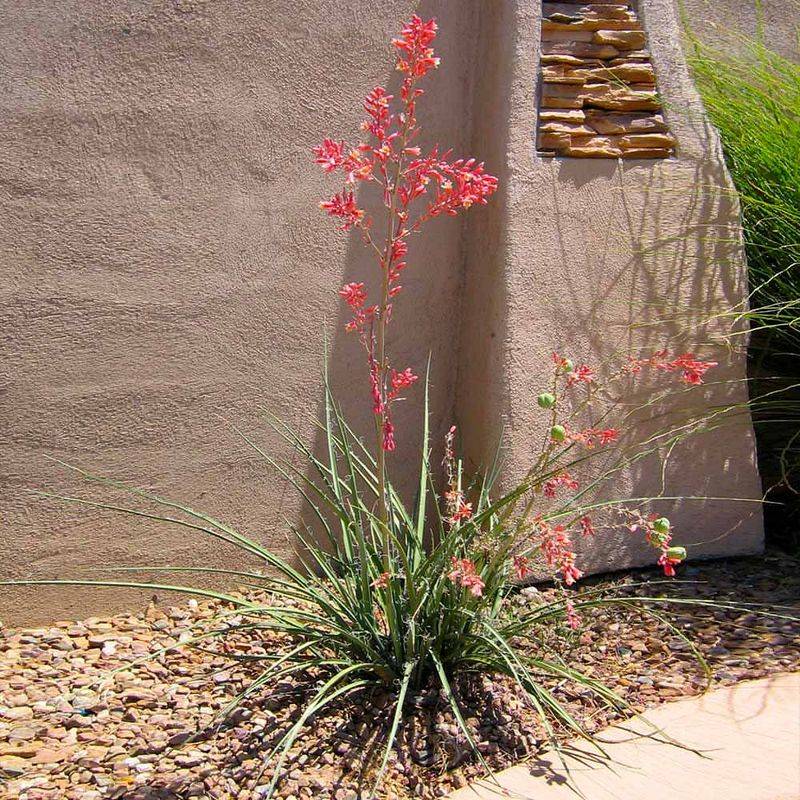
Hummingbirds absolutely love Red Yucca, and honestly, it is easy to see why. Those long, coral-colored flower spikes shoot up several feet into the air and are packed with tubular blooms that are practically designed for a hummingbird’s beak.
If you want to bring more wildlife into your West Texas yard, this plant is a great place to start.
Despite its name, Red Yucca is not actually a true yucca. It belongs to the Hesperaloe genus, but it shares that same tough, drought-busting spirit.
The dark green, arching leaves have a slightly grassy look, and they stay attractive year-round. The flower stalks appear in late spring and can keep blooming well into summer.
Red Yucca performs incredibly well in full sun and sandy or rocky soil, which makes it a natural fit for West Texas gardens. It requires almost no supplemental watering once it gets established.
Your Texas Garden Changes Every Week. Your Plan Should Too.
Gardening in Texas changes quickly throughout the season. Every Friday you’ll receive a simple weekly plan showing exactly what to plant, prune, fertilize, harvest, and protect so you never miss the right timing.
You can plant it and largely forget about it, which is a huge bonus in such a demanding climate.
Landscapers across West Texas often use Red Yucca as a focal point or a border plant. It adds vertical interest without taking up a lot of ground space.
Grouping several plants together creates a dramatic effect, especially when the flower stalks are all blooming at once. It is one of the most reliable xeriscape plants around.
3. Prickly Pear Cactus (Opuntia Species)
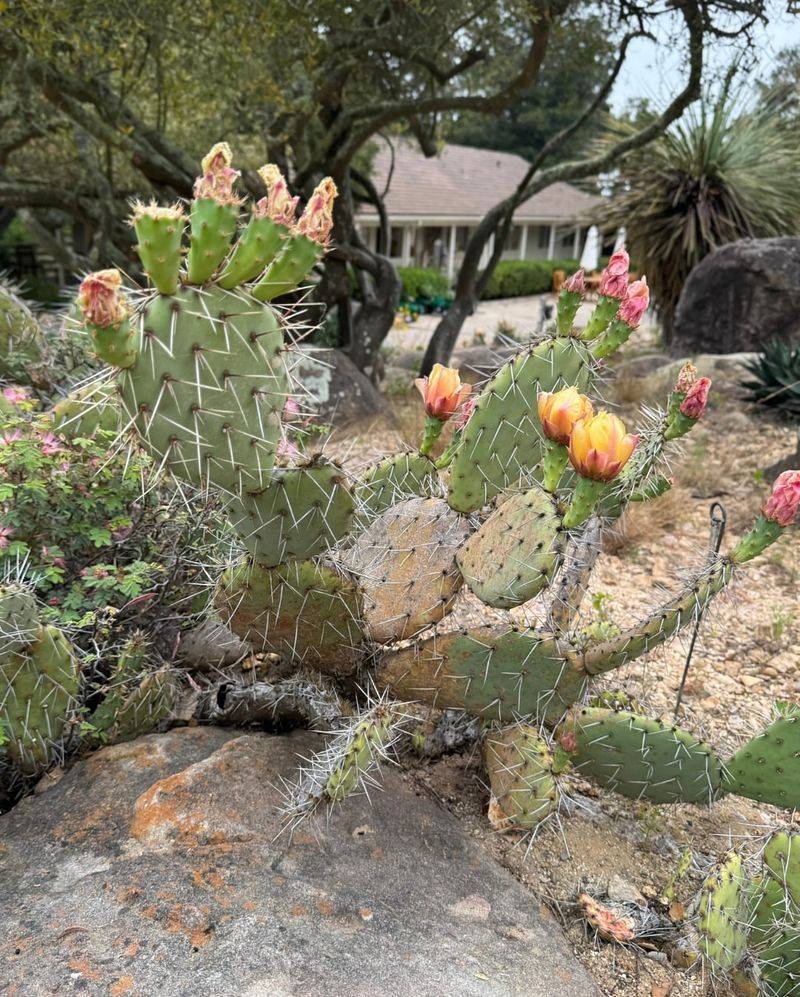
Few plants say “desert” quite like the Prickly Pear Cactus. Those flat, paddle-shaped pads stacked on top of each other are one of the most recognizable sights across West Texas.
But beyond its iconic look, this cactus is a true survivor that has been part of this landscape for thousands of years.
Prickly Pear produces surprisingly beautiful flowers, usually in shades of yellow, orange, or pink, depending on the species. After the blooms fade, the plant produces colorful fruits called tunas.
These fruits are edible and have been used in jams, juices, and even candy for generations. Wildlife like birds and deer also snack on them regularly.
Growing Prickly Pear in West Texas is about as easy as it gets. It thrives in extremely hot, dry conditions and needs almost no irrigation once it is established.
Rocky, sandy, or even gravelly soils are perfectly fine. Planting it in heavy clay or overly wet areas is where problems can start, so drainage is the main thing to watch.
One thing to keep in mind is that Prickly Pear spreads over time. Give it plenty of room to grow, or plan to trim the pads back occasionally.
Wear thick gloves when handling it because both the large spines and the tiny hair-like glochids can be painful. Despite the prickles, it is a rewarding and nearly indestructible addition to any West Texas garden.
4. Desert Willow (Chilopsis Linearis)
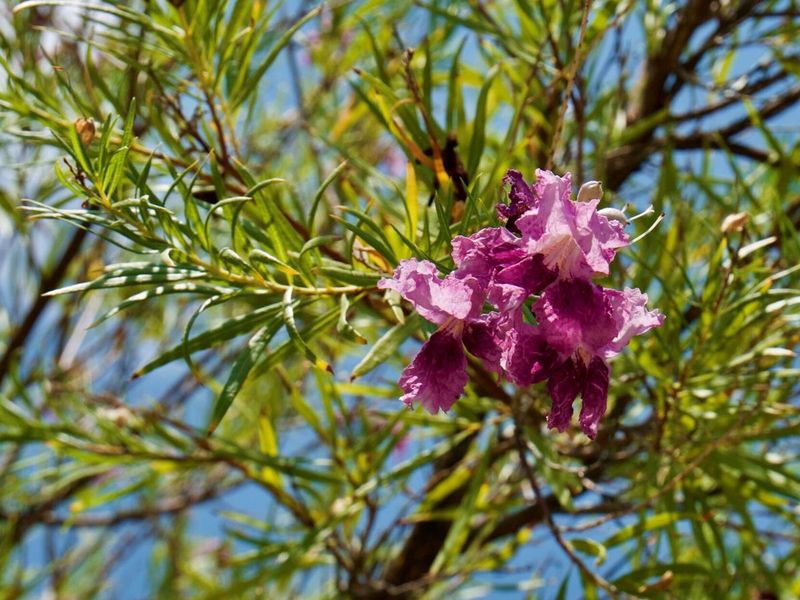
Picture a small tree covered in trumpet-shaped flowers in shades of pink, lavender, and white, all blooming right in the middle of a scorching West Texas summer. That is exactly what Desert Willow delivers.
It blooms during the hottest months of the year, when most other flowering plants have long given up.
Despite its name, Desert Willow is not related to true willows. It belongs to the Bignonia family and is native to the dry washes and creek beds of the Chihuahuan Desert.
The long, narrow leaves give it a graceful, willow-like appearance, but it is built tough for arid conditions. It can handle intense sun and extended dry spells without missing a beat.
One of the great things about Desert Willow is its flexibility. It can be pruned into a multi-trunk shrub or trained into a small shade tree.
Either way, it adds real beauty and some welcome shade to West Texas landscapes. The flowers also attract hummingbirds and butterflies, giving your yard extra life throughout the warm season.
Planting Desert Willow in well-drained soil and full sun will give it the best start. It is drought tolerant once established but appreciates occasional deep watering during its first growing season.
Mature trees can reach anywhere from 15 to 25 feet tall. For West Texas homeowners who want a flowering tree that handles heat without complaint, Desert Willow is hard to beat.
5. Blackfoot Daisy (Melampodium Leucanthum)
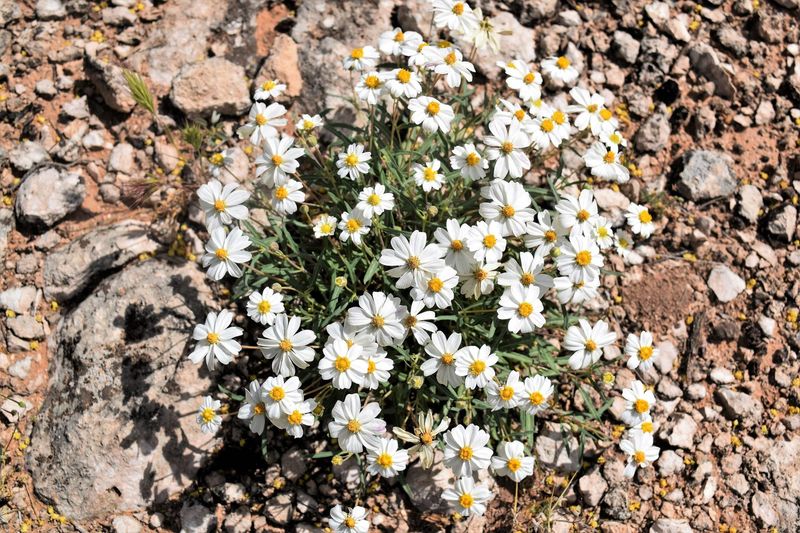
There is something cheerful and almost defiant about Blackfoot Daisy. Here is a small, delicate-looking flower that somehow thrives in the harshest conditions West Texas can throw at it.
Rocky soil, blazing sun, and months without rain? No problem. This little plant just keeps blooming.
Blackfoot Daisy is a low-growing perennial that typically stays under a foot tall. It spreads outward into a neat mound covered in small white flowers with bright yellow centers.
The blooms appear from early spring and often continue right through fall, making it one of the longest-blooming plants you can find for a West Texas garden.
The secret to its success is its love of well-drained, rocky, or sandy soils. In fact, it actually struggles in rich, moist garden soil.
West Texas’s naturally lean, alkaline soil is exactly what this plant prefers. It needs full sun and very little supplemental water once it gets going. Overwatering is the fastest way to cause problems for it.
Pollinators like bees and butterflies are big fans of Blackfoot Daisy. Planting a mass of them along a walkway or garden border creates a stunning, low-maintenance display.
They also work wonderfully in rock gardens or naturalized areas where you want color without a lot of upkeep. For anyone new to West Texas gardening, this plant is a wonderful, forgiving starting point that rewards you generously.
6. Agave (Agave Species)
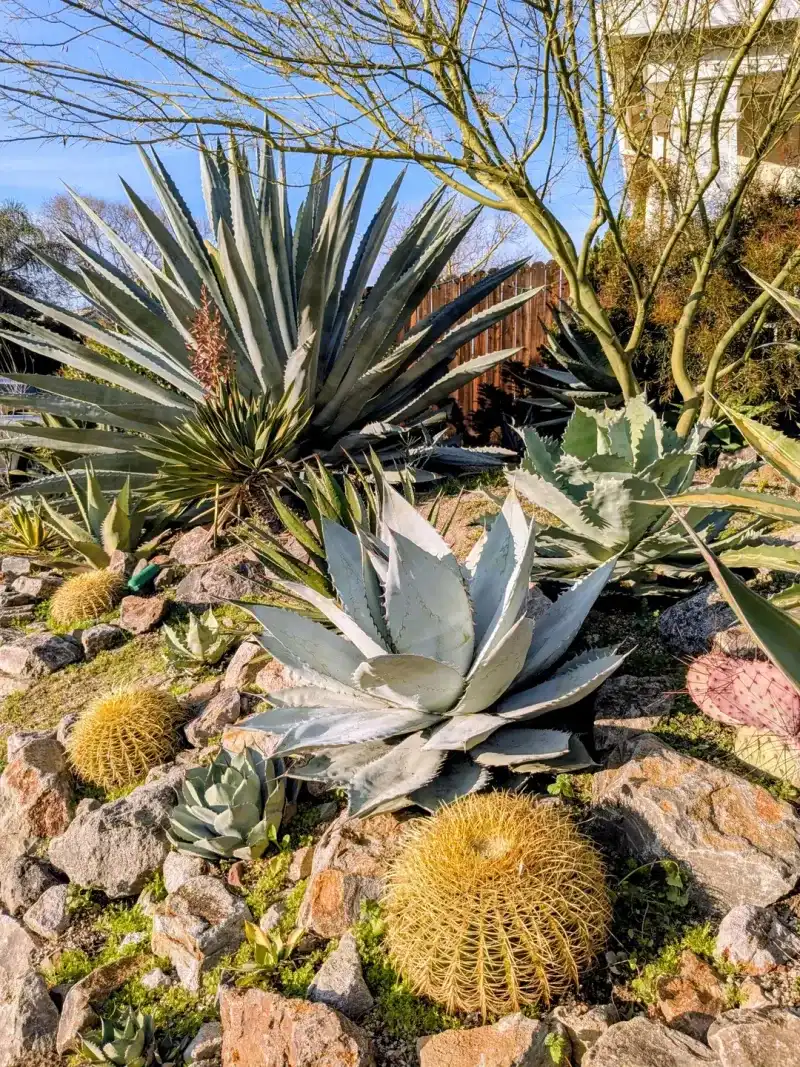
Walk through almost any neighborhood in West Texas and you will spot an Agave. That bold, architectural rosette of thick, pointed leaves is practically a symbol of the region.
Agave plants have a presence that is hard to ignore, and they bring a dramatic, sculptural quality to any landscape they are planted in.
There are hundreds of Agave species, and many of them are perfectly suited for West Texas conditions. Some stay compact and tidy, while others grow into massive, impressive specimens.
All of them share the same basic superpower: they store water in their thick, fleshy leaves, which allows them to survive long periods without any rainfall at all.
Agave Lechuguilla is one species that is especially common in the Chihuahuan Desert region of West Texas. It is considered an indicator plant of the desert, meaning its presence signals a true desert environment.
It forms low clusters of sharp-tipped, curved leaves and is incredibly resilient in rocky, dry soils. It handles both heat and cold snaps better than many other desert plants.
For landscaping purposes, Agave works beautifully as a focal point or anchor plant. Pair it with ornamental grasses or flowering perennials for contrast.
One important note: the leaf tips are very sharp, so plant them away from walkways and play areas. With essentially zero water requirements once established, Agave is one of the most effortless plants you can grow in West Texas.
7. Desert Marigold (Baileya Multiradiata)
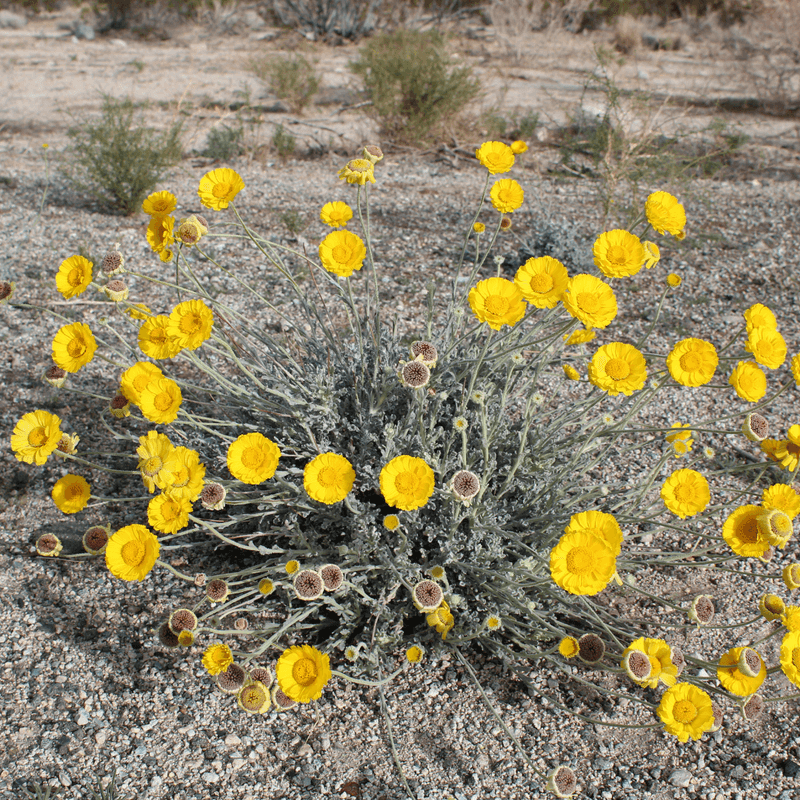
Bright yellow flowers stretching across a rocky West Texas hillside is one of the most uplifting sights the desert has to offer. Desert Marigold is responsible for a lot of that golden color.
It blooms enthusiastically from spring through fall, and sometimes even into winter during mild years, bringing cheer to the landscape for months at a time.
Desert Marigold is a perennial that grows about one to two feet tall. Its silvery-white stems and leaves are covered in fine hairs that help reflect sunlight and reduce water loss, which is a clever natural adaptation to the intense West Texas heat.
The bright yellow, daisy-like flowers sit on top of long stems and are very attractive to bees and butterflies.
Sandy, gravelly, or rocky soils are where Desert Marigold feels most at home. It thrives in the naturally lean soils found across much of West Texas and actually struggles if the soil is too rich or too moist.
Full sun is a must. Once established, it needs very little supplemental watering and handles extended dry periods with ease.
Scattering Desert Marigold seeds in a naturalized garden area is a simple and rewarding way to add color. It self-seeds freely, meaning new plants pop up each year with almost no effort on your part.
For anyone wanting a cheerful, low-effort flowering plant that truly belongs in the West Texas landscape, Desert Marigold is a top-tier choice worth planting right away.
8. Mexican Feather Grass (Nassella Tenuissima)
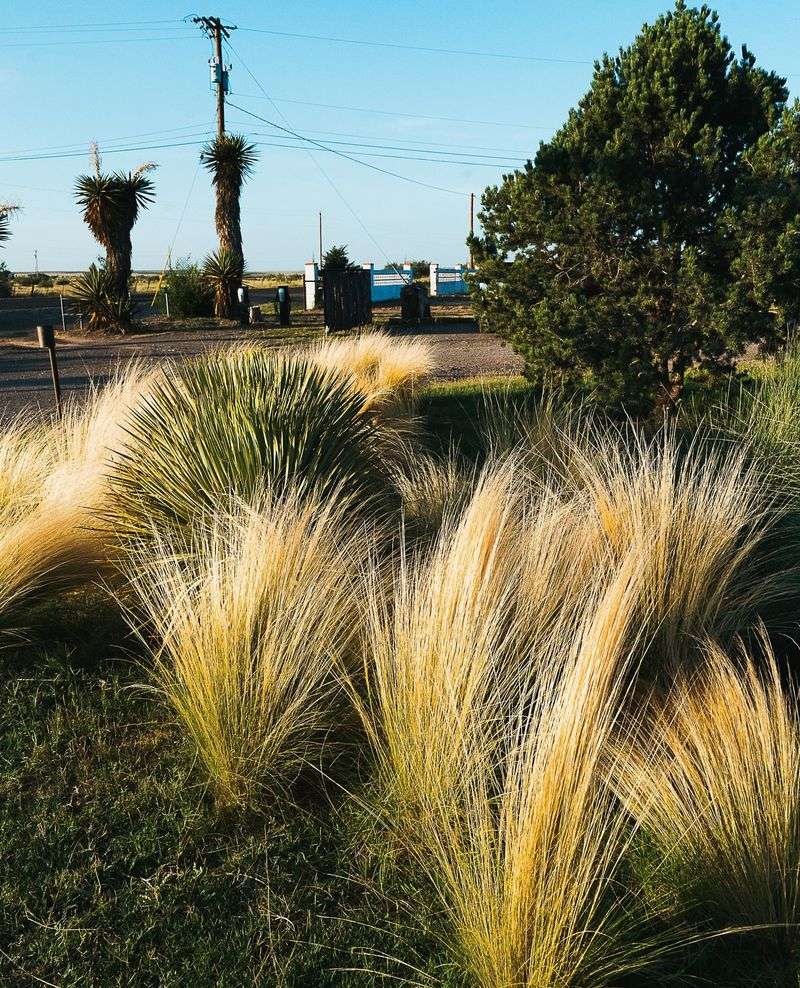
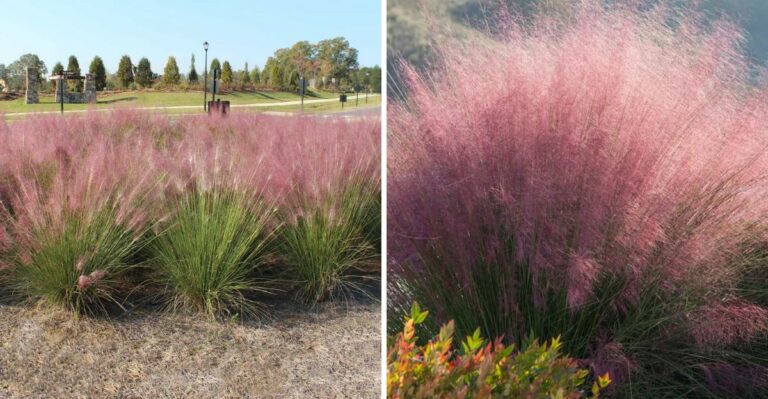
If a plant could dance, Mexican Feather Grass would be the one doing it. Its ultra-fine, silky blades catch even the gentlest breeze and sway in graceful, flowing waves.
In a landscape full of spiky cacti and bold agaves, this ornamental grass brings a softness and movement that is genuinely beautiful to watch.
Mexican Feather Grass grows in tidy clumps that reach about one to two feet tall. In spring and early summer, it takes on a soft golden color as the seed heads mature, giving it an almost luminous quality in the afternoon sun.
It is native to the Chihuahuan Desert region, which means West Texas is basically its home turf.
Drought tolerance is one of its strongest qualities. Once established, it requires very little water and handles the blazing West Texas summers without any fuss.
It prefers well-drained soil and full sun, and it actually thrives in the rocky, lean soils that are so common across the region. Heavy clay or poorly drained areas are the only real spots to avoid.
Landscapers love using Mexican Feather Grass as a filler plant between boulders, along slopes, or as a soft border alongside harder-textured plants. It also helps with erosion control on hillsides.
One thing to note is that it can self-seed generously, so deadheading the spent seed heads helps keep it from spreading too far. Overall, it is a wonderfully expressive and easygoing plant for any West Texas garden.