These 9 Native Shrubs Thrive In Florida Front Yards When Planted In March
March quietly opens one of the best planting windows in Florida gardens. As the weather warms and the soil begins to wake up, shrubs planted now get a head start on strong roots before the intense summer heat arrives.
Smart gardeners know this short window can make all the difference in how well new plants establish. Native shrubs make the opportunity even better.
Adapted to Florida’s heat, sandy soils, and seasonal rains, many of these plants settle in quickly and reward front yards with flowers, berries, and lush foliage that attract birds and pollinators. The right choices can transform the look of a landscape almost overnight.
Plant them in March and you may soon see vibrant color, wildlife activity, and healthy growth turning an ordinary front yard into a thriving Florida garden.
1. Beautyberry Adds Brilliant Purple Berries To Fall Gardens
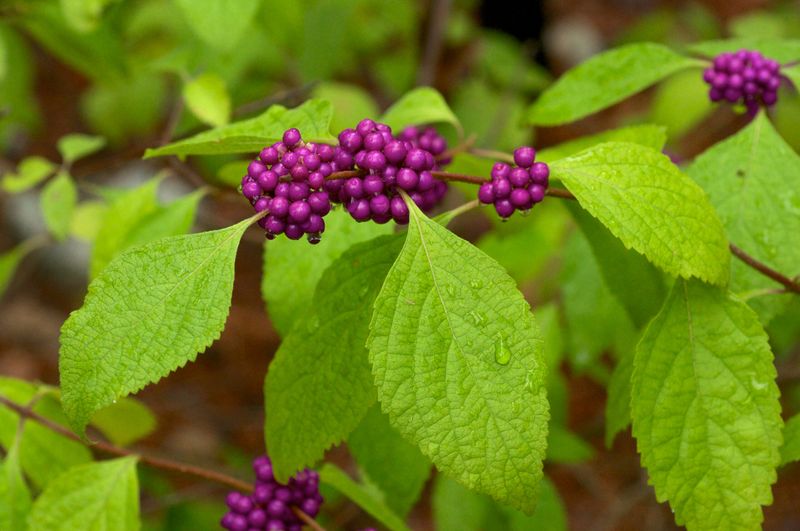
Few plants in a Florida front yard can match the jaw-dropping color show that American Beautyberry delivers every fall. The botanical name is Callicarpa americana, and it earns every bit of attention it gets.
Clusters of metallic purple berries wrap tightly around the arching branches in a way that looks almost too vivid to be real.
The University of Florida IFAS Extension recognizes this shrub as an outstanding native for Florida landscapes. It grows naturally in woodland edges and open forests throughout the state, making it completely at home in Florida’s sandy soils and humid climate.
The arching, slightly wild growth habit gives it a relaxed, naturalistic look that works beautifully in informal front yard designs.
Wildlife absolutely loves it. Mockingbirds, cardinals, and many other native birds feed heavily on the berries through fall and winter.
Even white-tailed deer browse the foliage, and the flowers attract pollinators during summer. Planting in March gives the roots plenty of time to establish before summer heat peaks.
Choose a spot with partial shade to full sun and amend sandy soil with organic matter before planting. Water regularly during the first season, then step back and let this tough native do what it does best.
2. Firebush Lights Up Front Yards With Hummingbird Flowers
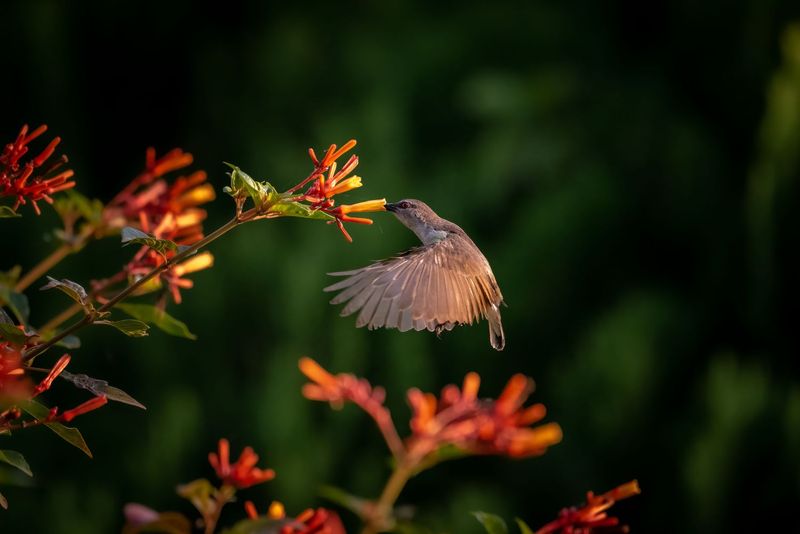
Walk past a Firebush in full bloom on a warm Florida morning and you might just stop in your tracks. Hamelia patens earns its common name honestly, with clusters of blazing red-orange tubular flowers that practically glow against the green foliage.
The bloom season runs from March all the way through December, making it one of the longest-flowering native shrubs available to Florida gardeners.
Hummingbirds are drawn to those tubular flowers like magnets, and butterflies are not far behind. The Florida Native Plant Society highlights Firebush as an exceptional pollinator plant that also supports native bee populations.
Beyond wildlife value, it brings serious ornamental punch to any front yard design.
Florida’s heat and humidity are no problem for this tough native. Once established, Firebush handles dry spells gracefully and bounces back quickly after cold snaps in North Florida.
It grows in full sun to light shade and reaches six to eight feet if left unpruned, though it responds well to shaping.
Your Florida Garden Changes Every Week. Your Plan Should Too.
Gardening in Florida changes quickly throughout the season. Every Friday you’ll receive a simple weekly plan showing exactly what to plant, prune, fertilize, harvest, and protect so you never miss the right timing.
March planting is ideal because young plants establish quickly in warming soil. Add a layer of mulch around the base to retain moisture and keep the roots comfortable as temperatures climb through spring and into summer.
3. Walter’s Viburnum Forms A Dense Evergreen Hedge
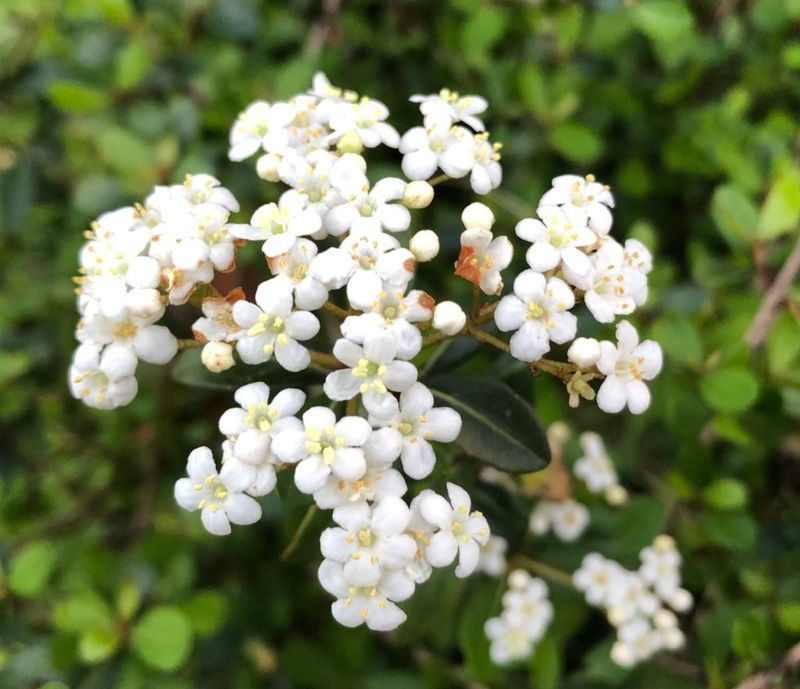
If you have ever driven past a Florida neighborhood and admired a beautifully neat, dense green hedge, there is a good chance Walter’s Viburnum was doing the work. Viburnum obovatum is one of the most reliable native hedging plants available in Florida, offering small glossy leaves, a naturally tight growth habit, and impressive tolerance for the state’s variable conditions.
Each spring, the entire plant becomes covered in clusters of tiny white flowers that create a frothy, cloud-like effect. According to the University of Florida IFAS Extension, this species performs exceptionally well across the state, handling both brief flooding and extended dry periods with equal composure.
That kind of flexibility is rare and genuinely useful in Florida’s unpredictable climate.
Birds appreciate the small black fruits that follow the spring flowers, adding wildlife value to what is already a highly ornamental plant. The evergreen foliage means your hedge stays dense and attractive all year, which is exactly what most homeowners want in a front yard.
March is a perfect planting window because the mild temperatures allow roots to spread before summer arrives. Space plants about three feet apart for a solid hedge effect, and water consistently during the first growing season to encourage strong establishment in Florida’s sandy soils.
4. Simpson’s Stopper Produces Fragrant Flowers And Bright Berries
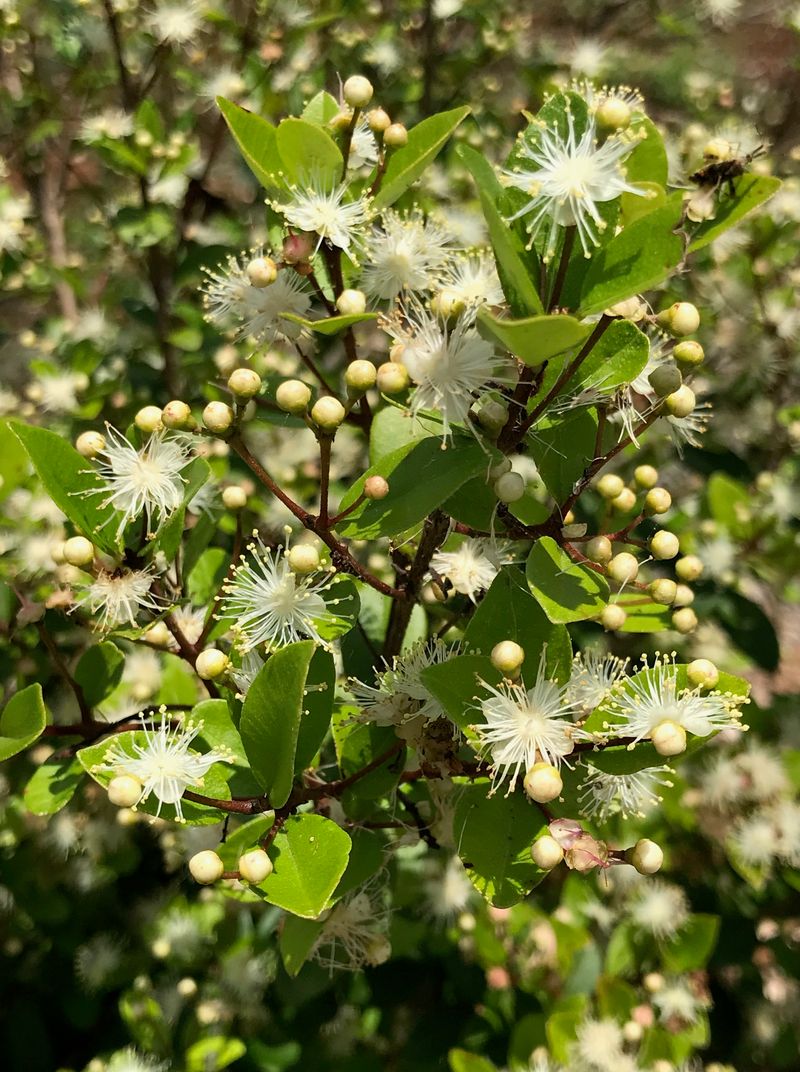
There is something quietly elegant about Simpson’s Stopper that sets it apart from flashier landscape plants. Myrcianthes fragrans has smooth, attractive cinnamon-colored bark that peels slightly with age, giving it a refined, almost sculptural quality that improves over time.
The combination of glossy leaves, fragrant white flowers, and bright orange-red berries makes this native shrub a genuine four-season performer.
The Florida Native Plant Society rates it highly for coastal and inland Florida landscapes alike. Its salt tolerance is impressive, and it handles Florida’s sandy, well-drained soils with ease.
The fragrant flowers appear multiple times throughout the year, drawing in bees, butterflies, and other pollinators that are essential to a healthy garden ecosystem.
Birds go wild for the berries, which ripen to a warm orange-red and are quickly claimed by mockingbirds, waxwings, and other fruit-eating species. Used as a hedge, small specimen tree, or foundation shrub, it fits comfortably into most front yard designs without overwhelming the space.
Planting in March means the shrub gets a full growing season to anchor itself before Florida’s summer humidity and heat settle in. Give it well-drained soil, moderate water during establishment, and a sunny to partly shaded spot for the best results in your front yard.
5. Coontie Supports Native Butterflies With Tropical Style
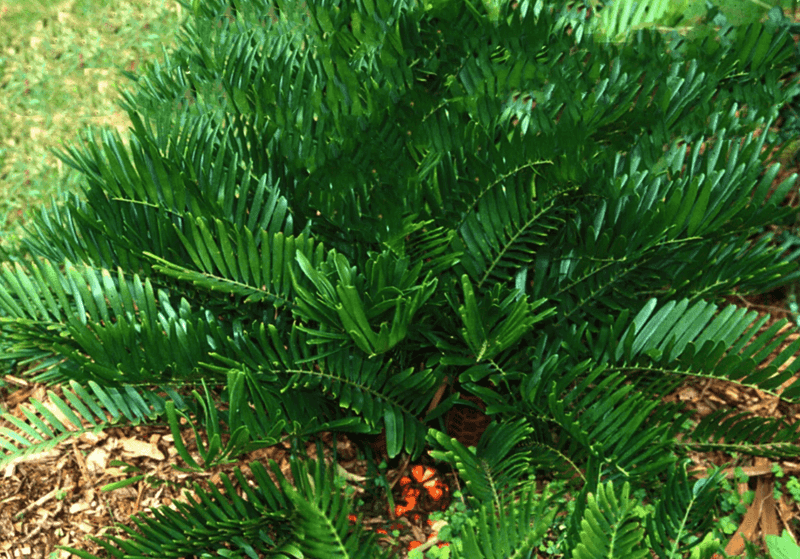
Long before Florida had neighborhoods and landscaped front yards, Coontie was growing quietly across the sandy scrubs and pine flatwoods of the state. Zamia integrifolia is Florida’s only native cycad, and it carries a prehistoric quality that brings undeniable character to any landscape.
The dark green, palm-like fronds create a lush, tropical look that belies just how tough this plant actually is.
Drought tolerance is one of its strongest traits. Once established in well-drained sandy soil, Coontie needs very little supplemental water, making it an excellent choice for low-maintenance Florida front yards.
The University of Florida IFAS Extension recommends it widely for xeriscaping projects and native plant gardens throughout the state.
The wildlife connection here is particularly special. Coontie is the sole host plant for the Atala butterfly, a once-rare species that has made a remarkable comeback largely because gardeners started planting this native cycad again.
Watching Atala caterpillars feed on the foliage is a genuinely rewarding experience.
March planting works beautifully for Coontie because the warming soil encourages steady root development. Place it in partial shade to full sun, avoid heavy clay or waterlogged spots, and let it grow at its own relaxed pace.
Patience pays off with this one.
6. Wild Coffee Shows Off Glossy Leaves And Red Berries
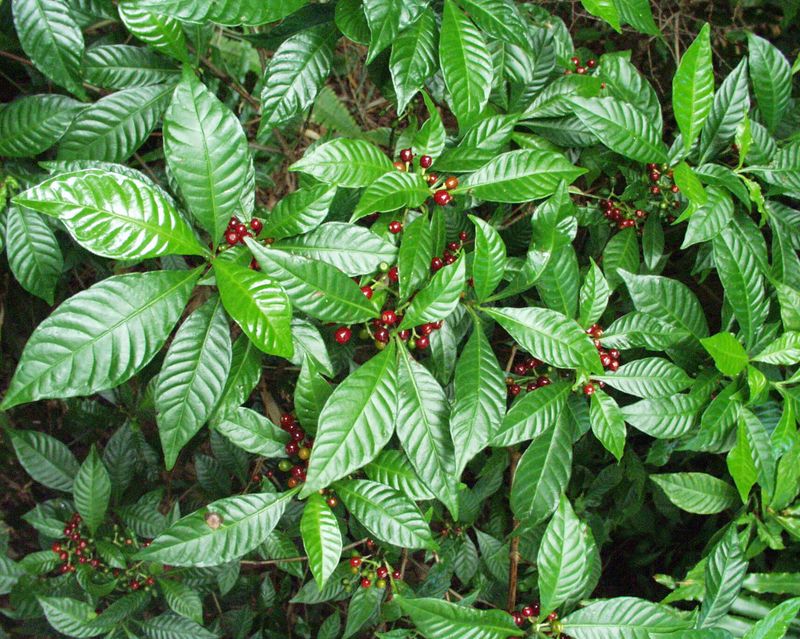
Shaded front yards in Florida can be tricky to plant well, but Wild Coffee handles low-light conditions with real style. Psychotria nervosa is a medium-sized native shrub with some of the most beautifully textured foliage you will find on any Florida native plant.
The leaves are deeply veined, almost quilted in appearance, and carry a rich dark green color that stays vibrant even under dense tree canopy.
Small clusters of white flowers appear throughout the year and are followed by bright red berries that ripen in fall and winter. According to the Florida Native Plant Society, these berries are a valuable food source for migratory and resident birds, including thrushes and vireos.
That kind of consistent wildlife support is hard to overstate in a garden setting.
Wild Coffee handles Florida’s humidity extremely well and rarely struggles with pests or disease when planted in appropriate conditions. It prefers partial to full shade and moist, well-drained soil enriched with organic matter, conditions that are easy to create beneath existing trees in a front yard.
Planting in March gives this shade-lover a gentle start before the harshest summer heat arrives. Water regularly during the first few months, keep a layer of mulch over the roots, and enjoy watching a beautiful, low-fuss native shrub gradually settle into its new home.
7. Dwarf Yaupon Holly Creates A Neat Evergreen Shrub
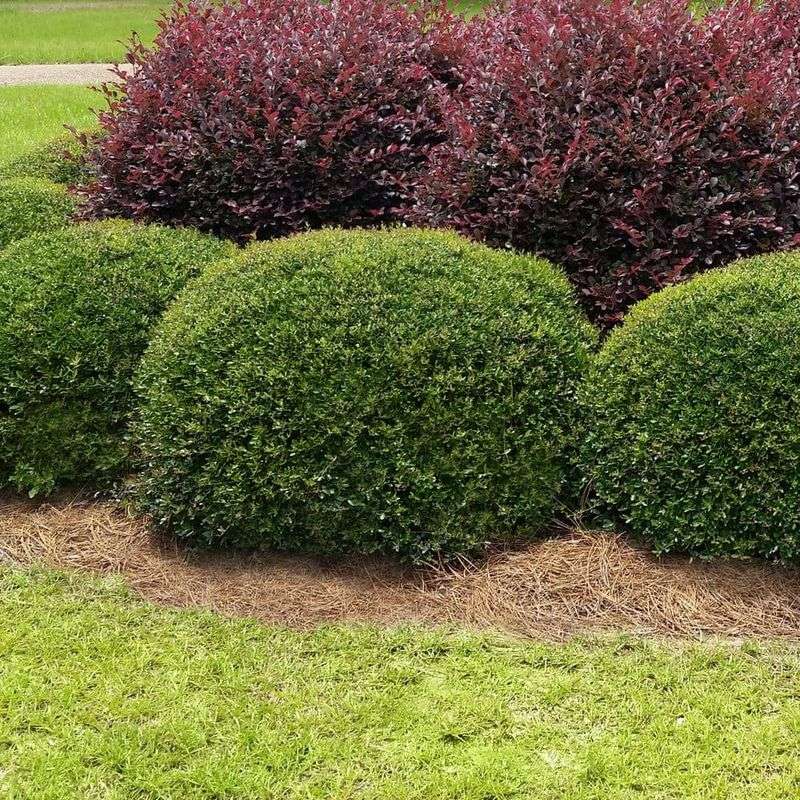
Neat, tidy, and completely unfussy, Dwarf Yaupon Holly is the kind of plant that makes a front yard look polished without demanding constant attention. Ilex vomitoria ‘Nana’ is a compact cultivar of the native Yaupon Holly, growing slowly into a dense, rounded mound of fine-textured evergreen foliage that holds its shape well even without regular pruning.
Its versatility is one of its biggest selling points. Use it as a low border hedge along a walkway, as a foundation planting near the house, or as a repeated element throughout a front yard design for visual consistency.
The small leaves create a refined texture that pairs well with larger-leaved plants nearby.
The University of Florida IFAS Extension notes that Yaupon Holly is one of the most salt-tolerant native shrubs in Florida, making it a strong performer in coastal communities as well as inland neighborhoods. It thrives in full sun to full shade, handles Florida’s sandy soils and humid summers without complaint, and supports caterpillars of Henry’s Elfin butterfly.
March is an ideal time to get these shrubs in the ground. They establish quickly in warming spring soil and will be well-anchored before summer heat intensifies.
Water consistently through the first season, then enjoy years of low-maintenance beauty.
8. Buttonbush Produces Unique Flowers Pollinators Love
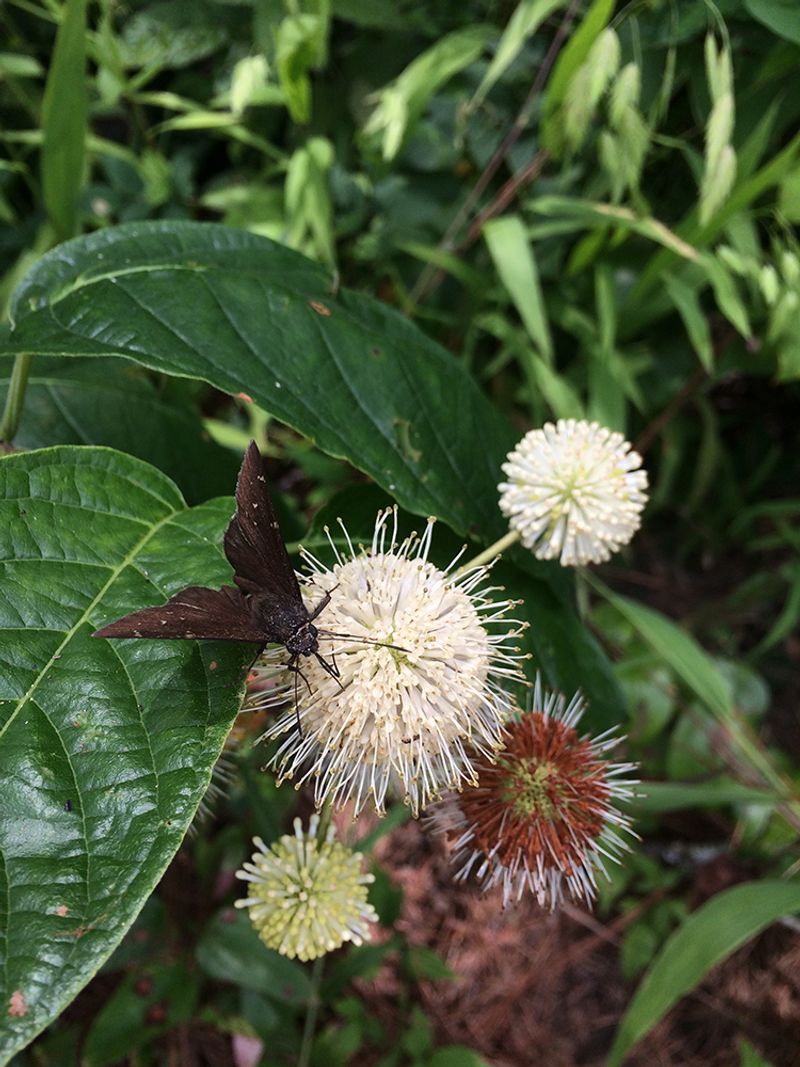
Some plants earn their spot in a garden purely on the strength of one unforgettable feature, and Buttonbush is one of them. Cephalanthus occidentalis produces the most distinctive flowers of any native Florida shrub, round, white, pincushion-like globes that look almost otherworldly when covered in bees, butterflies, and other pollinators on a warm summer afternoon.
This is a shrub for the gardener who genuinely loves wildlife. Research from university horticulture programs confirms that Buttonbush supports an impressive range of pollinators, including native bees, honeybees, sphinx moths, and multiple butterfly species.
The seeds that follow the flowers are eaten enthusiastically by ducks and shorebirds, adding another layer of ecological value.
Adaptability to moist or periodically wet soils makes Buttonbush particularly valuable in Florida landscapes where drainage can be unpredictable. It thrives in areas that stay damp, making it an excellent choice near rain gardens, retention areas, or low spots in a front yard where other plants might struggle.
Planting in March allows roots to settle before the rainy season begins in June, which is genuinely helpful for a moisture-loving shrub. Give it full sun to partial shade, keep it well-watered through its first summer, and prepare to be amazed by the pollinator activity it generates year after year.
9. Saw Palmetto Adds Tough Native Texture To Landscapes
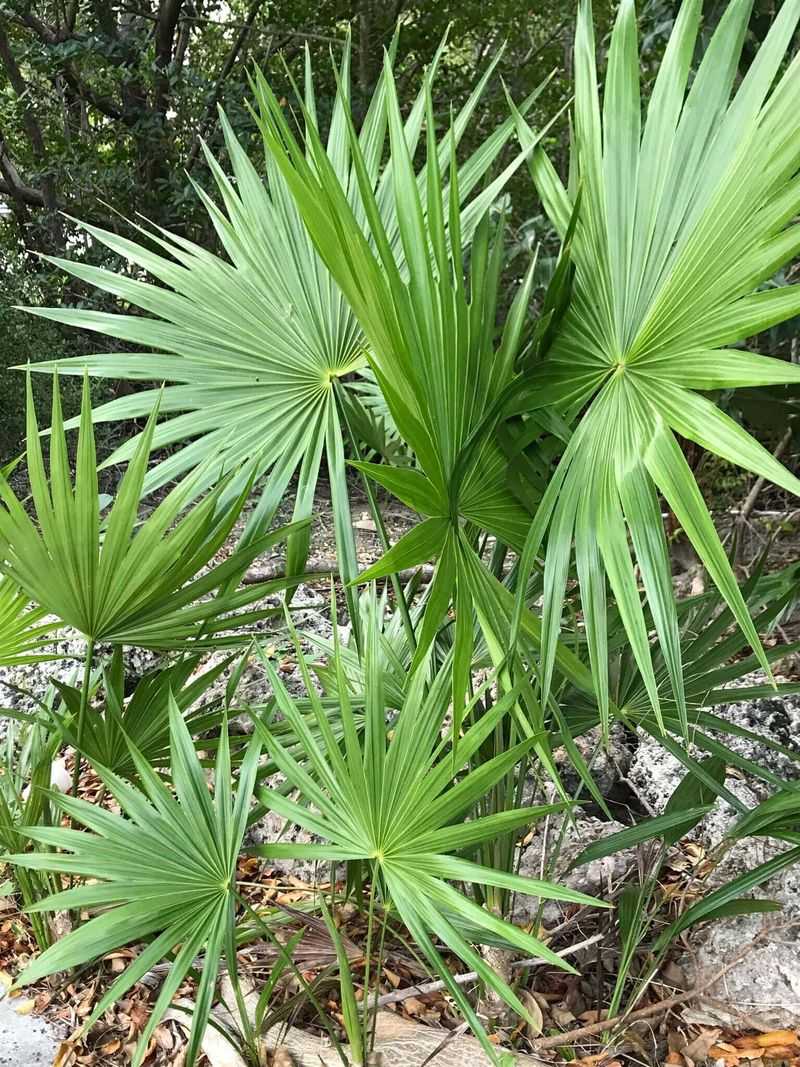
Nothing says Florida quite like a stand of Saw Palmetto catching the afternoon light with its fan-shaped fronds. Serenoa repens is one of the most iconic plants in the state’s native ecosystem, found naturally from dry scrublands to coastal dunes, and it brings that same rugged, sun-baked character to front yard landscapes with zero apology.
Extreme durability is what defines this plant. The USDA Plants Database and University of Florida IFAS Extension both document its remarkable tolerance for drought, poor sandy soils, salt spray, and intense heat.
Once established, Saw Palmetto essentially takes care of itself, which makes it one of the most genuinely low-maintenance native plants available to Florida homeowners.
The ecological role of this plant is enormous. Its dense thickets provide shelter for gopher tortoises, Florida scrub-jays, and many small mammals.
The creamy white flower clusters that appear in spring attract large numbers of native bees, and the dark fruits are consumed by black bears, raccoons, and various bird species throughout fall.
March planting suits Saw Palmetto well because the warming soil encourages strong early root growth before summer heat peaks. Choose a sunny, well-drained spot, avoid overwatering once established, and let this ancient Florida native bring authentic, textured beauty to your front yard for decades to come.