8 Privacy Plants That Thrive In Florida Heat And Humidity
Spending time in the backyard is one of the small comforts many homeowners enjoy. A quiet cup of coffee in the morning, an evening breeze after a long day, or a weekend spent tending the garden can turn a simple yard into a favorite part of the home.
In many Florida neighborhoods, though, houses sit close together and open spaces can feel more exposed than relaxing.
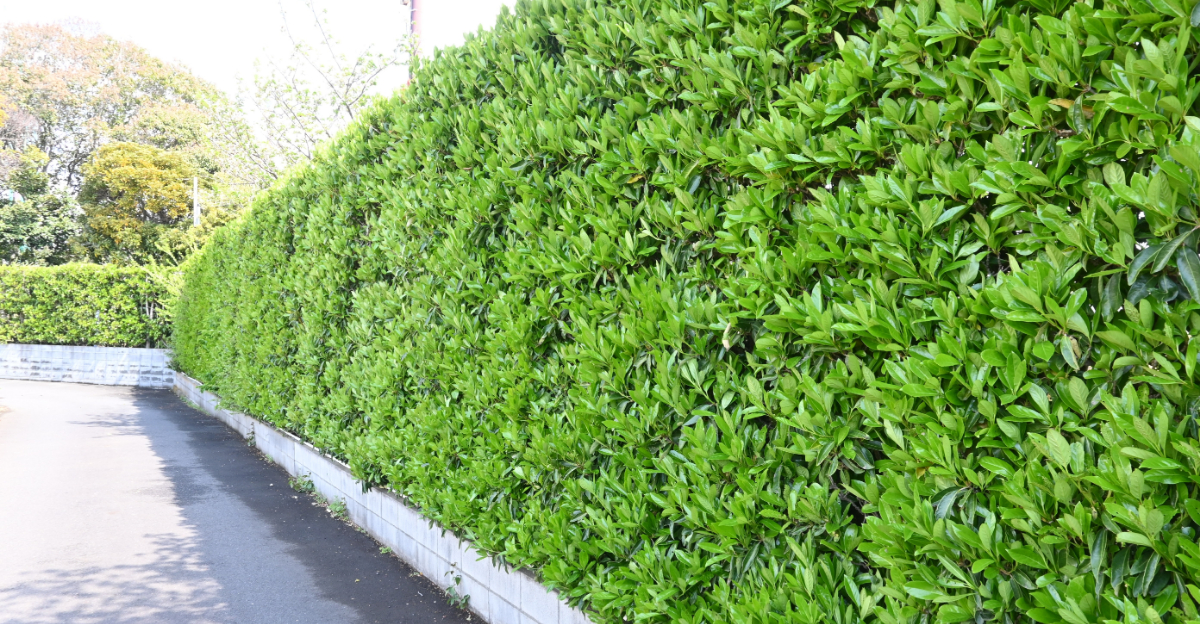
Plants offer a natural way to create privacy without making the yard feel closed off. A well chosen hedge or a row of shrubs can soften the view, block nearby windows, and add greenery at the same time.
The challenge is that Florida’s heat, humidity, and intense sun can be tough on plants that are not suited for the climate.
Fortunately, several dependable plants handle those conditions well and grow thick enough to provide the quiet backyard separation many Florida gardeners are hoping for.
1. Podocarpus And Its Tall Privacy Screen
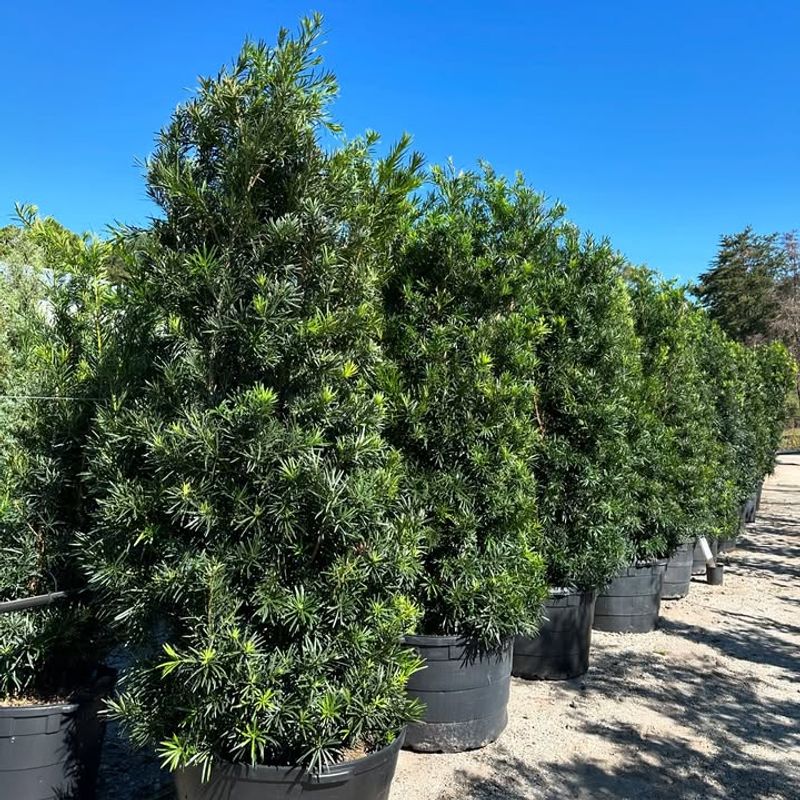
If you want a privacy screen that looks sharp year-round without demanding too much of your time, Podocarpus might just become your new favorite plant. Often called the “Japanese yew” or “Buddhist pine,” this evergreen grows in a naturally upright, columnar shape that makes it ideal for tight spaces along fences or property lines throughout Florida.
It also has a neat, tidy look that works especially well in formal landscapes, entry gardens, and side yards where space can feel limited. It also performs best in full sun, prefers well-drained acidic soil, and generally often looks cleaner when hand-pruned instead of being clipped with hedge shears.
Podocarpus handles Florida’s heat and humidity like a champ. It grows well in full sun or partial shade, making it flexible for different yard conditions.
Once established, it is surprisingly drought-tolerant, though regular watering during the dry season helps it grow faster and fuller.
In Florida, Podocarpus typically grows between 15 and 40 feet tall, but most homeowners keep it trimmed to a manageable 6 to 10 feet for a clean, formal hedge look. It responds really well to pruning, so shaping it into a perfectly uniform wall of green is easy.
Pests rarely bother it, and it handles salt spray reasonably well, which is a bonus for coastal Florida residents. Plant it about 3 feet apart for a solid, dense screen that fills in nicely over time.
2. Sweet Viburnum Filling In Fast
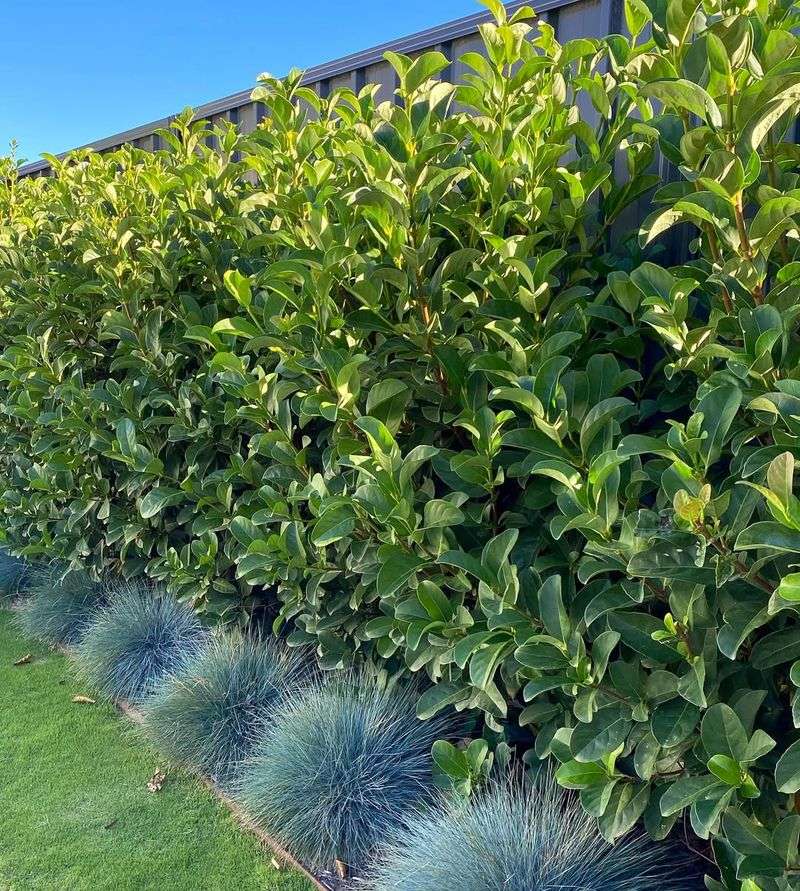
Walk past a Sweet Viburnum in bloom and you will immediately understand how it earned its name. The clusters of small, creamy white flowers release a sweet fragrance that drifts through the yard on warm Florida evenings, making this privacy plant as pleasant for your nose as it is for your eyes.
Sweet Viburnum, known scientifically as Viburnum odoratissimum, is one of the most popular hedge plants across Florida for good reason. It grows quickly, reaching heights of 10 to 20 feet, and its large, glossy leaves create a thick, dense wall that blocks views and buffers noise effectively.
It thrives in Florida’s heat and handles humidity without skipping a beat. In Florida, UF/IFAS also notes it is not considered a problem species, which gives gardeners extra confidence when using it.
Your Florida Garden Changes Every Week. Your Plan Should Too.
Gardening in Florida changes quickly throughout the season. Every Friday you’ll receive a simple weekly plan showing exactly what to plant, prune, fertilize, harvest, and protect so you never miss the right timing.
Planting Sweet Viburnum is straightforward. It prefers full sun to partial shade and does well in most Florida soil types, though it appreciates well-draining ground.
Water it regularly while it gets established, and after that, it becomes fairly low-maintenance. Trim it a couple of times a year to keep the shape tidy and encourage thicker growth.
Birds love the small red berries that appear after flowering, so your privacy screen doubles as a mini wildlife habitat right in your own Florida yard.
3. Awabuki Viburnum With Glossy Green Foliage
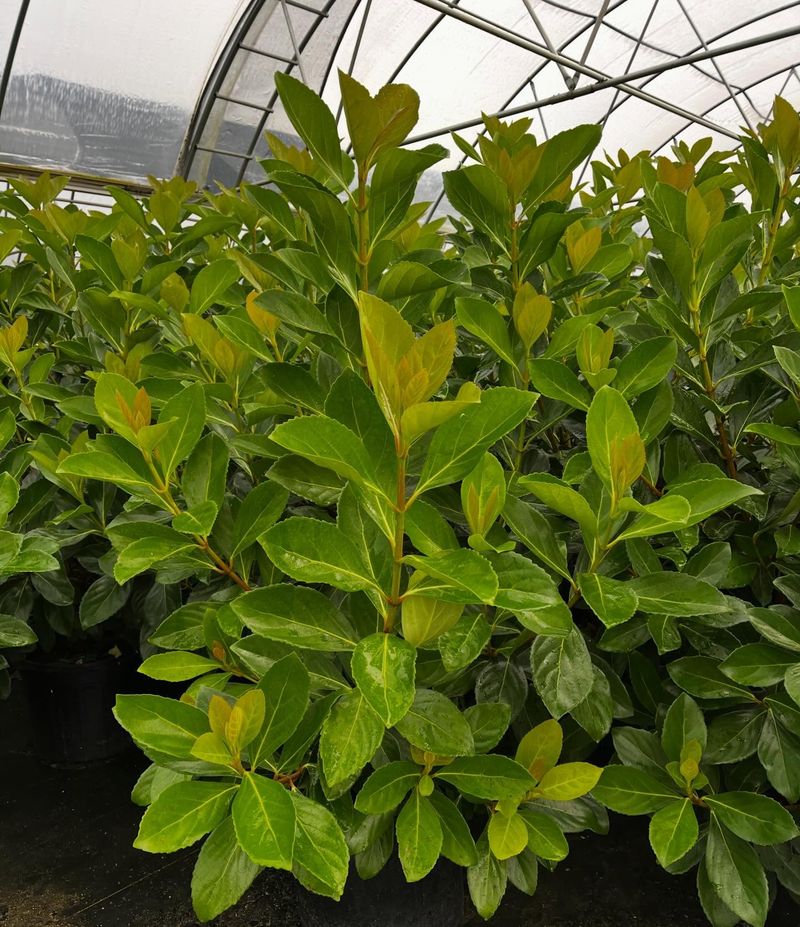
Imagine a privacy hedge so glossy it almost looks polished. That is exactly the impression Awabuki Viburnum gives, and it is one of the reasons Florida homeowners fall in love with this plant at first sight.
The leaves are noticeably larger and shinier than those of its cousin Sweet Viburnum, giving the hedge a bold, lush, almost tropical appearance that suits Florida landscapes perfectly. In spring, it also produces fragrant white flowers, and the red fruit later darkens as it ripens, adding another season of interest for homeowners too.
Awabuki Viburnum, a cultivar of Viburnum awabuki, is a powerhouse when it comes to screening. It grows faster and denser than many other viburnum varieties, reaching heights of up to 20 feet under the right conditions.
In Florida’s warm climate, it grows well in full sun or partial shade and is widely used as a dense screening plant when matched to the right site and given good air circulation.
One practical tip for Florida gardeners: space Awabuki plants about 4 to 5 feet apart to allow room for their naturally wide growth habit while still achieving a solid, unbroken screen. Fertilize two to three times a year with a balanced slow-release fertilizer to keep the foliage looking vibrant and deep green.
This plant also handles salt spray reasonably well, making it a solid choice for Florida coastal properties where conditions can be tough on less resilient plants.
4. Walter’s Viburnum For Native Privacy
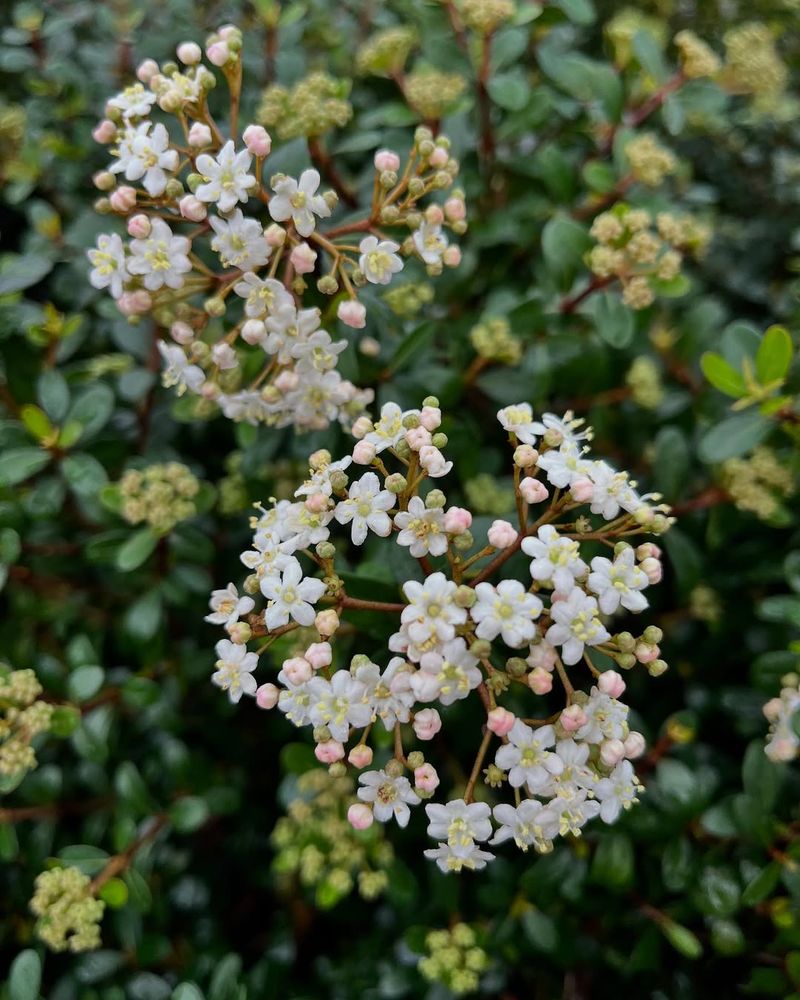
Not every privacy plant needs to be a foreign import. Walter’s Viburnum is a Florida native, and that helps explain why it handles many of the heat, rain, and seasonal swings common in Florida landscapes.
Gardeners who want a low-maintenance, eco-friendly privacy screen absolutely should give this plant serious consideration. Its dense branches also give songbirds places to nest, and the plant can be pruned into a hedge or small tree, which gives Florida gardeners more flexibility in tighter spaces.
Viburnum obovatum, its scientific name, is a multi-stemmed evergreen shrub that typically grows 8 to 15 feet tall. In late winter to early spring, it puts on a spectacular show of tiny white flowers that cover the entire plant, attracting native bees and butterflies.
The display is brief but genuinely beautiful, and it adds seasonal interest that most privacy hedges simply cannot offer.
Because Walter’s Viburnum is native to Florida, it requires very little fertilizer and is naturally resistant to most local pests and diseases. It grows well in full sun or partial shade and tolerates wet soil better than many other hedge plants, which is a real advantage in Florida’s rainy season.
For a wildlife-friendly, naturally beautiful privacy screen that feels like it belongs in the Florida landscape, Walter’s Viburnum is hard to beat. Plant it and watch your yard come alive.
5. Wax Myrtle And Its Soft Natural Screen
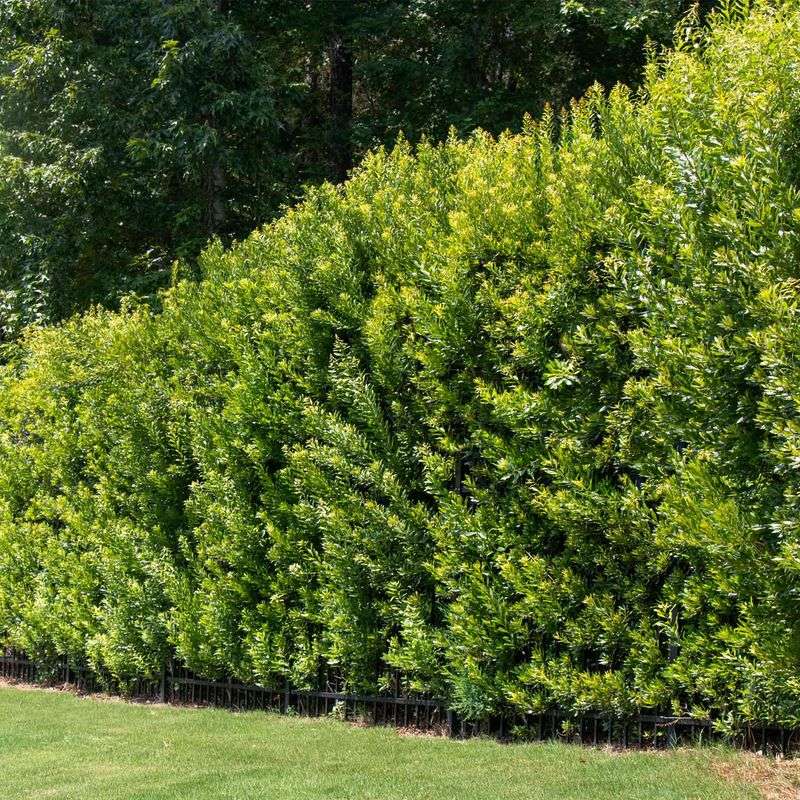
Few plants in Florida grow as fast or as willingly as Wax Myrtle. This native evergreen shrub can shoot up several feet in a single growing season, making it one of the quickest ways to get privacy in a new yard or fill in a gap in an existing hedge.
If patience is not your strong suit, Wax Myrtle is your plant.
Morella cerifera, commonly called Wax Myrtle or Southern Bayberry, is a tough, adaptable plant that grows naturally across Florida in a wide range of conditions. It handles wet and dry soils, full sun and partial shade, and everything in between.
The aromatic leaves release a pleasant, slightly spicy fragrance when brushed against, which is a nice bonus during a backyard stroll. It also tolerates salt spray well, supports butterflies as a host plant, and female plants produce berries birds rely on.
Wax Myrtle typically reaches 10 to 20 feet tall, but it responds well to trimming and can easily be maintained at a shorter height. Birds absolutely love the small, waxy blue-gray berries that appear in fall and winter, making this privacy screen a lively gathering spot for local wildlife.
For Florida homeowners who want relatively fast results, native plant credentials, and fairly low upkeep, Wax Myrtle covers a lot of what gardeners look for in a privacy plant. It is a workhorse of the Florida landscape.
6. Yaupon Holly Tough In Florida Heat
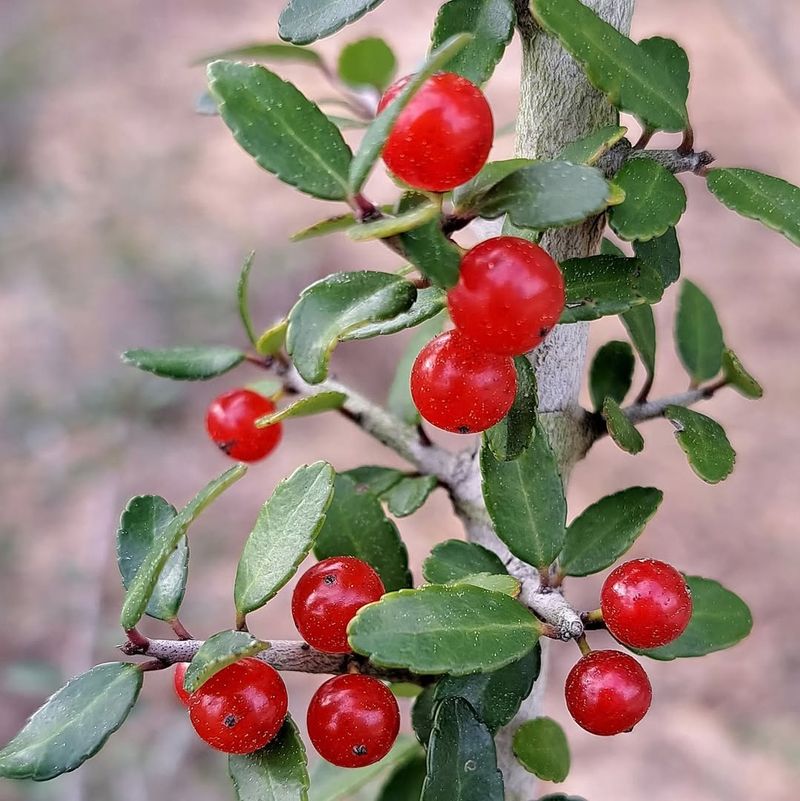
Tough, adaptable, and surprisingly underused, Yaupon Holly deserves a lot more attention from Florida homeowners looking for reliable privacy plants. This native evergreen is one of the most resilient shrubs you can put in the ground in Florida, tolerating drought, flooding, salt spray, poor soil, and intense summer heat without so much as a complaint.
It is one of the more durable native shrubs Florida gardeners can grow under a wide range of normal landscape conditions.
Ilex vomitoria, its scientific name, can grow anywhere from 3 to 25 feet depending on the cultivar you choose. For a privacy screen, the taller varieties work beautifully, forming a dense, fine-textured wall of small, dark green leaves.
Female plants produce bright red berries in winter that persist on the branches for months and attract cedar waxwings and other birds to your Florida yard.
Yaupon Holly responds exceptionally well to pruning, which means you can shape it into a formal hedge or let it grow in a more natural, flowing form depending on your preference. It grows in full sun to partial shade, though denser growth for privacy usually develops with more light.
Fun fact: Yaupon Holly is the only caffeinated plant native to North America, and Indigenous peoples brewed it into tea for centuries. A truly remarkable plant for Florida gardens.
7. Simpson’s Stopper With Dense Tropical Growth
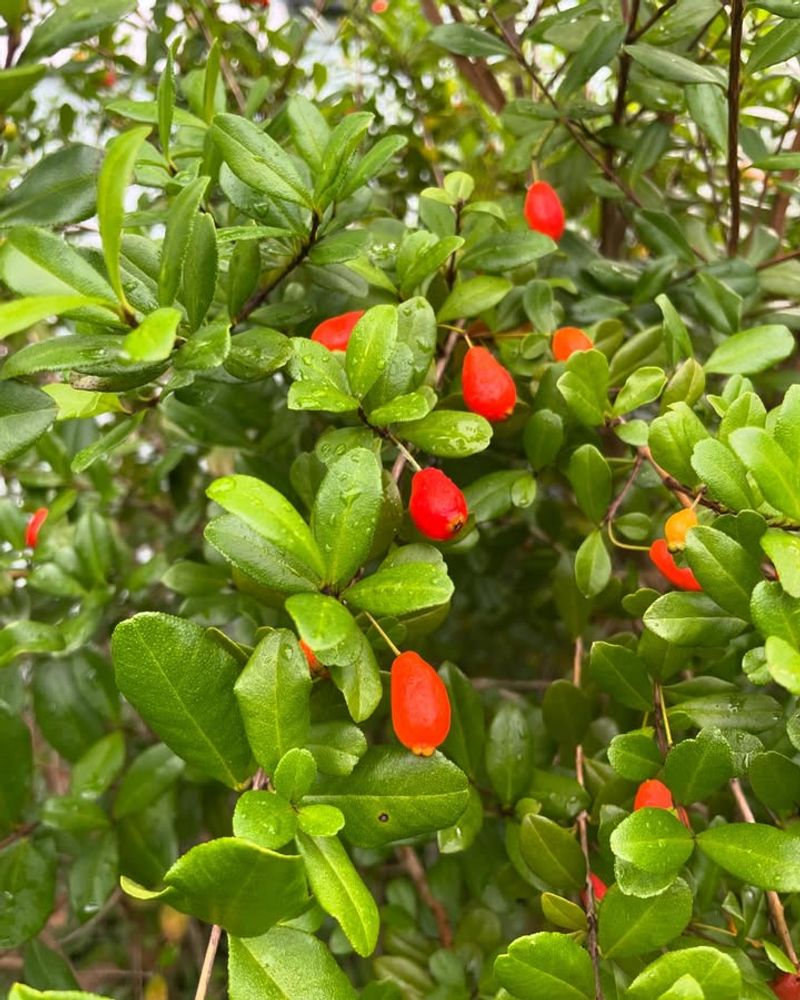
There is something quietly special about Simpson’s Stopper that makes experienced Florida gardeners smile when they see it. This native evergreen shrub has been growing in Florida’s hammocks and coastal areas long before anyone thought to use it as a hedge, and its natural toughness makes it one of the most trustworthy privacy plants available in the state today.
Mature plants also develop attractive peeling bark, and full sun usually keeps the foliage denser for a fuller screening effect.
Myrcianthes fragrans grows at a moderate pace, eventually reaching 10 to 15 feet tall, though it is easy to keep shorter with occasional trimming. The small, glossy leaves are densely packed, and in spring and summer the plant produces delicate white flowers with a sweet, spicy fragrance that fills the surrounding area.
Small orange-red berries follow the flowers and attract mockingbirds, catbirds, and other Florida wildlife.
Simpson’s Stopper handles Florida’s heat and humidity effortlessly. It tolerates salt spray, making it a go-to choice for coastal Florida properties, and it can handle brief periods of drought once it is well established.
Plant it in full sun to partial shade, water it regularly during the first year, and then mostly leave it alone. It is not a plant that demands constant attention.
For a privacy screen that feels natural and fits beautifully into the Florida environment, Simpson’s Stopper is an outstanding choice.
8. Cleyera For Year-Round Evergreen Privacy
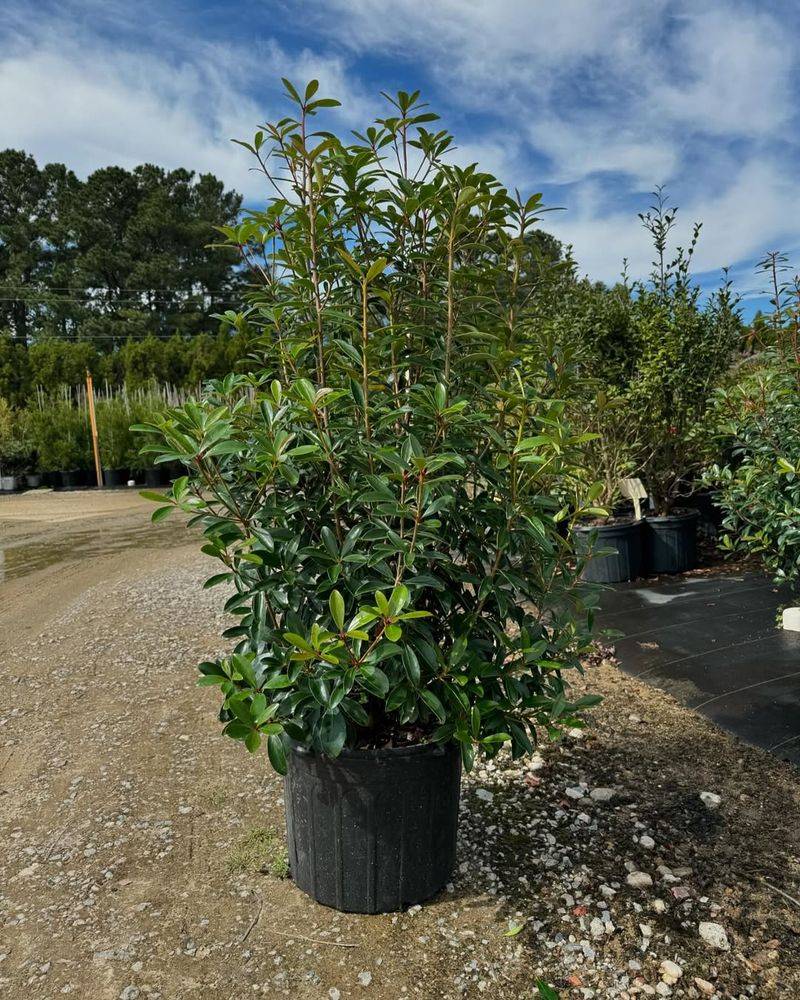
Most Florida gardeners discover Cleyera by accident and then wonder why they had not planted it years earlier. This handsome evergreen shrub brings something a little different to the privacy hedge conversation: striking foliage that emerges with a rich bronze or reddish tint before maturing into deep, glossy green.
The color contrast between new and old growth gives the plant a layered, textured look that most solid hedges simply do not have.
Cleyera japonica grows at a moderate rate, typically reaching 8 to 15 feet tall, and it forms a naturally dense, bushy shape without requiring heavy pruning to stay full. In Florida, it performs best in partial shade to full sun, though it appreciates some protection from the harshest afternoon heat in South Florida.
The humidity that wilts other plants barely bothers Cleyera at all.
Small, creamy white flowers appear in spring and release a light fragrance that adds another sensory layer to your landscape. Cleyera is relatively pest-resistant and does not demand much fertilizer to stay healthy and attractive.
It works especially well along fence lines, the sides of homes, or anywhere a refined, polished-looking privacy screen is needed. For Florida homeowners who want privacy with a touch of elegance, Cleyera can be a strong choice in the right setting.