These Low-Water Flowers Keep Their Color In Harsh Texas Heat
Texas heat has a way of exposing weak plants fast. A flower that looks great in mild weather can start fading, wilting, or giving up altogether once the sun gets intense and the rain disappears.
That is why low-water flowers are such a smart choice for Texas gardens. They do not just survive tough conditions.
The best ones keep showing off with bright color even when the weather is doing its worst.
For gardeners, that kind of staying power matters. Nobody wants to spend time and money planting a beautiful bed only to watch it lose its charm halfway through summer.
Flowers that can handle heat and get by with less water make it much easier to keep a yard looking lively without constantly dragging out the hose. They also fit well with the way many Texans want to garden now, using less water while still enjoying plenty of color.
The real appeal is that these plants do not force you to choose between beauty and toughness. With the right picks, you can have both, and your garden can still look bright and full even during the harshest stretch of Texas summer.
1. Moss Rose
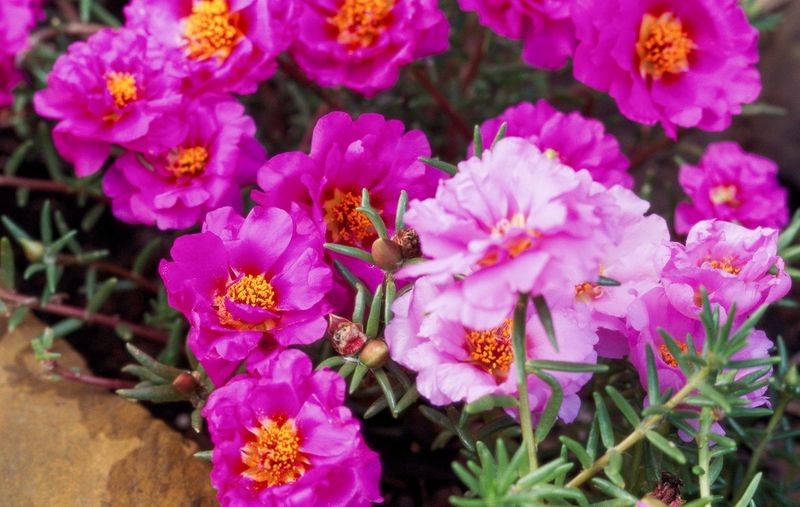
Forget everything you thought you knew about keeping flowers alive in the Texas heat. Moss rose is practically built for it.
This low-growing beauty produces silky, cup-shaped blooms in shades of red, pink, yellow, orange, and white, often all in the same garden bed.
What makes moss rose so special is its succulent-like leaves. Those thick, fleshy stems and foliage store water the same way a cactus does, which means the plant can go days without a drink and still look stunning.
That trait makes it one of the most reliable flowers you can grow anywhere in Texas.
Moss rose loves full sun and actually performs better in poor, dry soil than in rich, moist conditions. Overwatering is the one thing that can cause problems.
Plant it in a spot that gets at least six hours of direct sunlight each day, and it will reward you with nonstop color from late spring through the first cool snap of fall.
It works beautifully in garden borders, hanging baskets, and containers on sunny patios. You can also let it spread across rocky slopes or dry garden patches where other flowers struggle.
Moss rose self-seeds, so once you plant it, it often comes back year after year with very little effort on your part.
2. Texas Lantana
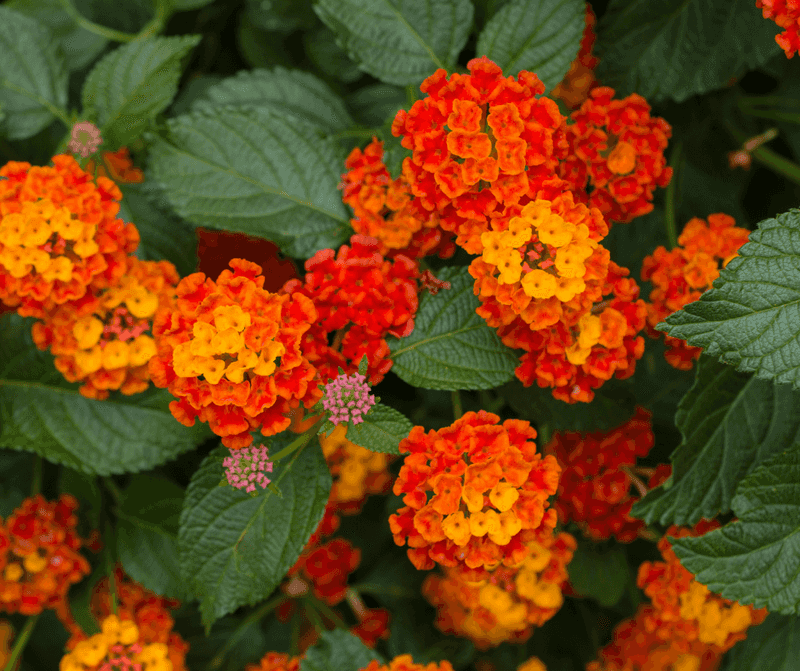
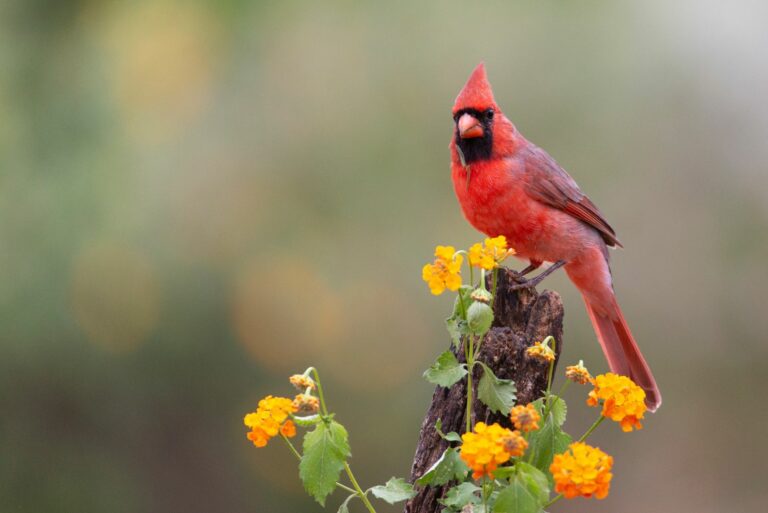
Native to the Lone Star State, Texas lantana is one of those plants that seems to thrive on neglect. The hotter and drier things get, the more this tough shrub blooms.
Its clusters of tiny flowers come in vivid shades of orange, red, and yellow, creating a warm, tropical look that stands out in any yard.
One of the biggest perks of growing Texas lantana is the wildlife it attracts. Butterflies absolutely love it.
On a warm summer afternoon in Texas, you might spot a dozen different butterfly species fluttering around a single lantana plant. That kind of natural activity adds a whole new layer of life and beauty to your garden.
Your Texas Garden Changes Every Week. Your Plan Should Too.
Gardening in Texas changes quickly throughout the season. Every Friday you’ll receive a simple weekly plan showing exactly what to plant, prune, fertilize, harvest, and protect so you never miss the right timing.
Texas lantana is drought-tolerant once it gets established, which usually takes just one growing season. After that, it can handle long dry stretches without any help from you.
It thrives in full sun and well-drained soil, making it a natural fit for the rocky or sandy ground found across much of Texas.
This plant grows into a rounded shrub that can reach two to four feet tall, making it great for borders, slopes, or low hedges. Trim it back lightly in early spring to encourage fresh, bushy growth.
It’s a low-maintenance powerhouse that blooms from spring all the way through late fall.
3. Blanket Flower
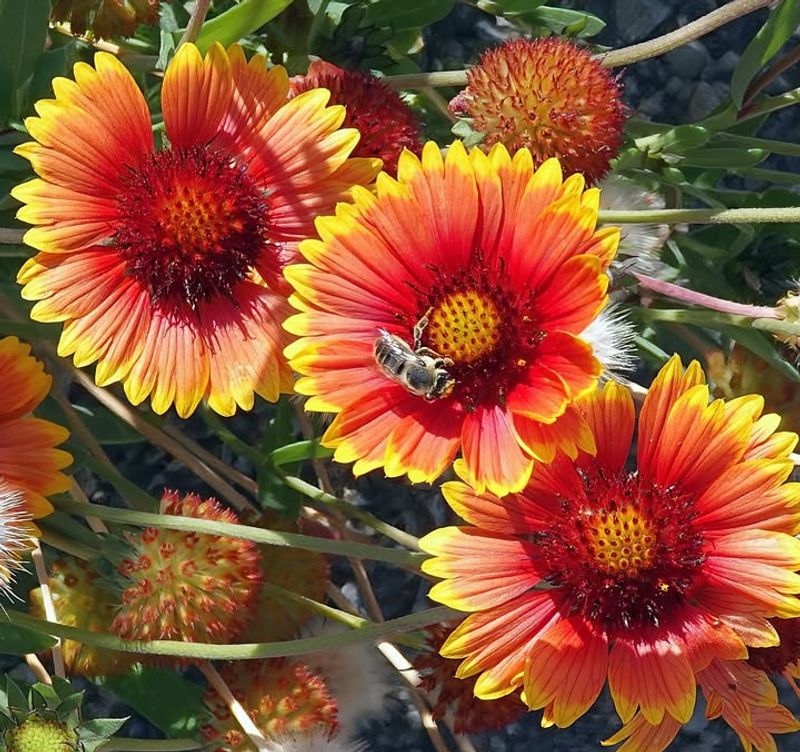
Walk through a Texas wildflower meadow in early summer and you’ll likely spot blanket flower waving in the breeze. Those bold red and yellow petals look like a patchwork quilt tossed across the landscape, which is exactly how this cheerful plant got its name.
Blanket flower is a true Texas native, and it shows. It handles poor, sandy, or rocky soil without complaint.
It laughs in the face of intense summer heat and keeps right on blooming even when rainfall is scarce. Most flowers fade or go dormant during the harshest part of a Texas summer, but blanket flower just keeps going.
Full sun is where this plant shines brightest. It needs at least six hours of direct sunlight daily and actually does better with less water than more.
Overwatering or planting in heavy clay soil can cause root rot, so well-drained ground is a must. Once established, it requires almost no supplemental irrigation.
Blanket flower is a short-lived perennial, but it self-seeds freely, so new plants pop up each season to fill in any gaps. It works well in naturalized areas, wildflower gardens, and along driveways or fences.
Pollinators like bees and butterflies are drawn to its bright blooms, making it both a beautiful and ecologically valuable addition to any Texas garden.
4. Blackfoot Daisy
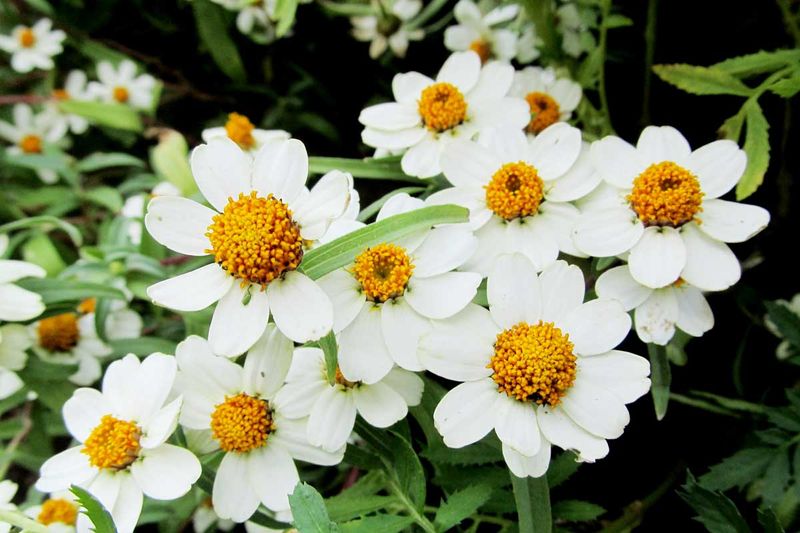
There’s something quietly charming about blackfoot daisy. It doesn’t show off with oversized blooms or flashy colors.
Instead, it covers itself in dozens of small white flowers with bright yellow centers, creating a soft, cheerful look that works in almost any garden style.
What really sets blackfoot daisy apart is its incredible toughness. This compact perennial is native to the rocky, limestone-rich soils of central and west Texas, so it’s naturally adapted to the exact conditions that challenge most garden flowers.
Dry spells, poor soil, and relentless summer sun are all things blackfoot daisy handles without missing a beat.
It blooms from early spring all the way through fall, making it one of the longest-blooming native plants you can grow in Texas. The flowers carry a light honey-like scent that attracts bees and other pollinators.
Even during the hottest weeks of a Texas summer, this plant holds its color and stays looking neat and tidy.
Blackfoot daisy grows about one foot tall and spreads to about two feet wide, making it perfect for rock gardens, garden edges, or planting between stepping stones. It needs excellent drainage and full sun to perform its best.
Once established, it rarely needs watering except during extended dry periods, making it one of the most water-smart choices for Texas landscapes.
5. Coreopsis
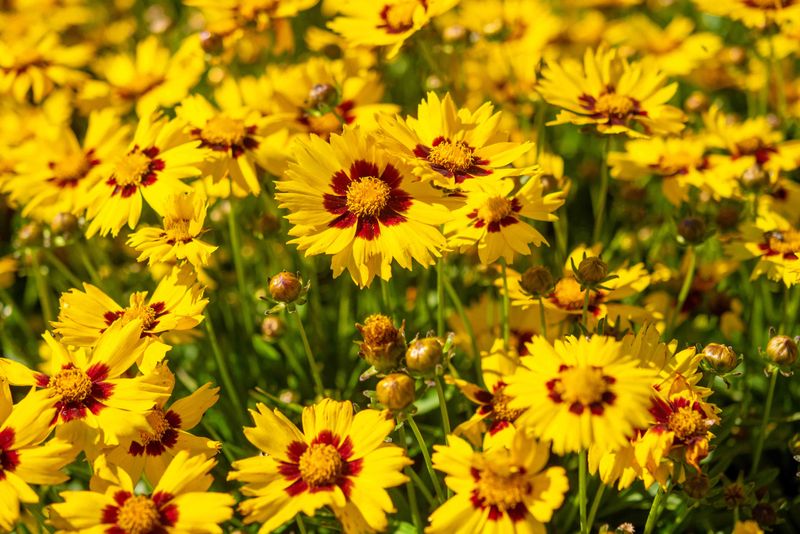
If sunshine had a flower, it would look exactly like coreopsis. Those bold, bright yellow blooms are practically impossible to overlook, and the good news is that growing them in Texas is about as easy as it gets.
Coreopsis is tough, cheerful, and surprisingly low-maintenance.
Also known as lanceleaf coreopsis, this perennial thrives in full sun and handles dry conditions with ease. Once it gets established in your yard, it needs very little supplemental watering.
That makes it a smart choice for Texas gardeners who want color without a high water bill or constant upkeep.
Coreopsis blooms heavily in spring and early summer, then takes a brief rest before pushing out a second flush of flowers in fall. Deadheading, which means removing spent blooms, encourages even more flowers to form.
You don’t have to do it, but a little trimming goes a long way toward extending the bloom season.
This plant grows about one to two feet tall and looks stunning when planted in masses along walkways, in meadow-style gardens, or mixed with other Texas natives. It tolerates poor, sandy, or clay soil as long as drainage is decent.
Coreopsis is also a magnet for butterflies and bees, adding lively pollinator activity to any sunny corner of your Texas landscape throughout the growing season.
6. Zinnias
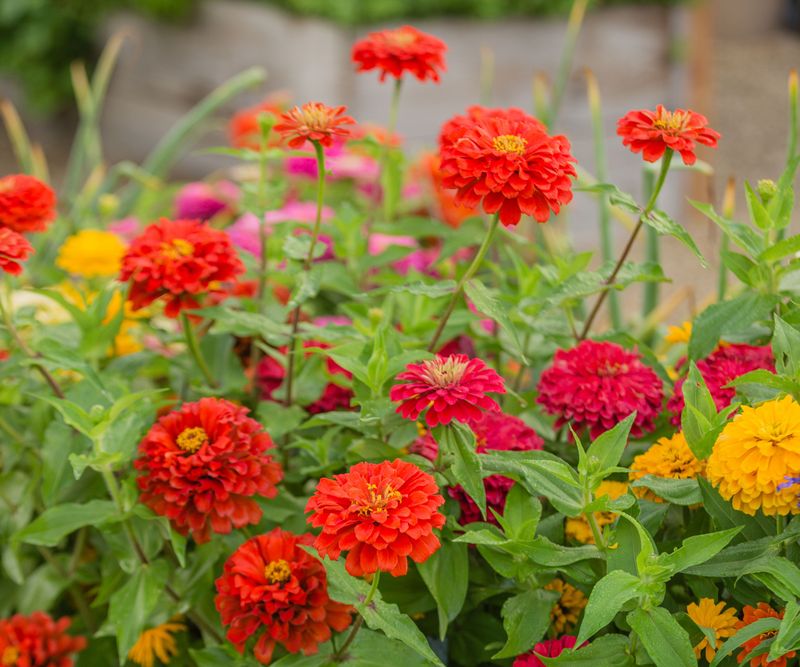
Few flowers bring as much color to a Texas summer garden as zinnias. They come in nearly every shade imaginable, from deep red and coral orange to soft lavender and bright white.
Plant a row of them along a fence or garden border, and you’ve got an instant burst of color that lasts for months.
Zinnias are warm-season annuals that actually prefer hot weather. While some flowers sulk and slow down when Texas temperatures climb into the 90s, zinnias just keep blooming.
They’re one of the few flowers that seem to genuinely enjoy the heat, making them a go-to choice for summer gardens across the state.
They grow best in full sun with well-drained soil and need moderate watering, especially when young. Once established, they become more drought-tolerant and can handle dry spells better than most annuals.
Watering at the base of the plant rather than overhead helps prevent powdery mildew, which can sometimes be an issue in humid parts of Texas.
Zinnias are also one of the easiest flowers to grow from seed. Direct sow them in the garden after the last frost, and they’ll sprout quickly in warm soil.
Butterflies and hummingbirds are strongly attracted to zinnia blooms, which adds extra life and movement to your garden. Deadhead regularly to keep plants looking full and producing fresh flowers all season long.
7. Rock Rose
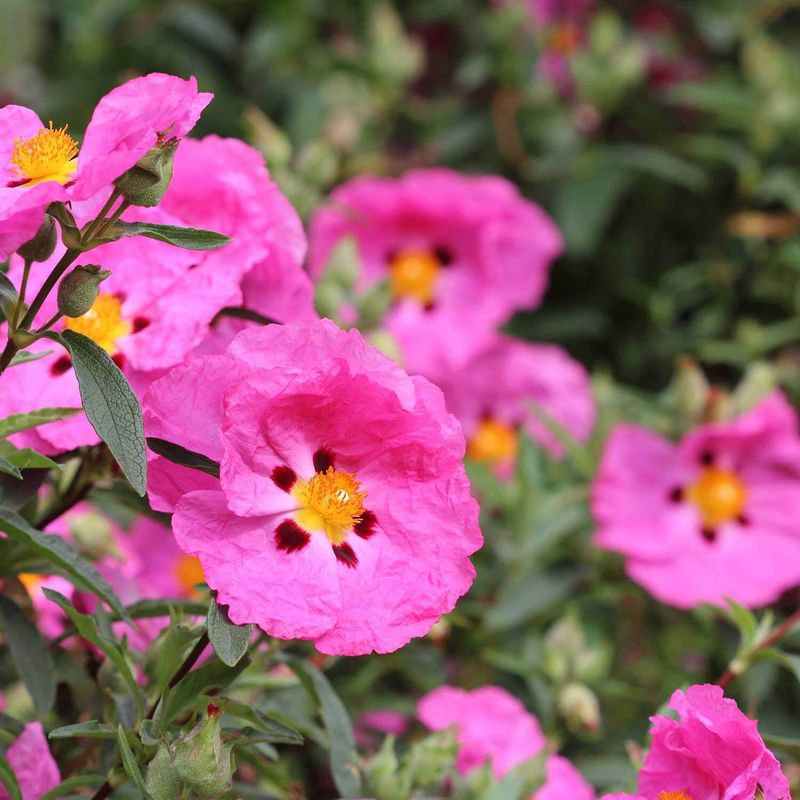
Picture a small hibiscus flower in the softest shade of pink you can imagine, and you’ve got a pretty good idea of what rock rose looks like. This Texas native shrub produces delicate, five-petaled flowers that open fresh each morning and add a touch of elegance to even the toughest, driest garden spots.
Rock rose is incredibly well-suited to the Texas climate. It grows naturally in the rocky limestone soils of the Hill Country and surrounding regions, so it’s already adapted to heat, thin soil, and long dry periods.
Established plants rarely need supplemental water, and they hold up impressively well even when temperatures are at their peak.
Unlike some native shrubs that look scraggly in summer, rock rose stays attractive throughout the season. It grows three to four feet tall and wide, making it useful as a low hedge, a foundation planting, or a focal point in a xeriscape design.
It tolerates partial shade as well, which gives gardeners more flexibility when choosing a planting spot.
Hummingbirds and butterflies are regular visitors to rock rose flowers, which adds a wonderful wildlife element to your yard. Prune it back in late winter to encourage vigorous new growth in spring.
With minimal effort and very little water, rock rose delivers season-long beauty that fits perfectly into any low-maintenance Texas garden plan.
8. Mexican Sunflower
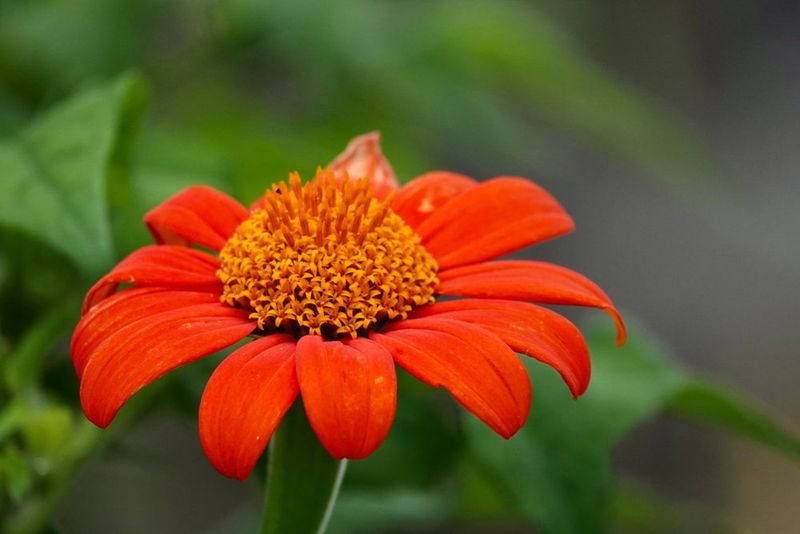
Bold, tall, and absolutely stunning in the summer heat, Mexican sunflower is the kind of plant that makes people stop and stare. Its large, velvety orange blooms sit on top of tall, sturdy stems that can reach four to six feet high, creating a dramatic backdrop in any Texas garden.
Originally from Mexico and Central America, this heat-loving annual is perfectly suited to Texas conditions. It thrives in full sun and handles high temperatures with ease.
Once established, it needs very little water to keep producing its vivid orange flowers from midsummer all the way through fall.
Mexican sunflower prefers well-drained soil and doesn’t like to sit in wet conditions for long. Plant it in a sunny spot with decent soil, water it during the first few weeks to help it get settled, and then step back and let it do its thing.
It’s a remarkably self-sufficient plant that rewards minimal care with maximum color.
Butterflies, particularly swallowtails, are strongly attracted to Mexican sunflower blooms. Hummingbirds visit frequently as well.
Because of its height, it works best at the back of a garden bed or along fences and walls where it can show off without blocking shorter plants. If you’re looking for a showstopper that can handle the full force of a Texas summer, Mexican sunflower is one of the best choices you can make.