8 Low-Maintenance Florida Backyard Ideas For Creating A Stylish, Relaxing Space
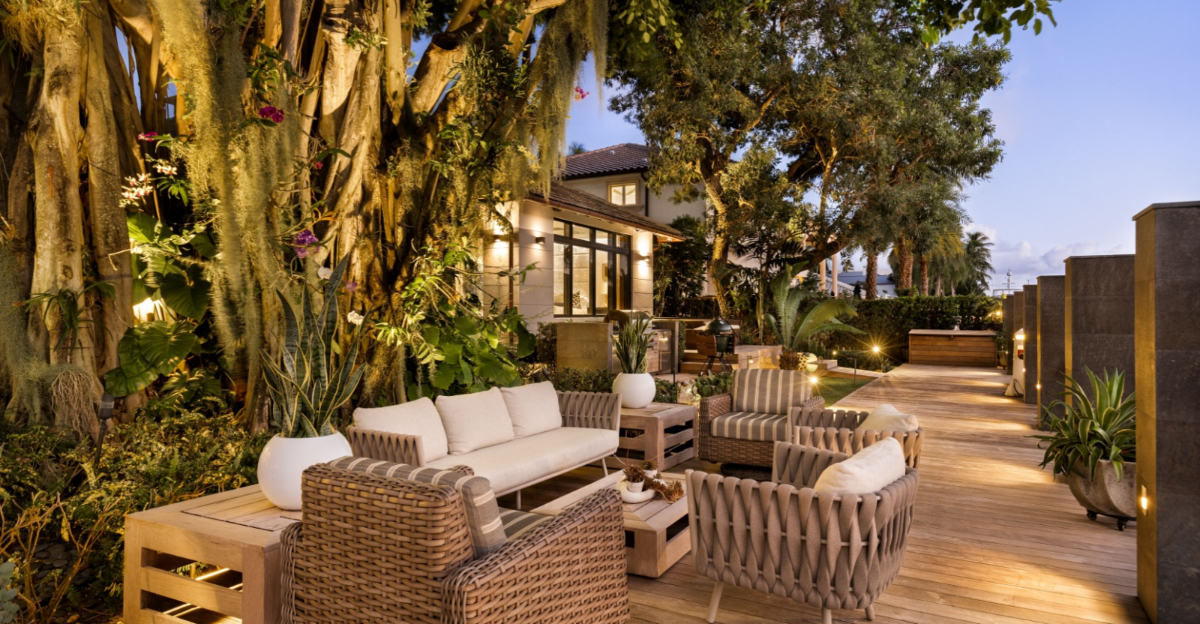
Step into a Florida backyard at golden hour and you can feel the potential in the air. Warm light filters through palms, a soft breeze moves across the patio, and the day finally slows down.
That space should feel like a private retreat, not another chore on your weekend list. In a climate built for outdoor living, style and simplicity belong together.
A beautiful yard does not need constant trimming, watering, and upkeep to look polished. Smart design choices can deliver texture, shade, and comfort without demanding hours of maintenance.
Think lush greenery that thrives in heat, clean hardscape lines that frame the space, and cozy seating that invites long conversations under the stars. With the right approach, your backyard becomes a low stress escape that looks elevated year round.
A few thoughtful updates can transform an ordinary patch of grass into a stylish, relaxing haven made for Florida living.
1. Tropical Lounge Corner
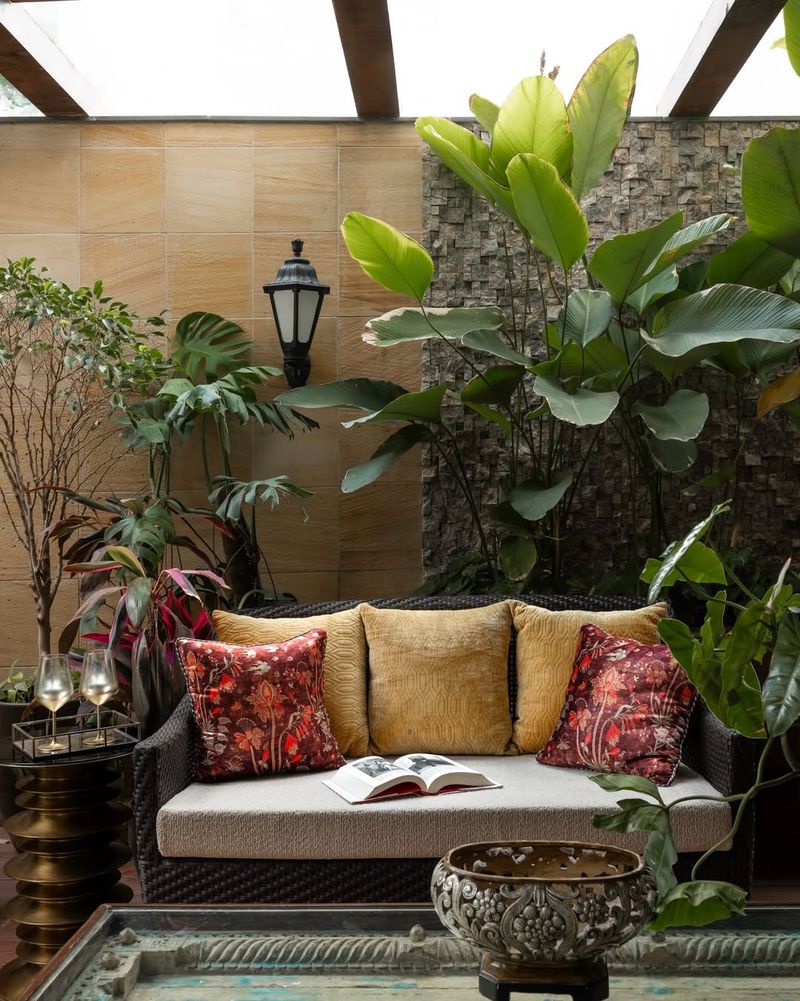
Picture yourself sinking into a cushioned chair surrounded by lush greenery that practically takes care of itself. A shaded lounge corner brings resort-style relaxation right to your backyard without demanding constant attention.
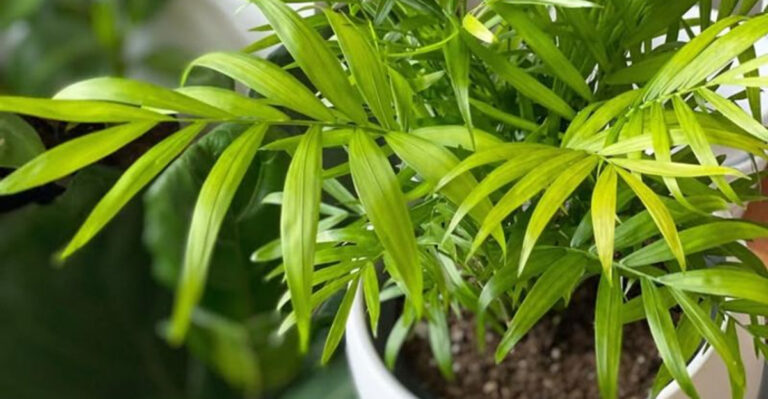
Areca palms create natural privacy screens while tolerating Florida’s humidity beautifully. These graceful palms thrive in partial shade and need minimal pruning compared to other screening options.
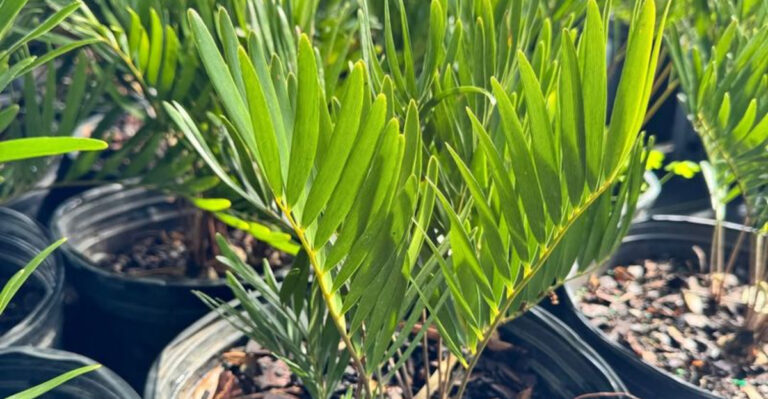
Coontie, a native Florida plant, adds texture at ground level and survives on rainfall alone once established.
Bird of paradise delivers dramatic tropical flair with its paddle-shaped leaves and occasional orange blooms. This plant handles heat exceptionally well and doesn’t require deadheading.
Crotons provide year-round color with their vibrant foliage patterns, thriving in containers where you can easily adjust their placement.
Container gardening works especially well in Florida’s sandy soils. Use quality potting mix designed for our climate, and consider adding a slow-release fertilizer during spring.
Grouping containers together helps create humidity pockets that benefit the plants while reducing individual watering needs.
Installing a simple drip irrigation system on a timer eliminates the guesswork from watering schedules. According to UF/IFAS Extension, proper irrigation timing prevents overwatering issues common in Florida landscapes.
Position your seating to capture afternoon shade, and you’ve created a maintenance-light retreat perfect for morning coffee or evening relaxation.
2. Gravel Garden With Native Accents
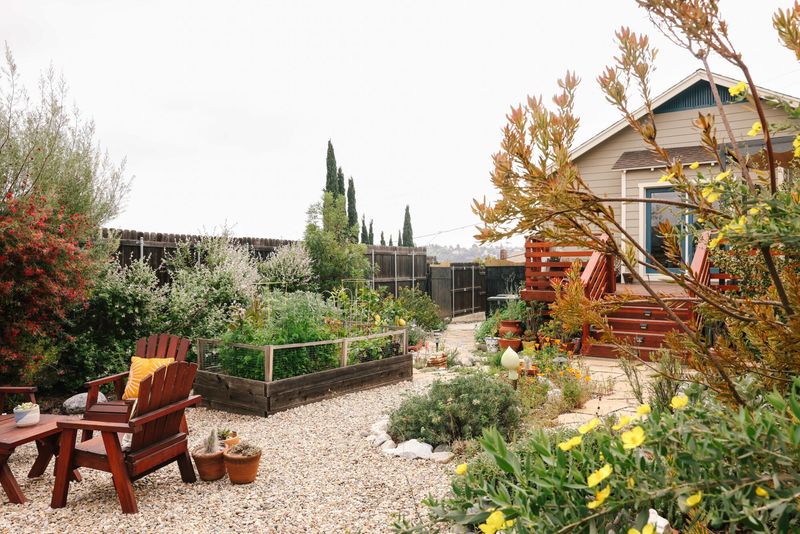
Replacing traditional turf with gravel dramatically cuts maintenance time while creating a contemporary look that handles Florida’s weather extremes. This approach aligns perfectly with Florida-Friendly Landscaping principles that emphasize water conservation and reduced chemical use.
Muhly grass brings seasonal drama with its pink plumes in fall, requiring just one annual trim. This native grass tolerates drought and our sandy soils naturally.
Dune sunflower spreads cheerfully with bright yellow blooms, attracting pollinators while asking almost nothing in return.
Firebush serves as an excellent mid-height accent, producing tubular red-orange flowers that hummingbirds adore. It handles full sun and heat without complaint, and its natural form means no shaping required.
Coontie anchors the design with its prehistoric appearance and incredible resilience to neglect.
Gravel provides superior drainage compared to mulch, preventing the soggy conditions that plague many Florida yards during rainy season. It also suppresses weeds far more effectively than organic mulches that decompose quickly in our heat.
Your Florida Garden Changes Every Week. Your Plan Should Too.
Gardening in Florida changes quickly throughout the season. Every Friday you’ll receive a simple weekly plan showing exactly what to plant, prune, fertilize, harvest, and protect so you never miss the right timing.
Choose light-colored gravel to reflect heat rather than absorb it.
UF/IFAS research shows that native plant selections significantly reduce landscape maintenance requirements. Before installation, lay quality landscape fabric to further minimize weed emergence.
Edge the area cleanly with metal or concrete borders to prevent gravel migration during heavy rains.
This setup practically maintains itself year-round.
3. Shade-Friendly Fern Retreat
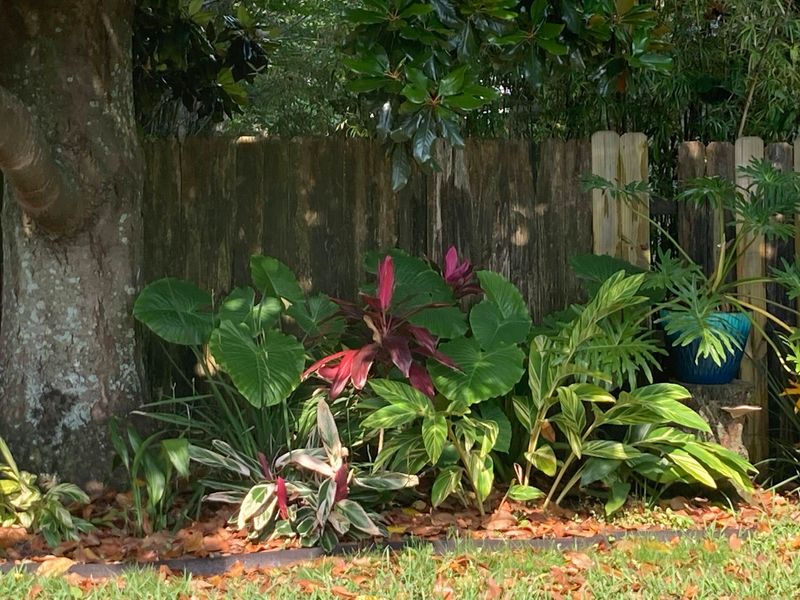
Not every Florida backyard basks in full sun, and shaded spaces deserve just as much design attention. Creating a fern-focused retreat transforms dim areas into cool, peaceful sanctuaries that require surprisingly little upkeep.
Boston ferns bring classic Southern charm when hung from covered patios or tree branches. While they need consistent moisture, grouping them together creates a humid microclimate that reduces how often you’ll reach for the hose.
Their cascading fronds soften hard edges beautifully.
Foxtail ferns add feathery texture at ground level and tolerate neglect remarkably well once established. Despite their delicate appearance, these plants handle Florida’s temperature swings without complaint.
They spread slowly, filling space without becoming invasive.
Caladiums inject brilliant color into shady spots with their patterned leaves in pink, white, and red combinations. These tubers go dormant in winter, giving you a seasonal break from maintenance.
Cast iron plants live up to their name, surviving in deep shade where little else grows and tolerating irregular watering.
Shade gardens naturally require less water than sun-exposed areas, cutting down on irrigation needs. Adding a layer of pine bark mulch helps retain moisture while slowly improving Florida’s nutrient-poor sandy soil as it breaks down.
Position a simple bench or a couple of chairs in your fern retreat, and you’ve created the perfect escape from Florida’s intense afternoon heat without adding hours to your weekend chore list.
4. Modern Paver Patio With Clean Lines
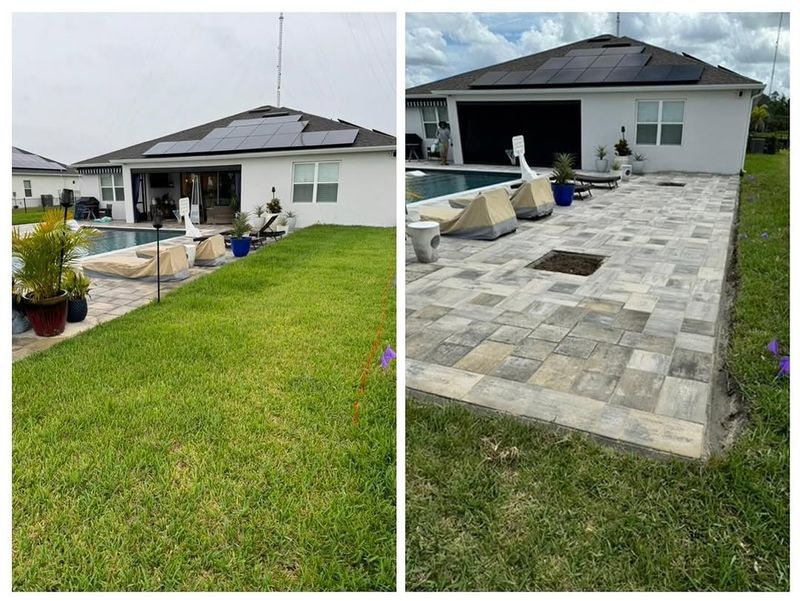
Hardscaping eliminates maintenance by replacing living elements with permanent materials that never need mowing, watering, or fertilizing. A well-designed paver patio becomes the hardest-working, lowest-maintenance feature in your Florida backyard.
Large-format pavers create a sleek, contemporary look while minimizing the number of joints where weeds might sprout. Concrete pavers handle Florida’s temperature fluctuations better than natural stone, which can crack during our rare cold snaps.
Porcelain pavers stay cooler underfoot, making them ideal for our climate.
Filling joints with gravel instead of sand prevents weed growth while allowing excellent drainage during Florida’s heavy afternoon thunderstorms. This detail matters significantly in our high-rainfall climate.
Proper base preparation with compacted limestone ensures your patio won’t shift or settle unevenly over time.
Frame your patio with structured, low-trim plants like podocarpus hedges that maintain their shape naturally. Ornamental grasses such as fakahatchee grass add movement without requiring deadheading or frequent division.
These selections soften the hardscape edges without creating maintenance headaches.
Consider your patio’s drainage carefully, sloping it slightly away from your home. Florida building codes often require specific drainage provisions due to our rainfall patterns.
Adding a pergola provides afternoon shade and creates an anchor point for solar string lights.
This combination of permanent hardscaping with minimal plantings gives you maximum outdoor living space with minimum ongoing effort, perfect for Florida’s year-round outdoor lifestyle.
5. Pollinator-Friendly Garden Border
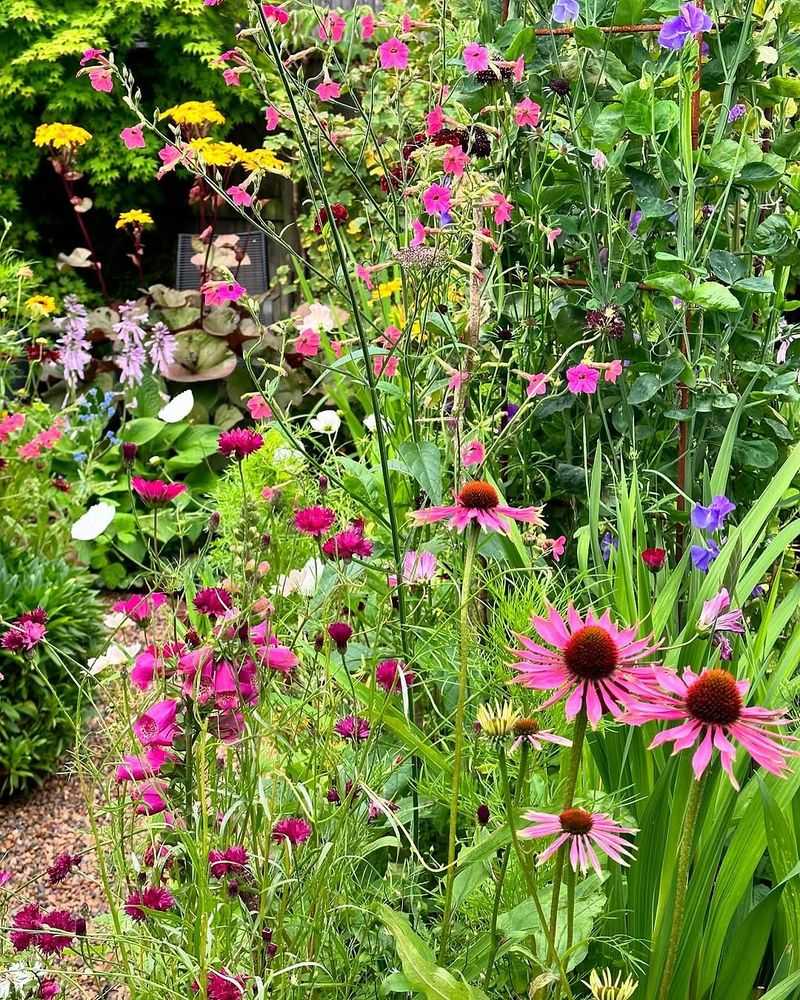
Supporting local pollinators doesn’t require high-maintenance rose gardens or fussy perennials. Florida’s heat-loving native and adapted plants attract butterflies and bees while thriving on neglect, creating a win-win situation for both wildlife and busy homeowners.
Pentas bloom relentlessly in Florida’s heat, producing clusters of star-shaped flowers in pink, red, white, and purple. Butterflies flock to these nectar-rich blooms, and the plants keep producing without deadheading.
They handle full sun and tolerate dry spells once their roots establish.
Lantana ranks among the toughest Florida plants, blooming year-round in our southern counties. Its colorful flower clusters attract numerous butterfly species, and it requires zero fertilizer or pest control.
Choose sterile cultivars to prevent unwanted spreading in natural areas.
Blue porterweed delivers true blue flowers that stand out in Florida landscapes while attracting both butterflies and hummingbirds. This Florida native tolerates wet and dry conditions equally well.
Salvia varieties offer vertical flower spikes that pollinators love, and most types handle our heat without wilting.
According to UF/IFAS Extension, selecting the right plants for your growing zone ensures success. Firebush serves double duty, feeding pollinators with its tubular blooms while providing berries for birds.
The Florida-Friendly Landscaping program emphasizes choosing regionally appropriate plants that support wildlife without requiring intensive care. Plant your pollinator border in a sunny spot, water during establishment, then step back and watch nature do the rest.
These tough performers bloom continuously without demanding your constant attention.
6. Outdoor Dining Under String Lights
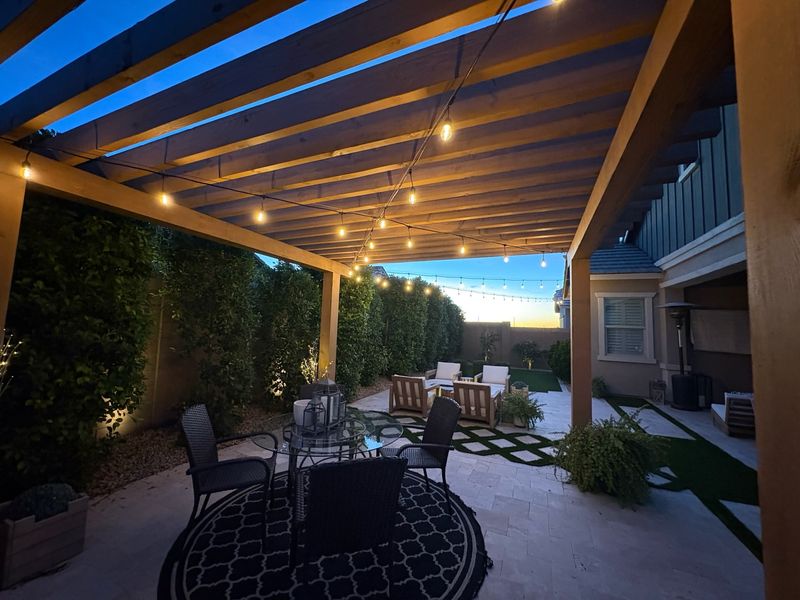
Ambiance matters just as much as plantings when creating a relaxing backyard retreat. An outdoor dining zone with thoughtful lighting transforms your space into an evening destination that requires almost no upkeep beyond occasional bulb replacement.
Solar-powered LED string lights eliminate electrical work while providing warm, inviting illumination. Modern solar options charge even on cloudy Florida days and last for years.
Drape them overhead in zigzag patterns or hang them from a pergola to create a restaurant-quality atmosphere.
Weather-resistant furniture designed for coastal climates withstands Florida’s humidity and salt air without constant maintenance. Look for powder-coated aluminum frames and solution-dyed acrylic fabrics that resist mildew and fading.
Store cushions during hurricane season, but otherwise, quality outdoor furniture can remain in place year-round.
A pergola provides structural support for lighting while offering partial shade during daytime meals. Cedar or vinyl pergolas require minimal maintenance in Florida’s climate.
Accent your dining area with a few low-maintenance container plants like dwarf palms or colorful cordyline varieties that add tropical flair without demanding attention.
Consider installing a ceiling fan under your pergola for air circulation during humid evenings. This simple addition makes your outdoor dining space comfortable even during Florida’s warmest months.
The beauty of this approach lies in its simplicity: once installed, your lighting and furniture create nightly magic automatically.
You’ve invested in permanent features that deliver ongoing enjoyment without adding tasks to your maintenance schedule, perfect for maximizing relaxation time in your Florida backyard.
7. Artificial Turf Accent Area
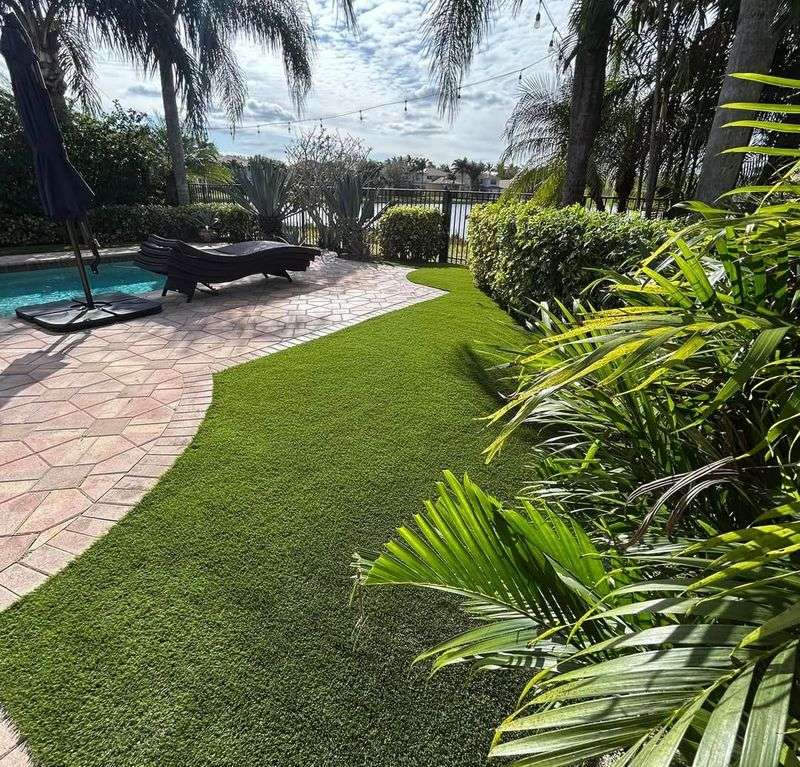
Lawn maintenance consumes more time than any other backyard task, but modern artificial turf offers a practical alternative that looks surprisingly natural. Strategic use of synthetic grass creates usable green space without the endless mowing, edging, fertilizing, and watering that real turf demands in Florida.
Quality artificial turf has evolved dramatically, with products now featuring varied blade heights and colors that mimic natural grass convincingly. Installation requires proper drainage layers underneath, which matters significantly in Florida where heavy rains can dump inches of water in hours.
Professional installation ensures water flows through rather than pooling on the surface.
Consider heat reflection when choosing artificial turf for Florida. Lighter green shades and products with cooling technology stay more comfortable underfoot during summer months.
Some manufacturers now incorporate heat-reducing infill materials specifically designed for hot climates like ours.
Check HOA regulations before installation, as some Florida communities have specific guidelines about artificial turf visibility and placement. Many homeowners use synthetic grass for high-traffic areas, pet runs, or small accent zones rather than replacing entire lawns.
This targeted approach maximizes the maintenance reduction benefits while minimizing costs.
Artificial turf eliminates the need for irrigation, fertilizers, and pesticides in treated areas, aligning with water conservation goals important in Florida. Occasional rinsing removes dust and pollen, and a stiff brush restores blade orientation after heavy use.
Compared to maintaining Florida turfgrass like St. Augustine or Bahia, which require regular mowing and struggle with our pests and diseases, artificial turf delivers consistent appearance with minimal effort year-round.
8. Container Garden Statement Zone
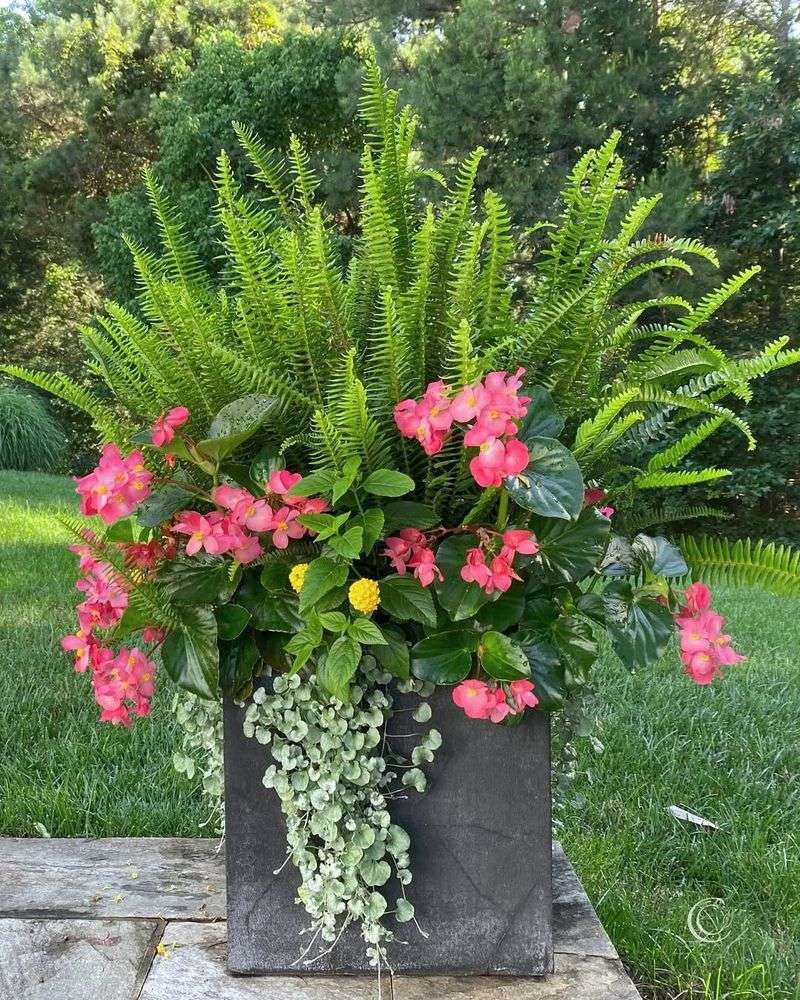
Oversized containers create dramatic focal points while offering unmatched flexibility in Florida landscapes. This approach lets you refresh your design seasonally, move plants to optimize sun exposure, and work around our challenging sandy soil entirely.
Crotons bring bold foliage color in containers, with varieties displaying yellow, red, orange, and green patterns. These tropical plants thrive in pots where you can control soil quality and drainage perfectly.
Coleus varieties offer equally vibrant leaves in shade or part-sun locations, and newer heat-tolerant cultivars handle Florida summers beautifully.
Angelonia produces delicate flower spikes in purple, pink, and white throughout Florida’s growing season without requiring deadheading. This tough annual tolerates heat and drought surprisingly well.
Sweet potato vine cascades dramatically from container edges, offering chartreuse or purple foliage that fills space quickly. Dwarf ixora provides year-round structure with glossy leaves and colorful flower clusters.
Use quality potting mix formulated for containers rather than garden soil, which compacts and drains poorly in pots. Florida’s intense sun and heat dry containers quickly, so consider self-watering planters or add water-retaining crystals to your mix.
Slow-release fertilizer applied in spring and mid-summer keeps container plants thriving without weekly feeding schedules.
The beauty of container gardening lies in its flexibility. Swap out plants seasonally, rearrange your display when you want a fresh look, or move containers to protected areas before hurricanes.
Group containers in odd numbers for visual appeal, varying heights and textures.
This approach gives you all the impact of an elaborate garden bed with a fraction of the maintenance commitment.