The Right Way To Prune Desert Willow In Arizona Without Causing Damage

Desert Willow grows fast in Arizona and can quickly turn from graceful to messy if it is left alone too long. Those long, flexible branches may look wild, but cutting them the wrong way can lead to weak growth or fewer blooms when the season picks up.
The goal is not to cut it back hard, but to shape it in a way that keeps its natural form while encouraging stronger branching.
Timing plays a big role here, especially in Arizona where heat arrives quickly and the plant responds fast once growth begins.
With the right approach, pruning helps the tree stay open, balanced, and much easier to manage. It also sets it up for better flowering later on, without the stress that comes from overcutting or trimming at the wrong time.
1. Prune Desert Willow After The Last Frost In Early Spring
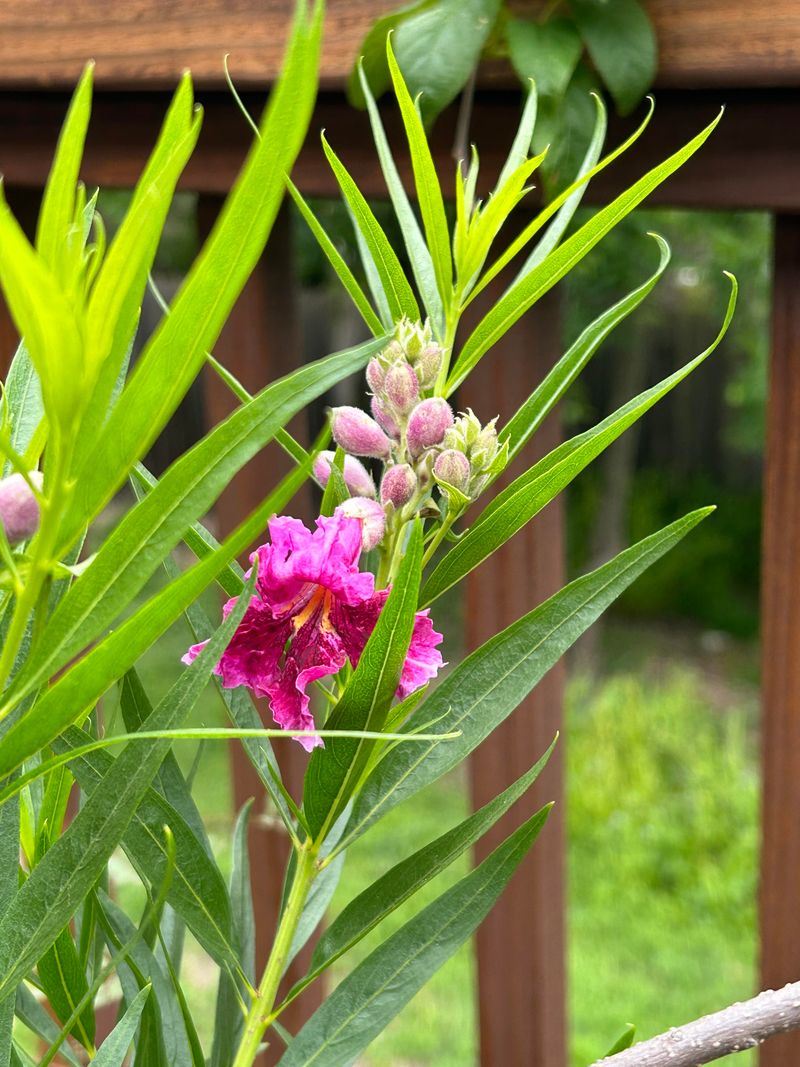
Timing is everything when it comes to desert willow, and getting it wrong can cost you a full season of blooms. In Arizona, the last frost typically wraps up by late February in the lower desert areas like Phoenix and Mesa.
Heading out with your pruning shears too early puts fresh cuts at risk of cold damage, which slows the whole healing process.
Late winter to early spring is the sweet spot. Right before new growth starts pushing out, the tree is still dormant enough that cuts heal cleanly without triggering premature budding.
You want to catch that narrow window when night temps are consistently above freezing but the tree hasn’t woken up yet.
If you’re in a higher elevation area like Prescott or Flagstaff, push your pruning date a bit later, maybe into mid-March. Frost lingers longer up there, and a surprise cold snap after a fresh prune can stress the tree significantly.
Watching the forecast for two weeks out before you cut is a smart habit to build.
Pruning at the right time also means you’re not accidentally cutting off developing flower buds. Desert willow sets buds early, and those buds are what give you that gorgeous bloom show from late spring through summer.
Protect them by respecting the calendar. A little patience in early spring pays off with months of color once the warm Arizona weather kicks into gear.
2. Remove Damaged And Weak Branches First
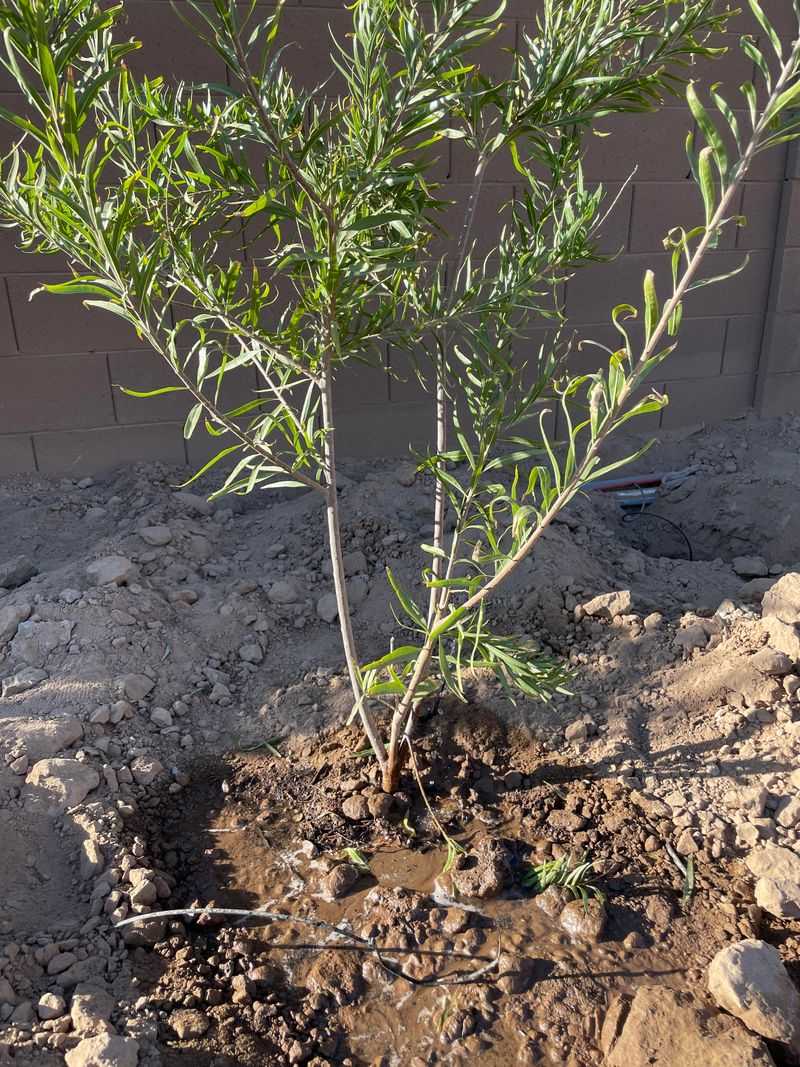
Walk around your desert willow before you cut a single branch. Just look at it.
Broken stubs, bark that’s cracked and peeling, thin wispy stems that droop under their own weight — those are your starting points, not the healthy stuff.
Weak branches are a drain on the whole tree. Energy that could go toward new growth and flowers gets wasted trying to sustain growth that was never going to amount to much anyway.
In Arizona’s intense summer heat, that wasted energy adds up fast, especially once temperatures push past 110 degrees in the low desert.
Start by cutting any branch that looks clearly damaged or weak all the way back to a healthy union, either where it meets a larger branch or back to the main trunk.
Your Arizona Garden Changes Every Week. Your Plan Should Too.
Gardening in Arizona changes quickly throughout the season. Every Friday you’ll receive a simple weekly plan showing exactly what to plant, prune, fertilize, harvest, and protect so you never miss the right timing.
Don’t leave long stubs behind. Stubs don’t heal well and become entry points for pests and fungal issues down the road.
After clearing out the obvious problems, look for branches that are rubbing against each other or growing inward toward the center of the canopy. Those are the next priority.
Rubbing causes bark wounds, and bark wounds in the Arizona sun can dry out and crack badly. Removing the weaker of the two crossing branches early on prevents a bigger problem later.
This first pass of cleanup work shapes up the tree before you even think about cosmetic trimming, and it puts the plant in a much stronger position heading into the growing season.
3. Cut Back Crossing Branches To Improve Shape
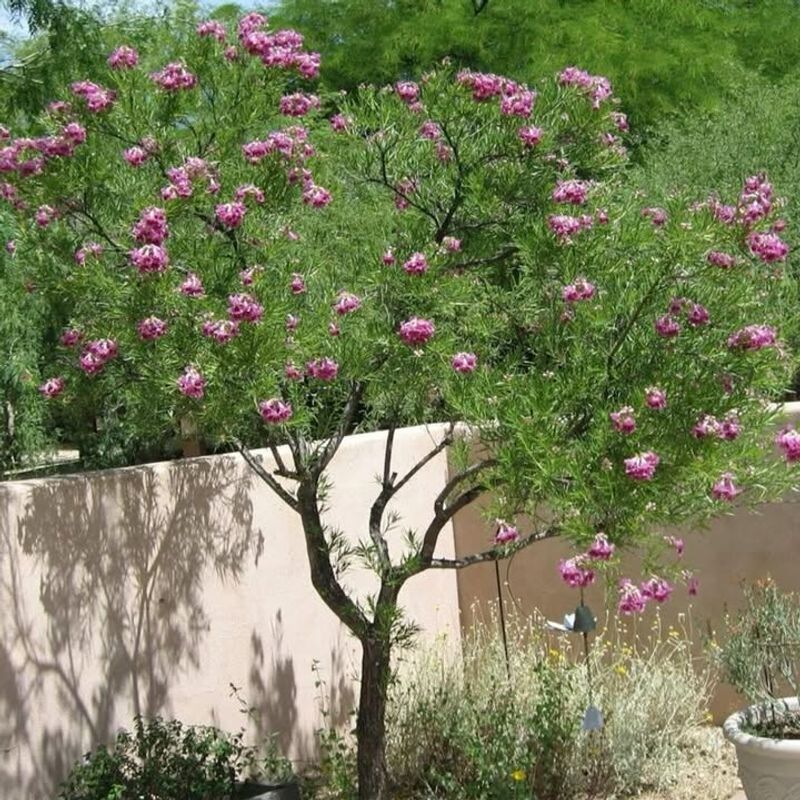
Crossing branches are one of the sneakiest problems in desert willow trees because they often look fine from a distance.
Up close, though, those branches are grinding against each other every time the wind picks up, and Arizona gets plenty of wind, especially in spring and during monsoon season.
When two branches cross and rub, the bark wears away at the contact point. That exposed wood becomes vulnerable to sunscald, which is a real issue in places like Tucson and Phoenix where the sun beats down relentlessly from June through September.
A raw wound on exposed wood in that kind of heat can set a branch back badly.
Deciding which branch to remove isn’t complicated. Keep the one that’s growing in a direction that adds to the natural shape of the tree.
Remove the one that’s heading inward, downward, or across the canopy in a way that clutters the structure. Always cut back to the branch collar, that slight swelling where the branch meets a larger limb.
Cutting there gives the tree the best shot at sealing the wound cleanly.
Improving the canopy shape also helps with airflow. Desert willow can get fungal leaf issues if air circulation is poor, and in Arizona’s humid monsoon months, that risk goes up.
A well-spaced canopy dries out faster after summer rains, keeping the foliage healthier through the back half of the year. Cleaning up crossing branches now makes the whole tree stronger going forward.
4. Avoid Topping To Keep Natural Form Intact
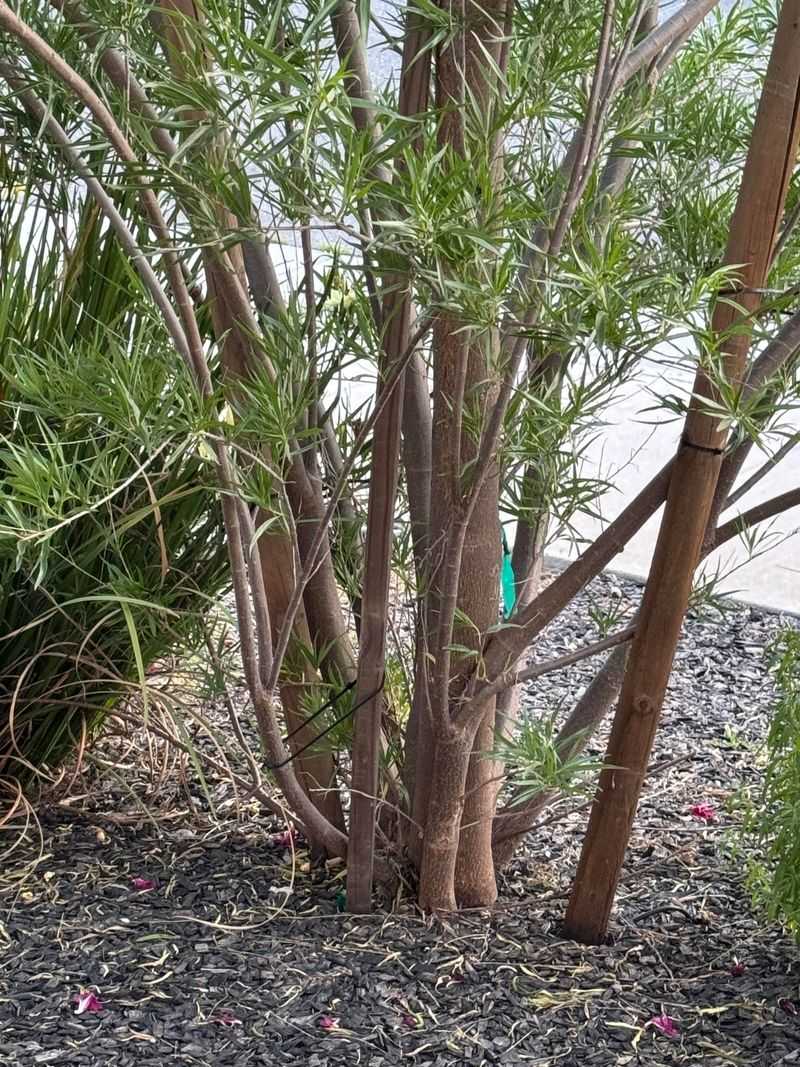
Topping a desert willow is one of the fastest ways to ruin what took years to develop. Cutting the main leaders back to stubs forces the tree to push out a bunch of weak, fast-growing shoots that clutter the canopy and never develop into strong structural branches.
You see topped trees all over Arizona neighborhoods, and they’re easy to spot. That dense, bushy regrowth at the top looks unnatural and actually makes the canopy heavier and more wind-prone, not lighter.
Instead of solving a problem, topping creates a bigger one that compounds every year.
Desert willow has a naturally graceful, arching shape that looks beautiful without much interference. In Arizona’s open landscapes, that loose, flowing form fits right in with the surroundings.
Heavy topping strips that away completely and leaves behind a tree that looks awkward for years while it tries to recover its structure.
If height is genuinely a concern, the better move is to selectively reduce individual long branches back to a lateral branch that’s at least one-third the diameter of the branch being cut.
That technique, called reduction cutting, lowers the overall height without destroying the tree’s natural silhouette.
It takes a bit more thought than just lopping off the top, but the results are dramatically better. Your desert willow will keep its graceful look, heal faster, and continue producing flowers along the natural branch tips where blooms are supposed to appear.
5. Use Clean Sharp Tools For Smooth Cuts
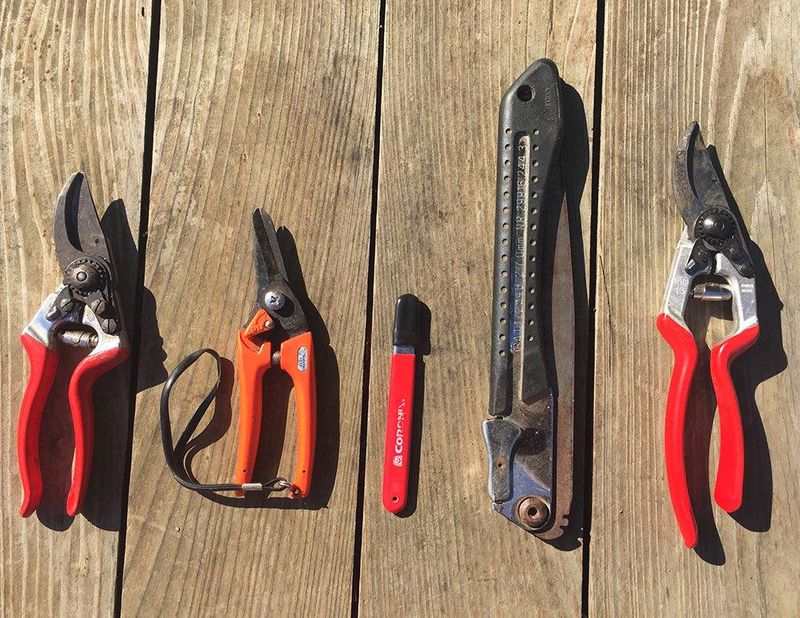
Dull blades do more damage than people realize. When a pruning tool is even slightly dull, it crushes and tears the wood fibers at the cut instead of slicing through cleanly.
That crushed tissue takes longer to heal and is more prone to moisture loss, which is a serious problem in Arizona’s dry climate.
Sharp tools make a noticeable difference in how quickly a cut seals over. A clean, smooth cut surface calluses faster and more evenly than a ragged one.
If you hold a freshly cut branch end up to the light and the surface looks fibrous or torn, the blade needs sharpening before you continue.
Cleaning your tools is just as important as keeping them sharp. Diseased plant material can hitch a ride on your blades and spread to healthy cuts on the same tree or neighboring plants.
Wiping blades down with a diluted bleach solution or rubbing alcohol between cuts takes about ten seconds and prevents a lot of potential problems. Keep a small spray bottle in your back pocket while you work.
In Arizona, where intense heat and low humidity already stress plants, giving your desert willow the cleanest possible cuts is a straightforward way to support its recovery. Well-maintained tools also make the job easier and faster for you.
Sharpening a pair of bypass pruners takes five minutes with a basic whetstone and is well worth doing at the start of each pruning season before you head out to the yard.
6. Do Not Remove Too Much Growth At Once
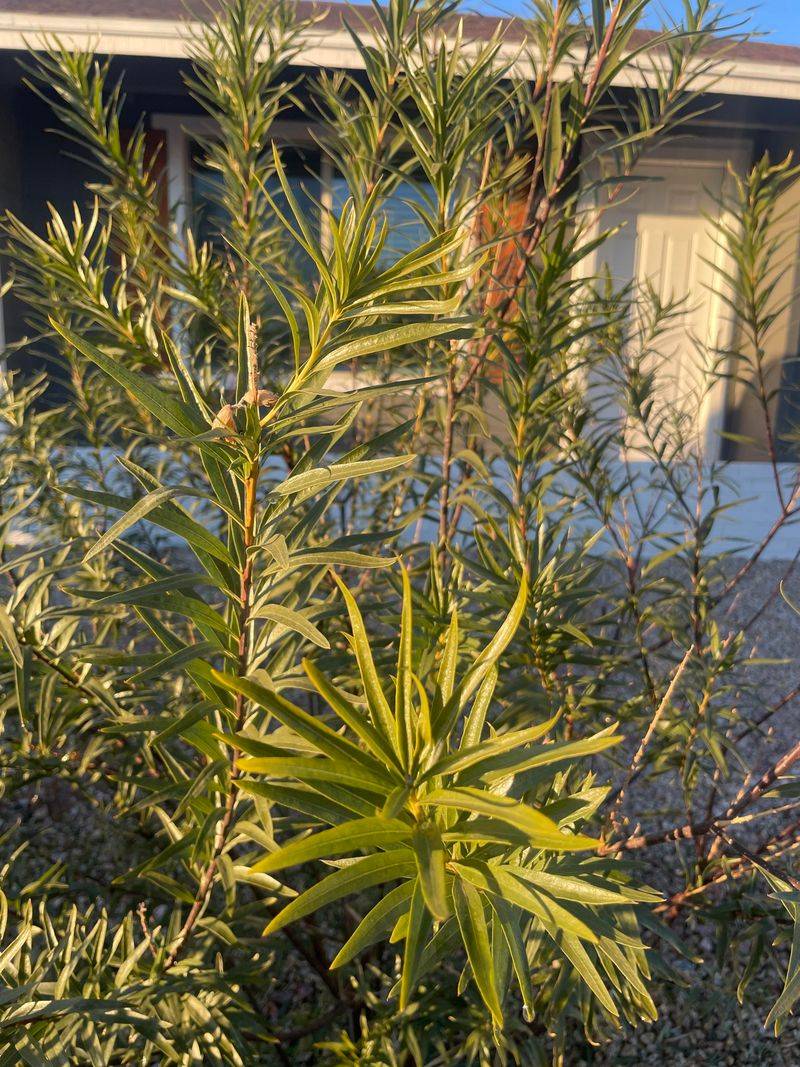
Pulling out your loppers and going heavy on a desert willow in one session might feel productive, but it can actually set the tree back by months. A good rule of thumb is to never remove more than twenty-five percent of the canopy in a single pruning session.
Push past that, and the tree goes into a kind of stress response that redirects energy away from flowering and toward survival.
Arizona’s climate already puts trees through a lot. Extreme heat from May through September, dry spells that can last weeks, and the sudden shift during monsoon season all add up to a challenging growing environment.
A tree that’s been over-pruned has less foliage to support the photosynthesis it needs to push through those conditions strong.
Spreading your pruning work across two or even three seasons is a smarter approach if your tree needs significant reshaping.
Remove the worst problems in year one, fine-tune the structure in year two, and by year three you’ll have a well-shaped tree that never had to deal with the shock of a single heavy cutback.
Patience is genuinely the better strategy here.
Keeping cuts minimal also protects your bloom show. Desert willow flowers on new growth, and if you’ve stripped too much of that growth away, you lose flowers.
In Tucson and Phoenix, where people plant desert willow specifically for its summer color, that’s a real loss. Restraint with the pruners keeps the blooms coming strong season after season.
7. Focus On Light Shaping Instead Of Heavy Cutting
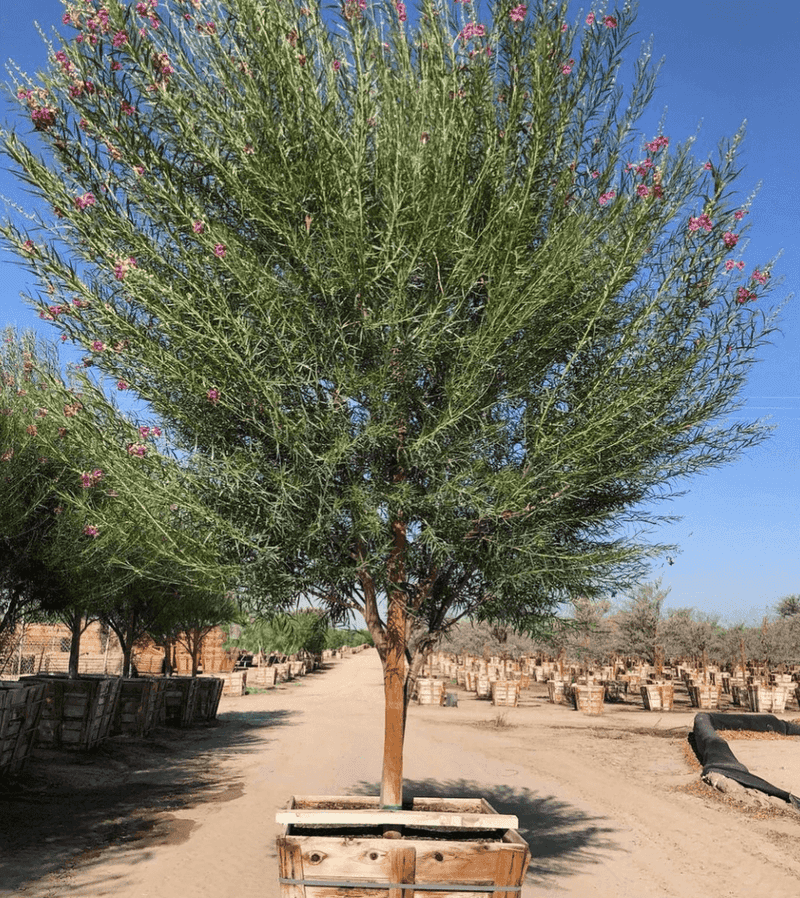
Desert willow doesn’t need aggressive pruning to look good. Light, thoughtful shaping done consistently over time produces a far better result than one dramatic cutback every few years.
Think of it less like a haircut and more like a regular tidy-up.
In Arizona, where these trees are in their element, they tend to put on a solid amount of growth during the warm months. A few well-placed cuts to redirect that growth keeps the tree looking neat without removing enough material to stress it.
You’re guiding the shape, not fighting the tree’s natural tendencies.
Light shaping also means you’re spending less time on the job each visit. Instead of a full afternoon with heavy loppers, you’re out there for twenty or thirty minutes with a pair of hand pruners making targeted cuts.
That kind of regular attention keeps small problems from becoming big ones and keeps the canopy balanced year to year.
Pay attention to where the tree wants to grow and work with it. If there’s a branch pushing in a great direction, let it go.
If there’s one heading somewhere awkward, redirect it early before it gets thick and hard to manage. Arizona gardeners who take this approach end up with desert willows that look like they were shaped by nature itself, not by someone with an agenda.
That natural, flowing silhouette is exactly what makes this tree so striking in southwestern landscapes across the state.