8 Flowering Trees That Provide Shade In Phoenix, Arizona Backyards
In Arizona, shade is not just a nice extra, it is what makes a backyard usable once the heat settles in, but that does not mean giving up color or interest.
The right flowering trees can do both at the same time, creating relief from the sun while still keeping the yard bright and full of life.
Not every tree can handle Arizona conditions, though. Intense sun, dry air, and long stretches of heat can stress the wrong choices fast.
The ones that thrive here are built for it, offering filtered or moderate shade while still putting on a strong bloom display.
Once established, everything feels more comfortable. Outdoor areas stay cooler, the yard looks more complete, and that mix of shade and flowers becomes something worth spending time around.
1. Desert Willow Provides Light Shade And Summer Blooms
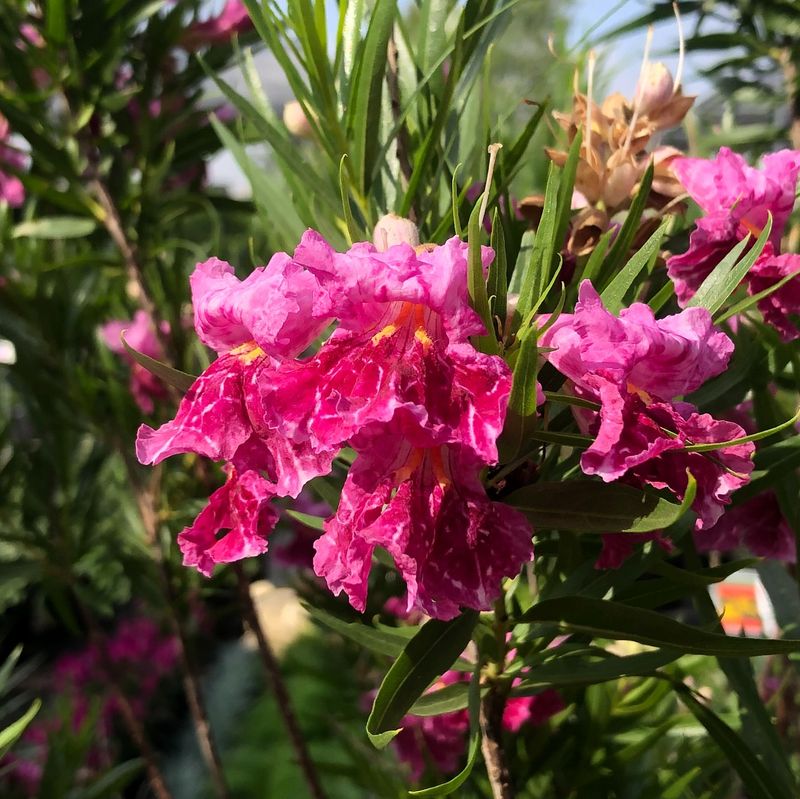
Walk past a Desert Willow on a July afternoon in Phoenix and you will immediately understand why so many locals swear by it. While most plants look beaten down by midsummer, this tree is covered in trumpet-shaped flowers in shades of pink, purple, and sometimes white.
It blooms from late spring all the way through fall, which is longer than almost any other flowering tree you can grow here.
Desert Willow grows anywhere from 15 to 25 feet tall, and its canopy is airy rather than dense. That means you get filtered light underneath rather than deep shade, which works well for patios where you still want some brightness.
The branches have a loose, slightly wild structure that gives your yard a natural, relaxed feel rather than a manicured look.
Native to the Chihuahuan Desert, this tree is genuinely built for conditions like Phoenix. It handles poor, rocky soil without complaining, and it does not need a lot of water to stay healthy.
Hummingbirds are absolutely drawn to those tubular flowers, so expect regular visits during bloom season. Plant it where you can see it from a window or sitting area and you will get daily entertainment from late spring through early fall.
It is one of those trees that earns its spot in a Phoenix backyard every single year.
2. Palo Verde Creates Filtered Shade With Bright Yellow Flowers
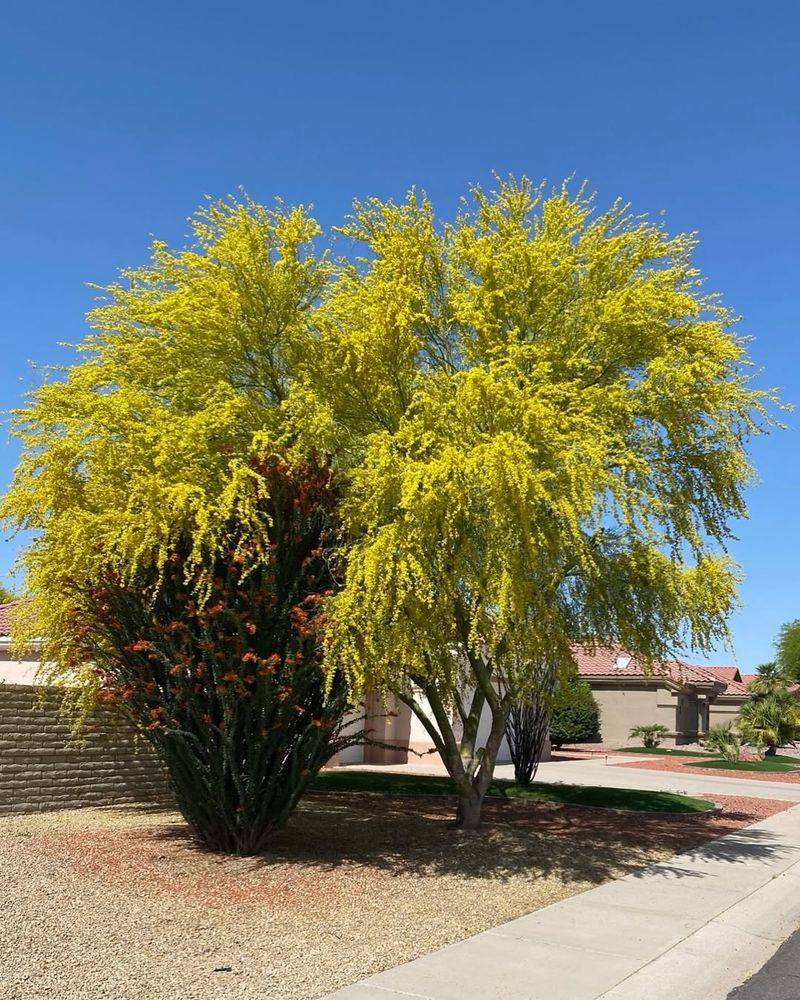
Arizona chose this tree as its state tree for good reason, and once you see a Palo Verde covered in yellow flowers in spring, the decision makes complete sense.
Entire stretches of the Phoenix valley turn golden in April when these trees bloom, and having one in your backyard puts that seasonal color right outside your door.
What sets Palo Verde apart from most shade trees is its green bark. Even when the tree drops its tiny leaves during dry spells, the bark keeps photosynthesizing, which means the tree stays active and alive without needing extra water to compensate.
That is a genuinely useful adaptation in a place like Phoenix where summer heat and dry spells happen every single year.
Mature trees reach 20 to 30 feet tall with a wide, spreading canopy that casts filtered shade rather than solid cover. Sitting under one feels breezy and open, not dark or heavy.
Your Arizona Garden Changes Every Week. Your Plan Should Too.
Gardening in Arizona changes quickly throughout the season. Every Friday you’ll receive a simple weekly plan showing exactly what to plant, prune, fertilize, harvest, and protect so you never miss the right timing.
Several varieties are worth considering, including Blue Palo Verde and Foothills Palo Verde, each with slightly different growth habits and bloom timing. Thornless varieties are also available if you have kids or pets using the yard regularly.
Plant it in a spot with full sun and well-draining soil, and it will reward you with decades of reliable blooms and steady shade in your Phoenix outdoor space.
3. Chitalpa Produces Showy Flowers And Grows Well In Heat
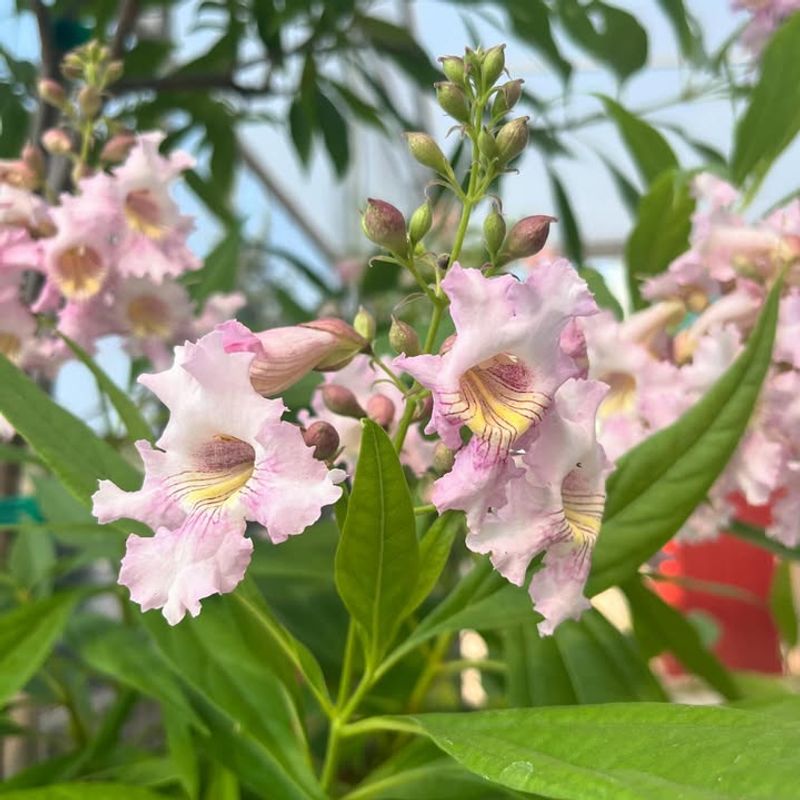
Chitalpa is basically the result of someone asking what would happen if Desert Willow and Catalpa had a child built specifically for the desert Southwest.
That is almost exactly what it is, a hybrid developed to combine the best traits of both parents, and it delivers in a Phoenix backyard in a way that is hard to ignore.
Flowers come in pink, white, or lavender and are noticeably larger than those on a standard Desert Willow.
The blooms appear in late spring and continue through summer, which means color during the hottest stretch of the year when most trees are just trying to survive.
Canopy spread is generous for a mid-sized tree, and the filtered shade it creates underneath is comfortable for outdoor seating.
Growing to around 20 to 30 feet tall, Chitalpa fits well in medium to large Phoenix backyards without overwhelming the space. Full sun is non-negotiable here, and the tree handles reflected heat from walls and pavement without showing much stress.
Water needs are moderate, and the tree responds well to deep, infrequent watering during the summer months rather than frequent shallow irrigation. Pruning to shape it every couple of years helps maintain a clean structure.
If you want reliable summer flowers and decent shade without spending a lot of time managing the tree, Chitalpa is a smart pick for Phoenix.
4. Orchid Tree Adds Tropical Looking Blooms And Moderate Shade
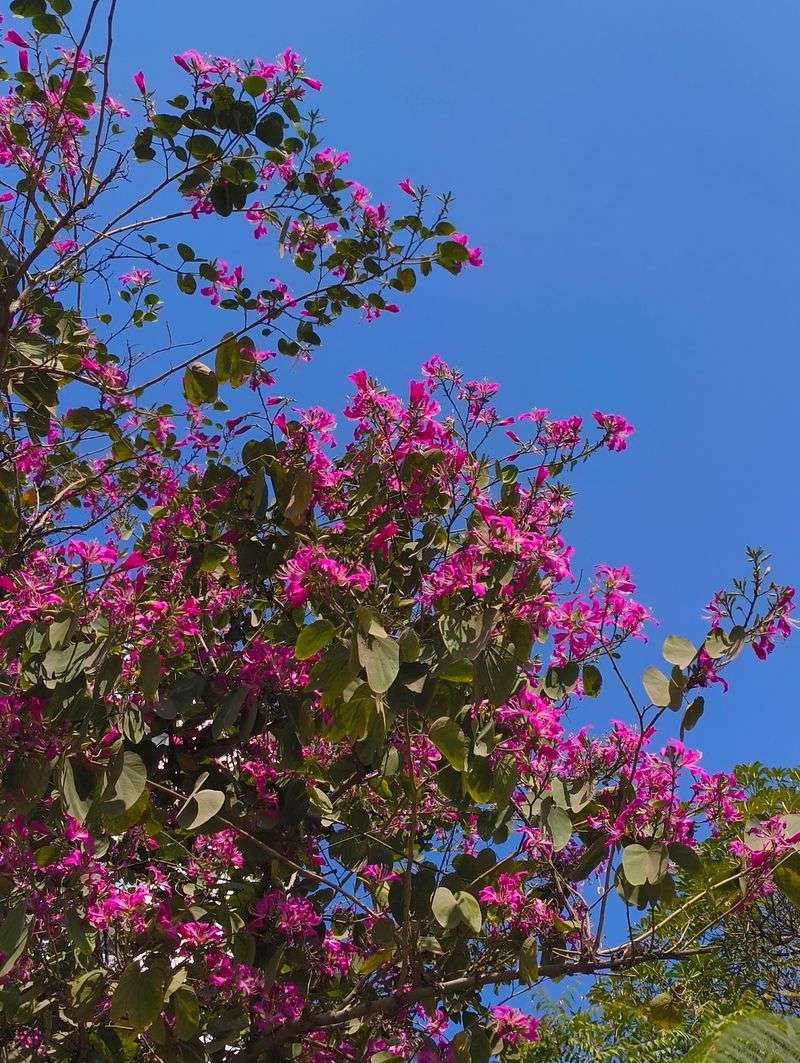
Seeing an Orchid Tree in full bloom for the first time in a Phoenix backyard genuinely stops people in their tracks.
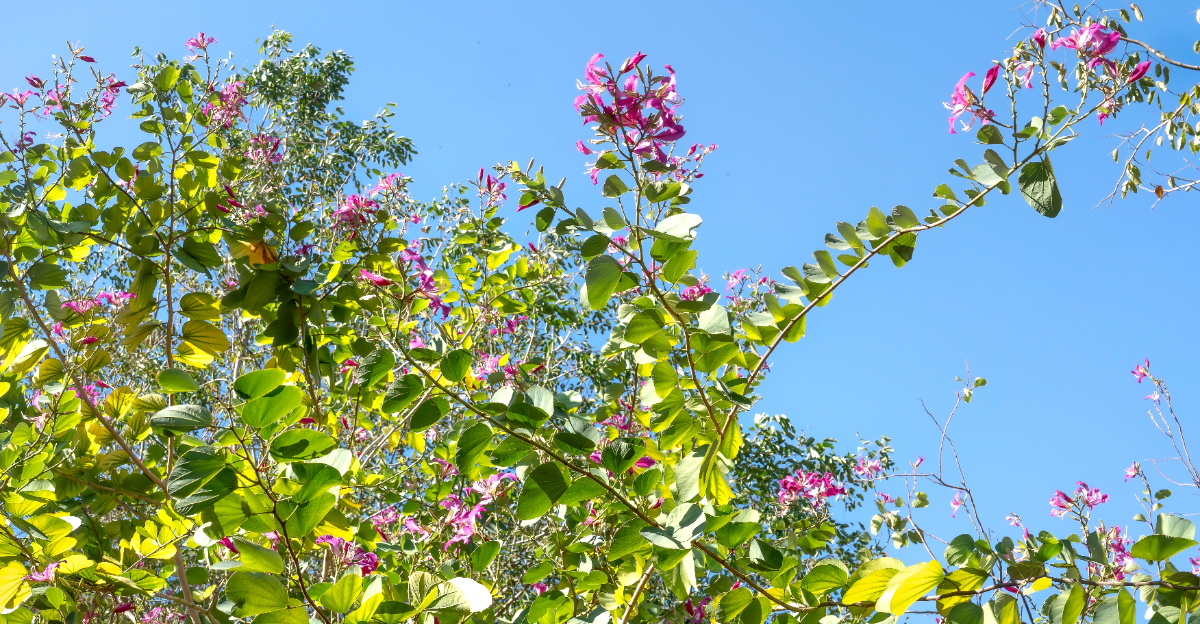
The flowers are large, showy, and shaped almost exactly like orchids, coming in deep magenta, pink, or occasionally white, and they appear in late winter to early spring before most other trees have even thought about waking up.
Bauhinia variegata is the species most commonly planted in Phoenix, and it grows to about 20 to 35 feet tall with a rounded, spreading canopy. Shade coverage is moderate, meaning you get real relief underneath on a hot afternoon without the space feeling completely closed off.
The large, bilobed leaves are distinctive and give the tree a lush, almost tropical appearance that stands out in desert landscaping.
One thing to know upfront is that Orchid Trees do drop their leaves and spent flower parts, so expect some cleanup during bloom season. They also prefer a spot with some protection from hard frost since a cold snap can damage the canopy in Phoenix during January.
Planting near a south or west-facing wall helps buffer against cold nights. Water needs are moderate, and the tree appreciates deep watering through summer.
For Phoenix homeowners who want something that looks genuinely exotic and still handles the desert heat, this tree delivers a level of visual drama that few others can match in a backyard setting.
5. Vitex Produces Long Lasting Blooms And Handles Heat Well
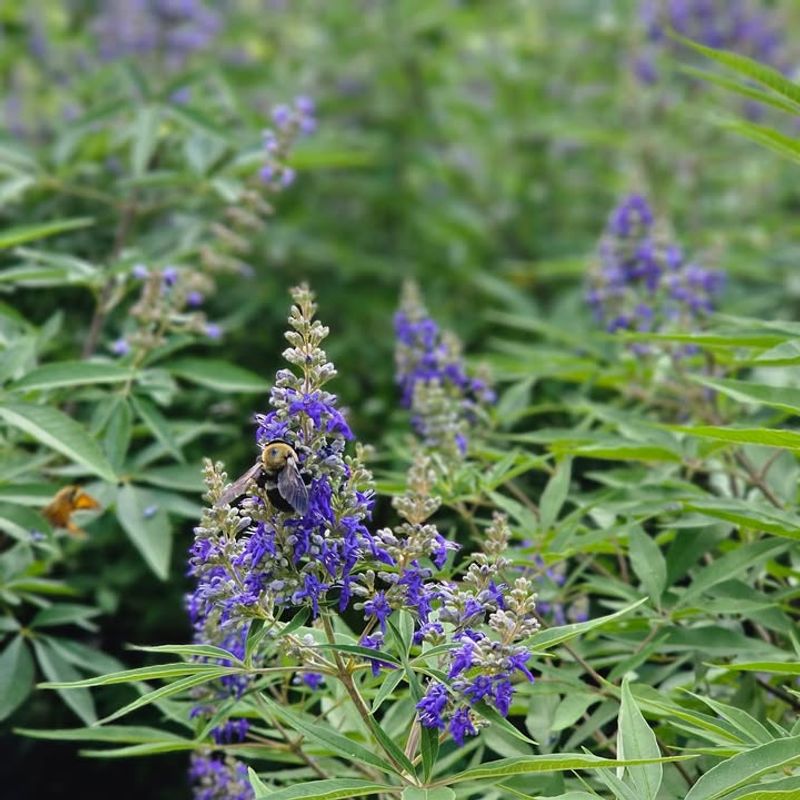
Purple flower spikes covering an entire tree canopy in the middle of a Phoenix summer is not something you expect to see, but that is exactly what Vitex delivers.
Also called Chaste Tree, this species pushes out long clusters of lavender to deep purple blooms starting in late spring and keeps going well into summer, which is a genuinely impressive performance when daytime temps are regularly above 105 degrees.
Vitex agnus-castus grows as either a large shrub or a small multi-trunk tree depending on how you train it, typically reaching 10 to 20 feet tall in Phoenix. Left to its own shape, it develops a wide, arching canopy with decent spread.
Pruning it up off the ground into a tree form creates a cleaner look and more usable shade underneath for a patio or seating area.
Bees and butterflies absolutely flock to the flowers, so placing it away from high foot-traffic areas is smart if you have young kids running around. Full sun is where it performs best, and it handles reflected heat from walls and hardscaping without much visible stress.
Water needs are on the lower end once the tree is established, making it a practical choice for Phoenix homeowners watching their water bills during summer.
The fragrant leaves are a bonus detail that most people do not mention but notice immediately when brushing past a branch.
6. Jacaranda Creates Light Shade With Purple Spring Flowers
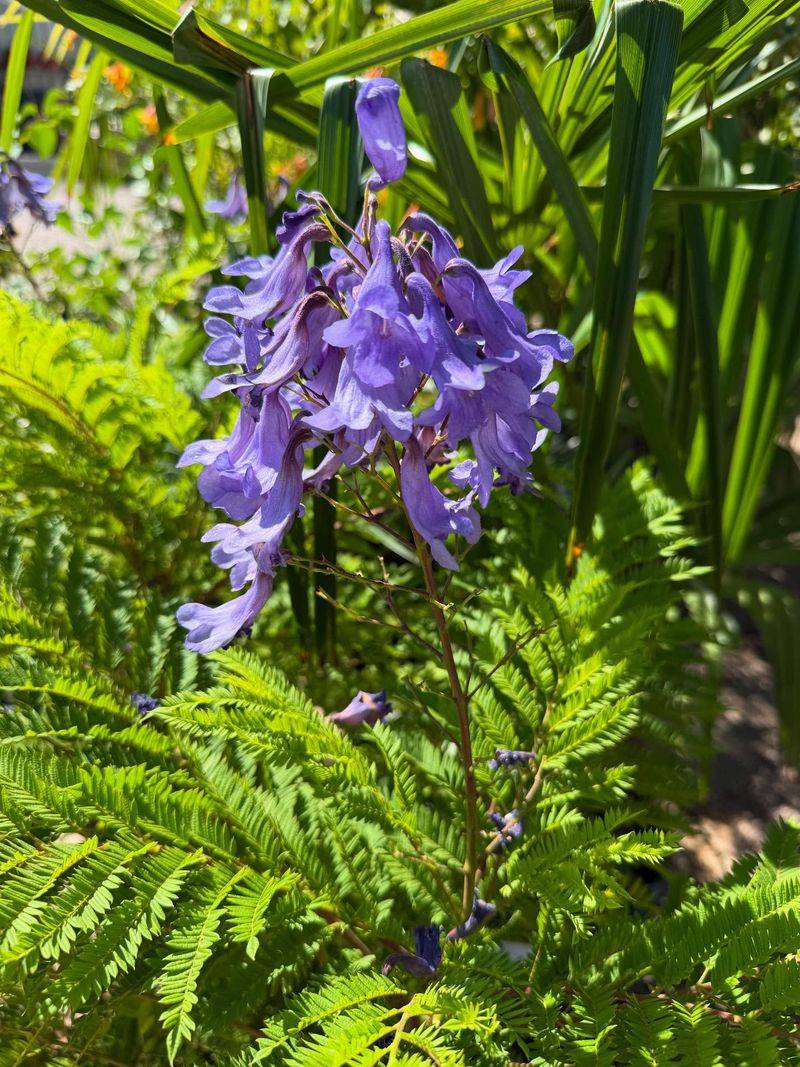
Few trees in Phoenix create a moment quite like a Jacaranda in peak bloom. For a few weeks in spring, the entire canopy turns a vivid purple-blue, and the fallen petals create a carpet on the ground underneath that looks almost too good to be real.
People in Phoenix neighborhoods with mature Jacarandas plan their walks around the bloom season just to see them.
Jacaranda mimosifolia grows to 25 to 40 feet tall and spreads wide, creating a light, feathery canopy that filters sunlight rather than blocking it completely.
Sitting underneath during a sunny afternoon feels softer and less harsh than sitting under a dense shade tree, which many Phoenix homeowners actually prefer for outdoor dining and relaxing spaces.
Cold sensitivity is the main thing to plan around in Phoenix. Young trees can take frost damage during hard January freezes, so planting in a protected spot or near a south-facing wall gives them a better start.
Once they hit a few years of solid growth, they handle Phoenix winters without much trouble. Summer watering should be consistent but not excessive, as Jacaranda prefers deep, infrequent irrigation over frequent shallow watering.
The tree also drops leaves and spent flowers, so factor in some seasonal cleanup. For the bloom display alone, most Phoenix gardeners consider the tradeoff completely worthwhile.
7. Desert Ironwood Provides Dense Shade And Spring Blooms
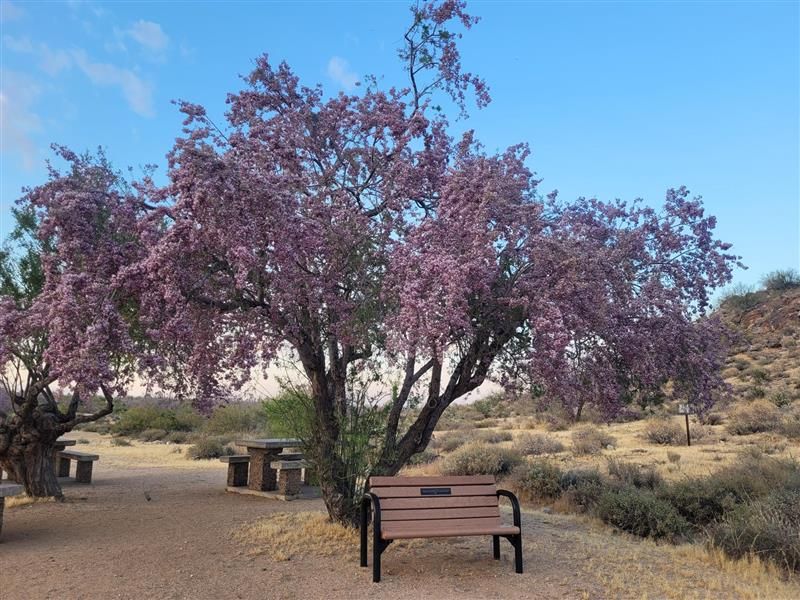
Desert Ironwood is the kind of tree that takes patience but pays you back with decades of serious shade and a canopy that nothing in Phoenix can really match for density.
Slow growth is the trade-off, but the payoff is a tree that can eventually spread 30 to 40 feet wide and create a shaded area underneath that stays noticeably cooler than the surrounding yard on a hot afternoon.
Spring brings clusters of small lavender to purple flowers that cover the canopy in a soft haze of color before the summer heat fully arrives. It is not as flashy as Jacaranda or Orchid Tree, but the blooms have a quiet, natural beauty that fits well with desert landscaping.
Silvery-green leaves hold on through most of the year, making Ironwood essentially evergreen in Phoenix conditions.
Olneya tesota is native to the Sonoran Desert, which means Phoenix is squarely in its natural range. It has deep roots, handles drought without any extra help, and actually improves the soil around it over time by fixing nitrogen.
Wildlife benefit too, as birds nest in the dense canopy and use the tree for cover. Thorns are present on younger branches, so keep that in mind when choosing a planting location near walkways or play areas.
For a long-term shade investment in a Phoenix backyard, few trees come close to what Desert Ironwood eventually delivers.
8. Sweet Acacia Provides Fragrant Yellow Blooms And Light Shade
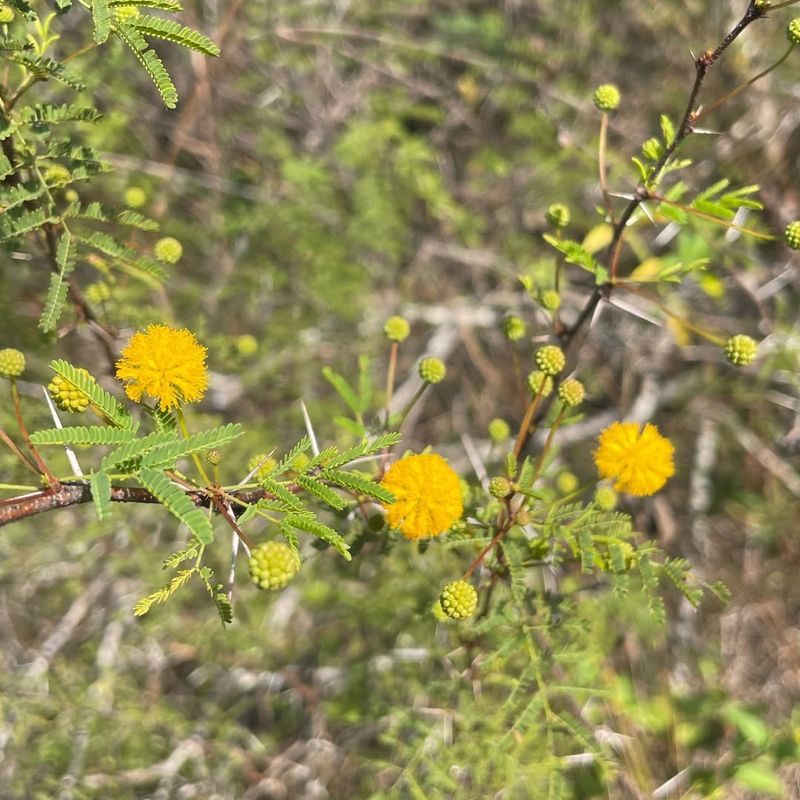
Sweet Acacia is one of those trees where the fragrance hits you before you even see the flowers.
Tiny, bright yellow puffball blooms appear in late winter through early spring and release a scent that carries across the yard on a warm Phoenix morning in a way that genuinely makes you stop and appreciate being outside.
It is one of the earliest bloomers in the Phoenix calendar, which makes it especially welcome after a grey winter.
Vachellia farnesiana grows to about 15 to 25 feet tall with a loose, open canopy that provides light, dappled shade. Underneath on a hot day, you still feel the breeze and see the sky, which makes it a great companion tree rather than a primary shade source.
Pairing it with a denser shade tree nearby gives you the fragrance and seasonal color while still getting real cooling coverage for a patio or seating area.
Thorns are a real feature on this tree, so planting it away from walkways and areas where people brush past branches regularly is a good call.
Birds love nesting in the structure, and the flowers attract pollinators in numbers that are impressive for a tree this size.
Water needs are low, and Sweet Acacia handles the rocky, alkaline soil common across the Phoenix valley without needing amendments or special treatment. It earns its place in a Phoenix backyard without asking for much in return.