10 Native Michigan Wildflowers That Bloom All Summer
Michigan summers can feel like a long, slow celebration of color, especially for gardeners who remember the first warm days after winter.
You know the joy of seeing a backyard come alive with blooms, the way bees and butterflies trace patterns over flowers, and how just a few carefully chosen plants can brighten every corner of your yard.
Native wildflowers are perfectly suited to Michigan’s climate, offering vibrant colors and long-lasting blooms while supporting pollinators and wildlife.
They thrive with minimal care and resist pests naturally, which makes them ideal for gardeners who want beauty without constant maintenance.
Planting these flowers ensures your garden stays colorful from early summer into late August, giving you a full season of blossoms, movement, and life.
As you watch these natives spread and flourish, you’ll discover how effortless long-lasting summer color can be.
1. Black‑Eyed Susan Lighting Up Every Garden
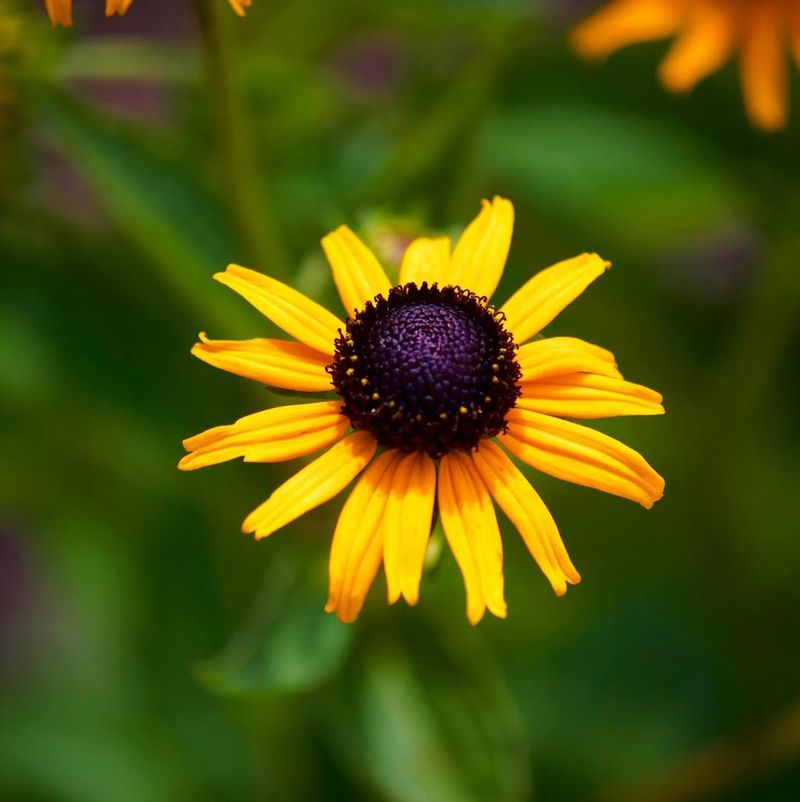
Bright, bold, and nearly impossible to miss, Black-Eyed Susan is one of Michigan’s most beloved native wildflowers. Its sunny yellow petals surrounding a rich, dark brown center make it look like a tiny burst of sunshine standing tall in a field.
Blooming from June all the way through October, this cheerful plant keeps Michigan gardens colorful for months.
Black-Eyed Susan thrives in full sun and is remarkably adaptable. It grows well in dry, sandy soils as well as average garden beds, making it a smart choice for gardeners across Michigan who deal with different soil types.
Once established, it generally requires minimal watering and maintenance under normal Michigan conditions.
Bees and butterflies absolutely love this plant, visiting its open blooms repeatedly throughout the day. Goldfinches also snack on the seed heads in late summer and fall, making this flower a true wildlife magnet.
Planting it in clusters creates a stunning visual display and gives pollinators a reliable food source. If you want a low-maintenance, high-reward native flower for your Michigan yard, Black-Eyed Susan deserves a top spot in your garden plan.
2. Butterfly Weed Attracting Pollinators With Ease
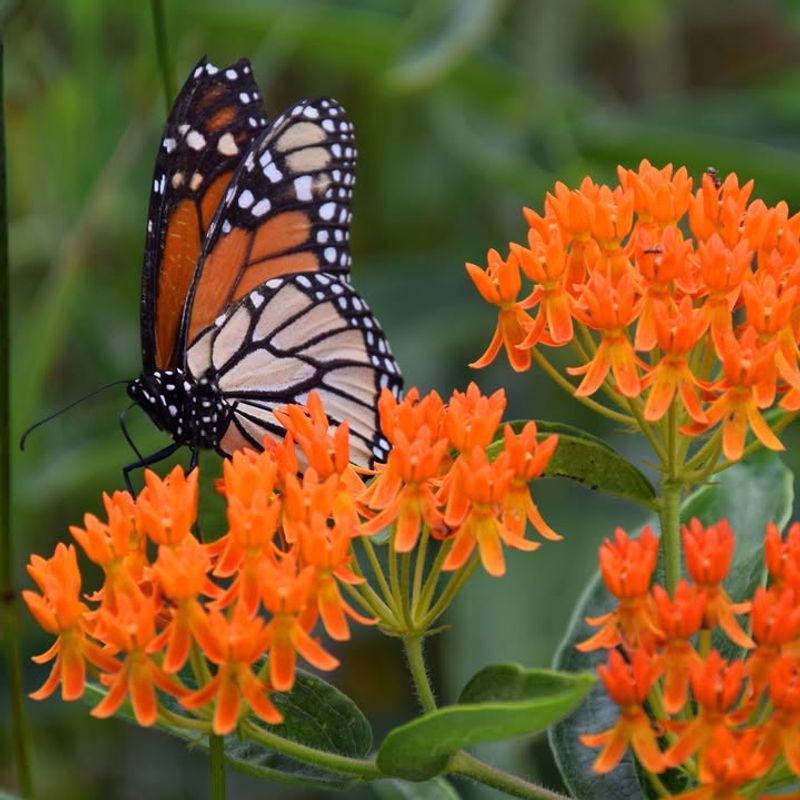
Few native plants in Michigan can match the electric energy of Butterfly Weed. Its clusters of vivid orange flowers practically glow in the summer sun, drawing monarch butterflies, bumblebees, and swallowtails from yards away.
Blooming from June through August, this perennial often performs well year after year with minimal care.
Butterfly Weed belongs to the milkweed family, which means it plays a critical role in the monarch butterfly’s life cycle. Monarch caterpillars feed exclusively on milkweed leaves, so planting Butterfly Weed in your Michigan yard directly supports one of North America’s most iconic and at-risk butterfly species.
That alone makes it worth growing.
Unlike many milkweeds, this species prefers dry, well-drained sandy soils and full sun, which makes it a natural fit for Michigan’s sandy Lower Peninsula regions. It does not like to be moved once established, so pick a permanent sunny spot and let it settle in.
Over time, it spreads slowly and forms beautiful, long-lasting colonies. Adding Butterfly Weed to a native garden can provide valuable support for local pollinators.
Your Michigan Garden Changes Every Week. Your Plan Should Too.
Gardening in Michigan changes quickly throughout the season. Every Friday you’ll receive a simple weekly plan showing exactly what to plant, prune, fertilize, harvest, and protect so you never miss the right timing.
3. Purple Coneflower Standing Tall And Bold
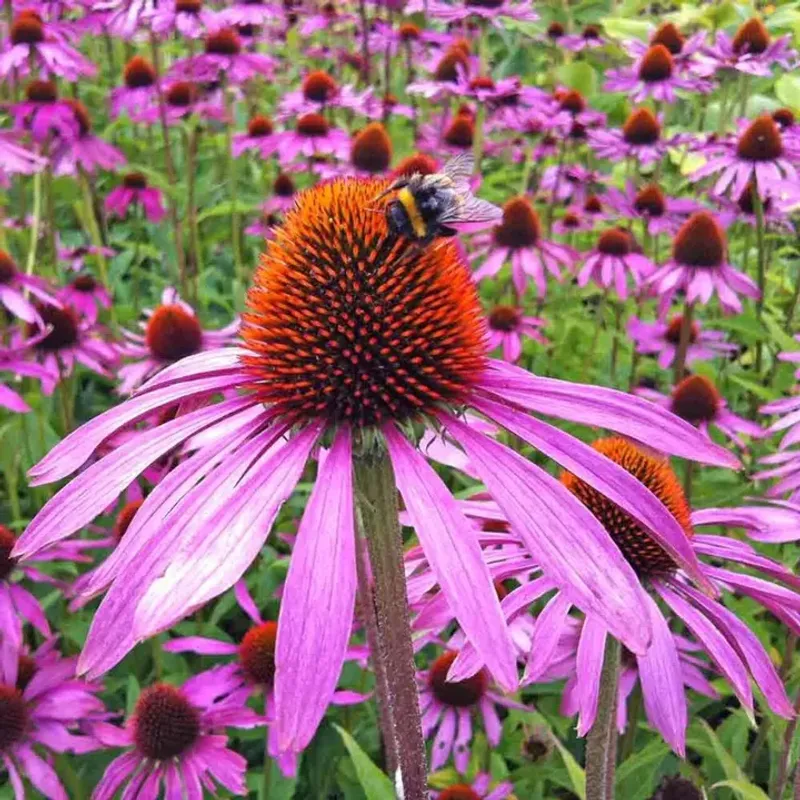
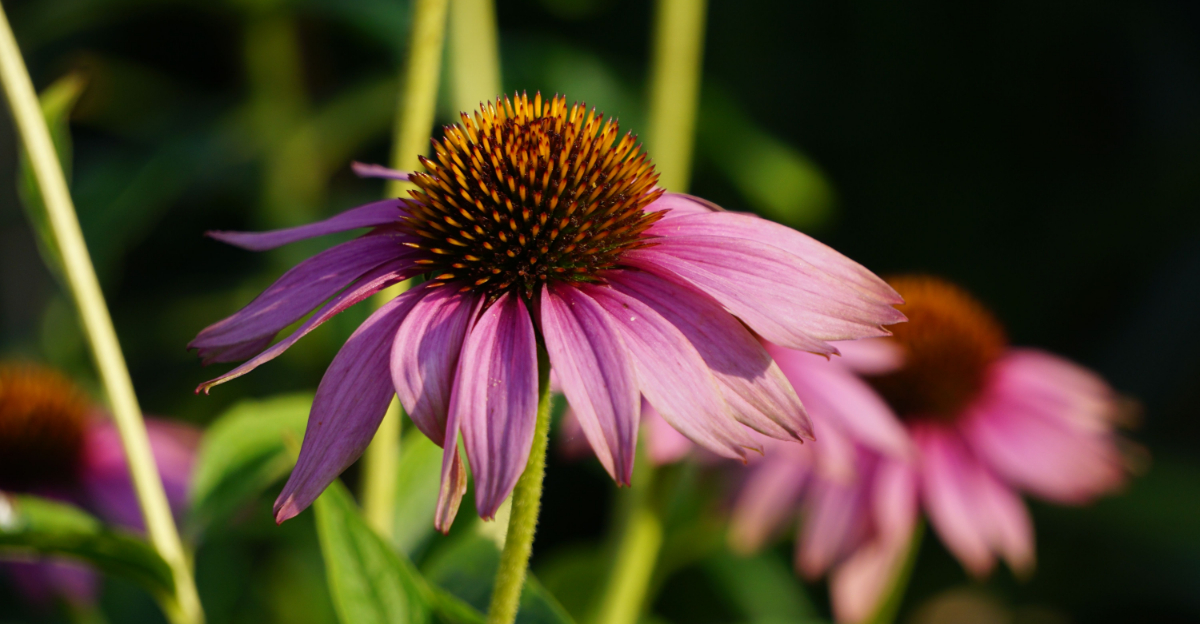
Walk through almost any Michigan native garden in midsummer and you are likely to spot the unmistakable silhouette of Purple Coneflower. Its swept-back lavender-pink petals and spiky, copper-toned central cone give it a look that is both wild and refined at the same time.
Blooming from June through October, it can provide extended color and wildlife value depending on conditions.
Beyond its beauty, Purple Coneflower has a long history of use in traditional herbal medicine. Many people know it as Echinacea, an herb commonly used to support immune health.
Native communities across the Great Plains and Midwest used various parts of the plant for generations before it became a popular supplement worldwide.
In Michigan gardens, Purple Coneflower is a powerhouse for pollinators. Bees swarm its open blooms throughout summer, and as the season winds down, goldfinches and other seed-eating birds flock to the dried seed heads.
It grows well in full sun to light shade and tolerates both dry and moderately moist soils. Planting it alongside Black-Eyed Susan or Blazing Star creates a classic Michigan prairie look that is stunning from a distance and fascinating up close.
4. Cardinal Flower Drawing Birds And Eyes
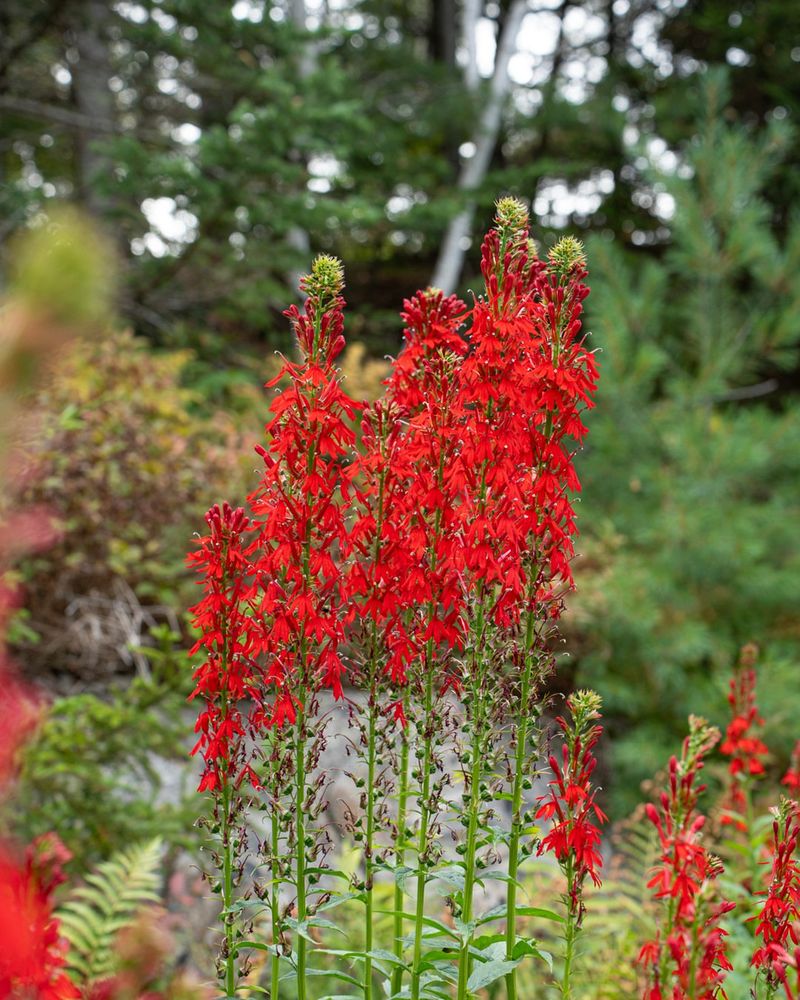
There is nothing subtle about Cardinal Flower. Its blazing red blooms are some of the most intensely colored flowers found anywhere in Michigan’s natural landscape.
Standing up to four feet tall along stream banks, pond edges, and wet meadows, this native perennial commands attention from the moment it opens in July and keeps blooming well into September.
Ruby-throated hummingbirds are its biggest fans. The tubular shape and vivid red color of Cardinal Flower’s blossoms are practically designed for hummingbird feeding, and watching one hover in front of a blooming spike is one of summer’s most magical Michigan moments.
Swallowtail butterflies and long-tongued bees also visit regularly, making it a multi-species pollinator magnet.
Cardinal Flower prefers consistently moist to wet soil and partial to full sun, so it shines in rain gardens, along Michigan’s many lakeshores, and near backyard water features. It can be a bit short-lived as an individual plant, but it self-seeds freely, meaning new plants pop up nearby each year to carry on the show.
With the right conditions, it can produce striking red blooms in your Michigan landscape, though results may vary.
5. Joe‑Pye Weed Towering With Summer Color
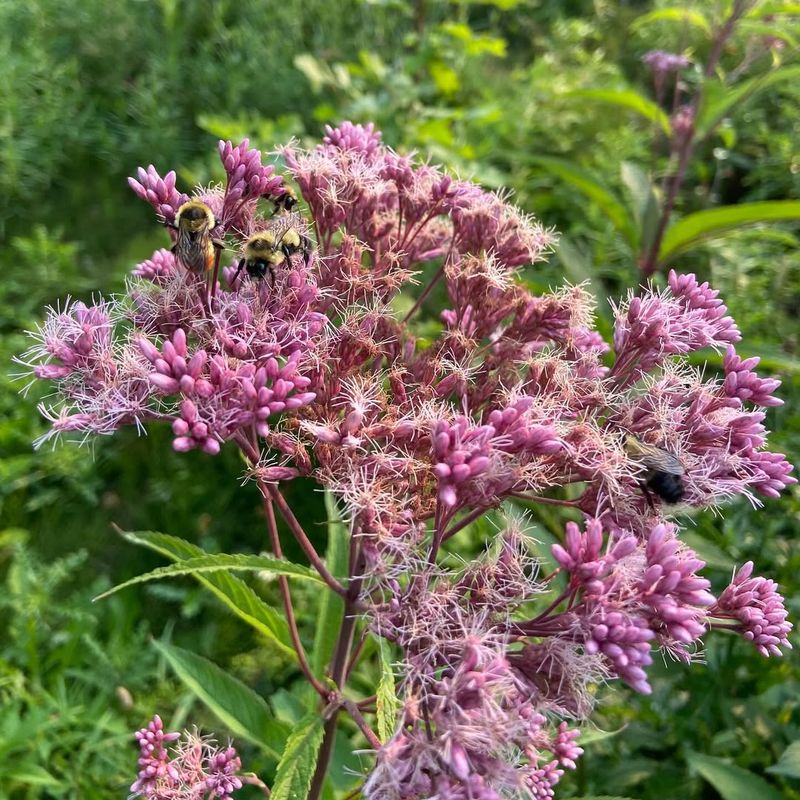
Joe-Pye Weed is the kind of plant that makes a statement. Growing anywhere from four to seven feet tall, it towers above most other wildflowers in a Michigan meadow, topped with massive, domed clusters of dusty pink blooms that appear in mid to late summer.
Bees and butterflies gather on these flower heads in huge numbers, creating a buzzing, fluttering spectacle that lasts for weeks.
Named after a legendary Native American healer who reportedly used the plant medicinally, Joe-Pye Weed has deep roots in North American history. Today it is celebrated more for its ecological value than its herbal history, though it remains a fascinating plant with a great story behind its unusual name.
In Michigan, Joe-Pye Weed grows naturally in moist meadows, stream banks, and woodland edges. It thrives in full sun to partial shade and prefers rich, consistently moist soil.
Because of its impressive height, it works best at the back of a garden border or planted in naturalized areas where it can spread freely. Pairing it with Cardinal Flower and Swamp Milkweed creates a stunning late-summer Michigan wildflower display that pollinators simply cannot resist visiting all season long.
6. Great Lobelia
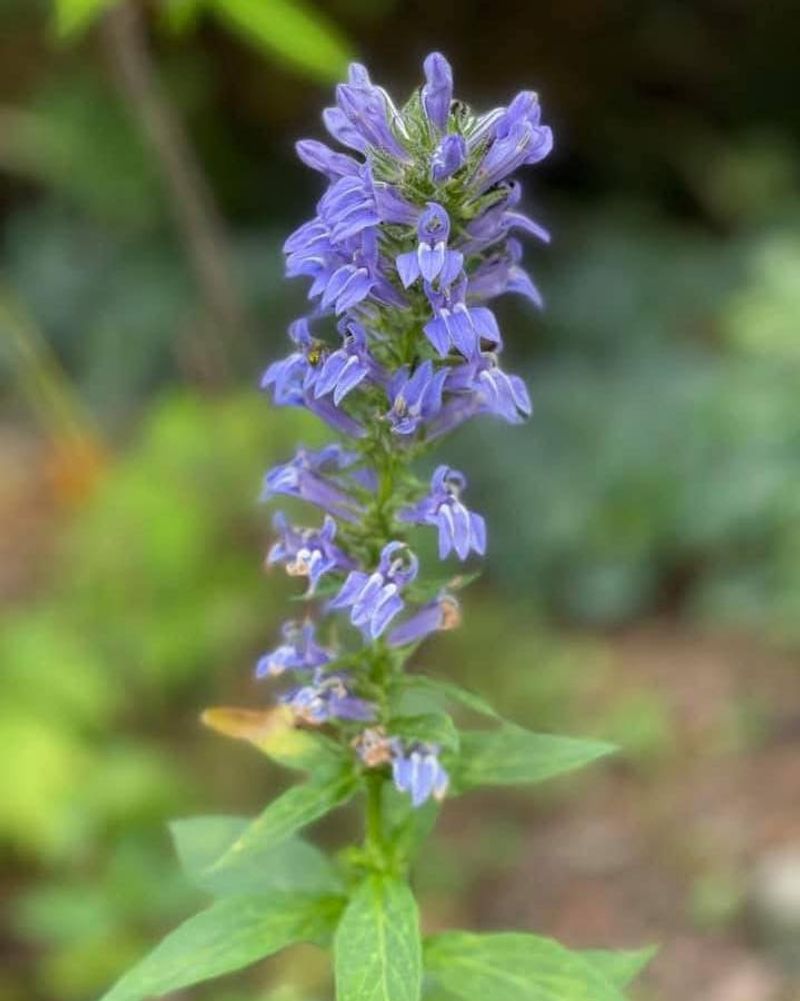
Not every wildflower needs full sun to shine, and Great Lobelia proves that beautifully. Also known as Blue Cardinal Flower, this striking native Michigan plant produces tall, elegant spikes covered in deep blue-violet tubular blooms from July through September.
It brings rich, cool color to shaded and partially shaded spots where most wildflowers struggle to perform.
Great Lobelia is closely related to Cardinal Flower and shares its love of moist soil. You will often find both species growing side by side along Michigan’s stream banks and in wet woodland clearings.
Together they create a striking red-and-blue contrast that is visually appealing in naturalized plantings. Planting them together in a rain garden or near a water feature is a simple way to recreate that wild Michigan woodland look.
Hummingbirds and long-tongued bumblebees are the primary visitors to Great Lobelia’s blooms, drawn in by the tubular flower shape and abundant nectar. The plant grows two to four feet tall and spreads slowly over time through self-seeding.
It is an excellent choice for Michigan gardeners who want to add native color to shadier parts of the yard without resorting to non-native plants that offer little value to local wildlife.
7. Swamp Milkweed Supporting Pollinators Abundantly
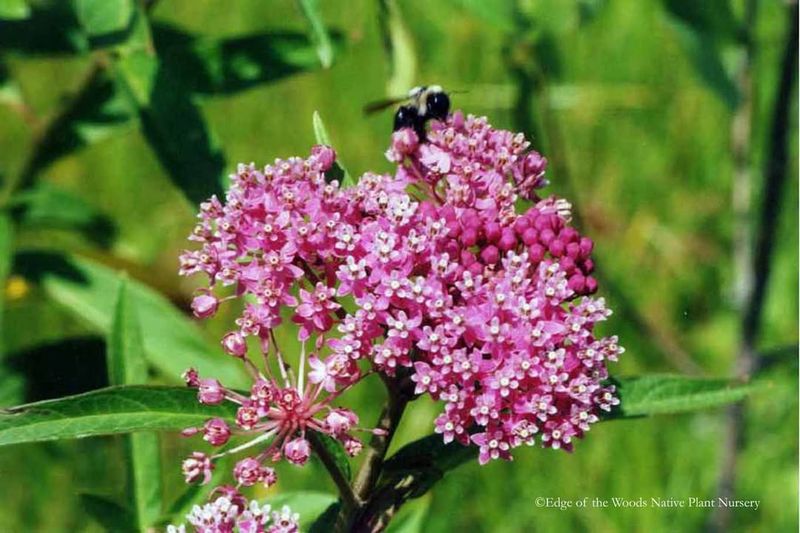
One of the unsung heroes of Michigan’s native plant world is Swamp Milkweed. While it may not have the flashiest name, its rosy-pink flower clusters are genuinely beautiful, and its value to monarch butterflies and other pollinators is truly remarkable.
Blooming from late June through August, it fills Michigan’s wet meadows, stream edges, and rain gardens with soft, sweet-smelling color.
Like Butterfly Weed, Swamp Milkweed is a true milkweed, which means monarch butterflies use it as a breeding plant. Female monarchs lay eggs on its leaves, and the caterpillars that hatch feed on the foliage as they grow.
Milkweed plants like this one help support monarch populations across Michigan and North America.
Unlike Butterfly Weed, Swamp Milkweed loves moisture. It thrives in wet to consistently moist soils and does well in full sun to partial shade, making it ideal for low-lying Michigan yards, rain gardens, and pond margins.
It grows three to five feet tall and spreads gradually through underground rhizomes, eventually forming lush, wildlife-friendly colonies. If supporting monarch butterflies while adding gorgeous summer color to your Michigan garden sounds appealing, Swamp Milkweed belongs in your planting list without question.
8. Yellow Coneflower Brightening Any Spot
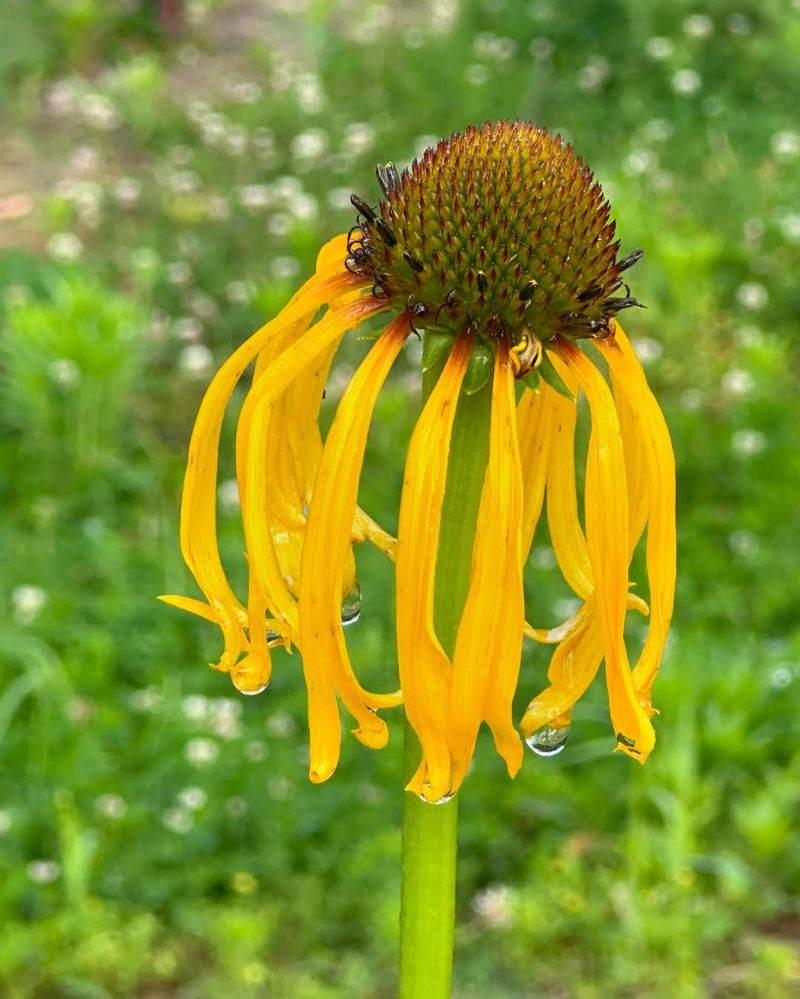
Sometimes called Gray-Headed Coneflower or Prairie Coneflower, Yellow Coneflower is a tall, graceful native Michigan wildflower that adds a relaxed, airy feel to any garden or meadow planting. Its long, drooping yellow petals hang down from a distinctive thimble-shaped center cone, giving it a look that is slightly different from its more famous cousin, Purple Coneflower.
Blooming from July through September, it is a reliable midsummer performer.
Yellow Coneflower is a true prairie plant at heart. In Michigan, it grows naturally in open prairies, dry meadows, and roadsides, especially in the southern Lower Peninsula where prairie remnants still exist.
It is exceptionally drought-tolerant once established and thrives in poor, well-drained soils where other plants may struggle to survive.
Bees and butterflies visit the blooms regularly throughout summer, and the seed heads that form in late summer attract songbirds looking for an easy meal before migration. Growing three to five feet tall, Yellow Coneflower works well in the middle or back of a native garden border.
Combining it with Blazing Star and Black-Eyed Susan creates a classic Michigan prairie palette that celebrates the natural beauty of the region while supporting an impressive variety of local wildlife.
9. Blazing Star Catching Attention Instantly
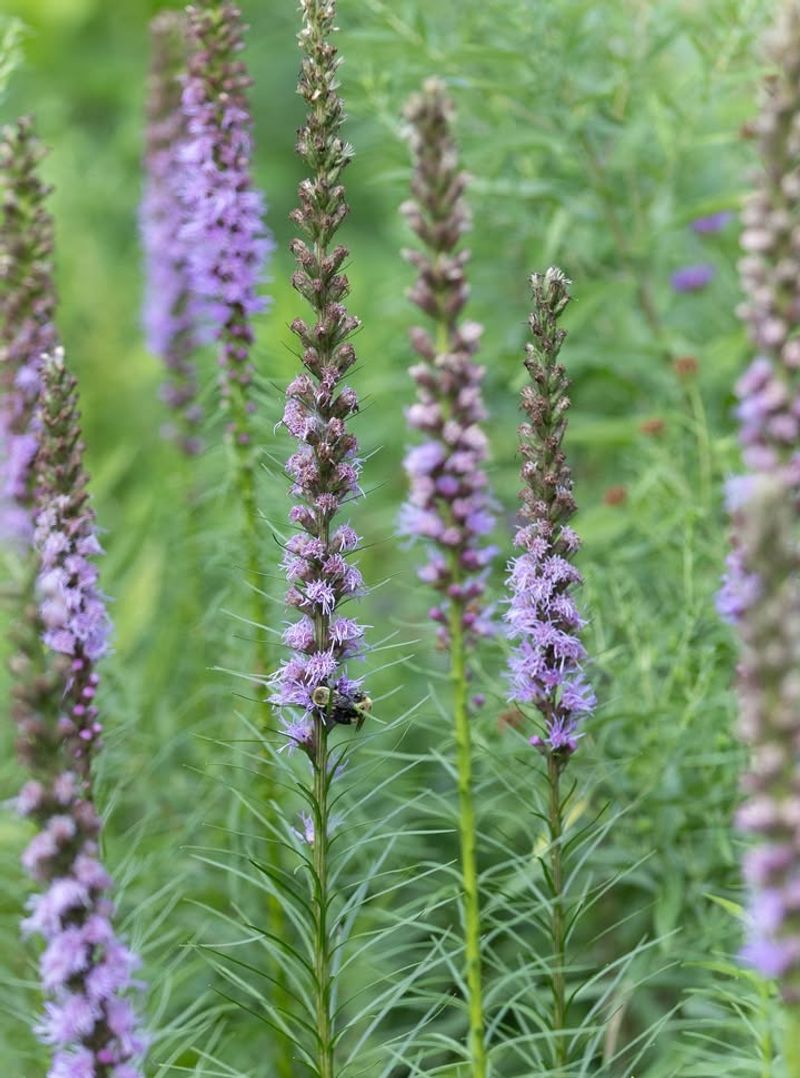
One of those wildflowers that stops people in their tracks is Blazing Star. Its tall, wand-like spikes of bright magenta-purple blooms are unlike almost anything else growing in a Michigan summer garden.
What makes it even more interesting is the way it blooms from the top of the spike downward, which is the opposite of most flowering plants. Blooming from July through September, it is a true midsummer showstopper.
Monarch butterflies, swallowtails, and bumblebees treat Blazing Star like a destination. On a warm August afternoon in Michigan, a patch of Blazing Star can attract many pollinators throughout the day, depending on conditions.
Its nectar-rich flowers are especially valuable during the height of summer when many other plants have already finished blooming.
Also known as Liatris or Dense Blazing Star, this native Michigan plant grows from a corm and prefers full sun and well-drained soil. It handles drought surprisingly well and even performs in sandy, nutrient-poor soils that frustrate many gardeners.
Growing two to four feet tall, it adds strong vertical interest to garden beds and meadow plantings. Pairing Blazing Star with Yellow Coneflower and Purple Coneflower creates a bold, pollinator-packed Michigan native garden display that looks professionally designed with very little effort.
10. Common Evening Primrose Showing Unique Charm
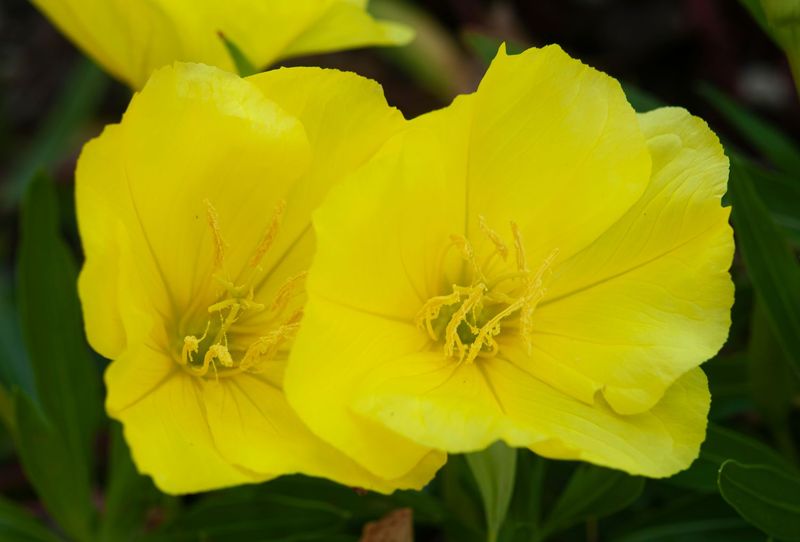
Among wildflowers, Common Evening Primrose stands out with its unique charm. Unlike most wildflowers that open in the morning sun, this Michigan native waits until evening to unfurl its large, silky yellow blooms, releasing a soft, sweet fragrance that drifts through the warm night air.
Blooming from June through September, it lights up roadsides, meadows, and garden edges with golden color from dusk to dawn.
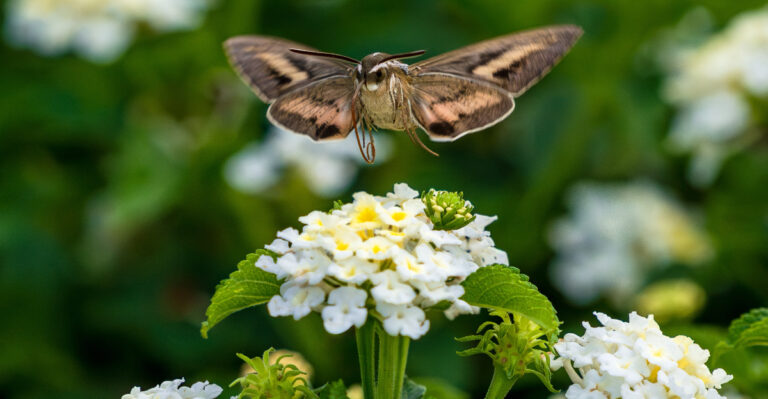
Night-flying moths are its most devoted pollinators, particularly sphinx moths that hover like tiny hummingbirds in front of the open flowers. This evening blooming strategy is a clever adaptation that reduces competition with daytime pollinators and gives Common Evening Primrose a unique ecological role in Michigan’s native plant community.
Watching it open at dusk is a surprisingly magical experience.
Common Evening Primrose is a hardy and adaptable native wildflower that performs well in many Michigan sites. It grows in dry, sandy soils, disturbed areas, and roadsides without any extra care or watering.
Growing two to five feet tall with a strong central stalk, it self-seeds freely and can naturalize quickly in open areas. For Michigan gardeners seeking a low-effort native plant that supports nighttime pollinators and adds yellow color from midsummer through early fall, Common Evening Primrose is a reliable and often overlooked option.