Why Your Roses Keep Struggling In Pennsylvania Summers (And How To Help Them Recover)
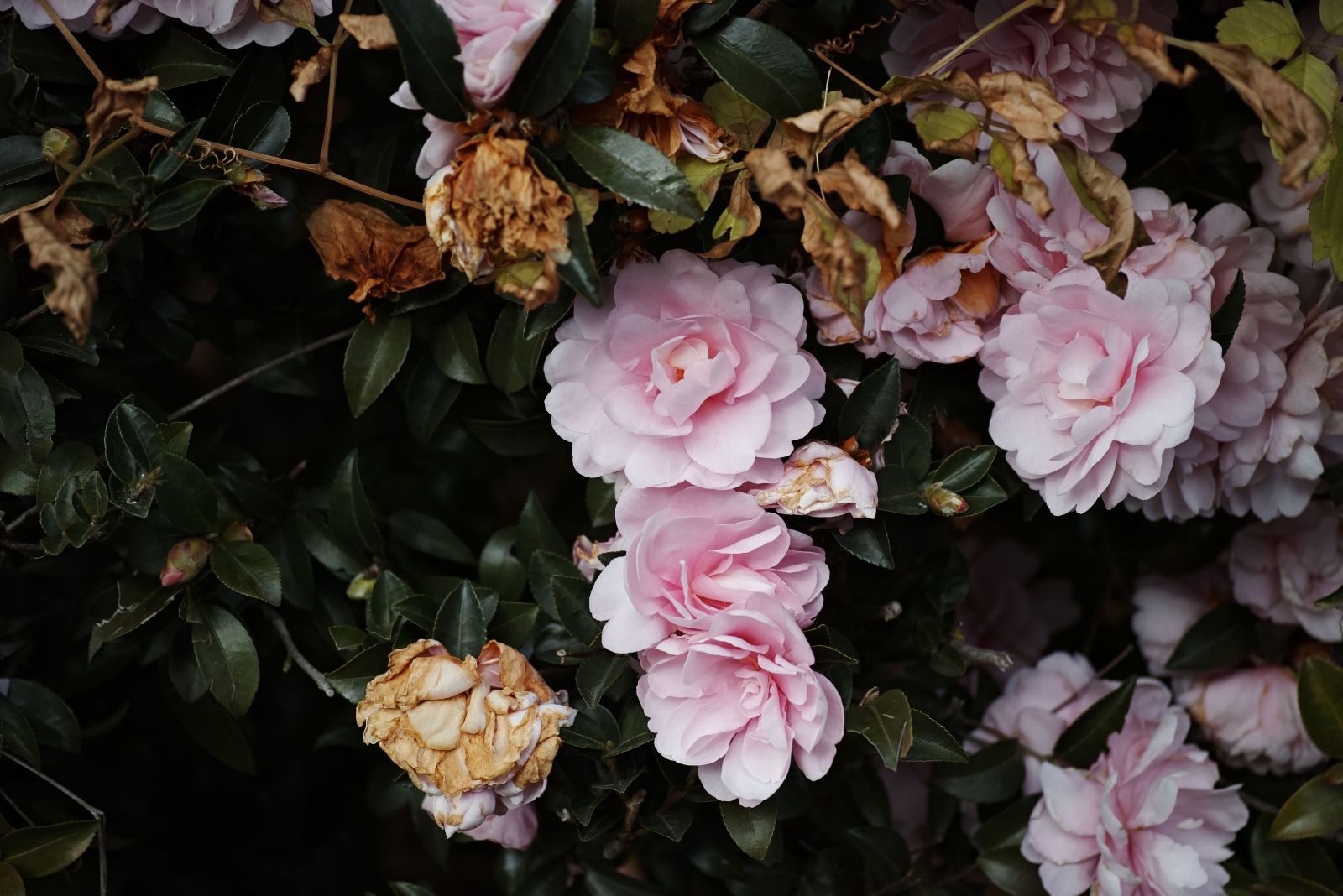
Roses can be a showstopper in Pennsylvania gardens, but when summer heat arrives, they can start to show signs of stress. The vibrant blooms you dream of can quickly turn into wilted petals and drooping leaves, leaving you wondering what went wrong.
The truth is that roses, like many other plants, have their limits when it comes to high temperatures, humidity, and even inconsistent watering. In a Pennsylvania summer, these factors can add up quickly and leave your roses looking less than their best.
The good news is that with a little attention, your roses can bounce back and thrive through the summer months.
By identifying the causes of their struggle, whether it’s overwatering, poor soil, or too much sun exposure, you can take simple steps to help them recover.
With the right care, you can keep your roses healthy, vibrant, and ready to bloom year after year, even in the heat of a Pennsylvania summer.
1. Insufficient Watering During Hot, Dry Spells
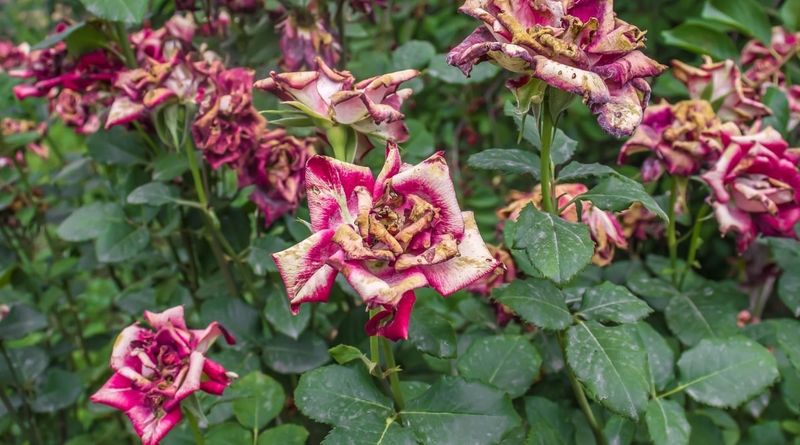
Picture this: it is the middle of July in Pennsylvania, the sun is blazing, and your roses are starting to droop and look sad. One of the most common reasons roses struggle during summer is simply not getting enough water.
When the weather turns hot and dry, roses need more moisture than usual to stay healthy and keep blooming.
Pennsylvania summers can bring stretches of dry weather that dry out the soil fast. Roses have deep roots and need water that reaches down at least six to eight inches into the ground.
Shallow watering only wets the top layer of soil, which evaporates quickly in the heat and leaves the roots thirsty.
The best time to water your roses is early in the morning. Morning watering gives the plant time to soak up moisture before the afternoon heat arrives.
It also helps keep the leaves dry, which reduces the chance of fungal problems later in the day.
Aim to water deeply two to three times per week during hot, dry periods. Use a slow, steady stream of water at the base of the plant rather than spraying the leaves. A drip irrigation system or soaker hose works really well for this.
Adding a two to three inch layer of mulch around the base of your roses can also make a big difference. Mulch holds moisture in the soil and keeps roots cooler during those blazing Pennsylvania afternoons.
Organic mulches like wood chips or shredded bark work great and also add nutrients to the soil as they break down over time.
2. Too Much Sun Exposure
Most people think roses love full sun all day long, but too much of a good thing can actually work against you. During Pennsylvania summers, afternoon temperatures can climb well above 85 degrees Fahrenheit.
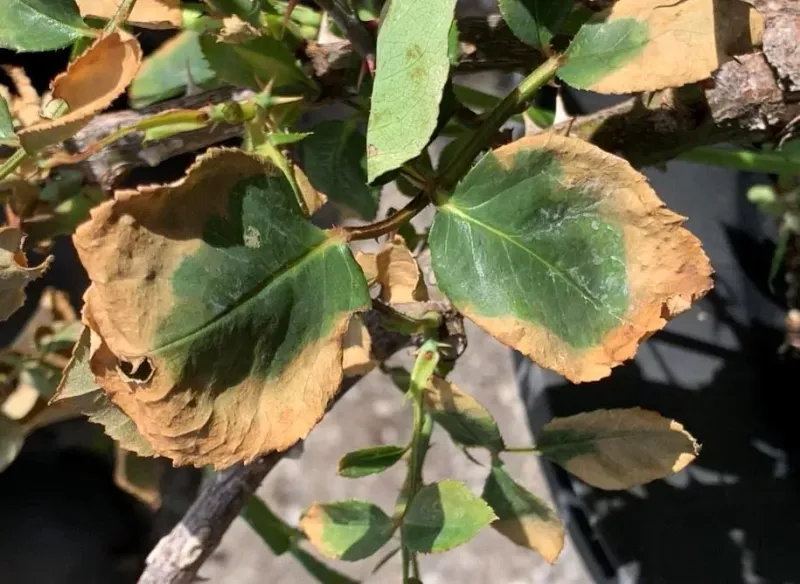
That kind of intense heat, combined with direct sunlight for hours on end, can literally scorch rose petals and burn the edges of leaves.
When roses get too much afternoon sun, you might notice the flowers fading faster than normal, petals turning brown at the edges, or leaves looking bleached and crispy. These are all signs that your roses are dealing with sun stress and need some relief.
Your Pennsylvania Garden Changes Every Week. Your Plan Should Too.
Gardening in Pennsylvania changes quickly throughout the season. Every Friday you’ll receive a simple weekly plan showing exactly what to plant, prune, fertilize, harvest, and protect so you never miss the right timing.
The ideal setup for roses in Pennsylvania is a spot that gets bright morning sun and some shade during the hottest afternoon hours. Morning sun helps dry any dew on the leaves, which lowers the risk of disease.
Afternoon shade gives the plant a break during the most intense part of the day, usually between noon and four o’clock.
If your roses are already planted in a very sunny spot, you have a few options. You can use a lightweight shade cloth to block some of the afternoon sun without cutting off airflow. You can also plant taller shrubs or install a garden structure nearby to create natural shade.
Potted roses are easier to manage since you can simply move them to a shadier location during heat waves. For in-ground roses, planning ahead and choosing the right planting spot in the first place saves a lot of trouble.
Pennsylvania gardeners who pay attention to sun patterns in their yard tend to have much healthier rose plants overall.
3. Poor Soil Drainage Or Soil Health
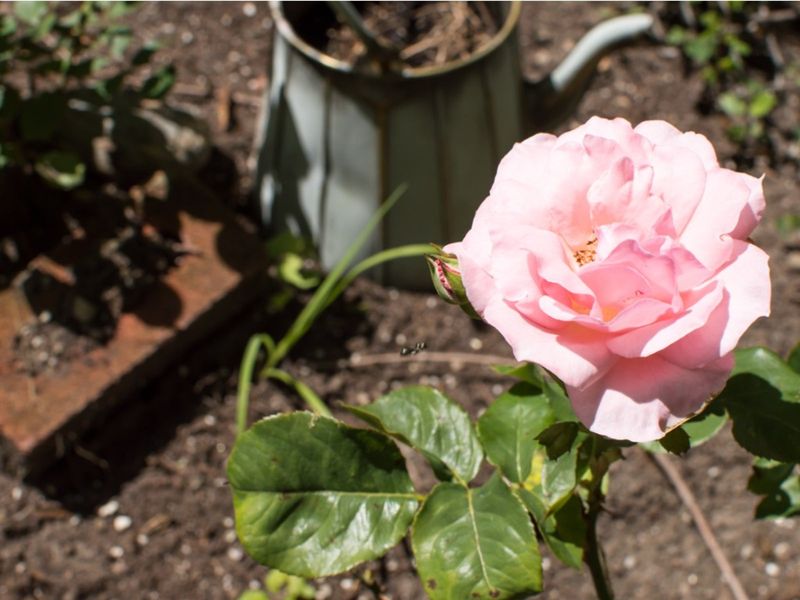
Healthy roses start from the ground up, and in Pennsylvania, soil quality is something every rose grower needs to take seriously. Many areas across the state have heavy clay soils that compact easily and drain poorly.
When water sits around the roots for too long, roots cannot breathe properly, and the plant starts to suffer in a big way.
Poor drainage can cause roots to become waterlogged, which cuts off their access to oxygen. Without enough oxygen, roots struggle to absorb nutrients, leaving the plant weak and more vulnerable to heat stress during summer months.
You might notice yellowing leaves, stunted growth, or wilting even after watering as signs of a drainage problem.
Compacted soil is another issue that affects many Pennsylvania gardens, especially in areas with heavy foot traffic or where the ground has never been amended.
Compacted soil makes it hard for roots to spread and grow, which limits the plant’s ability to find water and nutrients on its own.
Fixing poor soil starts with adding organic matter. Mixing in compost, aged manure, or a quality soil amendment loosens compacted soil and improves drainage over time.
It also adds beneficial microbes and nutrients that roses need to stay strong through the summer.
Getting a soil test is a smart move too. Pennsylvania State University Extension offers affordable soil testing services that tell you exactly what your soil needs.
Roses prefer a pH between 6.0 and 6.5. If your soil is too acidic or too alkaline, nutrients become locked up and unavailable to the plant, no matter how much fertilizer you add.
4. Insect Pests (Aphids, Japanese Beetles, Etc.)
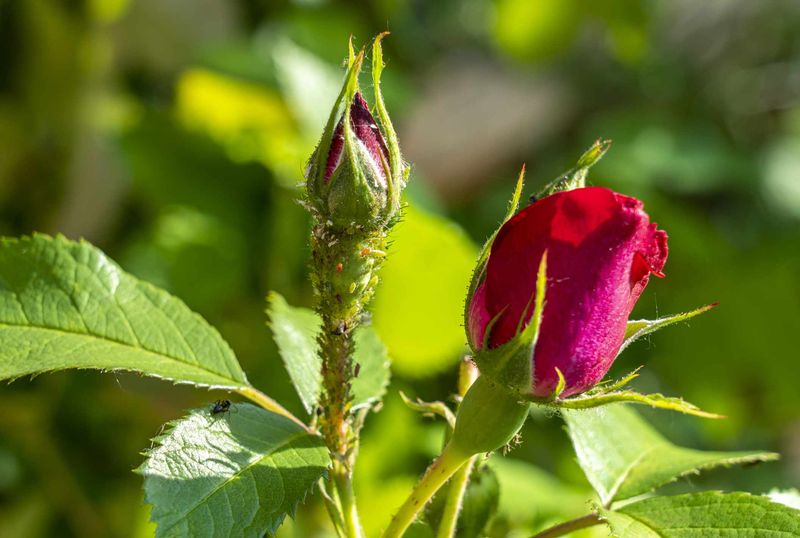
Summer in Pennsylvania is not just tough on roses because of the heat. It is also peak season for some of the most damaging garden pests around.
Aphids, Japanese beetles, and spider mites are three of the biggest troublemakers that target roses when temperatures rise, and they can do serious damage in a short amount of time.
Aphids are tiny, soft-bodied insects that cluster on new growth and flower buds. They suck the sap out of the plant, causing leaves to curl, yellow, and look distorted.
A heavy aphid infestation can weaken a rose plant quickly, especially during the stress of summer heat when the plant is already working hard to survive.
Japanese beetles are easy to spot because of their shiny green and copper bodies. They chew through rose petals and leaves, leaving behind a lacy, skeleton-like appearance.
These beetles are especially active in Pennsylvania from late June through August, which lines up perfectly with peak rose blooming season.
Spider mites are harder to see but cause just as much damage. They thrive in hot, dry conditions and leave behind tiny webs on the undersides of leaves. Affected leaves often look dusty or speckled and eventually drop off the plant.
The good news is that you have plenty of options for managing these pests. Insecticidal soap sprays work well against aphids and spider mites and are safe for beneficial insects when used correctly.
Neem oil is another excellent organic option that disrupts pest life cycles. For Japanese beetles, hand-picking them off plants in the early morning and dropping them into soapy water is surprisingly effective and satisfying.
5. Diseases (Black Spot, Powdery Mildew, Etc.)
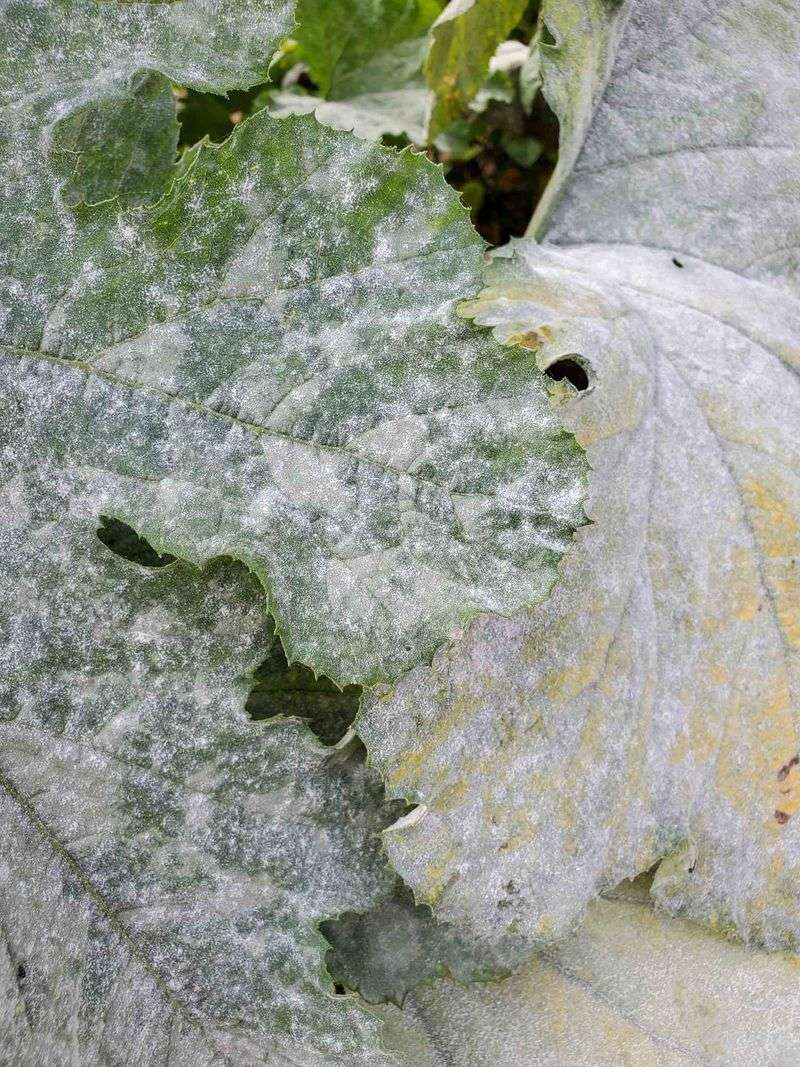
Pennsylvania summers bring heat and humidity together in a combination that fungal diseases absolutely love.
Black spot and powdery mildew are the two most common rose diseases gardeners deal with across the state, and both can spread quickly if conditions are right and nothing is done to stop them early.
Black spot shows up as dark, circular spots on the upper surface of rose leaves. Infected leaves often turn yellow around the spots and eventually drop off the plant.
Losing leaves weakens the rose significantly because fewer leaves means less energy produced through photosynthesis. A plant that keeps losing leaves all summer will struggle to bloom and recover.
Powdery mildew looks exactly like its name suggests. It creates a white, powdery coating on leaves, stems, and buds.
It tends to appear when nights are cool and days are warm and humid, which is a very common pattern in Pennsylvania during late summer. Affected plant parts often curl and become distorted.
Good garden hygiene goes a long way in preventing both diseases. Always clean up fallen leaves and debris from around your rose plants because fungal spores can overwinter in old plant material and reinfect plants the following season.
Avoid wetting the foliage when you water, and always water at the base of the plant. Pruning your roses to open up the center of the plant improves airflow, which makes it harder for fungal diseases to take hold.
If you already see signs of disease, applying a fungicide labeled for roses can slow or stop the spread.
Copper-based fungicides and sulfur sprays are popular choices among Pennsylvania gardeners looking for effective, relatively gentle treatments.
6. Improper Pruning Or Deadheading
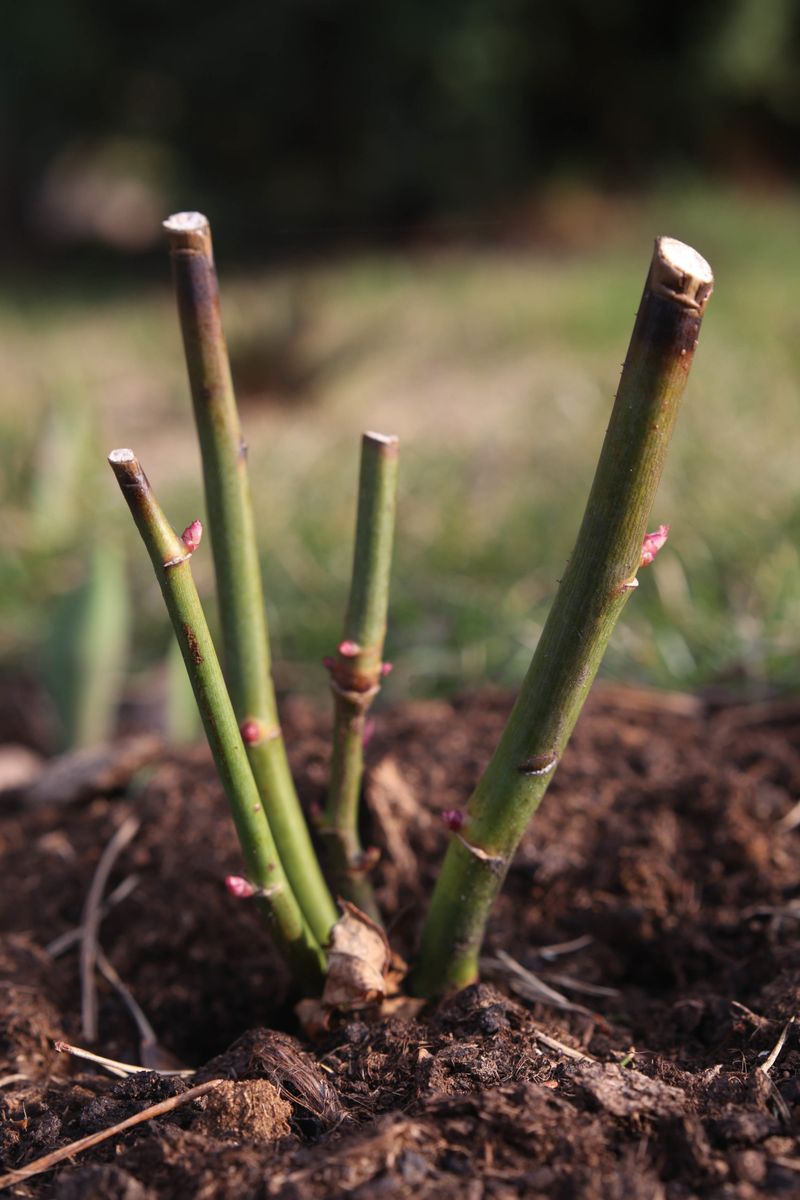
Not many gardeners realize just how much impact pruning has on how well roses perform through the summer.
When roses are pruned incorrectly or not pruned at all, the plant wastes energy on damaged, crowded, or spent growth instead of putting that energy toward producing fresh, healthy blooms.
Deadheading is one of the simplest and most rewarding things you can do for your roses. Deadheading means removing spent or faded flowers before they form seed heads.
When a rose bush is allowed to form seed heads, it thinks its job is done for the season and slows down blooming. Regular deadheading sends a signal to the plant to keep producing more flowers.
To deadhead properly, cut the spent bloom down to the first set of five leaves below the flower. This encourages the plant to send out a new flowering shoot from that point.
Doing this every week or so during the blooming season keeps your roses looking fresh and encourages a much longer display of color.
Pruning for shape and health is also important. After the first big flush of blooms in late spring or early summer, a light shaping prune helps roses stay compact and encourages a strong second wave of flowers.
Always use sharp, clean pruning shears to make smooth cuts that heal quickly and do not invite disease into the plant.
Avoid heavy pruning during the hottest part of Pennsylvania summers because cutting back hard when a plant is already stressed can set it back significantly.
Stick to light maintenance pruning and deadheading through July and August, and save any major shaping for late winter or early spring when the plant is still dormant and ready to push out strong new growth.