11 Texas-Friendly Boxwood Alternatives That Instantly Elevate The Landscape
Is it possible to have the classic, structured look of a formal garden without the heartbreak of watching a boxwood struggle in the Texas sun?
While these iconic shrubs have long been a landscaping staple, our intense heat, alkaline soil, and unpredictable droughts often make them a high-maintenance gamble.
Fortunately, you don’t have to sacrifice elegance for endurance. Several hardy, Texas-friendly alternatives offer that same polished evergreen beauty while thriving in our challenging climate.
Whether you are designing a crisp formal hedge or a resilient mixed border, these low-maintenance stars provide the perfect foundation.
By choosing shrubs built for the Lone Star State, you can create a sophisticated landscape that stays green and vibrant all year long.
1. Dwarf Yaupon Holly Brings Shape And Texas Toughness
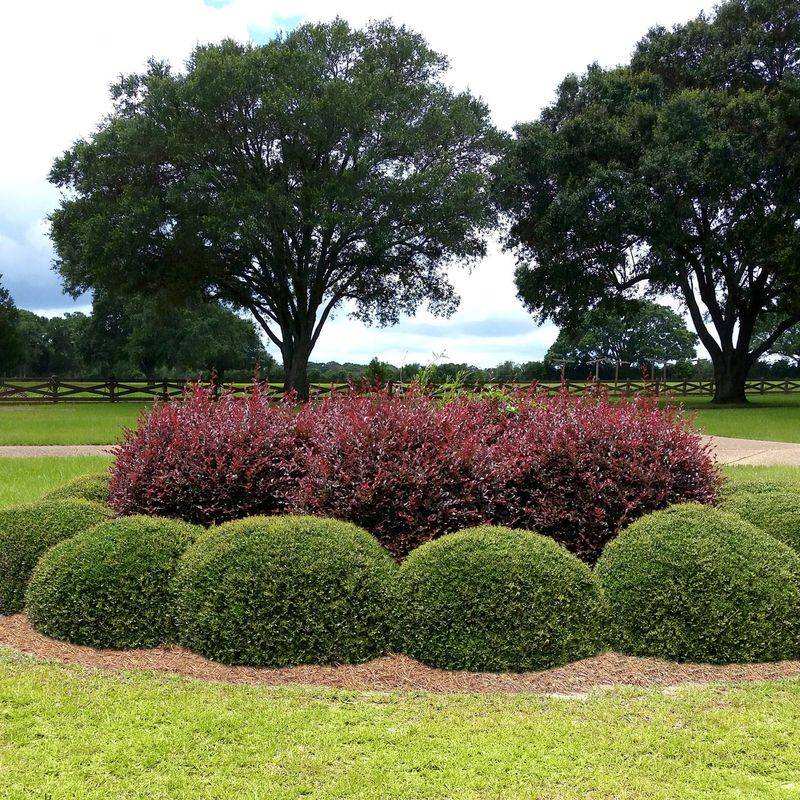
Few shrubs in the Texas plant world can match the all-around reliability of Dwarf Yaupon Holly.
As a native plant, it has spent centuries adapting to the exact conditions that make Texas gardening challenging, including heavy clay, sandy soil, full sun, and long dry stretches between rain events.
This compact evergreen typically reaches three to five feet tall and wide, making it an excellent choice for low borders, foundation plantings, and formal hedges.
Its small, rounded leaves give it a texture that reads similarly to boxwood from a distance, which is part of why so many Texas landscapers reach for it first when a client wants a structured look.
One common mistake is overwatering once the plant is established. Dwarf Yaupon Holly is genuinely drought-tolerant and actually performs better with less irrigation than most homeowners expect.
It grows well across nearly all of Texas, from the Panhandle to the Gulf Coast, and tolerates both full sun and partial shade without complaint.
Pruning is easy and forgiving, and the plant responds well to shaping into tidy mounds or low hedges that hold their form through the season.
2. Japanese Holly Offers A Classic Boxwood Look
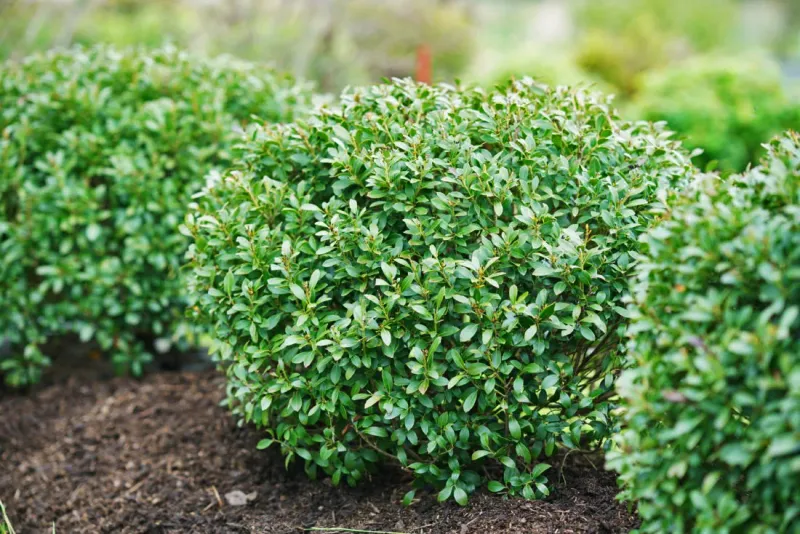
Japanese Holly is a fantastic option for Texas gardens, especially for those seeking a boxwood alternative.
However, this shrub tends to perform best in more acidic soils, which can pose a challenge for gardeners in Central and West Texas, where soils are often alkaline.
The high pH levels in these areas can lead to a condition known as iron chlorosis, which causes the leaves of Japanese Holly to yellow, hindering its growth and overall health.
The key to successfully growing Japanese Holly in these parts of Texas is to amend the soil properly before planting. A simple soil test can reveal whether your soil’s pH is too high, allowing you to address the problem early.
Adding sulfur to the soil is one effective way to lower its pH and create a more acidic environment that is suitable for Japanese Holly.
In addition to soil amendments, it’s important to plant the shrub in a location with well-draining soil and moderate watering. This will prevent waterlogging, which can further stress the plant.
Once the soil is amended and the plant is established, Japanese Holly thrives in the Texas climate, offering an elegant, boxwood-like appearance with minimal maintenance.
Your Texas Garden Changes Every Week. Your Plan Should Too.
Gardening in Texas changes quickly throughout the season. Every Friday you’ll receive a simple weekly plan showing exactly what to plant, prune, fertilize, harvest, and protect so you never miss the right timing.
By making these adjustments, gardeners in Texas can enjoy the beauty of Japanese Holly without worrying about its health.
3. Inkberry Holly Adds Soft Evergreen Texture
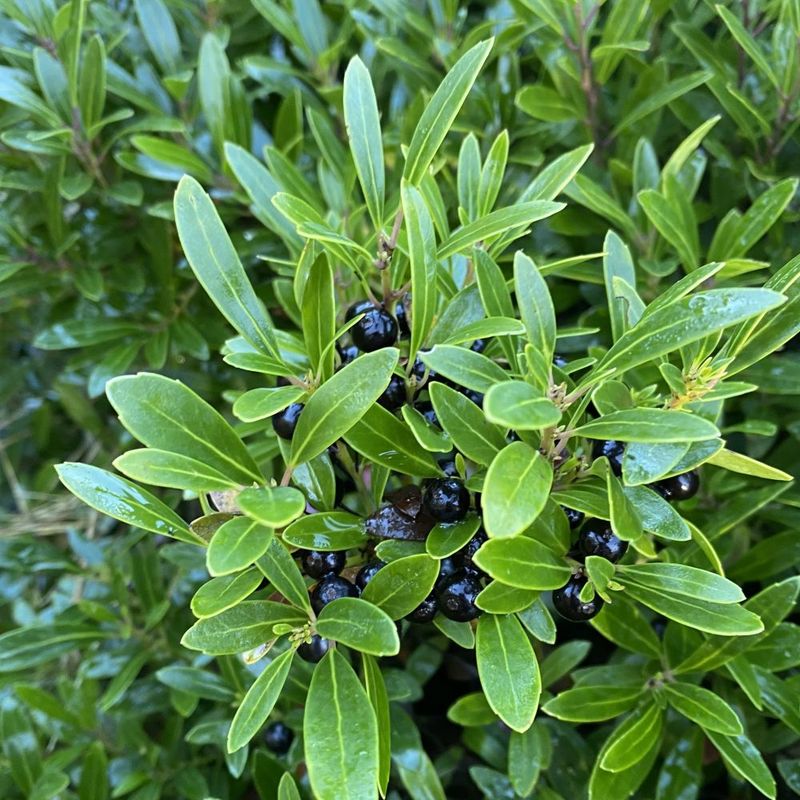
Inkberry Holly brings something a little different to the table compared to the more architectural options on this list.
Rather than crisp formal structure, it offers a softer, more relaxed evergreen presence that works beautifully in naturalistic borders, rain gardens, and low-maintenance landscape beds.
This shrub is a strong performer in East Texas and along the Gulf Coast, where it benefits from higher moisture and slightly acidic soils.
It can handle periodic wet conditions that would stress many other shrubs, making it a smart pick for low-lying spots or areas that collect rainwater.
The small black berries that appear in late summer and fall are a bonus, attracting birds and adding seasonal interest to the landscape.
Inkberry Holly grows at a moderate pace and typically reaches four to eight feet tall, though dwarf cultivars stay much more compact at around two to four feet.
Those smaller varieties are better suited for use as a boxwood-style substitute in borders and foundation plantings.
Full sun to partial shade works well, and while it appreciates consistent moisture, established plants show reasonable drought tolerance. Avoid planting in heavy alkaline soils, as this plant genuinely prefers more neutral to slightly acidic conditions.
4. Texas Sage Brings Silver Leaves And Purple Blooms
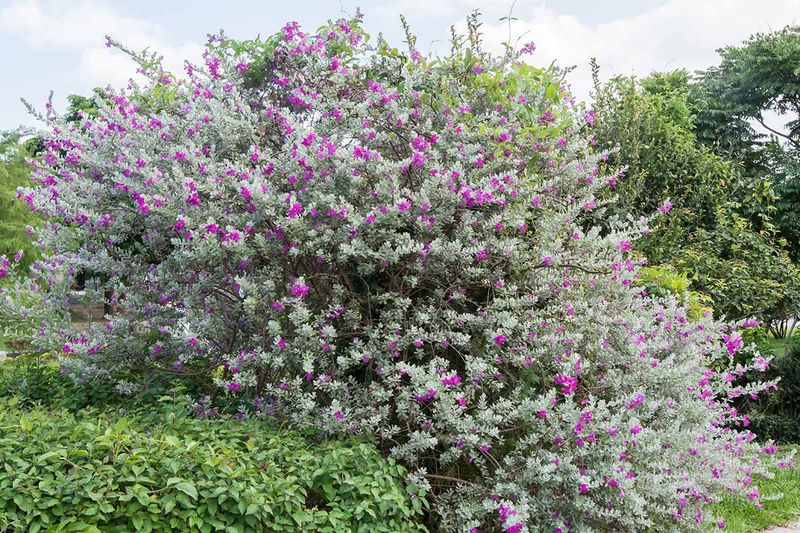
Walk through almost any West Texas or Hill Country neighborhood after a summer rainstorm and you will likely spot Texas Sage erupting into a cloud of purple blooms almost overnight.
This shrub has earned its nickname, the Barometer Bush, because it tends to flower in response to humidity and rainfall, putting on a show precisely when the rest of the landscape looks parched and tired.
Texas Sage is not a traditional boxwood look-alike, and that is perfectly fine.
What it offers instead is something more dramatic: silver-gray foliage that reflects heat and sunlight, a naturally rounded form that requires minimal pruning, and seasonal blooms that genuinely stop people in their tracks.
It works wonderfully as a specimen shrub, a low informal hedge, or a bold accent in xeriscape designs.
This plant demands excellent drainage above almost everything else. Heavy clay soils that stay wet will cause root problems quickly, so raised beds or amended planting areas are worth considering in those situations.
Texas Sage thrives in full sun and alkaline soils, making it one of the most broadly adaptable options for Central, West, and South Texas.
Overwatering and excessive fertilizing actually reduce blooming, so a hands-off approach tends to produce the best results.
5. Dwarf Burford Holly Creates A Dense, Polished Look
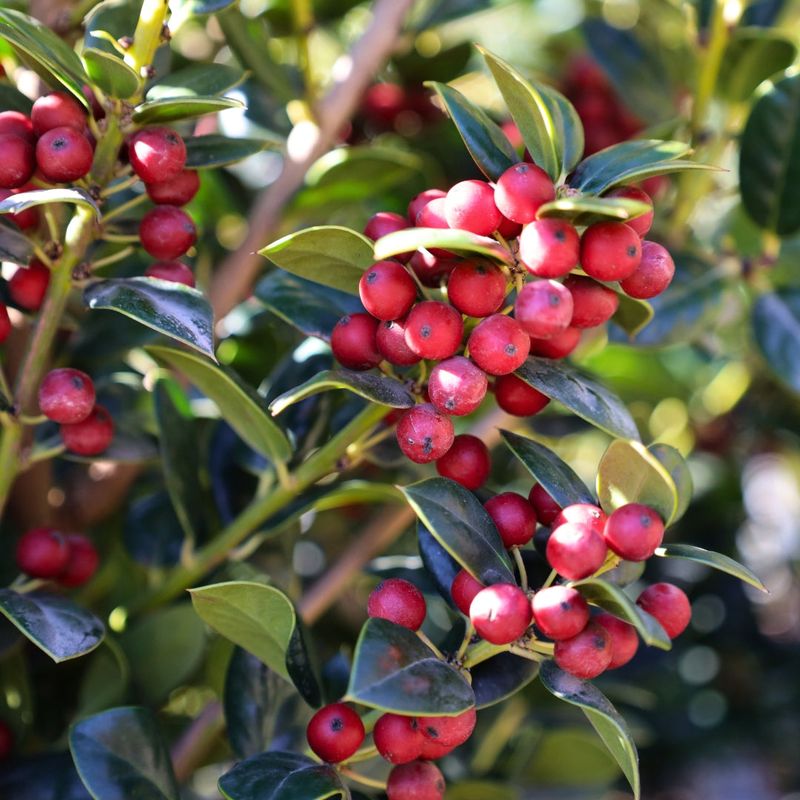
Glossy, dense, and remarkably tough, Dwarf Burford Holly is one of those workhorses that landscape professionals in Texas rely on year after year.
The deep green, slightly spiny leaves catch the light beautifully, and the bright red berries that appear in fall and winter add a festive touch that most evergreen alternatives simply cannot offer.
This compact holly typically grows four to six feet tall and wide, fitting neatly into foundation plantings, formal hedges, and corner accents without overwhelming smaller spaces.
It handles the heat and humidity of East and Southeast Texas extremely well and also performs solidly across Central Texas with proper irrigation during establishment.
The plant is adaptable to a range of soil types, though it prefers well-drained conditions and does not do well in areas with standing water.
One thing to keep in mind is that Dwarf Burford Holly has small but real spines on its leaves, which makes it a natural deterrent for foot traffic along borders and entry points.
Pruning is straightforward, and the shrub responds well to shaping once or twice a year.
Avoid shearing too aggressively in late summer, and give new plantings consistent water for the first full growing season to encourage strong root development before summer heat intensifies.
6. Podocarpus Adds Sleek Evergreen Structure
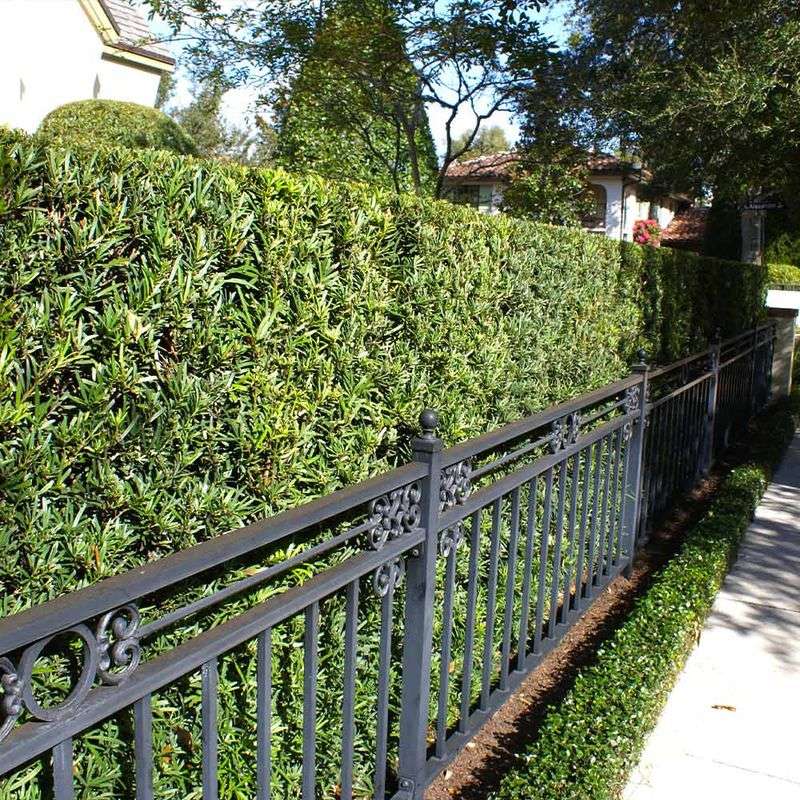
When a Texas landscape calls for something a little more refined and architectural, Podocarpus deserves serious consideration.
Sometimes called the Japanese Yew, this evergreen shrub features fine-textured, dark green, needle-like foliage that creates a sleek, vertical presence unlike anything else on this list.
It is particularly well-suited to modern and contemporary home designs where clean lines and structured greenery set the tone.
Podocarpus performs best in the warmer parts of Texas, including the Gulf Coast, South Texas, and the Houston area, where winters stay mild and summers are long.
It is not the right choice for the Panhandle or areas with regular hard freezes, as it has limited cold hardiness compared to other options here.
In the right climate, though, it grows into a handsome, tall hedge or privacy screen that stays dense and green year-round.
This plant prefers well-drained, slightly acidic soil and does best in full sun to partial shade. It tolerates moderate drought once established but appreciates deep, infrequent watering during dry stretches.
Avoid planting in low spots where water collects after rain. Pruning is easy and Podocarpus responds beautifully to shaping, making it an excellent choice for gardeners who want a formal, sculpted look without constant maintenance battles.
7. Rosemary Brings Fragrance And Neat Form
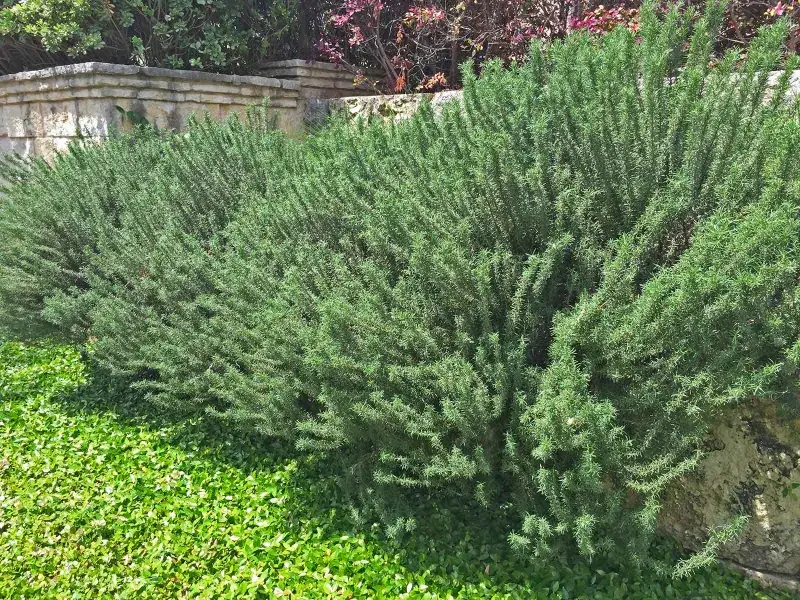
Most people think of rosemary as a kitchen herb, but in Texas landscapes it earns its keep as a legitimate structural shrub that happens to smell incredible.
Upright varieties can be shaped into low hedges, border accents, or even small topiary forms, giving the landscape that polished, intentional look that boxwood traditionally provides but with an aromatic bonus that no other plant on this list can match.
Rosemary thrives in the heat, alkaline soils, and dry conditions that challenge so many other plants across Texas. Full sun is non-negotiable for best performance, and excellent drainage is equally important.
Poorly drained or consistently wet soils are the fastest way to stress this plant, so raised beds or gravelly, amended soil make a real difference in areas with heavy clay.
In Central and West Texas, rosemary often performs like a true evergreen shrub, maintaining its form and color through mild winters with minimal care.
Along the Gulf Coast, high humidity can occasionally lead to root or stem issues, so spacing plants for good airflow helps significantly.
Pruning after bloom keeps the plant compact and tidy. Avoid cutting back into old, woody stems too aggressively, as rosemary does not always regenerate well from bare wood.
8. Abelia Adds Glossy Leaves And Soft Growth
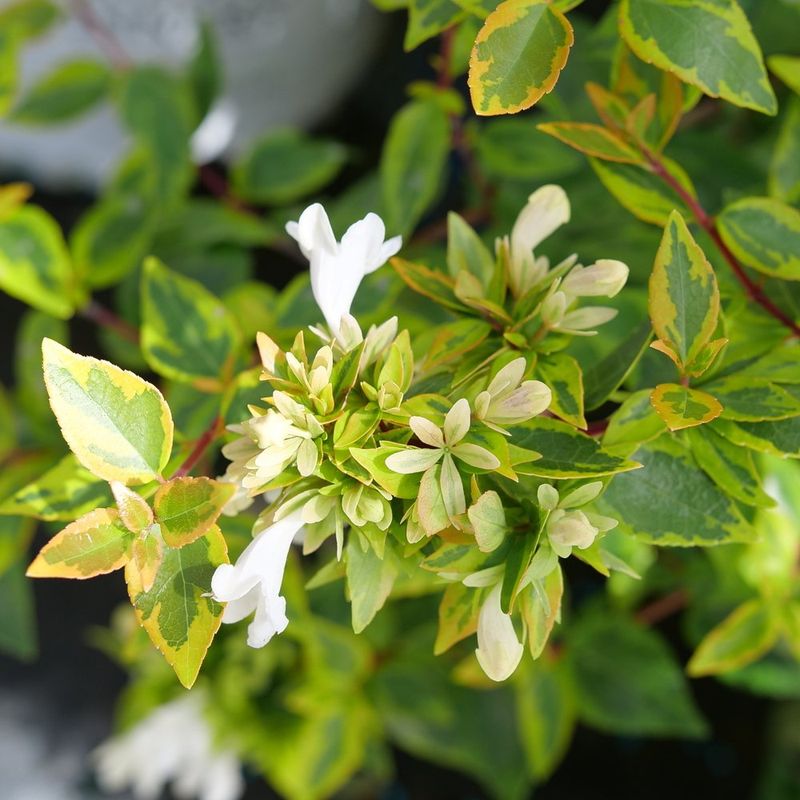
Abelia occupies a sweet spot between formal structure and relaxed cottage-style charm, which makes it one of the more versatile boxwood alternatives for Texas gardeners who want something that looks refined but does not demand constant shearing to stay attractive.
The glossy, arching foliage catches the light beautifully, and the small, tubular flowers that appear from late spring through fall attract pollinators in a way that few evergreen shrubs can.
Glossy Abelia, the most commonly planted variety, grows four to six feet tall with a graceful, slightly fountaining shape. It works well as an informal hedge, a foundation planting, or a transition shrub between taller trees and lower ground covers.
In formal landscapes, it can be pruned into a more contained form, though it looks most natural with only light shaping to remove wayward stems.
Abelia performs reliably across most of Texas, handling heat, humidity, and moderate drought with ease once established. It prefers well-drained soil and full sun to partial shade.
One mistake to avoid is heavy shearing into a boxy shape, which removes the flowering tips and reduces the plant’s seasonal appeal.
Instead, use selective thinning cuts to maintain a natural, open form that shows off both the foliage and the blooms throughout the growing season.
9. Dwarf Wax Myrtle Offers Easy Native Screening
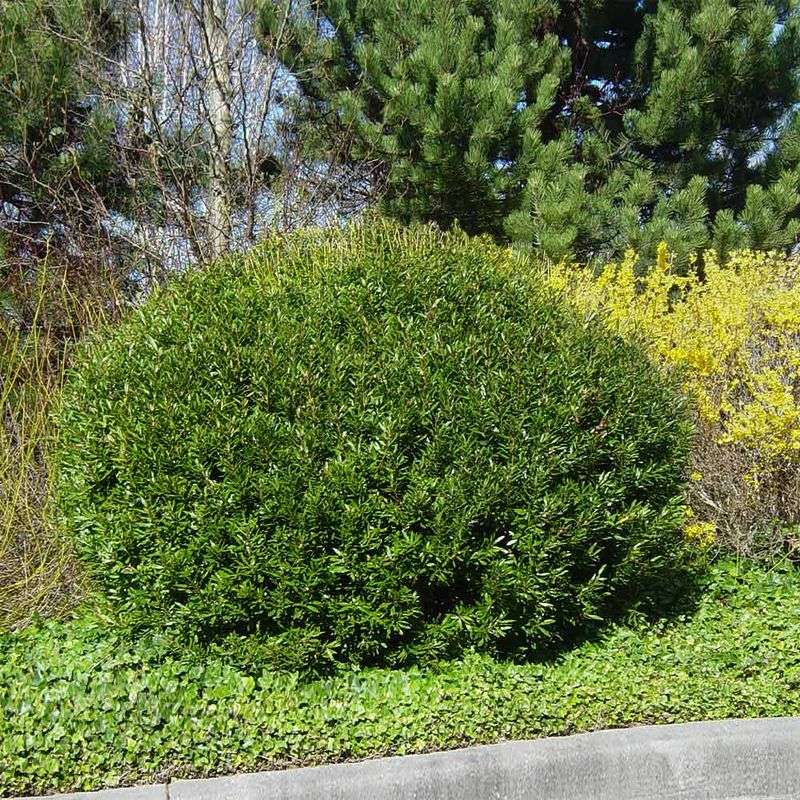
Native plants rarely get more practical than Dwarf Wax Myrtle.
This compact version of the beloved Texas native grows to around three to five feet tall, offering a manageable, evergreen presence that works beautifully as a low screen, informal hedge, or naturalistic border without demanding much in return from the gardener.
The fine-textured, aromatic foliage is one of Dwarf Wax Myrtle’s most appealing traits. Brush against the leaves and a pleasant, bay-like fragrance is released, a small but satisfying detail that makes working in the garden more enjoyable.
The small, waxy gray berries that appear on female plants also attract a variety of songbirds, adding wildlife value that purely ornamental shrubs cannot provide.
This plant adapts to a wide range of Texas soil conditions, including sandy, clay, and even periodically wet sites, which is a genuine advantage in coastal and East Texas gardens.
It grows in full sun to partial shade and shows solid drought tolerance once established.
Across much of the state, it stays evergreen through winter, though hard freezes may cause some tip damage in northern Texas. Recovery is typically quick in spring.
Avoid heavy pruning in fall, and instead do major shaping in late winter before new growth begins.
10. Waxleaf Privet Fills In Fast And Shapes Well
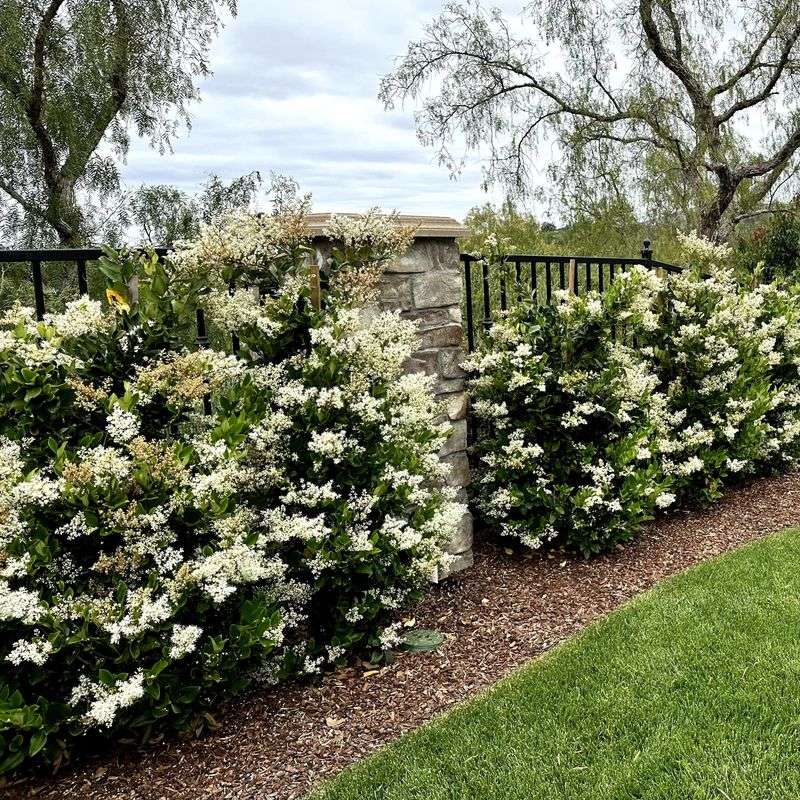
Speed matters in a Texas landscape, especially when you are trying to establish screening, structure, or curb appeal in a newly planted yard. Waxleaf Privet earns high marks for exactly that reason.
It grows quickly, fills in densely, and responds to pruning with the kind of enthusiasm that makes formal hedging and shaped borders achievable without years of waiting.
The large, glossy, dark green leaves give Waxleaf Privet a lush, polished appearance that works well along property lines, driveways, and foundation beds.
It is not a close visual match for boxwood in terms of leaf size or texture, but it delivers a similarly structured, evergreen presence that reads as intentional and well-maintained from the street.
Waxleaf Privet tolerates a range of soil types and handles both full sun and partial shade across most of Texas. It is moderately drought-tolerant once established, though it looks its best with regular deep watering during dry summer months.
One caution worth mentioning: the fragrant white flower clusters that appear in spring can be quite strong-smelling, which some people find pleasant and others find overwhelming.
If the planting is near windows or outdoor seating areas, that is worth considering before choosing placement.
Prune after flowering for the tidiest results.
11. Dwarf Pittosporum Brings Rounded Evergreen Style
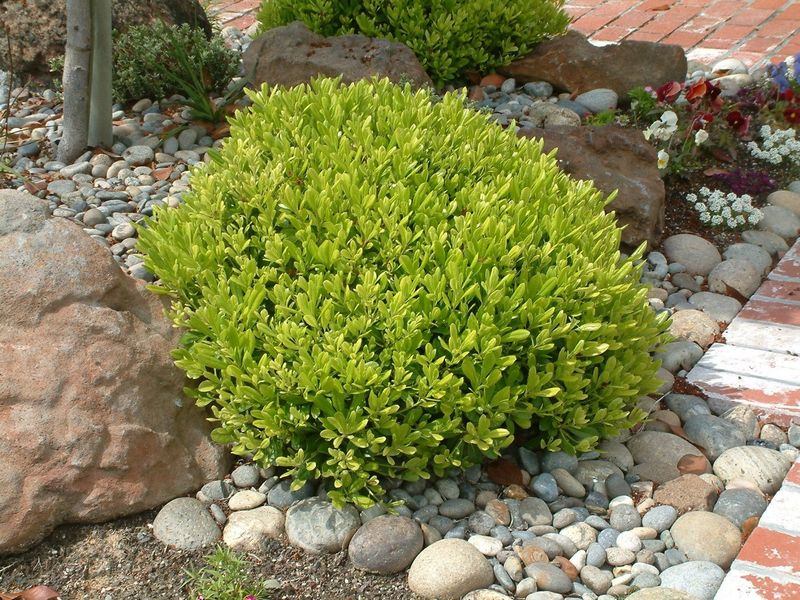
Rounded, dense, and quietly elegant, Dwarf Pittosporum is one of those shrubs that landscape designers reach for when they want a polished look without a lot of fuss.
The small, wavy-edged leaves are a deep, lustrous green, and the naturally mounding growth habit means the plant often requires only minimal pruning to maintain a tidy, intentional form that suits both formal and relaxed garden styles.
Pittosporum tobira ‘Wheeler’s Dwarf’ is the variety most commonly used as a boxwood substitute in Texas landscapes, growing about two to three feet tall and wide.
It works exceptionally well as a low border plant, a foundation accent, or a container specimen on patios and entryways.
The subtle fragrance of the creamy white spring flowers is a pleasant surprise for gardeners who have not grown it before.
This shrub performs best in the warmer regions of Texas, including the Gulf Coast, South Texas, and the San Antonio area, where winters are mild.
It is not reliably cold-hardy in North Texas or the Panhandle, so gardeners in those areas should consider one of the hardier hollies instead.
Pittosporum prefers well-drained soil, tolerates partial shade, and holds up well in coastal conditions where salt spray is a factor. Water regularly during the first season to establish strong roots.