The 8 Best Flowering Vines That Actually Thrive In Florida Heat
Florida heat can turn a promising garden vine into a wilted disappointment fast, which is why choosing the right one matters so much. Many flowering vines look beautiful in photos or at the nursery, then struggle once intense sun, humidity, and long summer stretches take over.
The good news is that some vines do far more than survive in Florida. They thrive in it.
With the right picks, you can cover fences, trellises, arches, and bare corners with bold color, lush growth, and blooms that hold up through the toughest weather. These vines bring beauty, height, and movement to the landscape without constant stress or endless replacement.
For gardeners who want strong performers instead of fragile showpieces, smart plant selection makes all the difference. The best flowering vines for Florida heat can deliver exactly that, with reliable growth and eye-catching color even when the temperature refuses to let up.
1. Coral Honeysuckle Brings Color Without The Fuss
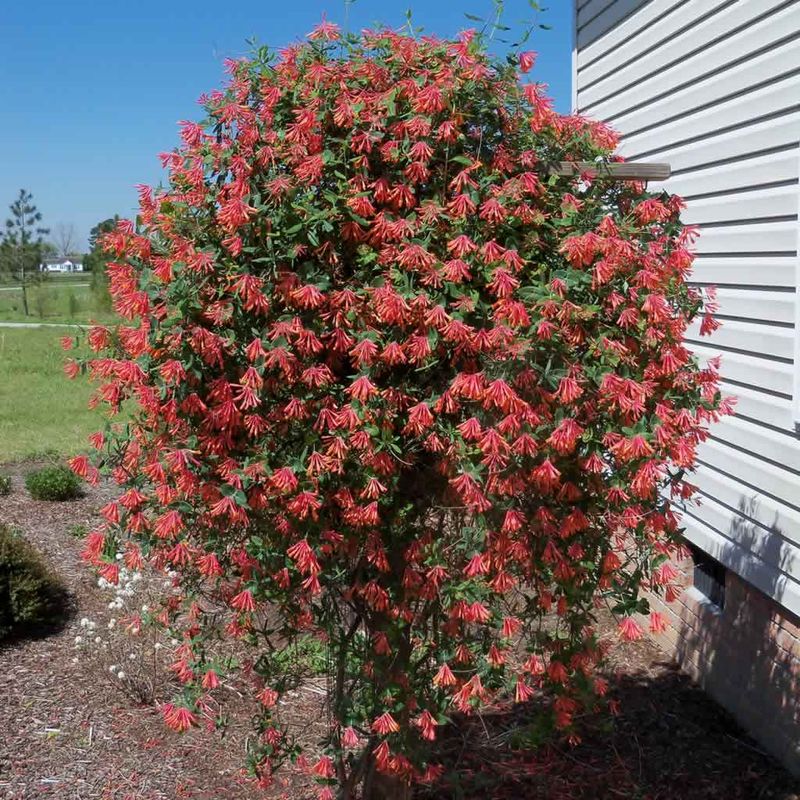
Few vines earn their keep in Florida gardens as reliably as coral honeysuckle. Known botanically as Lonicera sempervirens, this native plant produces clusters of slender, tubular flowers in a warm coral-red that practically glows in the afternoon sun.
Hummingbirds absolutely love it, and butterflies are not far behind.
Unlike its invasive cousins, coral honeysuckle plays well in the garden without taking over. It climbs fences, trellises, and pergolas with a graceful habit that never feels out of control.
Gardeners across North Florida and Central Florida especially appreciate how well it handles cooler winters while still bouncing back strong each spring.
Coral honeysuckle prefers full sun to partial shade and does well in a range of soil types as long as drainage is decent. Once established, it handles dry spells without much complaint.
Watering deeply but infrequently encourages stronger root development, which helps the plant stay resilient through Florida summers. Pruning lightly after a flush of blooms keeps the vine tidy and encourages a second wave of flowers.
For gardeners who want ornamental beauty paired with genuine wildlife value, this native vine is a smart, low-maintenance pick that delivers all season long.
2. Mandevilla Loves The Heat And Shows It Off
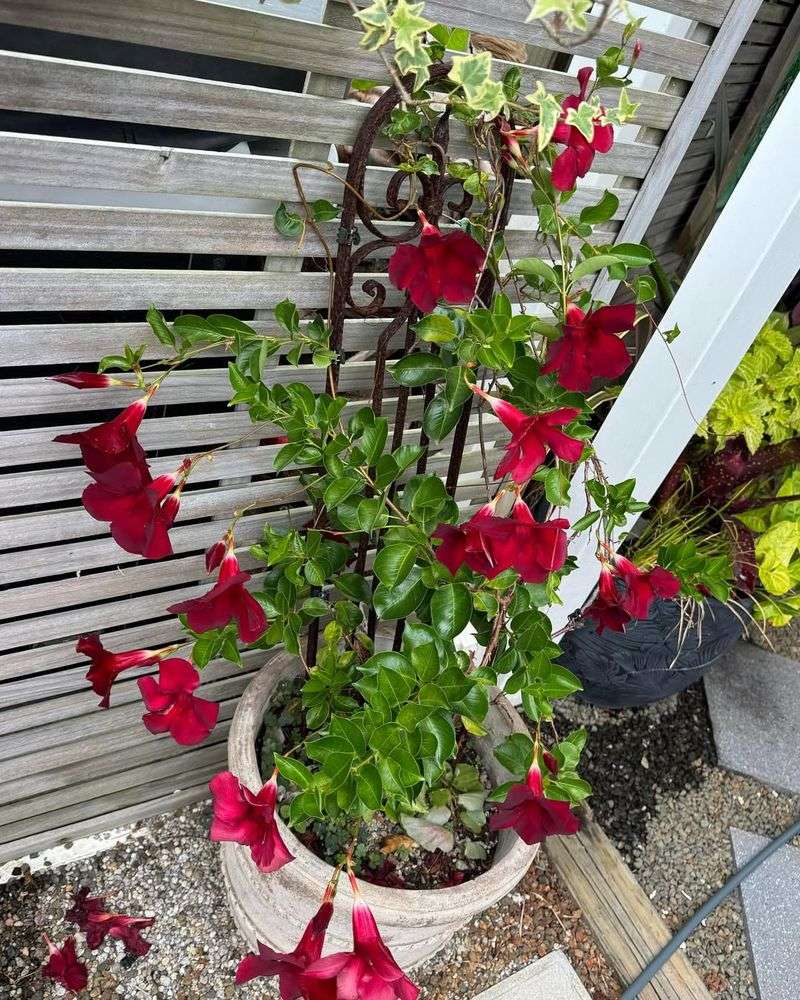
Walk through any garden center in Florida during summer and you will almost certainly spot mandevilla front and center. The reason is simple: this vine thrives in exactly the kind of blazing, humid heat that wilts lesser plants.
Large, trumpet-shaped blooms in shades of deep red, hot pink, and crisp white make it one of the most visually striking vines you can grow here.
Mandevilla performs beautifully in South Florida as a true perennial, coming back year after year without missing a beat. In Central and North Florida, gardeners often treat it as a warm-season annual or bring container-grown plants indoors during colder stretches.
Either way, the payoff during the long Florida growing season is absolutely worth it.
Plant mandevilla in full sun with well-drained, slightly sandy soil for the best results. It appreciates consistent moisture but will suffer in soggy conditions, so raised beds or containers with drainage holes work wonderfully.
Your Florida Garden Changes Every Week. Your Plan Should Too.
Gardening in Florida changes quickly throughout the season. Every Friday you’ll receive a simple weekly plan showing exactly what to plant, prune, fertilize, harvest, and protect so you never miss the right timing.
A balanced fertilizer applied monthly during the growing season keeps blooms coming in strong flushes. Train the twining stems onto a trellis or obelisk early in the season, and the vine will reward you with a continuous cascade of color from late spring straight through fall.
3. Passionflower Turns Heads In Florida Gardens
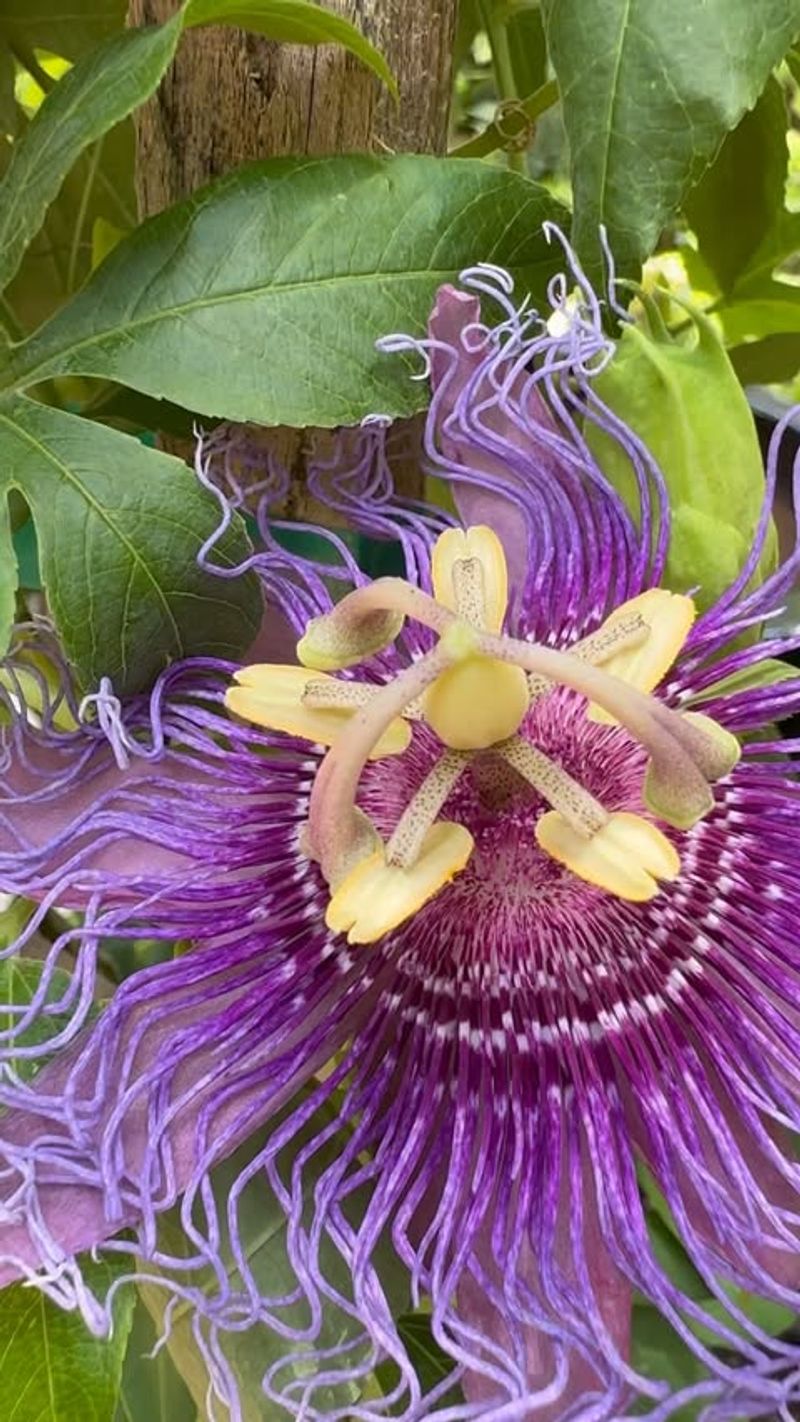
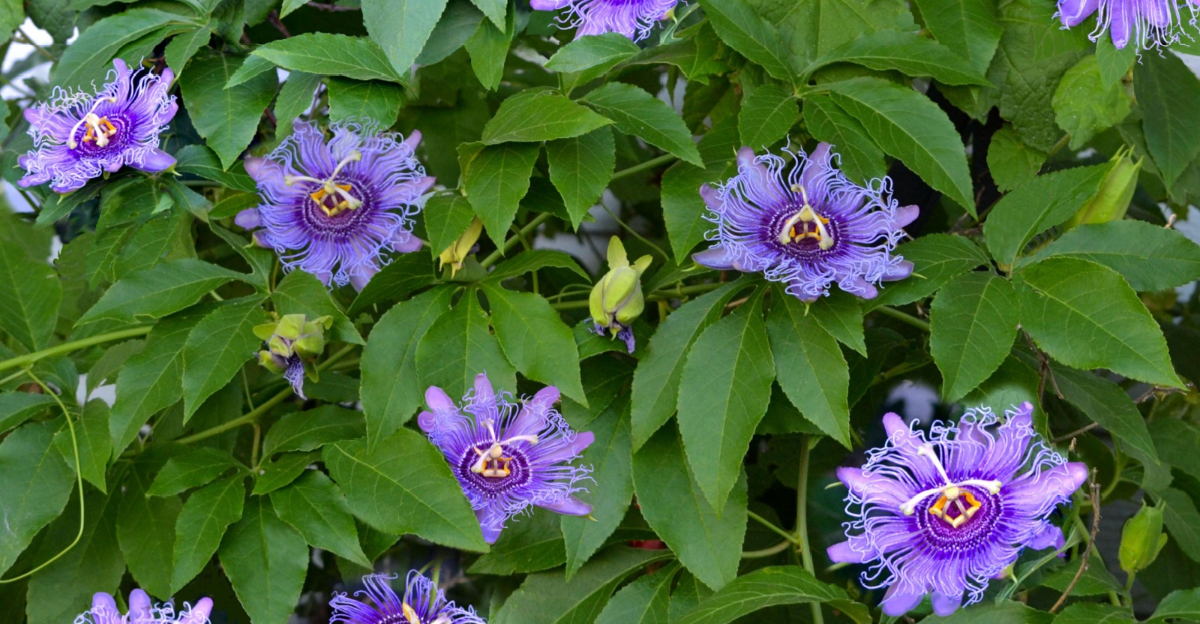
There is no flower quite like a passionflower. The blooms are so intricate and alien-looking that first-time gardeners often stop mid-step to get a closer look.
Florida is home to several native passionflower species, with Passiflora incarnata being one of the most well-known and widely recommended by UF IFAS for home landscapes.
Native passionflower species are the right call for Florida gardeners who want to support local wildlife. The flowers attract native bees, butterflies, and other pollinators, while the leaves serve as a host plant for gulf fritillary and zebra longwing butterfly caterpillars.
Watching those butterflies flutter around a mature passionflower vine in a Florida backyard is genuinely rewarding.
Passionflower grows vigorously in full sun and tolerates a range of soil conditions, making it adaptable across Central and North Florida. It spreads by underground runners, so giving it a defined space or growing it along a fence helps keep things organized.
In South Florida, some native species may behave more aggressively, so choosing the right species for your region matters. Pruning hard in late winter encourages fresh, healthy growth and a stronger bloom season ahead.
For gardeners who love a dramatic, conversation-starting vine, passionflower delivers like almost nothing else.
4. Confederate Jasmine Fills The Air With Sweet Scent
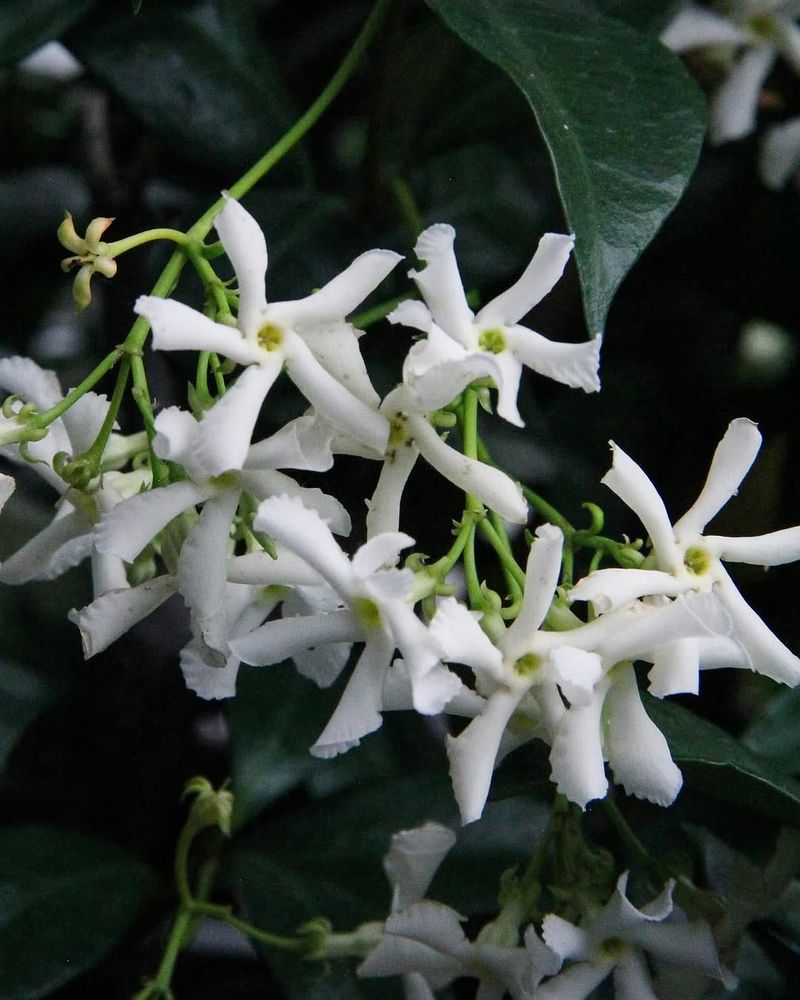
If you have ever walked past a Florida fence line in late spring and been stopped by an almost intoxicating floral fragrance, there is a good chance confederate jasmine was responsible. Also called star jasmine, Trachelospermum jasminoides is a go-to choice for Florida gardeners who want both ornamental beauty and serious sensory appeal in one plant.
The small, white, pinwheel-shaped flowers appear in clusters and bloom heavily in spring, with lighter blooming possible through summer. The dark, glossy evergreen foliage looks attractive even when the vine is not in bloom, making it a reliable year-round presence on trellises, walls, mailbox posts, and garden arbors throughout the state.
Confederate jasmine adapts well to full sun or partial shade, which gives Florida gardeners more flexibility than many other vines. It handles the humidity of Central and South Florida without complaint and holds up through mild winters in North Florida.
Well-drained soil is key, as the roots do not enjoy sitting in water. Fertilizing lightly in spring and again in midsummer supports healthy growth without pushing excessive leafy growth at the expense of blooms.
Regular light pruning after the main bloom period keeps the vine shapely and encourages stronger flowering the following season.
5. Bougainvillea Brings Big Color In Blazing Sun
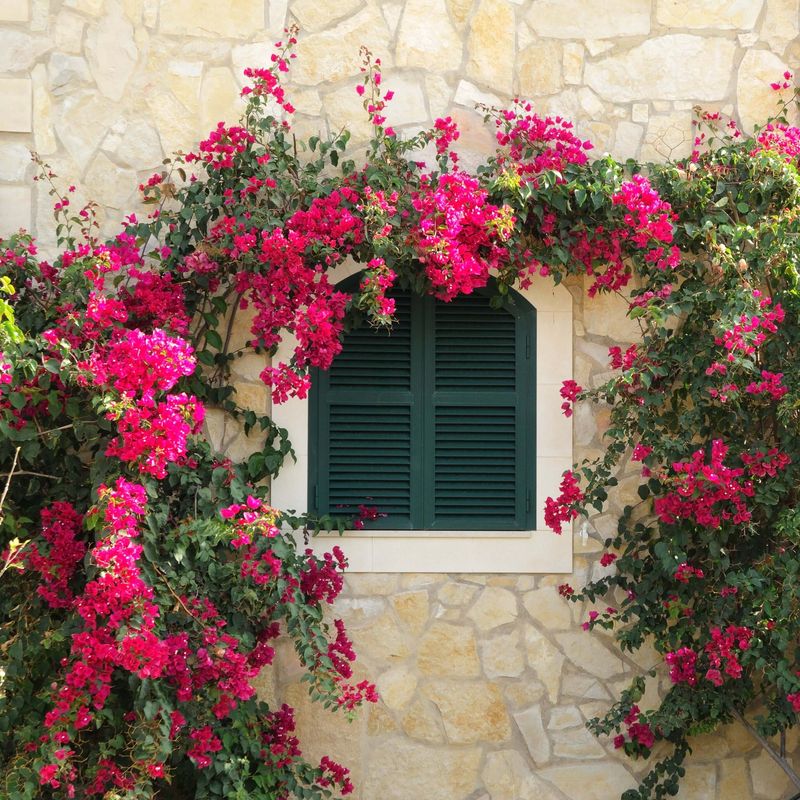
Bougainvillea is practically synonymous with Florida color. Drive through any neighborhood in South Florida and you will see it draped over walls, spilling across fences, and cascading from pergolas in shades of magenta, orange, red, white, and purple.
The real show comes from the papery bracts surrounding the tiny true flowers, and when a mature bougainvillea is in full flush, the effect is genuinely breathtaking.
Full sun is non-negotiable for bougainvillea. It needs at least six hours of direct sunlight daily to bloom well, and it actually performs better under some stress.
Slightly dry conditions between waterings encourage heavier flowering, while overwatering or overly rich soil tends to push leafy growth instead of those spectacular bracts.
In South Florida, bougainvillea grows as a true perennial and can reach impressive sizes over time. In Central Florida, it performs well through the warm season but may need frost protection during colder winters.
North Florida gardeners can grow it in large containers and bring it under cover when temperatures drop. Pruning after each bloom cycle encourages the next flush of color.
Sharp thorns mean gloves are a smart choice at pruning time, but the reward of that bold, sun-soaked color makes every bit of effort worthwhile.
6. Moonflower Brings Big Blooms After The Sun Goes Down
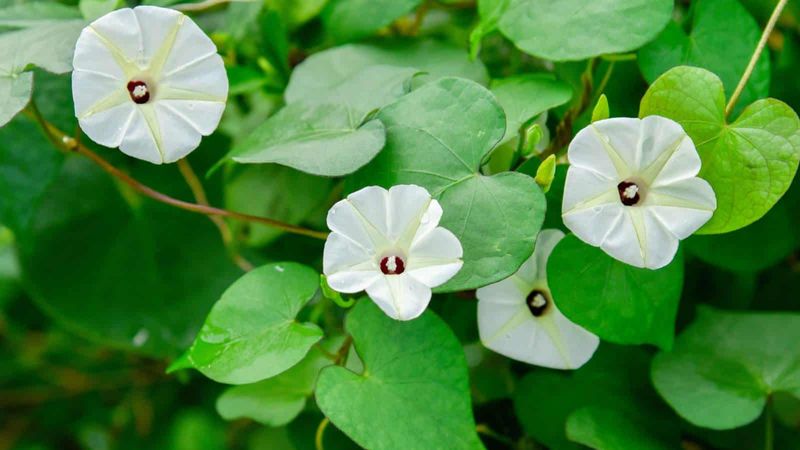
Once the Florida sun starts to fade, moonflower finally gets its moment. Known botanically as Ipomoea alba, this native vine saves its show for the evening, unfurling huge white blooms at dusk that seem to glow against the deepening sky.
UF IFAS describes it as a native Florida vine with fragrant nocturnal flowers that can reach up to 6 inches across, which makes it one of the most dramatic flowering vines you can grow for nighttime garden appeal.
That evening performance gives moonflower a completely different feel from the usual daytime bloomers. In Florida gardens, it adds a softer, more romantic kind of color while still handling the heat surprisingly well.
The fast-growing vines twine readily up trellises, arbors, fences, and porch supports, creating lush vertical coverage through the warm season. In South Florida it can behave as a tender perennial, while gardeners farther north in the state often grow it as a warm-season annual.
UF IFAS Extension guidance notes that it grows best in full sun and needs support for its twining stems.
Well-drained soil and regular moisture help moonflower look its best, especially while it is getting established. Once it starts climbing, growth can be quick enough to transform a bare structure in a single season.
For Florida gardeners who want a vine that feels a little unexpected, moonflower brings beauty, fragrance, and a memorable after-dark display that few other heat-loving climbers can match.
7. Crossvine Handles Florida Heat With Ease
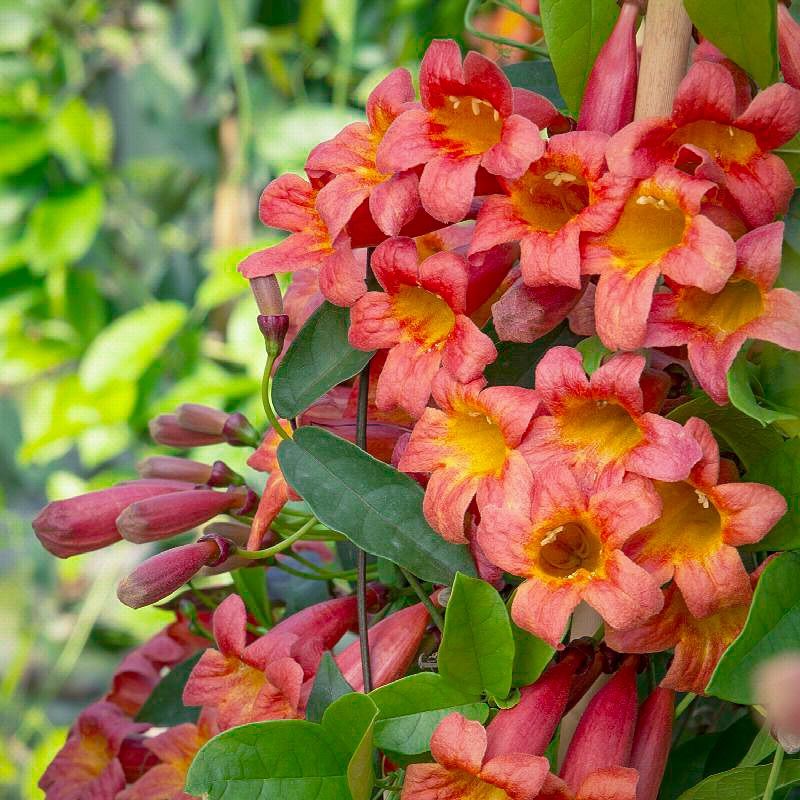
Crossvine, or Bignonia capreolata, is one of those underappreciated native gems that Florida gardeners should talk about far more often. The trumpet-shaped blooms appear in late winter and early spring, often before many other plants have even stirred from their cool-season rest.
Those warm orange and yellow flowers are a welcome sight after the quieter months, and hummingbirds show up fast once the blooms open.
As a native Florida vine, crossvine is naturally adapted to the state’s variable conditions. It handles heat, humidity, and even brief dry spells without much drama.
The semi-evergreen foliage holds on through mild winters in Central and South Florida, while North Florida plants may drop some leaves during colder stretches before leafing back out vigorously in spring.
Crossvine climbs using tendrils with adhesive discs, which means it can cling directly to walls, fences, and wooden structures without much help from the gardener. Full sun to partial shade both work well, giving it flexibility in different garden layouts.
Soil adaptability is another strong point, as crossvine tolerates clay, sandy, and loamy soils with equal ease. Pruning right after the main bloom period keeps the vine tidy and shapes it for the season ahead.
For Florida gardeners who want a reliable, native, heat-tough flowering vine, crossvine is a genuinely excellent choice.
8. Carolina Jessamine Brings Early Color With Southern Charm
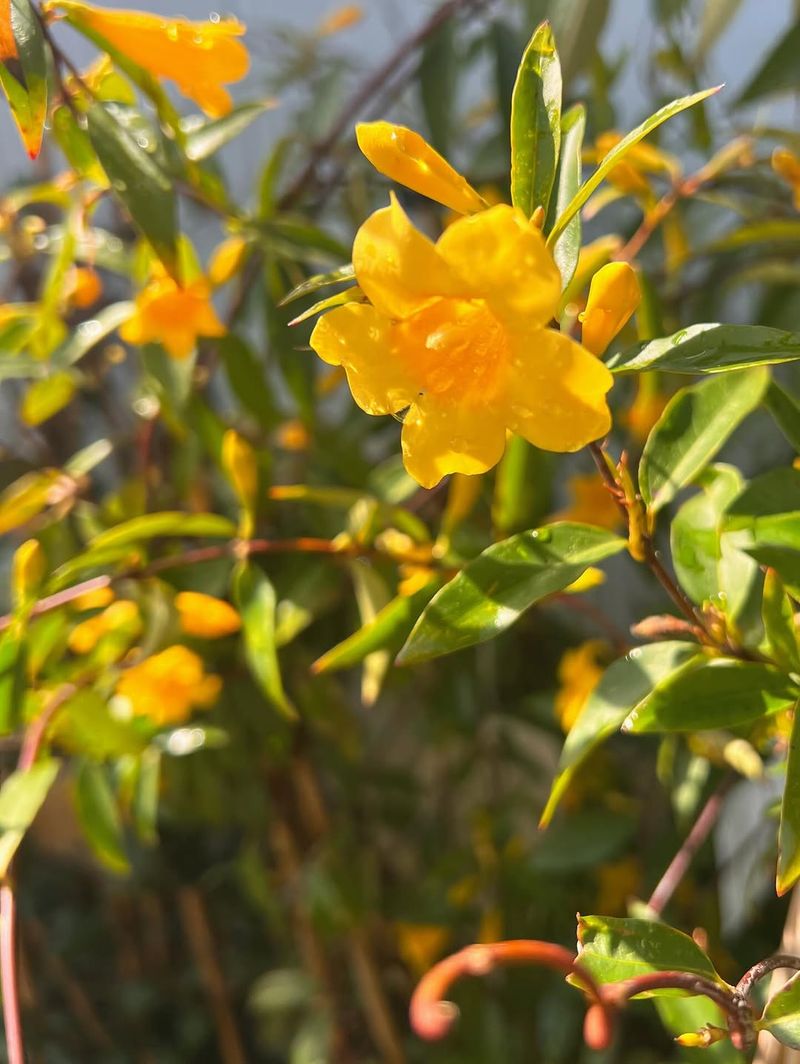
Carolina jessamine has a way of announcing the end of winter before most gardeners are even ready for it. Gelsemium sempervirens bursts into bloom in late winter and early spring, covering fences and trellises with cheerful clusters of bright yellow, tubular flowers that carry a light, pleasant fragrance.
In North Florida especially, that early color feels like a gift after the cooler months.
This evergreen vine is well-suited to the varied growing conditions found across Florida. It handles full sun beautifully but is one of the few flowering vines that also performs well in partial shade, making it a practical choice for spots that do not get all-day sun.
The glossy, dark green foliage stays attractive through the seasons, providing a clean backdrop even when the vine is not in active bloom.
Carolina jessamine is drought-tolerant once established and adapts to a range of soil types, from the sandy soils common in Central Florida to the heavier soils found in parts of North Florida. It climbs by twining, so a trellis, fence, or arbor gives it the support it needs to reach its full potential.
One important note for households with pets or small children: all parts of the plant are toxic if eaten, so placement in the garden should be thoughtful and deliberate.