Fast Growing Flowering Vines That Take Off In North Carolina Once April Warms Up
Once April starts to warm up in North Carolina, flowering vines seem to shift into high gear. Fences, trellises, and arbors that looked plain not long ago can suddenly turn green, full, and covered with color.
That fast burst of growth is one of the best parts of spring, especially for gardeners who want quick beauty without waiting all summer. The right vine can climb fast, soften empty spaces, and make the yard feel more alive in just a short time.
Some bring bold flowers that grab attention right away, while others add a softer look that still stands out. In North Carolina, warm spring days give these fast growers the push they need to really get moving.
For anyone wanting a garden that looks fuller, brighter, and more eye catching in a hurry, these flowering vines can make a big impact before the season even reaches its peak.
1. Coral Honeysuckle (Lonicera Sempervirens)
Few vines earn their keep as quickly and beautifully as Coral Honeysuckle does once April arrives in North Carolina. Unlike its invasive Japanese cousin, this native species plays nicely in the garden without taking over your entire yard.
It begins climbing trellises, fences, and arbors with impressive speed as soon as soil temperatures rise across the Piedmont and Coastal Plain.
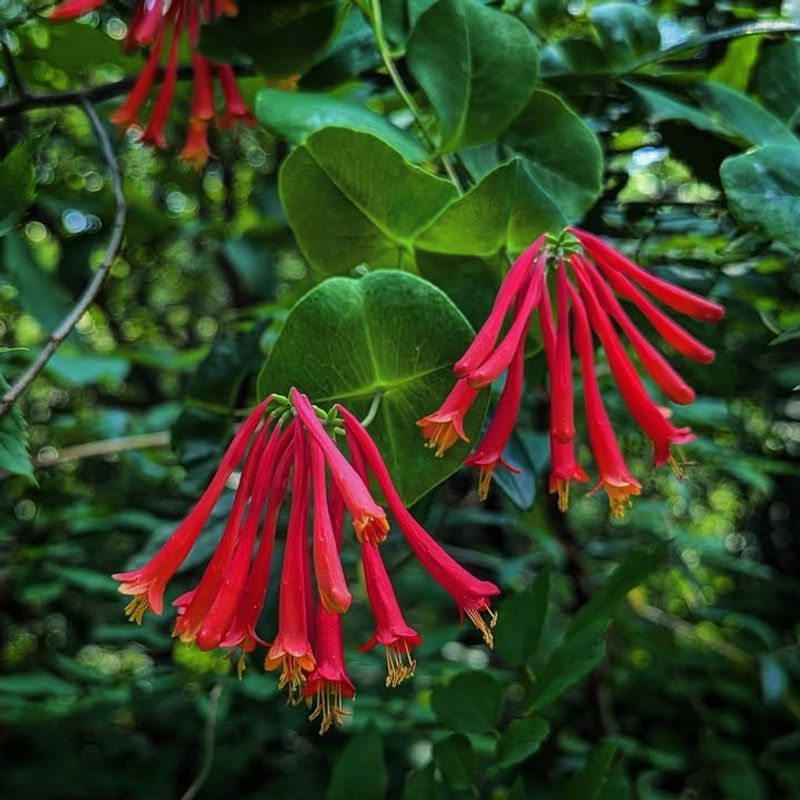
The flowers are something special. Bright red tubular blooms appear in clusters and practically shout an invitation to every hummingbird within flying distance.
Gardeners across North Carolina report hummingbirds visiting daily once this vine hits its stride in late spring, making it one of the most rewarding plants you can grow.
Coral Honeysuckle handles the heat and humidity of a North Carolina summer without skipping a beat. It thrives in full sun to partial shade and tolerates a range of soil types, which makes it incredibly easy for beginners.
Give it something to climb and a good watering schedule during dry spells, and this vine will reward you generously. It also produces small red berries after blooming, which songbirds absolutely love.
Native, tough, gorgeous, and wildlife-friendly, Coral Honeysuckle is one of the smartest choices any North Carolina gardener can make for a fast-growing flowering vine that truly delivers from spring through fall.
2. Crossvine (Bignonia Capreolata)
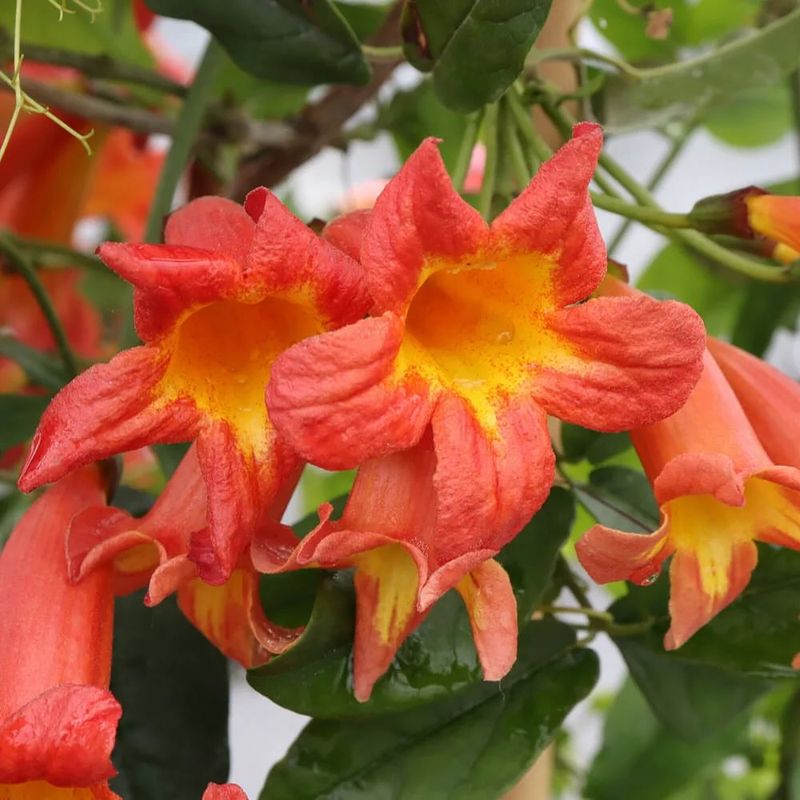
Crossvine is the kind of plant that makes neighbors stop and stare. This native southeastern vine bursts into bloom with stunning orange-yellow trumpet flowers right as April warms up across North Carolina, covering walls, fences, and pergolas faster than most gardeners expect.
It earned its name from the cross-shaped pattern you see when you cut through its woody stem.
What makes Crossvine especially impressive is its semi-evergreen nature. In the milder parts of North Carolina, like the Coastal Plain, it holds onto its leaves through winter, giving your garden structure even in the coldest months.
Once spring arrives, the new growth takes off aggressively, reaching up to 30 to 50 feet in a single growing season under ideal conditions.
Crossvine climbs using small tendrils that grip surfaces tightly, making it a reliable choice for covering large structures quickly. It performs best in full sun but tolerates partial shade without losing too much of its blooming power.
Your North Carolina Garden Changes Every Week. Your Plan Should Too.
Gardening in North Carolina changes quickly throughout the season. Every Friday you’ll receive a simple weekly plan showing exactly what to plant, prune, fertilize, harvest, and protect so you never miss the right timing.
The tubular flowers attract hummingbirds and native bees, adding wildlife value on top of its visual appeal. Plant it near a sturdy fence or trellis and give it a good start with rich, well-drained soil.
Once established, Crossvine becomes remarkably tough and drought-tolerant, thriving through the hot and humid summers that North Carolina gardeners know so well.
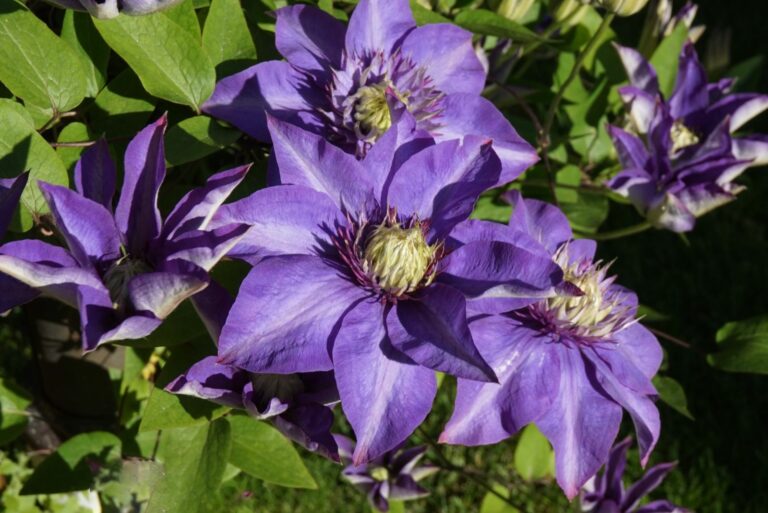
3. Clematis (Heat-Tolerant Varieties)
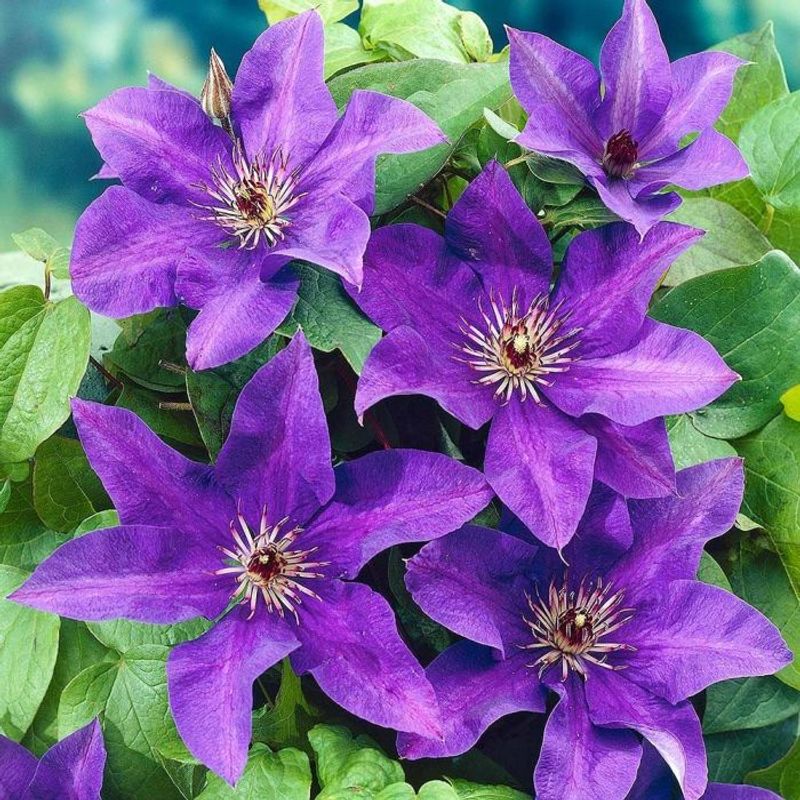
Clematis has a reputation for being tricky, but the right varieties grown in North Carolina gardens prove that reputation wrong in the best possible way.
Heat-tolerant types like Clematis viticella and Clematis texensis handle the Southeast’s warm, humid summers without struggling.
Once April temperatures climb, these vines spring to life and race up trellises with surprising enthusiasm.
One golden rule every successful Clematis grower knows: keep the roots cool and the top in the sun. Mulching around the base of the plant does wonders for keeping soil moisture and temperature stable during the warm months.
A thick layer of organic mulch, about two to three inches deep, can make a real difference in how aggressively your Clematis grows through spring and summer in North Carolina.
The blooms themselves are showstoppers. Large, showy flowers in shades of purple, pink, red, and white appear in late spring and often continue through summer when you deadhead spent blooms regularly.
Clematis pairs beautifully with climbing roses or on its own along a fence line. It prefers slightly alkaline, well-drained soil and benefits from a light balanced fertilizer in early spring.
For North Carolina gardeners looking for a vine that combines elegance with reliable fast growth, a good heat-tolerant Clematis variety delivers exactly that season after season without disappointment.
4. Passionflower (Passiflora Incarnata)
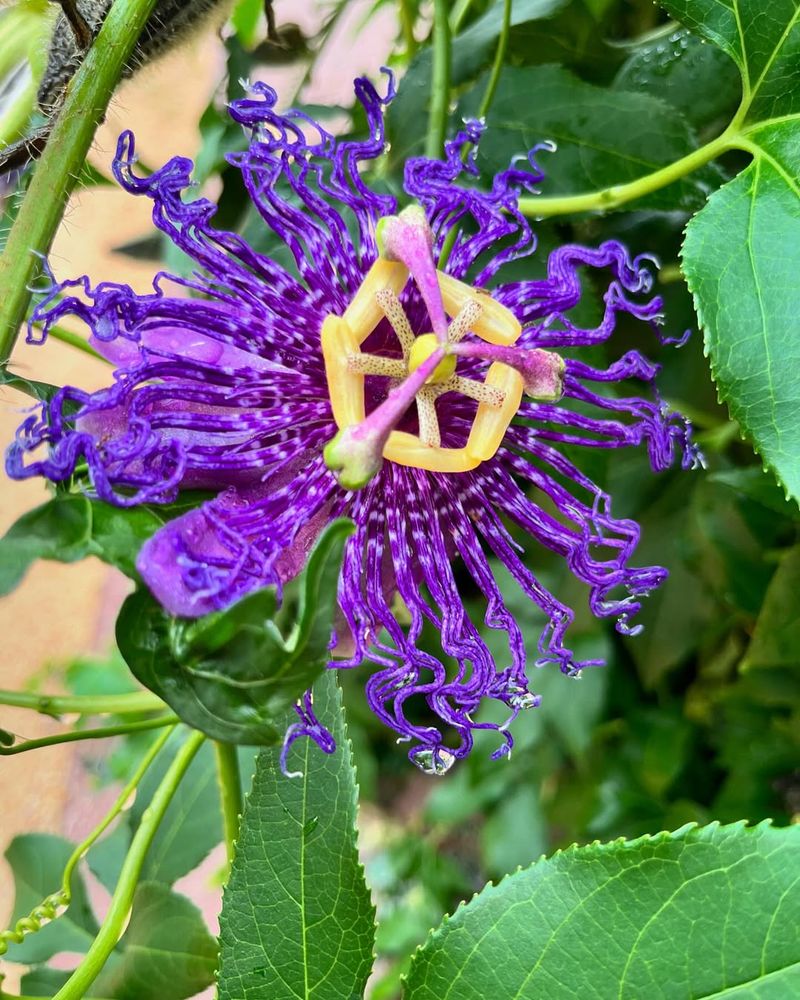
Nothing in a North Carolina garden stops visitors in their tracks quite like a Passionflower in full bloom. The flowers look almost too exotic to be real, with their layered purple and white petals and that dramatic fringe-like crown that seems designed by an artist.
Yet this is a completely native vine, naturally found across the Piedmont and Coastal Plain of North Carolina.
Passionflower emerges from the soil as temperatures warm in April and grows aggressively through the summer months. It can easily reach 20 feet or more in a single season, twining its tendrils around anything within reach.
Gardeners sometimes call it maypop because of the popping sound the oval fruit makes when squeezed, and yes, that fruit is actually edible with a sweet tropical flavor.
Beyond its beauty, Passionflower serves a critical ecological role in North Carolina. It is the sole host plant for the Gulf Fritillary and Zebra Longwing butterflies, meaning planting it directly supports local butterfly populations.
Bees and other pollinators visit the flowers constantly throughout summer. Plant it in full sun with well-drained soil and give it something sturdy to climb.
It spreads through underground runners, so containing it in a defined space works well for most home gardens. For wildlife gardeners across North Carolina, Passionflower is simply a must-have addition.
5. Hyacinth Bean Vine (Lablab Purpureus)
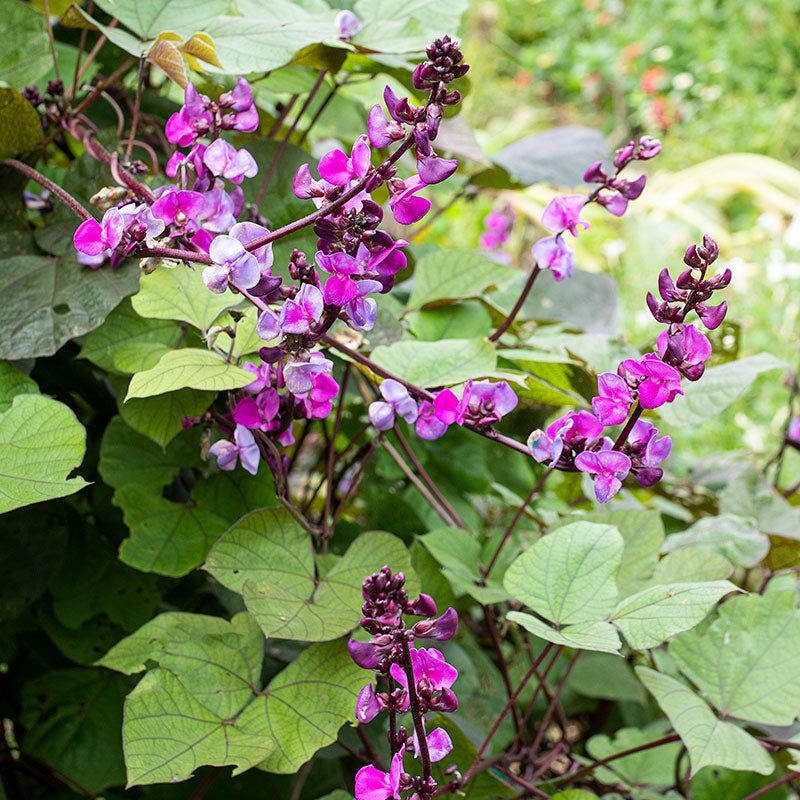
Gardeners who want drama and speed in the same plant need to look no further than Hyacinth Bean Vine. This warm-season annual takes off like a rocket once you plant it after the last frost in April, climbing trellises, fences, and arbors with incredible vigor.
In North Carolina, where the growing season stretches long and warm, this vine absolutely thrives.
The visual show it puts on is hard to beat. Fragrant purple flower clusters appear in summer and attract bees and butterflies by the dozens.
After the flowers fade, glossy deep purple seed pods emerge and stay ornamental on the vine for weeks. The combination of purple blooms, rich green leaves, and shiny pods makes Hyacinth Bean Vine one of the most eye-catching plants in any North Carolina garden.
Start seeds directly in the ground after soil temperatures reach at least 60 degrees Fahrenheit, which usually happens right around mid-April across much of North Carolina.
Give it full sun and a sturdy support structure, because this vine can easily reach 10 to 15 feet in a single season.
Water consistently during dry stretches and add a balanced fertilizer every few weeks to keep the growth moving. One important note: the raw beans and seeds are toxic if eaten, so plant it in spots where curious children and pets cannot easily access the pods.
Otherwise, it is a spectacular, low-maintenance performer.
6. Black-Eyed Susan Vine (Thunbergia Alata)
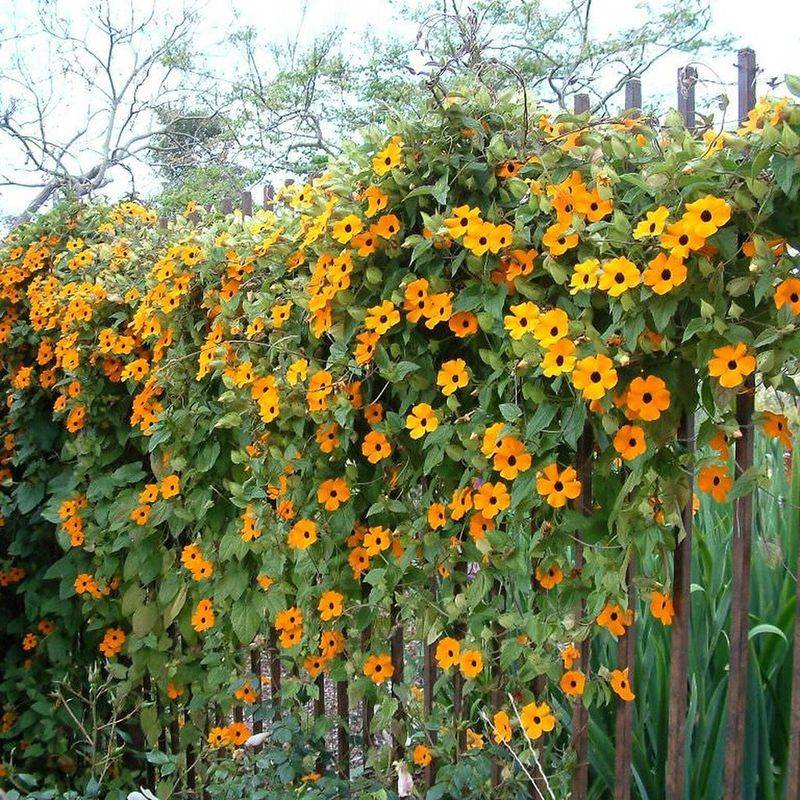
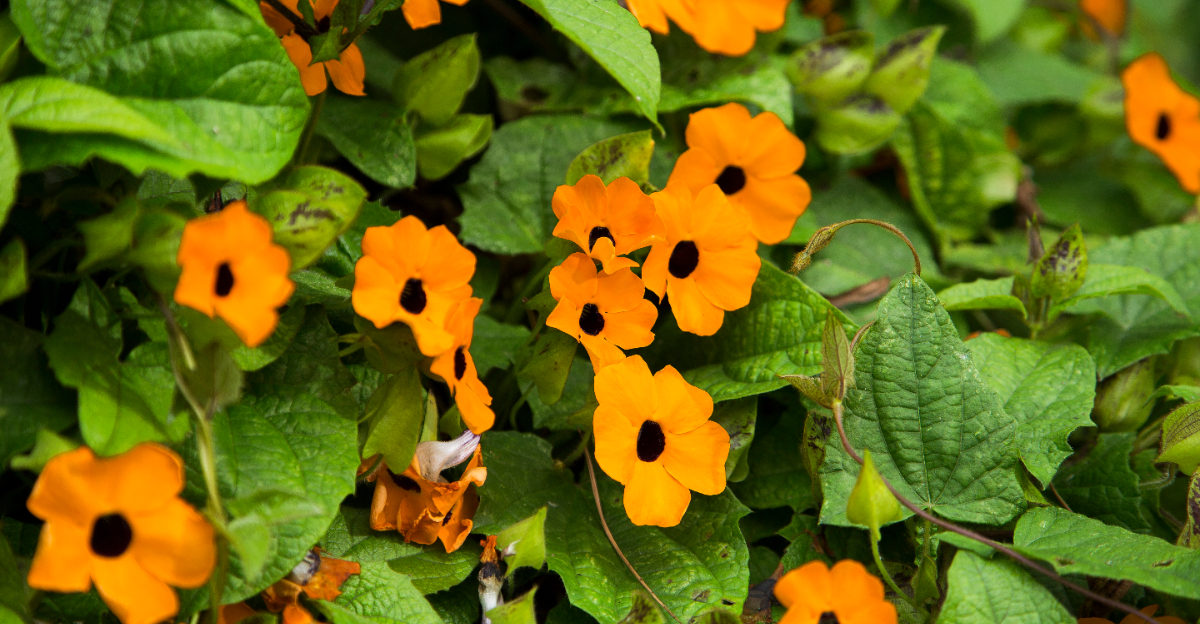
Cheerful, fast, and absolutely covered in color, Black-Eyed Susan Vine is one of those plants that earns a permanent spot in North Carolina gardens once you grow it the first time.
Those sunny orange and yellow flowers with their bold dark centers start appearing just six to eight weeks after planting, and they keep coming all summer long without much fuss from the gardener.
What makes this annual vine so versatile is its ability to thrive in containers as well as in the ground. A large pot on a sunny porch or patio with a small trellis becomes a stunning focal point when Thunbergia alata goes to work.
It grows quickly in warm weather, reaching six to eight feet by midsummer in most North Carolina locations. The Piedmont and Coastal Plain regions offer exactly the kind of long, warm growing season this vine loves.
Plant seeds or transplants in full sun to partial shade after the last frost date, which falls around mid-April across central North Carolina. Well-drained soil and regular watering keep it growing strong.
Deadheading spent flowers encourages continuous blooming through the heat of summer. You can find Thunbergia in shades ranging from pure white to deep burnt orange, so mixing varieties in a single container creates a really striking display.
For small spaces, balconies, or anyone who wants fast color without a huge commitment, this vine is a brilliant choice.
7. Cypress Vine (Ipomoea Quamoclit)
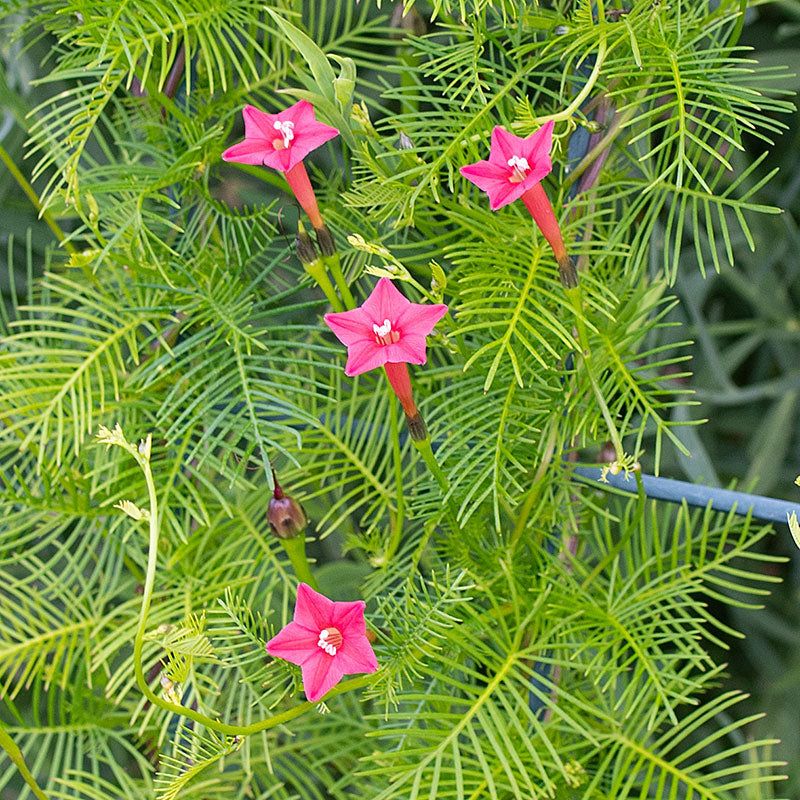
Cypress Vine might just be the most underrated fast grower in North Carolina gardens. Its feathery, fern-like foliage is so delicate and airy that it looks almost tropical, yet it grows with the toughness and speed of a weed once the soil warms up in April.
Tiny red tubular flowers dot the vine from midsummer onward, and hummingbirds treat them like a fast-food drive-through.
Direct sow seeds right into the ground after the last frost, and germination happens within one to two weeks when soil temperatures are warm enough. From there, this vine climbs rapidly, easily covering a fence or trellis by midsummer.
It can reach 15 to 20 feet in a single season under ideal conditions, which North Carolina’s long warm growing season provides in abundance.
Full sun is where Cypress Vine truly shines. It tolerates the intense afternoon heat of a North Carolina summer without wilting or struggling, making it a reliable performer from April all the way through the first cool nights of fall.
Well-drained soil and moderate watering are all it really needs. One fun fact: Cypress Vine self-seeds readily, so if you let a few pods mature at the end of the season, you may find seedlings popping up in the same spot next spring.
For gardeners who love hummingbirds and effortless beauty, this vine is genuinely hard to beat.
8. Morning Glory (Ipomoea Purpurea)
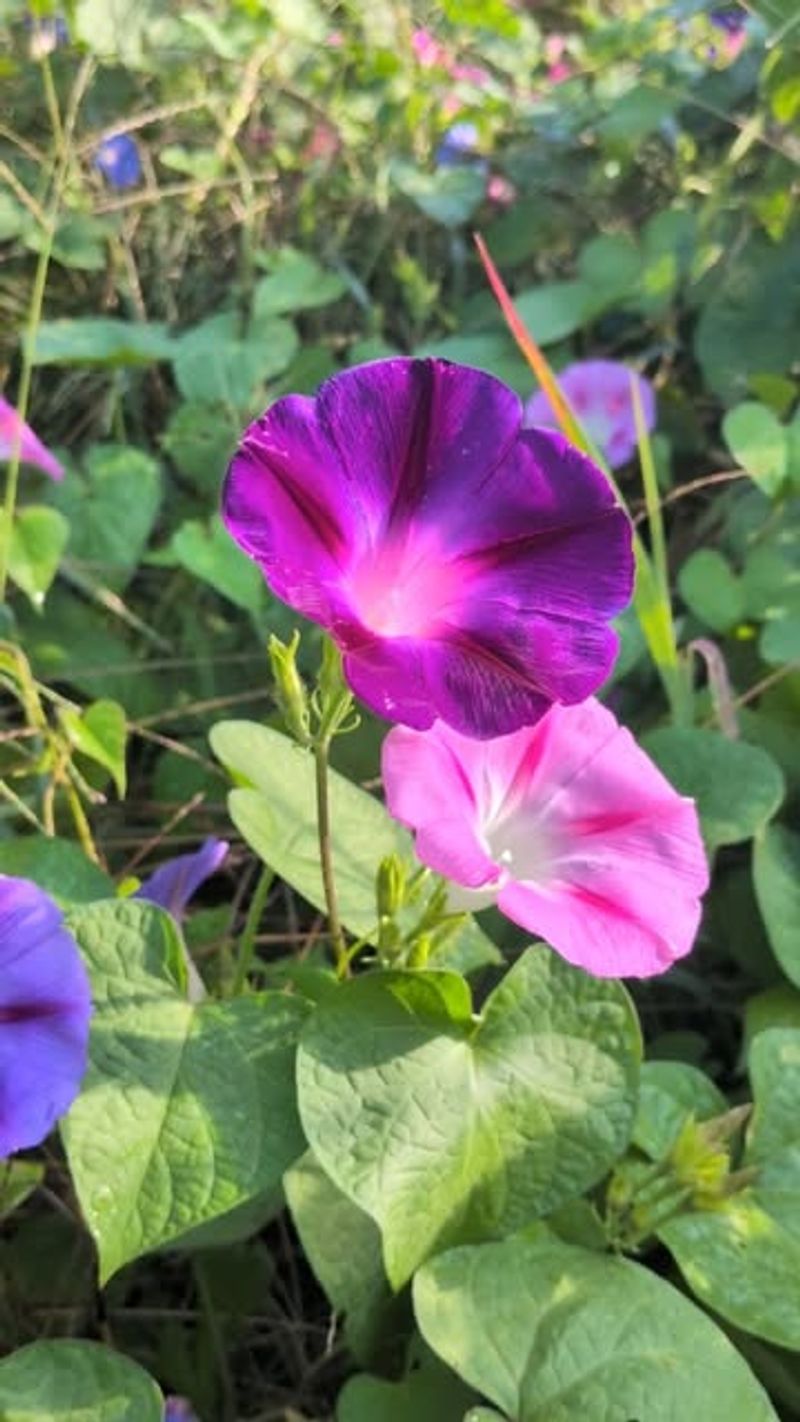
Morning Glory is the vine that practically every gardener has grown at some point, and for very good reason. Once the soil warms in April across North Carolina, these seeds germinate fast and the plants race upward with almost unstoppable energy.
Within just a few weeks of sprouting, the vines begin wrapping around fences, trellises, and posts with impressive determination.
The flowers open fresh each morning in shades of deep purple, vivid pink, bright blue, and pure white, creating a new display every single day. By midmorning the blooms close up, but the next day brings a whole new round of color.
This daily renewal is part of what makes Morning Glory so captivating throughout the long North Carolina growing season.
Soaking seeds overnight before planting speeds up germination noticeably, a simple trick that experienced gardeners swear by. Plant them in full sun with well-drained soil, and they will climb 10 to 15 feet or more by late summer without needing much attention.
Morning Glory does self-seed aggressively, so deadheading regularly helps keep the plant from spreading beyond where you want it.
In North Carolina, the combination of warm temperatures, long sunny days, and decent rainfall gives Morning Glory everything it needs to put on a spectacular show from spring through the first cool nights of autumn.
It is fast, reliable, and genuinely beautiful every single morning.