These 8 Shrubs Can Handle Heavy Clay Soil In Ohio Yards
Heavy clay soil can make shrubs struggle fast in Ohio yards. Water lingers, roots fight for air, and plants that look promising at the nursery can turn weak, sparse, or stunted once they go in the ground.
That is why shrub choice matters so much. The right ones can handle dense soil, bounce back from wet stretches, and still bring structure, color, and reliability to the landscape.
The wrong ones often sit and decline. In a state where clay-heavy ground is common, it helps to work with those conditions instead of constantly trying to beat them.
A shrub that tolerates tough soil from the start usually means less frustration, fewer replacements, and a yard that fills in with far less effort.
1. Ninebark Powers Through Tough Ohio Clay
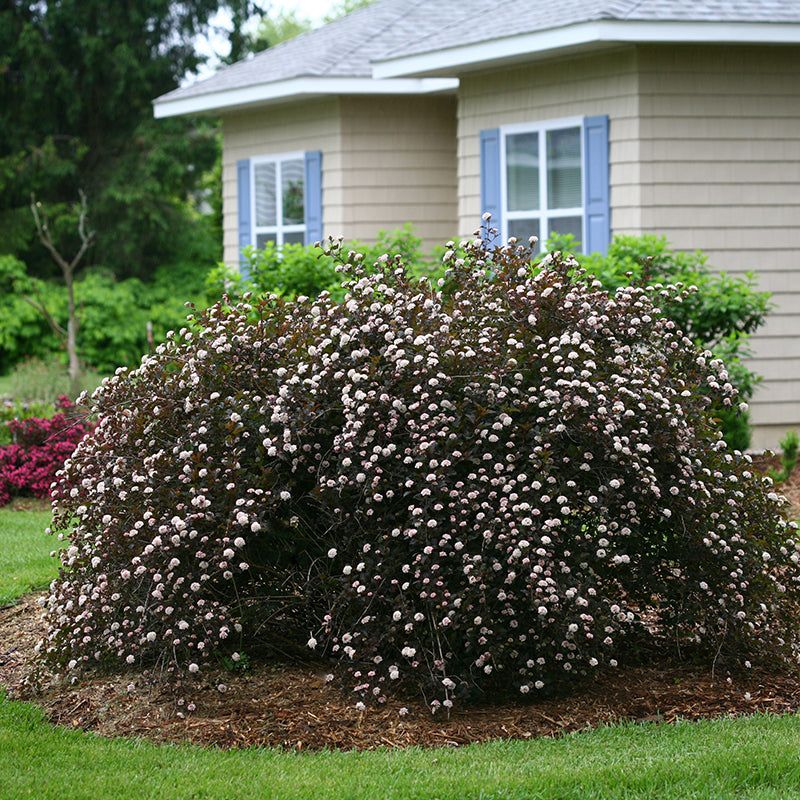
Planting something in rock-hard Ohio clay and watching it not just survive but actually flourish is one of the most satisfying things a gardener can experience. Ninebark, known botanically as Physocarpus opulifolius, delivers exactly that kind of reward.
Native to much of the eastern United States, including Ohio, it has evolved to handle the heavy, compacted soils that defeat so many other landscape plants.
Ninebark grows with a graceful arching form and produces clusters of small white to soft pink flowers in late spring. The foliage comes in a range of colors depending on the cultivar, from deep burgundy to golden yellow, giving you real design flexibility.
Popular varieties like Diablo and Summer Wine bring bold color to Ohio yards without demanding perfect drainage or amended soil beds.
Mature plants typically reach six to ten feet tall and wide, making ninebark useful as a privacy screen, a foundation anchor, or a bold specimen planting. It handles both drought and occasional wet periods once established, which is a real advantage in Ohio where clay holds moisture unevenly.
Pruning right after flowering keeps the shape tidy. Few shrubs offer this much reliability with this little fuss in heavy clay ground.
2. Arrowwood Viburnum Handles Heavy Ground With Ease
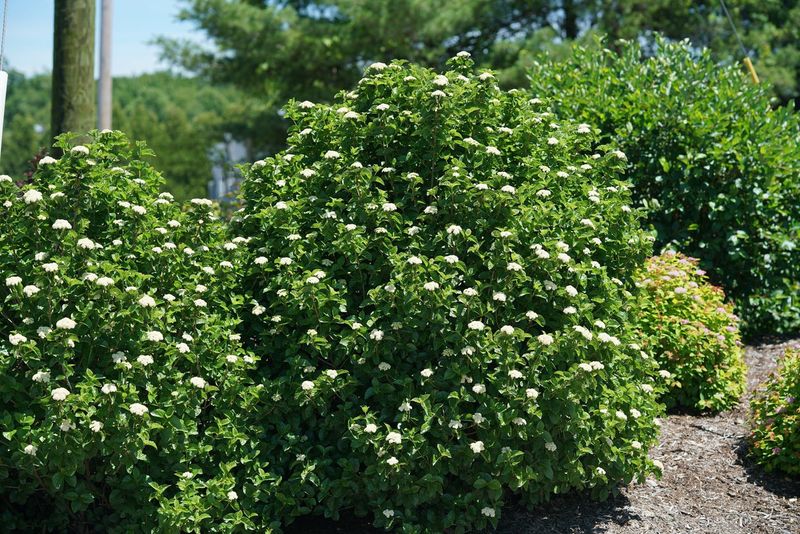
Some shrubs look delicate but turn out to be surprisingly tough. Arrowwood viburnum, Viburnum dentatum, is exactly that kind of plant.
Its creamy white flower clusters in late spring look almost too pretty for a difficult yard, but this native Ohio shrub handles dense, poorly drained clay soil without complaint.
Arrowwood earns its place in Ohio landscapes through sheer adaptability. It tolerates wet clay, periodic flooding, and compacted ground that would stress less resilient shrubs.
Ohio State University Extension recognizes native viburnums as solid choices for challenging landscape conditions, and arrowwood consistently lives up to that reputation. It grows six to ten feet tall with a naturally rounded, multi-stemmed form that fits well in naturalized borders or foundation plantings.
Beyond clay tolerance, arrowwood brings three full seasons of interest. The white flowers attract pollinators in May and June.
By late summer, clusters of blue-black berries ripen and draw in birds, making it a genuine wildlife plant. Fall foliage shifts to shades of red, orange, and purple before the leaves drop.
Your Ohio Garden Changes Every Week. Your Plan Should Too.
Gardening in Ohio changes quickly throughout the season. Every Friday you’ll receive a simple weekly plan showing exactly what to plant, prune, fertilize, harvest, and protect so you never miss the right timing.
It is low maintenance once established, rarely needs spraying, and holds its structure well through Ohio winters. For a yard with heavy soil and a need for reliable beauty, arrowwood viburnum is a dependable answer.
3. Black Chokeberry Brings Color To Stubborn Soil
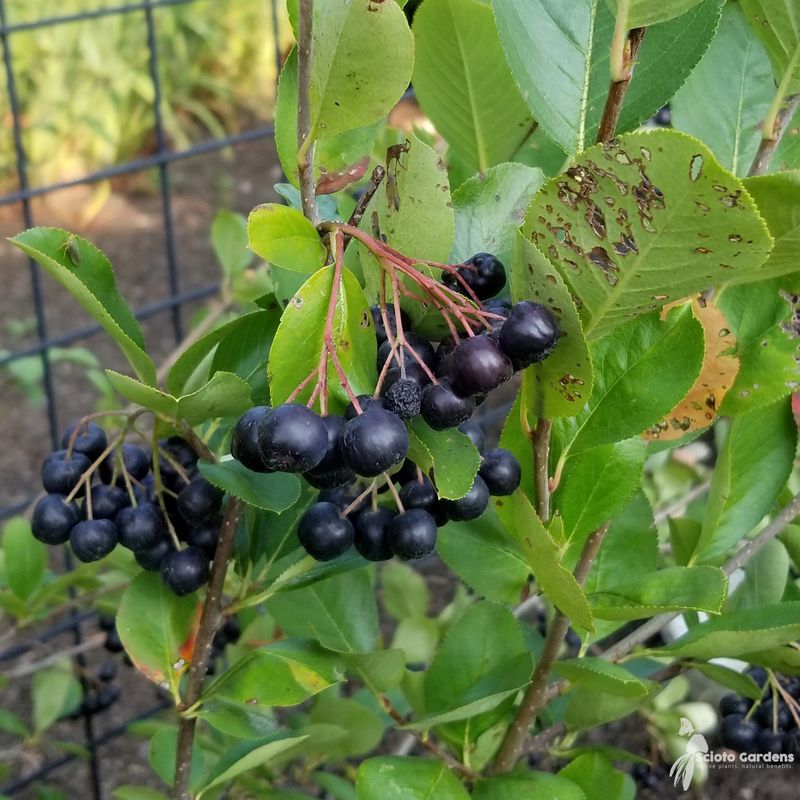
Not every yard needs a shrub that demands attention. Sometimes the best choice is one that quietly does its job through every season, looking sharp without requiring constant care.
Black chokeberry, Aronia melanocarpa, fits that description perfectly, and it happens to be one of the most clay-tolerant native shrubs available for Ohio yards.
Native to wetlands and forest edges across eastern North America, black chokeberry naturally grows in heavy, moisture-retentive soils. That background makes it an easy fit for Ohio clay, where standing water after rain is a familiar problem.
It typically grows three to five feet tall and wide, forming a tidy, upright clump that works well in borders, rain gardens, or naturalized plantings along property lines.
The seasonal show starts in spring with clusters of small white flowers. Summer brings glossy dark berries that ripen by late August, attracting birds and adding visual interest.
Fall is where black chokeberry really earns admiration, as the foliage turns vivid shades of red and orange that rival much showier plants. The berries persist into winter, giving the shrub extended landscape value.
Few native plants pack this much seasonal color into such a manageable, well-behaved package for Ohio clay yards.
4. Spicebush Thrives Where Clay Slows Others Down
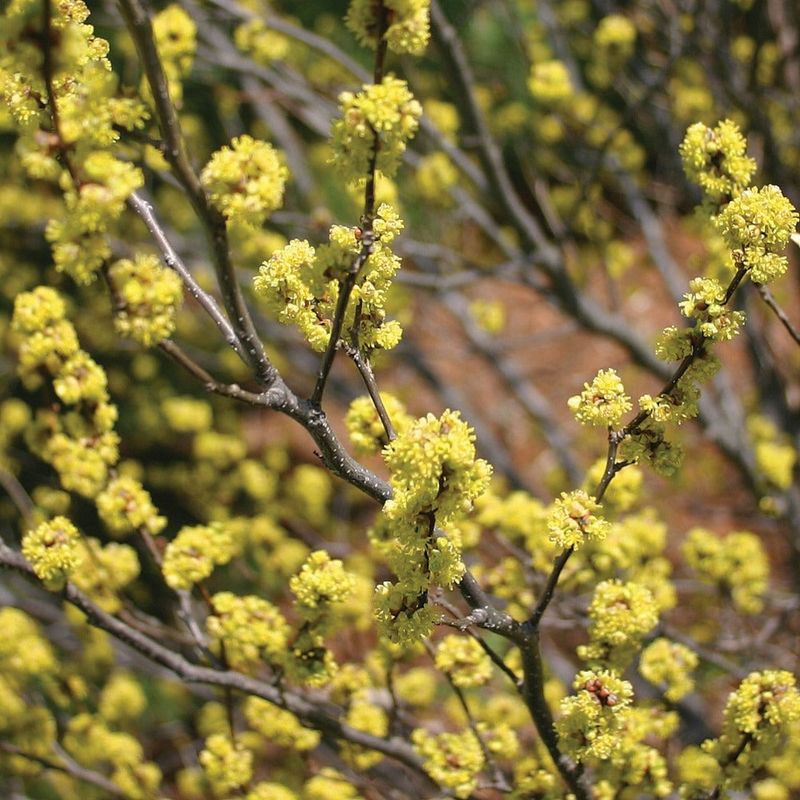
Early spring in Ohio can feel like a long wait for color. Spicebush, Lindera benzoin, ends that wait earlier than almost any other native shrub.
Its small, bright yellow flowers appear on bare branches before the leaves even open, sometimes as early as March in central Ohio, making it one of the first signs that the growing season is back.
Beyond its early show, spicebush is genuinely suited to the kind of heavy, somewhat moist clay soil that exists along Ohio stream banks, in low-lying yards, and under tree canopies where drainage is slow. It naturally grows in these conditions across Ohio, which means it does not need coaxing or soil amendments to perform.
Spicebush typically reaches six to twelve feet at maturity with a loose, layered branching structure that looks at home in naturalized or woodland-style landscapes.
Female plants produce bright red berries in late summer and fall that are highly attractive to migrating birds, including wood thrushes and veeries. The aromatic leaves and stems have a pleasant spicy scent when crushed, which is a fun detail for curious kids or visitors.
Ohio gardeners with shaded, clay-heavy corners often struggle to find shrubs that fit. Spicebush fills that gap with quiet confidence and genuine ecological value.
5. Virginia Sweetspire Brightens Damp Clay Corners
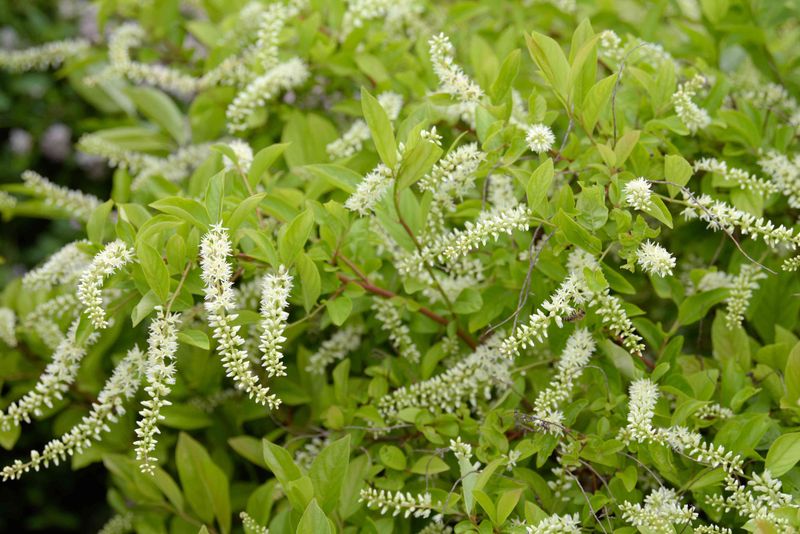
That soggy low corner of the yard where nothing seems to want to grow is a challenge many Ohio homeowners know well. Virginia sweetspire, Itea virginica, was practically designed for spots like that.
This compact native shrub handles heavy, moisture-retentive clay soil with ease and rewards patient gardeners with some of the most vivid fall color available in the shrub world.
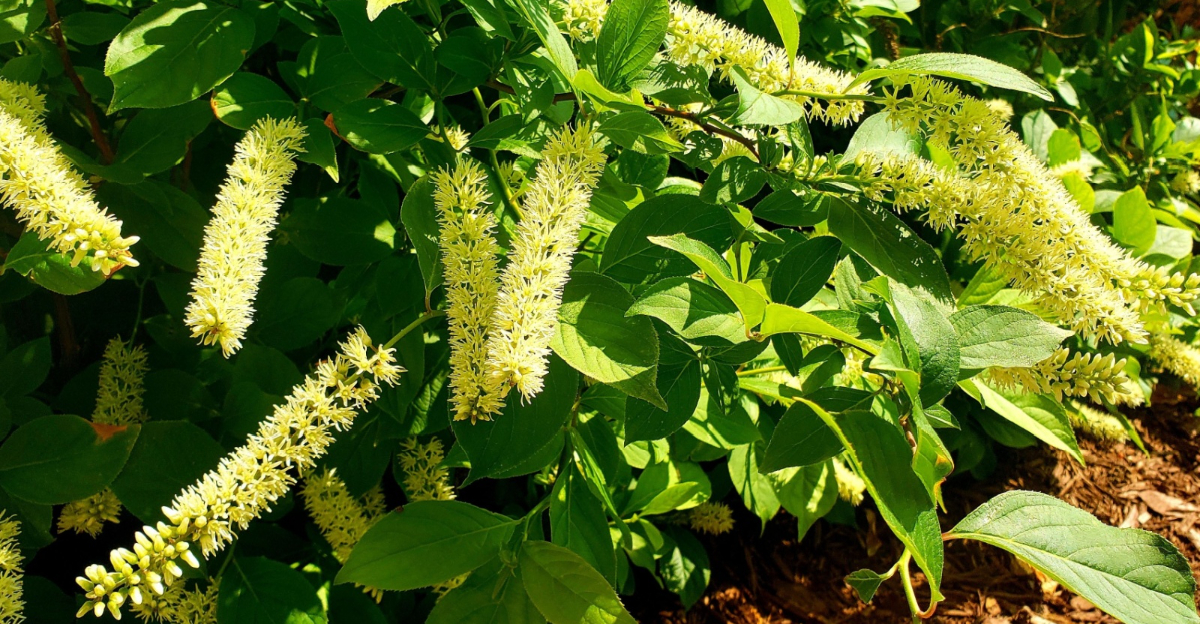
In early to mid summer, Virginia sweetspire produces graceful arching spikes of small white flowers with a light, pleasant fragrance. The blooms last several weeks and attract bees and butterflies reliably.
The plant typically grows three to five feet tall with a gently spreading habit, making it useful as a mass planting, a low border, or a naturalized edge along wet areas. Cultivars like Henry’s Garnet are widely available at Ohio nurseries and are known for especially intense fall color.
As temperatures drop in autumn, the foliage shifts to shades of deep red, burgundy, and orange that hold on longer than many other shrubs. Virginia sweetspire is also notably adaptable to partial shade, which makes it useful under tree canopies where clay soil tends to stay damp longest.
For Ohio yards with problem drainage zones, this shrub turns a frustrating corner into a genuine seasonal highlight.
6. Smooth Hydrangea Softens Dense Ohio Soil
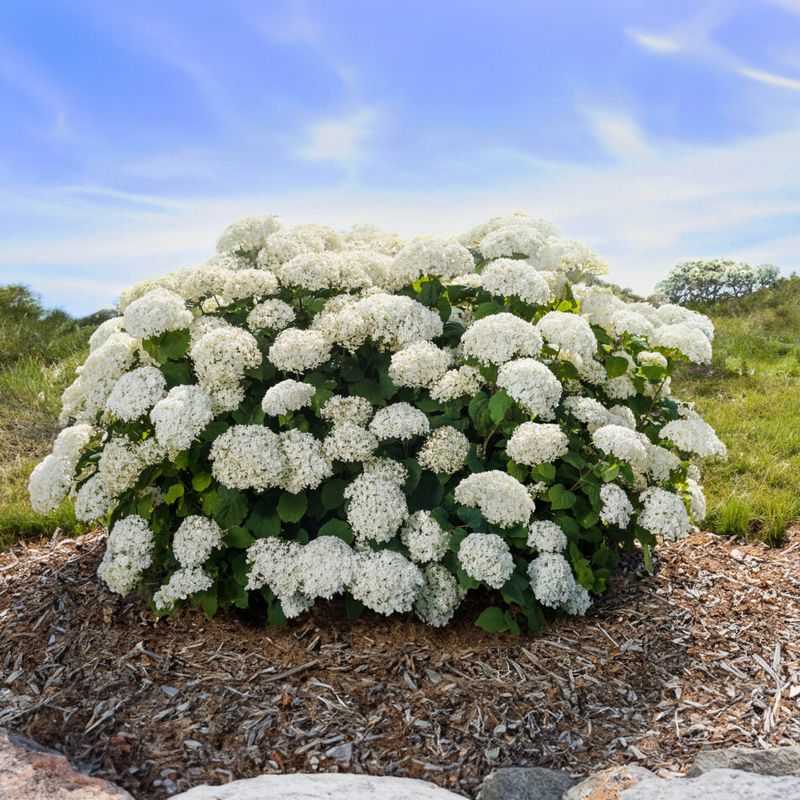
Few sights in an Ohio summer garden are as satisfying as a smooth hydrangea loaded with its signature large, round flower heads. Hydrangea arborescens, the species behind the beloved Annabelle cultivar, is a native plant that grows naturally in moist, heavy soils across much of the eastern United States, including Ohio woodlands and stream-side slopes.
What makes smooth hydrangea especially valuable for Ohio clay yards is its tolerance for both wet feet and temporary dry spells once it is established. Clay soil swings between waterlogged and brick-hard as seasons change, and smooth hydrangea handles those shifts better than most flowering shrubs.
It grows three to five feet tall and wide, producing those giant white blooms from June through August and sometimes into September in cooler parts of Ohio.
The flowers age gracefully from bright white to soft green and then to a warm tan, giving the plant extended visual interest well into fall and even winter. Smooth hydrangea does best in partial to full sun with at least a few hours of afternoon shade in hot Ohio summers, which also helps in spots under high-canopy trees where clay stays wetter.
Cut it back hard in late winter and it rebounds quickly with fresh stems and blooms every year, making it one of the most forgiving flowering shrubs in the Ohio landscape toolkit.
7. Buttonbush Loves The Wettest Clay Spots
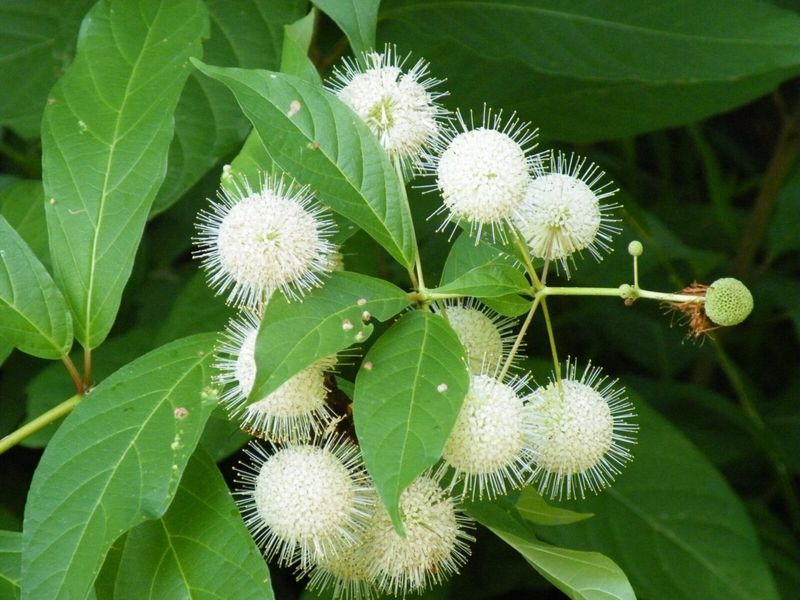
Most shrubs politely ask for decent drainage. Buttonbush, Cephalanthus occidentalis, does not care about that request at all.
This native Ohio shrub actually prefers the wettest, heaviest clay conditions on the property, making it an ideal solution for yards where standing water is a seasonal reality and other shrubs have repeatedly failed.
Buttonbush grows naturally along Ohio riverbanks, pond edges, and in wet bottomland forests, so planting it in a soggy clay depression is not asking it to adapt. It is putting it exactly where it belongs.
The shrub grows six to twelve feet tall at maturity with a loose, multi-stemmed form. In midsummer, it produces its signature blooms: round, golf-ball-sized clusters of tiny white flowers with protruding stamens that give them a spiky, almost whimsical appearance.
Those flowers are magnets for pollinators. Bees, butterflies, and hummingbirds visit buttonbush consistently throughout its bloom period, and the round seed heads that follow attract waterfowl and songbirds into fall and winter.
Buttonbush also plays a role in stabilizing wet clay banks and reducing erosion, which is a practical bonus for Ohio yards near drainage channels or low-lying areas. If the wettest part of your yard has been a problem for years, buttonbush turns that liability into a genuine ecological feature.
8. Red Twig Dogwood Turns Heavy Soil Into A Win
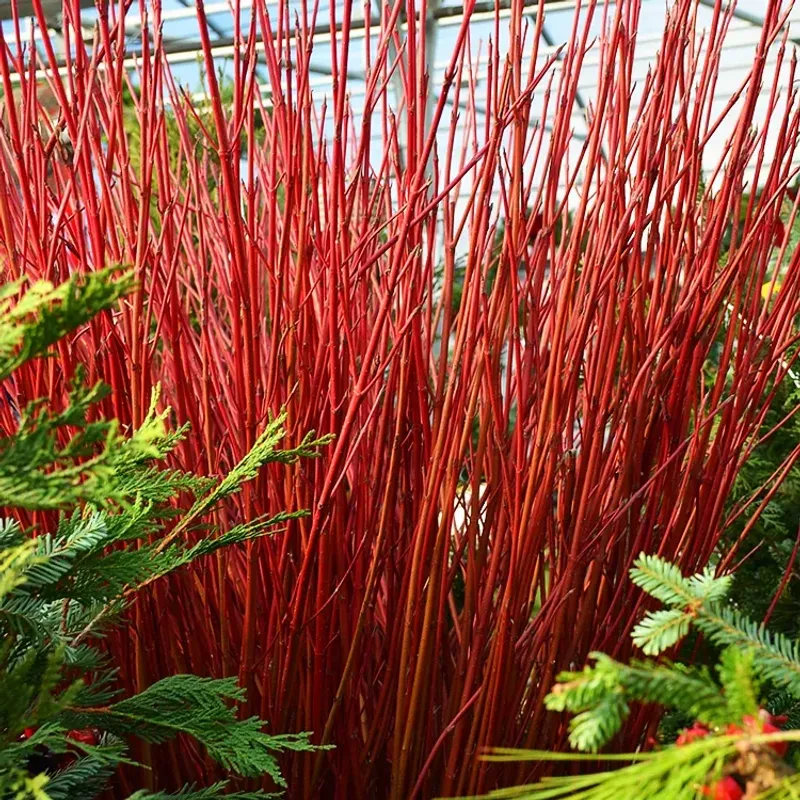
Winter in Ohio has a way of exposing every weakness in a landscape. Bare ground, gray skies, and dormant plants can make even a well-maintained yard feel flat.
Red twig dogwood, Cornus sericea, flips that script completely. Its stems turn a striking, almost electric red as temperatures drop, and that color holds all winter long, giving Ohio clay yards a bold visual anchor when almost nothing else is showing.
Beyond its famous winter display, red twig dogwood is genuinely built for heavy soil. It grows naturally in wet meadows, stream banks, and low-lying areas across Ohio, which means dense clay is not a hardship for it.
It spreads gradually by suckering to form a multi-stemmed colony, typically reaching six to nine feet tall. That spreading habit is actually an asset in large problem areas where you want thorough coverage without replanting every season.
Spring brings clusters of small white flowers, followed by white to pale blue berries that birds love. Summer foliage is clean and attractive.
Then the fall color arrives before the leaves drop, and those red stems take center stage again for months. Cutting older stems back to the ground every few years keeps the newest growth coming in with the brightest red.
For Ohio yards with heavy clay and a need for year-round interest, red twig dogwood is a genuinely hard plant to beat.