These Plants And Yard Features Are Bringing Ticks To Ohio Yards (And What To Remove Now)
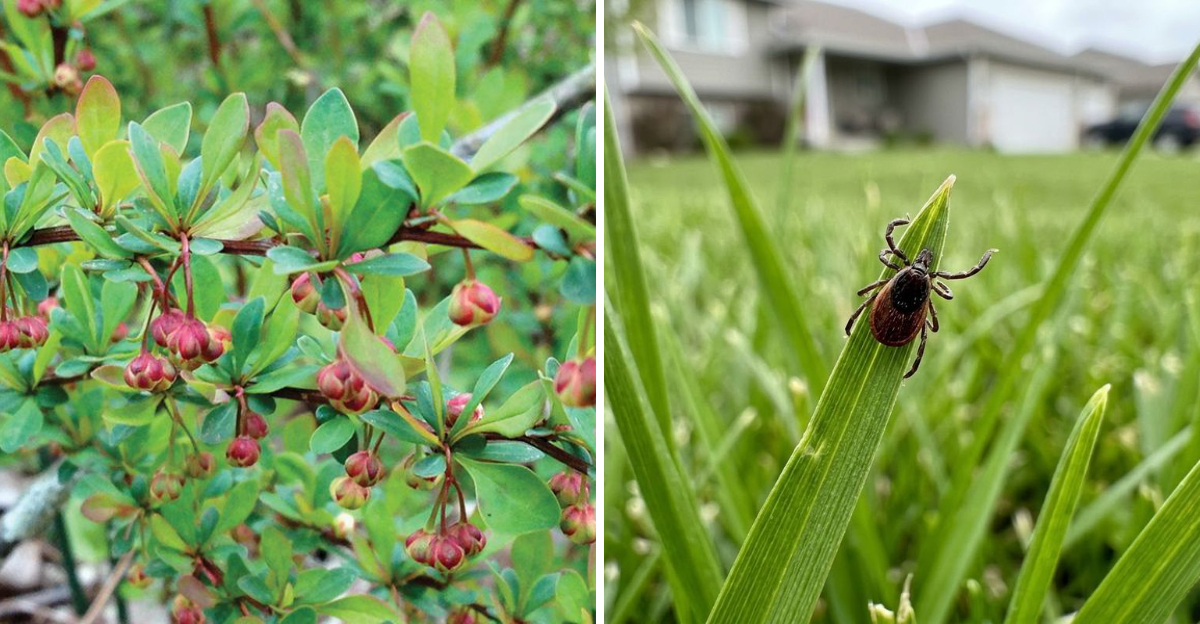
Ever get that weird feeling your yard is working against you?
Everything looks fine. The grass is green, the fence line looks full, the corners feel a little wild but nothing alarming.
Then you hear about ticks getting worse in Ohio, and suddenly the whole yard hits different. That shady patch by the edge.
The overgrown spot you keep meaning to deal with. The part of the lawn nobody thinks twice about.
Here’s where it gets creepy: a yard does not have to look neglected to quietly become the kind of place ticks love.
That is what catches people off guard. The problem is not always the obvious mess.
Sometimes it is the stuff that looks harmless, normal, even nice. A plant here. A forgotten buildup there. A few small choices that turn into the perfect setup without anyone noticing.
And by the time most people realize it, the yard has already been rolling out the welcome mat.
1. Japanese Barberry Brings Trouble To Ohio Yards
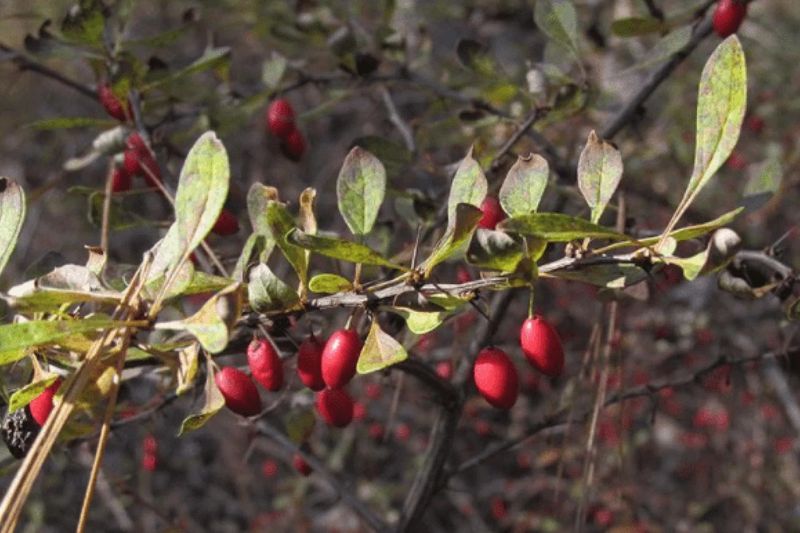
Walk through any overgrown Ohio yard and you might spot a low, thorny shrub with small oval leaves and bright red berries clinging to arching branches. That is likely Japanese barberry, and researchers have found it to be one of the more concerning plants when it comes to tick habitat.
Studies, including work referenced by Connecticut and northeastern extension programs, have shown that yards and forest edges with Japanese barberry tend to have higher tick populations than areas without it.
The reason comes down to structure. Japanese barberry grows so densely that it traps humidity underneath its canopy, creating a consistently moist microclimate close to the ground.
Ticks need that moisture to survive. Without it, they dry out quickly.
The thick, tangled branches also offer shelter to white-footed mice, which are among the most important hosts for blacklegged tick larvae.
In Ohio, Japanese barberry has also been listed as an invasive plant. It spreads aggressively, outcompeting native shrubs and changing the habitat in ways that benefit ticks and other pests.
Birds eat the berries and scatter the seeds, so even a single plant can spread far beyond where it was originally planted.
Identifying it is fairly straightforward. Look for a shrub that grows two to four feet tall with arching stems covered in single spines.
The leaves are small and spoon-shaped, turning red in fall. Yellow flowers appear in spring, followed by those bright red berries in late summer.
Ohio State University Extension and the Ohio Invasive Plants Council both recommend removing Japanese barberry from residential landscapes. Wear thick gloves when handling it because the thorns are sharp.
Young plants can be pulled by hand, while larger established shrubs may need to be cut back to the base and the roots dug out to prevent regrowth.
2. Common Barberry Can Make Things Worse
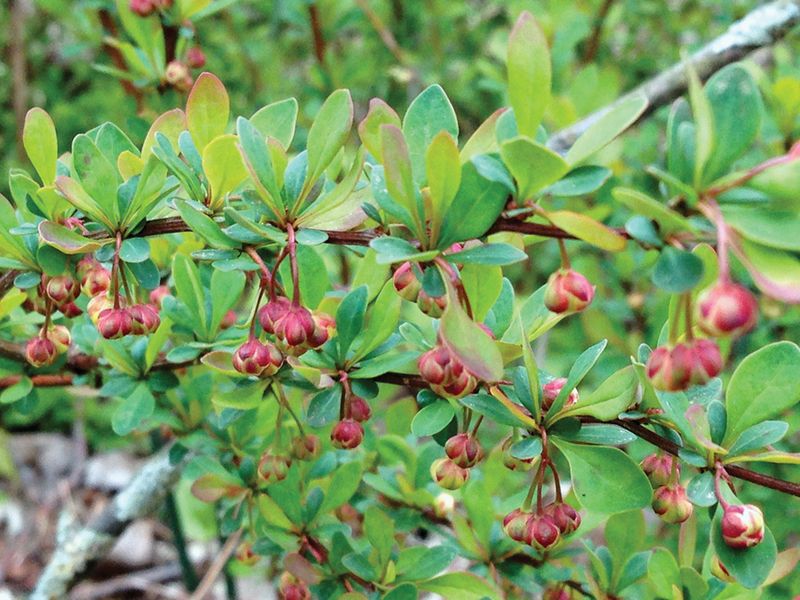
Not every thorny shrub in an Ohio yard is Japanese barberry. Common barberry, known scientifically as Berberis vulgaris, is a close relative that shares many of the same structural traits and creates similar conditions in the landscape.
Your Ohio Garden Changes Every Week. Your Plan Should Too.
Gardening in Ohio changes quickly throughout the season. Every Friday you’ll receive a simple weekly plan showing exactly what to plant, prune, fertilize, harvest, and protect so you never miss the right timing.
Homeowners sometimes plant it as a hedge or boundary shrub without realizing it carries many of the same concerns as its more well-known cousin.
Common barberry grows in a dense, arching form with sharp spines along its stems. Its leaves are slightly larger than Japanese barberry, and it produces small yellow flowers in spring followed by oblong red berries.
The overall growth habit is similar enough that the two are sometimes confused in home landscapes, especially when plants are young or have not yet fruited.
The concern with common barberry is the same as with Japanese barberry. Its dense, low canopy holds moisture and shade close to the ground, which helps ticks stay hydrated and active.
Ticks spend much of their lives waiting at the tips of low vegetation for a host to brush past, a behavior researchers call questing. Dense, shrubby plants with layered branching give ticks more surface area to rest on while they wait.
Common barberry has also been noted as a host for wheat stem rust, a plant disease, which led to widespread removal programs in agricultural areas of the United States in the early twentieth century.
While that concern is most relevant to farming regions, it adds another layer of reason to reconsider keeping it in a residential yard.
If you have a shrub along your fence or yard edge that you cannot quite identify, check for triple spines at each node, which is a clear marker of barberry species.
Removing it and replacing it with a native Ohio shrub like arrowwood viburnum or native spicebush is a practical step that benefits both your yard and local wildlife.
3. Bush Honeysuckle Creates The Cover Ticks Need
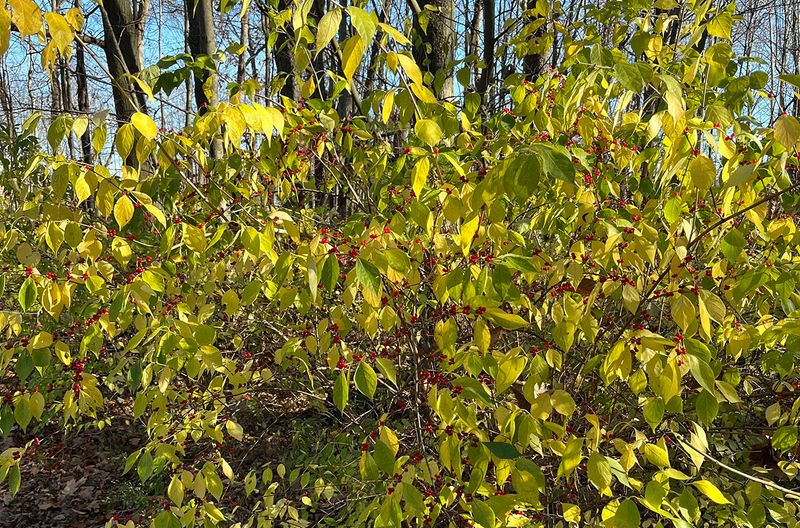
Spring in Ohio comes with a familiar sight along roadsides, park edges, and suburban backyards: a leafy shrub that greens up earlier than almost anything else around it and hangs on to its leaves well into fall.
That is invasive bush honeysuckle, and while it looks lush and full, it is one of the most problematic plants for Ohio landscapes, including from a tick habitat standpoint.
Several species fall under the bush honeysuckle umbrella, including Amur honeysuckle, Morrow’s honeysuckle, and Tatarian honeysuckle.
All of them are considered invasive in Ohio and have been identified as significant ecological concerns by the Ohio Invasive Plants Council.
They form dense thickets that shade out native plants and create a layered, overgrown understory that many wildlife species, including white-tailed deer and small mammals, use heavily as cover.
That wildlife connection matters a great deal. Deer and small mammals like mice and chipmunks are primary hosts for ticks at different life stages.
When dense honeysuckle thickets draw these animals into your yard or to its edges, ticks come with them. The thick, shaded interior of a honeysuckle stand also stays cooler and moister than open lawn, giving ticks the conditions they need to survive between feedings.
Identifying bush honeysuckle is not difficult once you know what to look for. The leaves are oval and opposite on the stem, the bark on older stems is often shreddy or hollow when cut, and the flowers are tubular and fragrant, usually white, pink, or yellow.
The berries are red or orange and appear in pairs.
Ohio State University Extension recommends cutting bush honeysuckle back and treating the cut stumps to prevent resprouting.
Removing it from yard edges and replacing it with native shrubs reduces the dense, moist cover that ticks rely on and helps restore habitat for native wildlife.
4. Leaf Litter Gives Ticks A Place To Hide
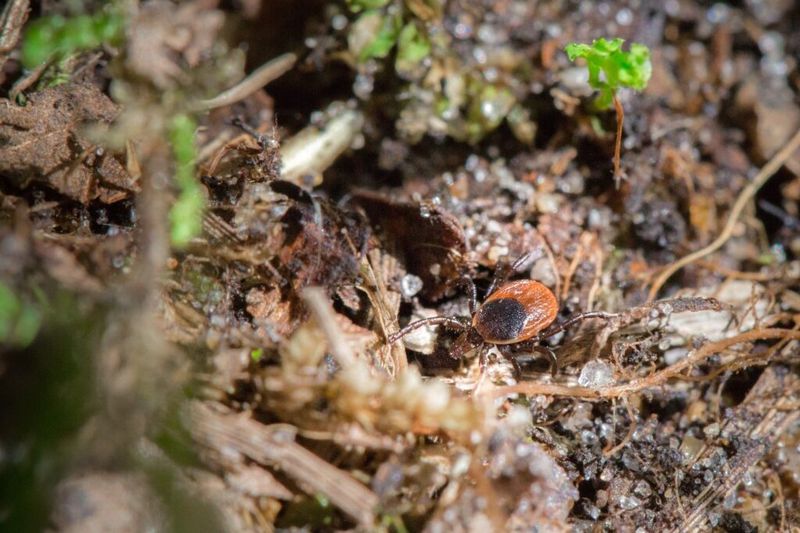
Every fall, Ohio yards get blanketed in leaves, and while that crunch underfoot feels satisfying, what builds up underneath is a different story.
Thick accumulations of leaf litter are one of the most consistently tick-friendly features a yard can have, and it is one of the easiest problems to address once you understand why it matters.
Ticks are surprisingly sensitive to their environment. They lose moisture quickly in dry, sunny conditions and need a certain level of humidity to stay active and healthy.
Leaf litter solves that problem for them perfectly. A deep layer of decomposing leaves holds moisture, insulates against temperature swings, and creates a dark, sheltered space just above the soil where ticks can rest, overwinter, and wait for a host.
The CDC and numerous university extension programs, including those focused on Lyme disease prevention, consistently list leaf litter removal as one of the most practical steps homeowners can take to reduce tick populations around the home.
Blacklegged ticks in particular are known to overwinter in leaf litter, surviving cold Ohio winters by burrowing into the insulating layer that fallen leaves create.
Pay special attention to spots where leaves naturally accumulate: along fence lines, under shrubs, against the house foundation, at the base of trees, and in low corners of the yard.
These areas tend to stay damp and shaded, making them especially favorable for ticks even after the rest of the yard has dried out.
Raking leaves and bagging or composting them regularly through fall and into early spring makes a real difference.
If you prefer to mulch leaves in place, keeping the layer thin, no more than an inch or so, allows it to break down quickly rather than building into the kind of deep, moist mat that ticks prefer.
Keeping garden beds tidy and clearing debris from yard edges is equally important.
5. Tall Grass Makes Yards More Tick-Friendly
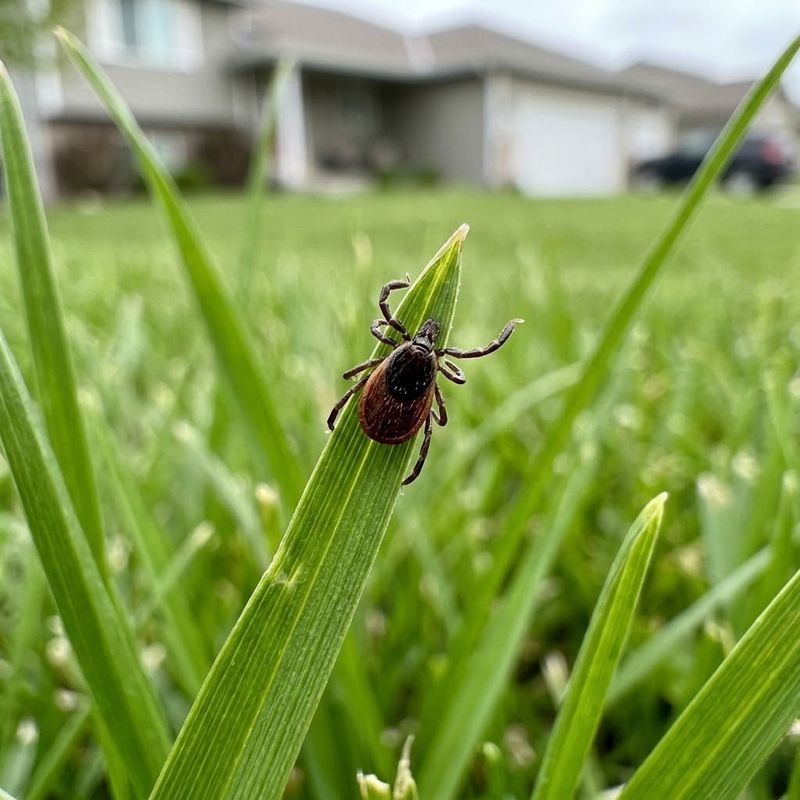
Picture the edge of your lawn where the mower does not quite reach, maybe along a back fence, beside a shed, or bordering a garden bed. That strip of taller grass might seem harmless, but it is exactly the kind of spot where ticks spend their active hours.
Ticks do not jump or fly. Instead, they climb to the tips of grasses and low plants and wait with their front legs outstretched, ready to grab onto a passing host.
Tall grass gives ticks more surface area to work with and keeps conditions closer to the ground cooler and more humid than a short, well-maintained lawn.
Ohio State University Extension and other public health resources note that keeping grass mowed regularly is one of the most straightforward ways to reduce tick exposure in residential yards.
Short grass dries out faster in the sun, which is hostile to ticks, and it removes the vertical structure they need to quest effectively.
The most problematic areas tend to be transition zones where maintained lawn meets taller, unmanaged vegetation. Ticks are most concentrated in these border areas rather than in the middle of a well-kept lawn.
If your yard backs up to a wooded area, a field, or a neighbor’s overgrown lot, that back edge deserves the most attention.
Mowing consistently throughout the growing season, not just occasionally, is what makes the difference. Aim to keep lawn grass at a healthy but managed height.
Beyond the main lawn, trim around fence posts, garden edges, tree bases, and any area where grass tends to get long between mowing sessions.
Adding a three-foot-wide barrier of wood chips or gravel between your lawn and any wooded or brushy edge is also recommended by the Harvard Chan Lyme Initiative and similar resources.
That dry, open barrier discourages ticks from crossing into the maintained yard area.
6. Brushy Edges Help Ticks Settle In
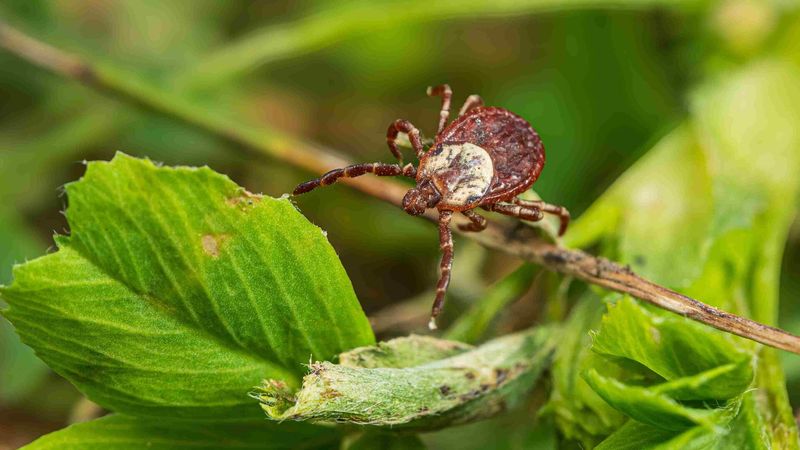
Somewhere between the manicured lawn and the neighbor’s tree line, there is often a zone that nobody quite manages: a tangle of woody stems, old brush piles, weedy shrubs, and maybe a forgotten stack of logs.
That transitional zone is prime tick territory, and it is one of the most overlooked parts of a yard when it comes to tick prevention.
Ticks do not spread evenly across a yard. Research consistently shows they concentrate in humid, shaded, sheltered spots, especially along edges where manicured areas meet overgrown ones.
Fence lines, wooded borders, brush piles, and unkempt corners all qualify. These spots tend to attract the wildlife that ticks depend on, including deer, raccoons, opossums, and white-footed mice, which move through brushy edges regularly and drop ticks as they go.
Brush piles are a particular concern. A pile of old branches or yard waste sitting against the back fence might seem harmless, but it provides shelter for small rodents, which are key hosts for immature blacklegged ticks.
When those ticks feed on infected rodents and then drop off in your yard, the next host they find could be a pet or a person.
Cleaning up brushy edges does not require a complete overhaul. Start by removing any brush piles and disposing of old woody debris.
Trim back overgrown shrubs and weedy growth along fence lines and property borders.
If your yard meets a wooded area, consider installing that wood chip or gravel barrier mentioned in tick prevention guidance from sources like the Harvard Chan Lyme Initiative and the CDC.
Creating a clear, dry, sunny separation between your living space and the brushy edge reduces the chance that ticks will migrate into the areas where your family spends time.
Staying on top of these edges through the growing season is one of the most effective long-term habits you can build.
7. Wood Piles And Debris Piles Round Out The Risk
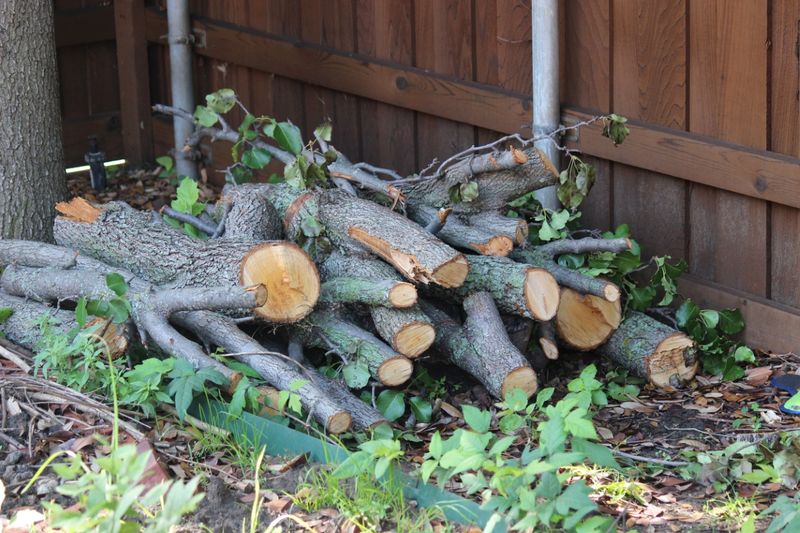
Stacked firewood is a staple of Ohio backyards, especially heading into fall and winter. A good wood pile is practical and useful, but where you put it and how you stack it can matter more than most homeowners realize.
Firewood stacked directly on the ground, close to the house, or tucked against a shrubby border creates an ideal refuge for the small rodents that ticks depend on most.
White-footed mice are the most significant reservoir for Lyme disease bacteria in the eastern United States. They are also highly attracted to sheltered, enclosed spaces like the gaps inside a loosely stacked wood pile.
When mice nest in or around a wood pile, ticks feeding on those mice are essentially being delivered to a spot right next to your yard, your porch, or your back door.
Beyond firewood, general debris piles carry similar risks. Old lumber, broken garden equipment, stacked pots, and piles of yard waste all create the kind of dark, sheltered microhabitats that rodents and ticks favor.
Even a forgotten tarp draped over something in the corner of the yard can trap enough moisture and warmth to make ticks comfortable.
Moving your wood pile away from the house and off the ground is a practical first step. Stack firewood on a rack that keeps it elevated, allows air to circulate, and reduces ground contact.
Position the pile in a sunny, open area of the yard rather than against a shaded fence or building wall.
Clearing out debris piles and doing a thorough yard audit at least twice a year, once in spring and again in fall, helps you catch these problem spots before they become established tick zones.
A tidy, open yard with fewer hiding places for rodents is a yard with fewer conditions that support ticks.