How To Grow Beautiful Container Blueberries In California
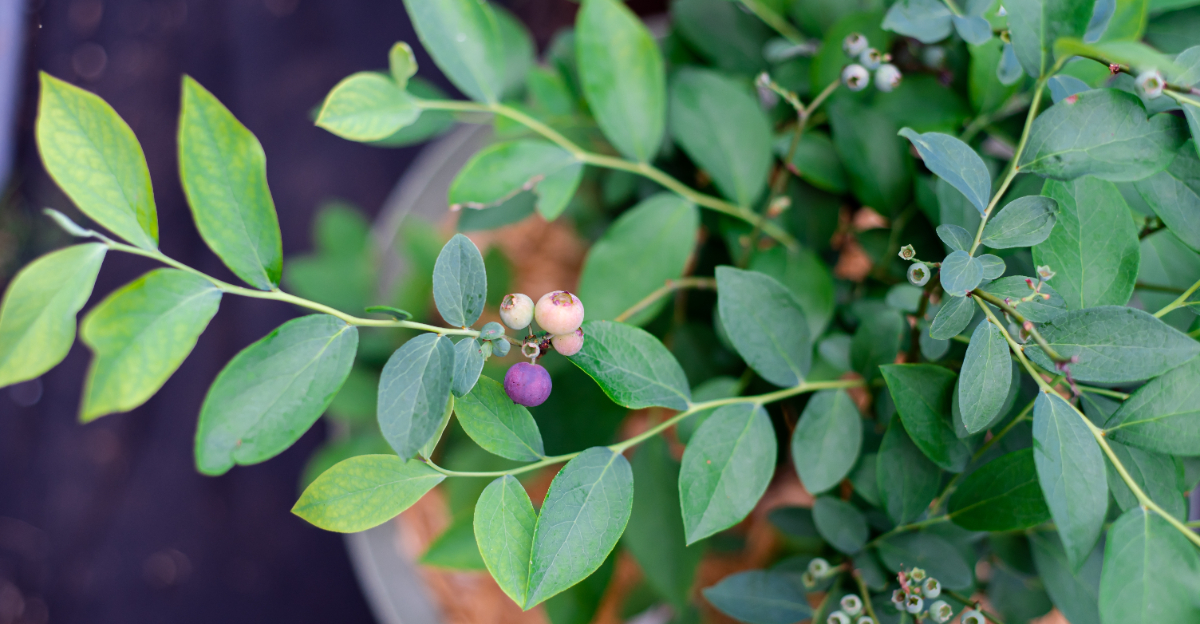
Growing blueberries in containers in California feels a little bit like beating the system. These sweet little berries can be surprisingly picky in the ground, especially in areas with alkaline soil, but pop them into pots and suddenly you are the one in charge.
Better soil, better drainage, better chance at a bowl full of homegrown blueberries that actually taste exciting. Not bad for a patio plant.
The trick is knowing how to set them up for success, because blueberries are not exactly the plant world’s chillest customers. They want the right soil, the right pot, the right watering routine, and a sunny spot that does not roast them alive.
Get those basics right, though, and they can reward you with pretty spring flowers, lush foliage, and piles of fruit that make store-bought berries seem a little sad.
For California gardeners, container growing is often the smartest way to keep blueberries happy and looking beautiful too.
Pick The Right Blueberry Variety
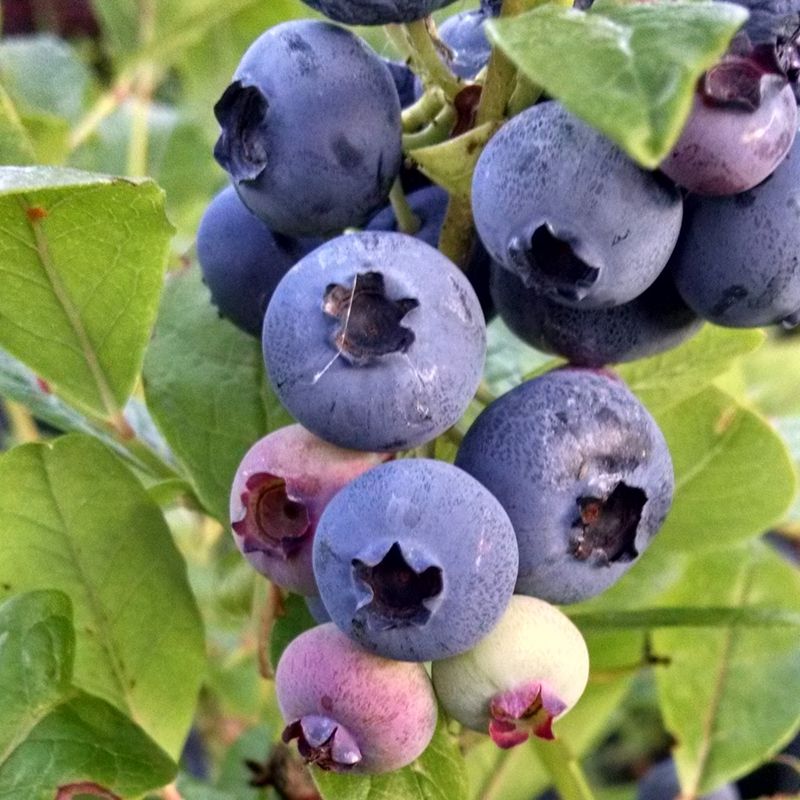
Not all blueberries are the same, and choosing the wrong one is the most common mistake California growers make. California has mild winters, which means most traditional blueberry varieties won’t produce well here.
You need low-chill varieties that don’t require long cold winters to set fruit.
Sunshine Blue is one of the best picks for California. It’s compact, self-pollinating, and thrives in warm, low-chill conditions across the state.
Misty is another excellent choice, especially for gardeners near the coast where summers stay cooler and the air stays damp.
For small patios or tight balcony spaces, Jelly Bean is a fantastic dwarf variety that stays small but still produces sweet, flavorful berries. Planting two different varieties near each other is always a smart idea because cross-pollination leads to bigger harvests.
Most low-chill varieties need fewer than 500 chill hours, which fits perfectly with California’s climate. Check with your local nursery to find out which varieties grow best in your specific part of the state, whether you’re in San Diego, the Central Valley, or the Bay Area.
Use A Large Pot
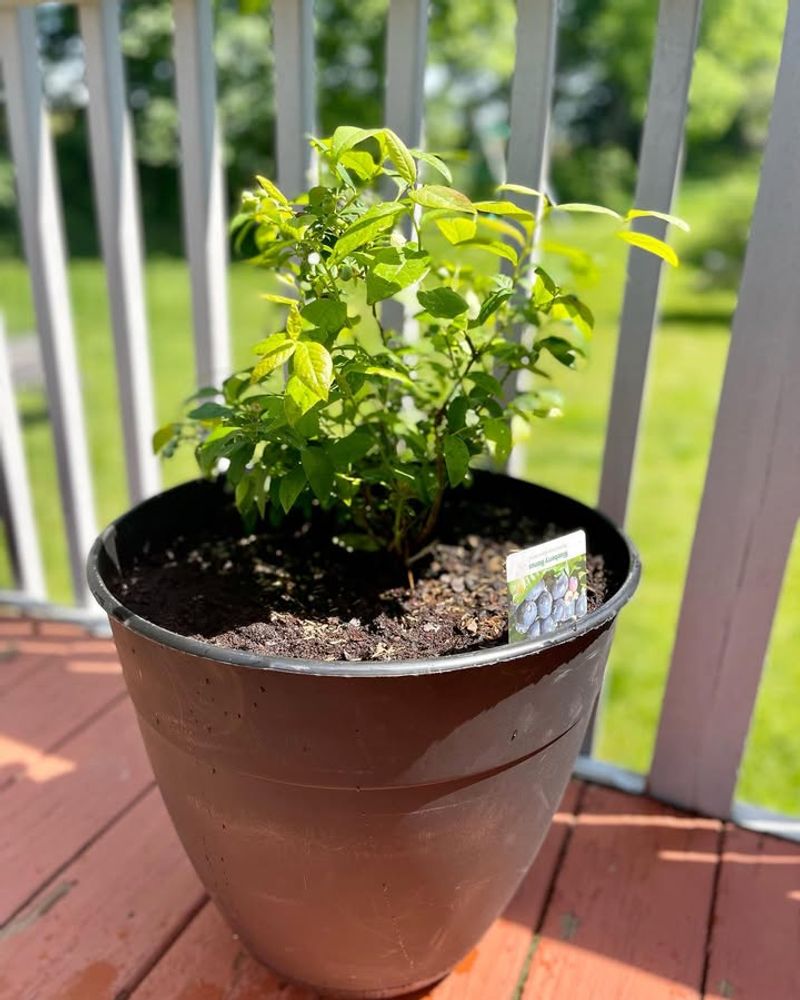
Blueberry roots spread out wide and need plenty of room to grow strong. A pot that’s too small will stress the plant and limit how many berries you get each season.
For best results, start with a container that holds at least 15 to 20 gallons and is at least 18 inches deep and wide.
Half wine barrels are a popular and affordable option for California gardeners. They look great on a patio and give roots all the space they need.
Plastic containers work well too because they’re lightweight and easy to move around when the weather changes.
Whatever material you choose, make sure the pot has several drainage holes at the bottom. Blueberries hate sitting in soggy water.
Without good drainage, roots can rot and the whole plant suffers. Placing the pot on risers or small feet helps water flow out freely after watering.
As the plant grows, you may need to repot it every three to four years into a slightly larger container. Refreshing the soil at that time keeps the roots healthy and gives the plant fresh nutrients to work with for the next growing season.
Your California Garden Changes Every Week. Your Plan Should Too.
Gardening in California changes quickly throughout the season. Every Friday you’ll receive a simple weekly plan showing exactly what to plant, prune, fertilize, harvest, and protect so you never miss the right timing.
Start With Acidic Soil
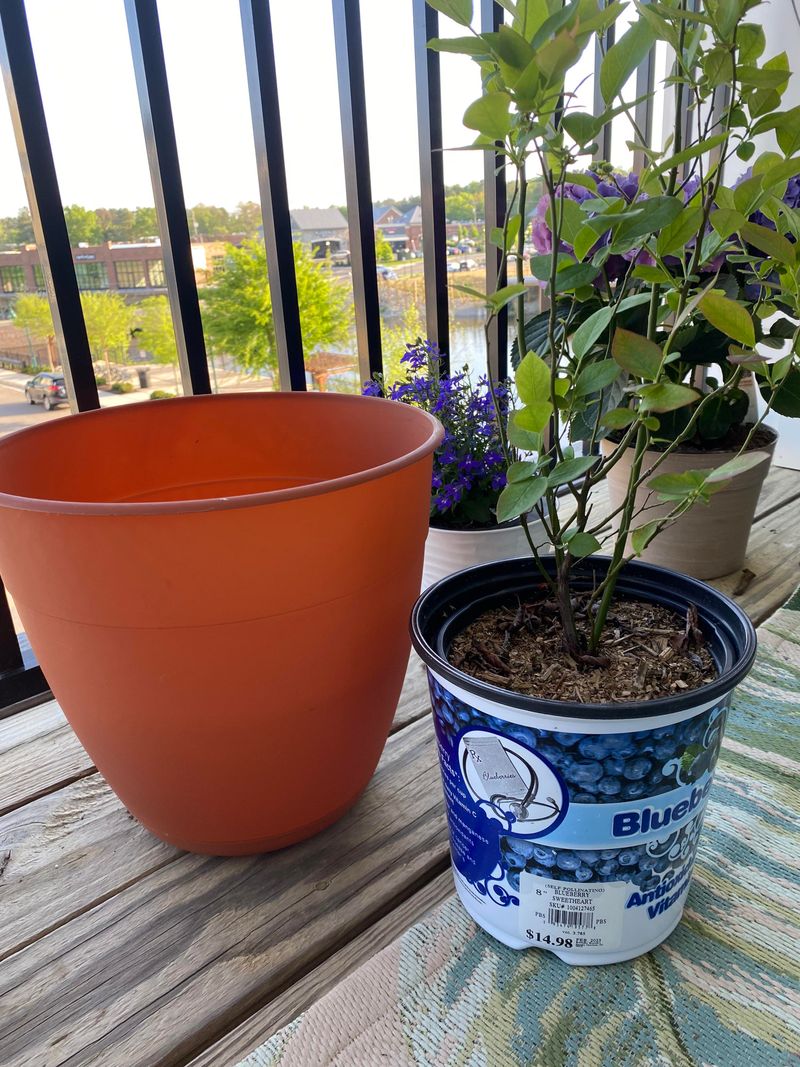
Here’s something many beginners don’t know: blueberries are very particular about their soil. Standard potting mix from the garden store is usually too alkaline for them.
Blueberries need a soil pH between 4.5 and 5.5 to absorb nutrients properly and stay healthy.
The best approach is to mix your own acidic blend. Combine 50 percent peat moss, 30 percent pine bark fines, and 20 percent perlite.
This mixture drains well, stays loose around the roots, and keeps the pH in the right range. You can find all these ingredients at most garden centers across California.
Testing your soil pH regularly is a great habit to build. Simple pH test kits are cheap and easy to use.
If the pH creeps too high, you can lower it by adding sulfur or using an acidifying fertilizer. Avoid using garden soil or compost-heavy mixes because they tend to compact over time and raise the pH.
Getting the soil right from the start saves you a lot of trouble down the road. When your blueberry plant has the right soil environment, it grows faster, looks greener, and produces more fruit with less effort from you.
Give Them Full Sun
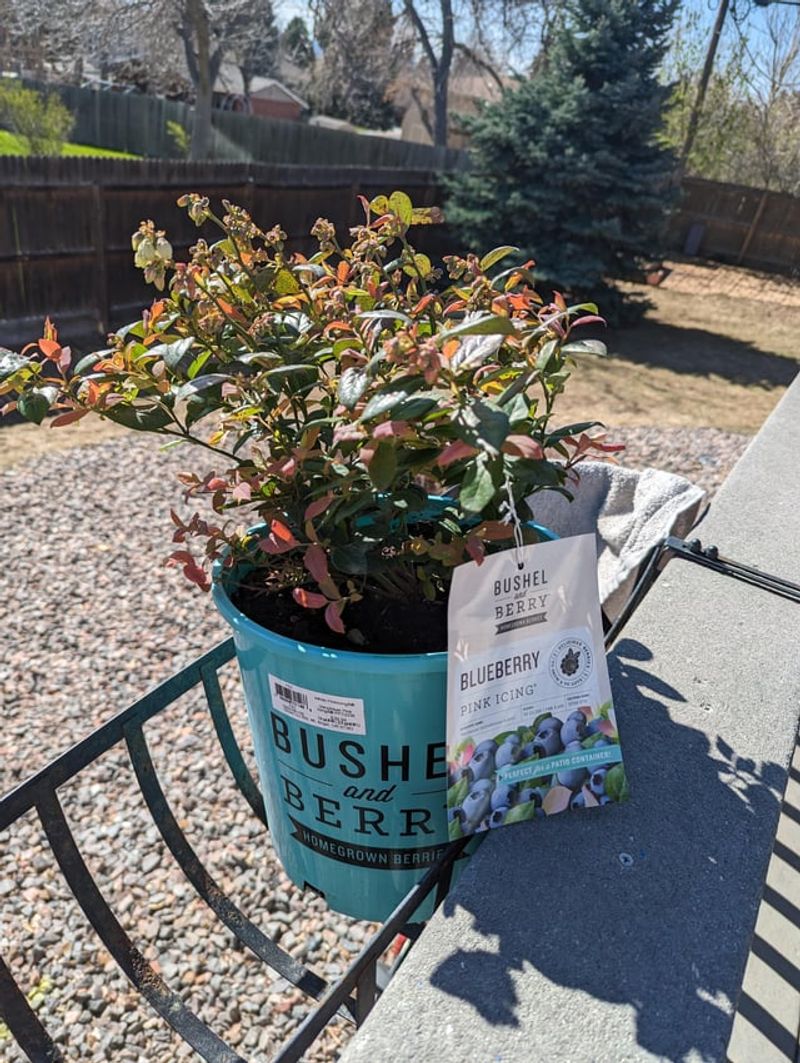
Sunlight is fuel for blueberry plants. Without enough of it, the plant won’t produce much fruit no matter how well you water or fertilize it.
Plan to give your container blueberries at least six to eight hours of direct sunlight every day.
In California, southern and western exposures are usually the best spots. These areas catch the most sunlight throughout the day.
One big advantage of container gardening is that you can move the pot to follow the sun as the seasons change, which is something you simply can’t do with plants in the ground.
That said, California summers can get brutally hot, especially in inland areas like the Central Valley or the Inland Empire. On days when temperatures push past 95 degrees, a little afternoon shade can actually protect the plant from heat stress.
Try placing the container near a wall or fence that blocks the harshest late-afternoon sun. Morning sun with some afternoon shade is a great balance in those regions.
Coastal areas in California rarely have this problem, and plants there can usually handle full sun all day long without any issues. Watch your plant and move it as needed.
Water To Keep Roots Evenly Moist
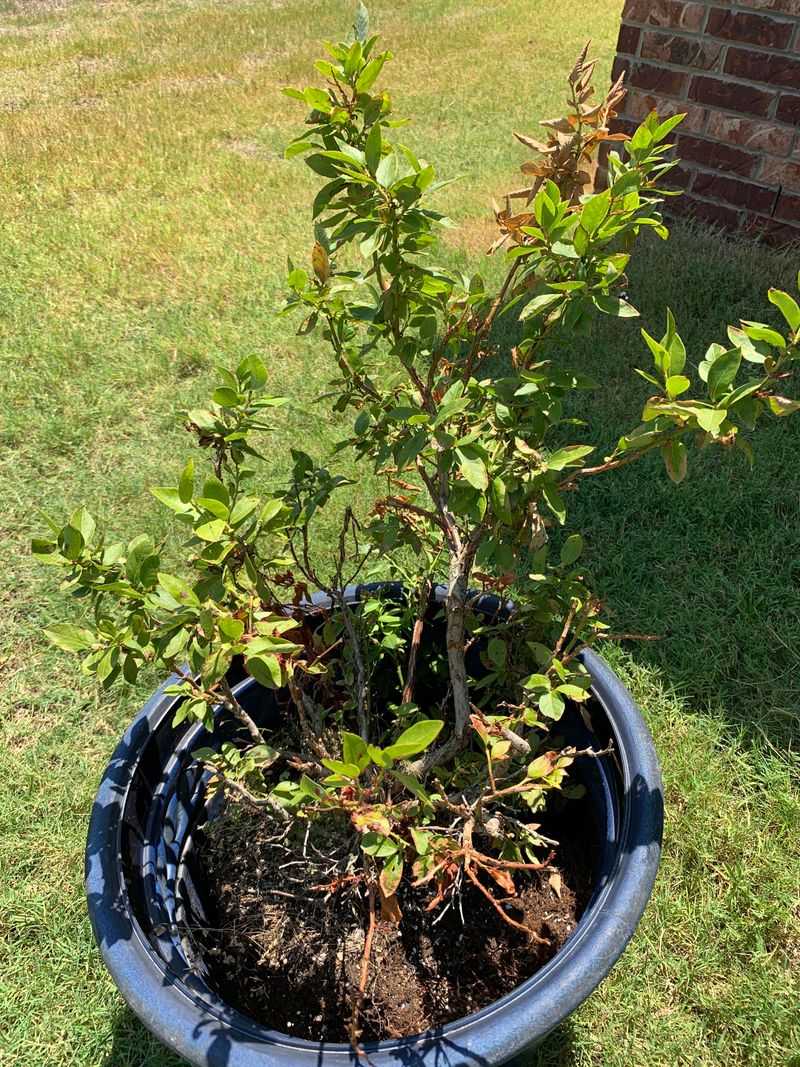
Blueberries have shallow, fibrous roots that dry out faster than most other plants. In California’s warm and often dry climate, watering consistently is one of the most important things you can do.
The goal is to keep the soil evenly moist, not soaking wet and not bone dry.
Check the top inch of soil every day during hot weather. If it feels dry, it’s time to water.
During cooler months, you can water less frequently. Always water slowly and deeply so the moisture reaches all the roots, not just the top layer of soil.
Water quality matters more than most people realize. Tap water in many parts of California is alkaline, which can raise your soil pH over time and hurt the plant.
A simple fix is to add one tablespoon of white vinegar per gallon of tap water before using it on your blueberries. Rainwater is naturally slightly acidic and is the best option when you can collect it.
Using a drip irrigation system or a soaker hose is also a smart move for California gardeners who want to save water while keeping their blueberry plants consistently hydrated throughout the growing season.
Feed For Better Growth
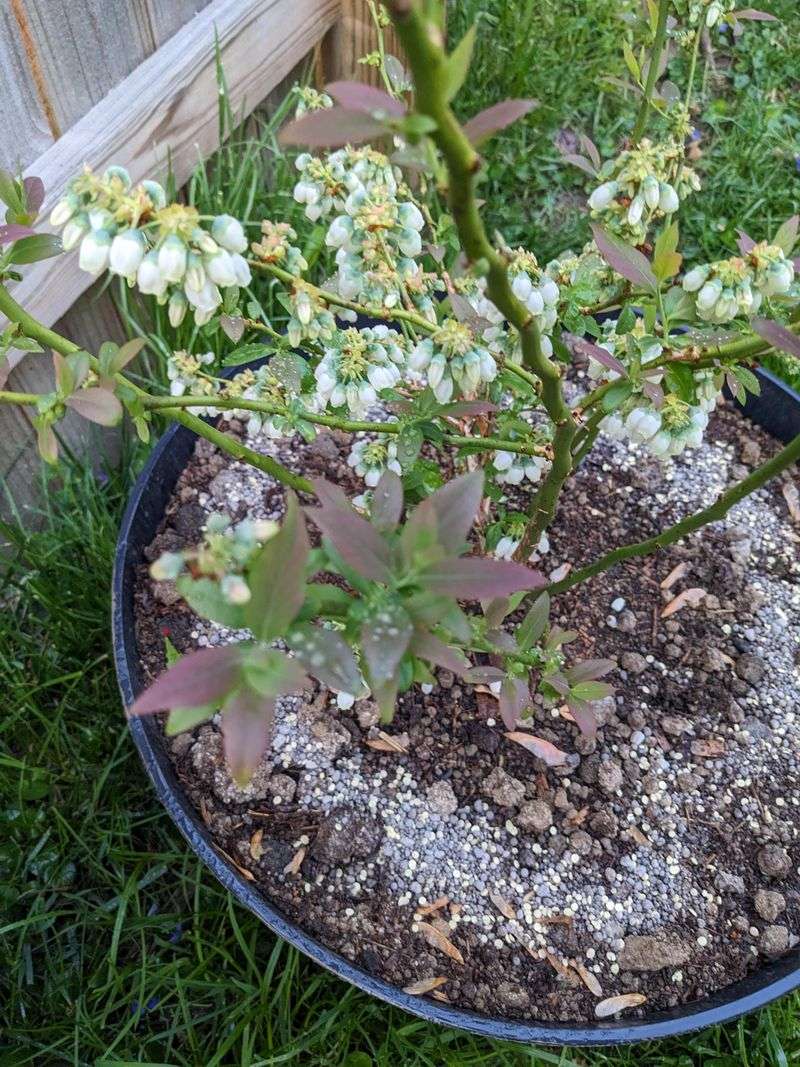
Feeding your blueberry plant the right fertilizer makes a noticeable difference in how fast it grows and how many berries it produces. Regular potting soil runs out of nutrients quickly, especially in containers, so you need to replenish them throughout the growing season.
Always use a fertilizer made for acid-loving plants. Products labeled for azaleas, rhododendrons, or blueberries specifically work great.
These fertilizers are formulated to keep the soil pH low while delivering the nutrients the plant needs. Apply fertilizer in early spring just before new growth starts, and then again after the plant finishes setting fruit.
One thing to watch out for: avoid fertilizers that contain nitrates or chlorides. These compounds can actually raise the soil pH and work against you.
Ammonium sulfate is a popular and effective nitrogen source for blueberries because it slightly acidifies the soil as it breaks down. Don’t over-fertilize either.
Too much fertilizer can burn the roots and stunt the plant. Follow the package directions and start with a lighter dose than recommended if your plant is young.
Consistent, moderate feeding throughout the California growing season is far better than one heavy application that overwhelms the plant.
Prune For Stronger Harvests
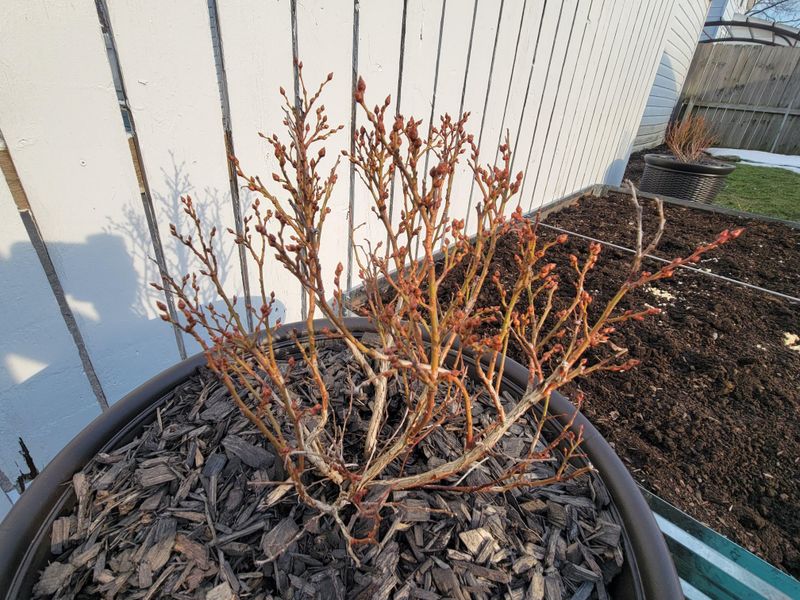
Pruning might feel intimidating at first, but it’s one of the most rewarding things you can do for your blueberry plant. Regular pruning keeps the plant healthy, encourages new growth, and leads to bigger, better harvests year after year.
Without it, the plant can become crowded and produce fewer berries over time.
The best time to prune blueberries in California is late winter, usually between January and early March, while the plant is still dormant. Start by removing any dead or damaged wood.
Then look for older, woody canes that are more than four or five years old and cut them back close to the base.
Older canes produce fewer berries than younger ones, so clearing them out encourages the plant to put energy into fresh new growth. Also remove any thin, weak shoots that are unlikely to produce fruit.
After pruning, clean up any fallen leaves or clippings around the base of the pot to reduce the chance of pests or disease setting in. It’s also a good idea to repot the plant every three to four years and refresh the soil mix at the same time.
Doing both together gives your California container blueberry the best possible start to each new growing season.