The One Native Tree Every Arizona Garden Should Have
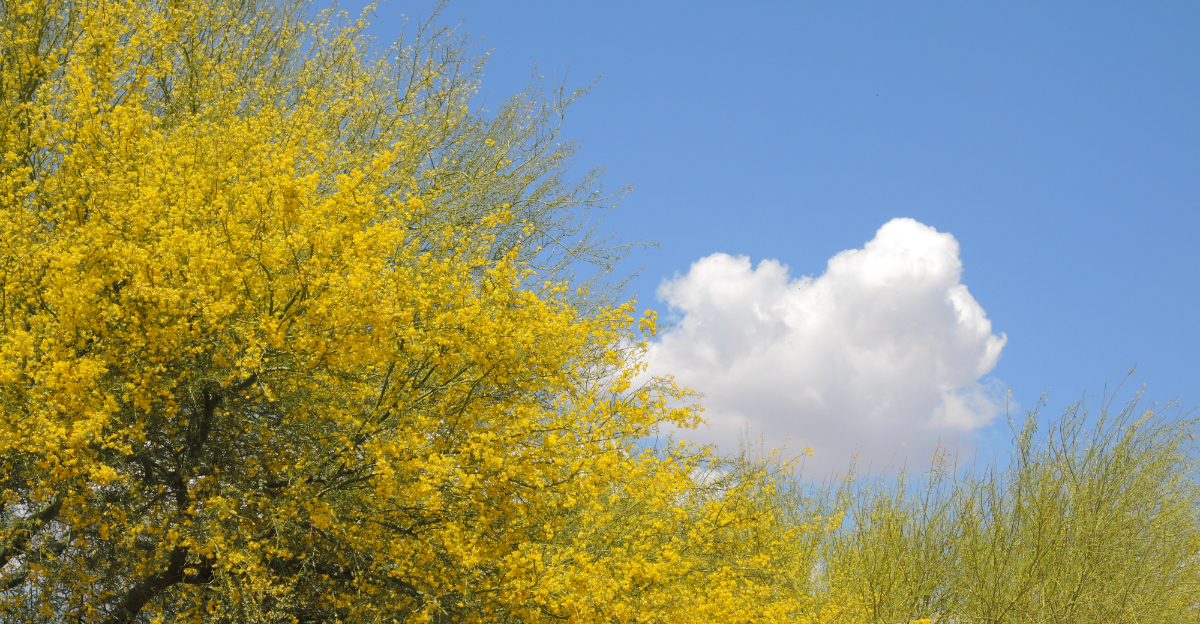
Some Arizona gardens never feel fully settled, even when plenty of plants are already in place. What is often missing is a tree that can anchor the whole yard and make everything around it look more intentional.
There is one native option that does exactly that, giving the landscape a stronger identity while still feeling effortless and natural in desert conditions.
Choosing a tree here is not just about looks. Heat, dry air, intense sun, and fast draining soil can quickly expose a poor choice, which is why the best pick is usually one that already knows how to live in Arizona.
This particular native tree brings more than simple beauty to the yard, and that is part of what makes it so worth a closer look.
Once it is there, the whole space can start to feel more grounded, more useful, and much more connected to the place around it.
1. Palo Verde Is The Native Tree That Defines Arizona Landscapes
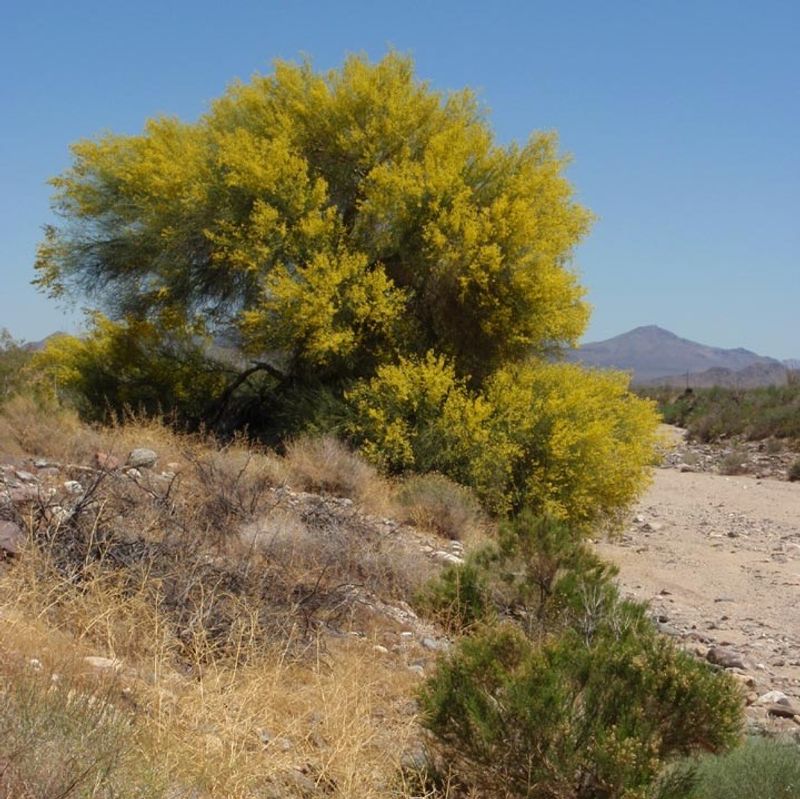
Walk through any neighborhood in Phoenix or Tucson in April and you will stop in your tracks. Palo Verde trees explode into pure yellow, covering every branch with tiny flowers that almost hide the green bark underneath.
No other tree in Arizona puts on a show quite like that.
Parkinsonia florida, the Blue Palo Verde, and Parkinsonia microphylla, the Foothill Palo Verde, are both native to the Sonoran Desert. Both grow naturally in Arizona and handle the climate without any help.
You can also find several palo verde hybrids at local nurseries, many of which perform well across the low desert.
What makes Palo Verde genuinely different from most trees is its bark. Green bark means the trunk and branches photosynthesize even when the tree has dropped its tiny leaves during dry spells.
Water stress that would hurt other trees barely slows a Palo Verde down.
Planting one is straightforward. Dig a hole twice as wide as the root ball, set it at the same depth it sat in the container, and water it in well.
For the first summer, water deeply every week or two. After the roots settle in, you can back off significantly and let rainfall handle most of the work.
Palo Verde grows fast enough to provide noticeable shade within a few years. Its canopy filters light rather than blocking it completely, which lets other desert plants thrive beneath it.
Wildflowers, brittlebush, and desert grasses all do well in that dappled light.
Birds absolutely love this tree. Doves nest in the branches, Gambel’s quail forage under the canopy, and the spring flowers pull in bees and butterflies by the dozens.
Planting one Palo Verde effectively creates a small habitat in your own backyard across Arizona.
2. Thrives In Extreme Heat And Needs Very Little Water Once Established
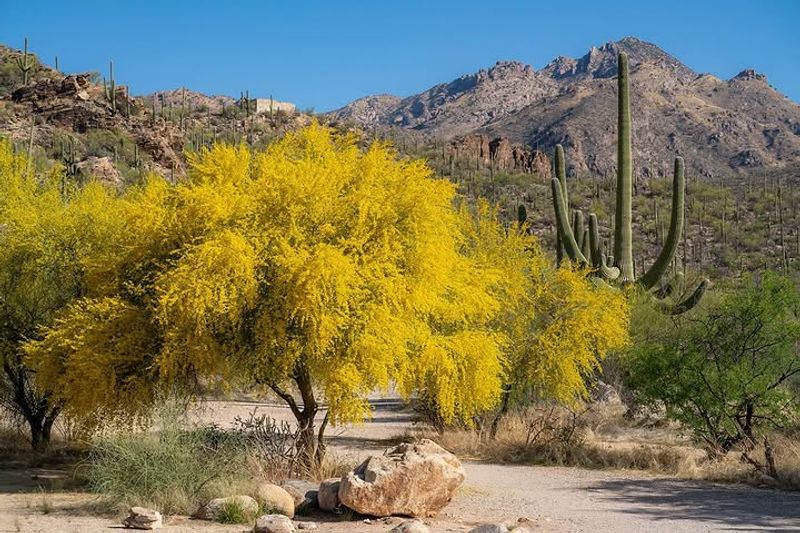
Palo Verde handles Arizona heat without showing stress, even when summer conditions become intense. Native to the Sonoran Desert, it is built for long stretches of dry weather, strong sun, and low humidity that push many other trees past their limits.
Your Arizona Garden Changes Every Week. Your Plan Should Too.
Gardening in Arizona changes quickly throughout the season. Every Friday you’ll receive a simple weekly plan showing exactly what to plant, prune, fertilize, harvest, and protect so you never miss the right timing.
Once established, it does not rely on frequent watering to stay healthy, which is part of what makes it such a reliable choice for Arizona landscapes.
During the first growing season, regular deep watering helps roots settle in and grow downward rather than staying near the surface. This early care makes a noticeable difference later, especially when heat intensifies.
After that period, watering can be reduced significantly. Many established Palo Verde trees do well with occasional deep watering during extended dry spells, and some can rely mostly on natural rainfall in low desert areas.
Too much water can cause more harm than too little. Excess moisture encourages weak growth and shallow roots, which increases the risk of instability during storms.
Keeping irrigation minimal supports stronger structure and helps the tree perform the way it naturally would in desert conditions. This balance is what keeps it thriving year after year.
3. Grows Well In Poor Soil Without Extra Amendments
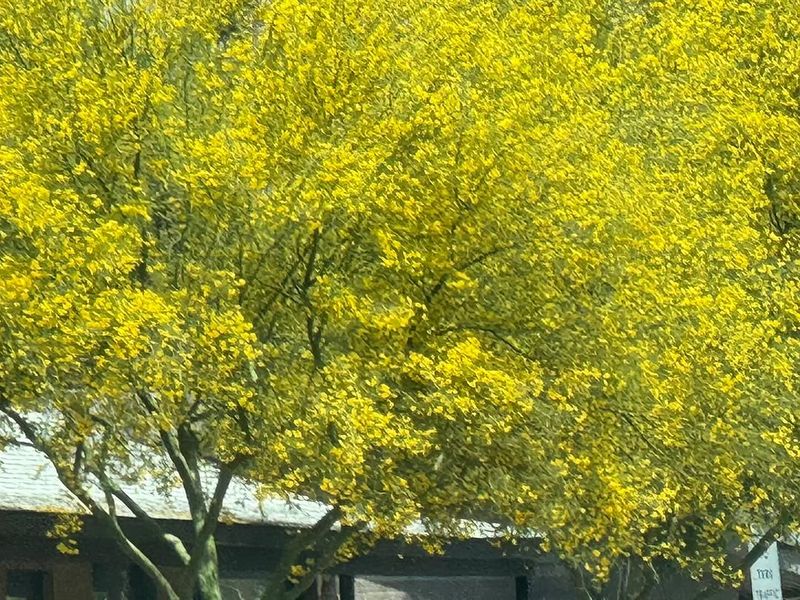
Poor, rocky, fast draining soil is not a problem for Palo Verde, it is exactly what this tree is built for. Across Arizona, many yards have sandy or compacted ground with very little organic matter, and that is where this tree performs best without extra effort.
Instead of needing soil improvements, it settles in quickly and begins establishing roots right away in natural conditions.
Trying to improve the soil too much can actually work against it. Adding compost, rich mixes, or fertilizers at planting time encourages roots to stay in that softer pocket instead of spreading into the surrounding ground.
Over time, that can lead to weaker anchoring and a tree that depends more on irrigation than it should. That is the opposite of what you want in a desert adapted tree.
Leaving native soil untouched allows roots to grow outward and downward, helping the tree stabilize itself and access moisture more efficiently. This growth pattern supports long term strength and better drought tolerance.
Alkaline soil, which is common across Arizona, does not slow it down either.
Many plants struggle in higher pH conditions, but Palo Verde continues growing without showing nutrient issues, making it one of the most reliable and low maintenance trees for desert landscapes.
4. Provides Light Shade That Supports Other Desert Plants
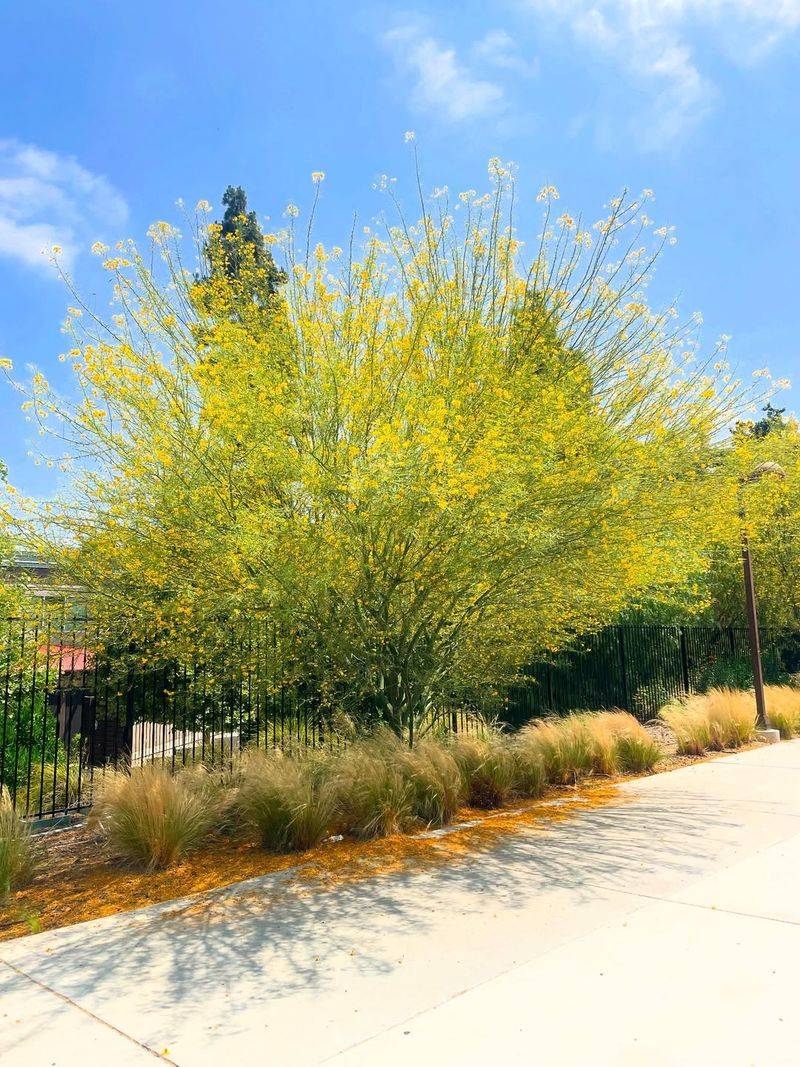
Unlike dense shade trees that block out nearly all sunlight, Palo Verde creates a lighter, filtered canopy that works better in desert landscapes.
Sunlight still passes through the branches, which prevents the ground beneath from becoming too dark or too cool for other plants to grow properly.
This balanced shade makes a noticeable difference in how a yard functions.
Temperatures under the canopy stay lower during the hottest parts of the day, helping reduce stress on nearby plants and slowing how quickly soil dries out. At the same time, enough light reaches the ground to support healthy growth.
Many desert adapted plants prefer this kind of environment rather than full, direct exposure all day.
Brittlebush, penstemon, desert marigold, and native grasses all perform well beneath Palo Verde. These plants benefit from the slight protection without losing the sun they need to bloom and grow strong.
Even young shrubs establish more easily when they are not exposed to constant, intense heat.
This type of shade also helps protect soil structure by reducing surface crusting and limiting moisture loss. The result is a more stable planting area where multiple layers of plants can grow together without competing for harsh conditions.
5. Bright Yellow Blooms Appear In Spring Without Extra Care
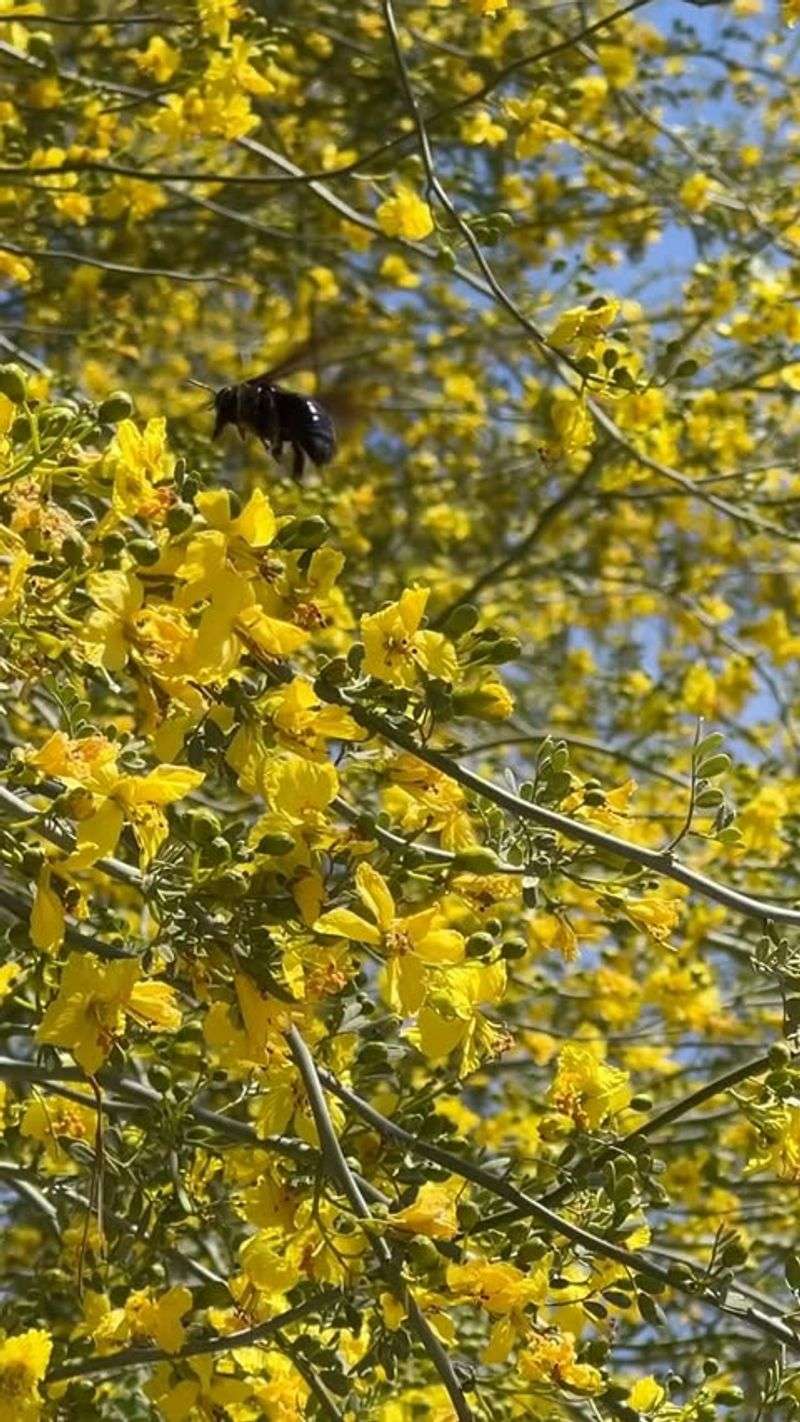
Bright yellow blooms arrive each spring without any extra effort, and that seasonal display is one of the main reasons Palo Verde stands out across Arizona landscapes. As temperatures warm, the branches fill with clusters of small yellow flowers that can cover the entire canopy.
In peak bloom, the green bark is barely visible beneath the color, creating a strong visual impact that is hard to miss.
This flowering happens naturally without the need for fertilizer, pruning for bloom, or special care. Once the tree is established, it follows its own cycle and produces consistent blooms each year under typical desert conditions.
Timing can shift slightly depending on weather patterns, but late spring is when the display is usually at its strongest across lower desert areas.
The flowers also play an important role beyond appearance. Bees are drawn to them in large numbers, along with other pollinators that help support nearby plants.
As blooms fade, small seed pods begin to form, adding another layer of interest to the tree.
Even outside the bloom period, the tree maintains visual appeal through its green bark and open structure, but when flowering begins, it easily becomes the focal point of the entire yard.
6. Green Bark Continues Photosynthesis Even During Dry Periods
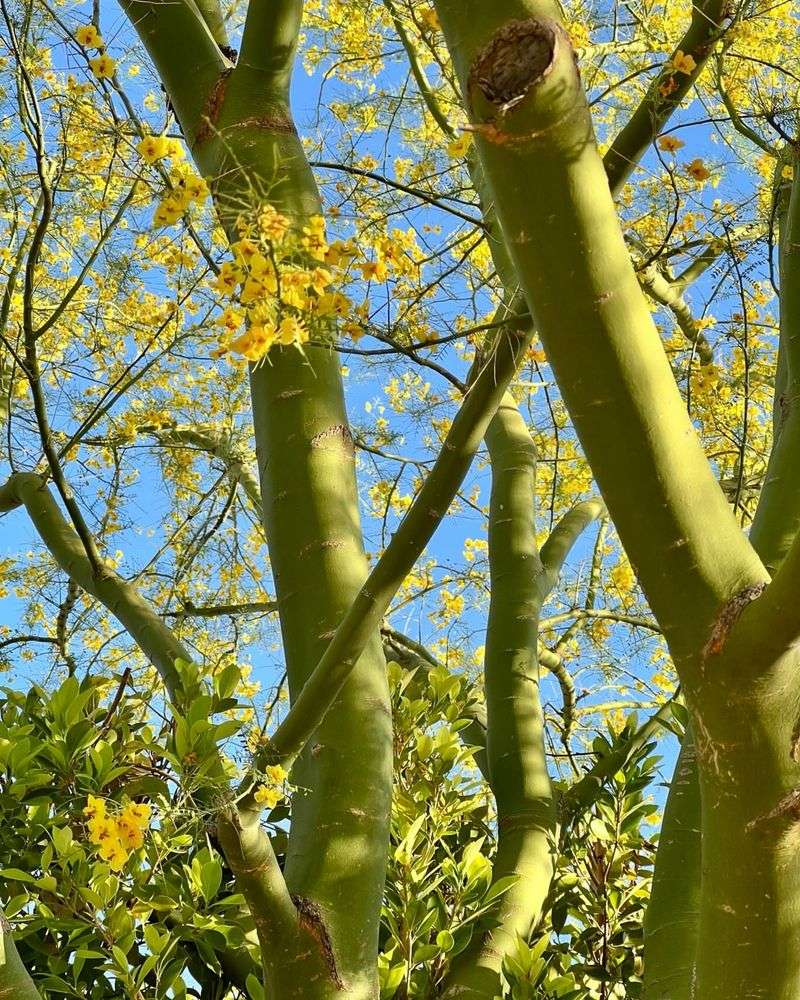
Green bark is one of the most distinctive features of Palo Verde, and it plays a direct role in how well the tree handles dry conditions. Instead of relying only on leaves, the trunk and branches are able to carry out photosynthesis.
That means the tree can continue producing energy even when it reduces or sheds its small leaves during drought or extreme heat.
This adaptation gives Palo Verde a clear advantage in Arizona landscapes. When water becomes limited, many trees slow down significantly because they depend on their leaves for energy production.
Palo Verde keeps functioning through its green bark, which helps it stay stable and continue growing even under stress.
Leaf drop during dry periods is not a sign of decline. It is a natural response that reduces water loss and helps the tree conserve resources.
At the same time, the green bark takes over the role of capturing sunlight and supporting basic functions until conditions improve.
Because of this, the tree handles long dry stretches without major setbacks. It recovers quickly once moisture returns, often pushing out new leaves and growth without needing intervention, which makes it especially reliable in low water desert landscapes.
7. Widely Used In Landscapes For Its Low Maintenance Nature
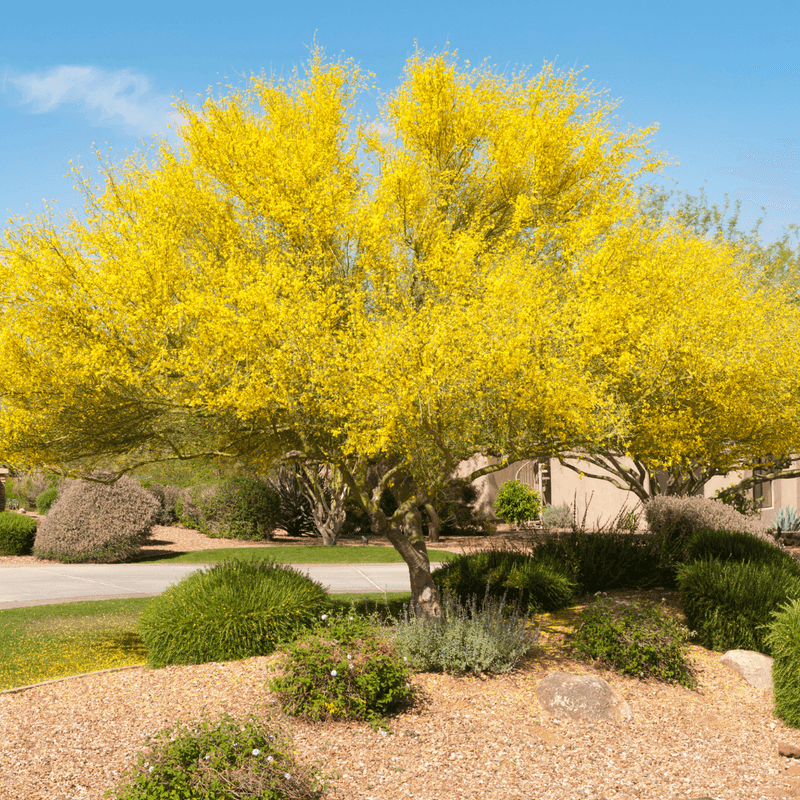
Across Arizona, Palo Verde shows up again and again in both residential yards and public landscapes, and that consistency comes down to how little it asks for once established.
It fits naturally into desert design without constant trimming, feeding, or frequent watering, which makes it a practical choice for long term planting.
Maintenance stays minimal compared to many other trees. Occasional structural pruning is usually enough to keep the canopy balanced and reduce the chance of limb breakage during storms.
Outside of that, the tree largely takes care of itself. It does not need regular fertilizing, and it rarely develops serious issues when planted in the right conditions.
Its growth habit also works well for everyday use. The open canopy allows light through while still providing relief from direct sun, and the root system is less aggressive than many shade trees, making it easier to place near patios or walkways when given proper space.
Because it handles heat, poor soil, and limited water without constant attention, it is often chosen for streetscapes, parks, and large scale plantings.
For homeowners, that same reliability means less ongoing work and a tree that continues to perform well without needing regular adjustments or extra care.