What Arizona Pomegranate Trees Need In Spring For Better Fruit
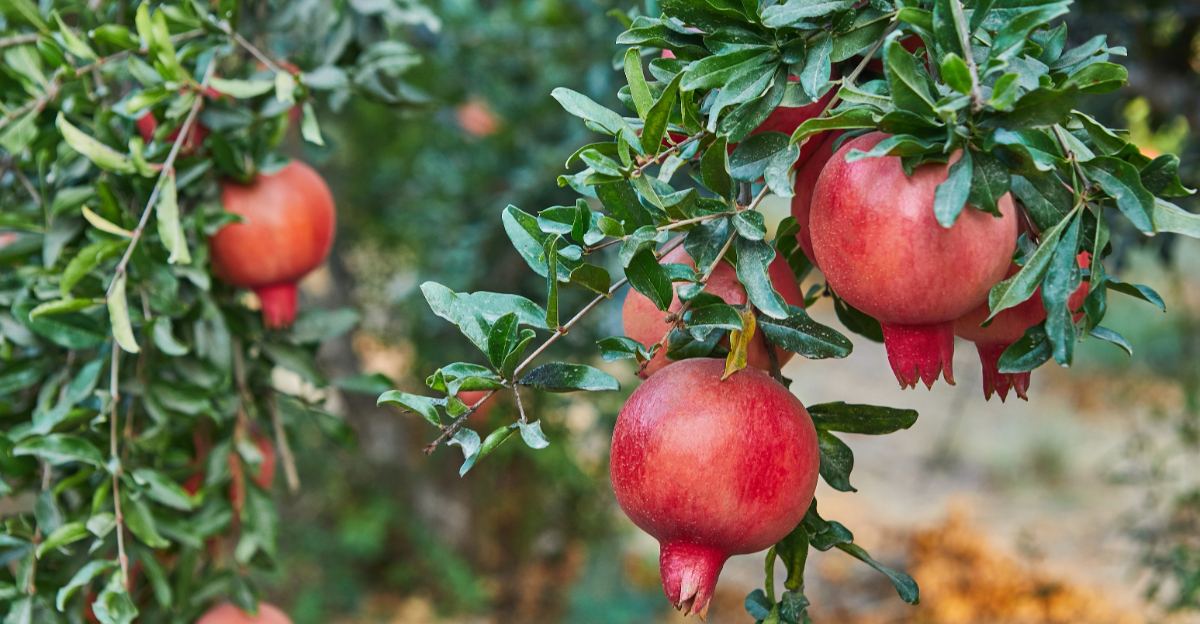
Pomegranate trees can look tough enough to handle anything, which is probably why spring care often gets pushed aside. But in Arizona, this part of the season has a lot to do with how well the tree sets fruit and how strong it stays once hotter weather takes over.
A few small things handled at the right time can make a noticeable difference later.
Spring is when the tree starts putting real energy into fresh growth, flowering, and everything that leads to better fruit. That makes it a key moment to pay attention before desert heat starts adding extra stress.
For Arizona gardeners hoping for a healthier tree and a more rewarding harvest, this is the window that can quietly shape how the rest of the season goes.
1. Start With Full Sun To Support Strong Flower And Fruit Development
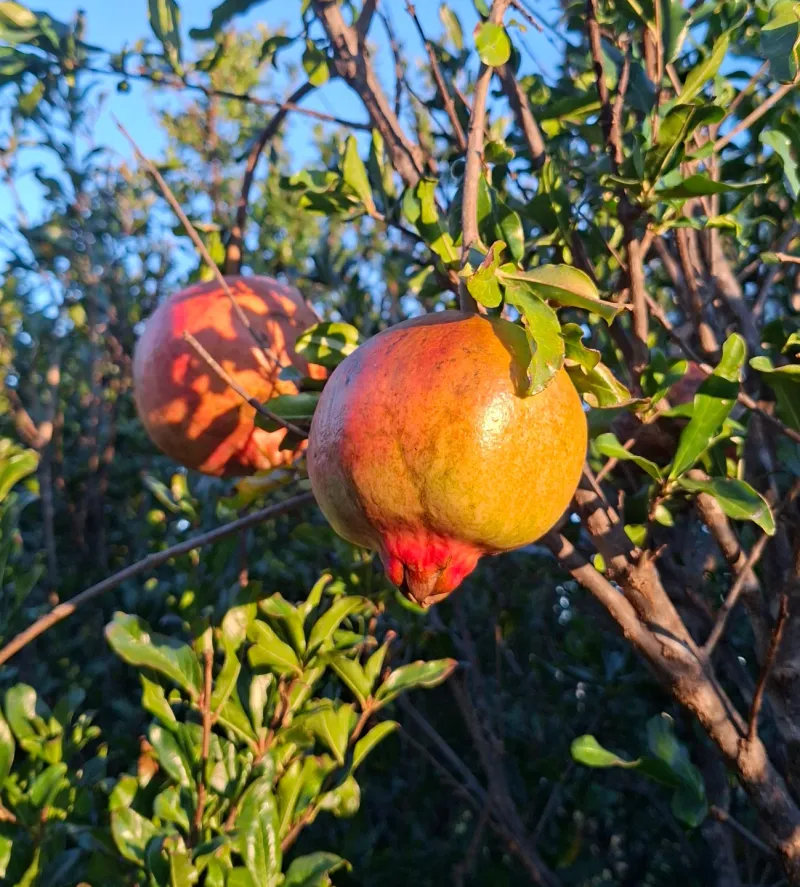
Sunlight is not optional for pomegranates — it is everything. Out here in Arizona, we are lucky to have plenty of it, but that does not mean every spot in your yard delivers what the tree actually needs.
A pomegranate pushed into a corner that gets afternoon shade will struggle to produce the way it should, even if everything else is perfect.
Aim for at least six to eight hours of direct sun each day. Morning sun is great, but full midday exposure is even better for fruit development.
Pomegranates use that light to build energy, set flowers, and push fruit along. Trees planted in partial shade tend to produce fewer flowers and smaller fruit overall.
If your tree has been underperforming, walk outside at noon and watch where the shadow falls. You might be surprised how much shade a nearby wall or large shrub throws across the canopy.
Repositioning a young tree in early spring is far easier than dealing with a disappointing harvest in October.
In Arizona, the sun angle shifts noticeably between February and May. A spot that seemed sunny in winter can look completely different once surrounding plants leaf out.
Check your sun exposure now, before new growth fully takes off, so you can make any adjustments while the season is still young. Full sun is the single biggest factor in getting your pomegranate to produce well, and no amount of fertilizer or water makes up for a shady location.
2. Water Deeply But Infrequently As Temperatures Begin To Rise
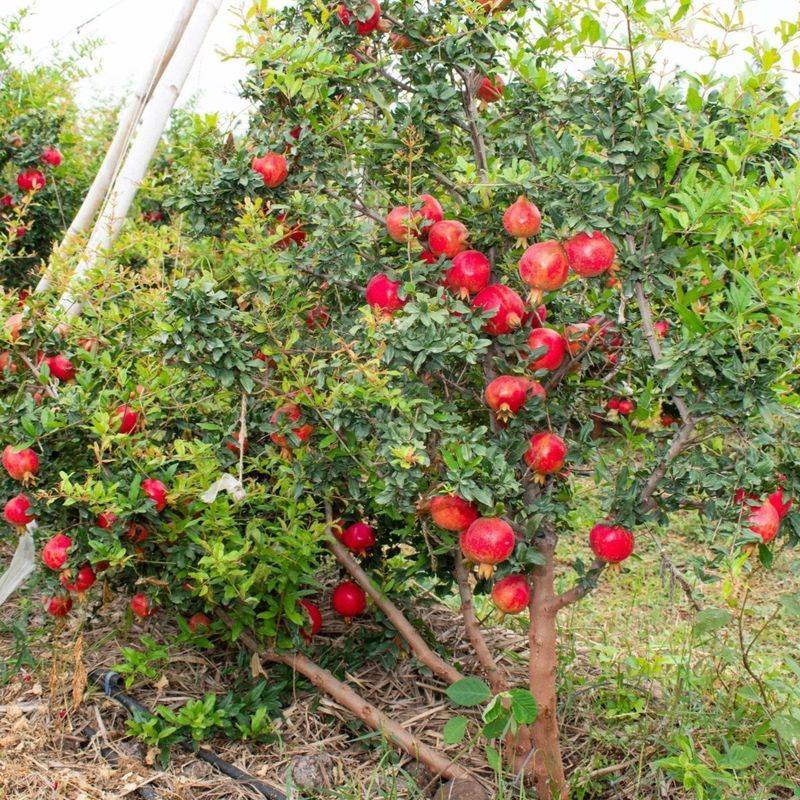
Shallow watering is one of the most common mistakes Arizona gardeners make with pomegranates in spring. Frequent light watering trains roots to stay near the surface, where they are vulnerable to heat and drought later in the season.
Deep, infrequent watering pushes roots down into cooler, more stable soil.
As temperatures start climbing in March and April, shift your watering schedule to match. A newly planted tree needs water every five to seven days during spring.
An established tree in the ground for two or more years can often go seven to fourteen days between waterings, depending on soil type and how hot things get.
Sandy soils common in parts of the Phoenix and Tucson areas drain fast, so you may need to water slightly more often than someone with heavier clay-based soil. Either way, the goal is to soak the root zone completely each time, then let it dry out before watering again.
Your Arizona Garden Changes Every Week. Your Plan Should Too.
Gardening in Arizona changes quickly throughout the season. Every Friday you’ll receive a simple weekly plan showing exactly what to plant, prune, fertilize, harvest, and protect so you never miss the right timing.
A moisture meter takes the guesswork out of this entirely.
Drip irrigation works well for pomegranates across Arizona. Set emitters about eighteen inches out from the trunk rather than right at the base.
Keeping water away from the trunk reduces the chance of rot and encourages roots to spread outward. Spring is also a good time to check your drip lines for clogs or breaks before the real heat arrives.
Catching a broken emitter now saves a lot of stress on the tree in June and July.
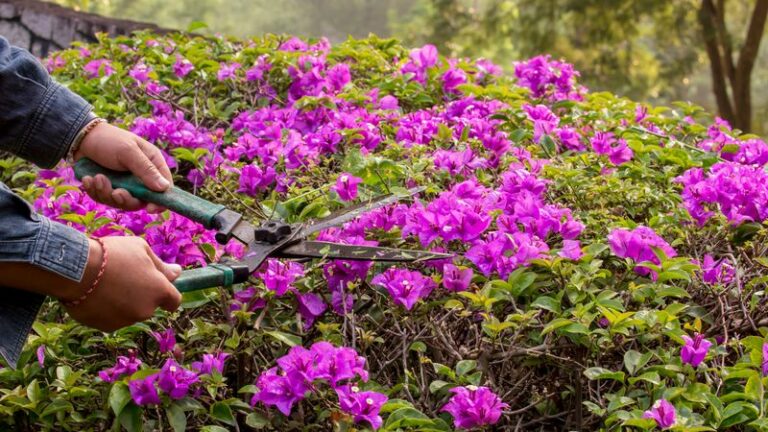
3. Prune Lightly To Remove Old Or Crossing Branches Before Growth Takes Off
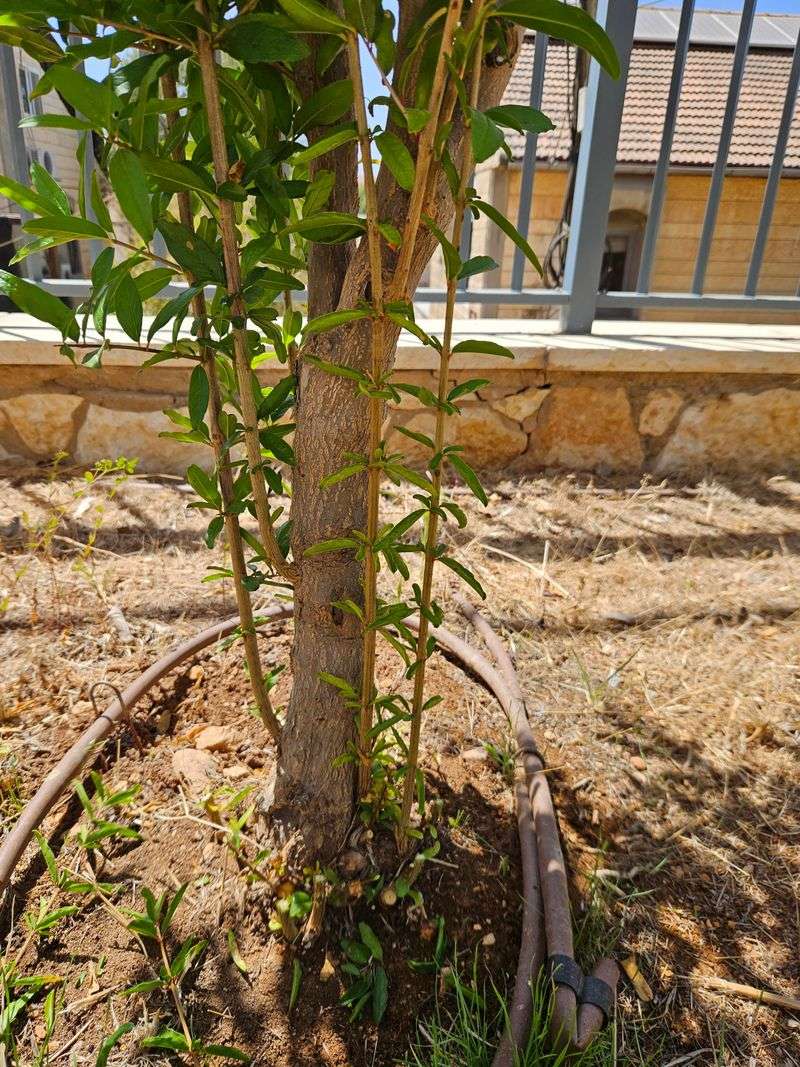
Pruning a pomegranate in Arizona is less about shaping and more about cleaning things up before the tree puts energy into new growth. If you wait too long, you end up cutting off new shoots that are already forming, which sets the tree back unnecessarily.
Early spring, just as buds begin to swell, is the right window. Start by removing any branches that clearly did not survive winter.
Scratch the bark lightly with your fingernail — green underneath means alive, brown and dry means it needs to come off. Crossing branches that rub against each other should also go, since they create wounds that invite pests and disease.
Do not go overboard. Pomegranates produce fruit on new growth, so removing too much wood means fewer fruiting sites.
A light cleanup is all most Arizona trees need annually. Focus on the interior of the canopy where airflow tends to get restricted.
Better airflow reduces the chance of fungal issues, especially during the monsoon season later in summer.
Skip the heavy shaping unless you are training a young tree for the first time. Mature pomegranates in the Sonoran Desert region tend to do best with a natural, multi-trunk form.
Cutting them back hard every year like a rose bush is not necessary and can actually reduce your fruit load. Keep your tools clean and sharp, make smooth cuts close to the branch collar, and let the tree do the rest once temperatures warm up.
4. Apply A Balanced Fertilizer Early In The Season If Growth Is Weak
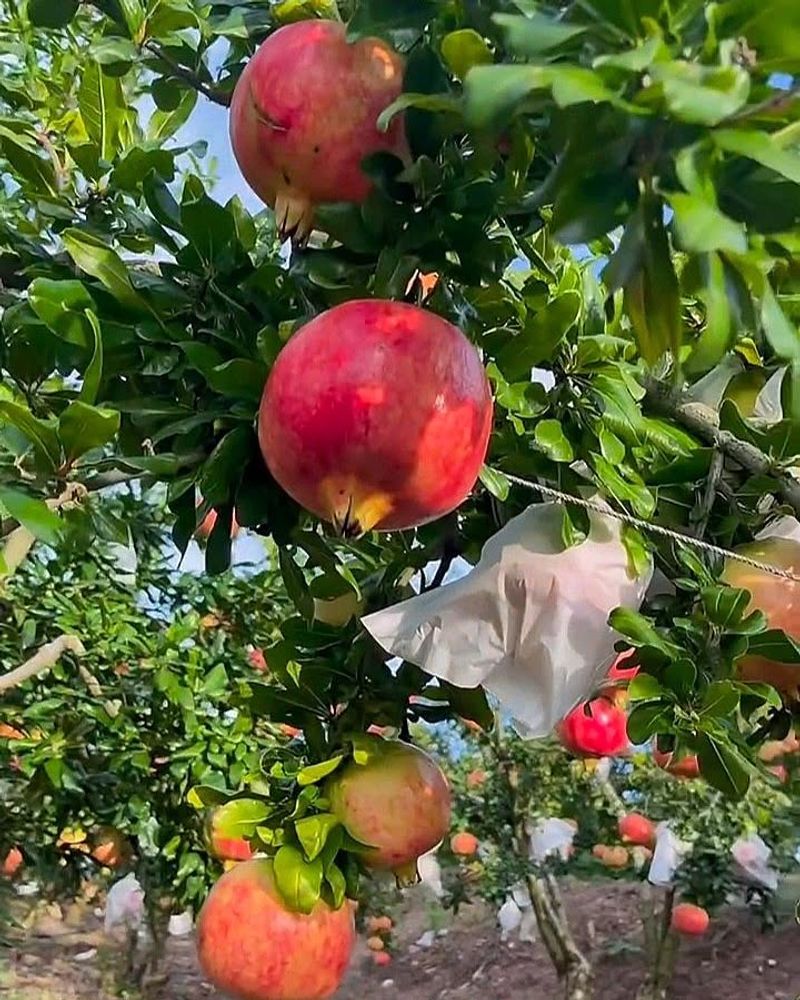
Not every pomegranate tree in Arizona needs fertilizer every single spring. Healthy trees growing in decent soil with good color and strong new growth can often skip it entirely.
Fertilizer is a tool, not a routine, and using it when it is not needed can cause problems.
Watch for signs that your tree actually needs a boost. Pale yellow leaves, slow or minimal new growth, or very small fruit from last season are all signals worth paying attention to.
If you see any of these, a balanced fertilizer with equal parts nitrogen, phosphorus, and potassium — something like a 10-10-10 blend — applied in early spring can help get things moving.
Scatter granular fertilizer around the drip line of the tree, not right up against the trunk. Water it in thoroughly after application.
Organic options like compost or aged manure work well too, especially in the sandy soils found across much of the Phoenix metro and lower desert areas. Organic amendments also improve soil structure over time, which benefits the tree long past that first season.
Avoid pushing too much nitrogen in spring. High nitrogen encourages leafy vegetative growth at the expense of flowers and fruit.
A little goes a long way with pomegranates. Apply once in early spring, then step back and let the tree respond.
If growth looks healthy and green by May, you are in good shape and probably do not need another application until the following year.
5. Keep The Area Around The Base Clear To Reduce Competition
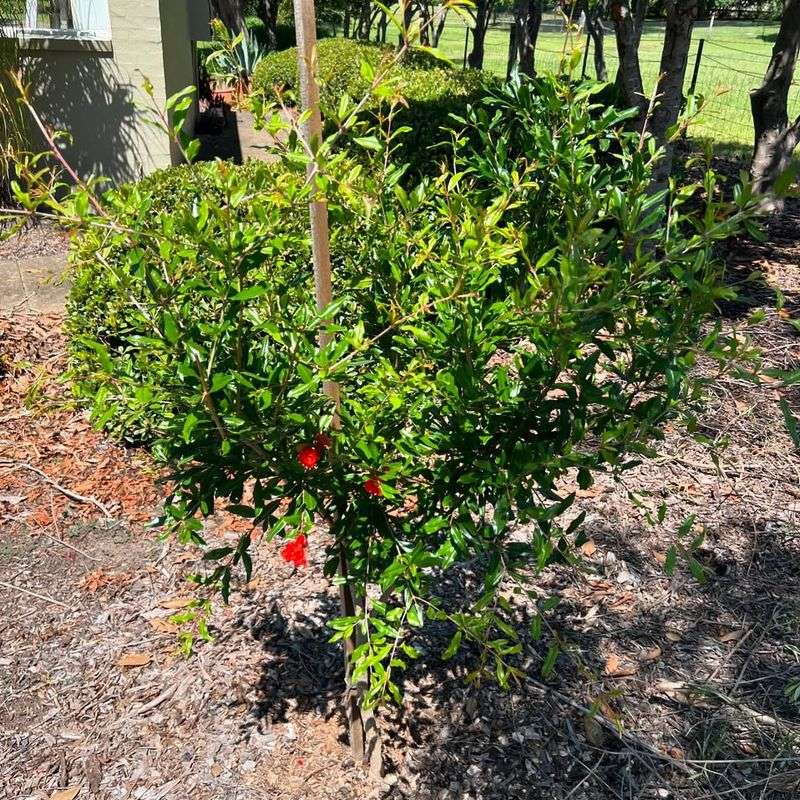
Weeds growing at the base of your pomegranate tree are not just an eyesore — they are actively competing with your tree for water and nutrients. In Arizona, where soil moisture evaporates quickly even in spring, that competition matters more than most people realize.
Clear out any grass, weeds, or ground cover within two to three feet of the trunk. Pull them out by hand or use a hoe to scratch the surface, but avoid digging deep near the tree since pomegranate roots are relatively shallow and easy to damage with aggressive cultivation.
After clearing, lay down two to three inches of organic mulch like wood chips or shredded bark. Mulch slows moisture loss from the soil, keeps the root zone cooler as temperatures rise, and breaks down slowly to add organic matter over time.
Keep the mulch a few inches away from the actual trunk to prevent moisture buildup against the bark.
Across Arizona, spring weeds can explode after any rain event, especially in the lower desert regions. Getting ahead of them early in the season prevents a bigger headache later.
A cleared and mulched base also makes it easier to monitor the tree for signs of pest activity or other issues at soil level.
Some Arizona gardeners use decomposed granite as a mulch layer, which works fine for moisture retention and weed suppression, though it does not add organic value to the soil the way wood chips do over time.
6. Watch For Aphids And Other Early Season Pests On New Growth
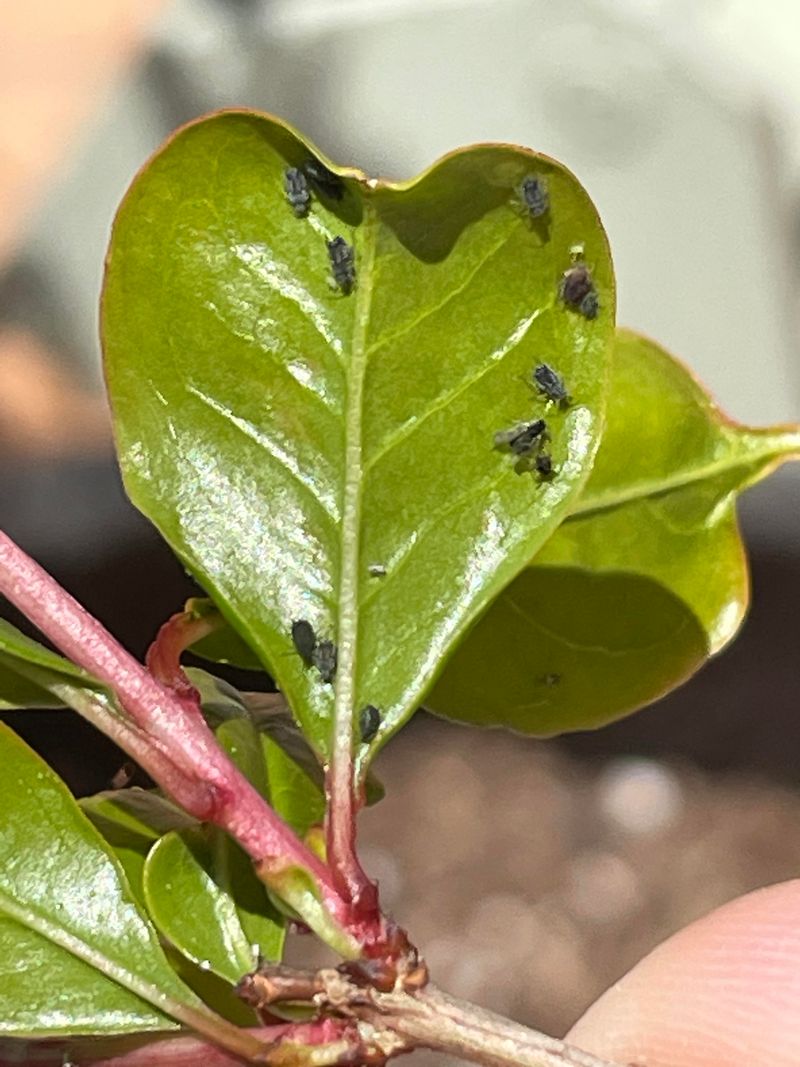
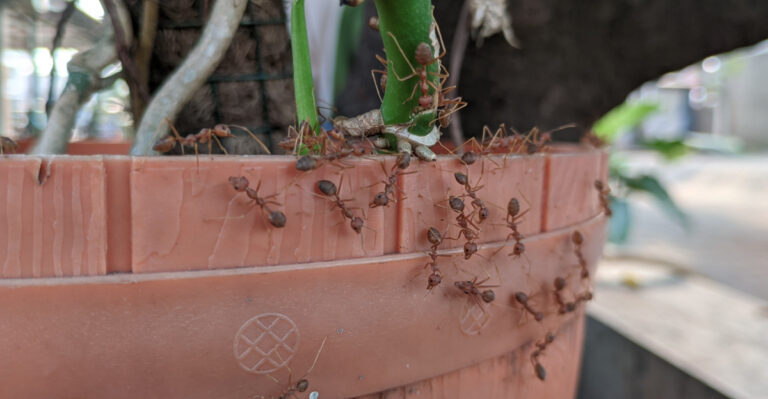
New growth on a pomegranate tree is like a welcome sign for aphids. Those soft, pale green or yellow clusters show up fast in spring, often before gardeners even notice the tree has started pushing new leaves.
Catching them early makes all the difference.
Check new shoot tips and the undersides of young leaves every few days once growth starts. Aphids reproduce quickly in warm weather, and Arizona springs warm up fast.
A small infestation can become a heavy one within a week if left unaddressed. Look for sticky residue on leaves below infested areas, which is a reliable sign aphids are present even before you spot the insects themselves.
A strong blast of water from a hose knocks aphids off effectively and costs nothing. For heavier infestations, insecticidal soap or neem oil applied in the early morning works well and is safe around beneficial insects when used correctly.
Avoid spraying during the heat of the day, especially in Arizona, since both the heat and the oil can cause leaf burn.
Leaf-footed bugs are another pest to watch for on Arizona pomegranates in spring. They are larger, easier to spot, and tend to cluster on fruit and stems.
Hand-picking them in the early morning when they are slower works surprisingly well for small trees. Keeping beneficial insects like ladybugs around helps naturally keep aphid populations in check, so avoid broad-spectrum pesticides unless absolutely necessary.
A healthy tree with good airflow is always less attractive to pest pressure overall.
7. Avoid Overwatering To Prevent Poor Fruit Set And Root Issues
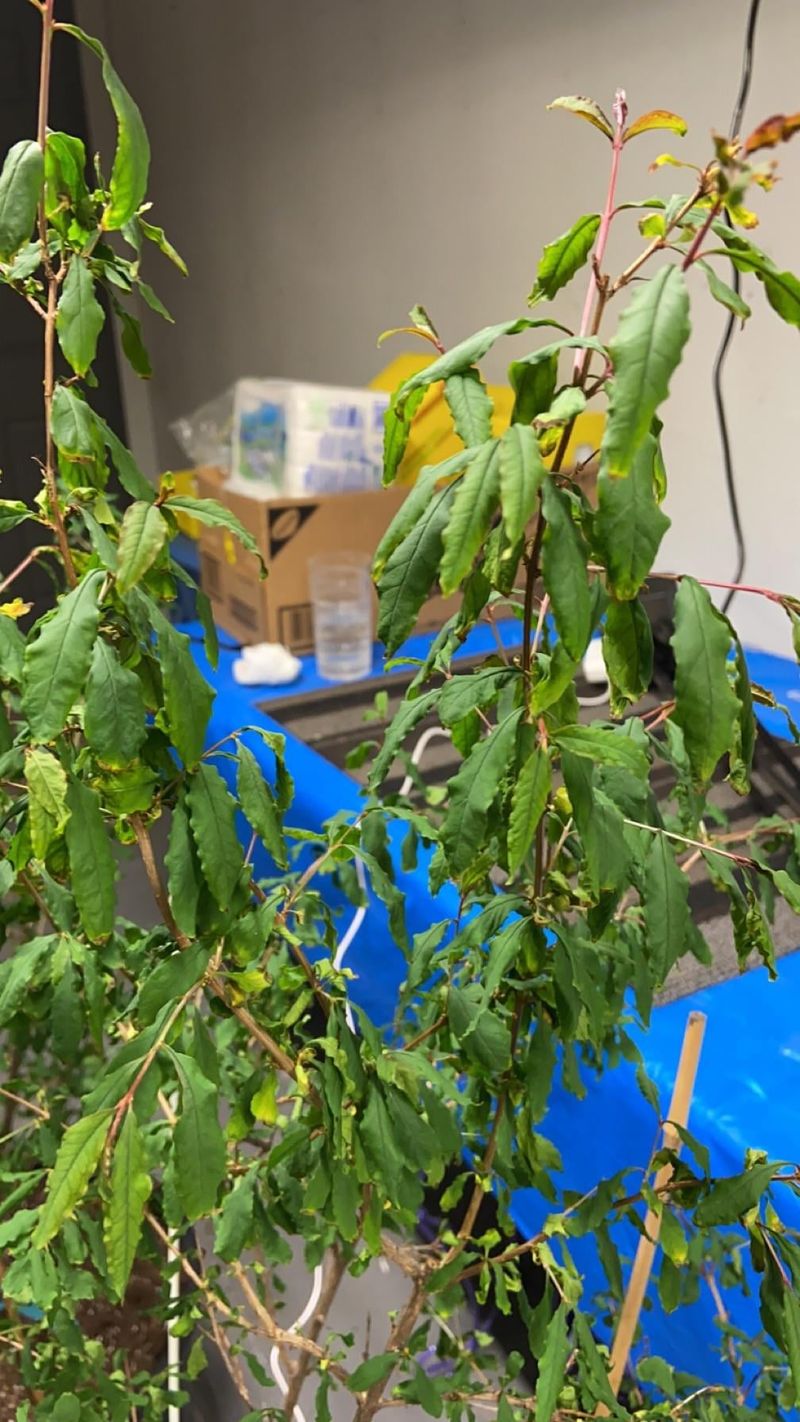
Overwatering is quietly one of the biggest reasons Arizona pomegranate trees underperform. It sounds counterintuitive in a desert climate, but too much water causes just as many problems as too little — sometimes more.
Roots sitting in consistently wet soil cannot get the oxygen they need to function properly. Over time, this leads to poor nutrient uptake, weak growth, and a reduced ability to set and hold fruit.
Waterlogged conditions also create an environment where root rot pathogens thrive, which is difficult to reverse once established in the soil.
Spring is when this problem most often starts. Gardeners coming out of winter tend to water on a schedule built for hotter months, not realizing that March and April temperatures in Arizona do not demand the same frequency as July.
Soil that stays wet for days after watering is a red flag worth taking seriously.
Check soil moisture before every watering. Push a screwdriver or wooden dowel six inches into the ground near the drip line.
If it comes out with damp soil clinging to it, skip the watering and check again in a couple of days. Pomegranates across the Sonoran Desert region are well adapted to dry conditions and actually prefer a slight dry-down period between waterings.