The One Tree That Truly Thrives In Texas Heat
Some trees manage to survive a Texas summer, but not many come out of it looking better than they did going in. When the sun feels nonstop, the soil turns dry, and the heat settles over the yard for weeks at a time, a lot of trees start to look worn out fast.
Leaves can curl, growth can slow down, and even a well-kept landscape can begin to feel a little tired by the middle of the season.
That is why a tree that stays strong, looks good, and keeps going through all that heat gets so much attention. In Texas, that kind of reliability is hard to ignore.
The desert willow is one of those rare trees that seems completely at ease in hot, dry conditions.
It handles intense sun and long stretches of warm weather without acting fragile, and it still manages to bring real beauty to the yard with its airy branches and colorful blooms.
For Texas gardeners who want something that feels both tough and graceful, it is an easy tree to appreciate. Once you see how well it performs when summer gets rough, it makes perfect sense why so many people keep coming back to it.
Meet Desert Willow, The Tree Made For Texas Heat
Not every tree earns its reputation, but the desert willow absolutely does. Known scientifically as Chilopsis linearis, this small ornamental tree was practically built for the Texas climate.
It handles intense sun, blazing heat, and long dry spells without missing a beat. For anyone who has watched other trees struggle through a tough Texas summer, finding this one feels like a real win.
Here is something that surprises a lot of people: despite its name, the desert willow is not actually a willow at all. It belongs to the Bignoniaceae family, which makes it more closely related to catalpa trees than to true willows.
The name comes from its long, narrow leaves that do look a little willow-like when the wind blows through them.
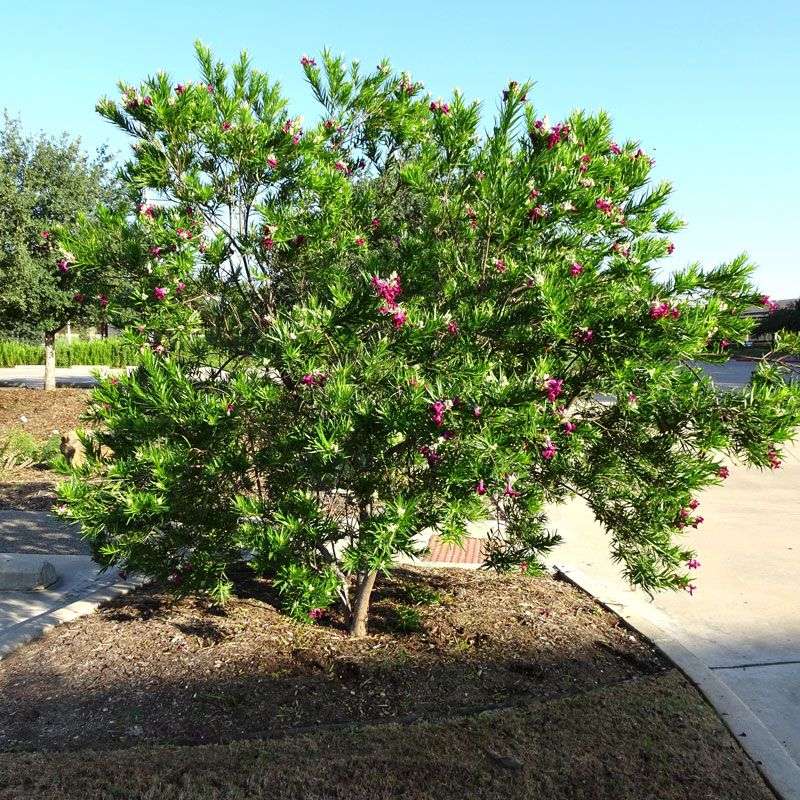
The tree has a light, open branching structure that gives it an airy, graceful look. Its leaves are slender and soft green, and they move beautifully in a breeze.
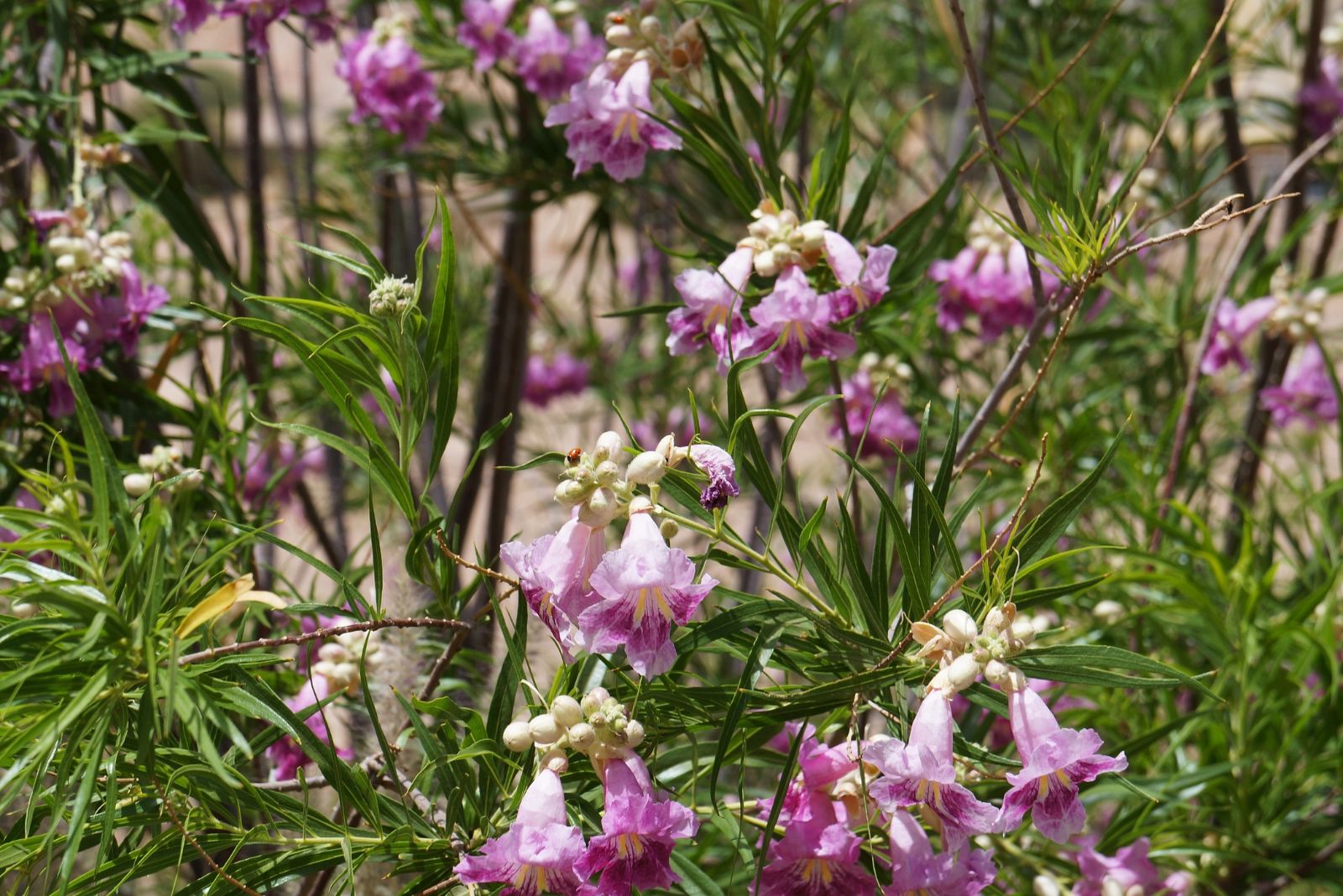
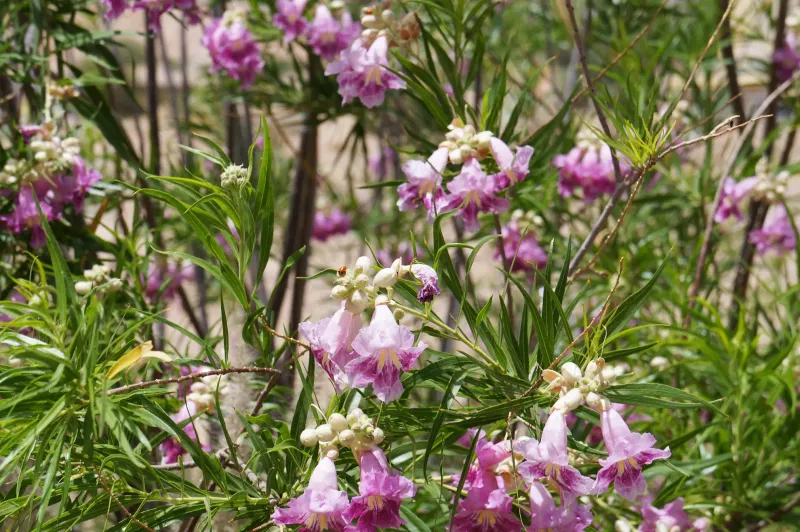
But the real showstopper is the flowers. They bloom in shades of pink, lavender, white, and deep burgundy, and each one is shaped like a small trumpet.
The blooms appear from late spring all the way through summer and sometimes into early fall. In Texas, where many plants look tired and brown by July, the desert willow keeps on flowering.
It typically grows between 15 and 25 feet tall, making it a great fit for smaller yards, narrow spaces, or spots where a big shade tree would feel too heavy. It is a tree that earns its place without asking for much in return.
Why Desert Willow Thrives Where Other Trees Struggle
Anyone who has gardened in Texas knows the struggle is real. Summer temperatures regularly climb past 100 degrees Fahrenheit.
Rainfall can disappear for weeks. The soil in many parts of the state is rocky, shallow, or full of clay.
Your Texas Garden Changes Every Week. Your Plan Should Too.
Gardening in Texas changes quickly throughout the season. Every Friday you’ll receive a simple weekly plan showing exactly what to plant, prune, fertilize, harvest, and protect so you never miss the right timing.
Most landscape trees need a lot of help just to get through the season. The desert willow, though, was made for exactly these conditions.
Once established, desert willow has outstanding heat and drought tolerance. Its roots go deep, searching for moisture that other plants cannot reach.
The narrow leaves reduce water loss compared to broad-leafed trees, which means it stays hydrated even when the air feels like a furnace.
This natural efficiency is one reason it thrives across West Texas, the Trans-Pecos region, and the dry stretches of the Hill Country where water is always in short supply.
Dry, sunny locations are where this tree truly shines. It does not want extra irrigation once it gets settled in.
Overwatering is actually one of the few things that can cause problems for desert willow. Too much moisture, especially in heavy soil, leads to root issues that weaken the tree over time.
Plant it in a spot that gets full sun and drains well, and it will reward you season after season. Many Texas gardeners have tried fast-growing shade trees that look great for a year or two and then fall apart during a harsh summer.
The desert willow does the opposite. It gets stronger as the seasons go on, proving itself a dependable choice where other trees simply cannot hold up.
A Beautiful Tree, Not Just A Tough One
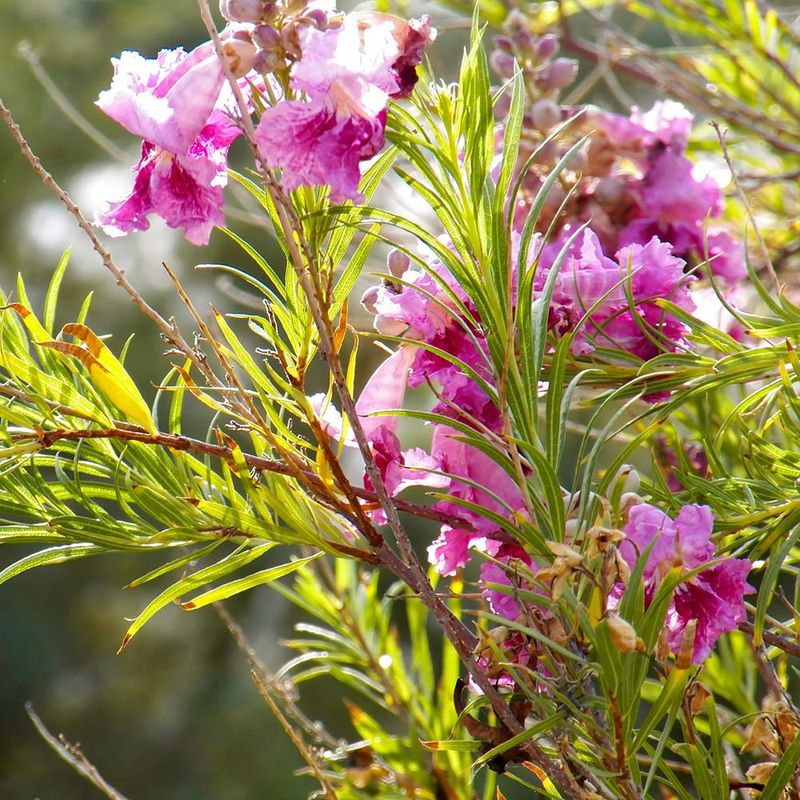
Toughness gets a lot of attention when people talk about Texas-friendly trees, and rightfully so. But the desert willow brings something extra to the table that most drought-tolerant plants simply cannot offer: genuine, eye-catching beauty.
From late spring through the hottest part of summer, this tree blooms with clusters of trumpet-shaped flowers that look like something out of a tropical garden catalog. And it keeps blooming, long after other flowering plants have given up for the season.
The flowers come in a range of colors depending on the variety. Some are soft lavender-pink, others are deep burgundy, and some are creamy white with purple streaks.
Each bloom is about two inches long and has a ruffled, orchid-like look that feels almost fancy for a tree that needs so little care. The fragrance is light and pleasant, adding another layer of appeal during those long Texas evenings when you are sitting outside.
Pollinators absolutely love this tree. Hummingbirds are especially drawn to the tubular flowers, hovering around the canopy throughout the summer.
Butterflies and native bees visit regularly too, making the desert willow a fantastic choice for anyone who wants to support local wildlife. In a season when most of the garden looks dry and faded, this tree adds real color and movement to the landscape.
It creates the kind of living, buzzing energy that makes a yard feel alive. For Texas gardeners who want something that looks just as good as it performs, the desert willow delivers on both fronts without requiring constant attention or extra resources to keep it going strong.
Where Desert Willow Grows Best In Texas
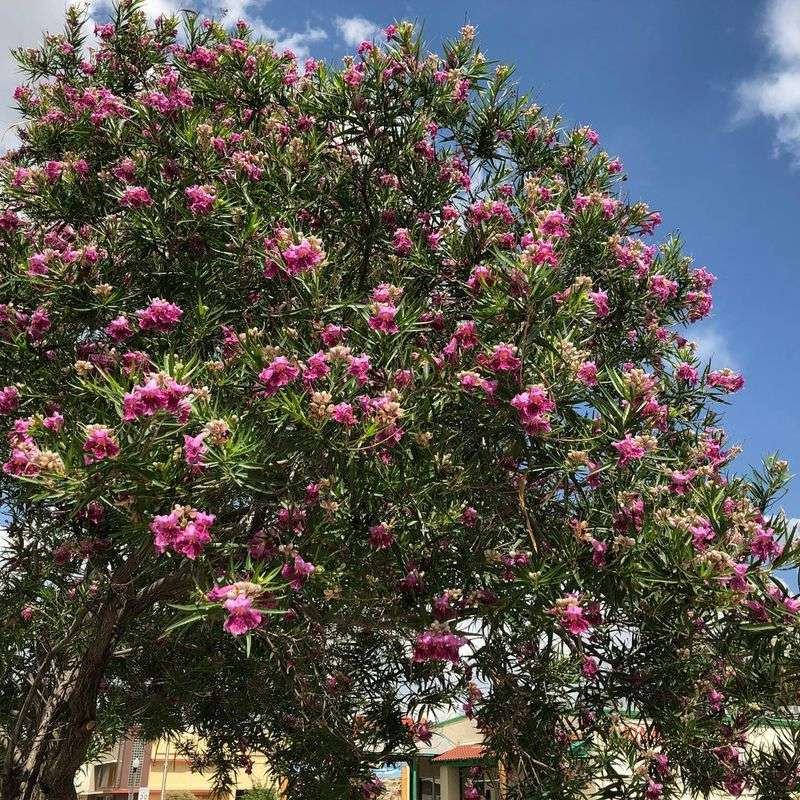
Location matters a lot when it comes to getting the most out of a desert willow. The good news is that Texas has plenty of spots where this tree absolutely thrives.
The most important thing to get right is sunlight. Desert willow needs full sun, meaning at least six to eight hours of direct sunlight each day.
Put it in a shady corner and it will grow slowly and bloom poorly. Give it open sky and strong Texas sun, and it will take off. Soil drainage is the other big factor. Desert willow does not like sitting in wet soil.
It prefers sandy, loamy, or rocky ground that lets water move through quickly. In areas with heavy clay soil, like parts of North Texas or the Blackland Prairie region, it helps to amend the planting area or build up a raised bed to improve drainage.
Getting the soil right from the start saves a lot of trouble later on. As for where to use it in the landscape, the options are wide open. It is a natural fit for xeriscaping, which is a style of landscaping designed to use very little water.
Native Texas gardens love it too, since it supports local pollinators and blends well with other drought-adapted plants. It works beautifully along dry borders, rocky slopes, or in small yards where a large shade tree would feel overwhelming.
Across West Texas, the Hill Country, and even parts of Central Texas, gardeners have found the desert willow to be one of the most reliable and rewarding choices they can make for their outdoor spaces.
What Gardeners Should Expect Before Planting
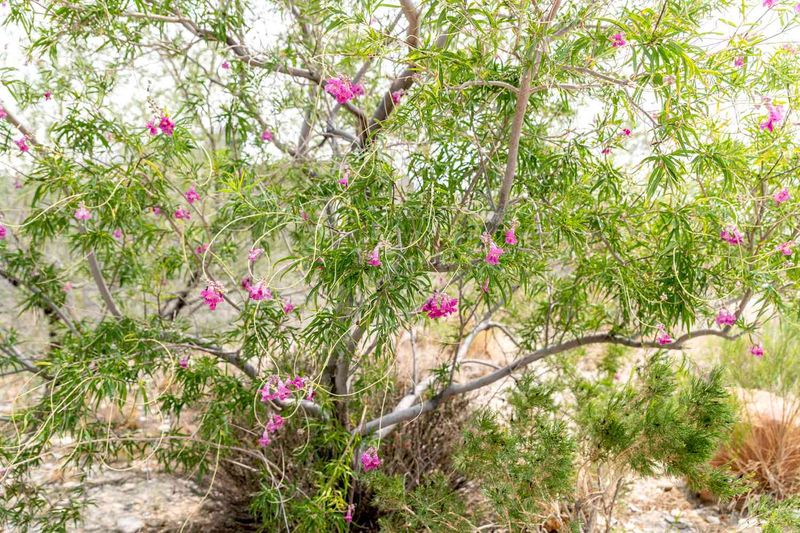
Before you head to the nursery and pick up a desert willow, it helps to know what you are actually getting. Setting realistic expectations makes the whole experience smoother and more enjoyable.
First and most important: the desert willow is not a large shade tree. It grows to about 15 to 25 feet tall and has an open, loose canopy.
If you are hoping for a big, dense tree that blocks out the afternoon sun like a live oak would, this is not the right pick for that job.
The canopy creates light, dappled shade rather than deep cover. That is actually a positive in many situations.
Grass and other plants can still grow underneath it because enough sunlight filters through. It also means the tree does not feel heavy or dominating in a smaller yard.
The open structure gives the landscape a relaxed, airy feel that works well in both formal and casual garden settings across Texas.
One thing to plan for is occasional pruning. Desert willow can develop a somewhat irregular shape as it matures, especially if multiple stems grow from the base.
A little trimming each year, usually in late winter before new growth starts, helps keep it looking tidy and encourages better branching. Some gardeners train it into a single-trunk tree shape, while others let it grow more naturally as a large multi-stem shrub.
Either approach works fine. The tree is also deciduous, which means it loses its leaves in winter.
That surprises some people who expect it to stay green year-round. But by spring, fresh new growth returns quickly, and the whole blooming cycle starts all over again.
The Best Reason To Choose Desert Willow
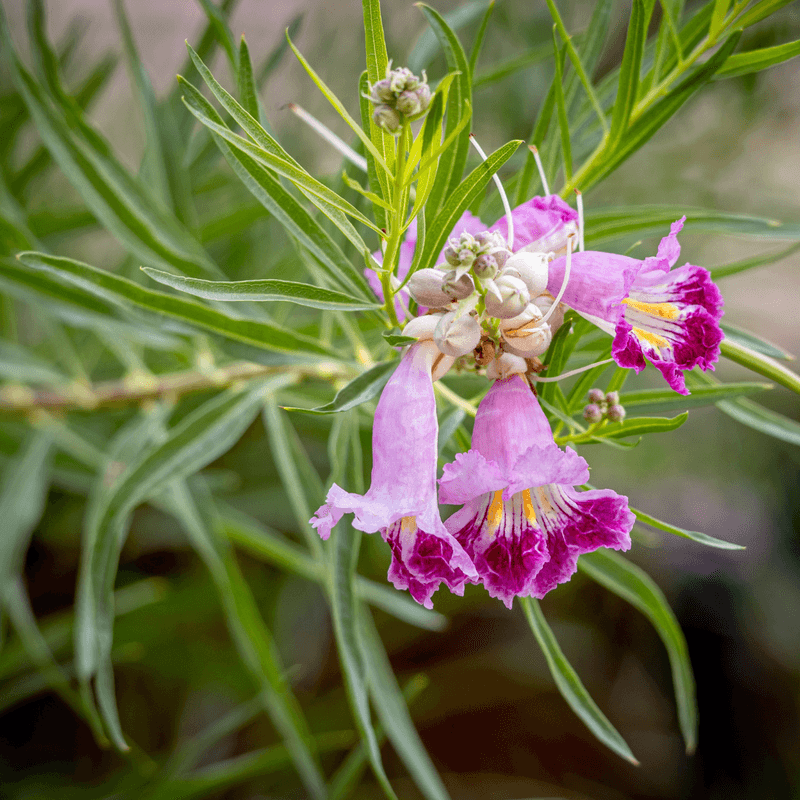
When you stack up everything the desert willow offers, the case for planting one becomes pretty hard to argue with. It handles Texas heat better than almost any other ornamental tree available.
It tolerates long periods without rain once it gets established. And through all of that stress, it still produces some of the most beautiful flowers you will find on any tree growing in the state. That combination of toughness and beauty is genuinely rare.
Most drought-tolerant plants ask you to sacrifice looks for survival. Cacti and succulents are tough, sure, but they do not give you a canopy of colorful blooms that attracts hummingbirds all summer long.
The desert willow refuses to make that trade-off. It survives the hard conditions that Texas throws at it and still manages to look stunning while doing so.
That is a quality worth paying attention to, especially for gardeners who want a low-maintenance yard that still turns heads.
Across Texas, from the dry reaches of the Trans-Pecos to the sun-baked suburbs of San Antonio and beyond, the desert willow has proven itself season after season. It does not need constant watering, heavy fertilizing, or complicated care routines.
Plant it in the right spot, give it a little patience during the first year, and it will reward you for decades. For anyone who wants a tree that brings resilience and real beauty to a Texas landscape, the desert willow is one of the smartest choices out there.
It is not just a tree that survives the summer. It is a tree that makes the summer worth looking at.