These Are The 8 Vining Plants Florida Gardeners Regret Planting The Most
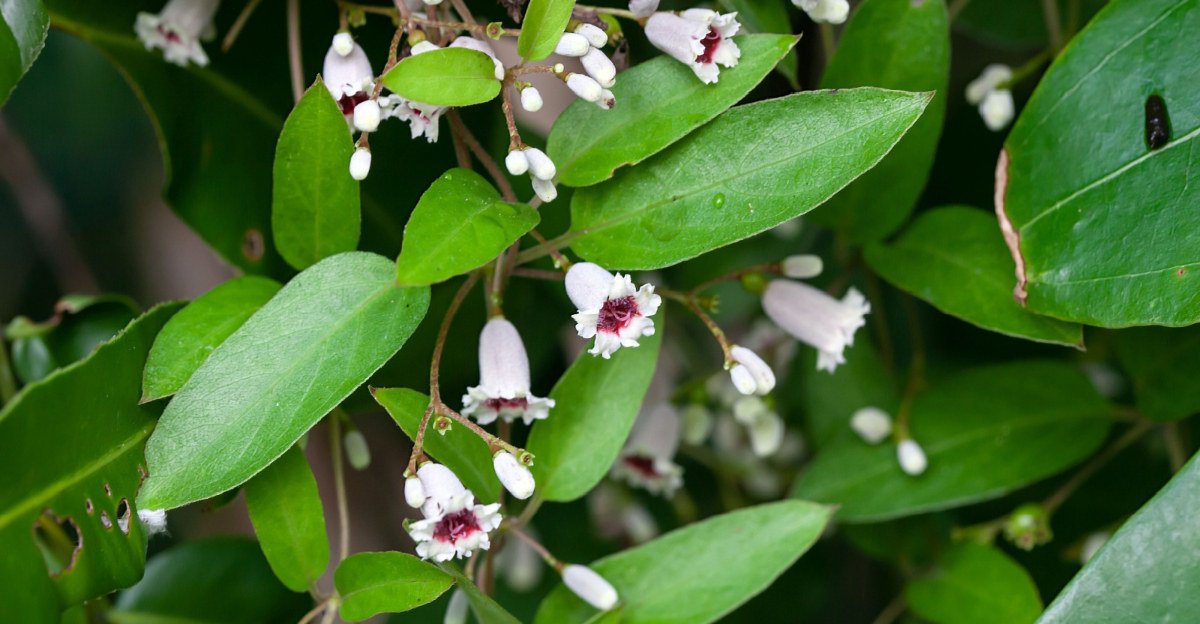
Some vines look charming at the garden center, then turn into full-blown yard bullies once Florida heat and rain kick in. What starts as a pretty climber can quickly smother fences, swallow shrubs, creep into trees, and create a maintenance headache that never really ends.
That is why so many Florida gardeners end up regretting certain vining plants long after the first flush of growth. The problem is not just fast growth.
It is the way some vines spread, tangle, reseed, and take over valuable space before most people realize what they signed up for. A plant that looks lush in one season can become a constant battle in the next.
That is where costly mistakes happen. The worst offenders do far more than climb.
They invade, overwhelm, and refuse to stay in bounds. Before you plant one near your home or landscape beds, it pays to know which vines Florida gardeners wish they had never brought home.
1. Air Potato Takes Over Fast
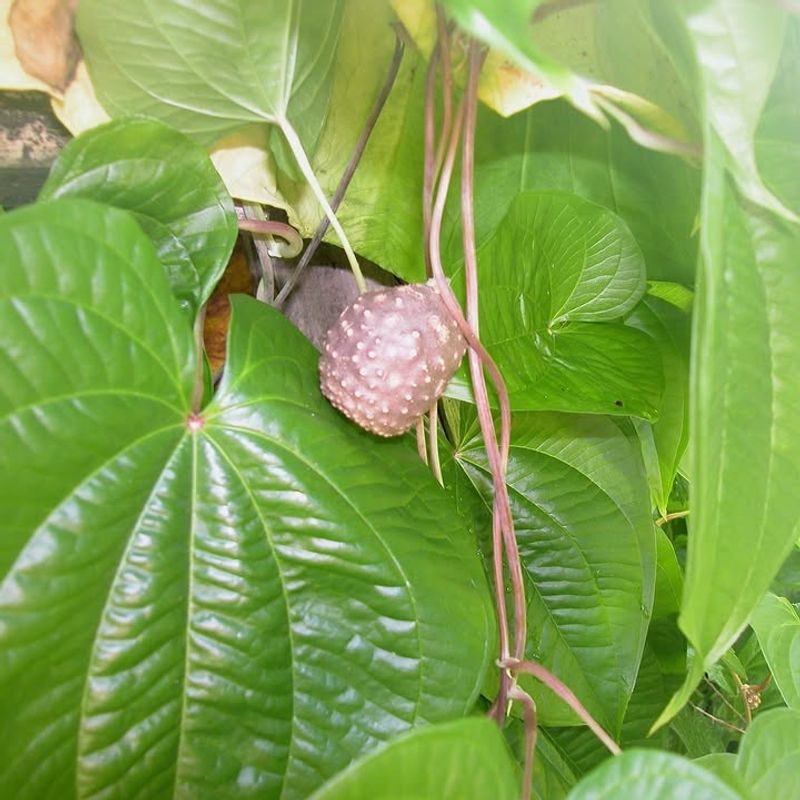
Few plants have earned a worse reputation in Florida than Air Potato. Introduced from Africa and Asia, this aggressive vine can grow up to eight inches per day under Florida’s warm conditions, rapidly climbing trees, fences, and shrubs and blocking sunlight from everything underneath.
The University of Florida IFAS Extension has documented just how destructive this plant can be in natural areas across the state.
What makes Air Potato especially hard to stop is its reproduction method. The vine produces small, potato-like bulbils along its stems.
These bulbils drop to the ground, roll away, and sprout into entirely new plants, meaning a single vine can generate dozens of offspring in one season. Even after you remove the main plant, leftover bulbils hiding in leaf litter can quietly regrow the following spring.
Air Potato is listed as a Category I invasive species by the Florida Invasive Species Council, meaning it is actively threatening native plant communities and natural ecosystems. Florida’s natural areas, including parks and conservation lands, have suffered significant damage from this vine.
Removal requires persistent effort over multiple seasons, and many homeowners underestimate just how relentless this plant truly is.
2. Cat’s Claw Vine Becomes A Nightmare
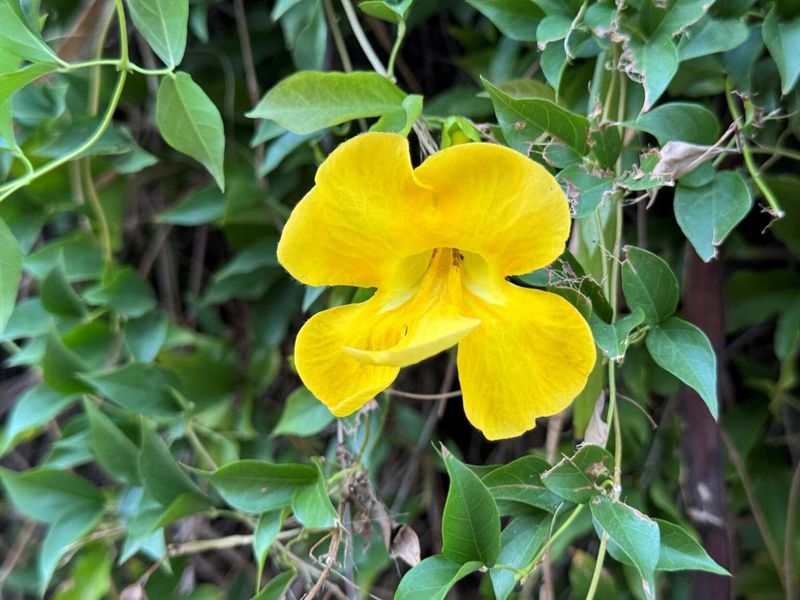
Gardeners who planted Cat’s Claw Vine for its cheerful yellow flowers often describe the same experience: a few years of manageable growth followed by a full-scale takeover that seems impossible to reverse. This vine uses tiny claw-shaped tendrils to grip onto bark, brick, stucco, and wood with incredible strength, making removal both physically demanding and time-consuming.
Cat’s Claw Vine does not just climb structures. It aggressively spreads across tree canopies, smothering branches and blocking the light that trees need to stay healthy.
The Florida Invasive Species Council lists it as a Category I invasive species, recognizing its serious threat to native ecosystems. Once established, the root system becomes dense and deeply anchored, and cutting the vine above ground only triggers vigorous resprouting from the roots below.
Florida homeowners who have tried to remove Cat’s Claw Vine often report spending years pulling it back, only to see it return stronger the following season. The vine thrives in Florida’s heat and spreads into neighboring properties and natural areas without much effort.
Your Florida Garden Changes Every Week. Your Plan Should Too.
Gardening in Florida changes quickly throughout the season. Every Friday you’ll receive a simple weekly plan showing exactly what to plant, prune, fertilize, harvest, and protect so you never miss the right timing.
Repeated cutting, root removal, and long-term monitoring are typically needed to manage it, and even then, complete removal is rarely guaranteed.
3. Coral Vine Looks Pretty Then Spreads Everywhere
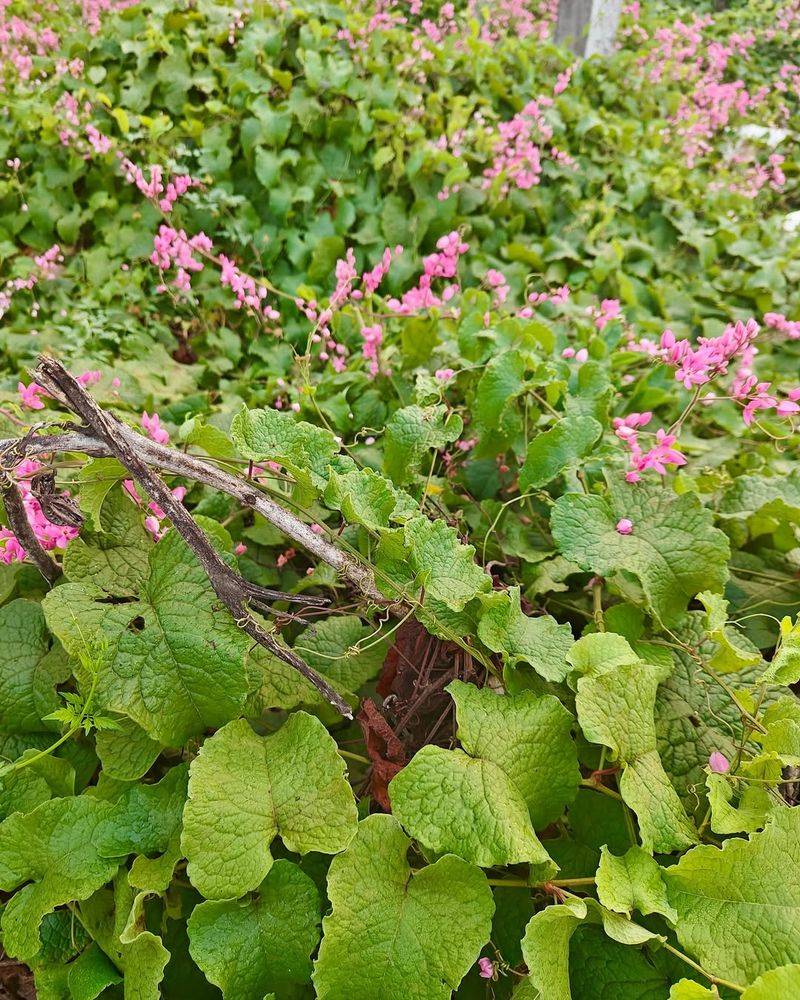
Walking past a Coral Vine in full bloom, it is easy to see why so many Florida gardeners were tempted to plant one. The cascading clusters of deep pink flowers look stunning draped over a fence or trellis, and the plant grows quickly enough to fill a space with color in just one season.
That fast growth, however, is exactly where the trouble begins.
Coral Vine, also called Mexican Creeper, thrives in Florida’s warm climate and can spread aggressively through underground tubers that are difficult to fully remove. The vine spreads beyond its intended space, climbing over neighboring shrubs, fences, and trees while producing seeds that birds and other wildlife carry into surrounding areas.
UF IFAS Extension notes that Coral Vine can escape cultivation and establish in natural areas, where it outcompetes native plants.
Florida gardeners who have tried to contain Coral Vine often find that cutting it back only encourages denser regrowth. The tubers store energy and can survive even after the above-ground portions are removed.
In South Florida especially, where the climate stays warm year-round, Coral Vine barely slows down between growing seasons. What looked like a manageable ornamental quickly becomes a garden-wide commitment that most homeowners did not sign up for.
4. Skunkvine Smothers More Than You Expect
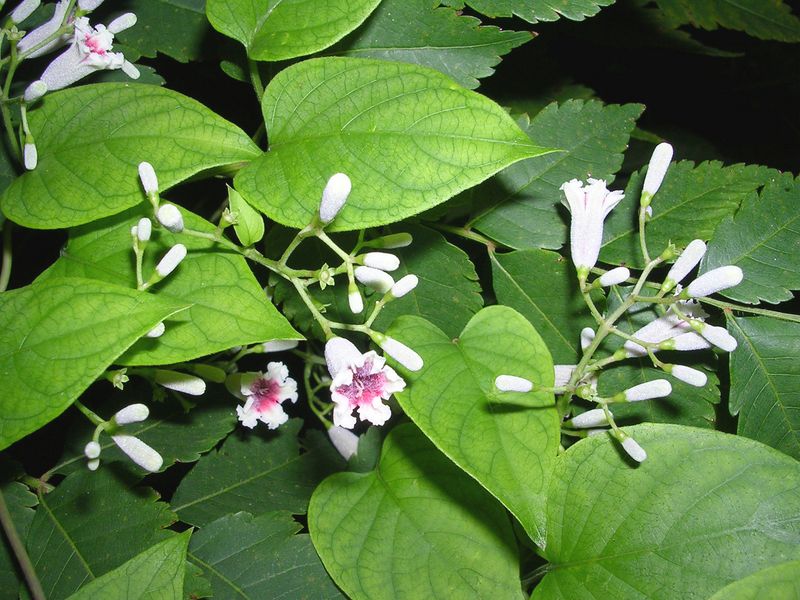
The name alone should be a warning. Skunkvine, known scientifically as Paederia foetida, releases a sharp, unpleasant odor when its leaves are crushed or disturbed, which makes working around it particularly unpleasant.
But the smell is the least of the problems this vine brings to Florida landscapes.
Skunkvine is one of the most aggressively spreading vines in Florida. It blankets fences, shrubs, and entire sections of forest understory with dense mats of foliage that block sunlight and prevent native plants from growing.
The Florida Invasive Species Council lists it as a Category I invasive species, and UF IFAS Extension has documented its spread across much of the state, particularly in Central and South Florida where growing conditions are ideal year-round.
The vine reproduces rapidly through both seeds and vegetative growth, meaning it spreads in multiple directions at once. Birds that eat the small fruit spread seeds widely, carrying the plant far beyond the original planting site.
Florida natural areas, including conservation lands and parks, have been significantly impacted by Skunkvine infestations. Homeowners who planted it hoping for quick ground coverage often find that within a few seasons, the vine has completely overtaken the yard and spread into neighboring properties.
5. Japanese Honeysuckle Refuses To Stay Put
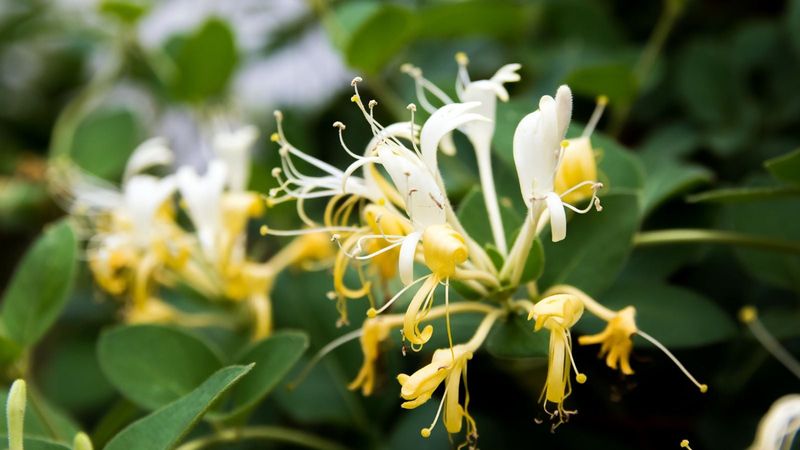
There is something undeniably nostalgic about Japanese Honeysuckle. The sweet fragrance and delicate white and yellow flowers have made it a sentimental favorite for generations.
Many Florida gardeners planted it near a porch or fence expecting a manageable, pretty climber, only to watch it creep steadily outward in every direction.
Japanese Honeysuckle spreads through both runners along the ground and seeds dispersed by birds, which means it escapes cultivation quickly and establishes in natural areas far from where it was originally planted.
UF IFAS Extension identifies it as a problematic invasive in Florida, where the mild winters allow the vine to grow nearly year-round without the cold-weather dieback that limits it in northern states.
Native shrubs and young trees are particularly vulnerable, as the vine twines tightly around stems and can girdle them over time.
Florida’s natural areas have experienced measurable damage from Japanese Honeysuckle infestations, with the vine outcompeting native groundcovers and shrubs in forest edges and open woodlands. Removing established plants requires persistent effort because the root system is tough and the vine resprouts readily.
Most Florida gardeners who planted it report spending far more time managing it than they ever expected, and many wish they had chosen a native alternative from the start.
6. English Ivy Turns Into A Headache
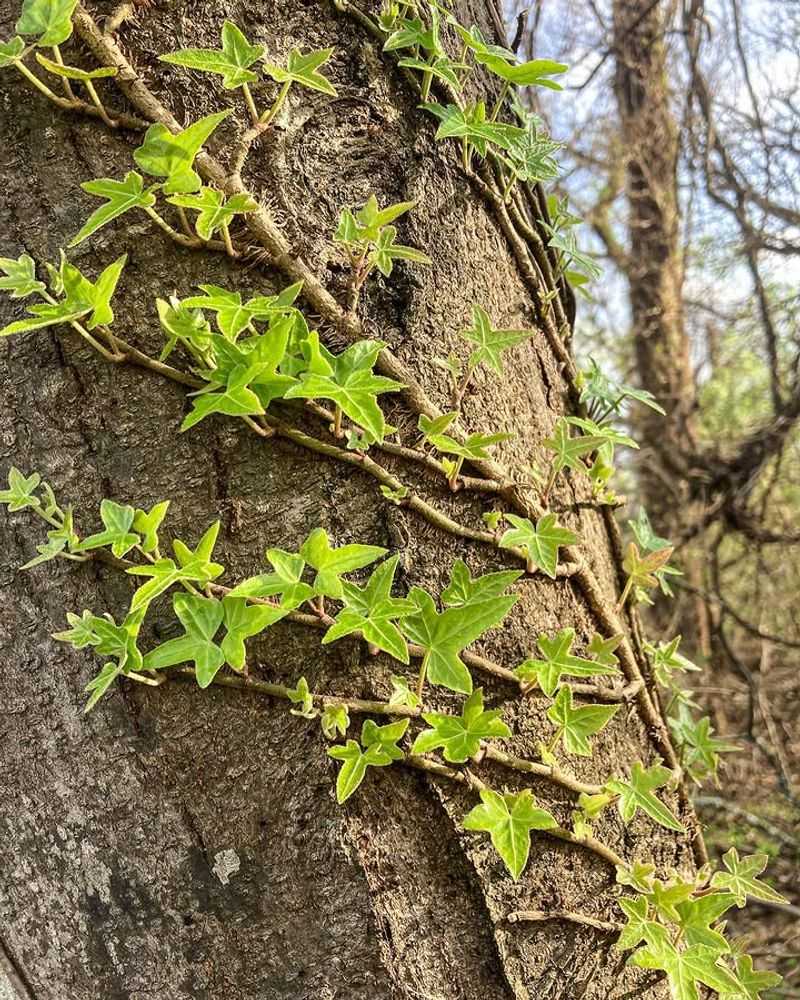
English Ivy has a polished, classic look that appeals to gardeners who want tidy ground cover or elegant wall coverage. For a season or two, it can seem like the perfect low-maintenance solution.
Then it quietly starts climbing trees, spreading across the lawn, and creeping under fences into neighboring yards before most homeowners even notice.
In Florida, English Ivy grows more aggressively than it does in cooler climates because the mild winters do not slow it down the way they would further north. When the vine climbs trees, it adds significant weight to branches and holds moisture against the bark, creating conditions that weaken the tree over time.
UF IFAS Extension has noted that English Ivy can also create what is called an ivy desert, where the dense mat of foliage prevents other plants from establishing beneath it.
English Ivy also acts as a bridge for pests and diseases to reach tree canopies. The vine is difficult to remove from tree bark without causing damage to the tree itself, and the ground-level root system is surprisingly tenacious.
Florida gardeners who wanted a neat, attractive ground cover often end up with a spreading vine that overtakes garden beds, climbs structures, and requires constant cutting back to prevent it from taking over the entire yard.
7. Algerian Ivy Gets Out Of Bounds
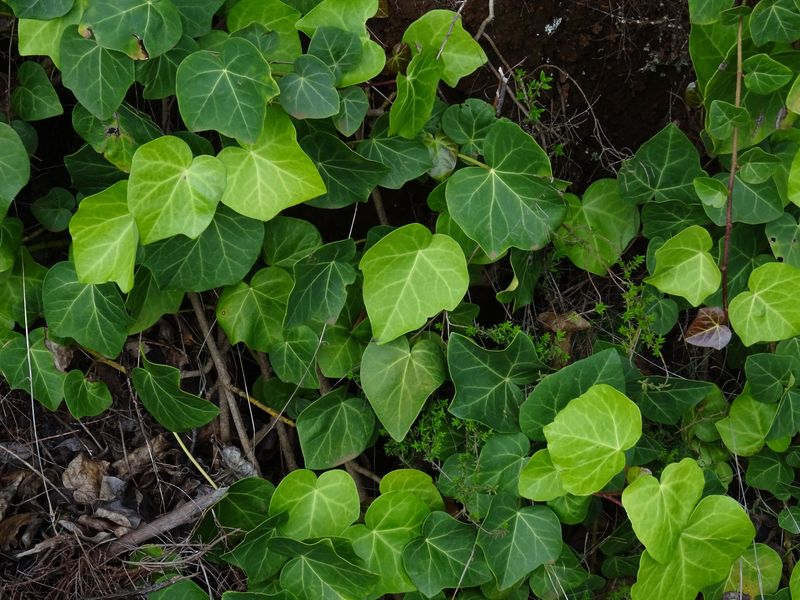
Marketed as a lush, fast-growing ground cover, Algerian Ivy seemed like a practical choice for Florida gardeners trying to fill shaded areas where grass struggles to grow. The large, glossy leaves look attractive and the plant establishes quickly, which is precisely the problem.
That fast establishment does not stop once the bare patch is filled.
Algerian Ivy spreads well beyond its intended planting area, creeping across lawns, into garden beds, and up any vertical surface it can reach. In Florida’s warm, humid climate, the plant stays active nearly year-round and can cover surprisingly large areas in a single growing season.
UF IFAS notes that Algerian Ivy has been observed escaping cultivation in Florida and establishing in disturbed natural areas where it can outcompete native vegetation.
The thick mat formed by Algerian Ivy makes it extremely difficult to remove. The dense foliage creates habitat for pests including slugs and rodents, and the root system clings stubbornly to the soil.
Florida homeowners who planted it along slopes or under trees often find it has spread to places they never intended. Pulling it up by hand is exhausting work, and any small root segment left in the ground can regrow into a new plant, making thorough removal a long, frustrating process.
8. Rosary Pea Is A Risky Mistake
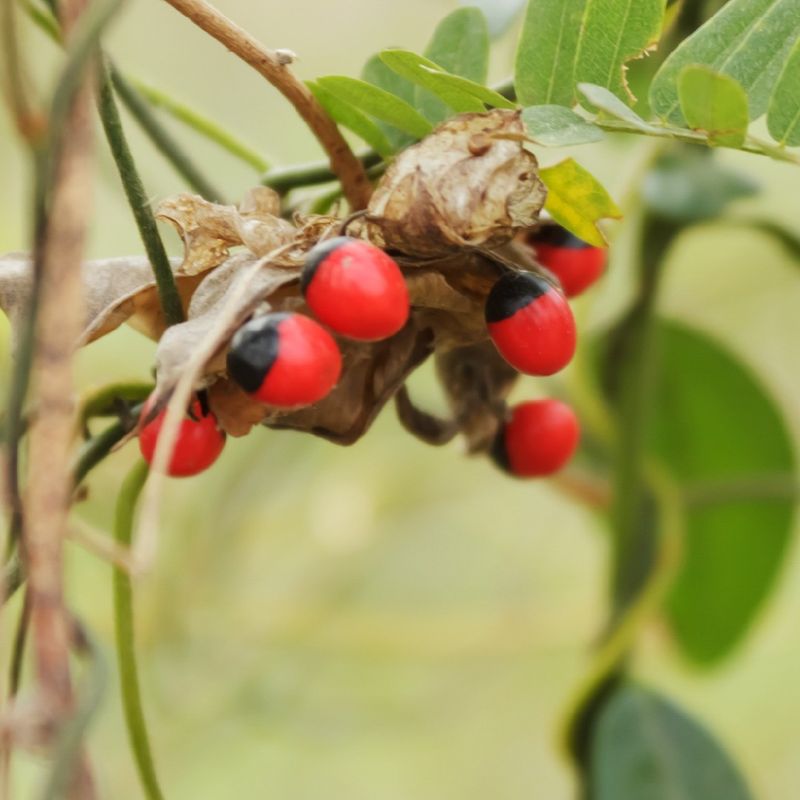
Rosary Pea stands apart from the other vines on this list for a reason that goes beyond aggressive spreading. The small red and black seeds of this plant are among the most toxic natural substances found in Florida, containing a compound called abrin that is considered extremely dangerous even in tiny amounts.
Planting Rosary Pea in a yard where children or pets spend time is a serious safety concern that Florida poison control and UF IFAS Extension both emphasize.
Beyond the toxicity issue, Rosary Pea is a Category I invasive species in Florida, recognized by the Florida Invasive Species Council for its ability to spread rapidly and displace native vegetation. The vine thrives in Florida’s warm climate and produces large numbers of seeds that remain viable for years.
Birds spread the seeds widely, carrying the plant into roadsides, natural areas, and conservation lands far from the original planting site.
Florida gardeners who planted Rosary Pea for its attractive flowers often had no idea about the dangers it carried. The vine is now found throughout much of the state, particularly in South and Central Florida.
Removal requires careful handling to avoid contact with the seeds. This is genuinely one of the most regrettable planting choices a Florida gardener can make, and safer, native-friendly alternatives are always a better option.