This Tall California Flower Attracts Bees, Hummingbirds, And Butterflies All Over The State
This is the kind of flower that does not know how to be subtle, and that is exactly why California gardens love it.
With its bright red blooms, tall stems, and long flowering season, Scarlet sage brings instant energy to a yard while rolling out the welcome mat for pollinators.
Bees show up, hummingbirds dart in, butterflies drift through, and suddenly the whole garden feels more alive. Not bad for one plant.
It also helps that scarlet sage can handle a lot of what California throws at it. Sun, heat, dry spells, and tough conditions do not scare it off nearly as much as they do fussier flowers.
That makes it a standout choice for gardeners who want something bold, reliable, and full of movement. In borders, native plantings, or pollinator beds, scarlet sage does more than add color.
It turns an ordinary patch of ground into a nonstop wildlife show people actually stop to admire.
Why It Stands Out
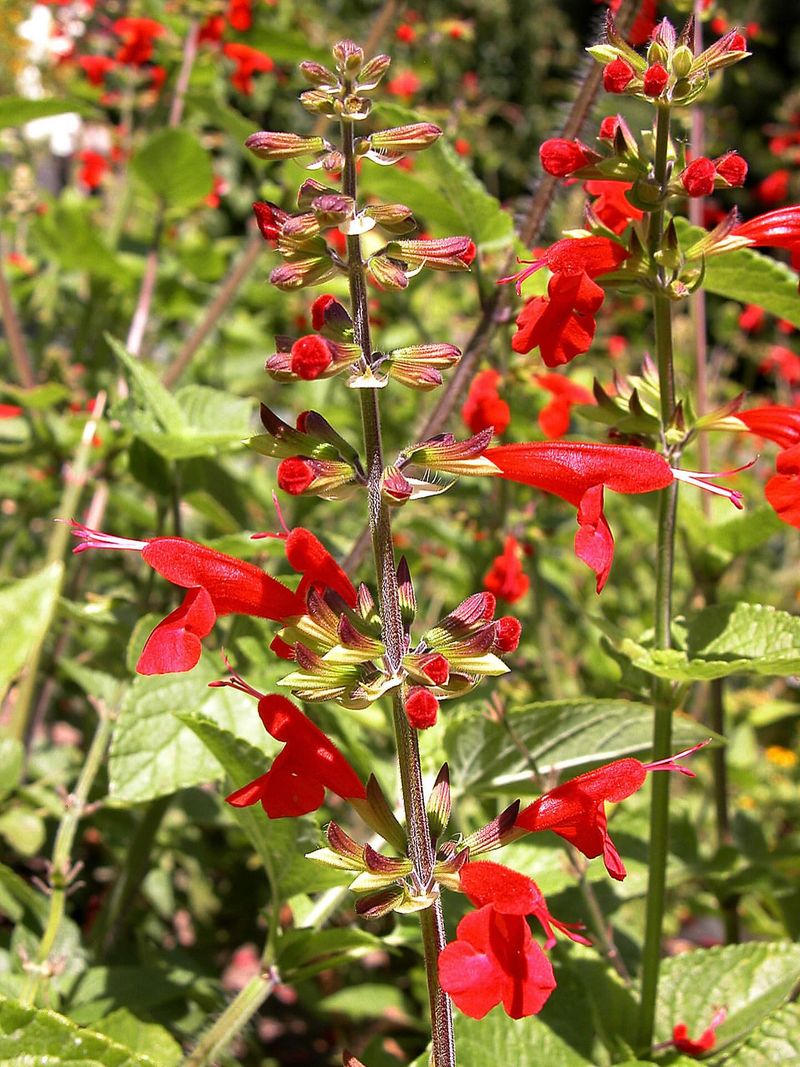
Few plants stop people in their tracks quite like Scarlet Sage. The moment those bold red blooms open up, the whole garden seems to light up with energy.
Standing anywhere from one to three feet tall, it brings vertical interest and color that most other plants simply cannot match.
What makes it especially eye-catching is the contrast between its deep green leaves and those fiery red flowers. The tubular shape of each bloom is not just pretty.
It is also perfectly designed to attract wildlife, which means your garden stays lively from morning to evening.
In California, where gardeners deal with everything from coastal fog to dry inland heat, having a plant that looks great and performs well is a real win. Scarlet Sage checks both boxes without much fuss.
It blooms from summer all the way through fall, giving you months of color.
Unlike some showy plants that fade fast, Scarlet Sage keeps producing new flowers throughout the season. That long bloom time is one reason California gardeners keep coming back to it year after year.
It is not just a pretty face. It is a reliable, hardworking plant that earns its spot in any garden bed.
A Pollinator Magnet
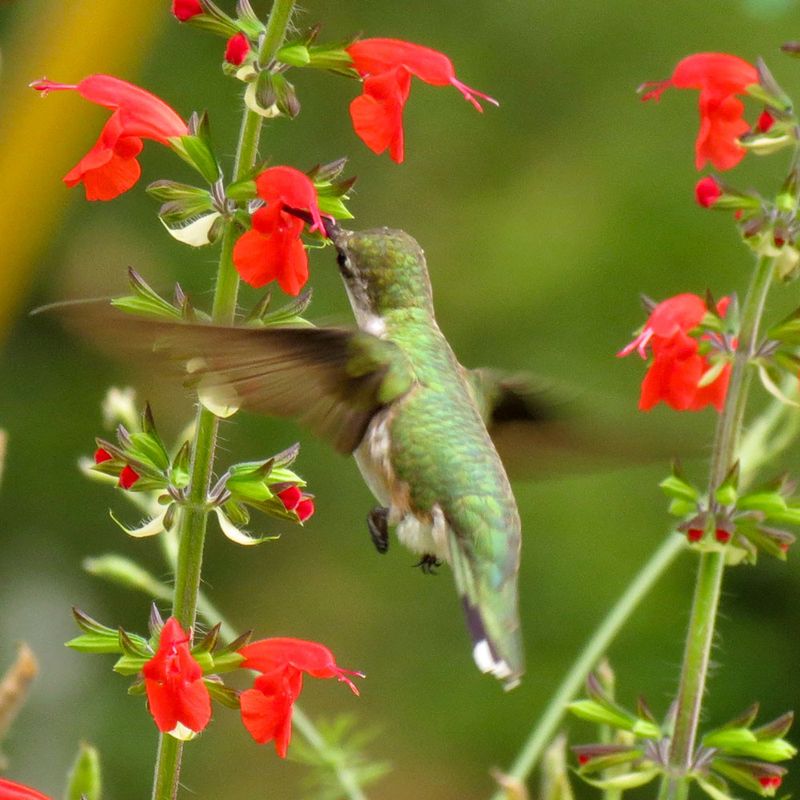
Walk past a blooming Scarlet Sage on a warm California afternoon and you will hear it before you see it. The gentle buzzing of bees, the flutter of butterfly wings, and the quick zip of hummingbirds create a kind of natural soundtrack around this plant.
It is genuinely one of the best pollinator plants you can grow in the state.
The secret is in the nectar. Scarlet Sage produces rich, sugary nectar deep inside its tubular flowers.
That design is not accidental. It evolved specifically to reward the kinds of visitors that help spread pollen and keep ecosystems healthy.
For California gardeners who care about supporting local wildlife, planting Scarlet Sage is one of the easiest and most effective steps you can take. You do not need a huge yard.
Even a small container on a sunny patio can become a hotspot for pollinators when Scarlet Sage is in bloom.
Your California Garden Changes Every Week. Your Plan Should Too.
Gardening in California changes quickly throughout the season. Every Friday you’ll receive a simple weekly plan showing exactly what to plant, prune, fertilize, harvest, and protect so you never miss the right timing.
Studies and gardeners alike have noted that pollinator-friendly plants like this one help boost the health of surrounding plants too. When bees and butterflies are active in your garden, everything benefits.
Scarlet Sage basically does the work of inviting them in, and the rest of your garden gets to enjoy the results.
Bee And Butterfly Favorite
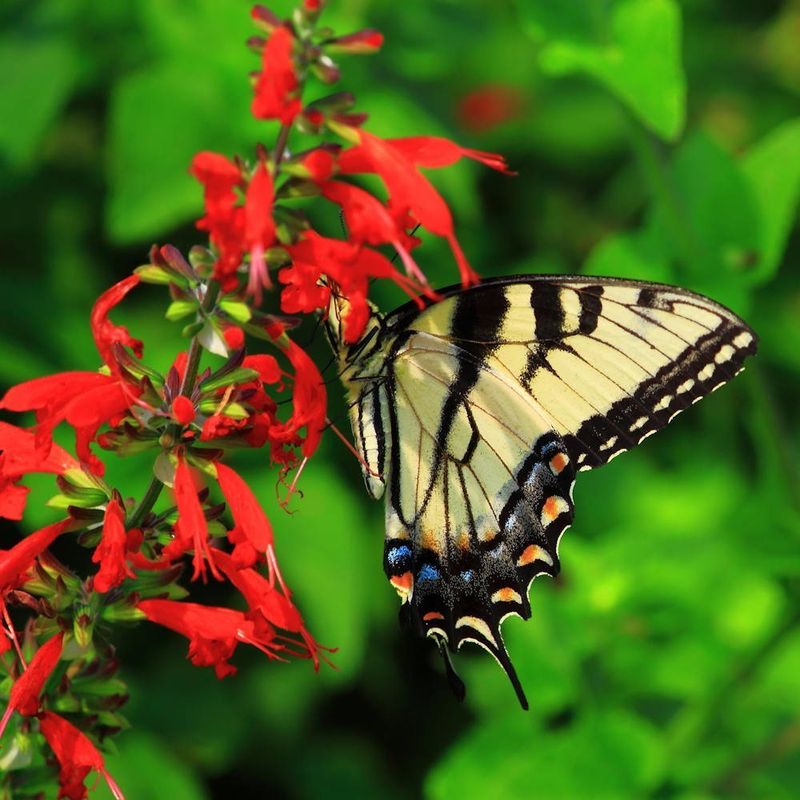
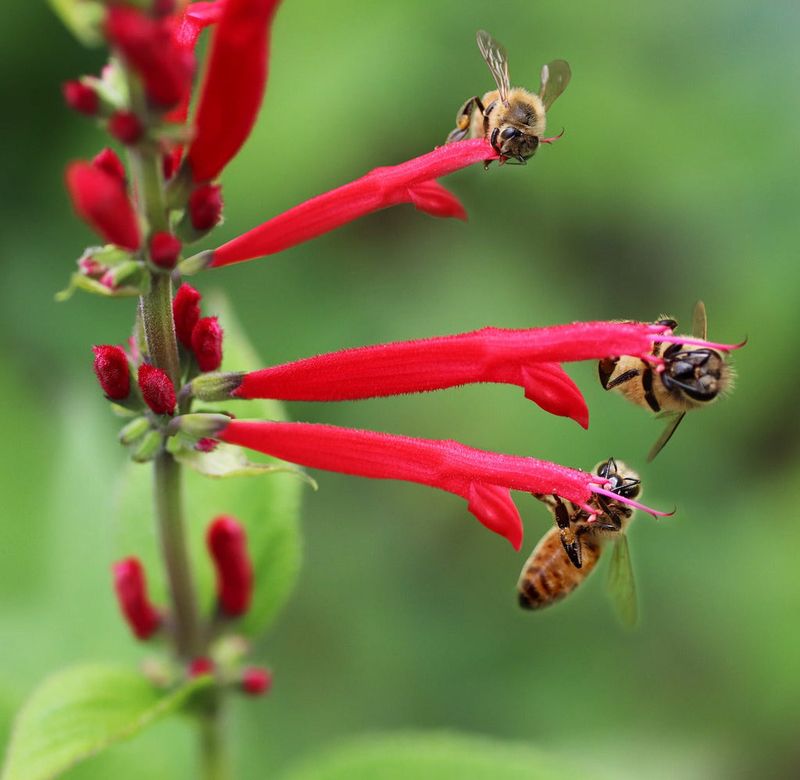
Bees and butterflies are wild about Scarlet Sage, and it is easy to see why. The flowers are packed with nectar, and the bold red color acts like a beacon.
Both honeybees and native California bees are drawn to it regularly throughout the blooming season.
Butterflies, especially swallowtails and monarchs, also visit Scarlet Sage frequently. They love landing on the blooms and feeding in the warm afternoon sun.
If you are trying to create a butterfly garden in California, adding Scarlet Sage to the mix is a smart and colorful move.
What is interesting is that bees and butterflies do not compete too heavily for the same flowers on this plant. Bees tend to visit in the morning, while butterflies often show up later in the day.
That natural scheduling means the plant stays busy with visitors from sunup to sundown.
For kids and families, watching bees and butterflies work through a patch of Scarlet Sage is genuinely exciting. It turns a garden into a living science lesson.
You can observe pollination happening in real time, right in your own backyard. Across California, from the Central Valley to the coast, gardeners have reported steady bee and butterfly activity wherever this plant grows.
Why Hummingbirds Love It
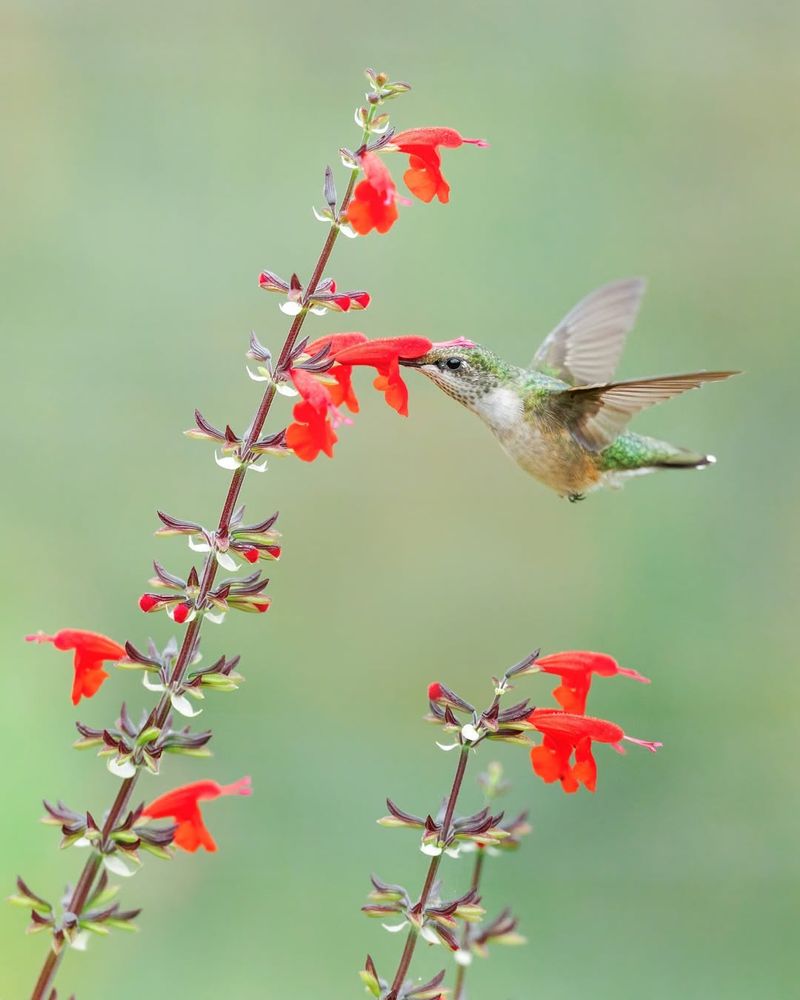
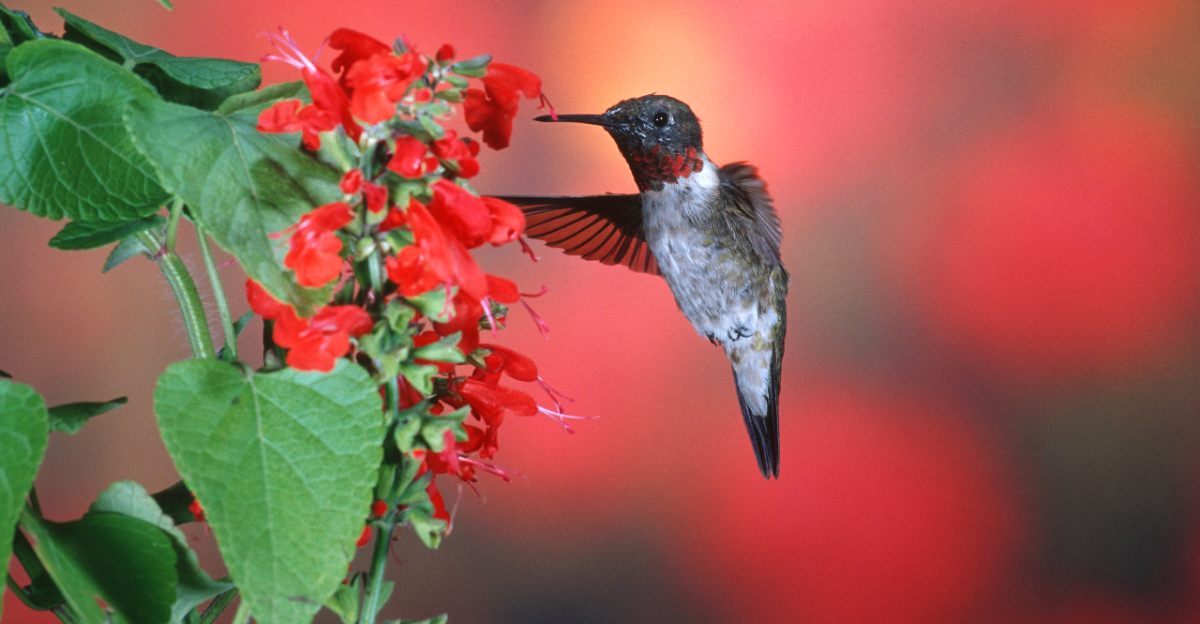
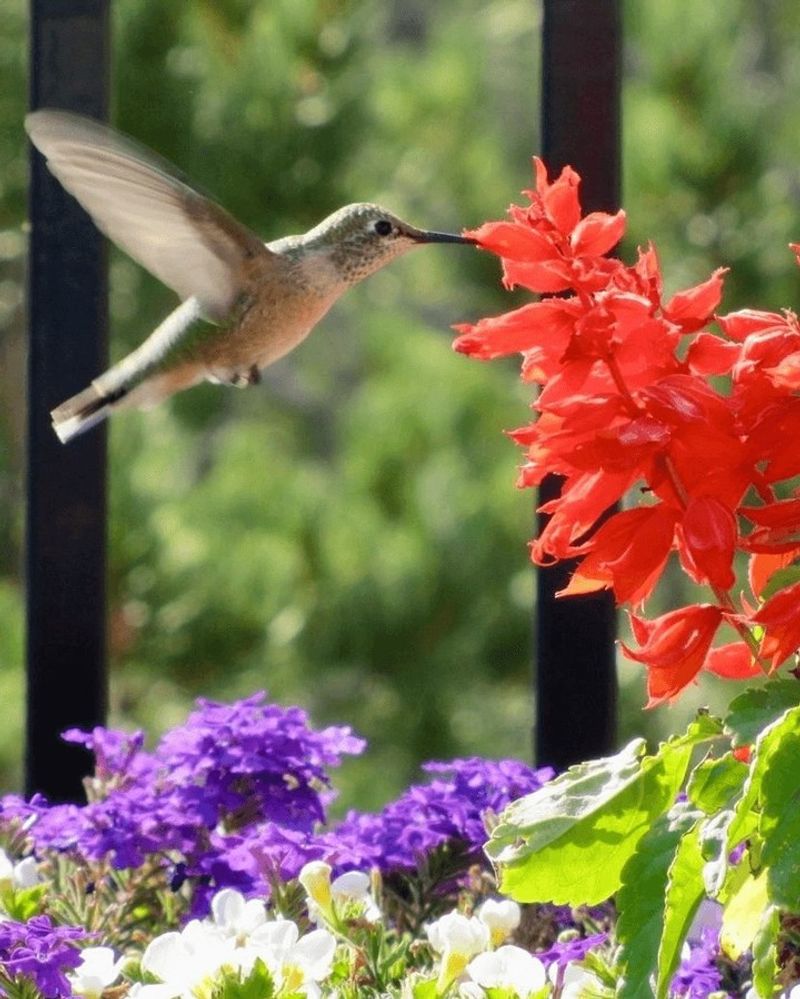
Hummingbirds and Scarlet Sage seem made for each other. The long, narrow tube of each red flower is shaped almost perfectly for a hummingbird’s beak.
When they hover and feed, their heads brush against the pollen, helping the plant reproduce while the bird gets a sweet reward.
Red is also the color hummingbirds are most attracted to. So a tall plant covered in bright red blooms is basically a hummingbird magnet.
In California, where species like the Anna’s hummingbird and Allen’s hummingbird are common, Scarlet Sage gets a lot of repeat visitors.
Gardeners in Southern California often report seeing hummingbirds at their Scarlet Sage plants multiple times a day. The birds seem to have a mental map of where the best nectar sources are, and once they find your plant, they keep coming back.
It is one of the most rewarding things about growing this flower.
If you want to attract hummingbirds without hanging a feeder, Scarlet Sage is one of the top plants to try. It gives them natural nectar, which is healthier than sugar water.
Plant it near a window or a seating area and you will have a front-row seat to some of the most impressive flying in the animal kingdom, all happening right in your California garden.
Where It Thrives
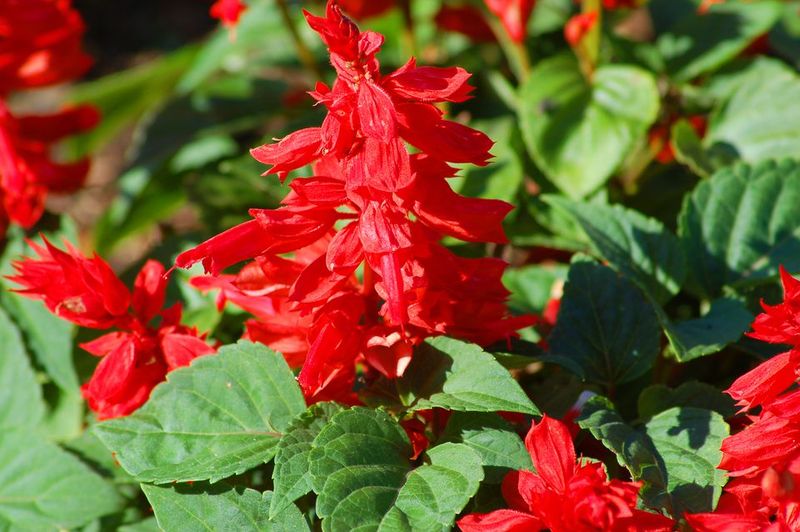
Originally native to Texas and parts of Mexico, Scarlet Sage has found a very happy home in California. The state’s warm climate, especially in USDA Zones 8 through 10, suits this plant well.
It loves full sun but can handle a little afternoon shade in hotter inland areas.
Well-drained soil is key. Scarlet Sage does not like sitting in soggy ground.
Gravelly or sandy soils work great, which is good news for many California gardeners who deal with fast-draining soil types. Once established, the plant shows impressive drought tolerance, making it a smart choice for water-conscious gardening.
You will find it thriving in gardens across the state, from the warm valleys of the Central Valley to the sunnier neighborhoods of Los Angeles and San Diego. In Northern California, it does best in the warmer months and may need replanting each season in cooler areas.
In parts of California with mild winters, Scarlet Sage can behave like a true perennial and return year after year. In cooler zones, it is often grown as an annual.
Either way, it delivers reliable color and pollinator activity wherever it is planted. Checking with a local nursery in your part of California is a great way to find out exactly how it will perform in your specific area.
How To Grow It
Growing Scarlet Sage is surprisingly straightforward, even for beginners. You can start seeds indoors about six weeks before the last frost date in your area.
Cover the seeds lightly with vermiculite and keep the soil moist. Germination usually happens within one to two weeks.
Once the danger of frost has passed, transplant your seedlings outside into a spot that gets at least six hours of direct sunlight daily. Space them about twelve inches apart so air can circulate and the plants can fill out nicely.
In California’s warmer regions, you can often scatter seeds directly on the soil surface in late spring and water regularly until they sprout.
Watering needs are moderate. Young plants need consistent moisture, but once they are established, you can ease back on watering.
A layer of mulch around the base helps retain soil moisture and keeps roots cool during hot California summers.
Deadheading spent flowers encourages the plant to keep producing new blooms. It is a simple task that makes a big difference in how long and how heavily your plant blooms.
Fertilizing is not strictly necessary, but a light application of balanced fertilizer in early summer can give plants an extra boost. With minimal effort, Scarlet Sage rewards California gardeners with months of beautiful, pollinator-attracting color.
A California Classic
Over the years, Scarlet Sage has earned a true classic status among California gardeners. It is the kind of plant that gets passed along through neighborhoods, shared between friends, and recommended at every local nursery.
Once people discover it, they rarely go back to planting without it.
Part of what makes it such a California staple is how well it fits into the state’s gardening culture. California gardeners love plants that are beautiful, low-maintenance, and good for the environment.
Scarlet Sage ticks every one of those boxes without asking for much in return.
It also pairs beautifully with other California-friendly plants like lavender, yarrow, and native grasses. A mixed border that includes Scarlet Sage tends to hum with life all season long.
The combination of colors and textures creates a garden that looks intentional and vibrant without requiring a professional designer.
Whether you are planting a pollinator garden, sprucing up a front yard in Sacramento, or adding color to a patio in San Diego, Scarlet Sage fits right in. It connects your garden to the broader natural world in a meaningful way.
Watching bees, butterflies, and hummingbirds visit your plants day after day is a reminder that even a small garden can make a real difference for wildlife across California.