The 9 Best Flowers For Feeding Bumblebees In Early Oregon Spring
Oregon’s early spring can feel like it’s still hitting the snooze button, but bumblebees are already up and on the move.
The moment there’s a break in the cold, they’re out buzzing around, hungry and determined, even when most gardens still look half asleep. That’s your chance to roll out the welcome mat with flowers that bloom right on time.
These fuzzy little pollinators love cool, drizzly weather, so Oregon suits them perfectly. What they need is a steady supply of early blooms packed with nectar and pollen.
Add the right flowers and your yard turns into a buzzing hotspot almost overnight. You’ll start spotting those chunky bees weaving through petals while the rest of the garden is still waking up.
It’s one of the easiest ways to bring your space to life and give local pollinators a much-needed boost at the start of the season.
1. Oregon Grape
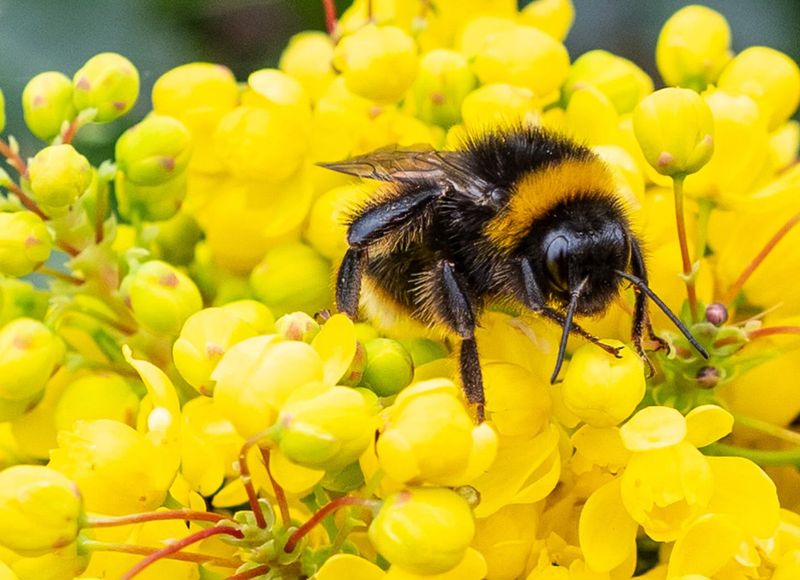
Oregon’s state flower has a lot going for it. Oregon Grape, known scientifically as Mahonia aquifolium, bursts into cheerful clusters of bright yellow blooms as early as February or March, making it one of the first major nectar sources available to queen bumblebees waking up from winter.
That early timing is exactly what makes it so valuable.
The flowers are small but packed with nectar, and bumblebees can visit dozens of blooms in a single foraging trip. The plant also thrives in a wide range of conditions across Oregon, from sunny garden borders to shaded woodland edges.
It is evergreen, meaning it provides some structure to your garden all year long.
Oregon Grape grows as a shrub and can reach anywhere from two to six feet tall depending on the variety. It is drought-tolerant once established, which is a bonus for gardeners who want low-maintenance plants.
After the flowers fade, dark blue berries appear that birds love. Planting Oregon Grape near pathways or garden borders means you will get to watch bumblebees up close every early spring season without much effort at all.
2. Red-Flowering Currant
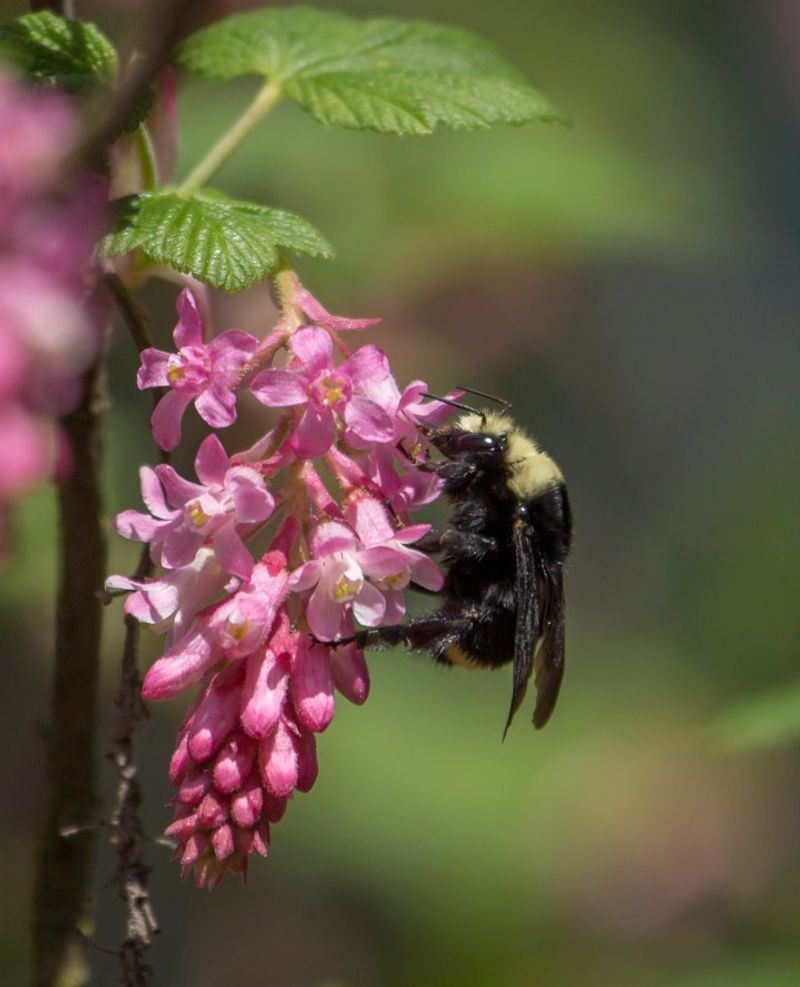
Few sights in an Oregon spring garden are as striking as a Red-Flowering Currant in full bloom. Ribes sanguineum explodes with hanging clusters of deep pink and red flowers before its leaves have even fully opened.
Bumblebee queens spot these vivid blooms from a distance and make a beeline straight for them.
This shrub is a powerhouse for early pollinators. It blooms reliably from late February through April across much of Oregon, giving bumblebees a consistent food source right when they need it most.
Hummingbirds are also big fans, so planting one near a window gives you a front-row seat to some incredible wildlife action.
Red-Flowering Currant grows well in full sun to partial shade and handles Oregon’s wet winters without complaint. It can reach six to twelve feet tall if left unpruned, but it responds well to trimming if you need to keep it smaller.
The plant produces small dark berries after flowering that wildlife enjoy. Gardeners across western Oregon often call this shrub their single best investment for supporting early spring pollinators, and it is easy to see why once you watch a bumblebee queen work those flower clusters.
Your Oregon Garden Changes Every Week. Your Plan Should Too.
Gardening in Oregon changes quickly throughout the season. Every Friday you’ll receive a simple weekly plan showing exactly what to plant, prune, fertilize, harvest, and protect so you never miss the right timing.
3. Pacific Bleeding Heart
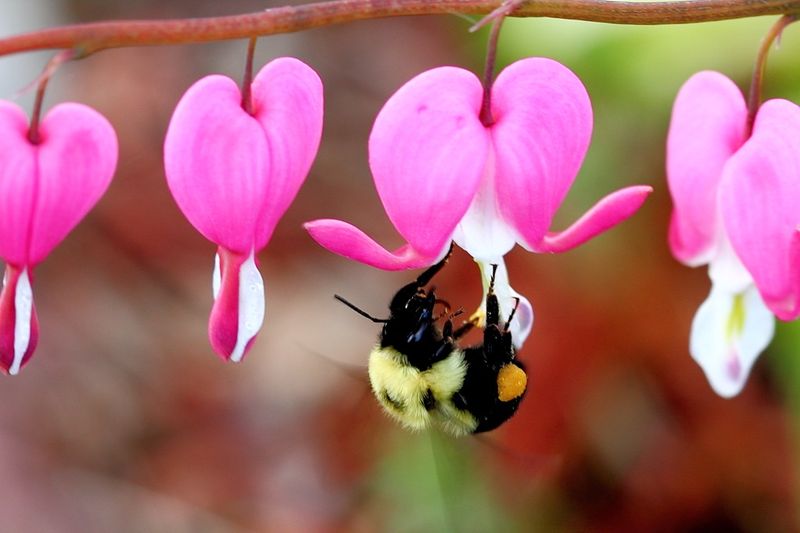
There is something almost poetic about a flower shaped like a tiny heart. Pacific Bleeding Heart, or Dicentra formosa, produces rows of dangling pink blooms along arching stems, and bumblebees are completely drawn to them.
The flowers have a tube-like shape that is perfectly sized for bumblebees to push into and collect nectar.
What makes this plant especially useful in Oregon gardens is that it thrives in shade. Most early spring bloomers prefer sunny spots, but Pacific Bleeding Heart does its best work under trees or along shaded fence lines where other plants struggle.
It naturally grows in Oregon’s coastal forests and mountain foothills, so it is well adapted to the state’s climate.
The plant spreads gently over time, forming soft green clumps of ferny foliage that look beautiful even when not in bloom. It typically starts flowering in March and can keep going into early summer if conditions stay cool and moist, which Oregon’s spring weather often provides.
Pacific Bleeding Heart pairs beautifully with Oregon Grape and Salal in a native shade garden. Once established, it requires almost no care and comes back reliably each year to feed the bumblebees that depend on it.
4. Camas
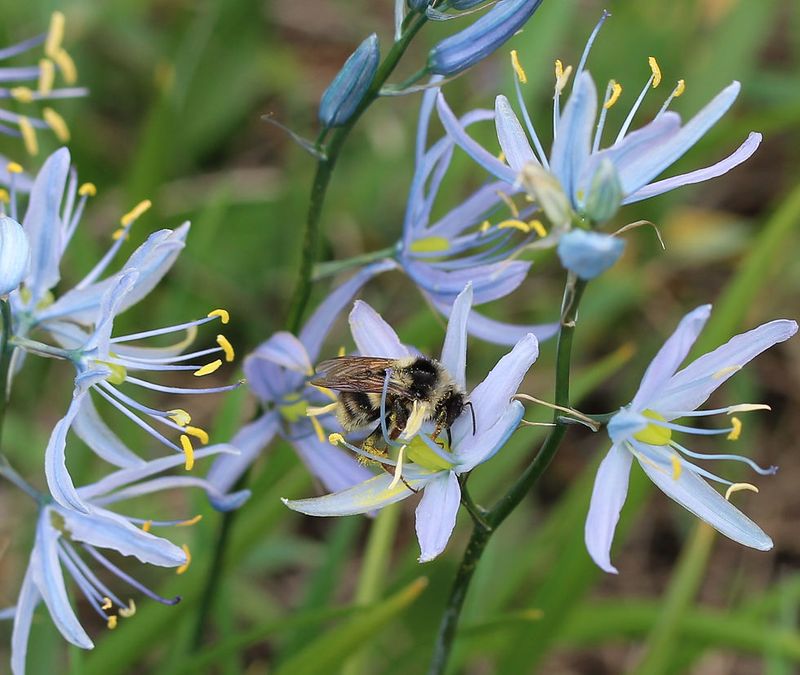
Long before Oregon became a state, Camas meadows were a landmark across the Pacific Northwest. Camassia quamash produces stunning spikes of blue-purple flowers that light up wet meadows and low-lying areas each spring.
For bumblebees, these blooms are a generous buffet of nectar and pollen arriving right when colony growth is ramping up.
Camas blooms a bit later than some other plants on this list, typically from April through June depending on elevation and local conditions across Oregon. That timing actually makes it incredibly useful because it bridges the gap between the earliest spring bloomers and summer flowers.
Bumblebee colonies are growing fast during this period and need a reliable food supply.
Growing Camas in your Oregon garden is surprisingly straightforward. It prefers moist, even seasonally wet soil, which many parts of western Oregon naturally provide.
Plant the bulbs in fall and they will reward you with spectacular spring color year after year. Camas looks stunning planted in drifts of twenty or more bulbs, mimicking how it grows naturally in the wild.
It also has deep cultural significance for Indigenous communities throughout the region, adding another layer of meaning to every beautiful bloom that appears in your garden each spring.
5. Lupine
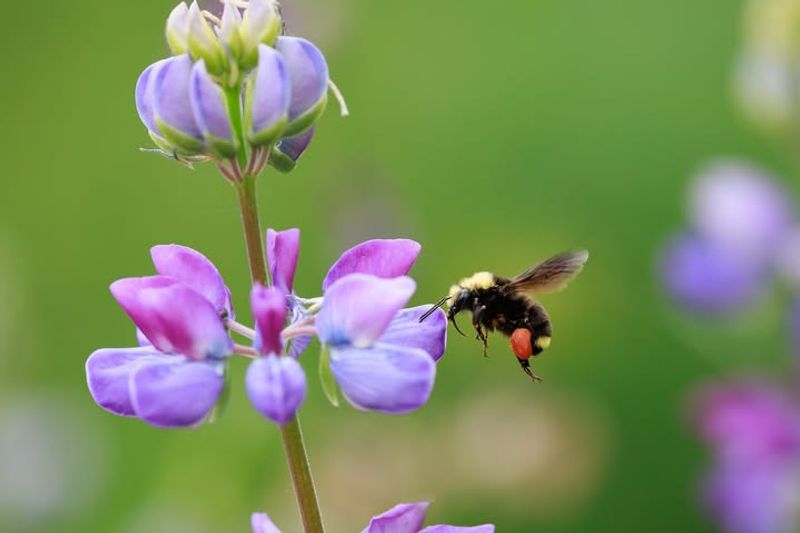
Bold, tall, and undeniably beautiful, Lupine is one of those plants that makes a garden look like a painting. Broadleaf Lupine, Lupinus latifolius, sends up tall spikes covered in purple and blue flowers that bumblebees absolutely adore.
The flowers are rich in both nectar and pollen, giving foraging bees a high-value meal every visit.
Bumblebees have a special technique called buzz pollination, where they vibrate their bodies at a specific frequency to shake pollen loose from flowers. Lupine is one of the plants that responds especially well to this behavior, making it a natural match for Oregon’s native bumblebee species.
Watching a bumblebee buzz-pollinate a Lupine spike is one of spring’s most entertaining garden moments.
Lupine grows across a wide range of Oregon habitats, from coastal bluffs to mountain meadows. It prefers well-drained soil and plenty of sunshine.
As a legume, it also fixes nitrogen in the soil, which benefits neighboring plants. Lupine typically blooms from May through July in Oregon, extending the feeding season well past early spring.
It self-seeds readily, so once you plant it, it tends to spread and return on its own, creating a growing patch of bumblebee habitat with very little effort from you.
6. Salal
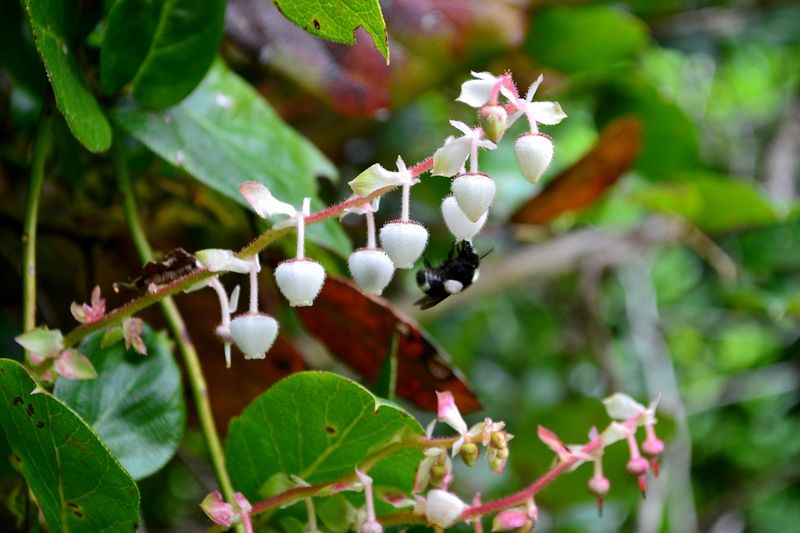
Walk through almost any forest in western Oregon and you will find Salal growing in lush, low mounds beneath the trees. Gaultheria shallon is a tough, evergreen shrub that produces strings of small, urn-shaped white flowers in spring and early summer.
Those delicate little blooms are a quiet but important food source for bumblebees working shaded forest edges.
Salal is not the flashiest plant in the garden, but bumblebees do not care about flash. They care about nectar, and Salal delivers it steadily throughout its bloom period.
The plant typically flowers from April through June in Oregon, overlapping nicely with the period when bumblebee colonies are at their most active and hungry.
For gardeners in Oregon, Salal is a dream plant for difficult spots. It handles deep shade, dry summers, and poor soils better than almost anything else.
It spreads slowly over time to form dense, weed-suppressing mats of glossy foliage. After flowering, it produces dark purplish berries that birds and even people enjoy.
Indigenous communities in Oregon and the broader Pacific Northwest have used Salal berries as food for thousands of years. Planting it means adding a piece of the region’s natural and cultural heritage right to your backyard.
7. Woodland Phlox
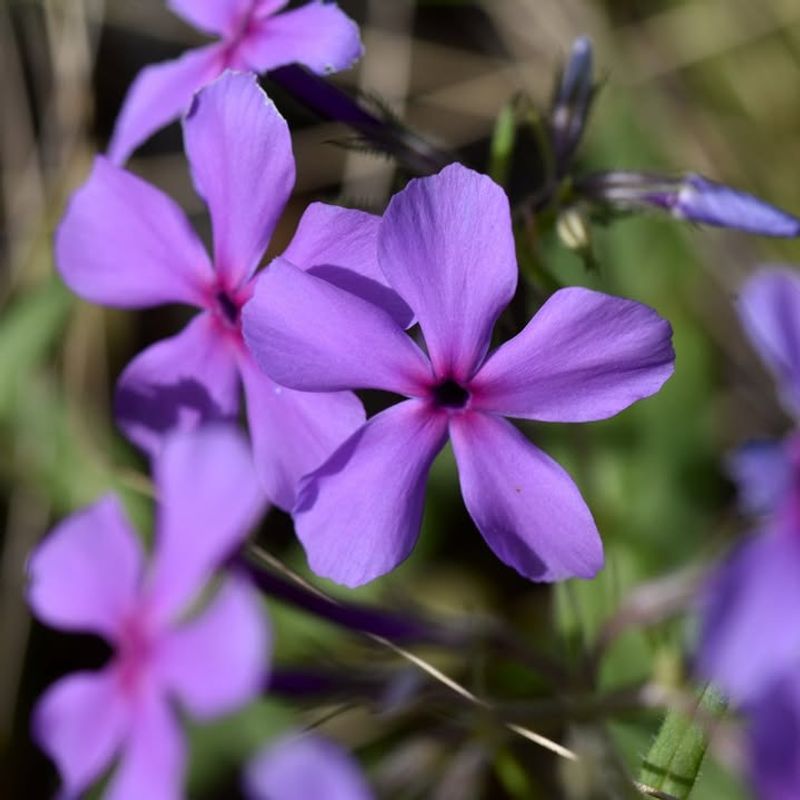
Soft, sweet, and surprisingly tough, Woodland Phlox is one of those plants that earns its place in any Oregon native garden. Phlox adsurgens produces clusters of pale lavender to white flowers in spring, and bumblebees visit them eagerly for their accessible nectar.
The flowers sit at just the right height and angle for bumblebees to land and feed comfortably.
Woodland Phlox naturally grows in the forests of southwestern Oregon and into the Siskiyou Mountains. It is a low-growing plant, typically reaching only about twelve inches tall, making it perfect as a ground cover under taller shrubs or trees.
It blooms from April through June, adding color to shaded spots that many other flowering plants ignore.
One of the best things about Woodland Phlox is how cheerful it looks even in low light. The flowers have a slight fragrance that adds a pleasant sensory layer to a spring garden walk.
It prefers well-drained soil with some moisture and does best in partial to full shade. Once established in an Oregon garden, it spreads gently and reliably without becoming invasive.
Pairing it with Pacific Bleeding Heart and Salal creates a shaded native plant corner that buzzes with bumblebee activity from early spring well into summer.
8. Western Columbine
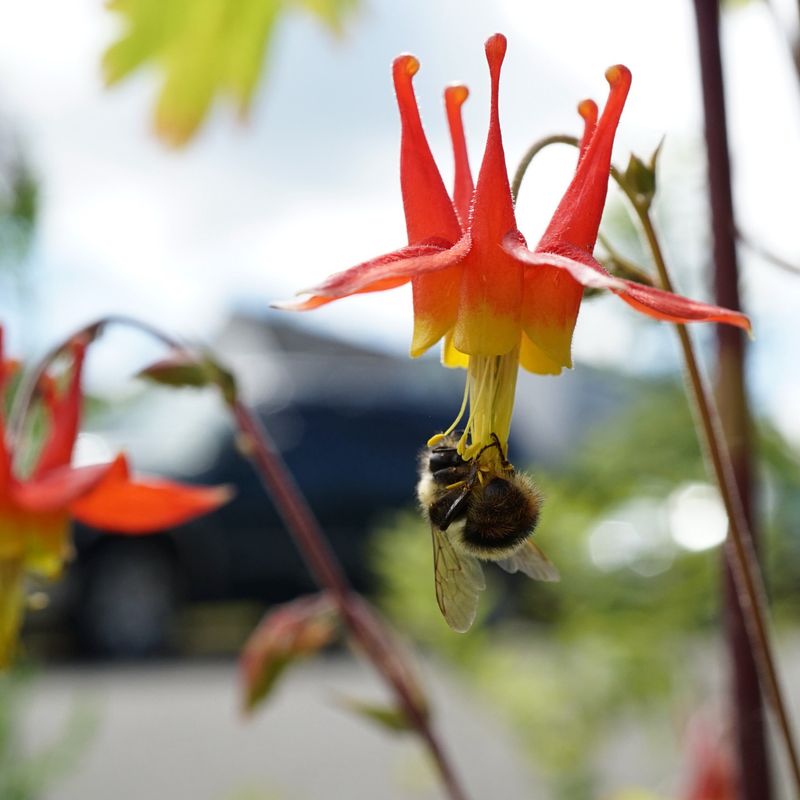
If there were a prize for most distinctive-looking spring flower in Oregon, Western Columbine would be a top contender. Aquilegia formosa produces red and yellow blooms with long, elegant spurs that dangle from slender stems like tiny lanterns.
Bumblebees are skilled enough to access the nectar hidden deep inside those spurs, giving them a reward that shorter-tongued insects cannot always reach.
Western Columbine blooms from April through July across Oregon, making it a mid-to-late spring staple for bumblebee gardens. It grows naturally in moist woodland areas, stream banks, and mountain meadows throughout the state.
In the garden, it does well in partial shade with regular moisture, though it can tolerate more sun if given enough water during dry spells.
Hummingbirds are equally wild about Western Columbine, so planting it means your garden becomes a hotspot for two of nature’s most entertaining visitors at once. The plant self-seeds freely, popping up in new spots around the garden each year and keeping the population going without any help from you.
Western Columbine also has a long history with Indigenous peoples of Oregon and the Pacific Northwest, who used various parts of the plant medicinally. Growing it connects your garden to deep roots in the region’s natural heritage.
9. Bluebells
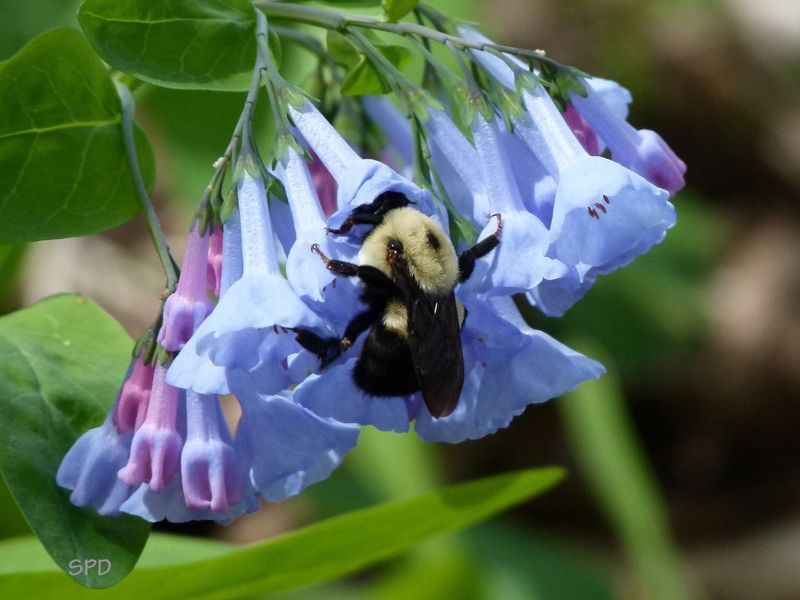
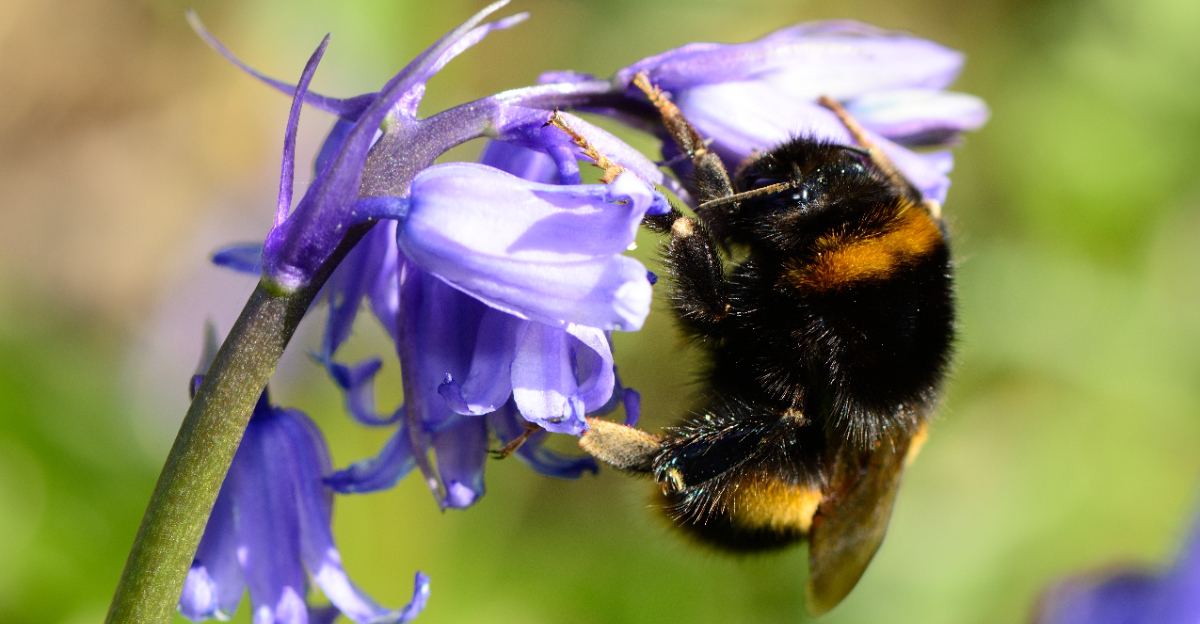
Few flowers capture the dreamy feeling of an Oregon spring quite like Bluebells. Mertensia species produce nodding clusters of tubular blue and purple flowers that seem to glow in the soft spring light.
Bumblebees are strongly attracted to blue and violet hues, and Bluebells deliver exactly that color combination in a flower shape built for bee feeding.
The tubular blooms are a great match for bumblebees, which have the body size and strength to push into the flowers and reach the nectar inside. Bluebells typically bloom from March through May in Oregon, depending on the variety and local conditions.
They thrive in moist, shaded spots, making them a natural companion to Pacific Bleeding Heart and Salal in a woodland-style garden bed.
Bluebells are spring ephemerals in many settings, meaning they bloom beautifully and then quietly fade back underground as summer arrives. That habit makes them easy to combine with summer-blooming perennials that will fill in the space after the Bluebell foliage disappears.
Planting them in drifts creates a sea of blue that is both visually stunning and incredibly productive for bumblebees during the critical early spring period.
Across Oregon, adding Bluebells to a native plant garden is one of the simplest and most rewarding choices a gardener can make for local pollinators.