These Are The 9 Ohio Plants That Bring Chickadees To Your Yard
A quiet Ohio yard can come alive fast once chickadees decide to move in. These small, curious birds look for more than just a feeder.
They rely on specific plants for food, shelter, and safe nesting spots throughout the year. The right mix of native choices creates a space that feels inviting and secure, which keeps them coming back day after day.
Strong seed sources, dense branches, and insect-friendly foliage all play a role in attracting them. With a few thoughtful additions, your yard can shift from occasional visits to regular activity filled with movement and soft calls.
Chickadees reward the effort with constant energy and charm, turning even a simple outdoor space into something far more lively and engaging. It all starts with planting the right species that meet their needs naturally.
1. Oak Trees Turn Your Yard Into A Bird Magnet
Few trees in North America can match what an oak brings to a backyard ecosystem. According to research by entomologist Doug Tallamy, native oak trees support over 500 species of caterpillars and moths, making them an unmatched food source for insect-eating birds like chickadees.
A single oak can host hundreds of caterpillars at once during peak spring and summer months, giving chickadees a constant, protein-rich buffet right outside your window.
Ohio is home to several native oak species worth planting, including white oak, bur oak, and pin oak. White oak tends to be especially valuable for wildlife because its acorns have lower tannin levels, making them more palatable to a wider range of animals.
Chickadees are not after the acorns themselves so much as the incredible insect life that oaks attract and sustain throughout the growing season.
Planting an oak is a long-term investment, but even young trees begin supporting insects within the first few years. OSU Extension recommends choosing a planting site with full sun and well-drained soil.
If space is a concern, bur oak handles urban conditions particularly well. An oak in your yard is not just a tree, it is a living wildlife sanctuary that builds value with every passing year.
2. Birch Trees Keep Your Yard Constantly Active
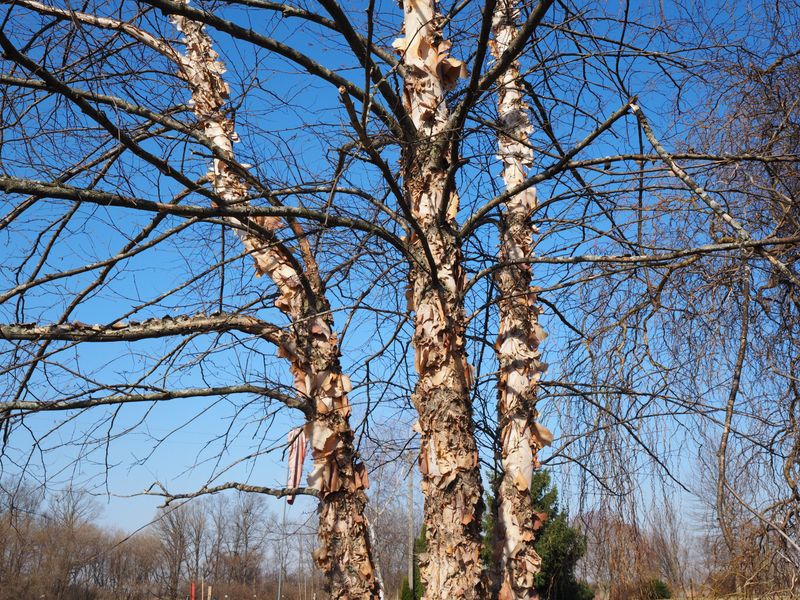
Walk past a birch tree on a warm spring morning and you will almost certainly spot a chickadee working its way along the bark. Birch trees are magnets for small insects and larvae that hide in the crevices of their distinctive peeling bark, and chickadees are expert foragers that know exactly where to look.
The tree’s open branching structure also gives birds an easy path to move through and feed without obstruction.
River birch is the species most recommended for Ohio landscapes by OSU Extension, largely because it tolerates the state’s variable moisture conditions better than other birch varieties. It thrives near streams or in low-lying areas of your yard where water tends to collect.
That said, river birch adapts well to average garden soil as long as it receives consistent moisture during its first couple of growing seasons.
Your Ohio Garden Changes Every Week. Your Plan Should Too.
Gardening in Ohio changes quickly throughout the season. Every Friday you’ll receive a simple weekly plan showing exactly what to plant, prune, fertilize, harvest, and protect so you never miss the right timing.
Beyond insect support, birch trees produce small catkins loaded with tiny seeds that chickadees pick through during colder months when other food is harder to find. Planting birch in a grouping of two or three creates a naturalistic stand that offers both foraging opportunities and light shelter.
Trim away any crossing branches in early spring to keep the canopy healthy and open for bird movement throughout the year.
3. Native Cherry Trees Bring Nonstop Backyard Life
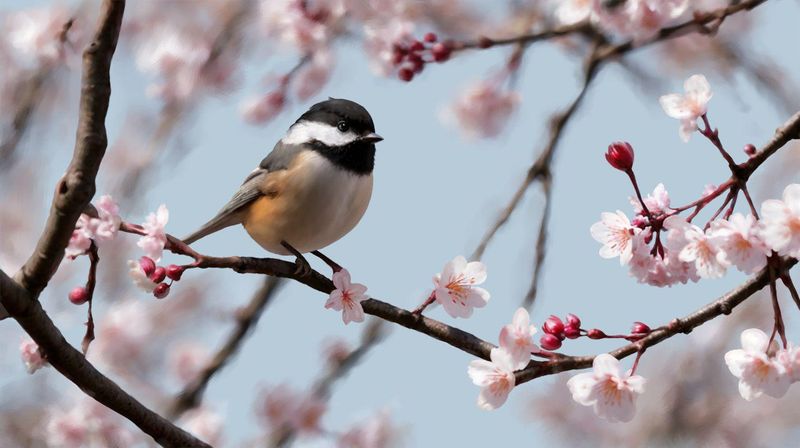
Black cherry is one of those native trees that quietly does everything right for backyard wildlife. Prunus serotina, as it is formally known, ranks among the top caterpillar-hosting trees in the eastern United States, supporting well over 400 species of Lepidoptera larvae.
For chickadees raising young in spring and early summer, that kind of insect abundance is essential since nestlings require a steady diet of soft, protein-packed caterpillars to grow properly.
Come late summer, the tree shifts gears entirely. Clusters of small, dark red to black cherries ripen along drooping branches, drawing in a parade of fruit-eating birds.
Chickadees, along with robins, waxwings, and thrushes, move through the canopy picking off berries one by one. Even after the fruit is gone, the tree continues offering value through its bark and branch structure, which shelters overwintering insects that birds search for on cold days.
Black cherry grows vigorously in Ohio and adapts to a wide range of soil types, preferring full sun to partial shade. It can reach 50 to 80 feet at maturity, so give it room.
Smaller yards might consider wild plum or chokecherry as compact alternatives in the same family. Whichever species you choose, a native cherry tree earns its space by supporting backyard life across all four seasons.
4. Serviceberry Trees Quietly Steal The Show
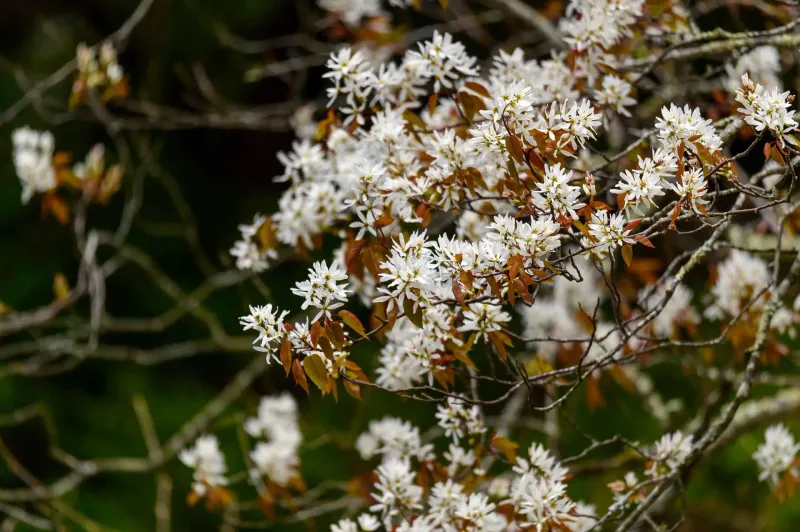
Every spring, before most other trees have even begun to leaf out, serviceberry bursts into a cloud of delicate white blossoms that signals the start of something special. Known botanically as Amelanchier, serviceberry is widely celebrated by horticulturalists and wildlife experts as one of the best small trees you can plant in an Ohio yard.
The Arbor Day Foundation and numerous native plant organizations consistently rank it at the top of bird-friendly plant lists for residential landscapes.
Chickadees love serviceberry for more than just its looks. The tree supports a solid community of caterpillars and insects during spring, right when birds are nesting and need the most food.
By early summer, small purple-red berries ripen along the branches, and the feeding frenzy that follows is genuinely impressive to watch from your kitchen window. Berries tend to disappear within days as birds compete for them eagerly.
Serviceberry tops out at around 15 to 25 feet depending on the species, making it a perfect fit for smaller lots or spots under power lines where a full-sized tree would not work. It prefers moist, well-drained soil and does well in both full sun and partial shade.
Fall color is a bonus, with leaves turning brilliant shades of orange and red before dropping. Planting one near a window gives you a front-row seat to the action all year long.
5. Hickory Trees Birds Keep Coming Back To
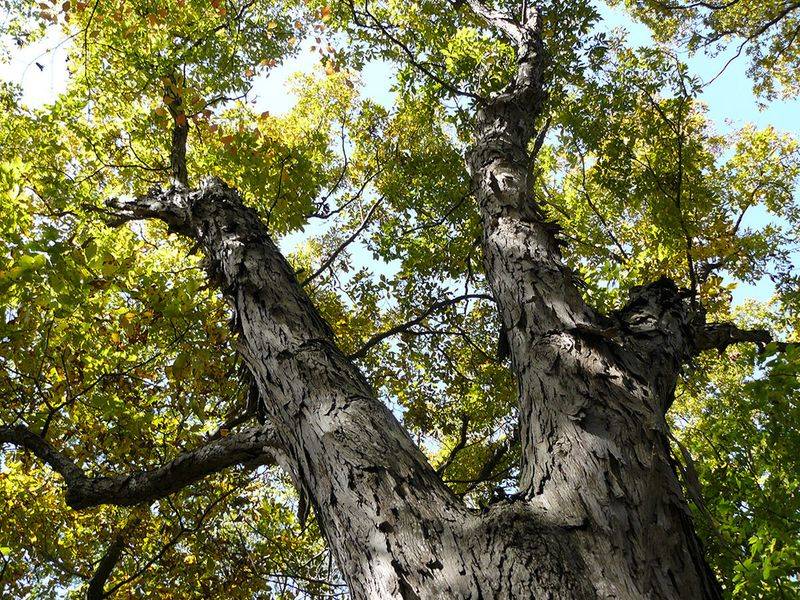
Shagbark hickory has a certain rugged charm that fits perfectly into an Ohio landscape. Its dramatically peeling bark creates deep crevices that insects love to nest and overwinter in, which means chickadees have a reason to visit the tree even when it is not producing nuts.
During warmer months, the tree hosts a healthy community of moth and butterfly caterpillars, adding to its value as a foraging destination for insect-eating birds.
The nuts themselves are a bonus that attracts a broader range of wildlife, from squirrels and deer to woodpeckers and nuthatches. Chickadees are opportunistic feeders and will investigate hickory nuts, particularly cracked or partially opened ones left behind by larger animals.
The dense canopy also provides shade and shelter that birds use as a safe resting point between feeding bouts.
Hickory trees are best suited for larger yards since they can grow 60 to 80 feet tall at maturity. They prefer deep, well-drained soils and full sun, and they are notably drought-tolerant once established, which is a real advantage during Ohio’s drier summer stretches.
Growth is slow in the first few years, but patience pays off. A mature hickory becomes a cornerstone of your yard’s ecosystem, supporting insects, birds, and other wildlife for generations without much maintenance required.
6. Sumac Shrubs Fill Your Yard With Movement
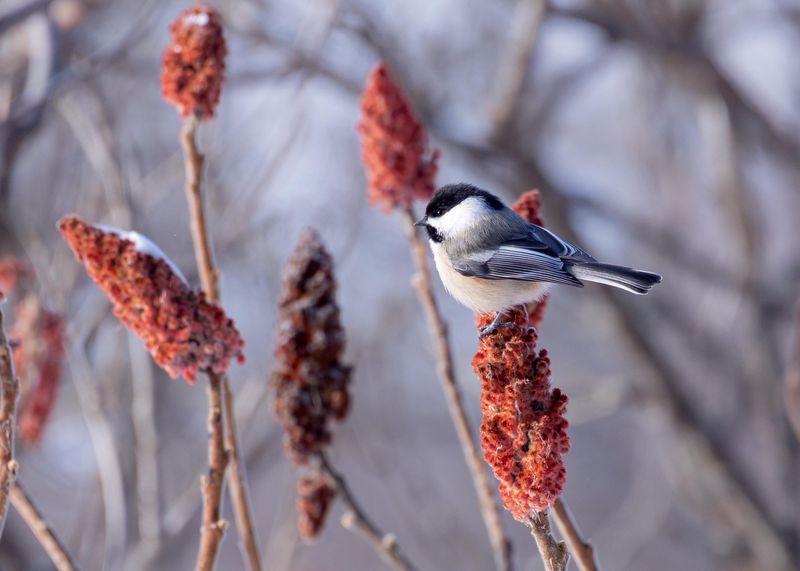
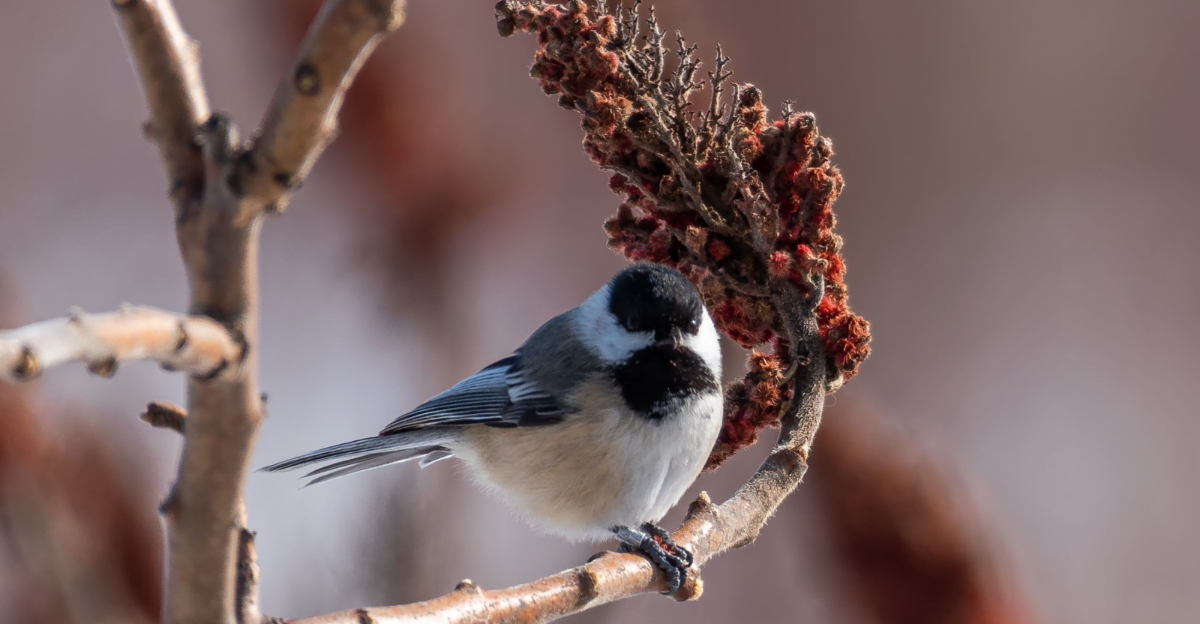
Staghorn sumac is the kind of plant that earns its place by showing up when other plants have given up for the season. Its bold, upright clusters of deep red berries, called drupes, cling to the branches well into winter and provide a critical food source for chickadees and other birds when fresh food is nearly impossible to find elsewhere.
The Ohio Department of Natural Resources recognizes sumac as a high-value native shrub for wildlife support across the state.
Sumac spreads by underground runners, forming dense colonies over time. That spreading habit can feel like a drawback in a tidy garden, but in naturalized areas along fence lines, slopes, or property edges, it creates exactly the kind of layered habitat that birds seek out.
The dense thickets offer shelter from cold winds and predators, making sumac patches popular roosting spots on frigid Ohio nights.
Beyond its winter value, sumac lights up the yard in fall with some of the most vivid red foliage you will find on any native shrub. It grows in nearly any soil type, tolerates drought, and requires almost no care once it is established.
If you want to keep it contained, simply mow around the edges of the colony in spring to stop the runners from spreading further. Plant sumac where you have room to let it do its thing, and it will reward you generously.
7. Dogwoods Offer Food And Shelter All Year
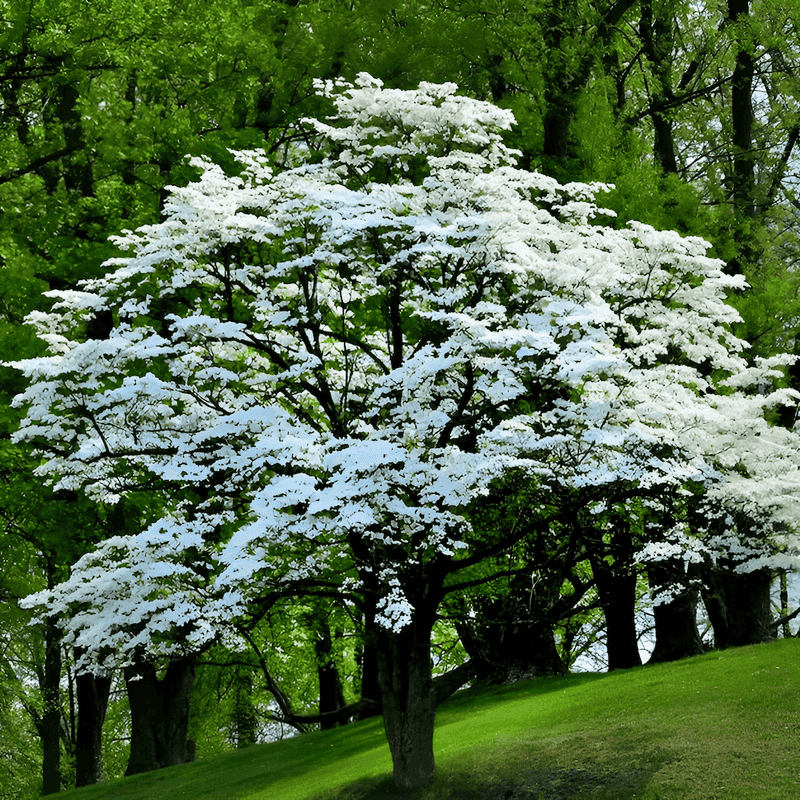
Ask any Ohio wildlife gardener which shrub or small tree does the most work for birds, and dogwood will almost always come up in the conversation. Native species like gray dogwood and flowering dogwood produce clusters of small, fat berries that ripen in late summer and early fall, right when migrating birds and year-round residents like chickadees are building up energy reserves for the coming cold months.
The berries are rich in fat, making them especially valuable as a high-energy food source.
Beyond fruit production, dogwoods have a branching structure that works beautifully as shelter. Their dense, layered canopy gives chickadees a place to dart into when a hawk circles overhead, and the low branching habit makes the plant accessible to birds of all sizes.
Insects also colonize dogwood bark and stems, giving foraging birds another reason to visit throughout the year.
Flowering dogwood prefers partial shade and moist, acidic soil, making it a natural fit for Ohio woodland garden settings. Gray dogwood is tougher and more adaptable, handling full sun, clay soil, and wetter spots without complaint.
Both species provide excellent fall color as a visual bonus. Planting dogwood near a brush pile or other dense shrubs creates a layered habitat corridor that chickadees will use consistently from one season to the next.
8. Asters Keep Your Yard Alive In Fall
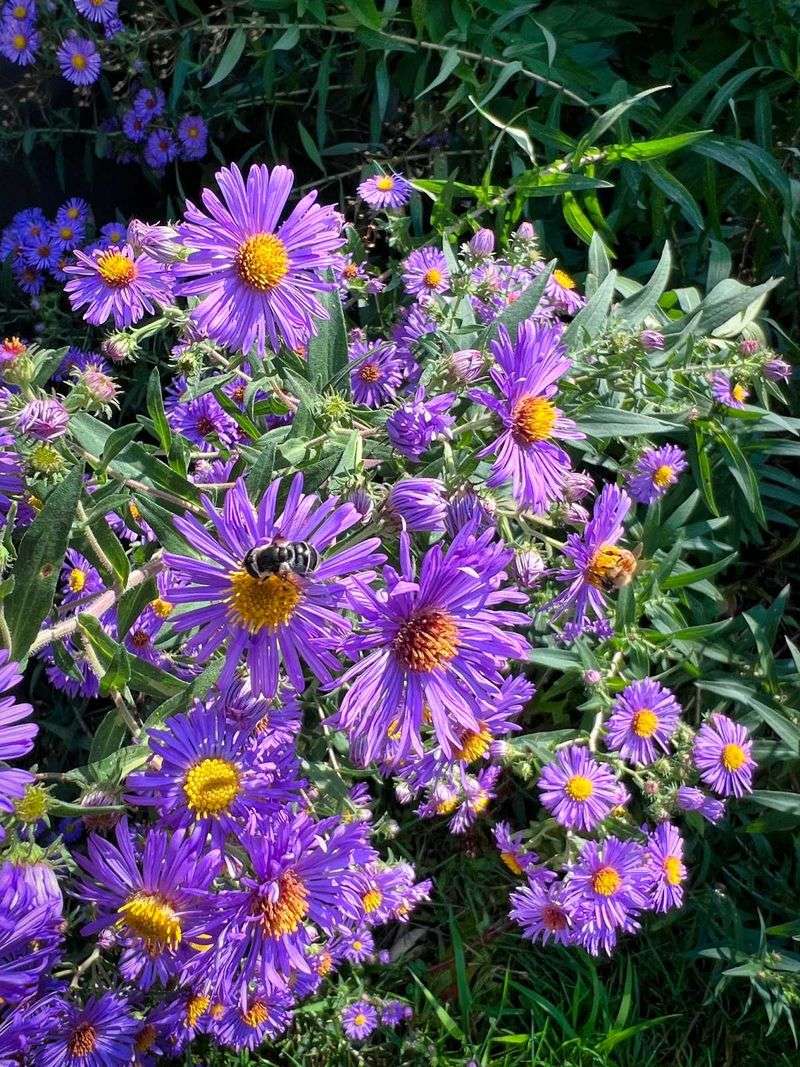
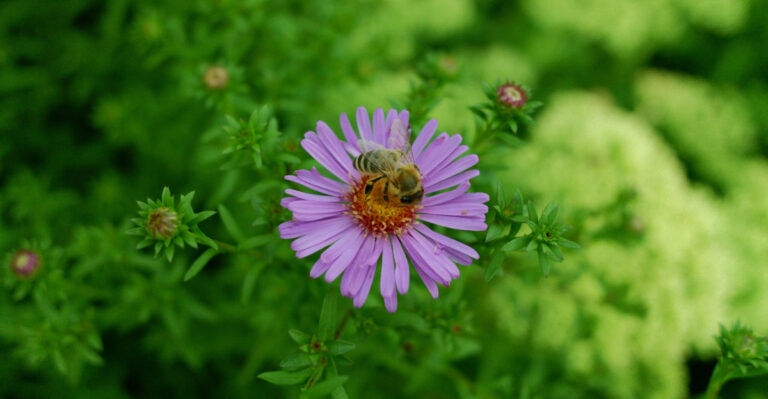
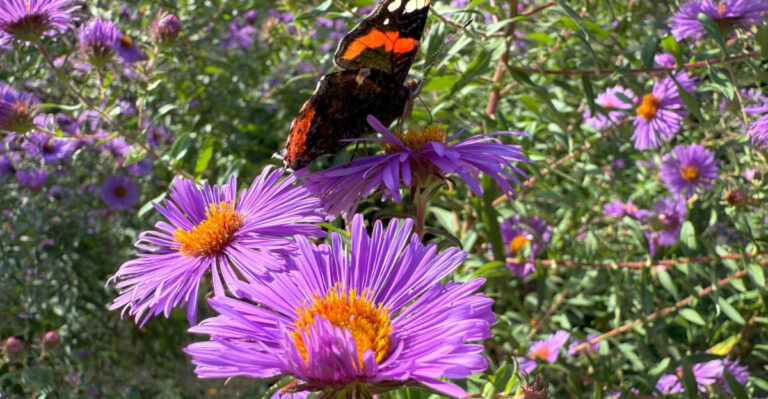
By October, most flowering plants in an Ohio yard have wound down for the year, but native asters are just hitting their stride. New England aster and smooth blue aster are two of the most common native species found across Ohio, and both produce hundreds of small, daisy-like flowers that attract a remarkable number of insects during the final warm weeks of the season.
That insect activity is exactly what chickadees are watching for as they fatten up before winter sets in.
Once the flowers fade, asters produce fluffy seed heads that chickadees pick through methodically, pulling out the tiny seeds one by one. Leaving the spent flower stalks standing through fall and winter is one of the easiest things you can do to support backyard birds.
The dried stems also provide overwintering habitat for native bees and small insects, which means the food chain continues functioning even after the growing season ends.
Asters are incredibly easy to grow and thrive in Ohio’s climate with minimal fuss. They prefer full sun to partial shade and average garden soil, and they spread gradually over time to fill in gaps naturally.
Plant them along borders, in meadow-style beds, or mixed into perennial gardens for a pop of late-season color. Their ecological payoff far exceeds the small amount of effort it takes to get them established in your yard.
9. Goldenrod Powers Your Backyard With Life
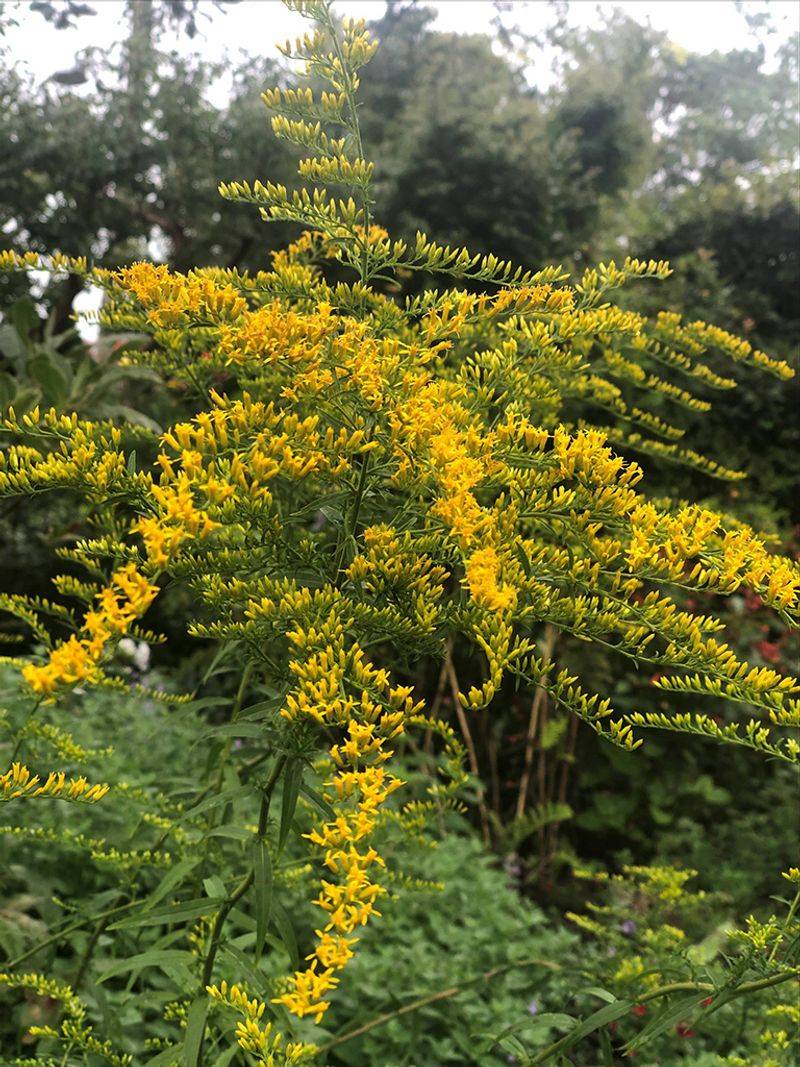
Goldenrod gets blamed for a lot of late-summer sneezing that it did not actually cause. Ragweed, which blooms at the same time, is the real culprit behind most seasonal allergies.
Goldenrod’s pollen is too heavy and sticky to travel through the air, which means it relies entirely on insects for pollination. That insect dependence turns goldenrod into one of the most ecologically productive native plants you can grow in an Ohio yard, supporting over 100 species of bees, beetles, and other invertebrates.
For chickadees, that insect traffic is a goldmine. The plant essentially acts as a living feeding station, drawing in bugs that birds snap up with impressive speed.
As the season progresses and temperatures drop, goldenrod’s fluffy seed heads become a direct food source that chickadees and other small songbirds pick through during morning foraging runs. Research from the Lady Bird Johnson Wildflower Center confirms goldenrod as a top-tier native plant for supporting bird and insect communities.
Goldenrod spreads by both seed and underground rhizomes, so plant it where you have some room to spare or where naturalized growth is welcome. It thrives in full sun and average to poor soil, actually blooming more vigorously in lean conditions.
Tall goldenrod and stiff goldenrod are two Ohio-native varieties worth seeking out at local native plant nurseries. Once planted, expect it to establish quickly and reward you with years of buzzing, fluttering backyard activity.