8 Native Ohio Vines For Fences That Look Better Than English Ivy
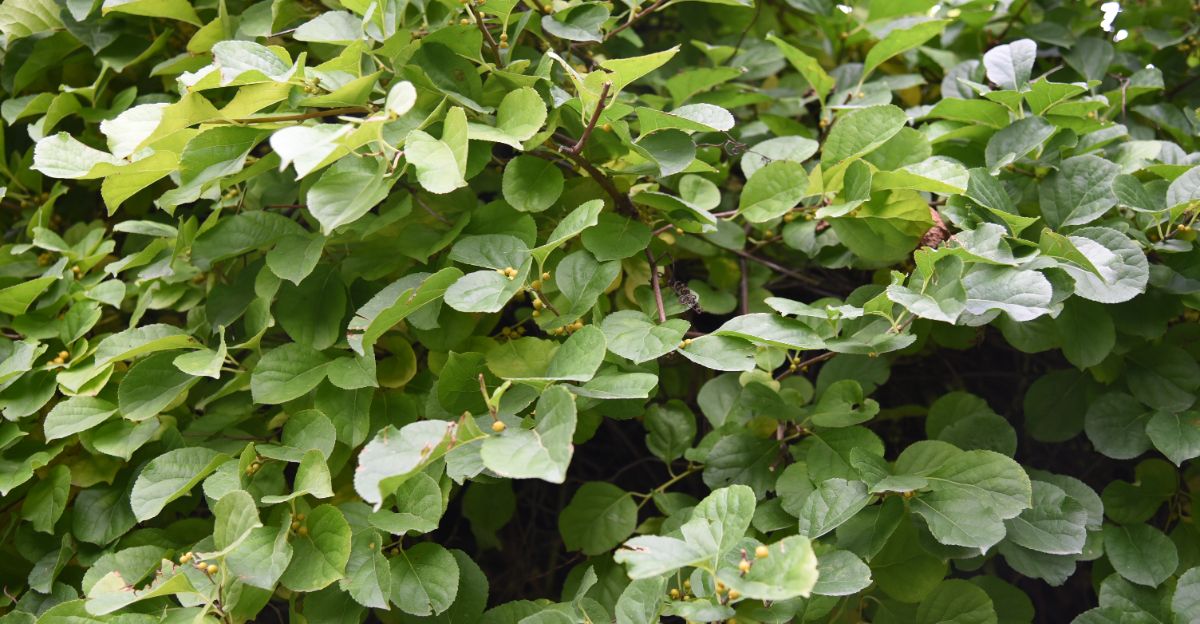
English ivy can look charming for about five minutes, then it starts acting like it owns the place.
In Ohio, this aggressive nonnative vine has earned a bad reputation for creeping beyond fences, climbing where it is not wanted, and turning a simple planting choice into a long-term headache.
That is a big reason more Ohio gardeners are ready to move on. They still want a fence covered in green, color, and texture, but they want it from plants that feel like a better fit for the landscape instead of a problem waiting to spread.
Native vines answer that call in a much better way. They can soften a plain fence, bring in birds and pollinators, and add that lush, finished look people love without the same baggage.
And truth be told, some of them look even better than English ivy ever did.
1. Trumpet Creeper Brings Bold Summer Flowers To Sunny Fences
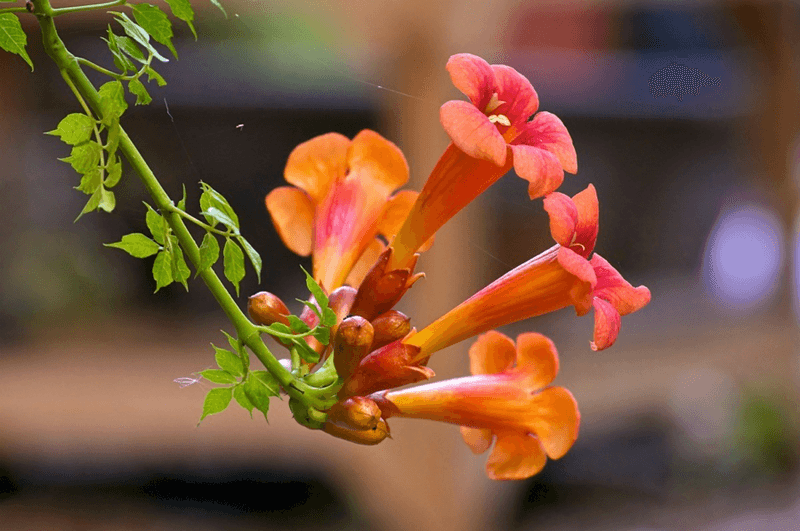
Walk past a fence covered in Trumpet Creeper on a July afternoon and you will likely spot a hummingbird hovering nearby.
The flowers on this vine are hard to miss, bold orange-red tubes that flare open like little trumpets and bloom prolifically from midsummer into early fall.
English ivy offers zero blooms, zero wildlife action, and zero visual excitement in summer. Trumpet Creeper offers all three.
Campsis radicans is a true Ohio native that thrives in full sun and well-drained soil. It is a vigorous grower, and that point deserves some honesty.
Without regular pruning, it can spread by underground runners and self-seeding, which means it needs a firm hand to stay where you want it. That is a management issue, not an ecological invasion, but it does require attention.
Plant it on a sturdy metal or wooden fence rather than a delicate trellis, because the stems get heavy over time.
Pollinators beyond hummingbirds also visit regularly, including ruby-throated hummingbirds, orioles, and various bee species.
Prune it back hard in late winter before new growth begins, and it responds with even more vigorous flowering the following season.
For a south-facing or west-facing fence that gets baked by the sun all day, Trumpet Creeper is one of the toughest and most rewarding native options available to Ohio gardeners.
2. American Wisteria Adds Dramatic Blooms Without The Invasive Chaos
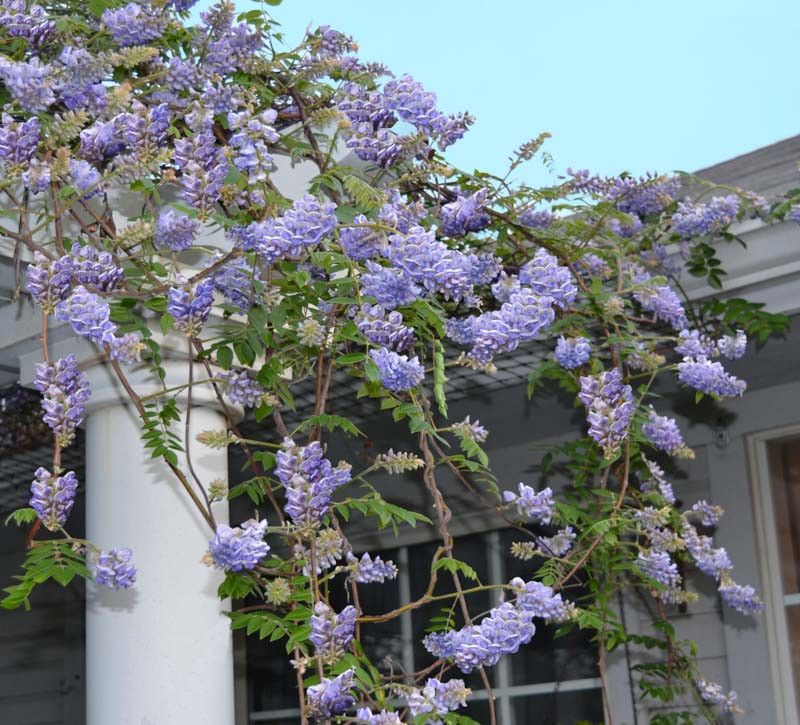
Wisteria has a complicated reputation, and for good reason. The Chinese and Japanese wisteria species sold widely at garden centers are genuinely invasive in Ohio and across much of the eastern United States.
They strangle trees, collapse structures, and spread aggressively into natural areas. American Wisteria, Wisteria frutescens, is a completely different story and it is native to the eastern U.S.
American Wisteria produces stunning clusters of fragrant bluish-purple flowers in late spring, sometimes reblooming lightly in summer. The flower clusters are slightly smaller than those of the Asian species, but the overall effect on a fence is still breathtaking.
It grows up to 30 feet and twines rather than clinging with adhesive pads, so it needs a strong support structure like a heavy wooden fence, a pergola post, or sturdy wire. A fence that flexes or wobbles will not hold it well over time.
Your Ohio Garden Changes Every Week. Your Plan Should Too.
Gardening in Ohio changes quickly throughout the season. Every Friday you’ll receive a simple weekly plan showing exactly what to plant, prune, fertilize, harvest, and protect so you never miss the right timing.
The key difference from invasive wisterias is growth behavior. American Wisteria is vigorous but controllable with annual pruning after flowering.
It does not send out the same aggressive underground root systems or self-seed as prolifically as its Asian relatives. Look for named cultivars like ‘Amethyst Falls’ or ‘Nivea’ at reputable native plant nurseries to ensure you are getting the right species.
Compared to ivy’s flat green wall of nothing, this vine delivers genuine seasonal spectacle with far less long-term risk.
3. Virgin’s Bower Softens Fences With Clouds Of White Flowers
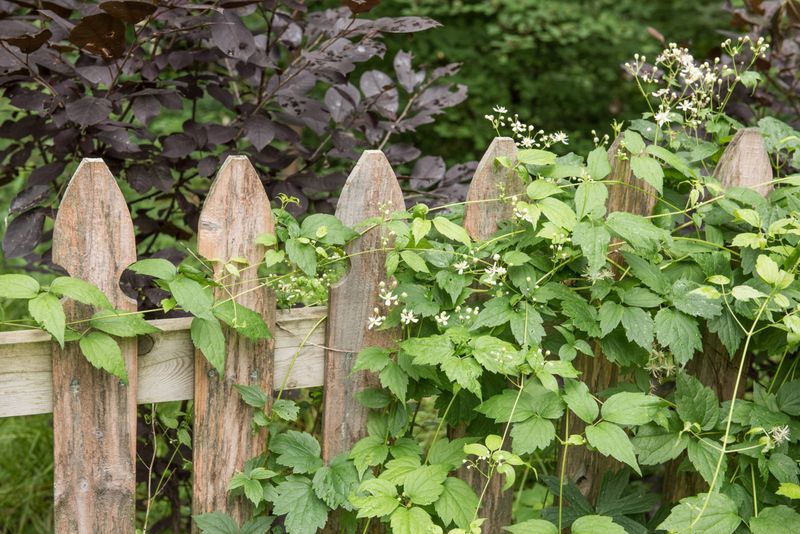
There is something almost magical about a fence draped in Virgin’s Bower in late August. While most flowering vines have already peaked by then, this native clematis hits its stride with masses of small, creamy white flowers that practically glow in the late-summer light.
Once the blooms fade, feathery silver seed heads take over and carry the visual interest well into fall, which is something English ivy can never offer.
Clematis virginiana is a native Ohio species that grows 10 to 20 feet, which makes it noticeably lighter and less overwhelming than some of the heavier vines on this list.
It twines rather than gripping with adhesive pads, so it works beautifully woven through chain-link fences, wooden rail fences, or wire trellises.
It prefers partial shade to full sun and grows naturally along stream banks and woodland edges across Ohio, meaning it handles moisture and clay soils reasonably well.
Unlike ivy, which creates a dense, impenetrable mat that blocks light and moisture from everything beneath it, Virgin’s Bower provides lighter, airier coverage that still allows some airflow through the fence.
Pollinators visit the flowers regularly, and birds use the seed heads as nesting material.
It can self-seed and spread modestly, so deadheading after bloom helps manage spread. For a fence that needs softening rather than full coverage, this vine brings an effortless, cottage-garden charm that ivy simply cannot replicate.
4. Maypop Brings An Unusual Tropical Look In Summer
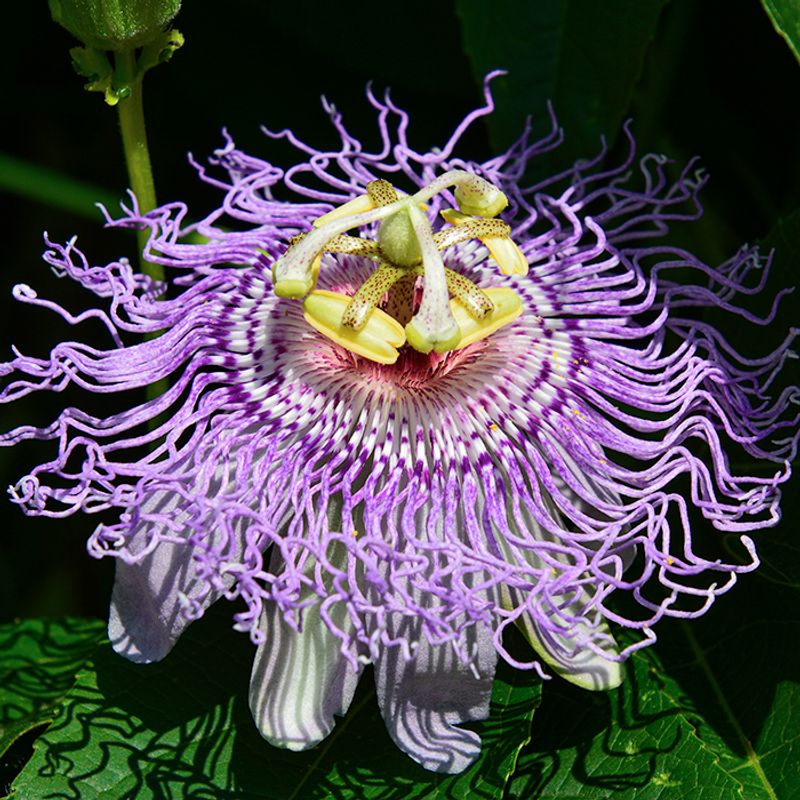
Nothing on an Ohio fence stops people in their tracks quite like a Maypop flower in full bloom. The blossoms look like they belong in a tropical greenhouse, with layered petals, a fringe of purple and white filaments, and a complex center that seems almost engineered.
Most neighbors will ask what it is, because it looks so unlike anything else growing in a typical Ohio yard.
Passiflora incarnata is actually a native Ohio wildflower that grows as a vine, climbing 6 to 15 feet using tendrils that grab onto fence wire, wood, or other plants. It thrives in full sun and well-drained soil, performing best in sandy or loamy ground rather than heavy clay.
One important thing to know upfront: Maypop is not evergreen. It goes completely dormant in winter, disappearing down to the roots, which means your fence will be bare from late fall through mid-spring.
That is the complete opposite of ivy’s year-round green wall.
The payoff in summer more than makes up for the off-season gap. Flowers appear from June through August, followed by egg-shaped yellow-green fruits that are edible and attract wildlife.
Maypop also serves as the host plant for Gulf Fritillary and Zebra Longwing butterfly caterpillars, adding real ecological value. It can spread by underground runners, so plant it where it has room or be prepared to pull back the edges each spring.
5. American Bittersweet Adds Bright Fall Fruit And Twining Texture
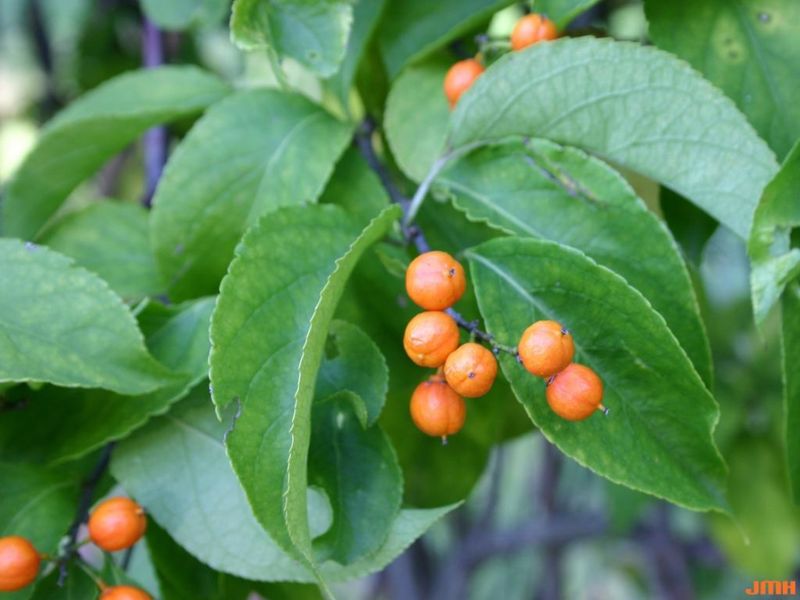
Spotting clusters of orange and red berries on a fence in October is one of fall’s best visual surprises, and American Bittersweet delivers exactly that.
The bright fruit capsules split open to reveal scarlet berries that cling to the vine well into winter, creating a display that ivy, with its plain dark berries and flat green leaves, cannot come close to matching.
Here is where sourcing matters enormously. Oriental Bittersweet, Celastrus orbiculatus, is an invasive lookalike that has spread aggressively across Ohio and much of the eastern U.S.
It is sold incorrectly at some garden centers and can hybridize with the native American species, Celastrus scandens, weakening the native plant’s genetic integrity. Always buy from a reputable native plant nursery and confirm the Latin name before purchasing.
If invasive Oriental Bittersweet grows anywhere near your property, the hybridization risk is real and worth knowing about.
American Bittersweet is a twining vine that grows 15 to 20 feet and needs both a male and female plant to produce the showy berries. It prefers full sun to partial shade and tolerates a range of Ohio soil types.
Sturdy fences work best since mature vines develop thick, woody stems. Pruning in late winter helps manage size and keeps the vine from overrunning neighboring plants.
The seasonal texture and fall color make it a genuinely rewarding choice for a fence that needs four-season interest.
6. Riverbank Grape Creates Full Green Coverage With A Native Look
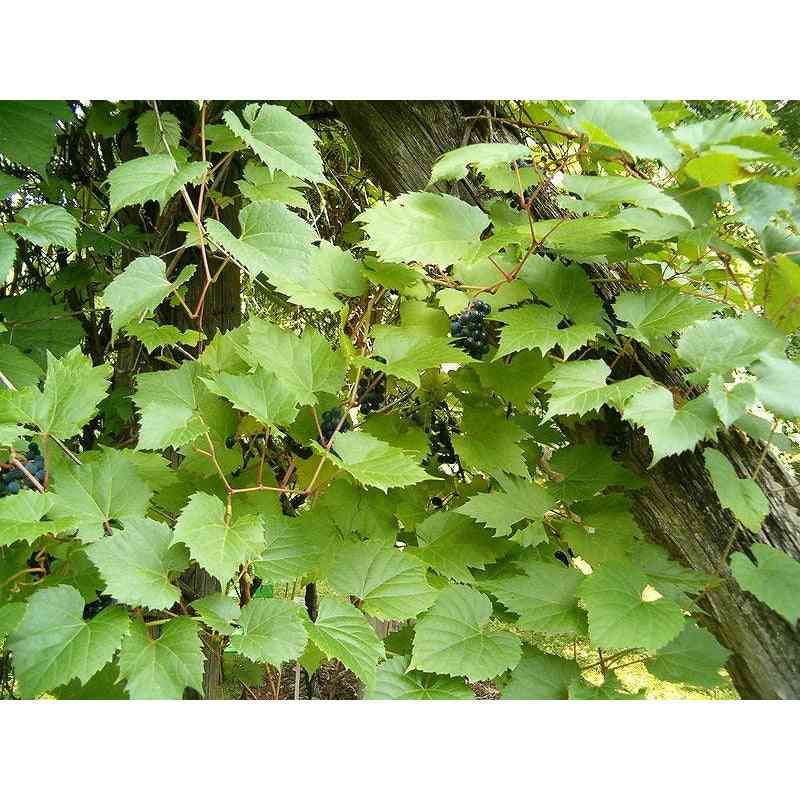
For gardeners who genuinely want dense, wall-to-wall green coverage on a fence, but without the invasive baggage that comes with English ivy, Riverbank Grape is worth serious consideration.
The large, lobed leaves overlap thickly along the fence line, creating a lush green backdrop through the whole growing season that rivals ivy’s coverage in sheer fullness.
Vitis riparia is a native Ohio species that grows naturally along riverbanks, forest edges, and disturbed areas across the state.
It climbs by tendrils rather than adhesive pads, which means it wraps around fence boards, wire, and posts without digging in and causing structural damage the way ivy rootlets do over time.
Growth is fast, sometimes 10 to 20 feet in a single season under good conditions, so plan for annual pruning to keep it within the fence boundaries. Without pruning, it will happily climb into nearby trees.
Small clusters of tart, dark blue grapes ripen in late summer and are a valuable food source for birds, foxes, and other Ohio wildlife. The foliage turns yellow in fall before dropping, revealing the vine’s woody framework.
Full sun produces the best fruit and densest leaf cover, though it tolerates partial shade.
Compared to ivy’s clinging, ground-smothering spread, Riverbank Grape stays on the fence where you put it, grows upward with guidance, and supports the local food web in ways ivy simply never will.
7. Trumpet Honeysuckle Climbs Lightly With Bright Hummingbird Flowers
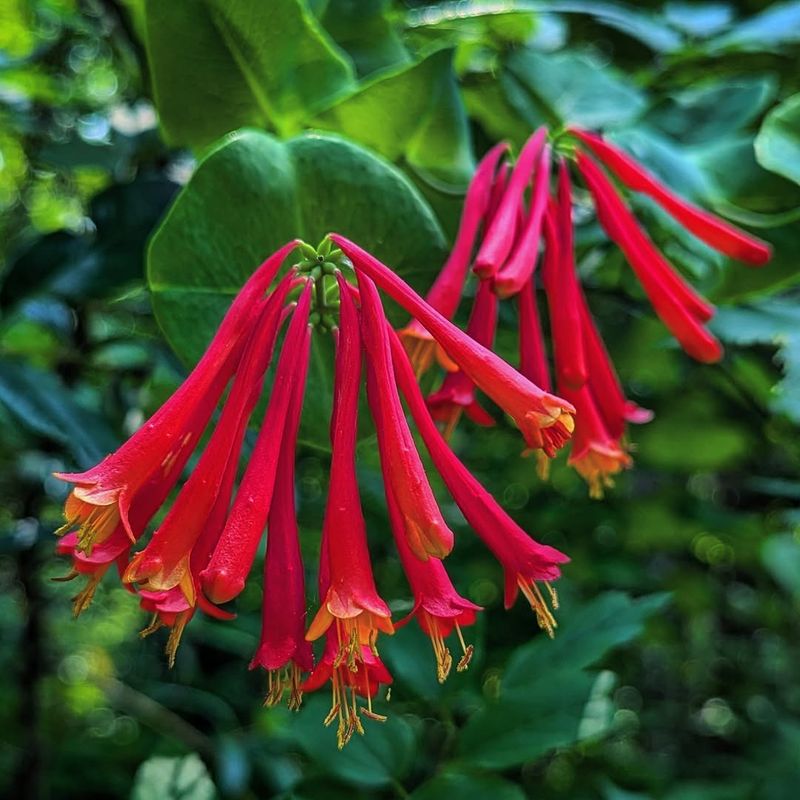
Honeysuckle has a complicated name in Ohio because of the invasive bush honeysuckles, Lonicera maackii and related species, that have taken over woodland understories across the state. Trumpet Honeysuckle, Lonicera sempervirens, is something entirely different.
It is a well-behaved native vine that climbs fences without spreading into natural areas, making it one of the most gardener-friendly options on this list.
The flowers are the main event, slender red and orange tubes that bloom from late spring through summer and attract ruby-throated hummingbirds with impressive reliability.
Unlike English ivy, which offers no nectar, no blooms, and no real wildlife value beyond occasional cover, Trumpet Honeysuckle functions as a living feeding station.
Bees and butterflies also visit, and small red berries follow the flowers and feed birds into fall.
Growth is lighter and more manageable than most vines on this list, typically reaching 10 to 20 feet with a relatively open, airy habit. It works well on chain-link fences, wooden rail fences, and wire trellises without becoming overwhelming.
Full sun to partial shade suits it well, and it tolerates Ohio’s variable spring weather without complaint. Prune lightly after the main flush of bloom to encourage reblooming and keep the shape tidy.
For a fence near a patio or seating area where you want color and wildlife activity without aggressive growth, Trumpet Honeysuckle is genuinely hard to beat.
8. Virginia Creeper Covers Fast With Strong Fall Color
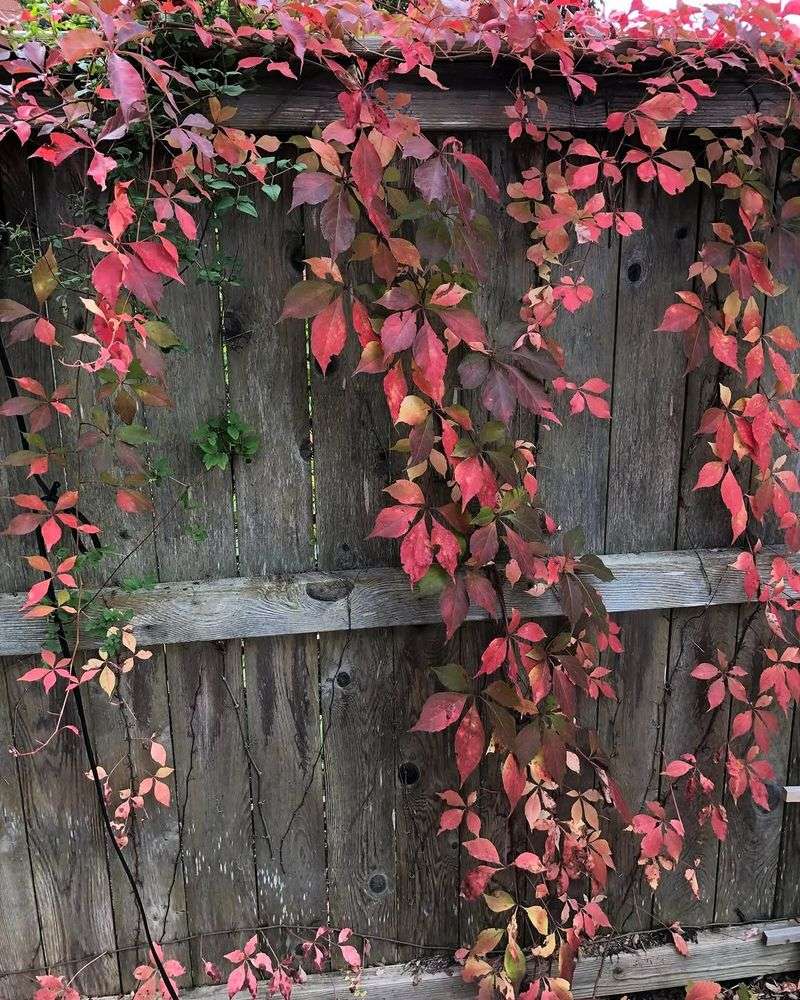
Few vines can match the seasonal drama that Virginia Creeper brings to a plain wooden fence.
While English ivy stays the same flat, uninspiring green all year long, Virginia Creeper spends spring and summer building lush, deep green coverage before exploding into fiery shades of red, burgundy, and orange every single fall.
That seasonal transformation alone makes it worth planting.
Scientifically known as Parthenocissus quinquefolia, this Ohio native can climb 30 to 50 feet using small adhesive pads that grip surfaces without digging into wood or mortar the way ivy roots can.
It grows quickly, which is great for covering a bare fence fast, but that speed means you will want to guide it away from gutters, windows, and nearby shrubs during the growing season.
A little annual pruning keeps it looking intentional rather than wild.
Birds genuinely love this vine. The small dark berries it produces in late summer feed over 30 species of birds, according to the USDA, making it a living wildlife station right on your fence line.
It grows in full sun to full shade and tolerates Ohio’s clay-heavy soils well. Unlike ivy, which smothers everything beneath it and spreads into woodlands, Virginia Creeper stays manageable with minimal effort.
Plant it at the base of a fence post and let it do the rest.