Best Cold-Tolerant Palms For Central Florida That Still Look Tropical
Central Florida may feel tropical most of the year, but winter can still deliver a few chilly surprises.
A sudden cold front can drop temperatures into the upper 20s or low 30s, and that is often enough to stress palms that are not suited to those swings.
Many homeowners want that lush, resort-style look without worrying every time the forecast dips. The good news is that some palms are better adapted to these conditions.
With the right choices, you can keep that bold, tropical feel while growing plants that handle Central Florida’s occasional cold spells more reliably.
1. Sabal Palm Brings Classic Florida Structure And Cold Tolerance
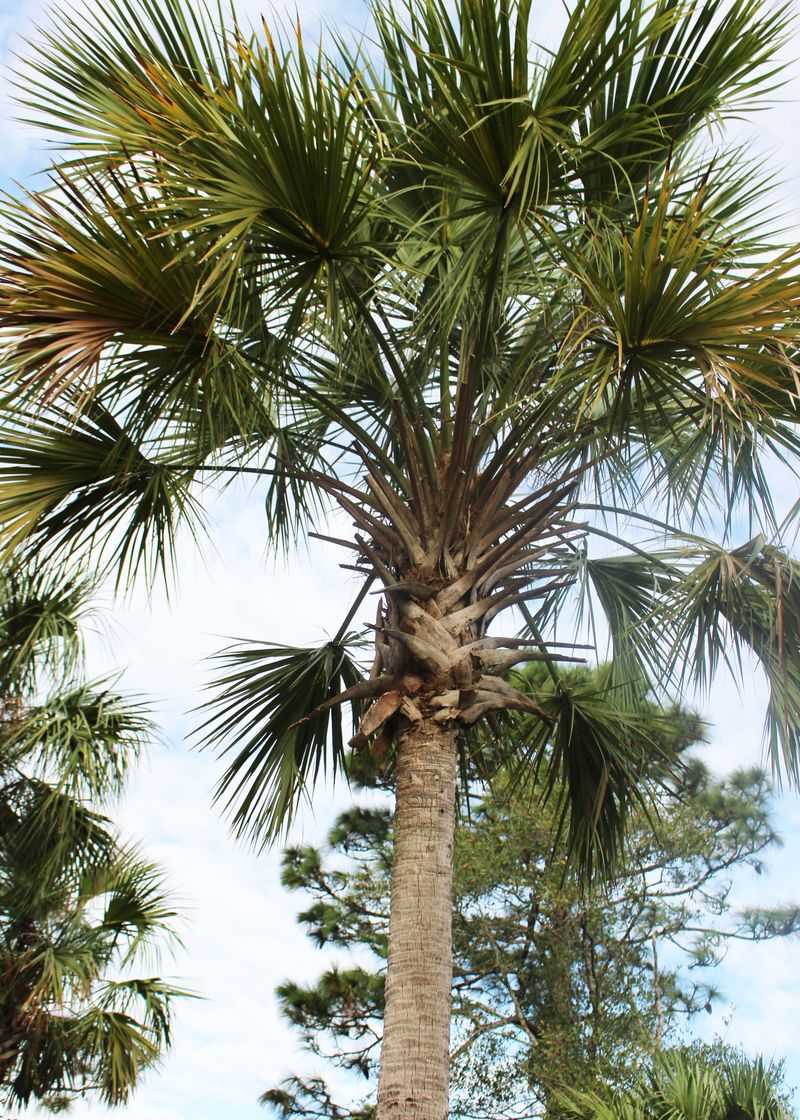
Walk through almost any neighborhood in Central Florida and you will likely spot the Sabal Palm towering above rooftops, its fan-shaped fronds rustling in the breeze.
As Florida’s official state tree, this palm carries deep roots in the region’s landscape history, and its reputation for toughness is well earned.
It can handle temperatures down to around 10 degrees Fahrenheit, making it one of the most reliable cold-tolerant palms available to homeowners here.
The Sabal Palm grows at a steady pace and can reach heights of 40 to 50 feet over time. Its trunk develops a rough, interlocking boot pattern when young and smooths out as the tree matures.
That combination of height and texture gives yards a strong vertical presence that reads as unmistakably tropical, even in the cooler months of December and January.
Planting in well-draining soil and giving it full sun will help it establish quickly in Central Florida conditions. Young trees benefit from regular watering during their first year, but once established, Sabal Palms handle drought surprisingly well.
They also tolerate salty air and sandy soil, which makes them useful across a wide range of Central Florida properties.
For homeowners who want low maintenance and high visual impact, this native palm is a dependable starting point.
2. Pindo Palm Adds Soft Blue-Green Fronds And Tropical Texture
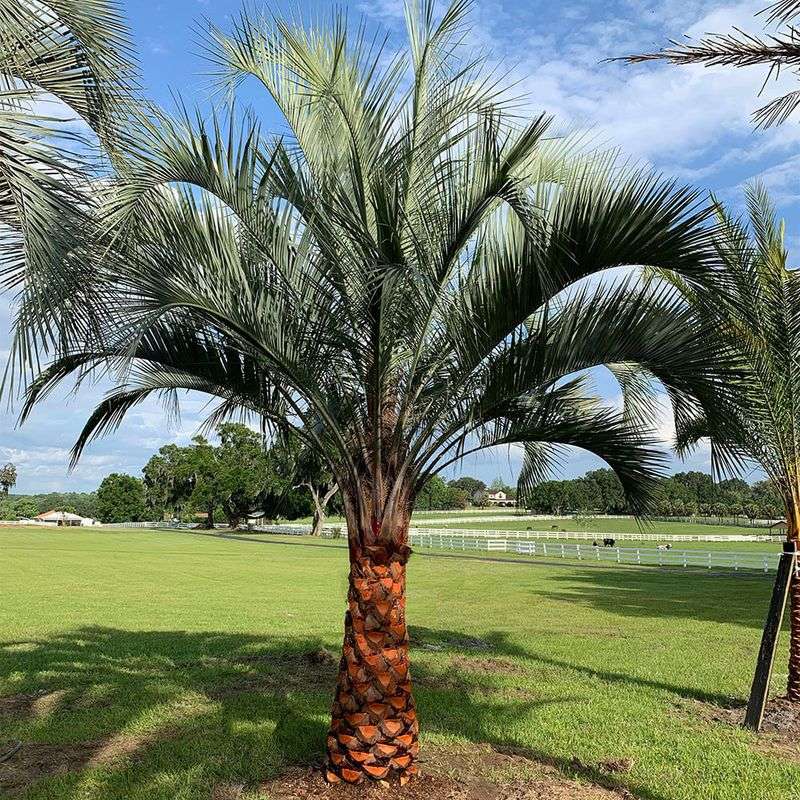
There is something almost otherworldly about the Pindo Palm’s coloring. The feathery, arching fronds carry a soft blue-green hue that stands out from the typical green palms found in most Central Florida yards.
Also called the Jelly Palm because of the edible fruit it produces, this species brings both ornamental beauty and a touch of novelty to home landscapes.
Cold tolerance is one of the Pindo Palm’s strongest qualities. It can handle temperatures down to around 10 to 15 degrees Fahrenheit, placing it firmly in the reliable range for Central Florida winters.
The fronds arch gracefully outward and downward, creating a full, feathery silhouette that looks genuinely tropical without requiring a frost-free winter to survive.
Pindo Palms grow slowly, typically reaching 15 to 20 feet in height over many years, which makes them a good fit for smaller yards or spots near structures where a towering palm would feel out of scale.
They prefer full sun and well-draining soil, and Central Florida’s sandy soils tend to suit them well.
Your Florida Garden Changes Every Week. Your Plan Should Too.
Gardening in Florida changes quickly throughout the season. Every Friday you’ll receive a simple weekly plan showing exactly what to plant, prune, fertilize, harvest, and protect so you never miss the right timing.
Avoid overwatering once established, as soggy roots can cause problems.
Clusters of small, yellowish-orange fruit appear in summer and can be used to make jelly, adding a fun, practical bonus to an already attractive landscape palm.
3. Windmill Palm Offers Compact Size And Strong Cold Hardiness
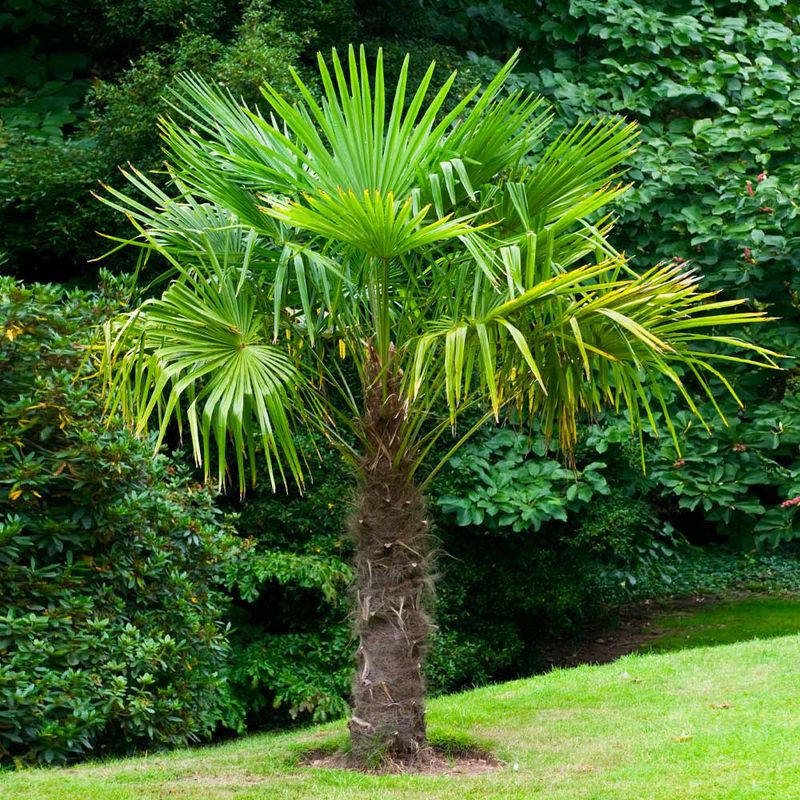
Few palms can match the Windmill Palm when it comes to sheer cold hardiness paired with a genuinely tropical appearance.
Native to the mountain slopes of China, this species has adapted to cold conditions in a way that most palms simply have not.
It can tolerate temperatures as low as 10 degrees Fahrenheit, and some mature specimens have reportedly survived even colder conditions with minimal damage.
The trunk is slender and covered in a distinctive dark, fibrous material that gives it a rugged, textured look.
Fan-shaped fronds fan out from the top in a tidy, upright crown that stays relatively compact compared to larger Florida palms.
That modest size, usually topping out around 20 to 30 feet, makes the Windmill Palm a smart choice for smaller Central Florida properties or spots near entryways and patios where a dramatic but manageable palm is needed.
In Central Florida, Windmill Palms perform well in full sun to partial shade, which gives homeowners more flexibility in placement than many other palm species.
They appreciate well-draining soil and occasional deep watering during dry spells.
Because they are slower growing, they require less frequent trimming than faster-growing palms.
Planting them in a spot with some wind protection during their first year or two can help young trees establish with less stress in the Central Florida climate.
4. European Fan Palm Creates Dense Clumps With Mediterranean Appeal
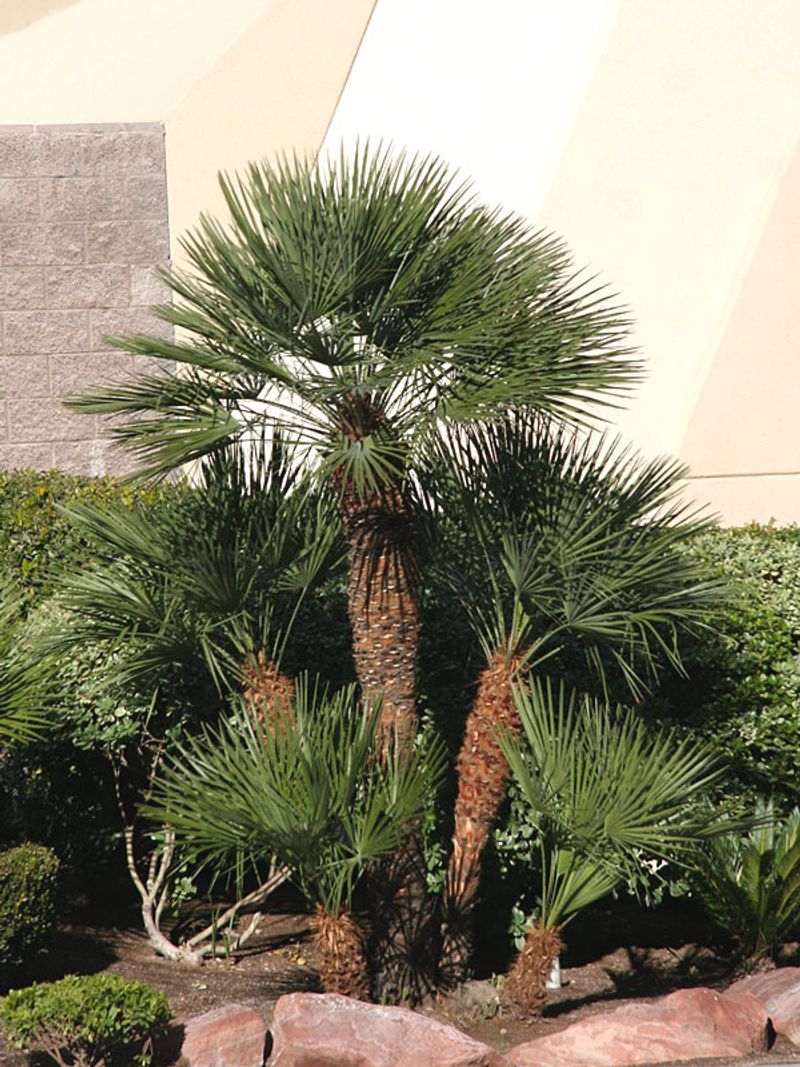
Clusters of stiff, silver-green fronds emerging from multiple low stems give the European Fan Palm a look that feels both exotic and structured.
Unlike palms that grow as a single tall trunk, this species typically forms clumping groups of stems that spread outward over time, creating a dense, shrubby mass that works beautifully as a focal point or a natural privacy screen in Central Florida yards.
Cold hardiness is a genuine strength here. The European Fan Palm can handle temperatures down to roughly 10 to 15 degrees Fahrenheit, which covers the range of most winter cold events Central Florida experiences.
Its slow growth rate, typically reaching 10 to 15 feet at maturity, keeps it manageable and less demanding than larger palm species.
The fan-shaped fronds have a slightly silvery tone that catches afternoon light in a way that looks especially striking against darker mulch or green groundcovers.
This palm thrives in full sun and handles Central Florida’s dry periods reasonably well once established, though it benefits from regular watering during its first growing season.
Sandy, well-draining soil suits it well, and it tends to resist most common palm diseases.
Homeowners who want a bold, layered look without the towering height of a Queen or Sabal Palm will find the European Fan Palm a rewarding and reliable choice.
5. Queen Palm Delivers Tall Feathered Fronds And Tropical Height
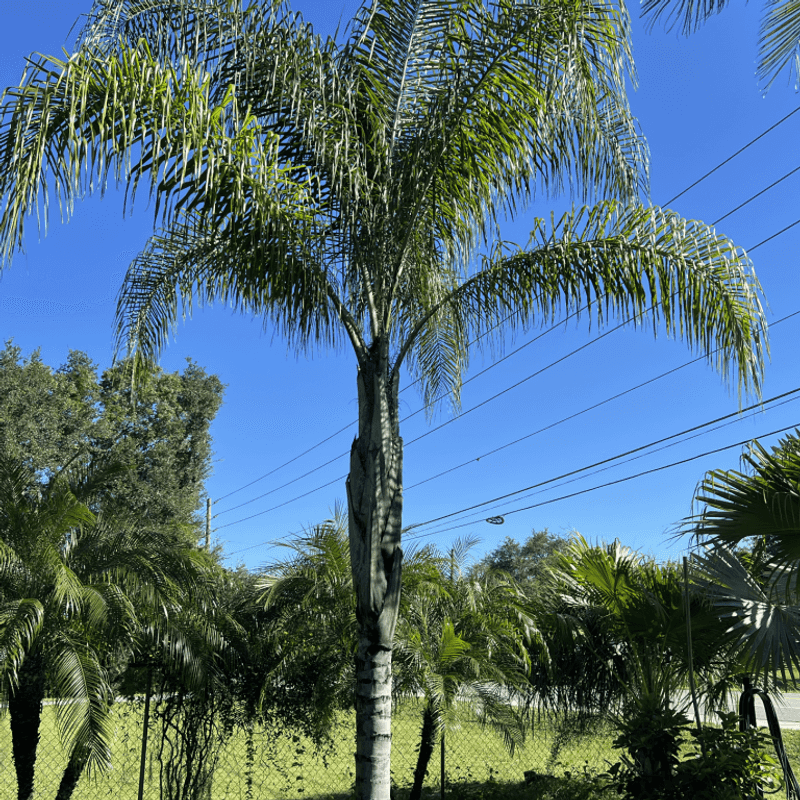
Rows of Queen Palms lining driveways and boulevards are one of the most recognizable sights in Central Florida neighborhoods.
Their long, feathery fronds and smooth, ringed gray trunks create an instantly tropical atmosphere that is hard to replicate with any other species.
When a homeowner wants that classic resort-style landscape, the Queen Palm is often the first tree that comes to mind.
In terms of cold tolerance, Queen Palms are somewhat more sensitive than other palms on this list, generally handling temperatures down to around 25 degrees Fahrenheit before showing damage.
That said, Central Florida’s winters typically stay above this threshold for most of the season, and established trees tend to recover from brief cold events better than younger ones.
Planting in a sheltered spot or near a south-facing wall can help protect them during rare hard freezes.
Queen Palms grow relatively quickly and can reach 40 to 50 feet tall, making them a strong vertical statement in larger yards.
They prefer full sun and well-draining soil, and they respond well to regular fertilization with a palm-specific fertilizer that includes manganese and potassium.
Without proper nutrients, Central Florida’s sandy soils can leave Queen Palms looking pale and stressed. With consistent care, though, they reward homeowners with lush, graceful canopies that sway beautifully in the Florida breeze.
6. Chinese Fan Palm Shows Large Weeping Fronds And Soft Texture
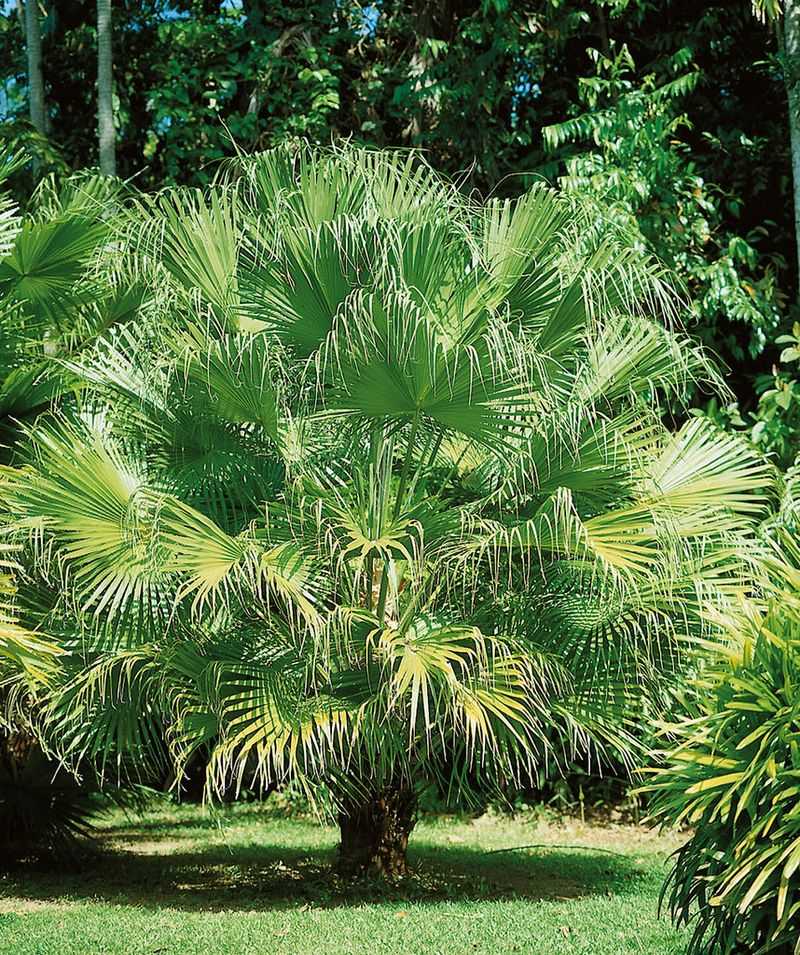
Broad, circular fronds that droop softly at their tips give the Chinese Fan Palm a relaxed, almost sculptural quality that sets it apart from stiffer-looking palms.
Each frond can span several feet across, and the way they hang and sway in a light breeze creates a layered, lush texture that reads as deeply tropical even in the middle of a Central Florida winter.
This palm handles cold reasonably well, tolerating temperatures down to around 15 to 22 degrees Fahrenheit.
While it is not quite as cold-hardy as the Windmill or Sabal Palm, it performs reliably through most Central Florida winters, especially when planted in a microclimate that offers some protection from north winds.
Mature trees tend to handle brief cold snaps better than newly planted specimens.
Chinese Fan Palms grow at a moderate pace and can reach 30 to 40 feet tall at full maturity.
They adapt well to partial shade, which makes them useful in spots under larger trees or along the eastern side of a house where afternoon sun is limited.
Central Florida’s humid summers suit them well, and they are fairly drought-tolerant once established. Providing consistent moisture during the first year after planting will help the root system develop strongly.
Their large, dramatic fronds make them a standout in any tropical-themed landscape design.
7. Needle Palm Thrives In Shade With Exceptional Cold Hardiness
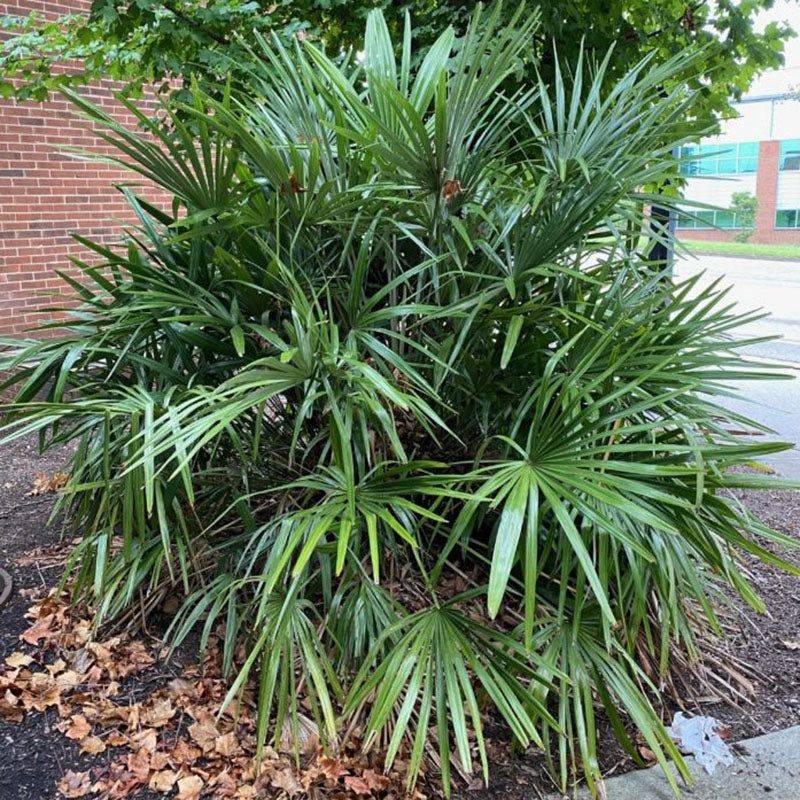
Gardeners who have struggled to find a palm that handles both deep shade and hard freezes often discover the Needle Palm and feel like they have found a hidden gem.
This native southeastern United States species is widely considered one of the most cold-hardy palms in existence, with documented survival at temperatures well below 0 degrees Fahrenheit under the right conditions.
For Central Florida homeowners, that level of hardiness provides real peace of mind during cold snaps.
The Needle Palm grows as a low, clumping shrub rather than a tall tree, typically staying under 6 to 10 feet in height.
Its dark green, stiff fronds fan outward from a central cluster, and the base is lined with sharp, needle-like black spines that give the plant its name.
Those spines also make it a natural deterrent for unwanted foot traffic in garden borders or along fences.
Unlike many palms that demand full sun, the Needle Palm actually prefers partial to full shade, opening up planting opportunities under tree canopies or on the north side of buildings where other palms would struggle.
It tolerates Central Florida’s moist, low-lying areas better than most species, making it useful in spots with periodic standing water.
Growth is slow, but the payoff is a tough, long-lived, genuinely tropical-looking plant that requires very little intervention once it settles in.
8. Saw Palmetto Provides Native Strength With A Wild Tropical Look
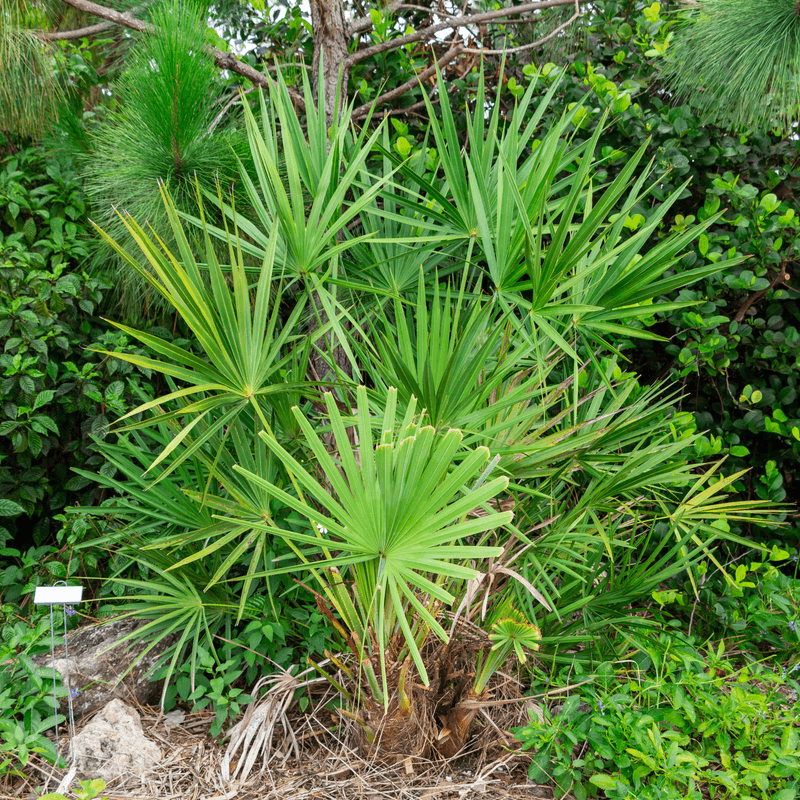
Driving through the natural areas of Central Florida, you will notice Saw Palmetto growing almost everywhere, from the edges of pine flatwoods to open scrub habitats. That widespread native presence is not a coincidence.
Saw Palmetto is extraordinarily well-adapted to Central Florida’s climate, soils, and weather patterns, including the cold snaps that occasionally push temperatures into the upper 20s.
Cold hardiness for Saw Palmetto extends to at least 15 to 20 degrees Fahrenheit, and many established plants handle brief dips below that with minimal visible damage.
The fan-shaped fronds range from silvery-green to blue-green depending on the individual plant, and they spread outward in a low, sprawling pattern that gives landscapes a wild, naturalistic texture.
That untamed quality is part of its charm and works especially well in casual or cottage-style landscape designs.
Saw Palmetto typically grows as a low shrub, though some older specimens develop a creeping or slightly elevated trunk over many decades.
It thrives in full sun to partial shade and handles dry, sandy Central Florida soils better than nearly any other palm on this list.
Once established, it needs almost no supplemental watering and very little maintenance.
The serrated stems that give it its name require caution during planting and pruning, but otherwise this tough, native palm rewards homeowners with year-round tropical texture at minimal cost and effort.