The 10 Flowers Oregon Bees Visit First Each Spring
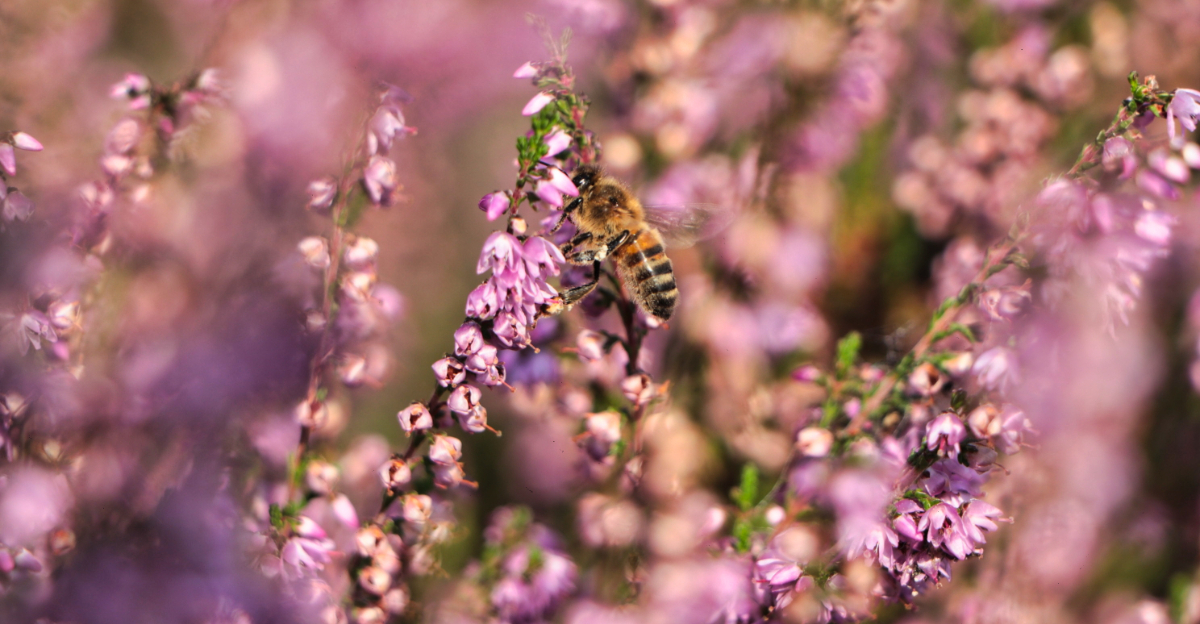
The moment Oregon starts to shake off winter, bees are already on the move. Even on cool, gray mornings, you’ll spot them searching for the first flowers that offer a reliable source of nectar and pollen.
At that point in the season, food is limited, so the earliest blooms matter more than most gardeners realize.
Some flowers consistently open right on time, giving bees exactly what they need when options are still scarce.
These early bloomers are often simple, hardy plants that handle Oregon’s damp soil and unpredictable spring weather without much trouble. They don’t just survive, they show up when it counts.
Plant a few of the right varieties and your garden becomes one of the first stops for hungry pollinators each year. It’s an easy way to support local bees while bringing your garden to life right at the start of the season.
1. Willow
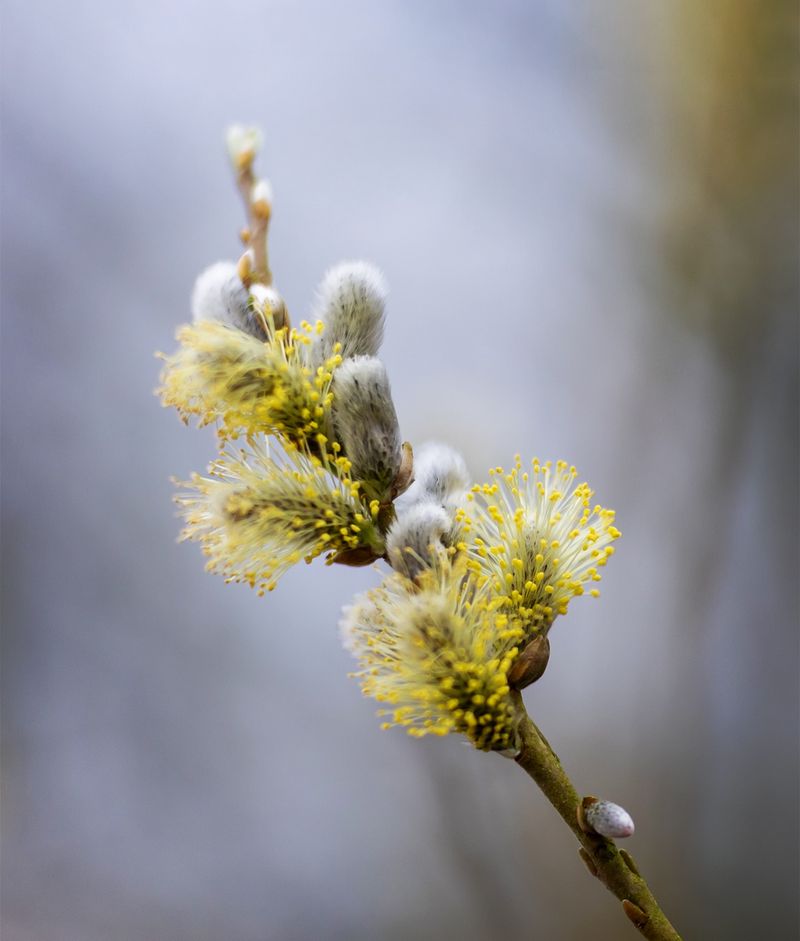
Before most trees even think about budding, willows in Oregon are already putting on a show. Those soft, fuzzy catkins that appear on bare branches in late winter are not just pretty to look at.
They are packed with pollen and nectar, making willows one of the very first food stops for hungry bees waking up in early spring.
Bumblebees and native solitary bees absolutely love willow catkins. The pollen is protein-rich, which helps young bee colonies grow strong right from the start.
In Oregon’s wet lowlands, river edges, and backyards, willows bloom when almost nothing else does, filling a critical gap in the early-season food supply.
If you want to support local pollinators, planting a willow near a water source is one of the smartest moves you can make. Even small shrub willows work well in home gardens.
They grow fast, tolerate wet soil, and need very little care. Oregon gardeners near the coast or in the valley can find native willow species at local native plant nurseries.
A willow in your yard is basically a free buffet for bees every single February and March.
2. Crocus
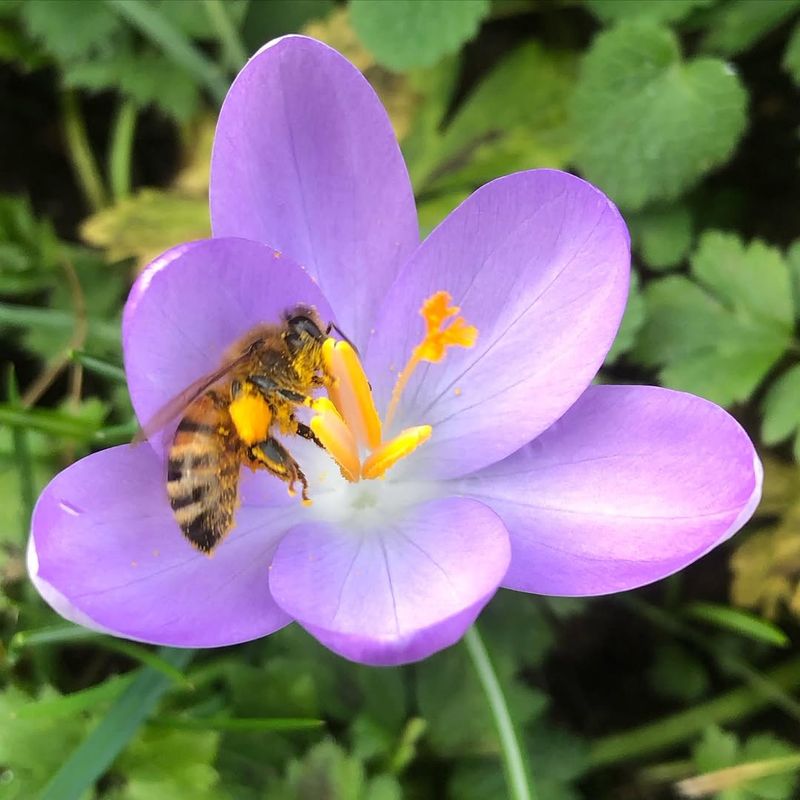
Few sights are more cheerful than a patch of crocus flowers poking through cold soil in late February. These small but mighty flowers are among the earliest bloomers in Oregon gardens, and bees notice them almost immediately.
The bright purple, yellow, and white cups open wide on sunny days, inviting bees in for a warm, pollen-filled snack.
Honey bees are especially fond of crocus. On a mild late-winter afternoon in Oregon, you can watch them crawl deep inside the flowers, coating themselves in bright orange pollen.
That pollen goes straight back to the hive and feeds developing larvae, helping the whole colony recover from the cold months.
Planting crocus bulbs in fall is easy and rewarding. You can tuck them into garden beds, under trees, or even in containers on a porch.
They come back year after year with almost no effort. In Oregon’s Willamette Valley and other mild regions, crocus often blooms as early as January during warm spells.
Your Oregon Garden Changes Every Week. Your Plan Should Too.
Gardening in Oregon changes quickly throughout the season. Every Friday you’ll receive a simple weekly plan showing exactly what to plant, prune, fertilize, harvest, and protect so you never miss the right timing.
Mixing different crocus varieties extends the bloom time, giving bees a longer feeding window. A handful of bulbs planted in fall can make a real difference for early-season pollinators in your neighborhood.
3. Snowdrops
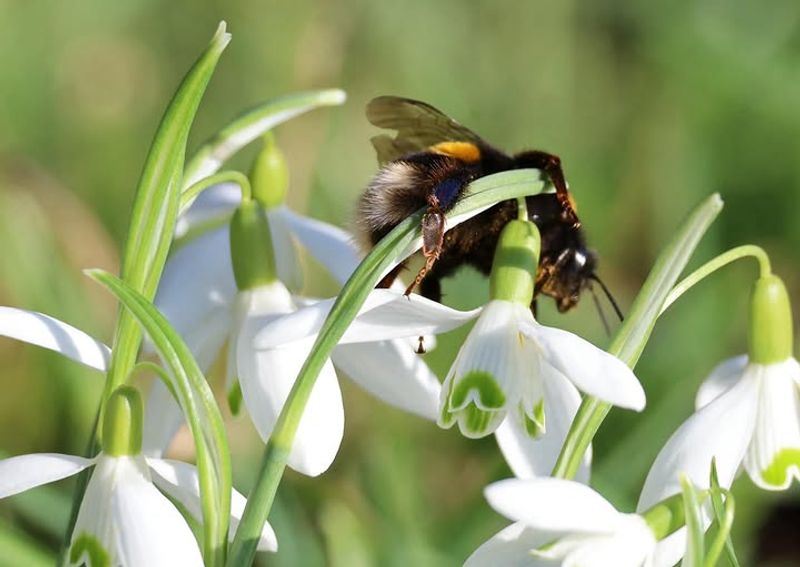
Snowdrops have a quiet kind of courage. They push up through frozen ground and bloom even when snow is still on the way, earning their name in the most literal sense.
In Oregon, these tiny white bell-shaped flowers often appear in January or February, making them one of the earliest sources of nectar available to any bee brave enough to venture out on a warm winter day.
Queen bumblebees are among the first to find snowdrops. These large, newly-emerged queens need energy fast after spending months underground.
A patch of snowdrops in an Oregon garden can be the difference between a queen finding enough fuel to start a new colony or not. That makes snowdrops surprisingly important, despite their small size.
Growing snowdrops is simple. Plant the small bulbs in fall in a shady or semi-shaded spot with well-drained soil.
They spread slowly over time, forming lovely drifts under trees or along garden paths. Once established, they come back reliably every year with zero fuss.
Oregon gardeners in cooler, shadier parts of the state tend to have great success with them. Pairing snowdrops with crocus creates an early-spring display that both humans and bees will truly appreciate.
4. Hellebores
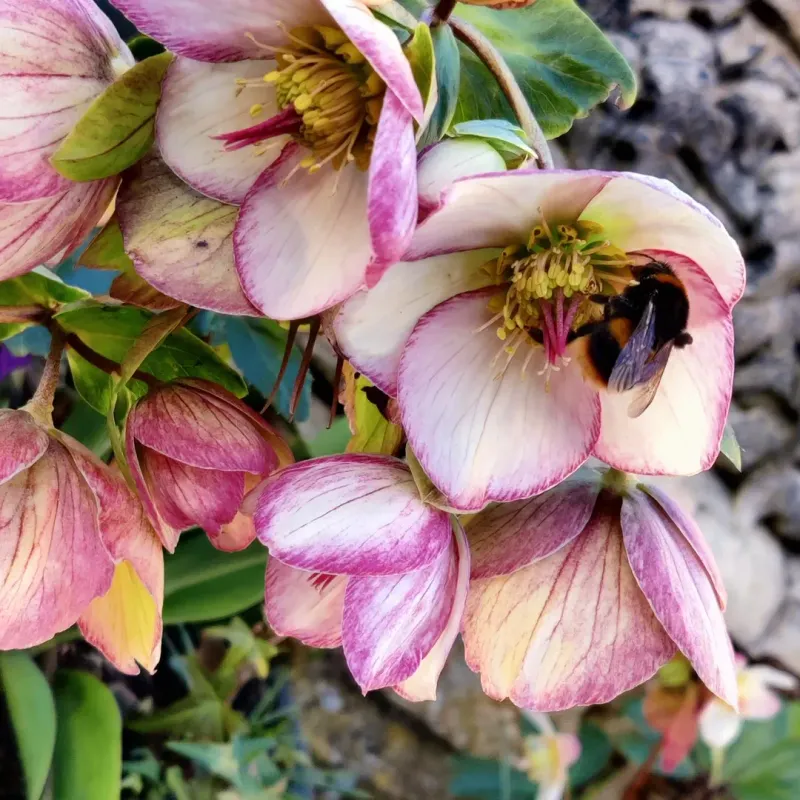
Walk through any Oregon garden in February and you might spot a flower hanging its head like it is too modest to show off. That is the hellebore, also called the Lenten rose, and its downward-facing blooms hide some of the richest nectar available to early spring bees.
Bumblebees quickly learn to hover beneath the flowers and reach up inside, a clever trick that pays off with a big nectar reward.
Hellebores bloom for weeks, sometimes even months, in Oregon’s mild winters. They are tough plants that handle frost, rain, and shade without complaint.
Because they flower so early and so long, they give bees a steady food source during a time when very few other plants are open for business.
Oregon gardeners love hellebores for their beauty and toughness. They thrive under deciduous trees where summer shade is heavy but winter light filters through.
Colors range from creamy white to deep purple and almost black. Once planted, hellebores need very little attention and can live for decades.
Choosing single-flowered varieties rather than double-flowered ones is key for bees, since double flowers often block access to the nectar inside. A few hellebores planted near a fence or woodland edge will reward both your garden and your local bee population year after year.
5. Lungwort
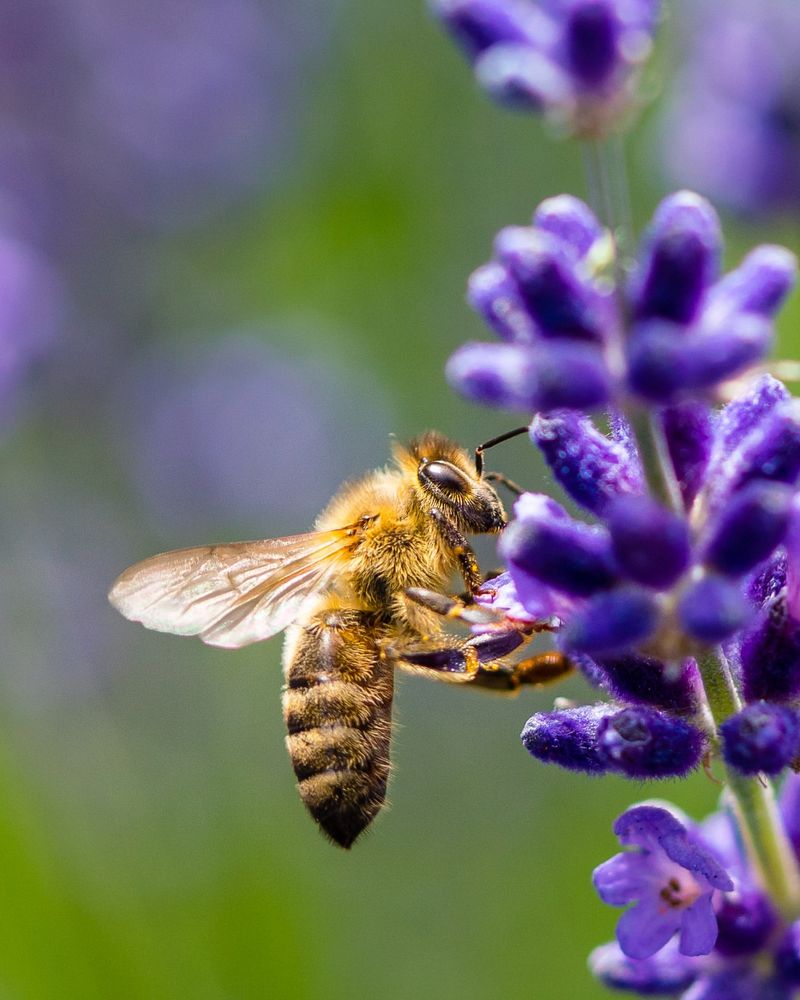
Not every spring flower gets the attention it deserves, and lungwort is a perfect example. The name is not exactly glamorous, but this low-growing shade plant produces clusters of small tubular flowers in shades of pink, blue, and purple that bees find absolutely irresistible.
What makes lungwort especially useful is that the flowers change color as they age, so a single plant often displays two shades at once.
In Oregon, lungwort typically blooms from late February through April, bridging the gap between the very earliest bloomers and the bigger spring flowers.
Native bees and honey bees both visit regularly, drawn in by the easy-to-access nectar inside the small but plentiful flowers.
The spotted, silvery leaves also make it a standout plant in shady garden spots.
Lungwort grows best in partial to full shade with moist, rich soil. It is a great choice for planting under trees or along the north side of a house.
Oregon’s rainy springs suit it perfectly. Once established, it spreads gently and fills in bare ground with attractive foliage that lasts all season long.
Gardeners who want a low-maintenance plant that gives back to pollinators should absolutely add lungwort to their spring lineup. It punches way above its weight when it comes to supporting early bees.
6. Camas
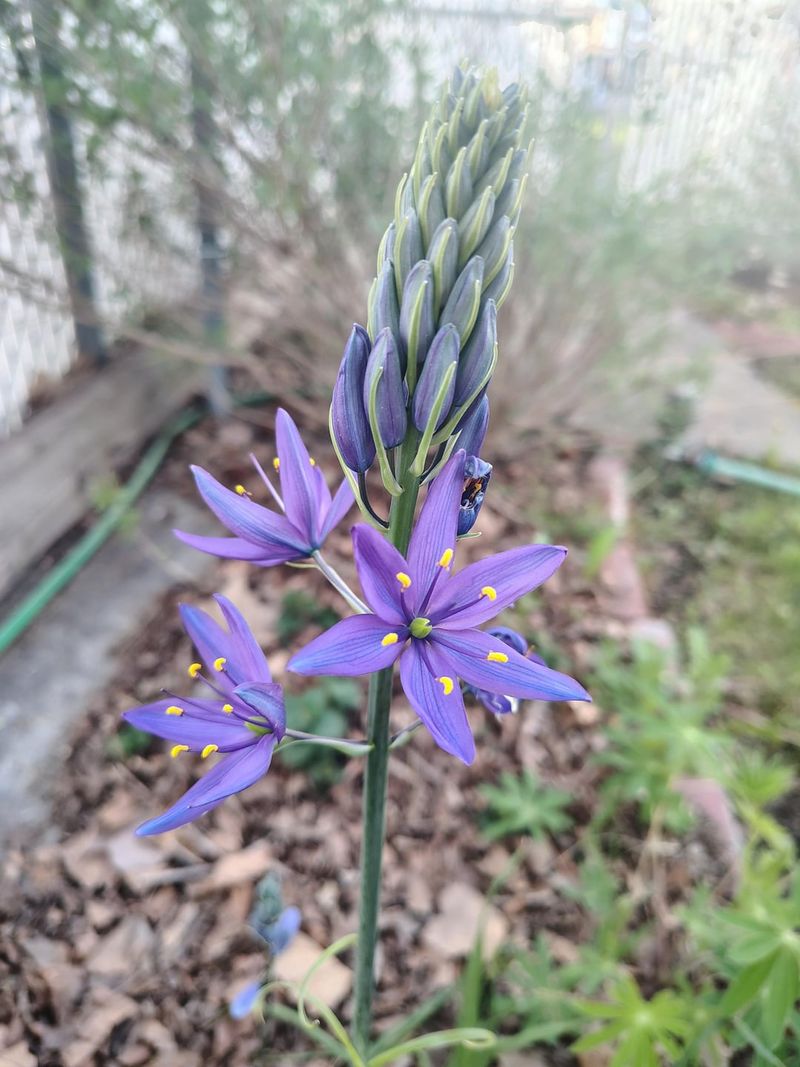
Few wildflowers are as deeply tied to Oregon’s history as camas. For thousands of years, Indigenous peoples across the Pacific Northwest harvested camas bulbs as a vital food source.
Today, the brilliant blue-purple flower spikes that rise from Oregon meadows in spring are just as important to bees as they once were to human communities. Native bumblebees and solitary bees flock to camas blooms with serious enthusiasm.
Camas typically blooms from April into early June in Oregon, depending on elevation and location. In places like the Willamette Valley, large natural camas prairies once covered thousands of acres.
Restoring even small patches of camas in home gardens helps bring back the native bee diversity that depends on these flowers. The star-shaped blooms offer both pollen and nectar in generous amounts.
Growing camas in an Oregon garden is straightforward. Plant the bulbs in fall in a sunny to partly shaded spot with moist soil.
They do especially well in areas that stay wet in winter and spring but dry out in summer, mimicking their natural prairie habitat. Camas naturalizes beautifully, spreading over time into lovely drifts.
Mixing camas with other native wildflowers creates a pollinator habitat that supports dozens of bee species. It is one of the most rewarding native plants any Oregon gardener can grow.
7. Bleeding Heart
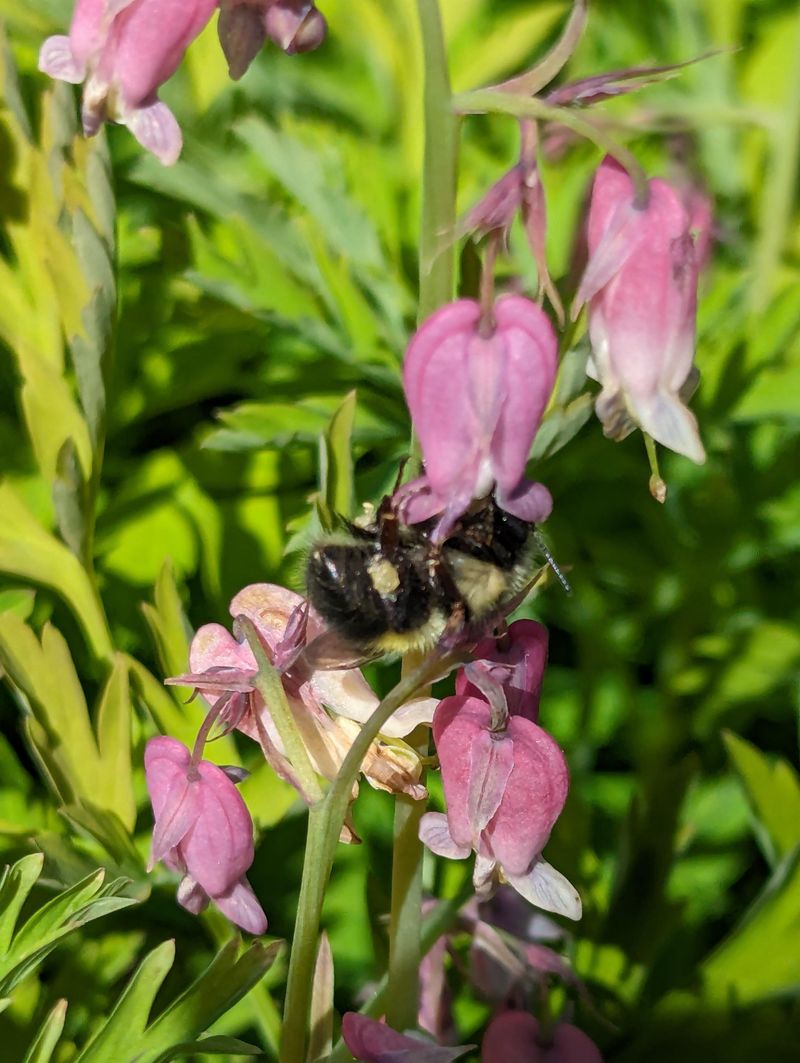
There is something almost poetic about a flower shaped like a tiny dangling heart. Pacific bleeding heart is native to Oregon’s forests and woodland edges, and it blooms in spring with strings of rosy pink heart-shaped flowers that sway gently in the breeze.
Bumblebees are the main visitors, and they have actually evolved a special technique called buzz pollination to shake the pollen loose from these flowers.
Finding bleeding heart growing wild along shaded Oregon trails is a genuine treat. The ferny, blue-green foliage is beautiful on its own, but when the flowers appear in April and May, the whole plant transforms into something truly eye-catching.
Bumblebees will visit the same patch repeatedly throughout the day, making it one of the most reliably bee-busy plants in any spring garden.
In home gardens, Pacific bleeding heart thrives in partial to full shade with moist, well-drained soil. It is a perfect plant for woodland-style gardens, shady borders, or areas under large trees.
Oregon’s naturally rainy spring season gives it exactly what it needs to flourish. The plant spreads by underground runners, slowly filling in shaded areas with lush foliage.
Unlike the garden bleeding heart from Asia, the Pacific native variety is perfectly adapted to Oregon’s climate and is an excellent choice for any pollinator-friendly planting project.
8. Columbine
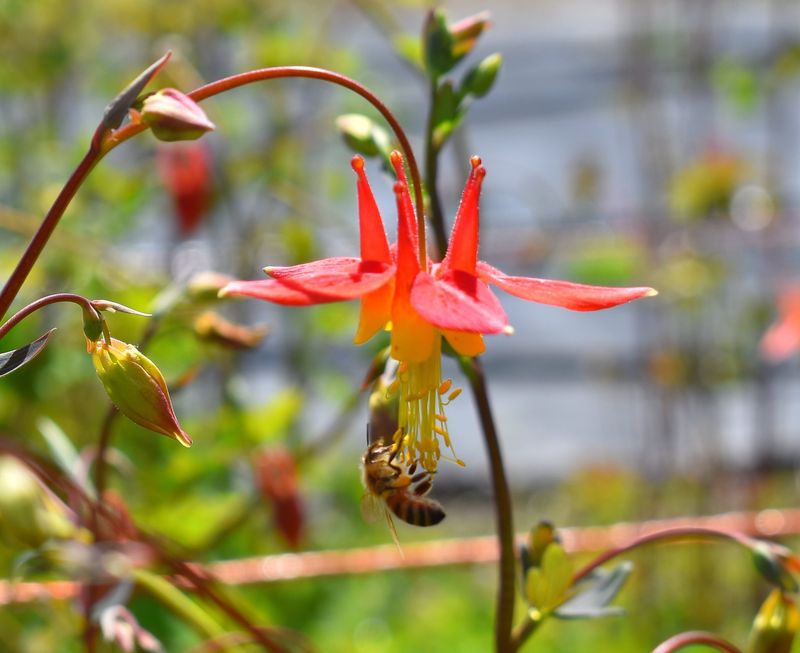
Columbine has one of the most distinctive flower shapes in the entire plant world. Those long, backward-pointing spurs hold nectar deep inside, and not every bee can reach it.
Bumblebees with long tongues are the champions here, though shorter-tongued bees sometimes chew a hole at the base of the spur to steal nectar without doing any pollinating. It is a fascinating little drama that plays out in Oregon gardens every spring.
Oregon’s native columbine, Aquilegia formosa, blooms in red and yellow and is perfectly matched to the native bees and hummingbirds that share its habitat. It typically flowers from April through June, appearing in meadows, forest clearings, and along stream banks across the state.
The nodding blooms add color and movement to any garden, and they attract a wide variety of pollinators beyond just bees.
Columbine is easy to grow from seed and thrives in a range of conditions, from full sun to partial shade. It prefers well-drained soil and does not need much fertilizer.
In Oregon gardens, it self-seeds readily, popping up in unexpected spots and creating a naturalistic, cottage-garden feel. Letting columbine spread freely rewards you with more flowers each year and more food for local bees.
It is a cheerful, low-effort plant that earns its place in any pollinator garden.
9. Oregon Grape
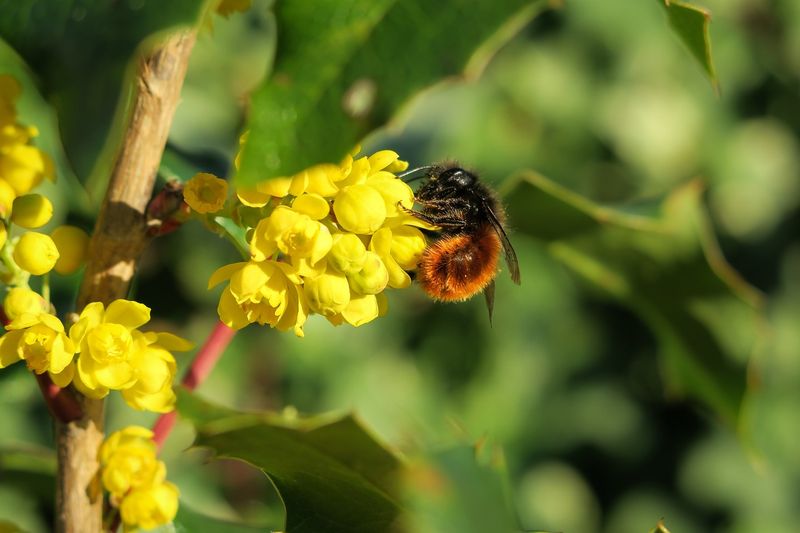
As Oregon’s official state flower, Oregon grape carries a lot of pride. This tough evergreen shrub bursts into clusters of bright yellow flowers in early spring, often as early as February in warmer parts of the state.
The flowers are small but numerous, and they offer a generous supply of nectar and pollen right when bees need it most. Bumblebees and native solitary bees are regular visitors.
Oregon grape grows naturally throughout the state, from coastal forests to dry inland slopes. Its holly-like leaves stay green all year, making it a handsome plant in every season.
After the flowers fade, dark blue berries develop, which birds love. But for bees, it is all about those early yellow blooms that arrive before most other shrubs even think about waking up.
Planting Oregon grape in a home garden is a great way to give back to local wildlife. It grows in sun or shade, tolerates dry soil once established, and needs almost no maintenance.
Shorter varieties like Mahonia nervosa work well in smaller spaces, while taller species like Mahonia aquifolium can become impressive specimen plants.
Oregon gardeners looking for a native, wildlife-friendly shrub that performs reliably every single year will find Oregon grape to be one of the best choices available anywhere in the Pacific Northwest.
10. Heather
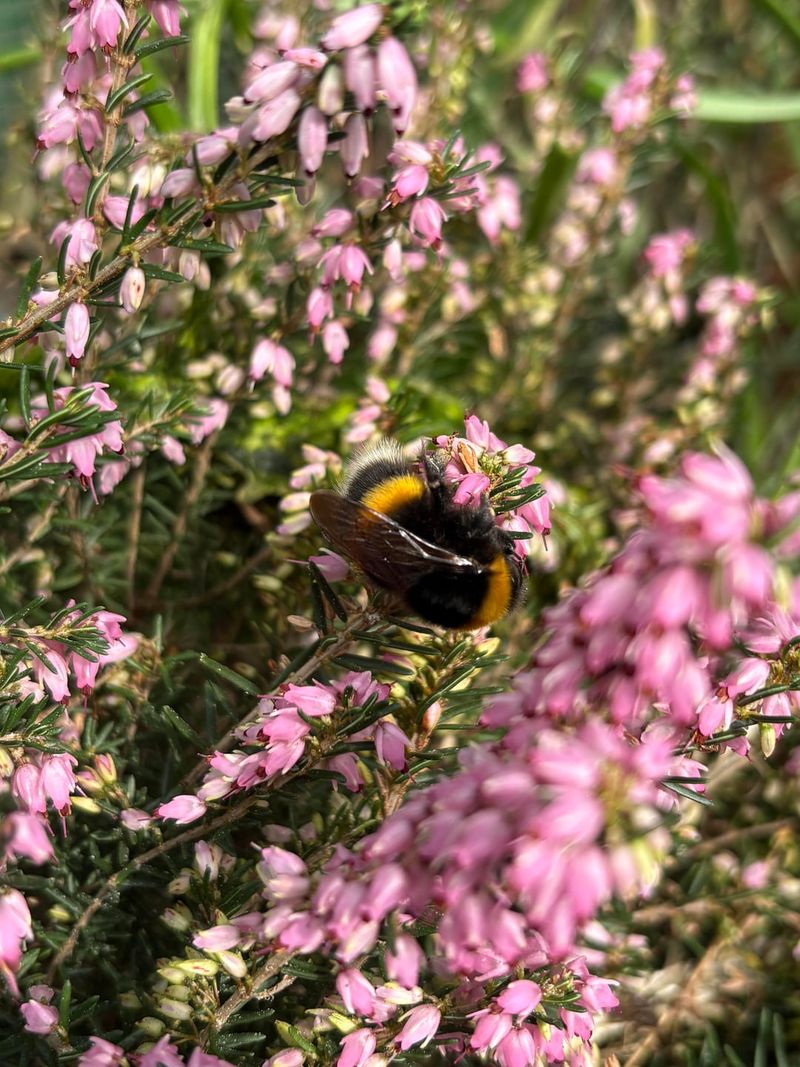
Heather is the kind of plant that blooms when you least expect it. In Oregon, winter-blooming heather varieties can flower as early as December, and spring varieties carry the show all the way through April and May.
That incredibly long bloom season makes heather one of the most valuable plants for early-season bees in the entire Pacific Northwest. Honey bees and bumblebees both adore it.
The tiny bell-shaped flowers of heather are packed with nectar. Bees work the small blooms methodically, moving from stem to stem in a slow, methodical buzz.
In parts of Scotland and Ireland, heather honey is considered a delicacy, prized for its rich flavor. Oregon gardeners who keep bees often plant heather specifically to boost early honey production.
Heather thrives in well-drained, slightly acidic soil and full sun. It is drought-tolerant once established and stays attractive year-round with its evergreen foliage.
In Oregon, the mild coastal climate and the well-drained soils of the Willamette Valley foothills are ideal for heather.
Choosing a mix of early, mid, and late-season heather varieties creates a continuous bloom that supports bees from winter all the way into summer.
A heather border or rock garden planting is one of the most productive pollinator investments an Oregon gardener can make.