7 Native Pennsylvania Plants To Grow Instead Of Oleander
Oleander may look like an easy way to add color and structure to a yard, but for Pennsylvania gardens, it is not always the smartest choice.
It is better suited to much warmer climates, and while it can look great in the right setting, it often feels out of place where winters are colder and growing conditions are less forgiving.
On top of that, many gardeners would rather fill their space with plants that actually belong there and bring more value to the local environment.
That is where native Pennsylvania plants come in. They are already adapted to local weather, soil, and seasonal changes, which usually means less work and fewer headaches.
Many of them also support pollinators, birds, and other wildlife in a way non-native ornamentals simply cannot match. Better still, native options can be every bit as beautiful, with bold blooms, rich texture, and strong garden presence.
If you want a landscape that looks good and makes more sense for your region, there are plenty of Pennsylvania natives worth planting instead of oleander.
1. Mountain Laurel (Kalmia Latifolia)
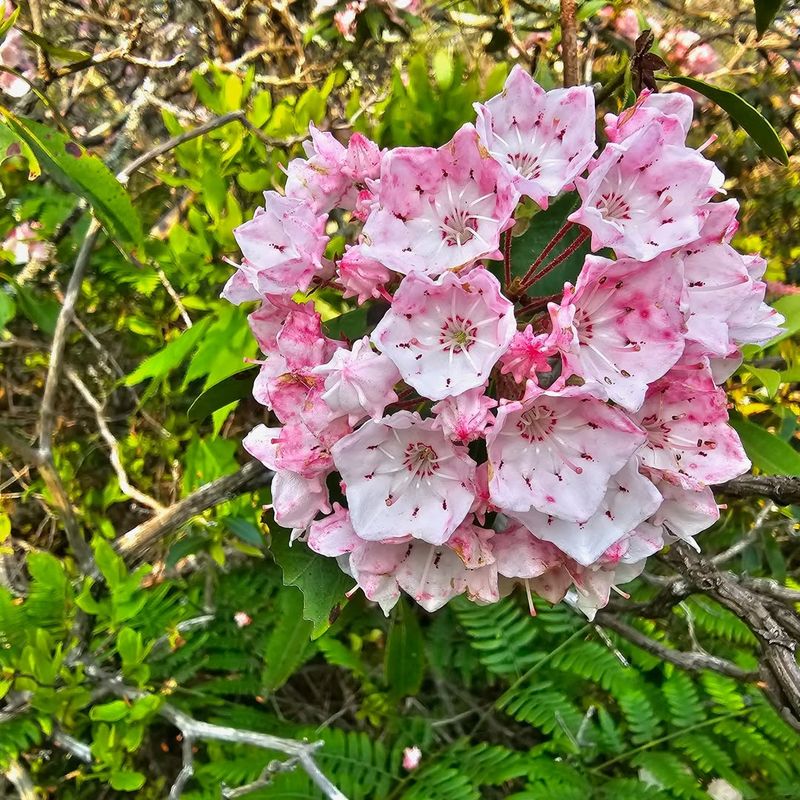
Pennsylvania is proud to call Mountain Laurel its official state flower, and honestly, it is easy to see why. Few plants put on a show quite like this one.
From late spring into early summer, it bursts into clusters of delicate pink and white blooms that look almost too perfect to be real.
Mountain Laurel is an evergreen shrub, which means it keeps its glossy, dark green leaves all year long. Even in the middle of a cold Pennsylvania winter, this plant adds color and life to your yard. That is a huge bonus when most other shrubs look bare and dull.
One of the best things about growing Mountain Laurel in Pennsylvania is how well it fits into the local environment.
It naturally grows in the rocky, acidic soils found across much of the state, especially in wooded areas. You will not need to do much to get it comfortable.
It thrives in partial shade, making it a great pick for spots under tall trees where other plants struggle. It grows slowly but steadily, eventually reaching six to eight feet tall.
Deer tend to leave it alone, which is a welcome relief for Pennsylvania gardeners dealing with browsing pressure.
Pollinators absolutely love the blooms. Bees and other insects flock to the flowers each spring.
Planting Mountain Laurel means you are feeding your local ecosystem while enjoying one of the most beautiful native shrubs the state has to offer.
2. Sweet Pepperbush (Clethra Alnifolia)
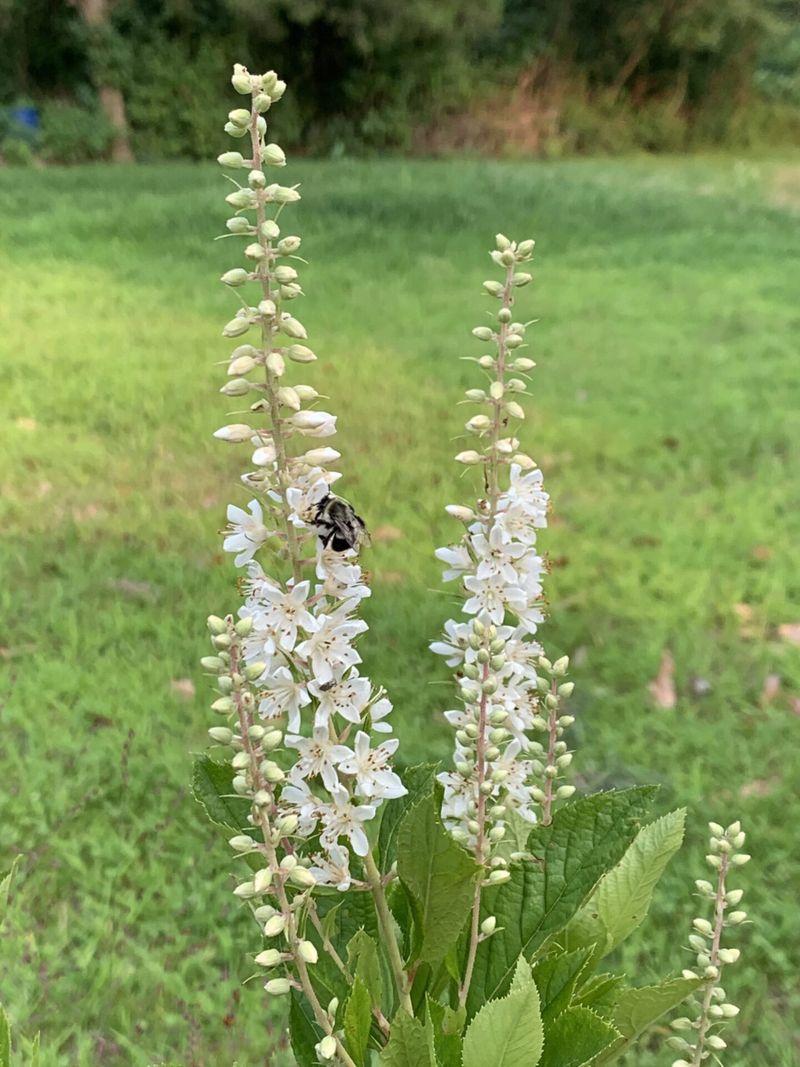
If you have ever walked past a garden in late summer and caught a sweet, spicy scent drifting through the air, there is a good chance Sweet Pepperbush was nearby.
This native Pennsylvania shrub produces tall spikes of tiny white flowers that smell absolutely wonderful. Bees, butterflies, and hummingbirds cannot get enough of them.
Sweet Pepperbush is a fantastic choice for spots in your yard that stay a little wet. It naturally grows along stream banks and in moist woodland areas throughout Pennsylvania. Low spots, rain gardens, and areas near ponds are perfect homes for this shrub.
Your Pennsylvania Garden Changes Every Week. Your Plan Should Too.
Gardening in Pennsylvania changes quickly throughout the season. Every Friday you’ll receive a simple weekly plan showing exactly what to plant, prune, fertilize, harvest, and protect so you never miss the right timing.
It handles partial shade like a champ, making it useful in corners of the yard where sunlight is limited. Most shrubs sulk in those conditions, but Sweet Pepperbush thrives.
It grows to about three to eight feet tall depending on conditions, making it a flexible choice for hedges or borders.
Come fall, the leaves turn a warm golden yellow before dropping. So you get a nice seasonal show even after the flowers fade. The dried seed capsules also add a little texture to the winter garden.
Gardeners in Pennsylvania will appreciate how low-maintenance this shrub is once established. It spreads slowly by suckers, gradually forming a tidy clump over time.
You can leave it mostly alone and it will reward you every single summer with those gorgeous, fragrant blooms that make the whole yard smell like a dream.
3. New Jersey Tea (Ceanothus Americanus)
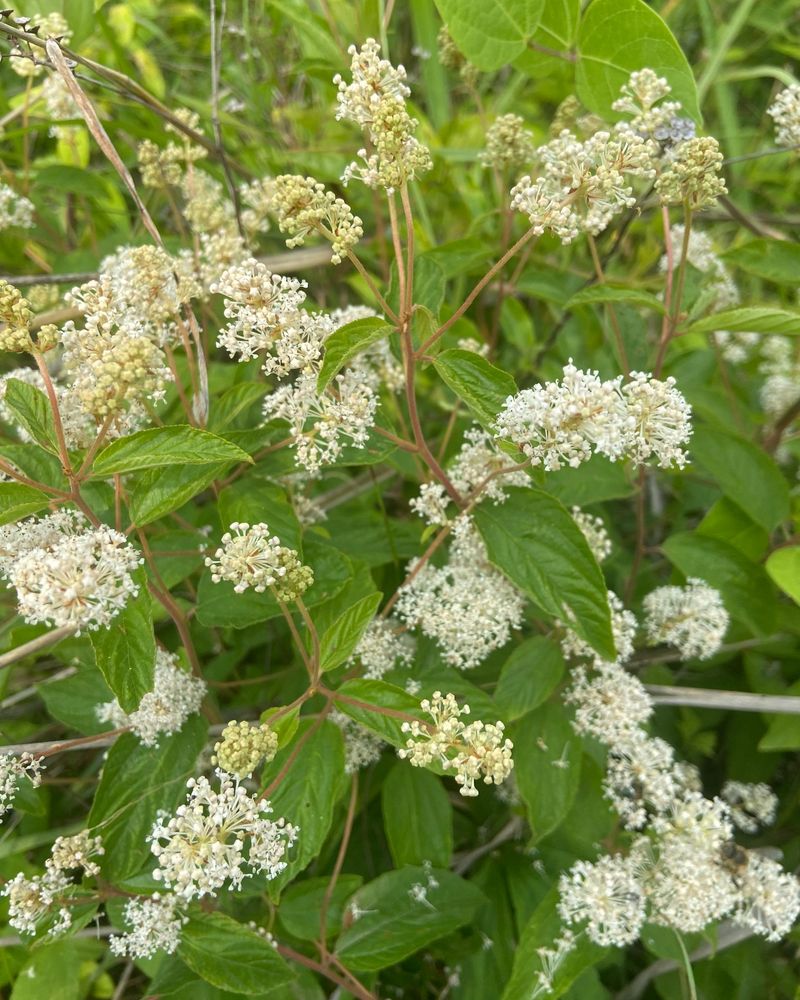
Do not let the name fool you. New Jersey Tea is very much at home in Pennsylvania, where it has been growing wild for centuries.
This compact native shrub was actually used by colonists during the American Revolution as a tea substitute when imported tea was hard to come by. Pretty cool piece of history for a garden plant.
It stays relatively small, usually reaching two to three feet tall, which makes it a great option for borders, rock gardens, or any sunny spot where you want something neat and tidy.
The clusters of tiny white flowers appear in late spring and early summer, creating a soft, frothy look that pairs beautifully with other native plants.
Drought tolerance is one of New Jersey Tea’s biggest strengths. Once established in your Pennsylvania garden, it handles dry summers without much fuss.
The deep root system helps it pull moisture from the soil long after the surface has dried out.
It also plays a big role in supporting native wildlife. Many species of native bees are especially attracted to the flowers.
Certain butterfly caterpillars also use this plant as a food source, so planting it helps the full life cycle of local species.
Full sun is where New Jersey Tea really shines. Give it well-drained soil and a sunny spot, and it will reward you with reliable blooms season after season. It is one of those plants that gives back far more than it asks for in return.
4. Virginia Sweetspire (Itea Virginica)
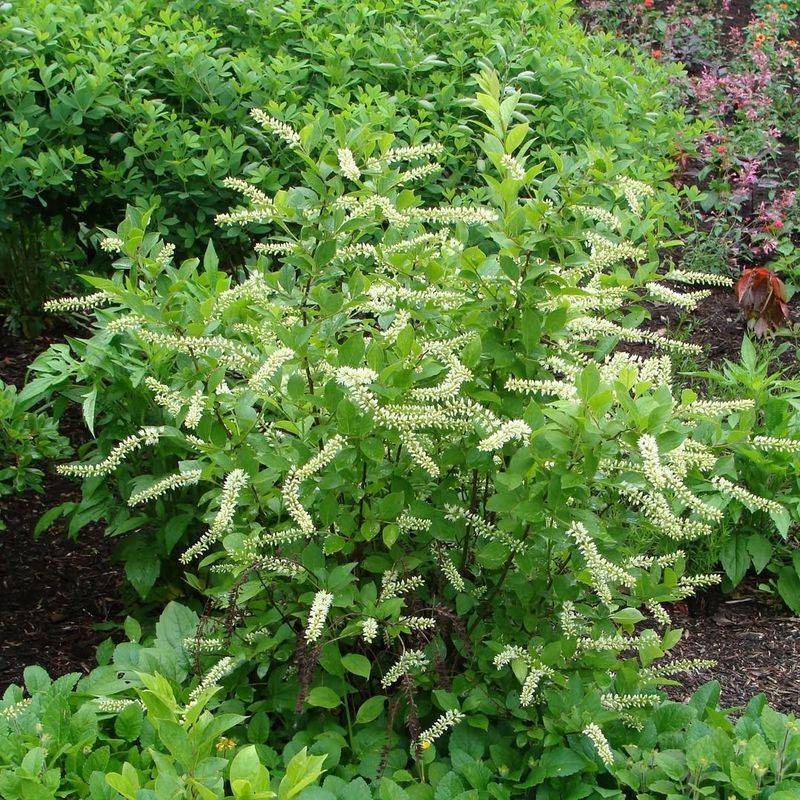
Virginia Sweetspire is the kind of plant that earns compliments in every season. In late spring, it sends up long, graceful spikes of small white flowers that arch elegantly over the foliage.
The blooms have a light, sweet fragrance that makes sitting nearby a real pleasure on a warm Pennsylvania evening.
But the real showstopper comes in fall. The leaves turn brilliant shades of red, orange, and purple before they drop.
Few native shrubs in Pennsylvania put on a fall color display this vibrant. It rivals even the most popular ornamental shrubs sold at garden centers.
Virginia Sweetspire is also remarkably flexible when it comes to growing conditions. It handles wet soil without complaint, making it a great choice for low-lying areas or spots near downspouts where water collects.
At the same time, it adapts well to average garden soil too. Partial shade suits it well, but it also grows in full sun with adequate moisture.
This adaptability makes it one of the most versatile native shrubs you can plant in Pennsylvania. It typically reaches three to five feet tall and spreads slowly into a tidy, rounded clump.
Pollinators are drawn to the flowers throughout the blooming period. Birds also benefit from the dense branching, which provides excellent cover.
If you are looking for a plant that checks nearly every box, from beautiful blooms to fall color to wildlife support, Virginia Sweetspire belongs in your yard.
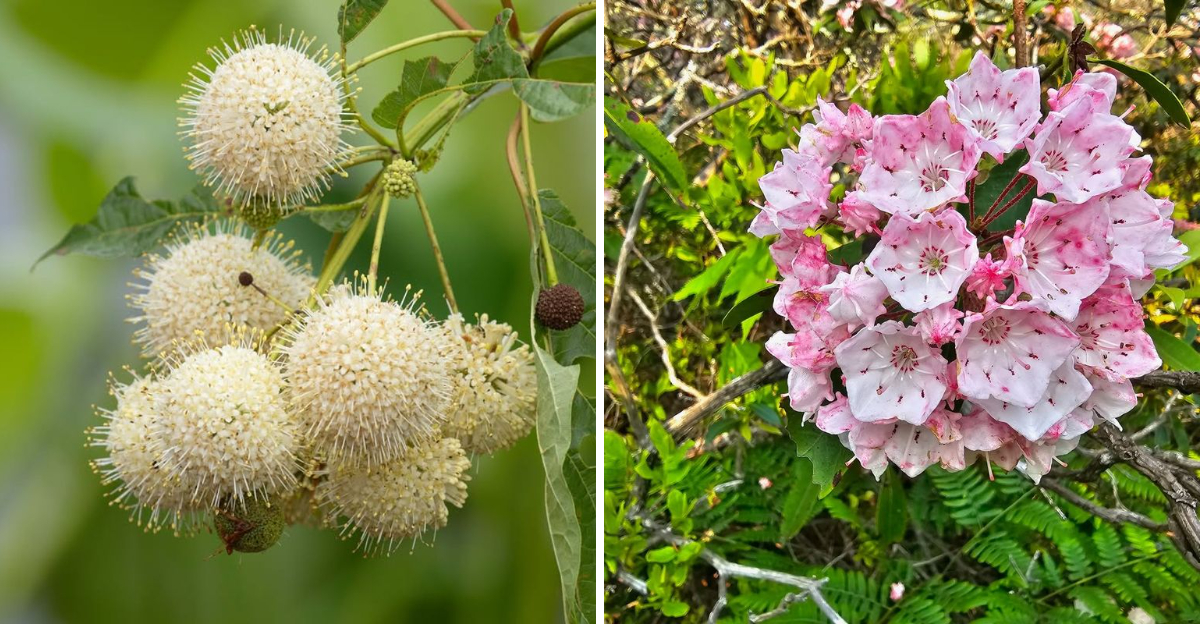
5. Buttonbush (Cephalanthus Occidentalis)
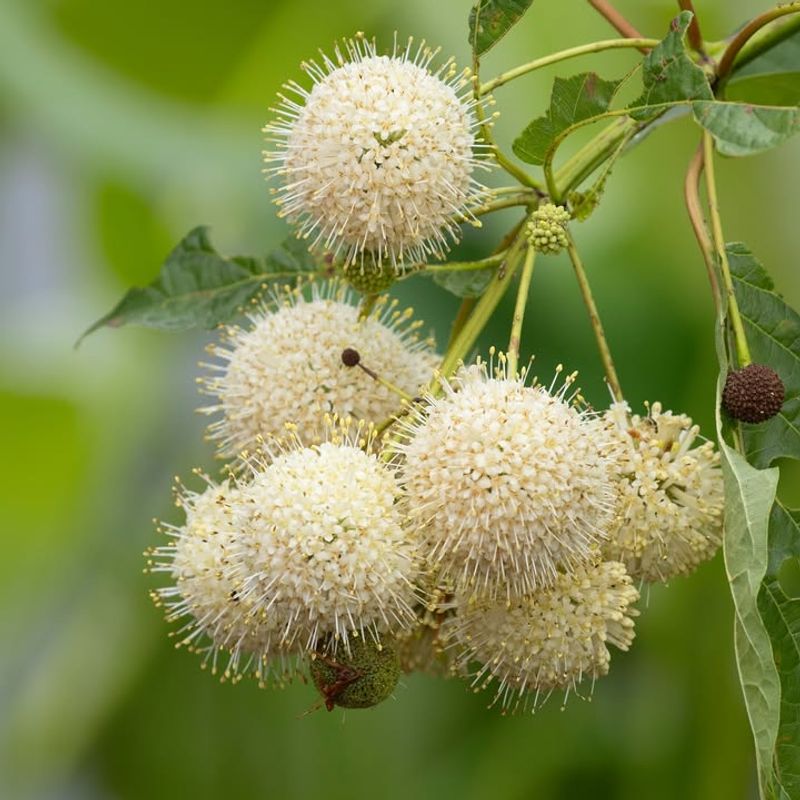
Buttonbush gets its name from the perfectly round, white flower clusters that look just like little pom-poms or buttons.
They are unlike anything else in the native plant world, and once you see them up close, you will understand why wildlife gardeners in Pennsylvania love this shrub so much.
Wet areas are where Buttonbush truly excels. It grows naturally along stream banks, pond edges, and swampy ground throughout Pennsylvania.
If you have a boggy corner of your yard that stays soggy most of the year, Buttonbush will treat it like prime real estate.
The flowers bloom in midsummer, right when many other shrubs have already finished. That makes Buttonbush a crucial late-season food source for pollinators.
Bees swarm the blooms, and hummingbirds are frequent visitors too. Ducks and shorebirds eat the seeds, making this shrub a true wildlife magnet.
Buttonbush can grow quite large, sometimes reaching twelve feet tall in ideal conditions. For most home gardens, it stays in the six to eight foot range.
It works beautifully as a backdrop in a rain garden or as a naturalized planting near a water feature.
One of the most interesting things about Buttonbush is how it can actually grow with its roots submerged in shallow water. Very few landscape shrubs can do that.
If you have a challenging wet spot in your Pennsylvania yard that nothing else seems to handle, this native shrub might just be the perfect answer you have been searching for.
6. Red Chokeberry (Aronia Arbutifolia)
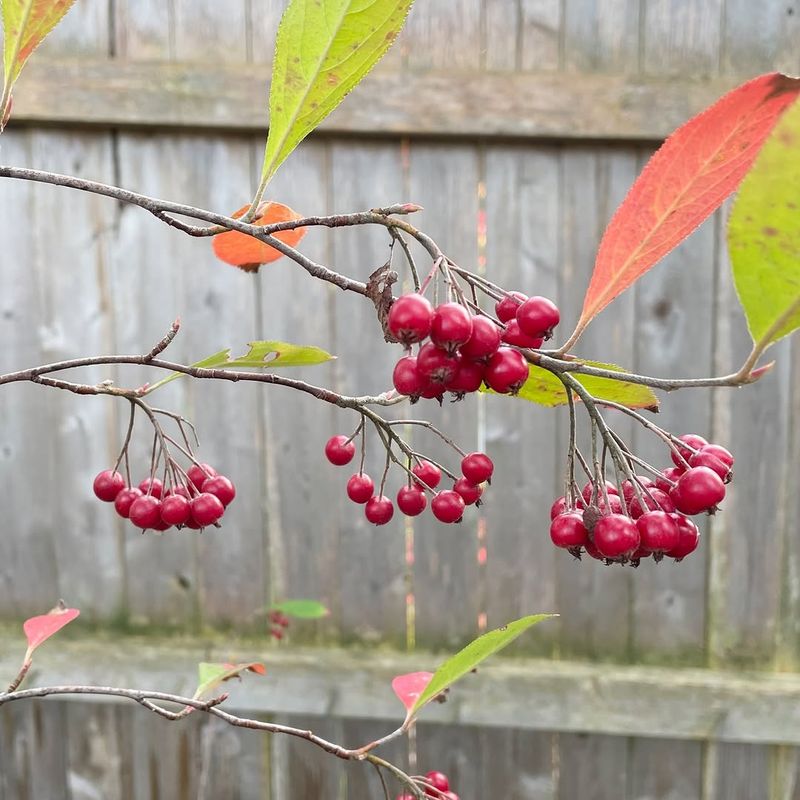
Red Chokeberry is a plant that gives you something exciting to look at in almost every season. White flower clusters appear in spring, drawing in early pollinators.
By late summer and fall, those flowers have turned into clusters of vivid red berries that practically glow against the foliage.
The fall leaf color on Red Chokeberry is outstanding. The leaves shift to deep shades of red and burgundy, making this shrub a real focal point in any Pennsylvania garden.
Combined with the bright berries, the fall display is genuinely hard to beat among native plants.
Birds go absolutely wild for the berries. Cedar waxwings, robins, and mockingbirds are among the many species that flock to Red Chokeberry plantings in Pennsylvania during the colder months.
If attracting birds to your yard is a priority, this shrub should be near the top of your list. One of the best things about Red Chokeberry is its toughness. It handles a wide range of soil types, from wet, poorly drained spots to average garden soil.
It tolerates both full sun and partial shade, so finding a suitable location in your yard is rarely a problem.
It grows to around six to ten feet tall and spreads by suckering, gradually forming a dense thicket over time. You can manage the spread with occasional pruning if needed.
For Pennsylvania gardeners who want a reliable, wildlife-friendly, four-season shrub with minimal fuss, Red Chokeberry is a truly excellent choice.
7. Ninebark (Physocarpus Opulifolius)
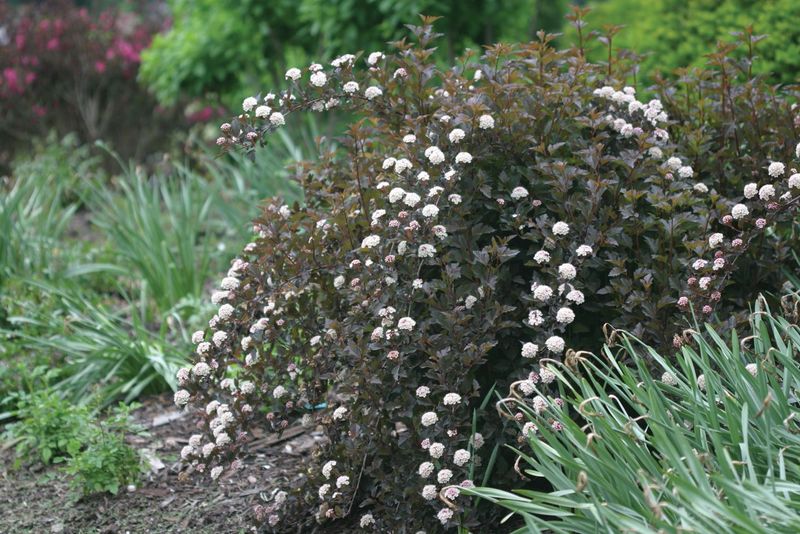
Ninebark might just be the toughest native shrub you can plant in Pennsylvania. It handles poor soil, drought, wet conditions, full sun, and partial shade without missing a beat.
Gardeners who have struggled with difficult spots in their yard often find that Ninebark steps in and thrives where everything else has failed.
The name comes from the bark, which peels away in thin layers to reveal multiple colors underneath. In winter, when the leaves are gone, that exfoliating bark becomes a genuine design feature.
It adds texture and visual interest to the garden during the months when most plants offer very little to look at.
Spring brings clusters of white or pale pink flowers that cover the arching branches in a soft, frothy display. Pollinators love them.
Native bees and butterflies visit the blooms regularly, and the shrub supports a healthy local food web throughout the growing season in Pennsylvania.
Several cultivated varieties of Ninebark have become popular in native landscapes across the state. Some feature deep purple or golden foliage that adds bold color to mixed borders.
Whether you choose the straight native species or a named variety, the care requirements stay the same: plant it and mostly leave it alone.
Ninebark typically grows six to ten feet tall with an arching, fountain-like shape. It works well as a hedge, a privacy screen, or a backdrop for smaller native plants.
For Pennsylvania gardeners who want maximum impact with minimum effort, Ninebark is genuinely hard to beat.