The Smart Spring Tips That Keep Arizona Plants Healthy
Spring in Arizona brings a clear shift that shows up across the entire yard. New growth starts coming in, leaves look sharper, and color stands out more with every passing day.
At the same time, plants that are not handling the conditions well begin to lose that strong, healthy appearance.
Some stay full, steady, and consistent, holding their shape and color without much change. Others start to look uneven, with growth slowing down or fading in ways that are hard to ignore.
That contrast becomes more noticeable as everything continues to move forward.
A few simple spring tips play a key role in how plants respond during this time. They help maintain balance, support steady growth, and keep everything looking healthier as conditions continue to shift.
With those in place, plants hold their strength and the yard stays more consistent overall.
1. Water Deeply Instead Of Frequent Light Watering
Shallow watering is one of the most common mistakes Arizona gardeners make, and it quietly sets plants up for trouble. When you sprinkle a little water every day, roots have no reason to grow downward.
They stay near the surface, where the soil dries out fastest and heat hits hardest.
Deep watering means letting water soak several inches into the ground, giving roots a reason to follow it down. In Arizona, deeper roots mean plants can access moisture even when the top layer of soil turns bone dry by midday.
Watering deeply every two to three days is far more effective than daily light sessions, especially as spring temperatures start climbing.
A simple way to check if you’re watering deeply enough is to push a wooden dowel or long screwdriver into the soil after watering. If it slides in easily about six inches, you’re doing it right.
If it hits resistance after two inches, the water isn’t penetrating far enough.
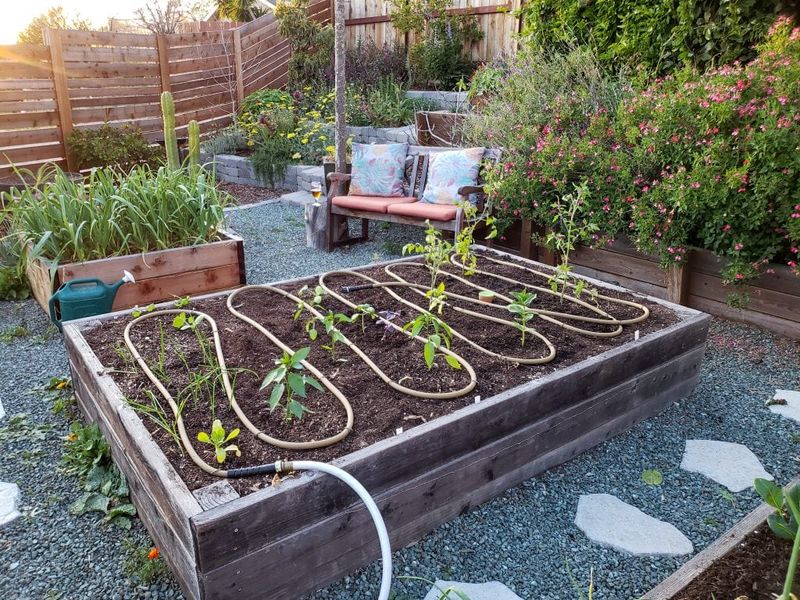
Drip irrigation works really well for deep watering in Arizona because it delivers water slowly, giving the soil time to absorb rather than run off. Soaker hoses are another solid option for garden beds.
Both methods reduce evaporation, which matters a lot when temperatures are rising and dry air pulls moisture out of the soil quickly.
Changing your watering habit from frequent and light to infrequent and deep is one of the most impactful things you can do for your Arizona garden this spring.
2. Adjust Watering As Temperatures Start To Rise
A watering schedule that worked perfectly in February will let your plants down by April. Spring in Arizona isn’t one steady season.
It shifts fast, and your watering routine needs to shift with it.
As daytime highs move from the 70s into the 90s, plants lose moisture through their leaves much more quickly. That process, called transpiration, speeds up with heat and dry air.
If your watering stays the same while temperatures climb, plants start showing stress before you even realize what’s happening.
Pay attention to the forecast each week rather than sticking to a fixed schedule. When a warm stretch is coming, increase watering frequency slightly and make sure each session is still deep.
Your Arizona Garden Changes Every Week. Your Plan Should Too.
Gardening in Arizona changes quickly throughout the season. Every Friday you’ll receive a simple weekly plan showing exactly what to plant, prune, fertilize, harvest, and protect so you never miss the right timing.
When a cooler week rolls through, pull back a little to avoid saturating the soil.
Mornings are the best time to water in Arizona during spring. Watering early gives moisture time to reach the roots before afternoon heat ramps up evaporation.
Evening watering can leave foliage damp overnight, which sometimes encourages fungal issues in certain plants.
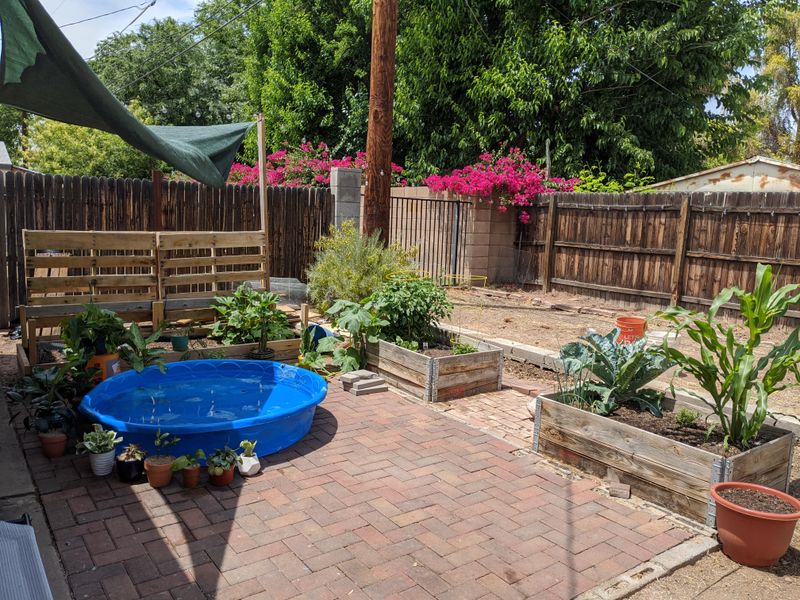
Container plants need extra attention because pots heat up quickly in Arizona’s sun and dry out faster than in-ground plants. During warm spring days, containers might need watering daily, while in-ground plants can go every few days.
Checking the soil with your finger before reaching for the hose is always a reliable approach.
Staying flexible with your watering schedule throughout spring keeps plants consistently hydrated without wasting water or stressing roots with unpredictable moisture swings.
3. Add Mulch To Help Soil Hold Moisture Longer
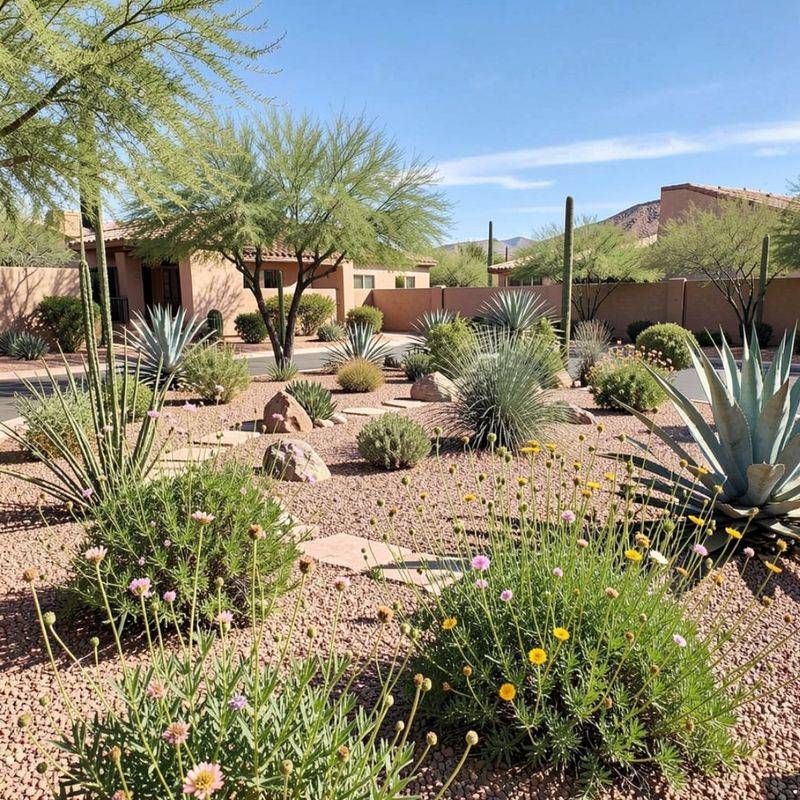
Bare soil in an Arizona spring garden is basically an open invitation for moisture to disappear. Without any cover, the sun bakes the top layer of soil and evaporation takes over fast.
Mulch changes that equation completely.
A two to three inch layer of organic mulch, like shredded wood, straw, or bark, acts as a barrier between the soil and the sun. It slows evaporation significantly, which means you can water less often and still keep roots consistently moist.
In a state where water conservation matters as much as it does in Arizona, that’s a real advantage.
Beyond moisture retention, mulch also regulates soil temperature. On a hot spring afternoon, bare soil can get scorching hot just below the surface.
Mulched soil stays noticeably cooler, which helps roots stay comfortable even when air temperatures are climbing toward triple digits.
Organic mulch breaks down gradually over time, adding nutrients back into the soil as it decomposes. That slow release of organic material improves the structure of Arizona’s often sandy or clay-heavy soil over multiple seasons.
It’s a long-term investment that pays off each year.
Apply mulch after watering so you’re locking moisture into already-hydrated soil. Keep mulch a few inches away from the base of plant stems and tree trunks to prevent moisture buildup right against the bark, which can cause rot over time.
Spreading mulch is one of the easiest spring garden tasks, and the results show up almost immediately in how well your plants hold up through the season.
4. Check Soil Before Watering To Avoid Overwatering
Overwatering is just as damaging as underwatering, and in Arizona, it’s a surprisingly common problem. People assume more water always means healthier plants, but roots sitting in soggy soil can’t get the oxygen they need, and they start to break down.
Before watering, push your finger about two inches into the soil near the base of the plant. If it feels damp, skip the watering session and check again the next day.
If it feels dry, go ahead and water deeply. That simple test takes about five seconds and saves you from a lot of guesswork.
Arizona’s clay soils hold water longer than sandy soils, so two plants growing in different parts of your yard might have completely different moisture needs. Checking each area individually rather than watering everything on the same schedule makes a noticeable difference in plant health.
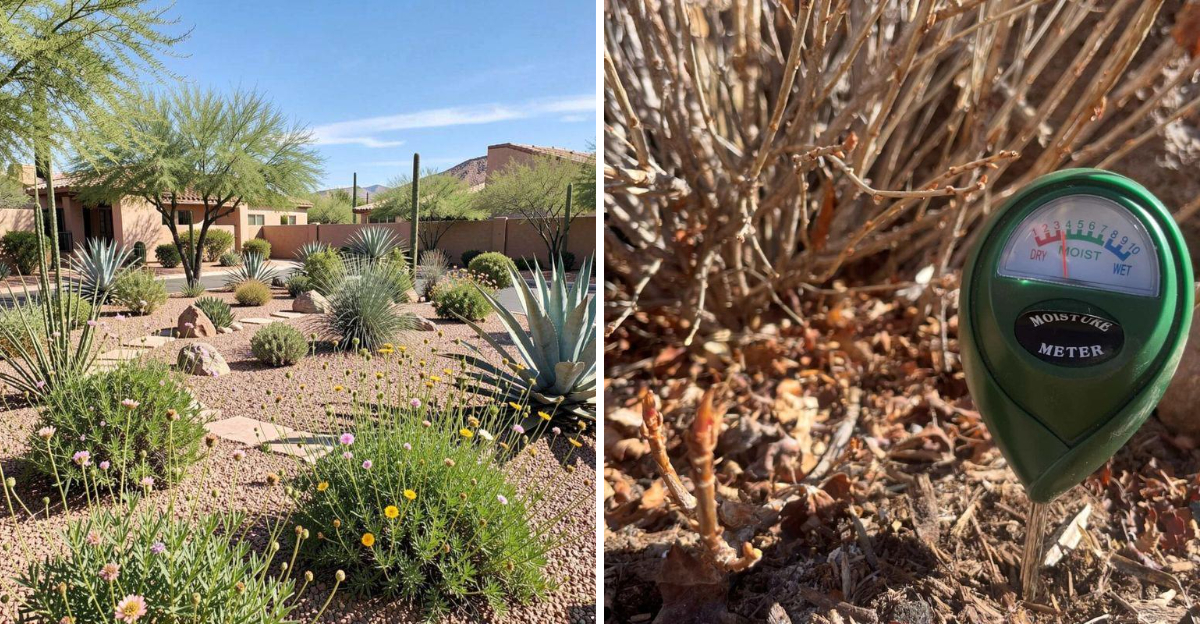
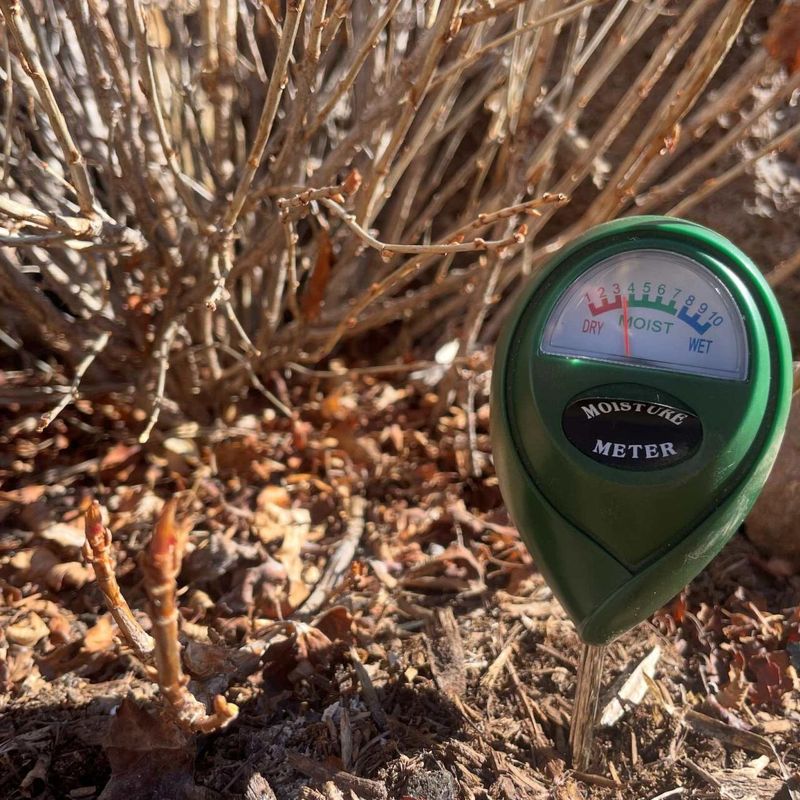
Inexpensive moisture meters are available at most garden centers and give you a more precise reading if you prefer a tool over the finger test. Push the probe into the soil and check the reading before deciding whether to water.
They’re especially helpful for container plants, which can be tricky to judge by feel alone.
Root rot is one of the most common spring plant problems in Arizona, and almost all of it comes from overwatering. Yellowing leaves, mushy stems, and a general drooping appearance despite wet soil are all signs that water has been applied too frequently.
Checking before watering builds a smarter habit that protects roots and keeps plants genuinely healthy throughout spring.
5. Prune Only When Needed To Avoid Stressing Plants
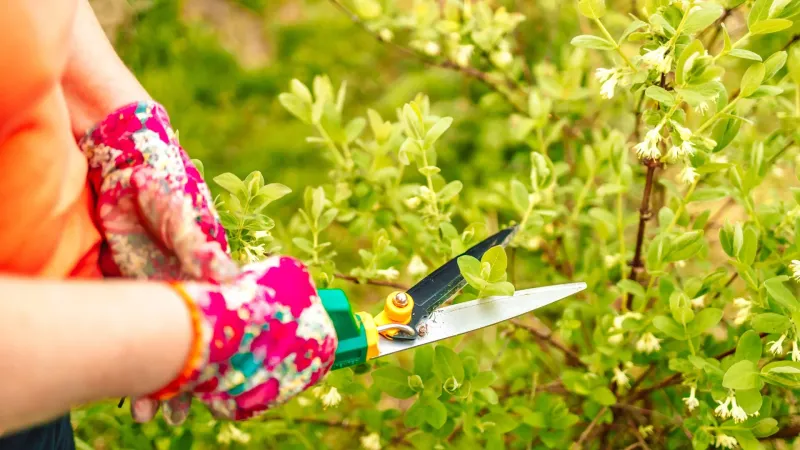
Grabbing the pruning shears every time you walk past a plant is a habit worth breaking. Pruning removes leaves, and leaves are how plants make energy.
Cut too much at the wrong time and you’re forcing a plant to recover instead of grow.
Spring is when most Arizona plants shift into active growth mode after a cooler winter. New shoots are pushing out, flower buds are forming, and the plant is putting real energy into expanding.
Pruning heavily during this period interrupts that momentum and can push the plant into a stressed state heading into summer heat.
Light pruning is fine during spring, especially for removing crossed branches or any parts that look clearly damaged from winter cold.
Clean cuts with sharp tools heal faster and reduce the chance of pest entry. Dull blades tear tissue and leave jagged wounds that take longer to seal.
Avoid the temptation to shape plants aggressively in spring just for appearance. Heavy shaping is better saved for late winter before new growth begins, or held until after the plant has finished its main bloom cycle.
Timing matters more than most people realize.
Desert plants like palo verde, brittlebush, and native sages have specific pruning windows that align with their natural growth patterns. Researching the right time for each species in your Arizona garden prevents accidental setbacks.
Pruning should always have a clear purpose. Removing a broken branch, improving airflow, or trimming frost-damaged growth are all good reasons.
Pruning just to tidy things up during active spring growth rarely benefits the plant.
6. Watch For Early Signs Of Heat Stress On Leaves
Leaves tell you things before roots do. By the time a plant looks truly wilted and beaten, damage has usually been building for days.
Catching heat stress early gives you a real chance to turn things around before it gets serious.
Curling leaves are often the first visible sign. Plants curl their leaves inward to reduce the surface area exposed to sun, which slows moisture loss.
If you notice leaves curling during the hottest part of the day, pay attention. Some afternoon wilting is normal in Arizona spring heat, but plants should recover by evening.
If they’re still drooping after sunset, something needs to change.
Brown, crispy leaf edges are another early indicator, especially on plants that prefer some shade or aren’t fully adapted to Arizona’s intense UV exposure.
Reflected heat from walls, pavers, and gravel mulch can push temperatures near plants much higher than the ambient air temperature.
Pale or bleached patches on leaves, sometimes called sunscald, show up when plants get more direct sun than they can handle.
Repositioning container plants to get afternoon shade, or adding a shade cloth for sensitive in-ground plants, can prevent further damage once you spot these signs.
Checking plants in the early morning and again in the late afternoon gives you a clearer picture of how they’re handling the day. Morning observations show you the plant’s rested state, while late afternoon shows you how much stress the heat is actually causing.
Arizona spring temperatures can be deceptive. Acting on early warning signs keeps small problems from becoming much bigger ones as summer approaches.
7. Start Fertilizing Lightly As Plants Begin Active Growth
Fertilizer works best when plants are actually ready to use it. Feeding a plant that’s still dormant or stressed doesn’t help much because the nutrients just sit in the soil without being absorbed efficiently.
Spring is the right time to start fertilizing in Arizona because plants are shifting into active growth and genuinely need the extra support. Starting light is the key phrase here.
A half-strength application of a balanced fertilizer every four to six weeks is plenty to encourage healthy growth without pushing plants too hard too fast.
Over-fertilizing is a real risk, especially with nitrogen-heavy products. Too much nitrogen during spring pushes plants to produce a lot of soft, leafy growth quickly.
That soft new growth is more vulnerable to heat damage when Arizona temperatures spike in late spring and early summer.
Slow-release granular fertilizers are a solid choice for in-ground plants because they feed gradually over weeks rather than flooding the soil with nutrients all at once. Water-soluble fertilizers work well for containers and give you more control over timing and concentration.
Adding a layer of quality compost to garden beds in spring also counts as a form of fertilizing. Compost feeds plants slowly and improves soil structure at the same time, which is especially valuable in Arizona where native soil often lacks organic matter.
Watch how plants respond after each feeding. Strong, steady new growth with good color is a sign the fertilizer is working well.
Yellowing leaves or excessive soft growth are signals to scale back and reassess your approach before the next application.