8 Landscaping Plants That Make Arizona Yards Easier To Maintain
Arizona yards have a way of showing everything. The good choices stand out fast, and so do the ones that quietly turn into extra work.
Spring is when things start picking up speed, and suddenly the yard either feels easy to keep up with or like it is asking for more than expected.
There is a certain kind of plant that just settles in without constant attention. It grows at the right pace, holds its shape, and does not demand fixing every week.
Once it is in place, the whole yard feels calmer and more put together without much effort.
That is where smart planting starts to matter. Not complicated, not fussy, just the kind of choices that work with Arizona conditions instead of against them.
A few well-placed plants can shift how everything looks and how much time it takes to keep it that way.
1. Firecracker Penstemon Brings Bright Red Blooms In Early Season
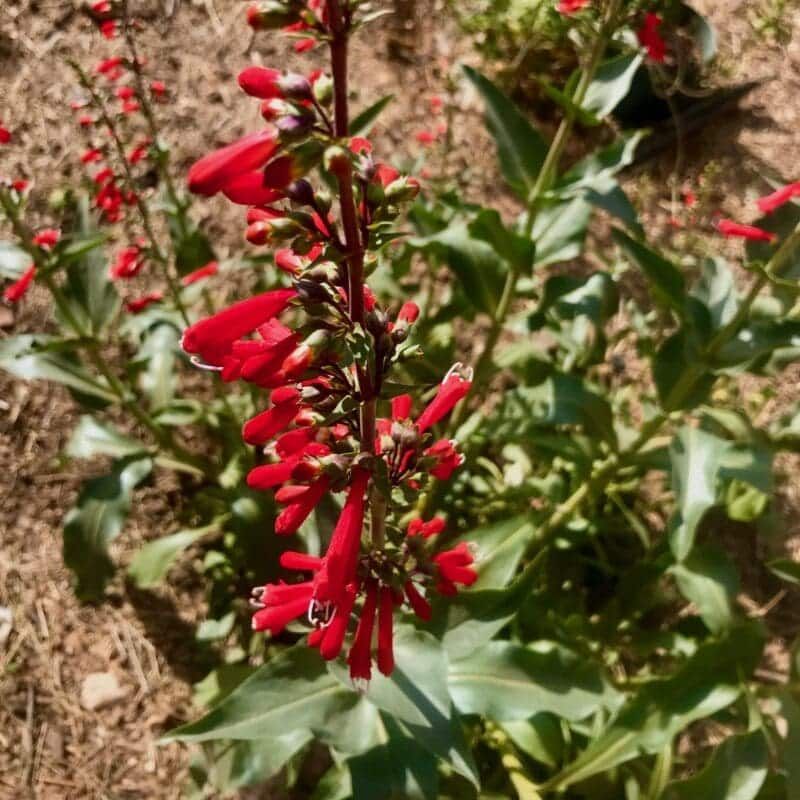
Red is hard to ignore, and Firecracker Penstemon knows it. Those narrow, tubular blooms show up in early spring before most other plants even wake up, giving your Arizona yard a jolt of color right when you need it most.
Hummingbirds track this plant down fast — don’t be surprised if you start seeing them hovering outside your window within days of the first bloom.
Firecracker Penstemon grows in rocky, dry soil without complaint. No rich amendments, no fussy watering schedule — just plant it in a sunny spot and let it do its thing.
It reaches about two to three feet tall, which makes it useful for filling in gaps along borders or tucking between larger shrubs.
After the blooms fade, the plant stays tidy and green through the rest of the season. Cutting it back slightly in late summer can encourage a second flush before cooler weather arrives.
It handles Arizona heat without wilting, and it rarely needs extra water beyond what the monsoon season delivers. If you want early-season color without putting in much effort, this one earns its place in the yard fast.
It settles in quickly without demanding constant attention, which makes it easy to rely on year after year. Once it starts blooming, it quietly becomes one of the most dependable spots of color in the yard.
2. Mexican Bush Sage Adds Soft Purple Color With Minimal Care
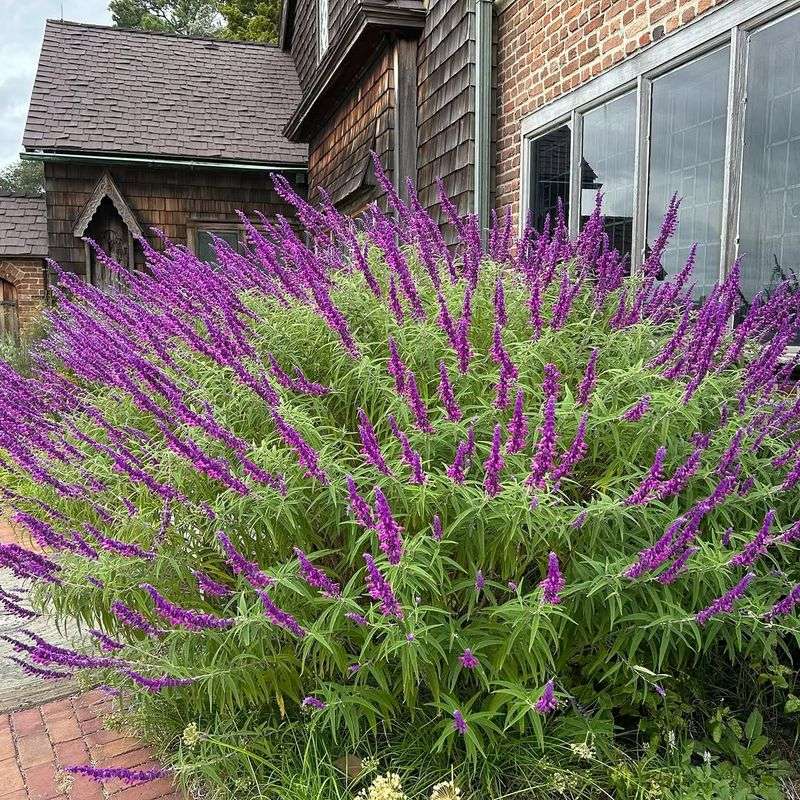
Soft, velvety purple spikes rising above silver-green foliage — Mexican Bush Sage has a look that stops people mid-stride. It blooms heavily in late summer and fall, which is exactly when most Arizona yards start looking worn out and dull.
Having something that peaks right during that stretch makes a real difference.
Cut it back hard in late winter and it comes back full and bushy by summer. Skip the fertilizer — rich soil actually encourages weak, floppy growth.
Lean, dry conditions keep it compact and upright, which is exactly what you want in a desert yard where water is always a consideration.
Butterflies and hummingbirds are drawn to the blooms consistently through the season. In Phoenix and Tucson, gardeners often use it as a backdrop plant because of its height — it can reach four feet or more when happy.
Your Arizona Garden Changes Every Week. Your Plan Should Too.
Gardening in Arizona changes quickly throughout the season. Every Friday you’ll receive a simple weekly plan showing exactly what to plant, prune, fertilize, harvest, and protect so you never miss the right timing.
It handles full sun without flinching and tolerates the reflected heat from walls and pavement that would stress out most other flowering plants. Pruning once a year is about all the maintenance it asks for, which puts it in rare company among flowering perennials.
If purple fits your color scheme, this plant delivers without demanding much back.
Its striking purple flowers create a vibrant focal point that draws attention all season long. Even in the harshest Arizona sun, it stays strong and visually appealing with very little care.
3. Canyon Penstemon Thrives In Dry Conditions With Strong Spring Flowers
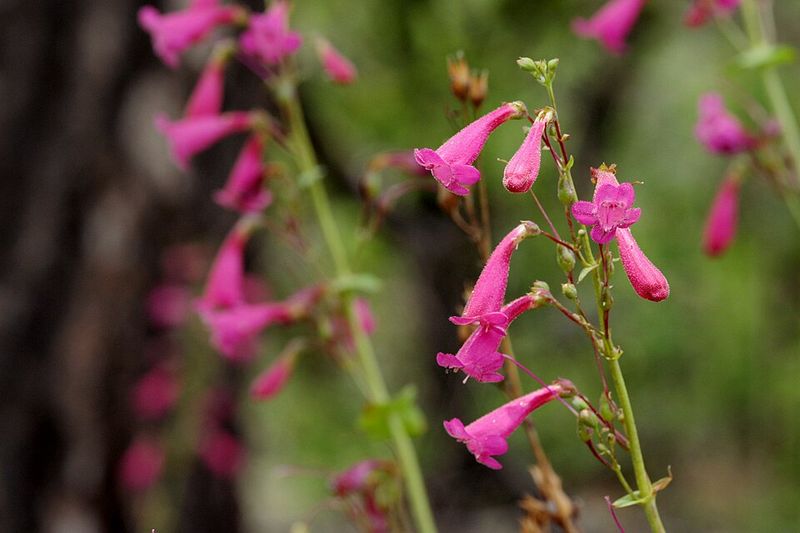
Not every flowering plant can handle the kind of dry, baking heat that Arizona throws at a yard from May through September. Canyon Penstemon can.
It grows in gravelly, well-drained soil and produces clusters of strong pink to red blooms in spring that hold up even when temperatures start climbing fast.
Unlike some penstemons that look ragged after their first season, Canyon Penstemon tends to get better with age. It fills in gradually, spreading into a clump that becomes more impressive year after year.
The root system goes deep, which is part of why it handles drought without skipping a beat.
Plant it along a dry slope, a rocky border, or anywhere water drains away quickly. Those are the spots where Canyon Penstemon genuinely thrives, not just survives.
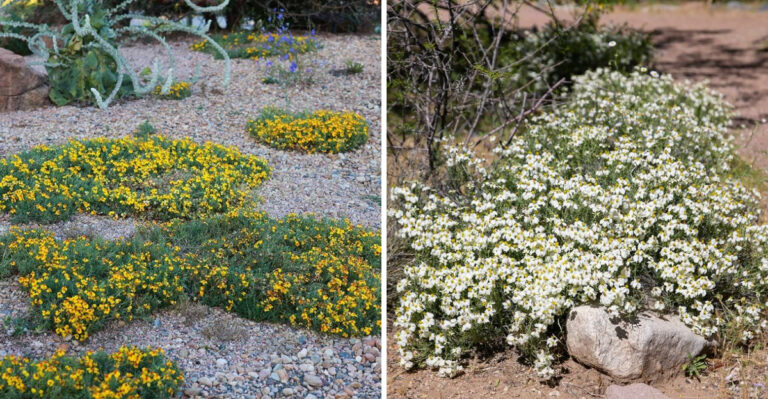
It pairs well with desert marigold and brittlebush if you’re building out a full native garden. Watering a few times in the first season helps it settle in, but after that, rainfall — including the monsoon — usually handles things just fine.
No deadheading is required, and the seed heads that form after blooming actually add texture to the yard through summer. Compact, tough, and reliable are three things every Arizona gardener wants in a plant.
Over time, it becomes a standout feature that adds color and structure without extra effort. Its resilience makes it a go-to choice for low-water, high-heat Arizona landscapes.
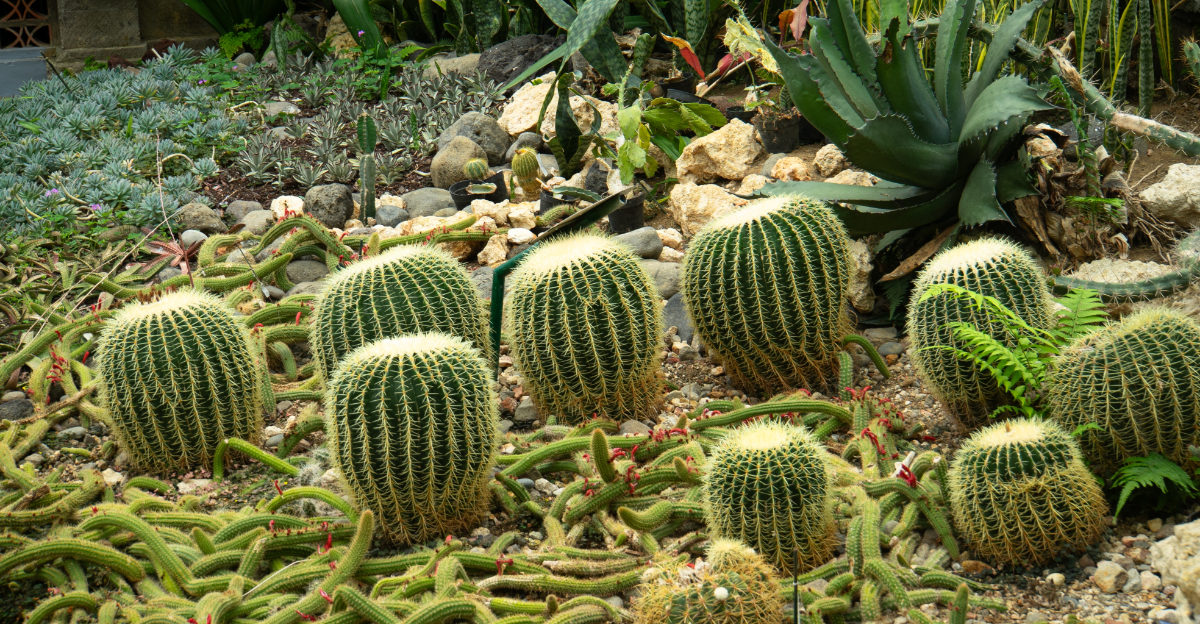
4. Golden Barrel Stays Compact And Needs Almost No Maintenance
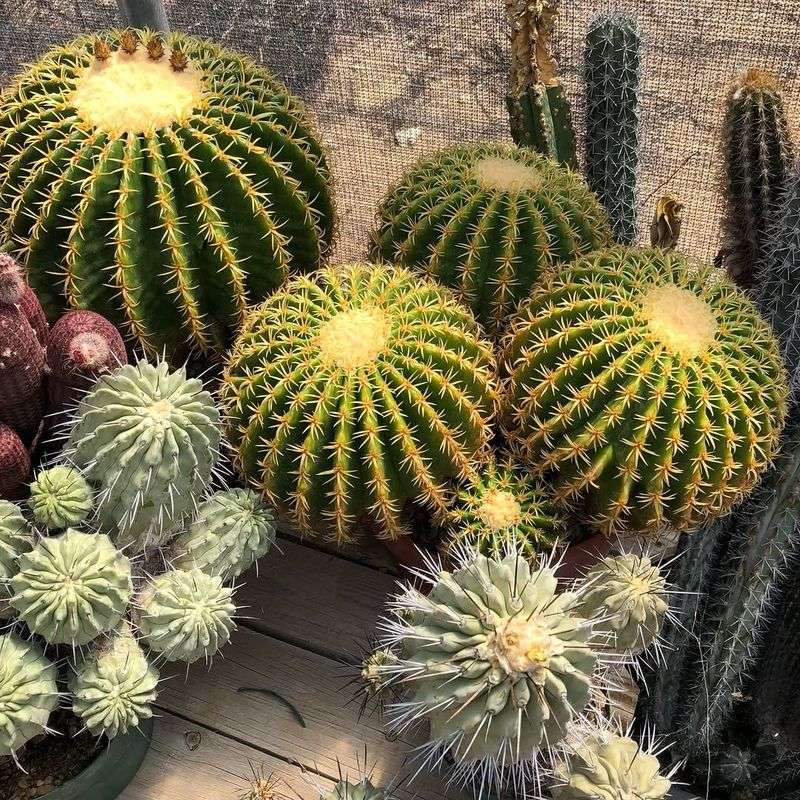
Round, golden, and completely self-sufficient — Golden Barrel cactus is one of those plants that makes a yard look intentional without requiring you to do much of anything. It grows slowly into a perfect globe shape, so there’s no pruning, no trimming, and no reshaping needed.
What you plant is basically what you get, just gradually bigger.
In Arizona, it handles full sun and reflected heat from walls and concrete without any issues. Gravel mulch around the base keeps the soil temperature stable and prevents any moisture from sitting around the roots.
Overwatering is the one thing to avoid — these plants prefer to stay dry between any irrigation you give them.
Golden Barrel looks great planted in groups of three or five, especially when surrounded by decomposed granite or river rock. It adds structure to a yard without taking up a lot of horizontal space, which makes it useful in smaller front yards or tight corners.
The yellow spines catch sunlight in a way that gives the plant a warm glow in the afternoon. Tucson and Scottsdale gardeners use it frequently as a focal point in xeriscape designs because it delivers year-round visual interest with almost zero input.
Few plants can make that claim and actually back it up.
5. Saguaro Grows Slowly With Almost No Water Once Established
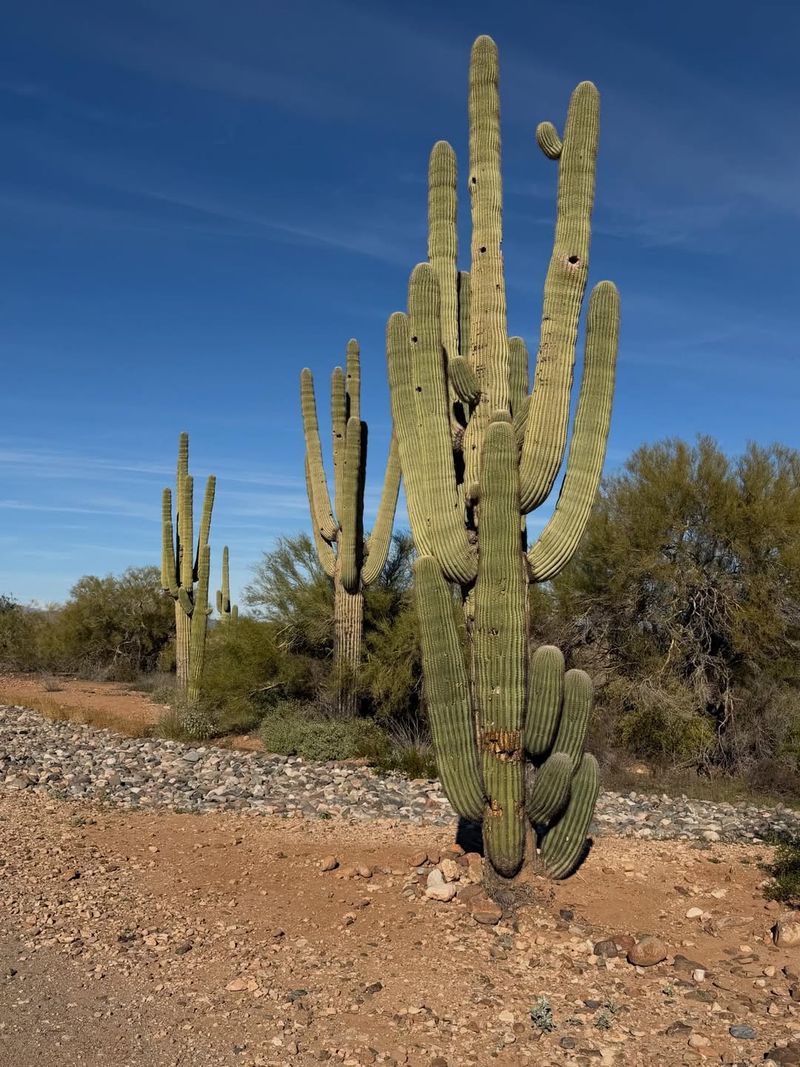
Arizona’s most iconic plant earns its reputation every single year. Saguaro doesn’t just survive the desert — it’s built for it, storing hundreds of gallons of water in its trunk after a good rain and drawing on that reserve through the driest months.
Having one in your yard is like having a living piece of the Sonoran Desert right outside your door.
Growth is slow in the beginning, which is worth knowing upfront. Young saguaros spend years developing their root system before putting much energy into height.
But that patience pays off — a mature plant in a well-placed spot becomes the defining feature of an entire yard, no other landscaping needed around it.
Planting a saguaro in Arizona requires a permit if it’s being relocated from wild land, so always buy from a licensed nursery. Once it’s in the ground and settled, maintenance basically drops to zero.
No pruning, no fertilizing, no regular watering needed after the first couple of years. Woodpeckers sometimes carve holes in larger specimens, creating natural cavities that owls and other birds eventually use.
That kind of wildlife activity happens right in your yard, which is something no ornamental shrub can replicate. For long-term, hands-off landscaping, saguaro is genuinely hard to beat.
Saguaro stands tall and impressive, giving any yard an unmistakable desert feel. Birds and other wildlife use it as a home, bringing movement and interest to the landscape with zero maintenance.
6. Cape Aloe Produces Bold Flower Spikes With Little Effort
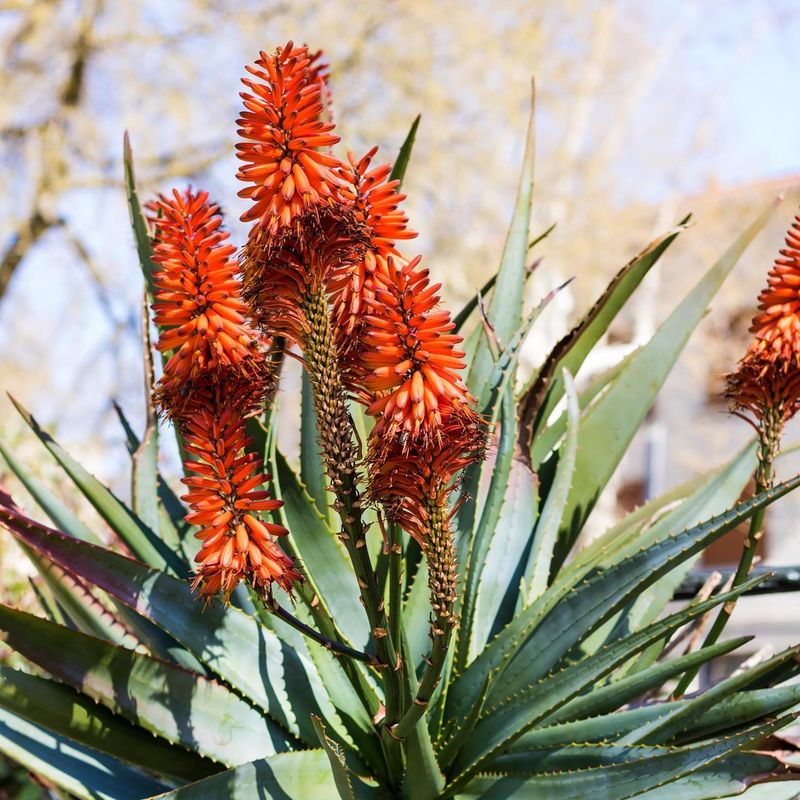
Winter is when most Arizona yards go quiet, but Cape Aloe completely ignores that pattern. Its tall flower spikes shoot up in December and January, covered in tubular orange-red blooms that hummingbirds start visiting almost immediately.
Having color in the yard during the coldest months is something most plants simply can’t offer.
Cape Aloe forms a rosette of thick, blue-green leaves with soft teeth along the edges. It’s not as sharp as agave, which makes it more practical in yards where kids or pets are around.
The leaves have a slightly waxy coating that helps the plant retain moisture even when temperatures spike.
After flowering, the spike can be cut down cleanly at the base, and the plant refocuses its energy into producing offsets — smaller plants that emerge around the base and can eventually be separated and replanted elsewhere.
In Phoenix, Tempe, and other lower-elevation Arizona cities, Cape Aloe handles the summer heat without any real stress as long as it gets decent drainage.
Sandy or gravelly soil suits it well. Watering every couple of weeks in summer is enough, and in winter you can skip irrigation almost entirely.
Few succulents deliver this much visual payoff for this little effort across all four seasons.
Its vibrant blooms provide color when most other plants are dormant. The offsets steadily fill in, creating a fuller, eye-catching display with minimal effort.
7. Ocotillo Responds Quickly To Rain With Fresh Leaves And Blooms
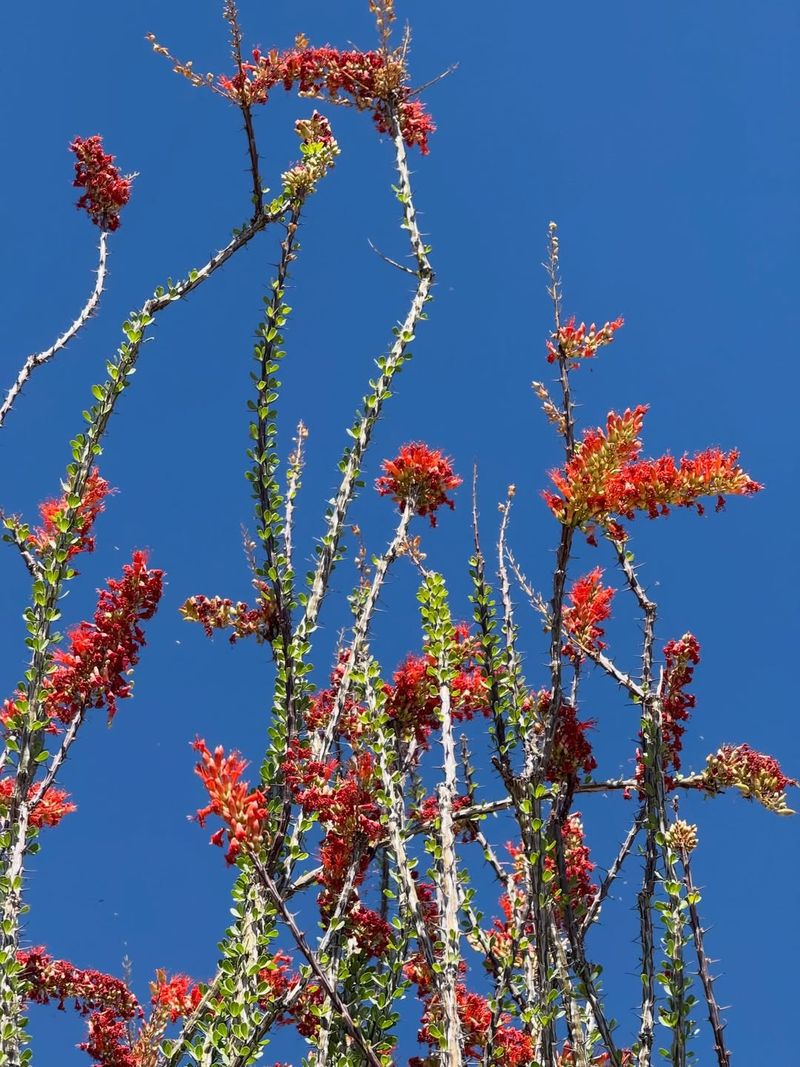
Watch an ocotillo right after a monsoon rain and you’ll understand why it’s one of the most fascinating plants in the Arizona desert. Bare, thorny canes can go from completely leafless to covered in small green leaves within 48 hours of a good soaking.
No other plant in the yard reacts to water quite that fast or that dramatically.
Red-orange blooms appear at the tips of the canes in spring, and they’re a serious draw for migrating hummingbirds passing through the state.
The flowers are bright enough to be visible from across the street, giving the yard a wild, desert-authentic look that rocks and gravel alone can’t create.
Ocotillo is often used as a living fence in Arizona yards because the canes grow tall — sometimes reaching 15 feet — and the thorns discourage foot traffic through planted areas. It needs full sun and fast-draining soil to stay healthy.
Avoid planting it in low spots where water pools after rain. Watering a few times in the first season helps roots establish, but after that, rainfall takes over completely.
Transplanted ocotillo can look rough for a year while it adjusts, but patience is rewarded with a plant that’s nearly indestructible and absolutely unforgettable in the landscape.
8. Agave Parryi Stays Compact And Handles Heat With Almost No Care
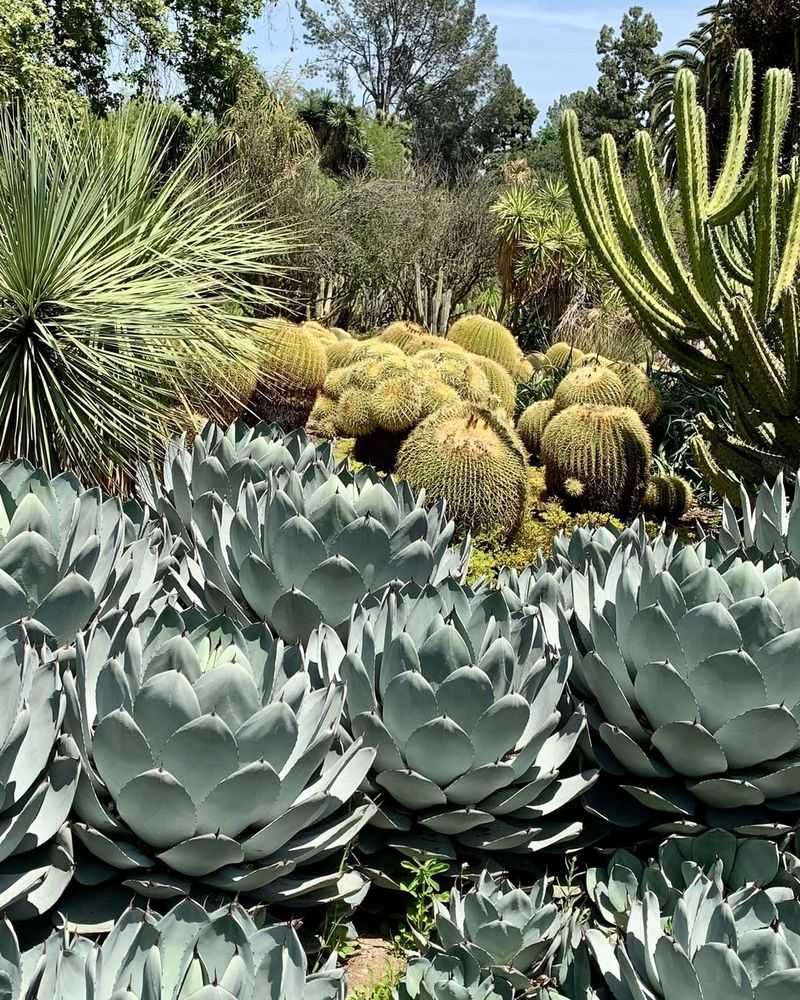
Symmetry without any effort — that’s what Agave Parryi brings to an Arizona yard. Its thick, blue-gray leaves fan out in a tight rosette that looks almost architectural, like someone designed it by hand.
It grows slowly and stays compact, usually reaching about two feet tall and three feet wide, which makes it one of the more manageable agaves available.
Heat doesn’t slow it down. Even during Arizona’s triple-digit summer stretches, Agave Parryi holds its shape and color without any extra attention.
No watering reminders, no shade cloth, no special soil prep required beyond making sure drainage is decent. Caliche layers in the soil can cause problems, so breaking through that layer before planting makes a real difference.
Cold hardiness is a bonus that not every Arizona agave can claim. Agave Parryi handles freezes down to around 5 degrees Fahrenheit, which matters for higher-elevation yards in Flagstaff or Prescott where winter temperatures drop sharply.
It blooms once — sending up a tall stalk covered in yellow flowers — then the main rosette finishes its life cycle. But before that happens, it usually produces pups around the base that carry on in the same spot.
Pair it with desert marigold or red yucca for color contrast, and you’ve got a combination that practically takes care of itself all year long.