This Native Tree Brings More Songbirds To California Gardens
Not every tree changes the feel of a garden, but western redbud has a way of doing exactly that.
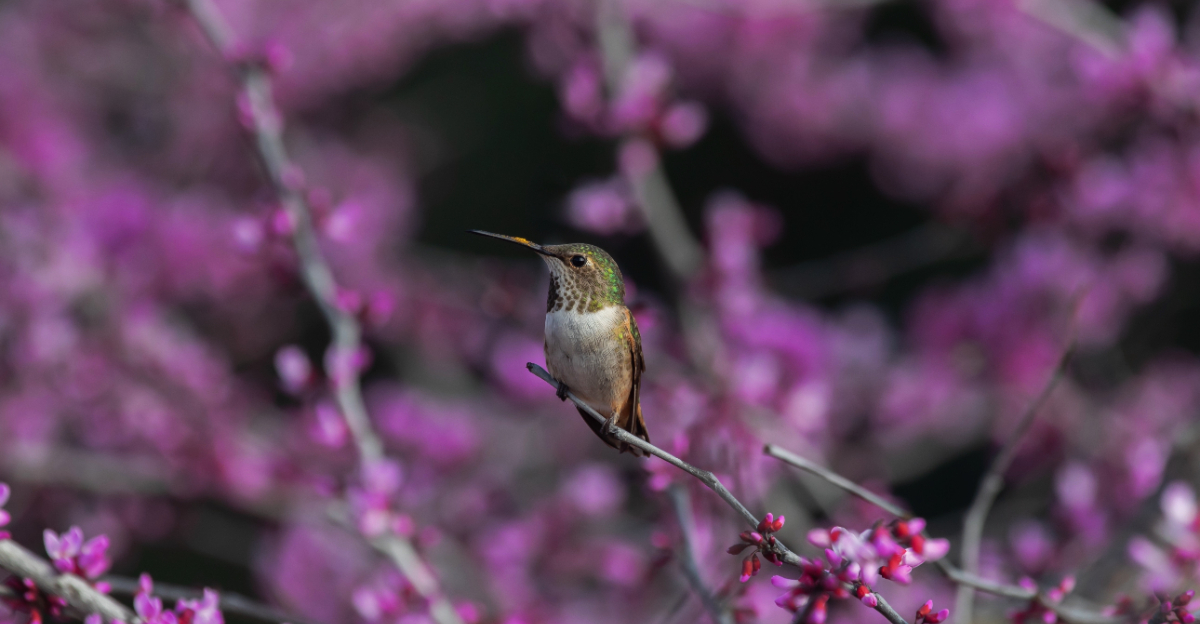
Early in the season, its branches light up with soft pink blooms that seem to appear out of nowhere, catching attention before most plants even wake up.
That early burst of color also signals food for pollinators, which quickly brings more life into the space. As the months pass, the tree keeps giving, offering shade, structure, and seed pods that birds use throughout the year.
Because it is native to California, it handles dry summers with ease once established and fits naturally into a wide range of landscapes.
It is a simple addition that can make a yard feel more active, layered, and connected to the local environment.
Why Western Redbud Stands Out
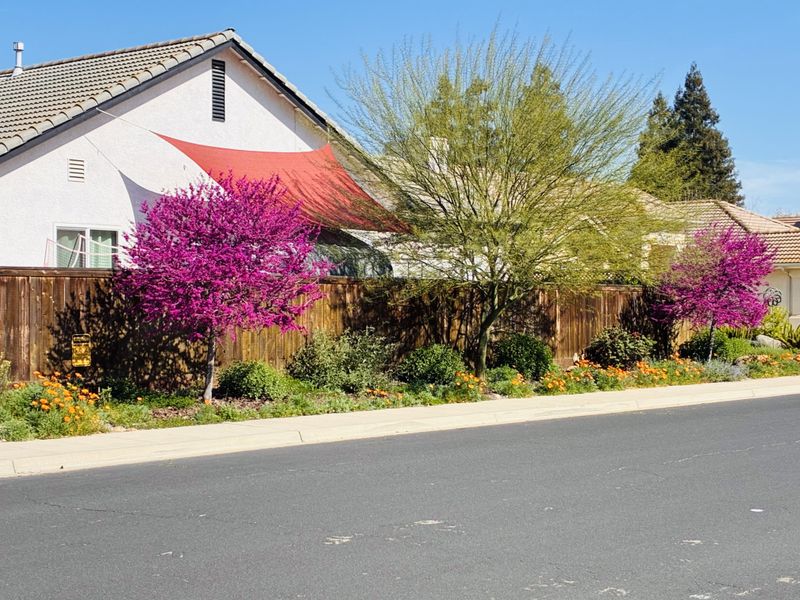
Few native trees can match the year-round beauty and wildlife value of the western redbud. Native to California’s foothills, woodlands, and canyon slopes, this small tree brings something special to every season.
In spring, it explodes with rich magenta flowers. In summer, deep green heart-shaped leaves take over.
Come fall, those leaves shift to golden yellow and warm red, giving your yard a gorgeous show.
What really sets this tree apart is how much it supports local wildlife. Hummingbirds zoom in for the nectar.
Bees work the flowers from morning to evening. Butterflies drift by looking for a landing spot.
Then, as the season moves forward, reddish-purple seed pods hang on the branches and feed songbirds well into winter.
Western redbud grows naturally throughout much of California, including the Sierra Nevada foothills, the Coast Ranges, and the Central Valley edges. It feels right at home in these landscapes because it evolved here.
Planting it in your garden means you are working with nature, not against it. Gardeners across California are rediscovering this tree as a low-effort, high-reward choice that looks stunning and gives back to the local ecosystem every single year.
Early Blooms Feed Pollinators
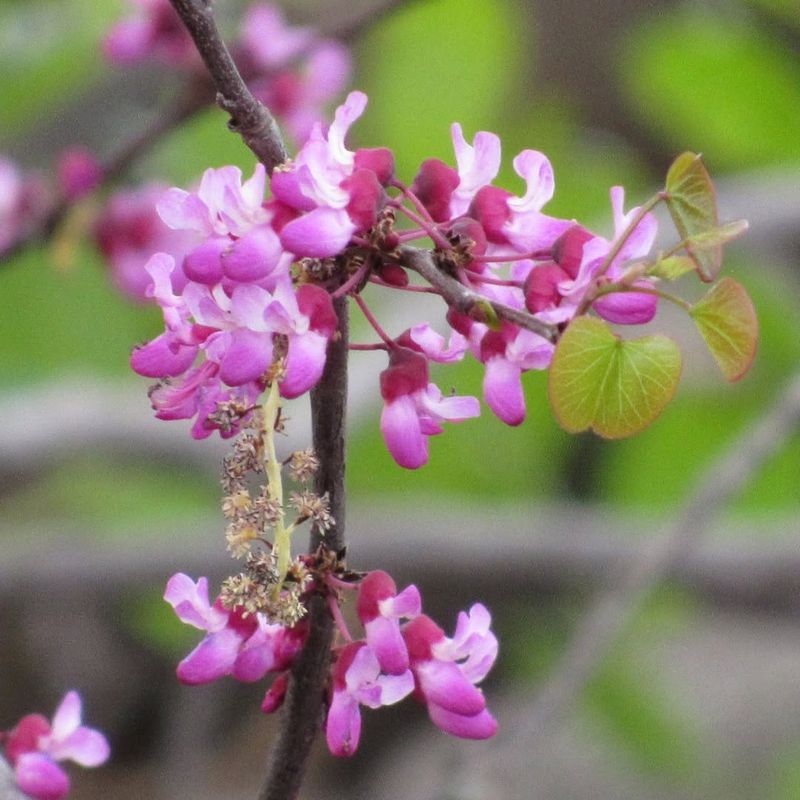
Before most other plants even think about waking up, the western redbud is already putting on a show. Sometime between February and April, depending on where you live in California, clusters of deep magenta flowers pop open all along the bare branches.
There are no leaves yet, just flowers. It looks almost unreal, like someone painted the tree overnight.
Those early blooms are not just pretty. They are a critical food source at a time when not much else is blooming.
Hummingbirds, which stay in California year-round, are some of the first visitors. They hover from branch to branch, sipping nectar and getting the energy they need after cool winter months.
Native bees also show up early, collecting pollen that helps them build strong colonies for the season ahead.
Butterflies like the Western Tiger Swallowtail and the Echo Azure are known to visit redbud blooms too. Having this food source ready in late winter and early spring makes a real difference for these pollinators.
In areas like the Sacramento Valley and the Bay Area, gardens with western redbud become little hotspots of activity when everything else is still quiet. Planting one tree can spark a whole chain of life that benefits your entire yard throughout the growing season.
Your California Garden Changes Every Week. Your Plan Should Too.
Gardening in California changes quickly throughout the season. Every Friday you’ll receive a simple weekly plan showing exactly what to plant, prune, fertilize, harvest, and protect so you never miss the right timing.
Seeds Attract Songbirds Later
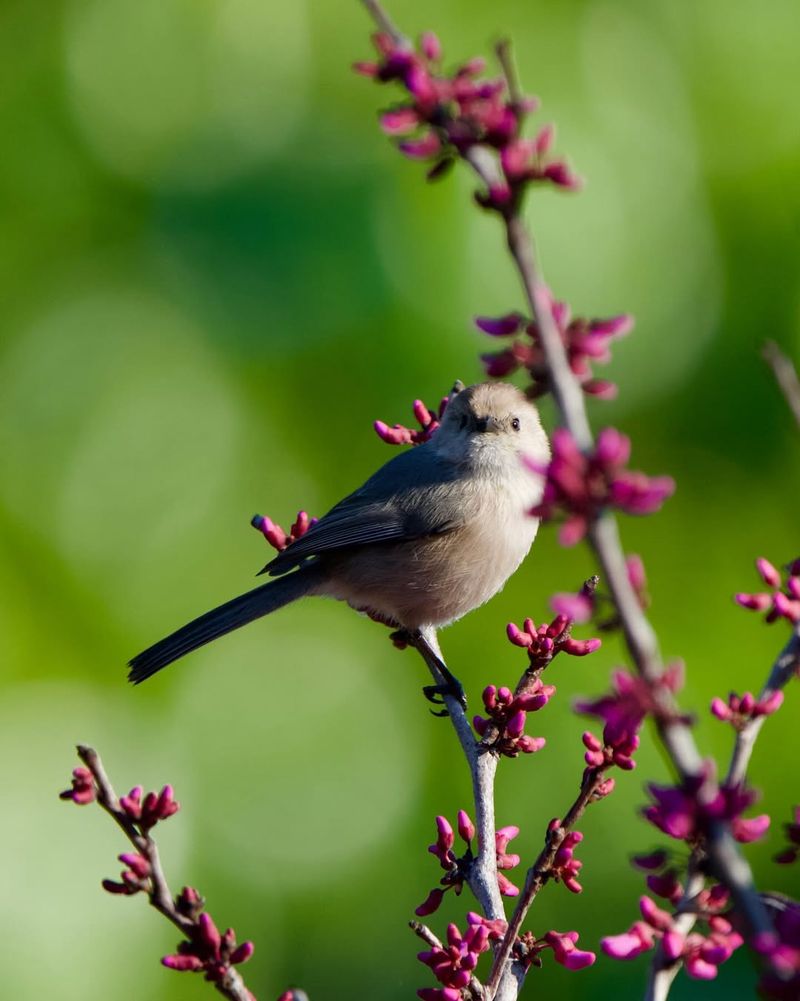
Once the flowers fade and summer settles in, the western redbud shifts into its next role. Long, flat seed pods begin to form along the branches, starting out green and slowly turning a rich reddish-purple as the months pass.
By late summer and into fall, these pods are fully developed and packed with small seeds that songbirds absolutely love.
Goldfinches are some of the most frequent visitors during this time. They cling to the branches and pick seeds right from the pods with their sharp little beaks.
House finches, sparrows, and other seed-eating birds join in too. In California gardens, where natural food sources can get scarce during the dry season, these seed pods become a reliable snack station that keeps birds coming back day after day.
Here is something most people do not realize: the pods do not drop right away. They hang on the tree through fall and often into winter, giving birds a long window to feed.
That persistence makes western redbud especially valuable compared to plants that drop their seeds all at once.
If you have been trying to attract more songbirds to your yard in California, adding a western redbud gives them exactly what they need, right when they need it most.
Thrives In California Climates
California has a reputation for tough growing conditions. Hot summers, dry spells, and unpredictable rainfall can stress out plants that did not evolve here.
Western redbud is different. It grew up in this climate, and it knows exactly how to handle it.
That is a huge advantage for any California gardener who wants a reliable, beautiful tree without constant watering and babysitting.
Naturally found across a wide range of California environments, from the foothills of the Sierra Nevada to the Coast Ranges and down into Southern California, this tree has adapted to many microclimates.
It handles warm inland valleys, dry rocky slopes, and even spots with occasional frost.
Whether you garden in Fresno, Sacramento, or the hills above Los Angeles, there is a good chance western redbud will feel right at home.
Planting a tree that matches your local climate just makes sense. You spend less time worrying about it, less money on water, and less energy fixing problems.
Western redbud rewards you instead. It roots in, settles down, and starts doing its thing, blooming reliably each spring and growing stronger each year.
For California gardeners who want a tree that fits the land rather than fights it, this native beauty is one of the smartest choices available today.
Handles Heat And Dry Conditions
Summer in California can be brutal. Temperatures in many inland areas regularly climb above 100 degrees Fahrenheit, and rainfall basically disappears from June through September.
Many ornamental trees struggle under these conditions. Western redbud does not even flinch.
Once it gets established, usually within its first two to three years, it becomes impressively drought-tolerant.
The tree has developed deep roots that reach down into the soil to find moisture even when the surface is bone dry. It has also evolved to slow down during the hottest, driest parts of summer rather than pushing hard growth when water is scarce.
That smart survival strategy means less stress on the tree and less work for you. In fact, overwatering a western redbud in summer can actually cause more problems than underwatering it.
For gardeners in places like the Central Valley, the Inland Empire, or the drier parts of the San Francisco Bay Area, this tree is a genuine solution to the challenge of keeping a yard green and alive through long dry seasons.
Pairing it with other California natives like toyon, manzanita, or California lilac creates a landscape that looks lush and full while using very little water.
That combination is not just good for your water bill. It is good for California’s future too.
Perfect For Small Yards
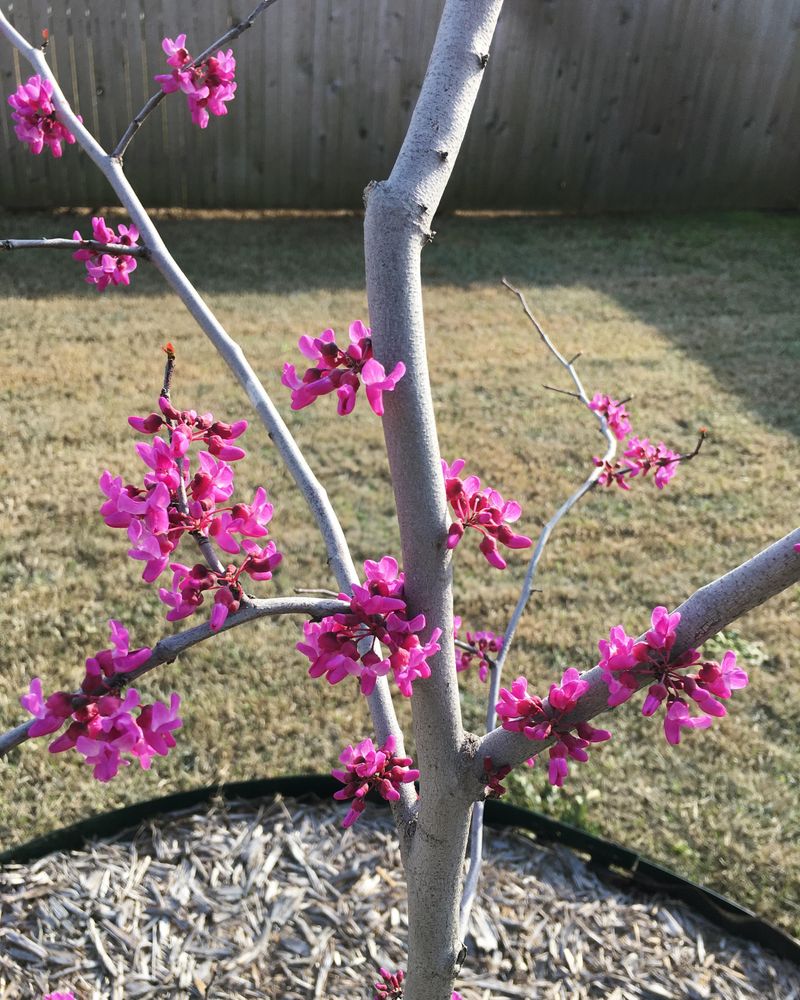
Not everyone has acres of land to work with. Many California homeowners are dealing with small backyards, narrow side yards, or tight front garden beds.
The good news is that western redbud was practically made for these spaces. It typically grows between 10 and 18 feet tall with a similar spread, making it a proper small tree rather than something that will eventually take over your yard.
Its tidy, rounded shape means it fits neatly under power lines, beside patios, or near fences without turning into a maintenance headache.
You can plant it close to a seating area and enjoy the shade it provides in summer without worrying that it will crack your foundation or shade out everything else.
Its manageable size also makes it easier to appreciate the flowers, seed pods, and visiting birds up close.
Urban and suburban gardeners across California have been embracing western redbud as a practical solution for small-space landscaping. It works as a focal point in a front yard, a privacy screen along a fence line, or a shady companion near a garden bench.
Because it stays naturally compact without heavy pruning, you get all the visual impact of a flowering tree without the constant trimming. For anyone in California looking for a tree that fits their space and still attracts wildlife, this one checks every box.
Low Maintenance Native Choice
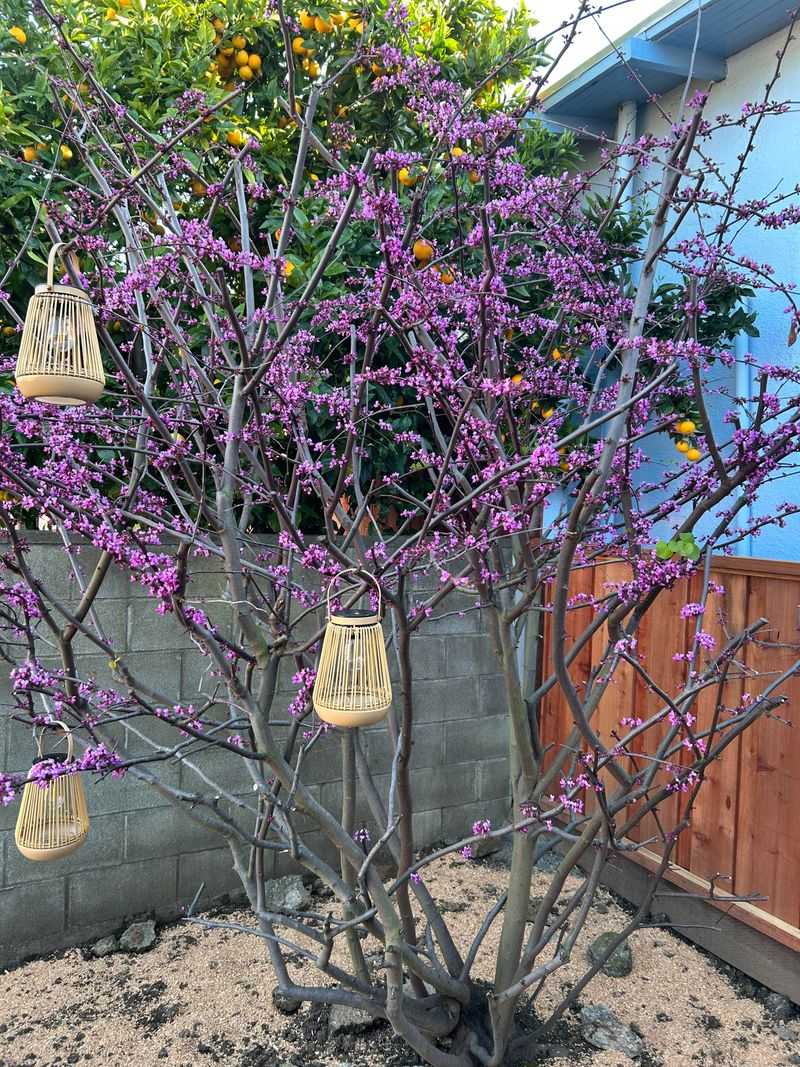
Some trees demand constant attention. Regular fertilizing, heavy watering schedules, pest treatments, and pruning can turn gardening into a second job.
Western redbud takes a completely different approach. Once it settles into its new home, it mostly takes care of itself.
That makes it a favorite among California gardeners who love beautiful landscapes but have limited time to maintain them.
The key to getting it started right is simple. Plant it in well-drained soil with full sun to partial shade, water it regularly during its first couple of summers to help it establish roots, then step back.
After that, occasional deep watering during extreme drought is usually all it needs. Mulching around the base helps keep moisture in and weeds out, which is always a good idea with any new planting.
Pests and diseases are rarely a serious problem for this tree when it is planted in the right conditions. It is well-adapted to California’s soils and climate, which means it does not need chemical sprays or constant monitoring.
Native trees like western redbud also support the local food web in ways that non-native plants simply cannot. Birds, insects, and other wildlife have evolved alongside it for thousands of years.
Choosing it for your California garden means choosing a tree that is built to last, built to give back, and built to thrive right where you live.