7 Plants California Gardeners Should Not Grow Next To Tomatoes
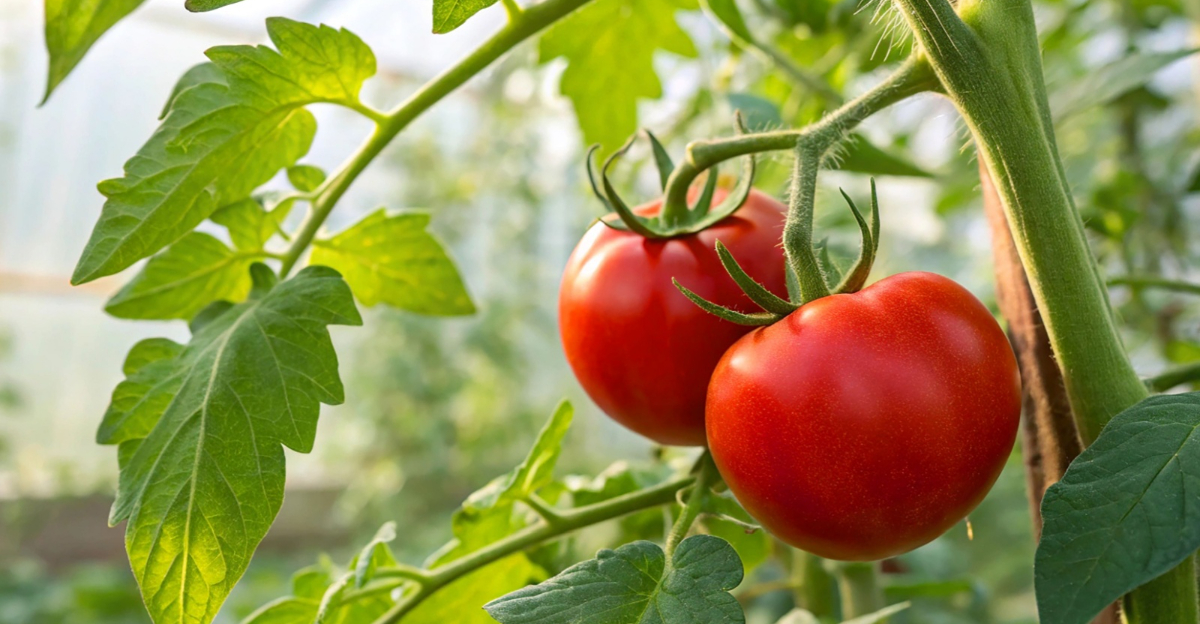
Tomatoes tend to thrive in California, but what grows nearby can quietly shape how well they perform.
A bed that looks full and healthy early in the season can run into trouble later when pests move in or plants start competing below the surface.
Warm summers and long growing seasons support strong tomato growth, yet they also give insects and diseases more time to build.
Some neighboring plants share those same problems or pull heavily from the soil at the same time.
A few thoughtful choices about what to plant nearby can help tomatoes stay stronger and more productive through the season.
1. Corn Can Attract The Same Fruit Damaging Pests As Tomatoes
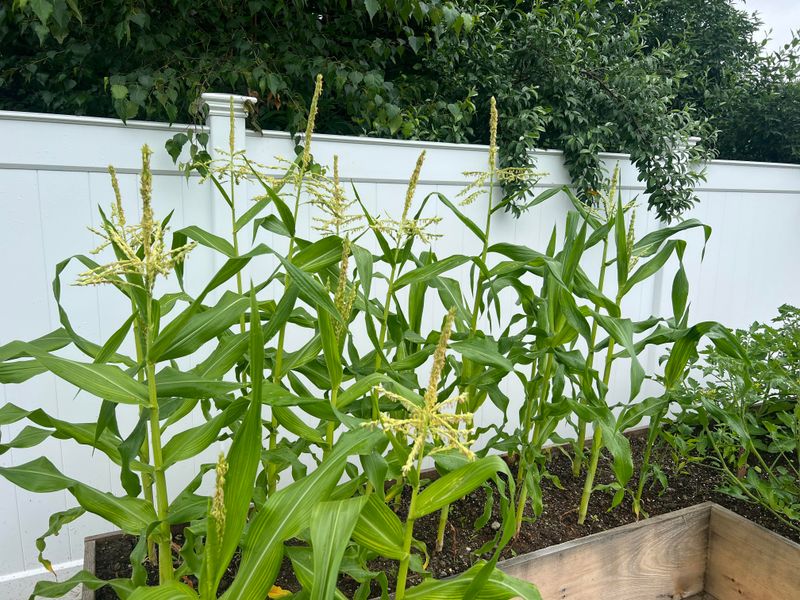
Gardeners across California often discover mid-season that their tomatoes and corn are quietly sharing something they wish they weren’t – pests.
The corn earworm, known in tomato beds as the tomato fruitworm, moves freely between both crops when they grow side by side.
This moth lays eggs on corn silks and tomato foliage alike, and once the larvae hatch, they burrow directly into the fruit.
In California’s warm Central Valley and Southern California growing zones, pest populations build quickly through the summer.
When corn and tomatoes grow close together, they essentially create a pest refuge that keeps insect numbers high throughout the season.
Removing one crop doesn’t help much if the other is still attracting the same insects just a few feet away.
Beyond pest pressure, corn grows tall fast. Its height can cast shade over tomato plants, reducing the sunlight tomatoes depend on for strong fruit development.
California tomatoes thrive with full sun exposure, so shading from neighboring corn can lead to fewer fruits and slower ripening.
Keeping corn and tomatoes separated by at least 30 to 40 feet gives both crops a better chance. Rotating planting locations each season also helps break pest cycles before they get established.
If you want to grow both crops in a smaller California garden, focus on physical barriers or staggered planting times to reduce the overlap in pest activity between the two.
2. Potatoes Share Diseases That Can Spread Through The Soil
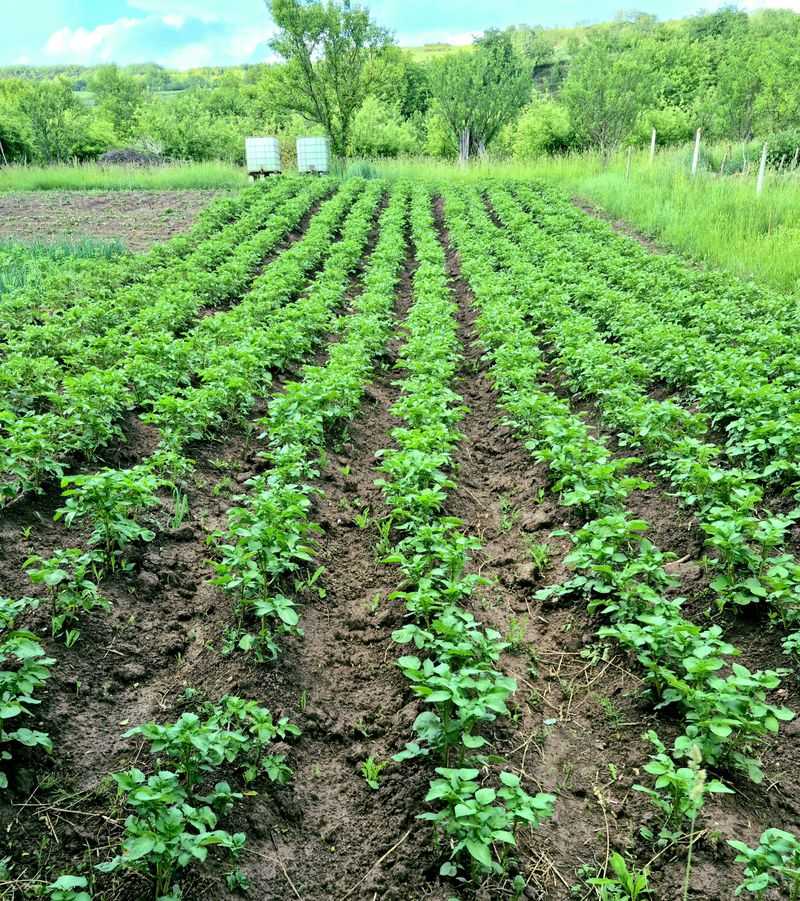
Few gardening mistakes in California carry as much long-term risk as planting potatoes near tomatoes. Both belong to the nightshade family, which means they share a surprisingly long list of vulnerabilities.
Late blight, caused by the water mold Phytophthora infestans, can devastate both crops and spreads rapidly through soil, water splash, and air movement.
California’s coastal regions, where fog and cool mornings are common during summer, can create ideal conditions for blight to develop and spread. Once late blight takes hold in a garden bed, it moves quickly.
Planting potatoes and tomatoes together essentially gives the disease two host plants to cycle through, making it much harder to control or eliminate.
Root-knot nematodes are another shared concern. These microscopic soil organisms damage root systems and reduce the ability of both crops to take up water and nutrients.
In California’s sandy soils, nematode populations can build up quickly, especially when the same family of plants is grown repeatedly in the same spot.
Your California Garden Changes Every Week. Your Plan Should Too.
Gardening in California changes quickly throughout the season. Every Friday you’ll receive a simple weekly plan showing exactly what to plant, prune, fertilize, harvest, and protect so you never miss the right timing.
Crop rotation is one of the most effective tools for managing these shared threats.
Moving tomatoes and potatoes to different areas of the garden each year – ideally waiting three to four years before returning to the same spot – helps reduce pathogen buildup in the soil.
Keeping these two crops as far apart as possible during the growing season, and never composting diseased plant material from either crop, are practical steps every California gardener should follow.
3. Eggplant Brings Overlapping Pests And Disease Pressure
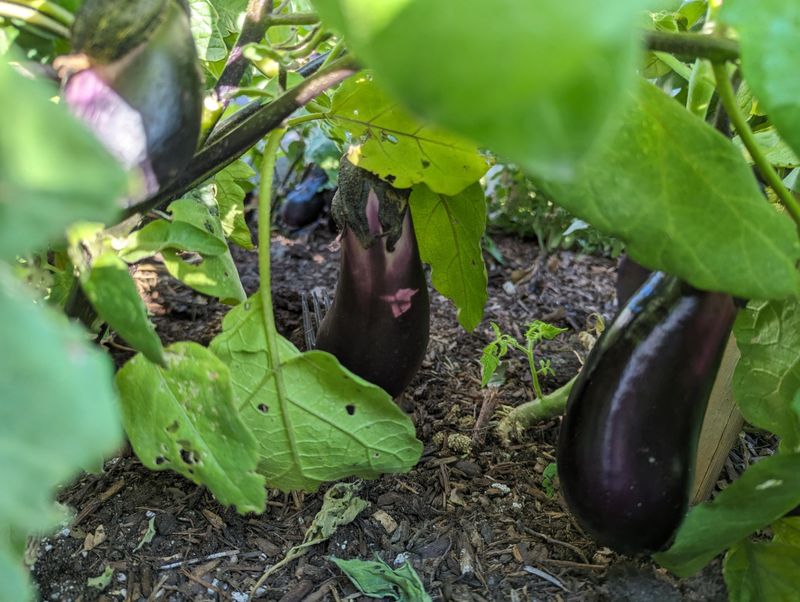
Walking through a California garden in late summer, it’s easy to see why eggplant and tomatoes look like natural companions – they’re often ready to harvest around the same time, they love the heat, and they seem to fit neatly into the same garden plan.
The problem runs deeper than appearances suggest.
Eggplant shares the same nightshade family as tomatoes, and that connection brings a long list of shared vulnerabilities.
Early blight and Verticillium wilt are two of the most damaging diseases that affect both crops.
When eggplant and tomatoes grow side by side, these fungal diseases can spread between plants through soil contact, water splash, and even foot traffic in the garden.
California’s warm, dry summers with occasional humidity spikes create conditions where fungal diseases can flare up quickly.
Pest overlap is just as concerning. Flea beetles, aphids, and spider mites are drawn to eggplant and will readily move to nearby tomato plants.
In California gardens where pest pressure from whiteflies is already common, adding eggplant to the mix near tomatoes can amplify the problem significantly.
Giving each crop its own dedicated space, separated by several feet and ideally by unrelated plant families, reduces the risk of disease and pest transfer.
Rotating eggplant and tomatoes to different beds each season is a smart habit that protects soil health and keeps disease pressure lower over time.
Mulching around both crops also helps prevent soil splash, which is one of the main ways fungal spores travel between neighboring plants.
4. Peppers Compete For Nutrients And Garden Space
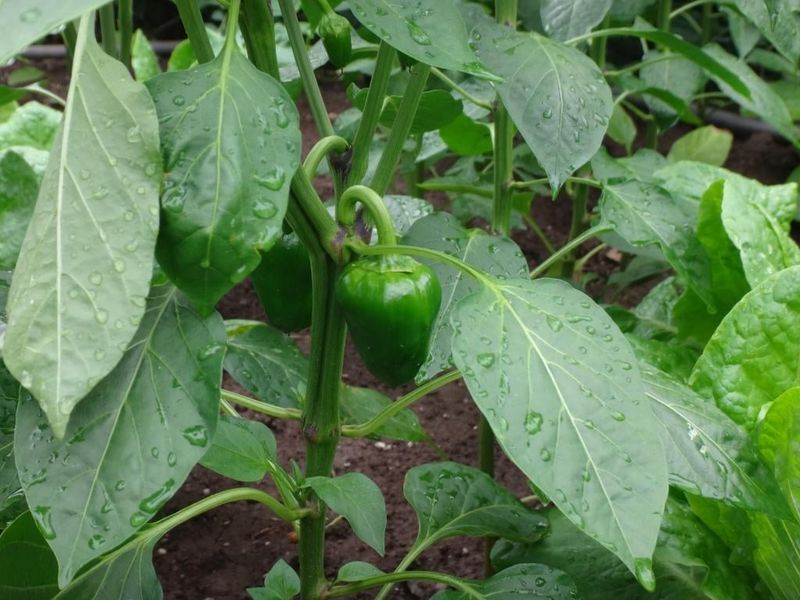
At first glance, peppers and tomatoes seem like a natural pairing for any California garden. They both love heat, they both produce through a long summer season, and they look great planted together in raised beds.
But putting them side by side often leads to a quiet competition that neither plant wins cleanly.
Both tomatoes and peppers are heavy feeders, meaning they pull significant amounts of nitrogen, phosphorus, and potassium from the soil throughout the growing season.
When grown close together, they end up competing for the same nutrients in the same root zone.
This competition can lead to slower growth, reduced fruit set, and smaller harvests for both crops – even in California’s generally fertile garden soils.
Root space is another issue that often gets overlooked. Tomato root systems spread wide and deep, sometimes reaching several feet in all directions.
Pepper roots occupy a similar zone, and when both plants crowd into the same area, neither develops as fully as it would with more room to spread.
Crowded roots also create conditions where soil moisture becomes uneven, which can contribute to blossom end rot in tomatoes.
Shared pest vulnerabilities add to the concern. Aphids, pepper weevils, and spider mites move easily between the two crops.
Spacing peppers and tomatoes at least three to four feet apart, and placing unrelated plants between them when possible, helps reduce competition and pest transfer.
California gardeners working with smaller plots can benefit from vertical growing systems that give each crop room without sacrificing garden space.
5. Fennel Can Interfere With Nearby Plant Growth
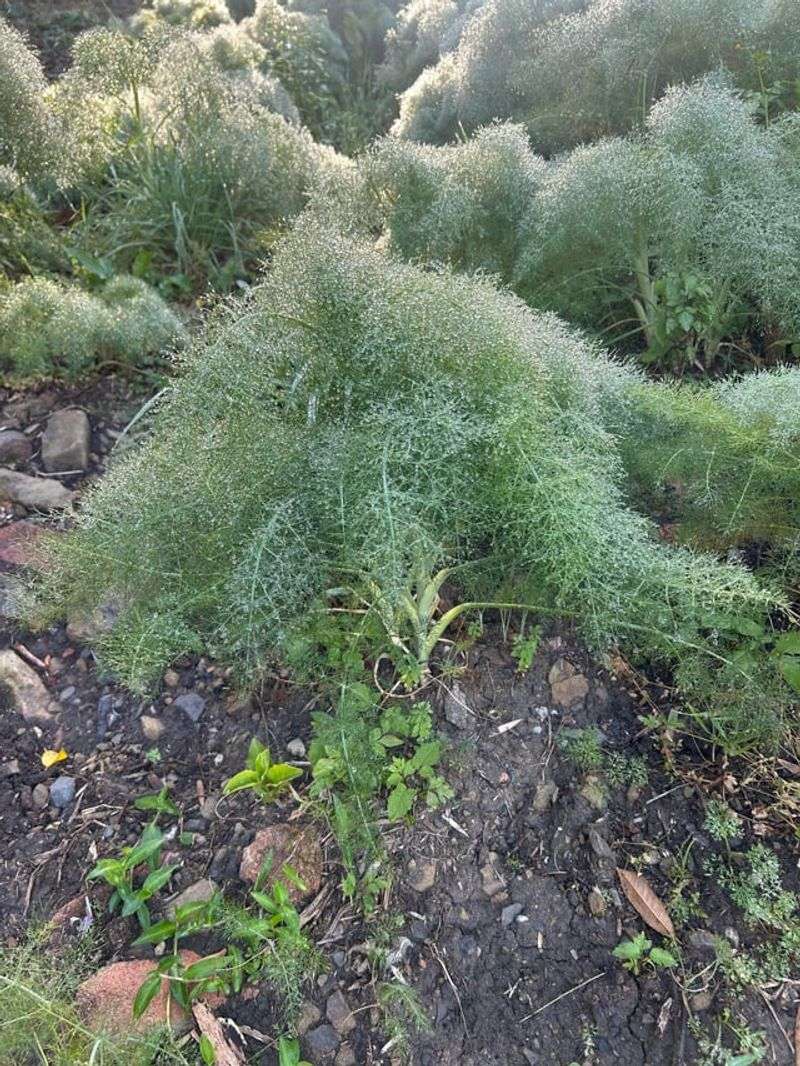
Fennel has a reputation as a troublemaker in the vegetable garden, and that reputation is well earned. Unlike most companion planting concerns that involve pests or diseases, fennel’s impact on tomatoes comes from chemistry.
Fennel releases allelopathic compounds into the surrounding soil – natural chemicals that suppress the germination and growth of nearby plants, including tomatoes.
These compounds don’t need direct contact to cause problems. They leach into the soil through fennel’s roots and decaying plant material, spreading into the root zones of neighboring plants over time.
Tomato plants growing near fennel may show signs of stunted growth, yellowing leaves, or reduced fruit production without any obvious pest or disease explanation.
California gardeners who notice their tomatoes underperforming near fennel often don’t connect the two until the problem has already affected the harvest.
Fennel is also notorious for being difficult to grow alongside almost anything in the vegetable garden. It tends to inhibit a wide range of plants, not just tomatoes.
Most experienced California gardeners recommend giving fennel its own dedicated bed, well away from vegetable crops, or growing it in containers where its root system and soil chemicals stay contained.
If you enjoy growing fennel for cooking – and it is a wonderful culinary herb – the key is separation. Keeping fennel at least six to eight feet from tomatoes, and ideally on the opposite side of the garden, reduces the risk of chemical interference.
Removing fennel from areas where you plan to grow tomatoes the following season, and allowing time for the soil to recover, also helps protect future tomato plantings.
6. Brassicas Compete Heavily And Disrupt Tomato Growth
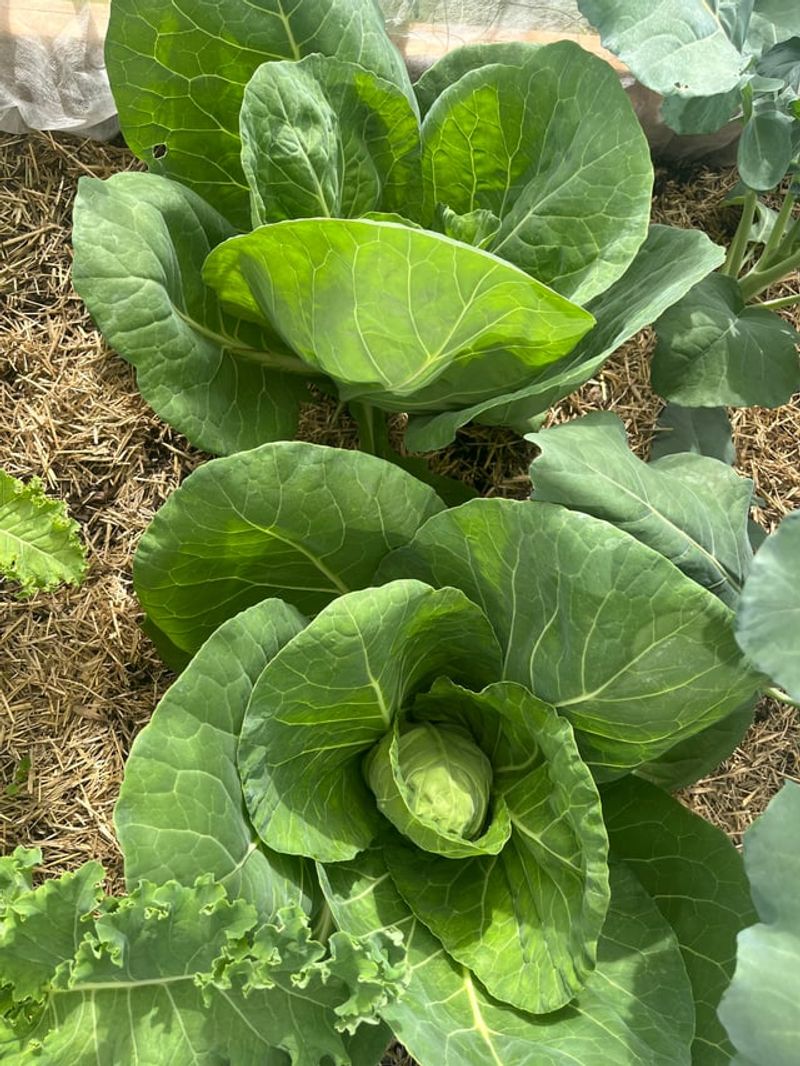
Broccoli, cabbage, cauliflower, kale, and Brussels sprouts are some of the most popular vegetables grown in California gardens, but they have a well-documented tendency to cause problems when planted too close to tomatoes.
The brassica family as a whole is made up of heavy feeders that pull large amounts of nitrogen and other nutrients from the soil at a rapid pace.
When brassicas grow near tomatoes, the nutrient competition is intense.
Tomatoes already have high nutritional demands throughout the growing season, and having brassicas pulling from the same soil zone can leave tomatoes struggling to get what they need.
The result is often slower growth, pale or yellowing foliage, and reduced fruit production – even when gardeners are adding fertilizer regularly.
There’s also a timing mismatch that creates practical challenges for California gardeners. Brassicas tend to perform best in cooler weather, while tomatoes thrive in the heat.
Trying to grow both in the same bed can mean one crop is always being planted or removed while the other is trying to establish itself, disrupting root zones and creating ongoing soil disturbance.
Brassicas can also harbor cabbage worms and aphids that may migrate to nearby tomato plants once the brassica crop matures or is removed.
Keeping brassicas on the opposite side of the garden from tomatoes, and rotating them into beds where tomatoes were not recently grown, helps reduce competition and keeps pest pressure from building up between the two plant families.
Good spacing and dedicated beds make a noticeable difference in yield.
7. Dill At Maturity Can Suppress Tomato Development
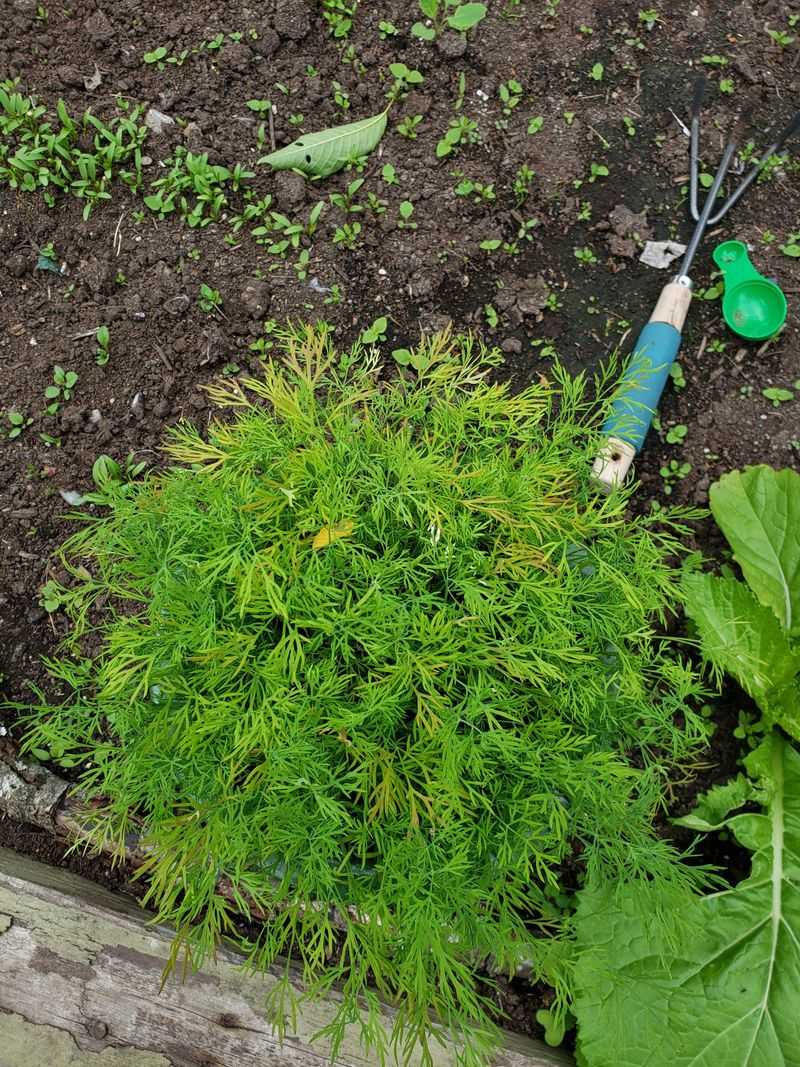
Young dill is often recommended as a tomato companion because it attracts beneficial insects like parasitic wasps that prey on tomato hornworms.
That benefit is real, but it comes with a significant catch that many California gardeners learn about the hard way.
Once dill matures and begins to flower, it shifts from being a helpful neighbor to a potentially disruptive one.
Mature dill releases compounds that can inhibit tomato growth, particularly once the plant bolts and begins producing seed heads.
The chemical interaction between mature dill and tomatoes isn’t as dramatic as fennel’s allelopathic effect, but it can still slow tomato development and reduce overall plant vigor when the two grow in close contact over an extended period.
There’s also a cross-pollination concern if you’re saving seeds.
Dill and tomatoes don’t cross-pollinate directly, but dill can cross with fennel, and having both dill and fennel near tomatoes compounds the chemical interference issue.
California’s long growing season means dill has plenty of time to bolt and reach maturity while tomatoes are still actively producing, which extends the window of potential interference.
The practical solution is to harvest dill regularly to prevent it from bolting, or to keep it at least five to six feet away from tomato plants.
If dill does go to flower near your tomatoes, remove the plants promptly and compost them away from the garden bed.
Planting young dill in a separate herb area and allowing beneficial insects to travel naturally between beds gives you the pest control benefits without the growth suppression risk to your California tomato crop.
8. Sunflowers Can Draw Aphids Toward Tomato Plants
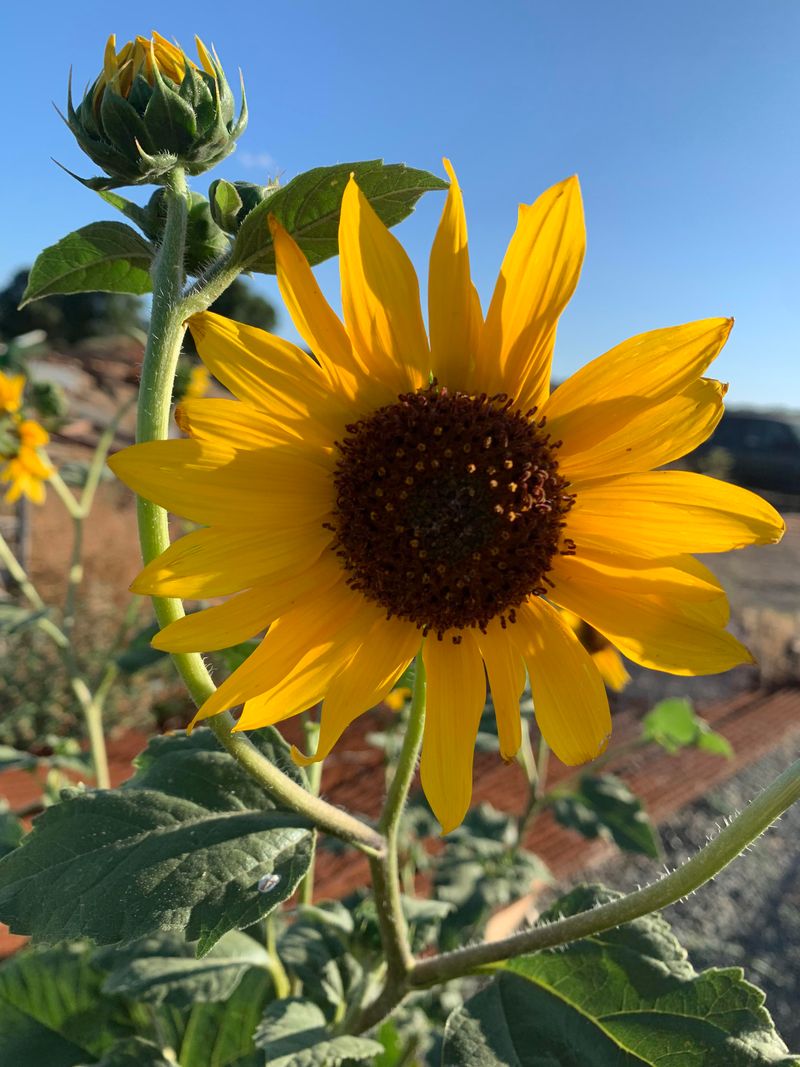
Sunflowers are a beloved addition to California gardens for good reason – they’re cheerful, drought-tolerant, and easy to grow in the state’s warm climate. Many gardeners plant them near vegetables thinking they’ll add beauty without causing any harm.
When it comes to tomatoes, though, sunflowers deserve a second look before being placed right next door.
Sunflowers are known to attract aphids, particularly the sunflower aphid, which forms large colonies on stems and leaves.
While aphids on sunflowers aren’t always a crisis by themselves, the problem is that aphid populations can spread quickly to neighboring plants.
Tomatoes are already a magnet for aphids in California gardens, and having a heavily infested sunflower nearby can dramatically increase the aphid pressure on your tomato crop.
There’s also evidence that sunflowers produce allelopathic chemicals through their roots and decomposing plant material that may slow the growth of nearby vegetables, including tomatoes.
The effect isn’t as pronounced as fennel’s, but in a closely planted garden bed, even mild chemical interference can add up over a long growing season.
Height is a practical concern as well.
Sunflowers can grow six to ten feet tall, and when planted on the south or west side of a tomato bed in California, they can cast significant shade during the afternoon hours when sun exposure matters most for fruit development.
Planting sunflowers on the north side of the garden, at a distance of at least four to five feet from tomato plants, lets you enjoy their beauty while keeping their potential negative effects well away from your tomatoes.
9. Mint Can Spread Aggressively And Compete With Tomatoes
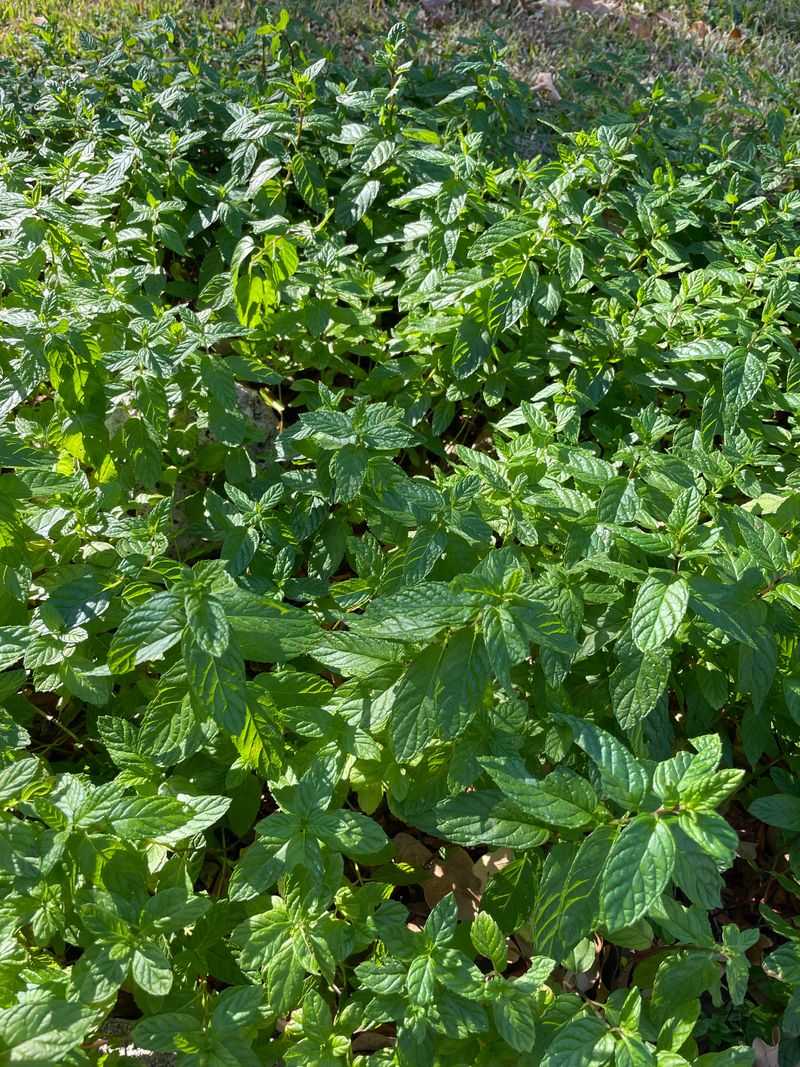
Mint has a well-earned reputation as one of the most aggressive spreaders in the herb garden.
What starts as a single small plant can quickly become a dense mat of roots and stems that takes over an entire garden bed within a single California growing season.
That spreading habit is exactly why mint and tomatoes don’t make good neighbors.
As mint sends out underground runners, called rhizomes, it competes directly with tomato roots for water and nutrients.
In California’s summer heat, where consistent moisture is already critical for tomato production, having mint drawing from the same soil zone can stress tomato plants during the hottest and most demanding weeks of the growing season.
Water-stressed tomatoes are more vulnerable to blossom end rot and cracking, both of which reduce fruit quality and yield.
There’s also a shading concern with low-growing mint varieties that spread at the base of tomato plants. Dense mint coverage at ground level can trap moisture around tomato stems and lower foliage, creating conditions that encourage fungal diseases like Botrytis and early blight.
California coastal gardens, where morning fog and humidity are common, face a higher risk of these moisture-related disease issues.
The best approach is to grow mint in containers, which is a widely recommended practice for keeping this herb in check.
Placing container-grown mint near the garden can still attract beneficial insects like bees without allowing the plant to invade tomato root zones.
If you prefer in-ground mint, keeping it bordered by a deep root barrier and maintaining at least three feet of distance from tomato plants helps reduce competition and spreading.
10. Black Walnut Trees Release Compounds That Harm Tomatoes
Some garden problems don’t come from what you plant – they come from what’s already growing in your yard.
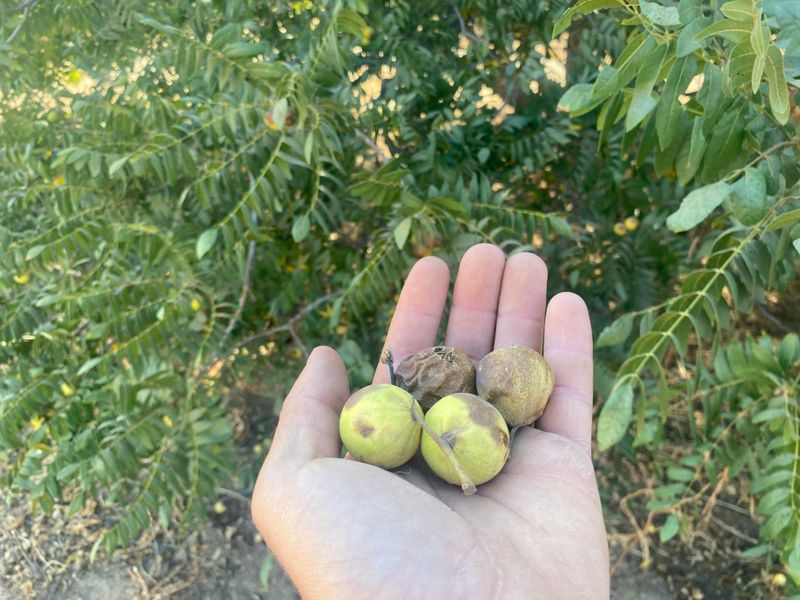
Black walnut trees are a striking presence in many California landscapes, valued for their shade and their nuts, but they pose a serious risk to tomato plants growing anywhere in their vicinity.
The culprit is a natural compound called juglone, which black walnuts produce in their roots, leaves, hulls, and bark.
Juglone leaches into the surrounding soil and can persist for years, even after a tree is removed. Tomatoes are particularly sensitive to this compound.
Plants exposed to juglone may wilt rapidly, show yellowing leaves, or simply fail to thrive despite good watering and fertilization.
In some cases, tomato plants growing near black walnuts can decline rapidly within just a few weeks of transplanting, leaving gardeners puzzled about the cause.
The effective zone of juglone toxicity can extend well beyond the tree’s canopy – sometimes reaching 50 to 80 feet from the trunk, depending on the size and age of the tree.
This means that even if a tomato bed looks physically separate from a black walnut, the roots may have already spread into that soil.
California gardeners dealing with existing black walnut trees on their property should map out the root zone carefully before selecting garden locations.
Raised beds with fresh, uncontaminated soil and a physical barrier at the bottom can help reduce exposure to juglone in areas near these trees.
Choosing a planting location on the opposite side of the property from any black walnut trees is the most reliable way to protect tomatoes from this invisible but damaging soil compound.