10 Native Michigan Flowers That Bloom When Pollinators Need Food Most
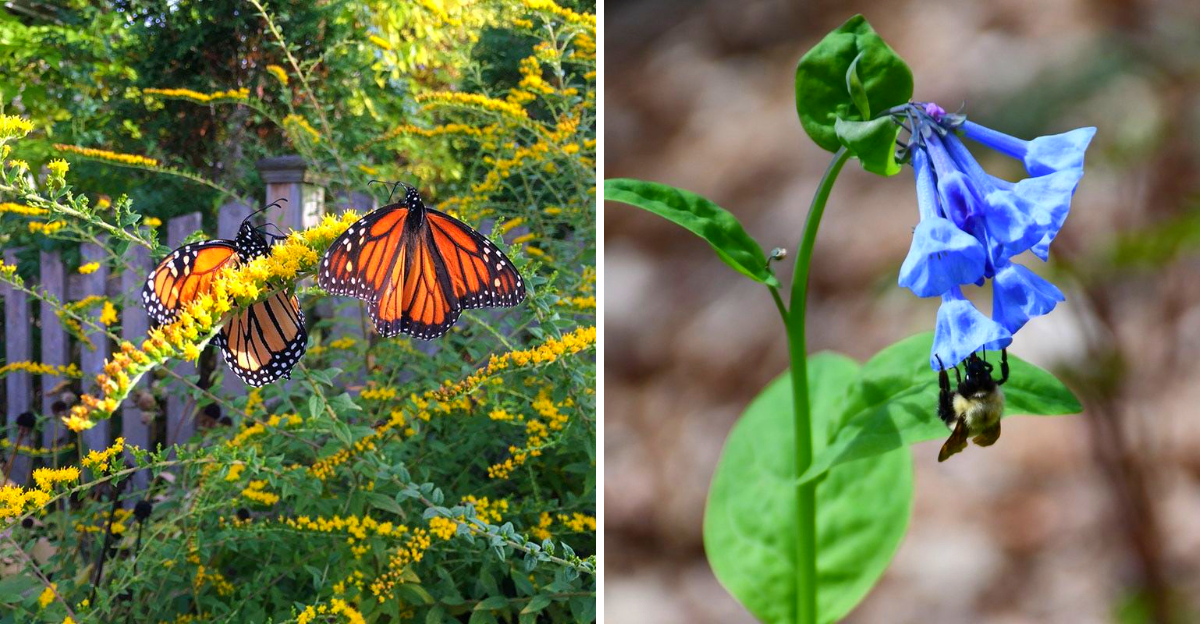
Bright color draws attention, but timing often makes the bigger difference for pollinators in Michigan gardens. Early spring can arrive with very few blooms, and late fall can leave insects searching for their last reliable food sources.
In between, steady flowering helps keep bees, butterflies, and other beneficial insects active and supported. Michigan’s long growing season creates a real opportunity to plan for that continuity.
By choosing native flowers that bloom in sequence from early spring through fall, you can fill those gaps naturally.
With the right mix, your garden can stay lively and supportive without adding extra work.
1. Bloodroot Blooms Early In Shaded Michigan Woodlands
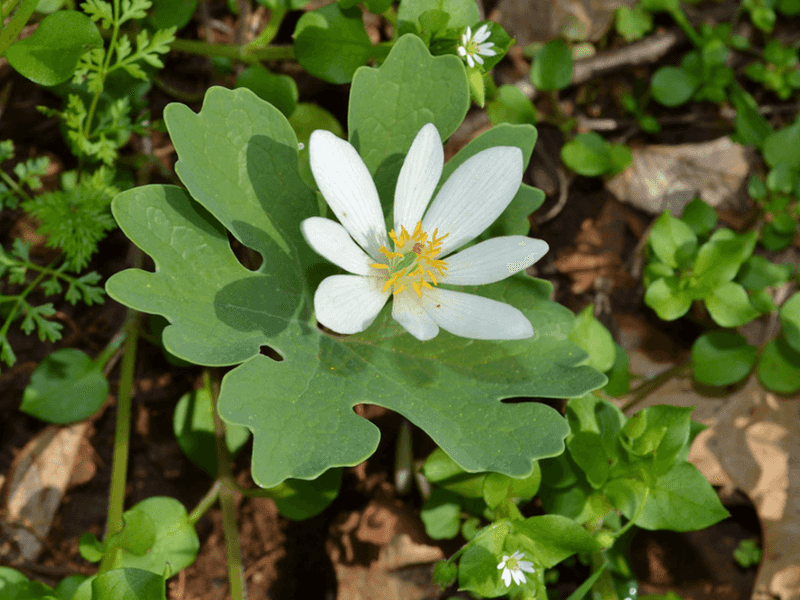
When the soil is barely thawed and most of Michigan’s landscape still looks dormant, bloodroot pushes through the leaf litter with quiet determination.
This early bloomer, known botanically as Sanguinaria canadensis, produces striking white petals surrounding a bright yellow center, often appearing in late March or early April depending on the year.
Its fleeting bloom window lasts only a week or two, but that timing is exactly what makes it so valuable.
Early-emerging native bees, including mining bees and small sweat bees, are actively searching for pollen during this period when almost nothing else is flowering in Michigan.
Bloodroot provides both pollen and a small amount of nectar, giving these early risers a critical energy source after a long winter.
The plant grows naturally in shaded woodland settings with moist, well-drained soil rich in organic matter.
In a home garden, bloodroot works well beneath deciduous trees where it can receive dappled spring sunlight before the canopy fills in.
It spreads slowly over time through rhizomes, forming loose colonies that become more generous with blooms each year.
Pairing bloodroot with other spring ephemerals like wild columbine helps extend the early-season food window for Michigan pollinators.
2. Wild Columbine Supports Early Hummingbirds And Pollinators
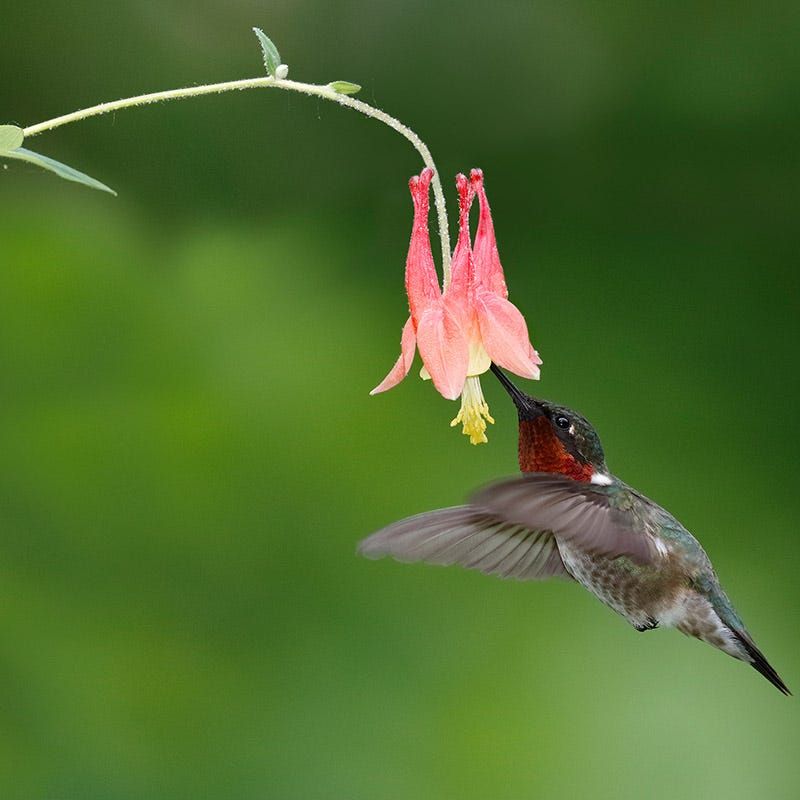
Ruby-throated hummingbirds begin arriving in Michigan in early May, and they arrive hungry after a long migration from Central America.
Wild columbine, Aquilegia canadensis, blooms right around that same window, making it one of the most timely native plants a Michigan gardener can grow.
The red and yellow tubular flowers are practically designed for hummingbird feeding, with long spurs that hold nectar deep inside each blossom.
Beyond hummingbirds, wild columbine also supports long-tongued bumblebees and various native bee species that visit the flowers for both nectar and pollen.
It typically blooms from late April through June in Michigan, bridging the gap between the earliest spring ephemerals and the main flush of summer wildflowers.
The plant thrives in partial shade to full sun and tolerates rocky or sandy soils, making it adaptable across many Michigan landscapes.
Wild columbine self-seeds reliably once established, gradually filling in open areas beneath trees or along woodland edges.
Unlike many ornamental plants, it does not require supplemental fertilizing or frequent watering once its root system settles in.
Growing it alongside bloodroot and Virginia bluebells creates a layered early-season display that keeps pollinators well fed throughout spring.
Your Michigan Garden Changes Every Week. Your Plan Should Too.
Gardening in Michigan changes quickly throughout the season. Every Friday you’ll receive a simple weekly plan showing exactly what to plant, prune, fertilize, harvest, and protect so you never miss the right timing.
3. Virginia Bluebells Fill The Spring Nectar Gap
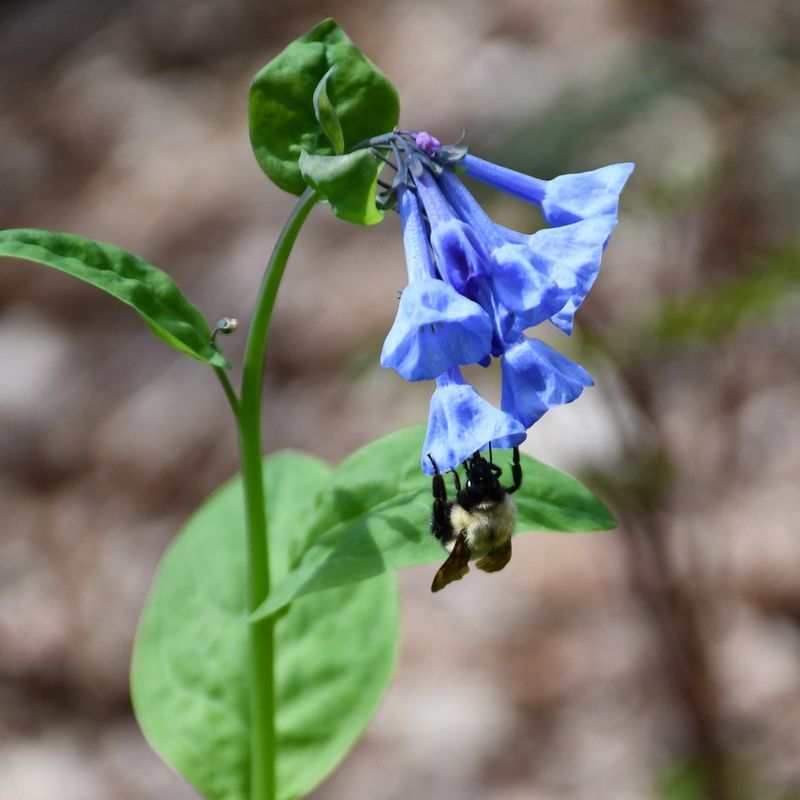
Few sights in a Michigan spring garden are as striking as a mass planting of Virginia bluebells catching the morning light.
Mertensia virginica produces clusters of trumpet-shaped flowers that open pink and gradually shift to a soft sky blue as they mature, creating a two-toned effect that is genuinely hard to replicate with non-native plants.
Blooming from mid-April through May, Virginia bluebells arrive right when the spring nectar gap is at its most severe.
Bumblebee queens, which emerge early and need consistent food to establish new colonies, rely heavily on spring-blooming natives like this one.
The tubular flowers are especially accessible to long-tongued bees, and migrating butterflies such as the eastern tiger swallowtail will also visit the blooms during their journey through Michigan.
The plant grows best in moist, rich soil with partial to full shade, and it thrives naturally along floodplains and stream banks.
One of the more interesting things about Virginia bluebells is that the foliage completely disappears by early summer, making room for other plants to fill the space.
Planting it alongside hostas or ferns helps cover the bare patches left behind after the foliage fades.
For Michigan gardeners trying to support pollinators in shaded areas, this is a reliable and low-effort choice.
4. Golden Alexanders Attract A Wide Range Of Early Insects
Not every pollinator has a long tongue or the ability to reach deep into tubular flowers.
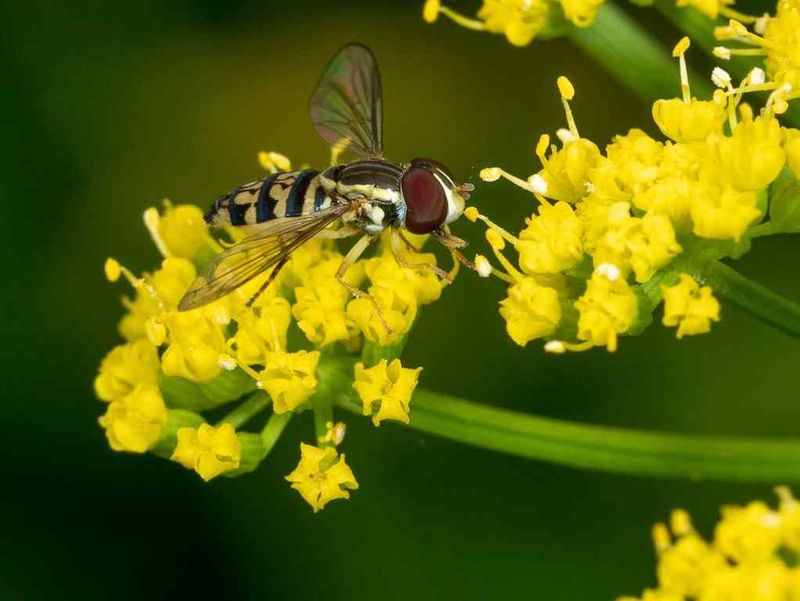
Golden Alexanders, Zizia aurea, address that gap by offering flat-topped clusters of tiny yellow flowers that are accessible to a remarkably wide range of insects.
Short-tongued bees, wasps, beetles, flies, and small butterflies can all feed easily from the open flower structure, making this one of the most inclusive plants in a Michigan pollinator garden.
Blooming in May and June, golden Alexanders arrive just as spring ephemerals begin to fade and before the bulk of summer wildflowers take over. That timing fills an important window in Michigan’s pollinator calendar.
The plant is also a host plant for the black swallowtail butterfly, which lays eggs on the foliage so caterpillars can feed as they develop.
Golden Alexanders grow well in full sun to partial shade and handle a range of soil moisture levels, from consistently moist areas near water features to average garden beds.
They reach about two to three feet in height and work well in the middle layer of a mixed native planting.
Because they are genuinely adaptable and require very little care once established, they are a practical choice for Michigan gardeners who want strong pollinator support without constant upkeep.
5. Purple Coneflower Provides Steady Summer Nectar
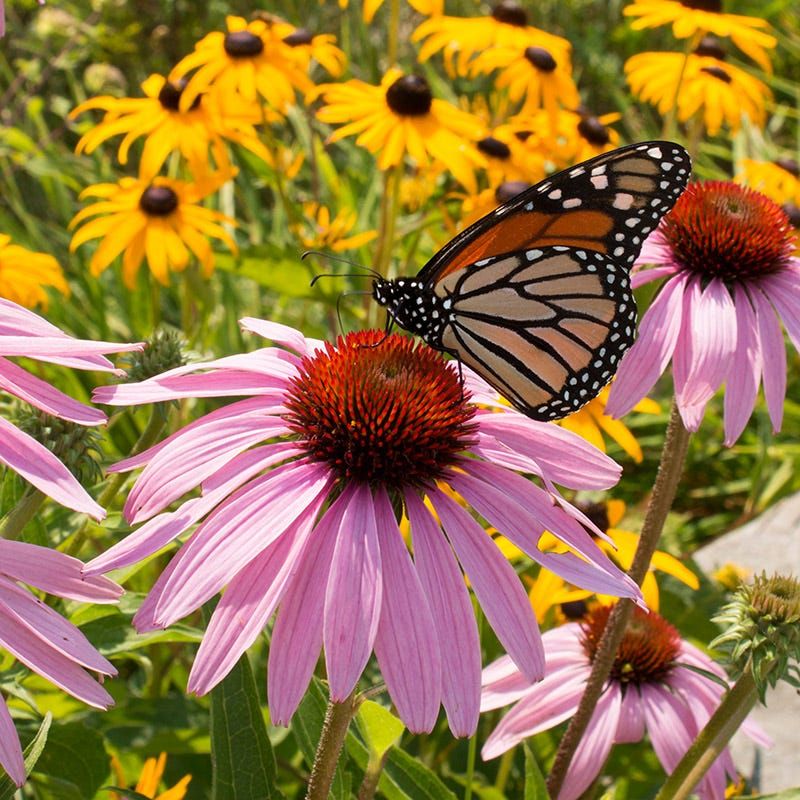
Summer in Michigan brings a surge of pollinator activity, and purple coneflower, Echinacea purpurea, is one of the most reliable plants for meeting that demand.
Starting in late June and continuing well into September, the large daisy-like blooms produce generous amounts of nectar and pollen over an extended period.
Unlike plants that bloom all at once and then finish, coneflowers open gradually across the plant, extending the feeding window across several weeks.
Bumblebees are especially fond of coneflowers, often spending long stretches of time on a single bloom. Monarch butterflies, painted ladies, and fritillaries also visit regularly during their summer activity peak in Michigan.
The raised central cone of the flower provides an easy landing platform for larger insects, while smaller bees work the ray petals closer to the base of the cone where nectar collects.
Purple coneflower thrives in full sun with average to dry soil, making it well suited for Michigan’s warmer, drier summer conditions.
It is drought-tolerant once established and does not need supplemental watering in most years.
Leaving the seed heads standing through winter provides food for goldfinches and other seed-eating birds, adding another layer of ecological value beyond the blooming season. It is a genuinely hardworking plant in any Michigan garden.
6. Bee Balm Draws Bees Butterflies And Hummingbirds
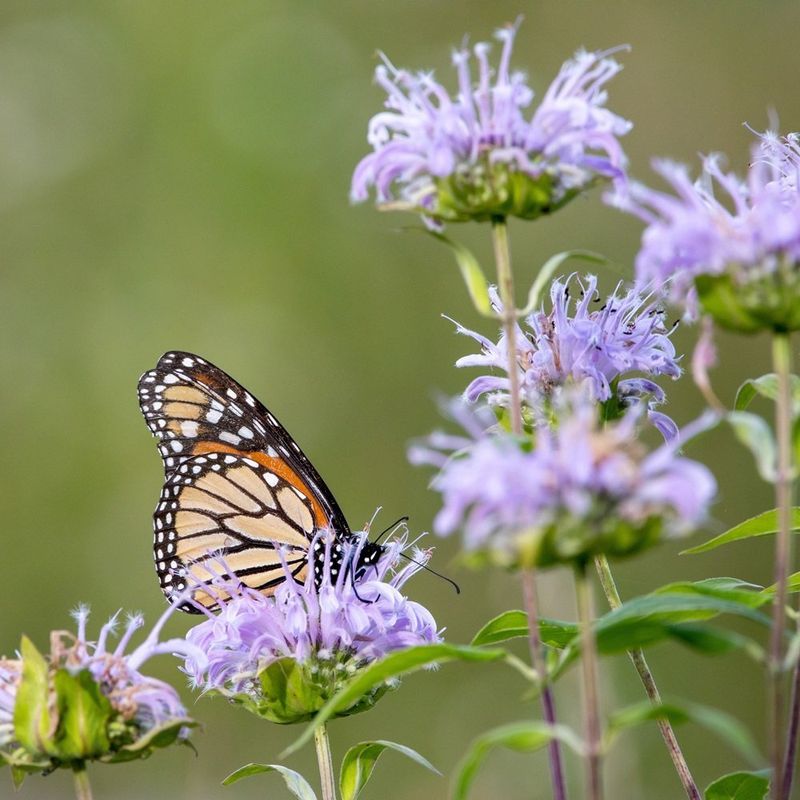
There is something almost theatrical about bee balm in full bloom.
The shaggy, firework-shaped flower heads of Monarda fistulosa, also known as wild bergamot, burst open in July and August in shades of lavender to soft pink, drawing in an impressive crowd of visitors.
Bumblebees, hummingbirds, sphinx moths, and multiple butterfly species all treat bee balm as a reliable midsummer destination in Michigan gardens.
The tubular individual flowers within each bloom cluster are well suited to long-tongued pollinators, particularly bumblebees and hummingbirds, which can reach the nectar other insects cannot access as easily.
This selectivity means the plant tends to reward the most efficient pollinators first, though many other species still benefit from visiting.
Blooming from mid-July through late August, bee balm fills the heart of Michigan’s summer season with consistent food.
Wild bergamot grows best in full sun and tolerates dry to moderately moist soils, which suits many Michigan garden conditions.
It spreads gradually through rhizomes, forming wider clumps over time, so giving it some room to expand is worth planning for.
Dividing the clumps every few years keeps the plant vigorous and blooming well. The aromatic foliage also has some natural resistance to deer browsing, which is a practical bonus in many Michigan neighborhoods and rural areas.
7. Black Eyed Susan Keeps Pollinators Active Through Summer
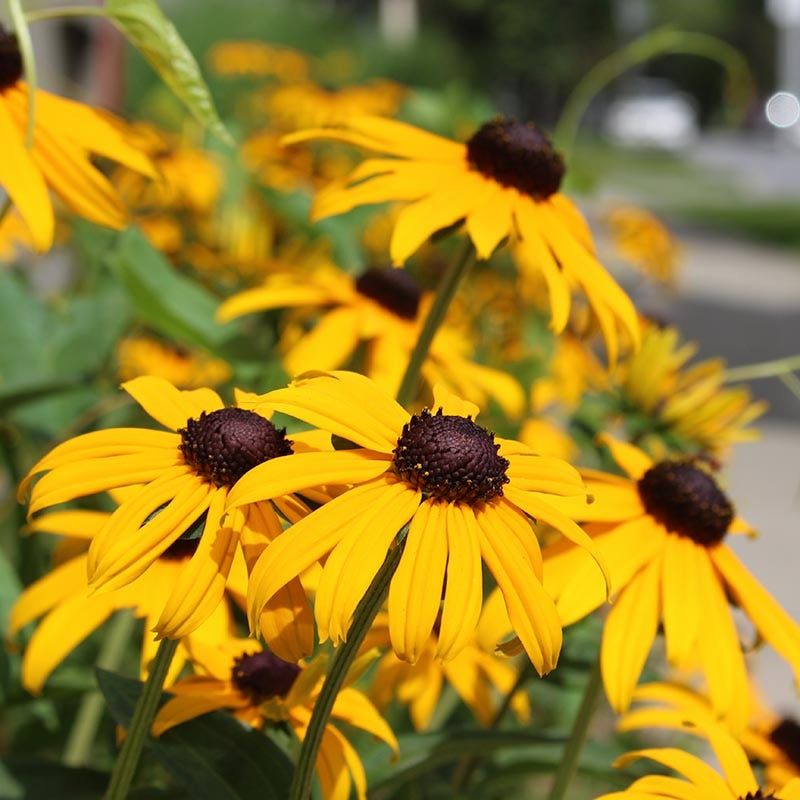
Cheerful and unfussy, black-eyed Susan is one of those plants that earns its place in a Michigan garden without asking for much in return.
Rudbeckia hirta produces bright golden-yellow petals surrounding a dark brown central disk, and it blooms from June all the way through October in Michigan, one of the longest bloom windows of any native wildflower.
That extended season makes it an anchor plant for summer pollinator support.
Sweat bees, bumblebees, and longhorn bees are among the most frequent visitors, using the open, flat flower heads as easy feeding platforms. Monarch butterflies and skippers also stop regularly during their late summer movements through Michigan.
Because the flowers open in succession over many weeks, there is a steady supply of fresh nectar available throughout the season rather than one brief burst.
Black-eyed Susan handles full sun and dry to average soil with ease, which is part of why it thrives in so many Michigan settings from roadside plantings to backyard gardens.
It self-seeds freely, so a small planting can grow into a larger patch over a few seasons without any extra effort.
Leaving the seed heads standing after bloom also feeds goldfinches and other birds during fall and winter, extending the plant’s usefulness well beyond its flowering period.
8. New England Aster Feeds Pollinators Late Into Fall
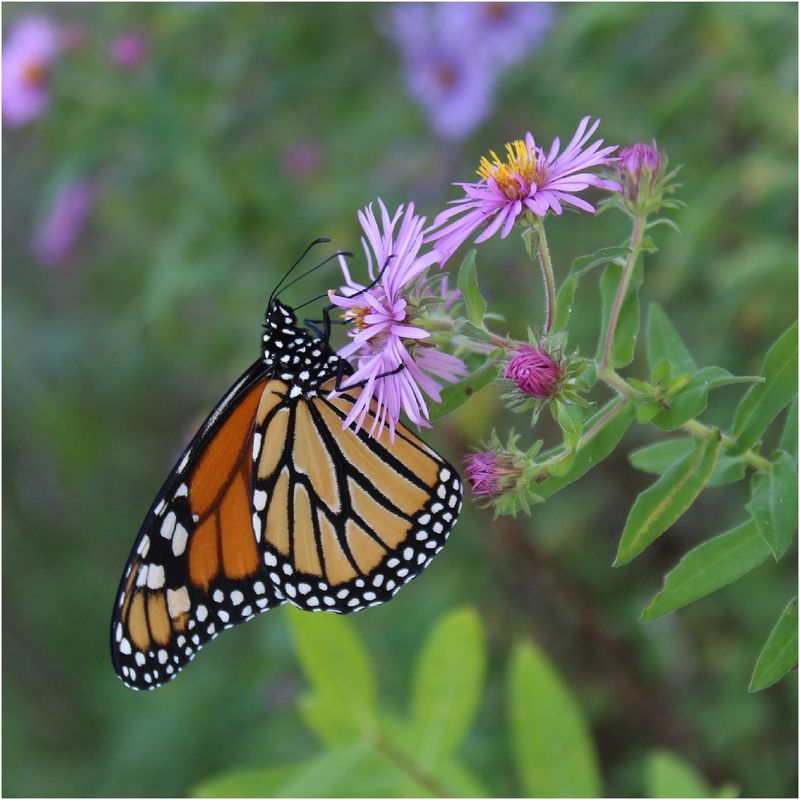
By September, the number of flowering plants in most Michigan gardens drops sharply, and pollinators that are still active begin to struggle for food.
New England aster, Symphyotrichum novae-angliae, steps in at exactly that moment, producing masses of deep purple to violet flowers with bright yellow centers from late August through October.
For migrating monarchs fueling up before heading south, this plant can be a genuinely critical resource.
Bumblebee queens are still foraging in September and October, building fat reserves before they overwinter in the soil.
New England aster gives them one of the last reliable nectar sources available in Michigan before temperatures drop too low for consistent activity.
Honeybees, skippers, and various native bee species also visit the flowers heavily during this late-season window.
New England aster grows well in full sun with moist to average soil and can reach four to six feet in height, so placing it toward the back of a garden bed works well visually.
Cutting the stems back by about half in late June encourages bushier growth and more blooms without delaying the flowering period significantly.
In Michigan, this plant is a cornerstone of any serious late-season pollinator garden, and its bold color makes it visually rewarding for gardeners as well as ecologically valuable for the insects that depend on it.
9. Smooth Blue Aster Supports Late Season Activity
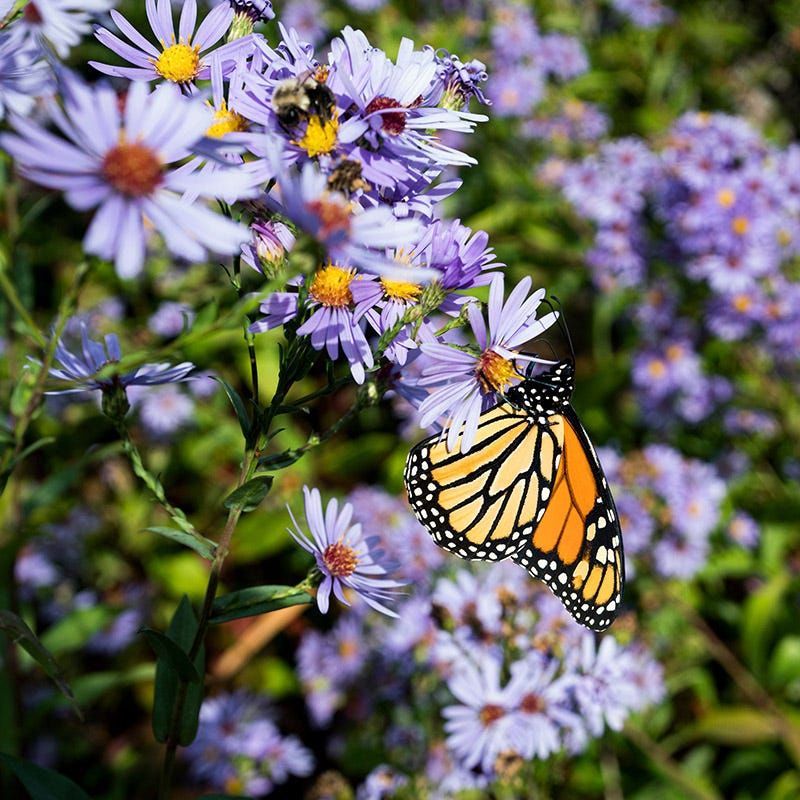
While New England aster gets much of the attention during Michigan’s fall season, smooth blue aster, Symphyotrichum laeve, deserves recognition as a quieter but equally reliable late-season performer.
The flowers are smaller and more delicate, with pale blue to lavender petals and yellow centers, and they bloom from September into October across much of Michigan.
The plant has a more refined, open habit compared to the bold bulk of New England aster, making it useful in smaller garden spaces.
Small native bees, including sweat bees and cellophane bees, are among the most frequent visitors to smooth blue aster.
These smaller bee species remain active later into fall than many people realize, and they depend on late-blooming flowers to complete their reproductive cycles before winter.
Providing smooth blue aster alongside New England aster gives these smaller pollinators options that match their size and feeding style.
Smooth blue aster thrives in full sun to light shade and handles dry to average soil conditions well, which is useful in Michigan landscapes where late-summer drought can stress less adaptable plants.
It typically grows two to four feet tall and has an upright, slightly arching form that blends naturally into mixed native plantings.
Because it is relatively compact and well-behaved compared to some asters, it suits both formal garden borders and more naturalistic Michigan landscapes without becoming unruly.
10. Goldenrod Powers Pollinators Before Winter Sets In
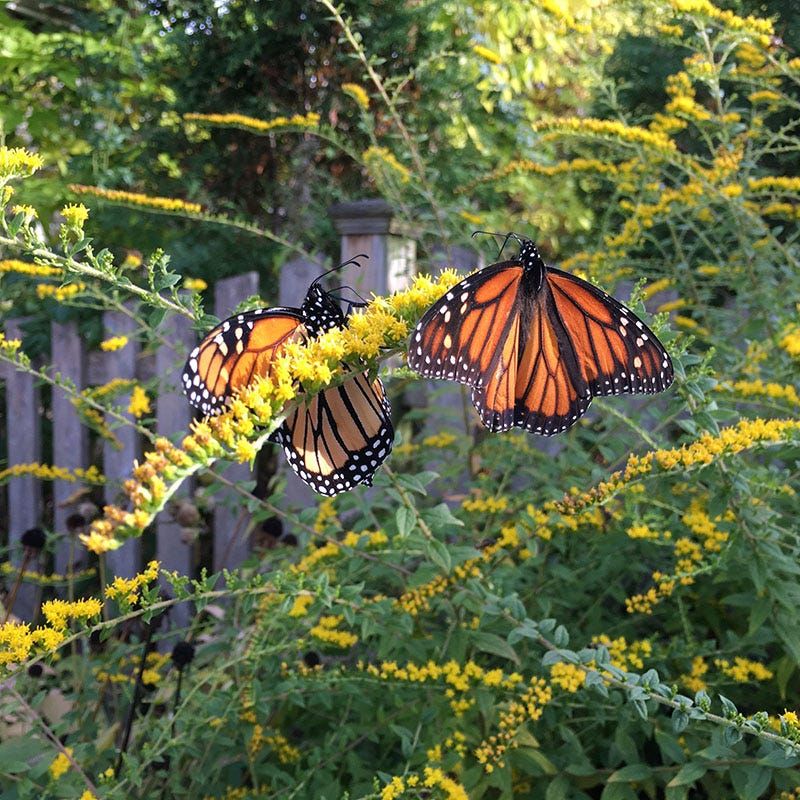
Goldenrod often gets unfairly blamed for fall allergies, but the real culprit is ragweed, which blooms at the same time and releases wind-borne pollen that goldenrod does not.
Solidago species are insect-pollinated plants, meaning their heavy, sticky pollen stays on the flower rather than drifting through the air.
For Michigan pollinators, goldenrod is one of the most important late-season food sources available anywhere in the state.
Blooming from August through October depending on the species, goldenrod provides a massive surge of nectar and pollen right when pollinators need to build energy reserves for winter.
Monarch butterflies feeding on goldenrod before their migration south, bumblebee queens storing fat before hibernation, and solitary bees completing their final broods of the year all depend heavily on this plant.
The ecological value goldenrod provides during this window is hard to overstate.
Several goldenrod species are native to Michigan, including stiff goldenrod, gray goldenrod, and showy goldenrod, each with slightly different habitat preferences ranging from dry sandy soils to moist meadow conditions.
Most grow best in full sun and spread through both seeds and rhizomes, eventually forming robust colonies.
Planting goldenrod alongside New England aster and smooth blue aster creates a powerful late-season combination that can carry Michigan pollinators through to the very end of the active season.