These Container Plants Thrive In Arizona Heat With Little Care
Arizona containers can look full and put together for weeks when the right plants are used, even as the heat starts building. Some plants settle in quickly, hold their shape, and keep growing without needing constant attention.
That kind of steady growth makes a noticeable difference, especially in pots where conditions change faster than in the ground.
In Arizona, certain plants are simply better suited for this, handling strong sun and dry air without slowing down.
When those plants are used, containers stay consistent instead of needing to be adjusted all the time. They keep their structure, maintain their look, and continue performing as temperatures rise.
As the season moves forward, that reliability becomes more obvious and makes container planting much easier to manage.
1. Lantana Thrives In Containers With Minimal Water
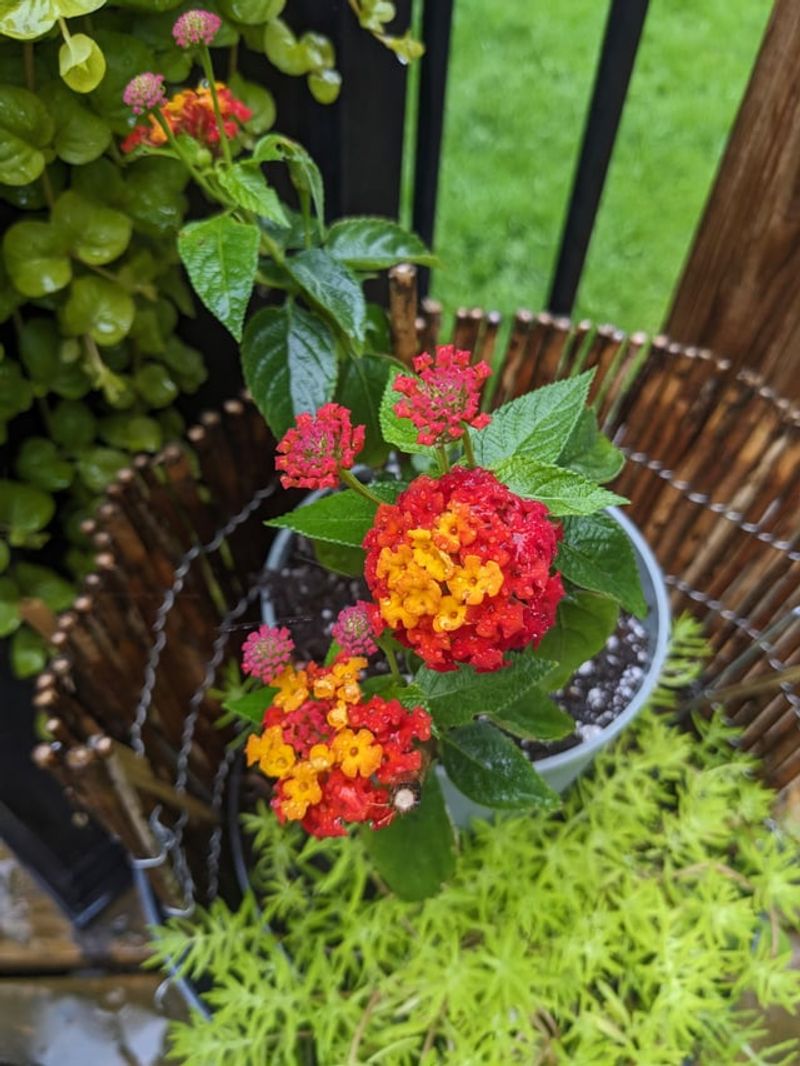
Lantana might just be the most underrated plant in Arizona container gardening. Clusters of tiny flowers in orange, yellow, pink, and red keep blooming even when the thermometer hits triple digits.
Most flowering plants tap out in that kind of heat, but lantana keeps pushing out fresh blooms week after week.
Water it deeply once or twice a week during the hottest months, and it handles the rest on its own. Skipping a watering here and there won’t cause any visible damage.
A pot with good drainage holes and a cactus-friendly soil mix gives it everything it needs to stay happy.
Butterflies and hummingbirds are drawn to it constantly, so placing a container near a window or seating area turns it into free entertainment. Full sun is non-negotiable for heavy blooming.
A little afternoon shade in Phoenix or Mesa won’t hurt, but shade all day will reduce flower production significantly.
Trim back leggy stems every few weeks to encourage fresh growth and more flower clusters. Fertilize lightly once a month with a balanced fertilizer to keep the color intense.
Lantana in a container stays more manageable in size than in the ground, which makes it a practical choice for smaller outdoor spaces across the Valley.
Lantana keeps blooming through intense heat without needing constant watering. It holds color well and keeps containers looking full even in the toughest conditions.
2. Bougainvillea Handles Intense Sun And Dry Conditions
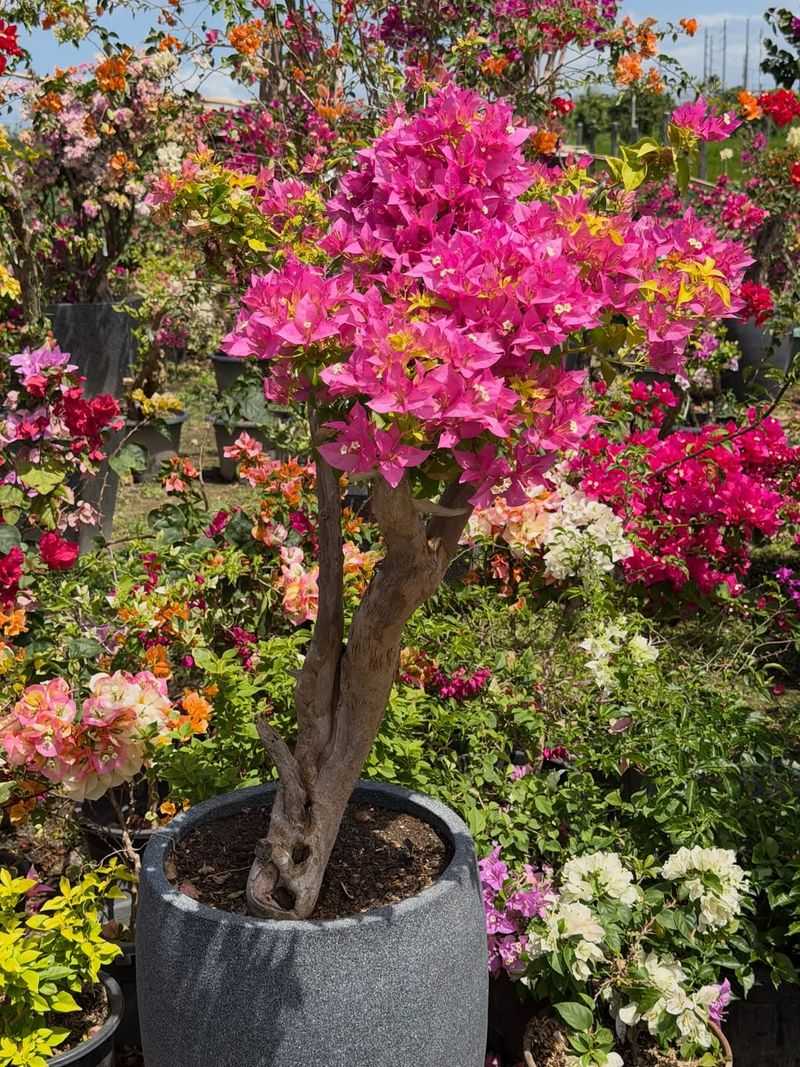
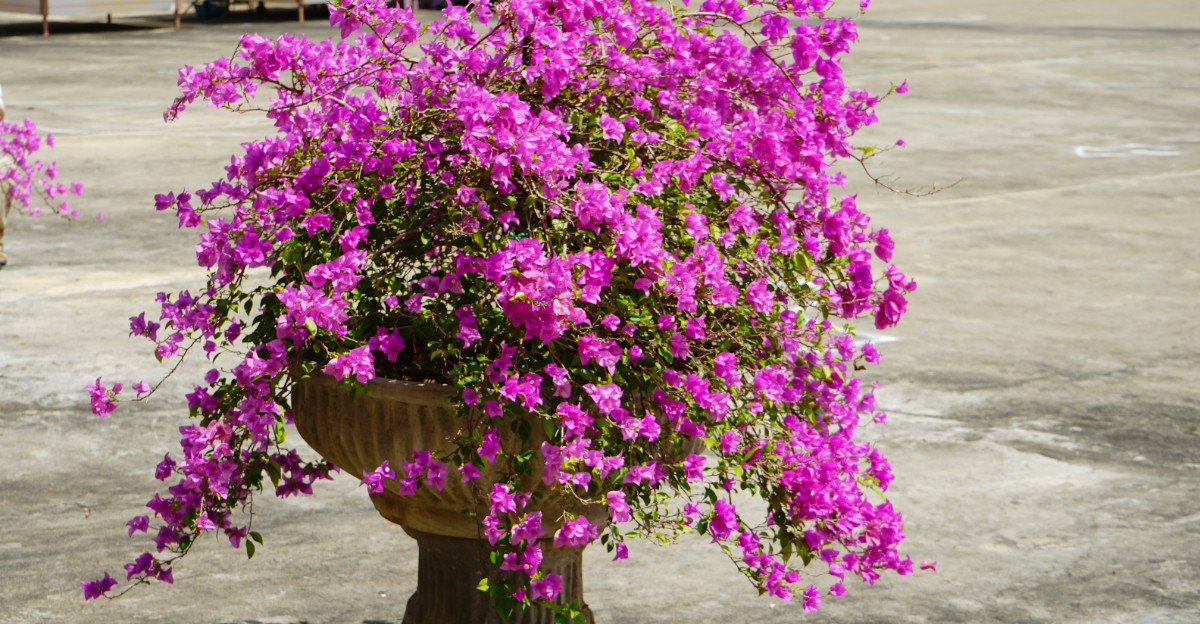
Few plants put on a show like bougainvillea does in the Arizona sun. Bright magenta, coral, red, and orange bracts cover the plant for months at a stretch, and the more sun it gets, the harder it performs.
Shaded spots produce weak color and sparse coverage, so full exposure is where it belongs.
Watering less actually works better with bougainvillea. Letting the soil dry out between waterings triggers more blooming and toughens the plant against heat stress.
Overwatering is the most common mistake people make with this plant in containers, and it shows up quickly as yellowing leaves.
Use a large pot, at least 15 to 20 gallons, to give the roots enough room. A well-draining mix with some perlite added keeps excess moisture from sitting around the roots.
Glazed ceramic or concrete pots hold up better than terracotta in Arizona summers because they don’t dry out as fast.
Your Arizona Garden Changes Every Week. Your Plan Should Too.
Gardening in Arizona changes quickly throughout the season. Every Friday you’ll receive a simple weekly plan showing exactly what to plant, prune, fertilize, harvest, and protect so you never miss the right timing.
Bougainvillea does grow fast and will need occasional pruning to stay tidy in a container. Wear gloves when trimming because the thorns are sharp and catch skin easily.
Across Tucson and the greater Phoenix area, bougainvillea in containers adds serious curb appeal to patios and entryways with almost no effort beyond basic maintenance.
Bougainvillea pushes out strong color the more sun it gets, making it stand out in any container. Letting the soil dry slightly helps it bloom even more.
3. Geraniums Grow Well In Containers During Milder Heat
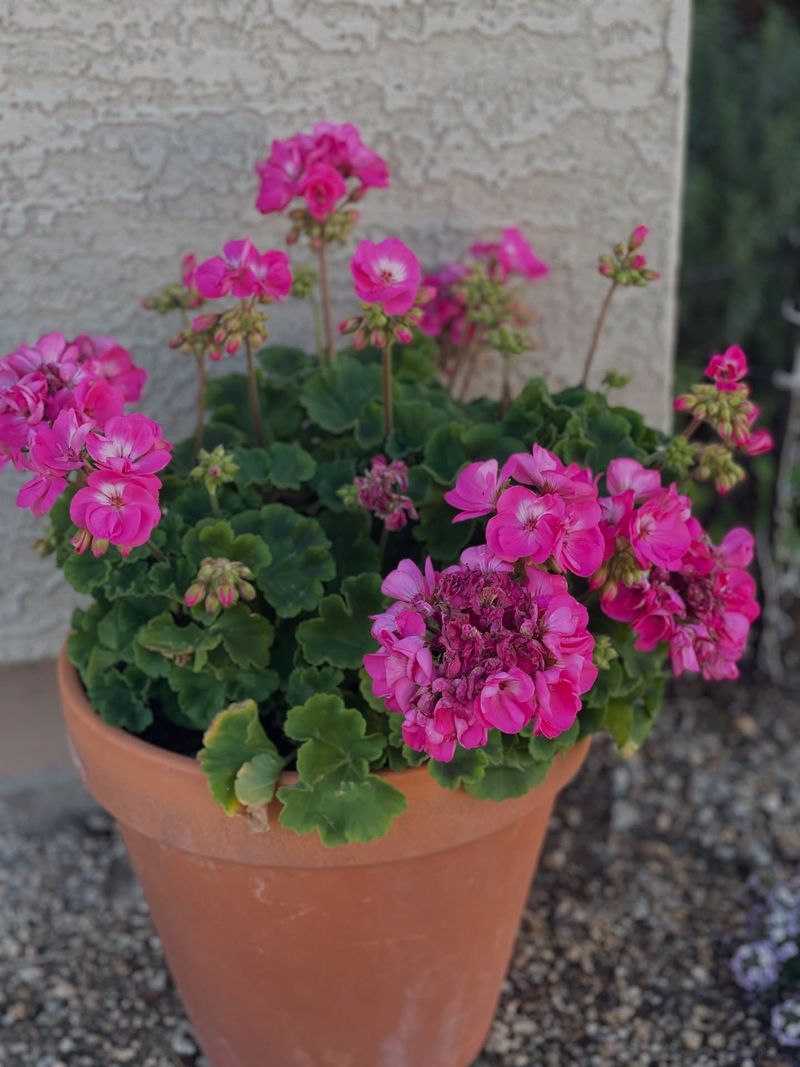
Geraniums have a reputation for being easy, and in Arizona that reputation holds up during the right season. Spring and fall are their prime time here, when temperatures stay between 60 and 85 degrees.
During those windows, they bloom generously and look fantastic in containers on patios and porches.
Arizona summers are a different story. When afternoon temps push past 100 degrees consistently, geraniums slow down and may drop leaves or stop flowering.
Moving containers to a spot with afternoon shade during peak summer months extends their season significantly. East-facing spots work well since they get morning sun without the brutal late-day heat.
Water them when the top inch of soil feels dry, but avoid letting water sit in the saucer beneath the pot. Root rot develops fast in humid, stagnant conditions.
A standard potting mix with good drainage keeps them comfortable without any special amendments needed.
Deadheading spent blooms regularly encourages the plant to keep producing new flowers instead of focusing energy on seed production. Pinching back leggy stems keeps the shape full and compact, which looks much better in a container setting.
Geraniums are widely available at nurseries across the Phoenix metro and Tucson areas every spring, usually at very reasonable prices, making them an accessible option for any budget.
Geraniums perform best during spring and fall, when temperatures stay more moderate. A bit of shade during hotter periods helps them keep going longer.
4. Vinca Handles Heat And Performs Well In Containers
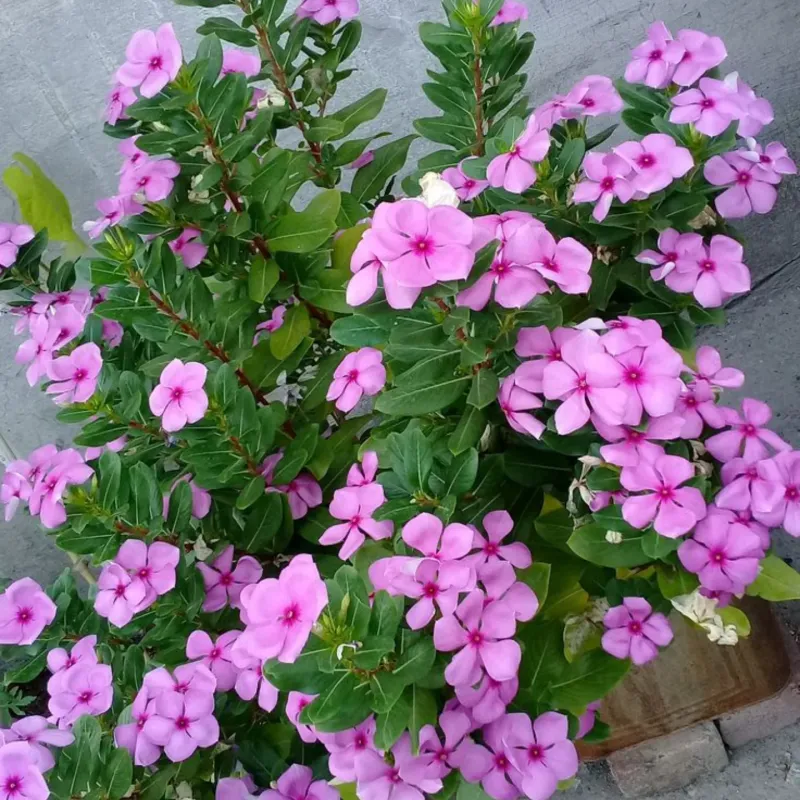
Vinca, also called periwinkle, is one of those plants that genuinely earns its place in Arizona container gardens. Solid pink, white, lavender, and bicolor varieties pump out flowers from late spring straight through fall without much fussing from the gardener.
Heat that would stress other flowering annuals barely slows vinca down.
Full sun is where vinca does its best work. A south or west-facing patio in Scottsdale or Gilbert, where afternoon sun is relentless, suits it just fine.
Partial shade will reduce flowering noticeably, so resist the urge to tuck it somewhere cooler during summer.
Watering needs are moderate compared to many annuals. Letting the top layer of soil dry out between waterings actually benefits vinca and reduces the chance of fungal issues.
Good airflow around the container also helps prevent powdery mildew, which can appear in humid monsoon conditions during late July and August.
No deadheading is required since vinca drops its spent blooms cleanly on its own. That self-cleaning habit makes it ideal for people who want a colorful container without a lot of upkeep.
Feed it every three to four weeks with a balanced fertilizer to keep the blooms coming strong. Available at most garden centers across Arizona each spring, vinca is budget-friendly and extremely reliable through the long, punishing desert summer season.
5. Aloe Vera Stores Water And Tolerates Dry Air
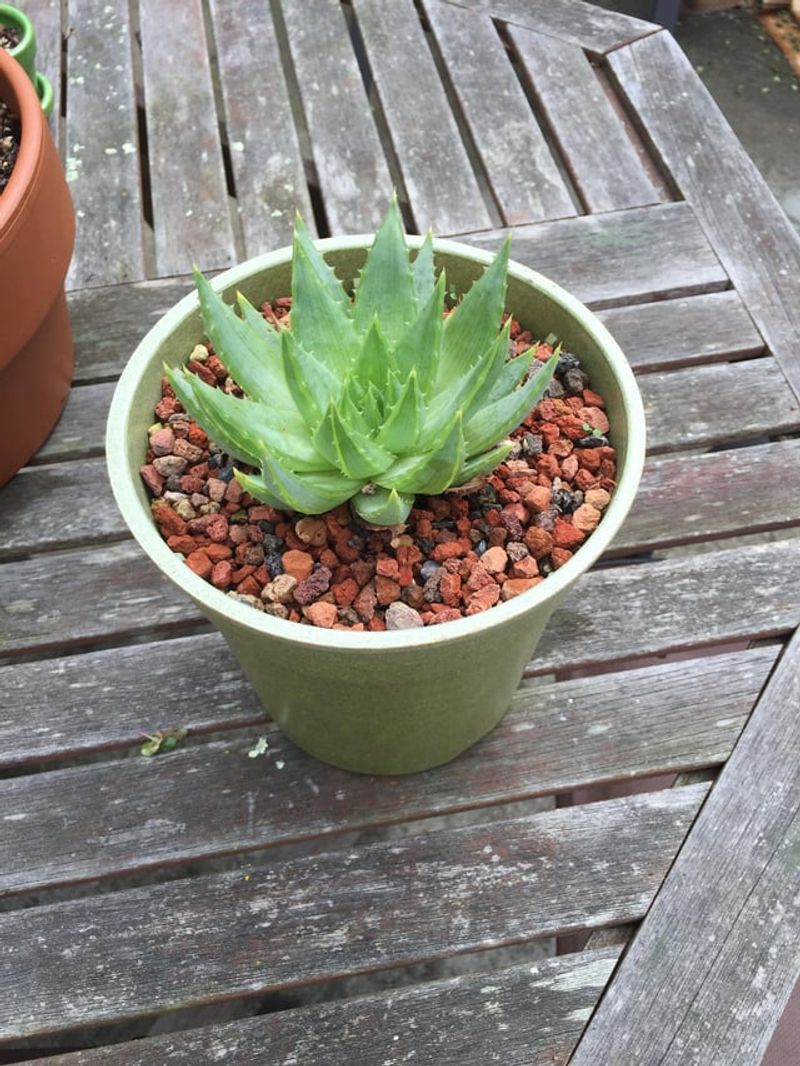
Aloe vera is one of the most practical plants you can keep on an Arizona patio. Beyond its well-known skin-soothing uses, it adds a bold, architectural look to any container arrangement.
The thick, upright leaves hold enough internal moisture to get through stretches of dry weather without any help from the gardener.
Watering deeply every two to three weeks during summer is usually enough. During cooler months, once a month or even less keeps it healthy.
Overwatering is a far more common problem than underwatering with aloe, and soggy soil will cause the base of the plant to soften and deteriorate quickly.
Terracotta pots work well for aloe because they breathe and allow excess moisture to evaporate through the walls. A cactus or succulent mix gives it the fast drainage it needs.
Avoid pots without drainage holes since standing water at the bottom is a serious problem for this plant.
Aloe handles full sun well in Arizona but can develop orange or brown tips if exposed to extreme reflected heat, like from a white wall or concrete floor. A spot with morning sun and light afternoon shade keeps the leaves looking their best.
Pups, the small offshoots that grow at the base, can be separated and repotted once they reach a few inches tall, giving you more plants for free across your patio or garden.
6. Portulaca Thrives In Full Sun And Hot Conditions
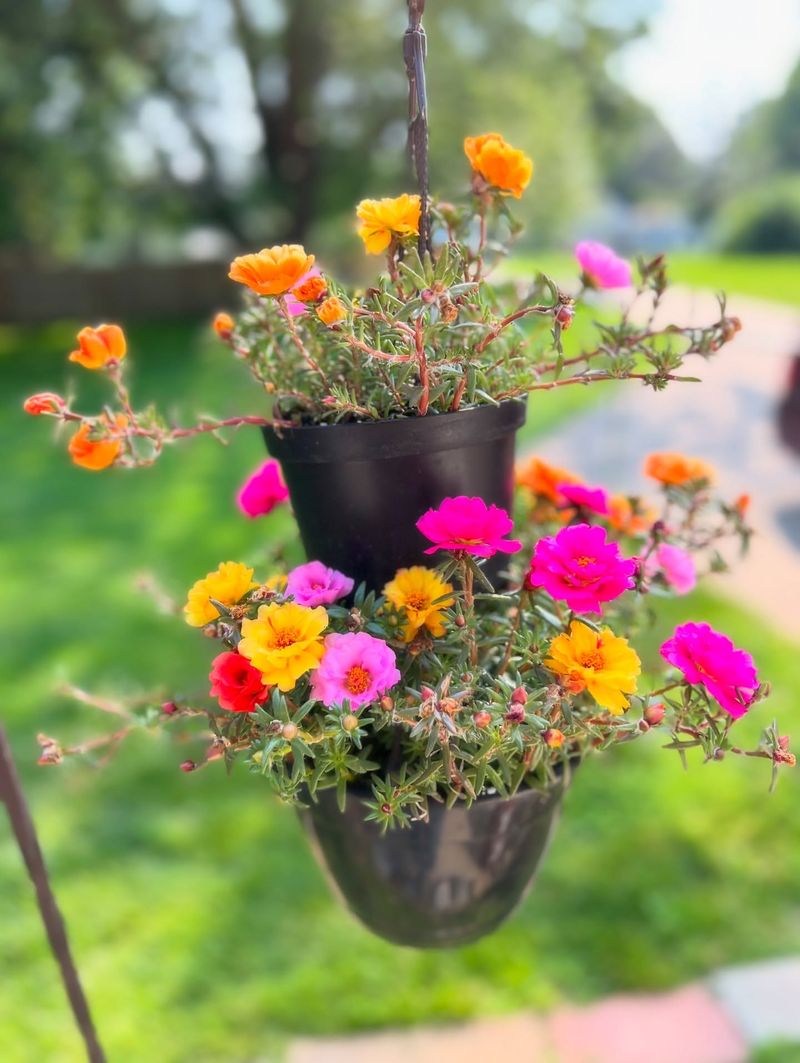
Portulaca, sometimes called moss rose, is built for heat in a way most plants simply aren’t. Its thick, fleshy leaves hold moisture like a small reservoir, which means it handles dry spells without skipping a beat.
In Arizona’s blazing summer sun, portulaca doesn’t just survive, it genuinely thrives.
Shallow containers work perfectly for this plant since its roots don’t run deep. A window box or a wide, low pot gives it plenty of room to spread and fill out.
Cactus or succulent potting mix drains fast enough to prevent soggy conditions that would otherwise cause root problems.
Blooms open up in full sun and close in the evening or on cloudy days, which is a fun quirk that surprises a lot of first-time growers. Colors range from hot pink and orange to yellow and white, and the flowers appear constantly throughout the warm season.
A single planting in late spring will keep blooming well into October across most of Arizona.
Watering once or twice a week is usually enough, even during the hottest stretches. Fertilizing every three to four weeks with a balanced liquid fertilizer keeps the flower production steady.
Portulaca rarely needs pruning and stays naturally tidy, making it a no-fuss choice for anyone who wants container color without spending a lot of time outdoors tending plants.
Portulaca handles strong sun easily and keeps blooming without slowing down. Its low water needs make it a simple choice for containers in hot weather.
7. Agave Grows Reliably In Containers With Little Attention
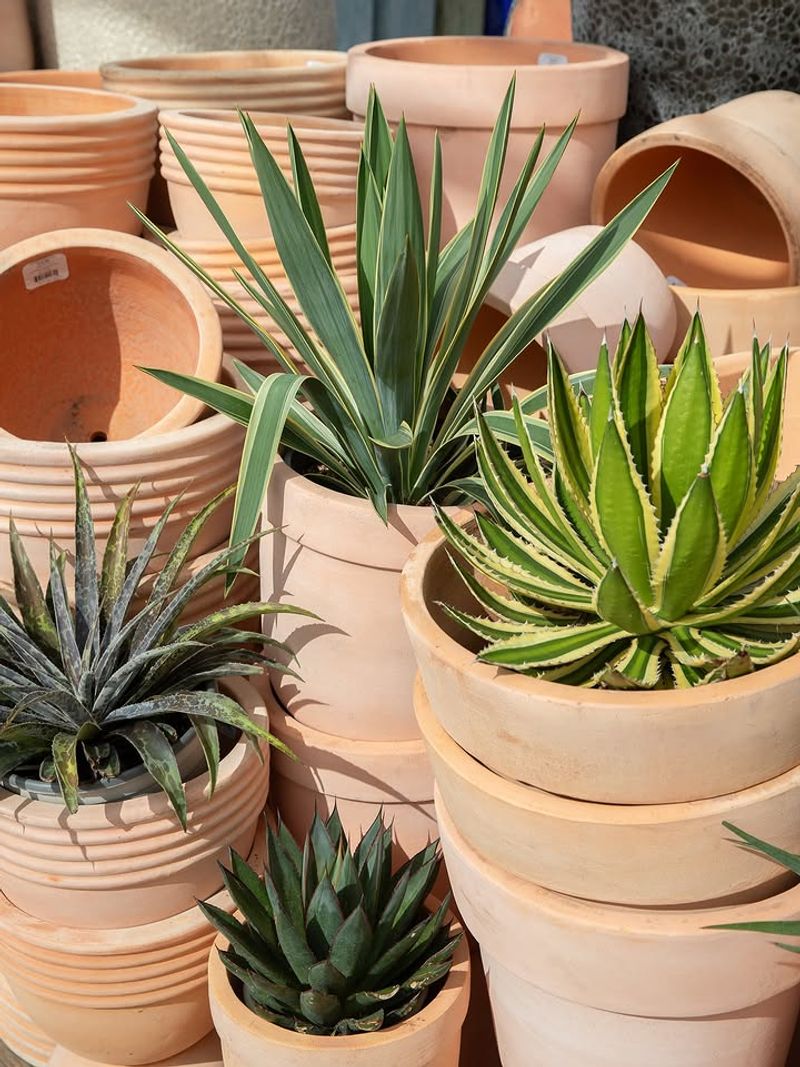
Agave is the definition of a plant that does its own thing. Once it’s settled into a container with decent soil and a sunny spot, it asks for almost nothing in return.
In Arizona, where summers are long and water is precious, that kind of independence is genuinely valuable.
Smaller agave varieties like Agave parryi or Agave ‘Blue Glow’ are well suited to container life. They stay compact enough to look intentional in a pot rather than cramped.
A wide, heavy container is a good choice since agave can get top-heavy as it matures, especially in windy monsoon conditions.
Watering once every two to three weeks during summer is sufficient, and in winter you can stretch that to once a month or less.
A cactus mix with added gravel or coarse sand at the bottom of the pot improves drainage and mimics the rocky desert soil agave naturally prefers across the Sonoran Desert region.
Sharp leaf tips are a real concern, especially in high-traffic areas. Placing agave containers away from walkways and seating areas avoids accidental contact.
Some gardeners use cork or rubber tips on the spines for safety.
Repotting is rarely needed more than once every three to five years, which keeps the maintenance commitment extremely light for anyone tending a container garden in Phoenix, Tempe, or surrounding communities.
8. Diamond Frost Euphorbia Handles Heat And Requires Minimal Care
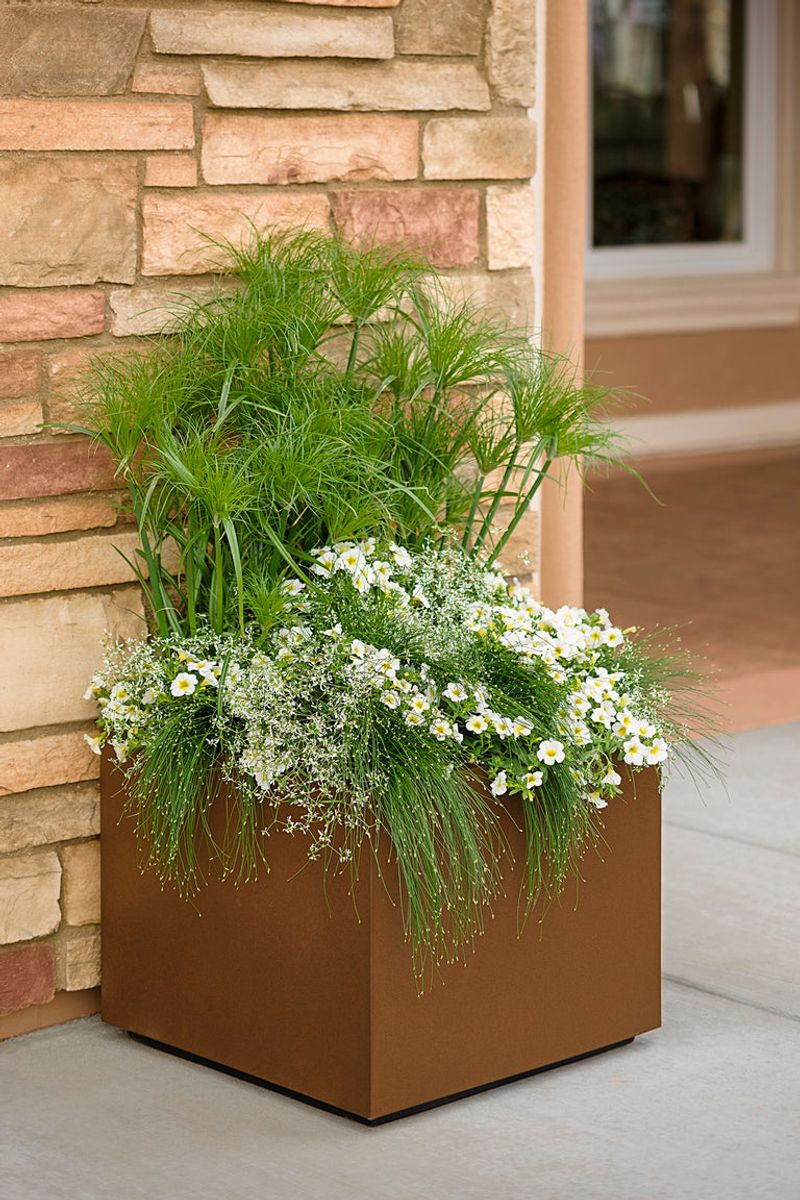
Diamond Frost euphorbia looks delicate, like a cloud of tiny white flowers floating above fine stems, but it’s tougher than it appears. Arizona heat doesn’t faze it at all, and it keeps producing those airy white blooms from spring through the first cold snap in late fall.
It pairs beautifully with bold-colored plants in mixed containers.
Full sun works perfectly for this plant, though it also tolerates partial shade better than most heat-loving annuals. That flexibility makes it useful in spots that don’t get consistent sun all day, which is common on patios with overhead structures or nearby walls.
Across Chandler, Mesa, and the broader Phoenix area, it’s a popular filler plant in container arrangements.
Watering every few days during peak summer keeps it looking fresh. It doesn’t store water like a succulent, so it needs more consistent moisture than agave or aloe.
Still, it bounces back quickly from mild drought stress once watered, and the foliage rarely shows permanent damage from short dry spells.
No deadheading is needed since spent flowers drop on their own and new ones appear almost immediately. Fertilizing every three to four weeks encourages denser growth and heavier blooming.
Diamond Frost rarely exceeds 18 inches in height or spread, which keeps it proportional in most standard-sized containers without constant pruning or reshaping throughout the season.